What is Postman 2024?
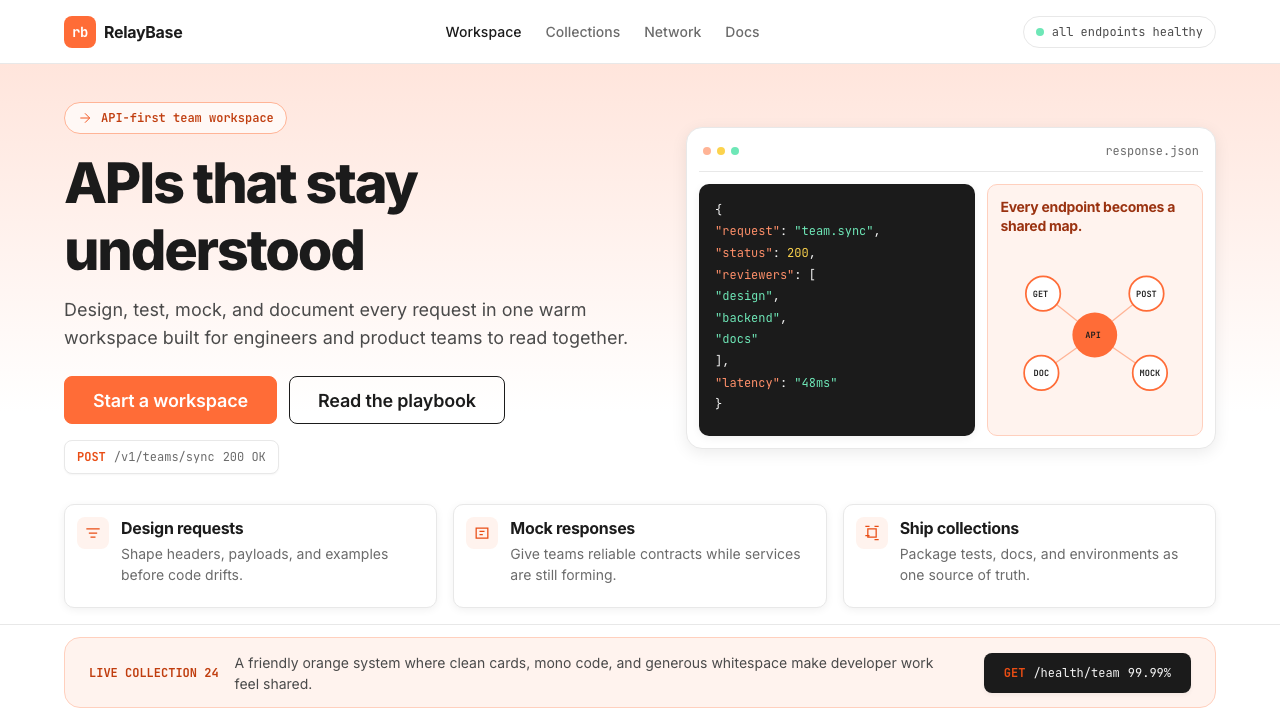
Postman turned the API request into a first-class design artifact — warm orange confidence, elevated code blocks, and a mascot that makes enterprise tooling feel genuinely human.
Postman 2024 in brief
Postman 2024 is the visual and interaction design language developed by Postman, Inc. across the years 2022 through 2024, representing the maturation of a brand that grew from a simple Chrome extension into the world's most widely used API development platform. The system is characterized by a warm signature orange deployed against clean white or near-white surfaces, elevated code-block aesthetics that treat developer output as hero imagery, and a friendly anthropomorphic mascot, Postdog, whose presence softens an otherwise technical product category.
At its core, the system solves a design problem specific to developer tooling: how to signal professional credibility to engineers while remaining approachable enough for product managers, technical writers, and business stakeholders who share the same workspace. It achieves this balance through a deliberate pairing of typefaces — a humanist sans-serif for headlines and marketing copy, a geometric monospaced face for all code surfaces — and through a palette that leads with warm hues rather than the cool greys and deep blues that dominate most enterprise software.
The design language is not derived from a historical art movement but from a specific commercial and technological moment: the emergence of the API economy in the mid-2010s and the simultaneous shift in developer tooling from purely command-line experiences toward collaborative, visually designed platforms. Postman 2024 is the visual record of that shift — a brand identity built for an era in which the API itself became a product.

Where does Postman 2024 come from?
Postman began in 2012 as a personal side project by Abhinav Asthana, then a computer science student in Bangalore, India. Frustrated by the clumsiness of testing HTTP requests directly in a browser, he built a Chrome extension that simplified the process of sending and inspecting API calls. The extension's orange interface — chosen partly for its visibility against Chrome's grey chrome and partly for its warmth — became the earliest visual seed of what would become a global brand. By the time Abhinav co-founded Postman, Inc. in 2014 with Ankit Sobti and Abhijit Kane, the extension had accumulated hundreds of thousands of users without any dedicated marketing.
The company's early visual identity was functional rather than considered — orange was the brand color because it had always been the color, and the interface was organized around utility rather than aesthetic intent. The first major design inflection point came as Postman expanded beyond its Chrome extension origins into a native desktop application, a paid team collaboration layer, and eventually a full platform with environments, mocking, monitoring, and documentation capabilities. Each expansion forced a reckoning with what the brand actually communicated and to whom.
The 2022–2024 visual identity represented a deliberate rebranding effort by Postman's in-house brand team, conducted against the backdrop of the company's rapid enterprise growth — Postman had crossed 20 million registered users and was increasingly selling to large engineering organizations. The design challenge was to elevate the brand from a developer utility into a platform brand that could credibly sit alongside enterprise software vendors, while preserving the grassroots developer affection that had made Postman's growth possible in the first place. The solution was to double down on warmth: richer orange gradients with peachy undertones, a mascot with expressive personality, and a typographic system anchored in faces with visible human construction.
The cultural context of Postman 2024 is the broader API-first movement. By the early 2020s, the software industry had largely adopted the position that APIs were not implementation details but products in their own right — designed, documented, versioned, and marketed. Postman's brand evolved in lockstep with this shift. The elevation of code blocks to hero imagery was not incidental: it reflected an industry-wide normalization of showing raw technical content in marketing materials, as pioneered by developer-tool companies including Stripe, Twilio, and Vercel. Postman 2024 sits firmly in that lineage while adding a warmth and approachability that distinguishes it from the cooler, more austere aesthetics of its nearest peers.
What defines the Postman 2024 look?
Warm Orange Identity
The dominant hue is a warm, saturated orange — not the aggressive neon-orange of alert systems nor the muted terracotta of lifestyle brands, but a confident midpoint with strong visibility on white. This orange appears in gradients that shift toward softer peach at lighter values, maintaining warmth across both marketing surfaces and product UI. It functions as the brand's primary trust signal, carrying associations of energy, approachability, and forward motion without the aggression of pure red or the coolness of blue-shifted alternatives.
Elevated Code as Hero Imagery
Code blocks occupy a position in Postman's visual system normally reserved for product photography or illustration. They appear prominently on marketing pages, presentations, and social content — rendered in a dark-background monospace format with syntax highlighting that uses warm ambers and muted greens against near-black. The effect communicates that the technical artifact itself is beautiful and worthy of display, rather than something to be hidden behind abstracted UI. This treatment is one of the most distinctive elements of the 2024 language and directly addresses developer audiences who recognize and trust visible technical authenticity.
Humanist-Meets-Monospace Typography
The typographic system is built on a deliberate contrast between two typeface categories. Headlines and marketing text use a humanist sans-serif with open letterforms and visible calligraphic origins, which conveys warmth and approachability at large display sizes. All code-related surfaces — inline code, code blocks, API endpoints, request bodies — use a geometric monospaced typeface with high legibility and clear character differentiation. The contrast between these two voices — one warm and expressive, one precise and technical — mirrors the product's dual audience of marketers and engineers and prevents the design from collapsing into either pure utility or pure warmth.
Mascot-Driven Approachability
Postdog, the brand's canine mascot, is not merely decorative — it functions as an emotional counterweight to the technical density of the product. The mascot appears in illustrations that range from onboarding flows to error states to marketing campaigns, consistently rendered in a warm, simplified style with the brand's orange palette. This character-based warmth is a deliberate strategy for reducing the perceived barrier to entry of API tooling, which historically carried a high-expertise signal. Postdog's presence implicitly communicates that non-experts are welcome, softening a product category that might otherwise feel intimidating.
Gradient Warmth with Structural Restraint
While many developer-tool brands in the same era moved toward flat, nearly-colorless interfaces, Postman 2024 embraces gradients as a signature element — but applies them with deliberate restraint. Gradients appear primarily in hero sections, feature block backgrounds, and marketing illustrations, always flowing between the warm orange family and its lighter, peachy adjacent values rather than introducing unrelated hues. The body of the product UI remains crisp and largely achromatic, so the gradients read as branded moments rather than noise. This creates a rhythm of warmth at key attention points and clarity everywhere else.
Collaborative Space Architecture
The product UI reflects an architectural decision to organize work around shared spaces rather than individual files. Collections, workspaces, and environments occupy a sidebar hierarchy that prioritizes team context over single-user linear flows. Visually, this manifests as a persistent left-panel navigation in muted tones that never competes with the active editing canvas, combined with a breadcrumb and tab system that makes multi-context work legible. The layout language is closer to a collaborative knowledge tool than a traditional developer console, reflecting the product's positioning at the intersection of engineering and organizational workflow.
Documentation as Design Surface
One of the most significant extensions of the Postman 2024 language is its treatment of API documentation as a first-class visual product. Auto-generated documentation pages carry the brand's typographic system and warm palette, transforming what was historically a raw technical artifact into a designed publication. Endpoint listings, parameter tables, and example responses are laid out with clear visual hierarchy, making the documentation readable by non-engineering stakeholders. This positions Postman not just as a testing tool but as a communication platform between API producers and their consumers.

Who shaped Postman 2024?
Co-founder and CEO of Postman, Abhinav Asthana created the original Chrome extension in 2012 that seeded the brand's visual identity. His instinct to choose orange — warm, visible, and friendly — over the cool blues and greys dominant in developer tooling at the time set the aesthetic direction that persists in Postman 2024. As CEO through the company's growth from a free tool to a platform valued in the billions, he shaped the strategic decisions that drove the 2022–2024 brand evolution, including the push to make API development genuinely collaborative and the elevation of technical content to marketing-grade visual material.
Co-founder and CTO, Ankit Sobti shaped the technical architecture of the Postman platform from its earliest days. His engineering decisions — including the choice to build a desktop client rather than remain browser-bound, and the early investment in a team collaboration layer — directly determined the design problems the brand team had to solve. The collaborative workspace model that defines Postman's product layout language emerged from Sobti's conviction that API development was fundamentally a team sport, not an individual activity. The visual system that followed had to make that team context legible at a glance.
The in-house brand and design team responsible for the 2022–2024 visual identity is the collective force behind Postman's most significant aesthetic transformation. Working against the constraints of a product with 20 million users and deeply embedded visual habits, the team navigated the challenge of elevating brand sophistication without alienating the developer audience that had made organic growth possible. Their key contributions include the refined gradient system, the elevation of code blocks to hero imagery, the integration of Postdog across product and marketing touchpoints, and the typographic pairing that makes technical and marketing content feel like parts of a coherent whole.
While not part of Postman's organization, Stripe's design team warrants mention as a defining peer influence on the Postman 2024 language. Stripe's practice of featuring code snippets prominently in marketing materials — treating the developer experience as a design surface rather than a technical afterthought — established a template that Postman extended and personalized. Where Stripe's aesthetic runs cool and precise, Postman's 2024 answer to the same challenge runs warm and mascot-friendly. Understanding this dialogue helps explain why both brands share a structural logic (code as hero, strong typographic hierarchy, minimal decoration) while reading as distinctly different in tone.
How do you use Postman 2024 today?
Postman 2024 is a practical reference for any presentation, UI, or marketing asset that needs to communicate technical credibility without sacrificing warmth. The core principle to internalize before applying it is the system's emotional contract: warm where the brand speaks, crisp where the product works. Confusing these two registers — making the product UI feel like a marketing brochure, or making a marketing deck feel like a developer console — produces incoherent results even when individual elements are correctly executed.
For presentation slides, the system works best when it separates cover and section-opener pages from content pages. Cover slides benefit from the full gradient treatment: the signature warm orange moving toward peach anchors a hero area, large display type in the humanist face carries the primary message, and code or a Postdog illustration provides a visual counterpoint. Content slides should pull back to a clean white or near-white ground with black body text, reserving orange only for data callouts, highlighted terms, or CTAs. Data visualization slides — API usage charts, uptime graphs, team activity metrics — are ideal candidates for the dark code-block aesthetic: a near-black card on a light slide background, with warm amber and muted green used to differentiate data series.
For web UI design, the system offers clear guidance for dashboards, API documentation pages, and pricing tiers. Dashboards should maintain a light, airy ground with high-contrast black type and restrained orange accents for interactive states and status indicators. Navigation follows a sidebar-first pattern in desaturated tones, ensuring it never competes with the active content canvas. API documentation pages work well with a two-column layout — left for navigation hierarchy, right for content — with the monospaced typeface handling all technical content and the humanist face reserved for prose explanations. Pricing pages are natural fits: tier headers in bold display type, orange as the differentiator for the recommended plan, and a warm gradient strip at the top to ground the page in brand identity without overwhelming the decision content.
For editorial and marketing contexts — blog headers, social cards, email banners, conference materials — the system's most expressive elements come forward. Full-bleed gradient backgrounds in the orange-to-peach range support bold, single-message headlines in the humanist display face. Code blocks embedded in editorial content should maintain the dark-background monospaced treatment even when the surrounding layout is light, preserving their function as visual anchors. Postdog illustrations can carry significant communicative weight in onboarding emails or error pages, where the human tone of voice needs visual reinforcement. Marketing one-pagers and landing pages benefit from alternating content rhythm: a warm gradient hero, a white feature section with code hero imagery, a dark code-block section, and a warm gradient close.
A common mistake when applying Postman 2024 is treating the orange as interchangeable with any warm color. The system's warmth is precise — it lives in a specific balance between orange and peach, and tipping toward red makes the brand feel aggressive, while tipping toward yellow makes it feel playful in ways that undercut enterprise credibility. A second common error is applying the dark code-block aesthetic to non-code content: dark sections that do not contain actual code or technical data feel like decorative mimicry rather than authentic technical context, and developers notice. Use the dark treatment only where technical content genuinely justifies it.

Postman 2024 — FAQ
Is Postman 2024 only suitable for developer-tool products?
Not exclusively. The underlying design logic — warm orange identity, humanist typography for communication, monospaced typography for technical content, elevated code as imagery — is transferable to any context where technical credibility and human approachability need to coexist. SaaS dashboards, API documentation sites, developer-facing marketing, technical conference materials, and data engineering team presentations are all natural fits. The system becomes less appropriate in purely consumer contexts — food, fashion, wellness — where the technical-warmth balance reads as tonally mismatched rather than differentiating.
How does Postman 2024 differ from other developer-tool visual identities like Stripe or Vercel?
All three share a common structure: code as hero imagery, strong typographic hierarchy, restrained decoration, and a conviction that showing real technical content in marketing materials builds trust. The key differences are tonal. Stripe runs cool — its palette is restrained greys and deep indigo, its typography is precise, and its illustrations are abstract and geometric. Vercel runs darker and more dramatic — near-black grounds, high-contrast whites, and a cinematic quality. Postman 2024 runs warmest of the three: orange gradients, a mascot, and a visual system designed to welcome non-engineers into the same workspace as engineers. These are not interchangeable aesthetics; choosing between them should be driven by the emotional tone the product needs to set with its specific audience.
Can the dark code-block aesthetic be used as a full-page background treatment?
It can, but with significant caution. The dark code-block treatment is designed to be a moment of contrast within a predominantly light layout — its power comes from the context shift it creates. Using it as a full-page or full-section background for non-code content strips it of that purpose and can make the design feel heavy or theatrical rather than technically grounded. If a dark treatment is desired for a full section, ensure it contains substantial technical content — actual endpoints, request examples, or response payloads — that justifies the register. Otherwise, a dark near-black background with the humanist typeface and no code elements reads as a generic dark mode, not as a Postman-coded design decision.
How should Postdog be used without it feeling forced or infantilizing?
Postdog works best at emotional inflection points — onboarding moments, empty states, error pages, and success confirmations — where the user's task is paused and a human tone of voice has room to land. It works poorly when inserted into dense functional UI, data-heavy dashboards, or high-stakes decision contexts like billing or security settings, where the character's warmth conflicts with the user's focused attention. In presentation and marketing materials, Postdog is most effective as a single visual anchor per composition rather than as a recurring motif throughout. One well-placed Postdog in an email or slide header carries warmth; multiple Postdog appearances in the same composition reads as a mascot dump rather than a brand decision.
Does Postman 2024 work well in print or physical materials?
Yes, with one important consideration: the warm orange-to-peach gradients that are central to the digital identity require careful color management in print to maintain their warmth without muddying. The gradient's lightness range is wide, and cheap printing processes may flatten it into a single orange block or shift it toward an unpleasant yellow-brown. For high-quality print — conference signage, premium event materials, brochures — the system translates well. For budget print runs, a flat orange treatment with selective code-block excerpts and Postdog spot illustrations is a more reliable choice than attempting gradient fidelity. The typographic system and mascot-driven warmth port to physical media essentially unchanged.
Related design styles
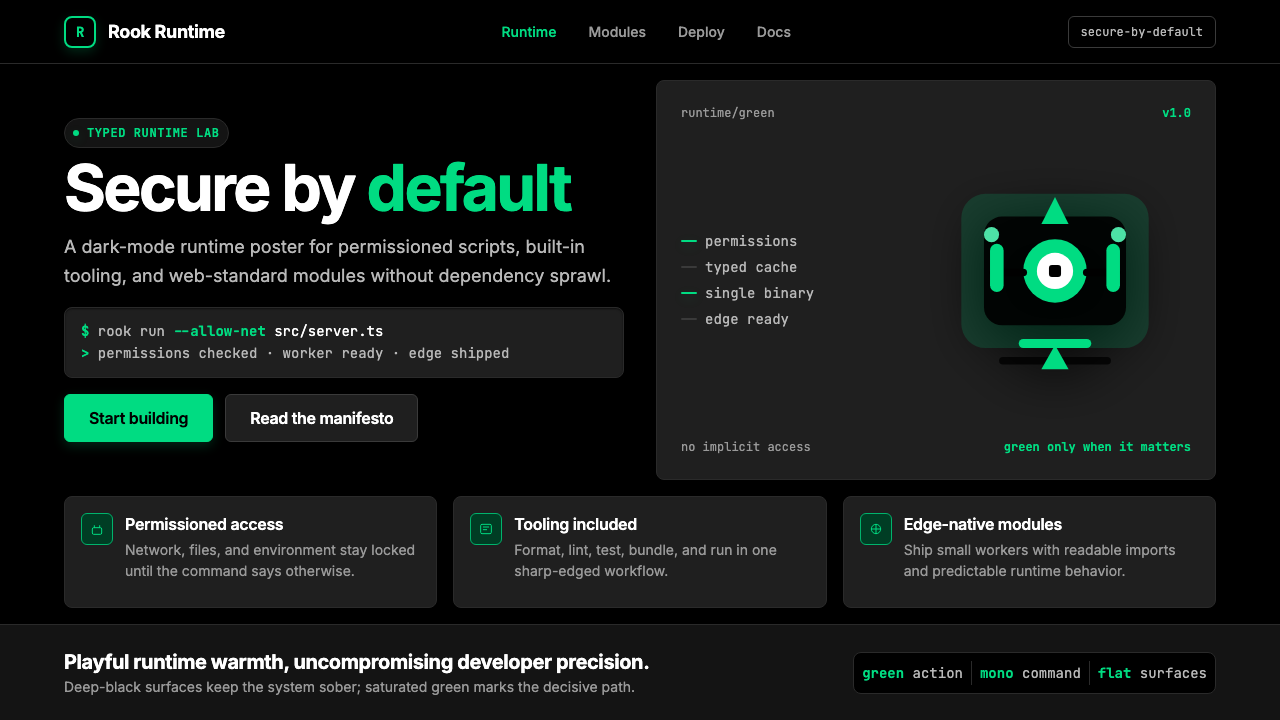 Deno Runtime-GreenWarm precision on black. Saturated green, Inter, and mono code turn security…
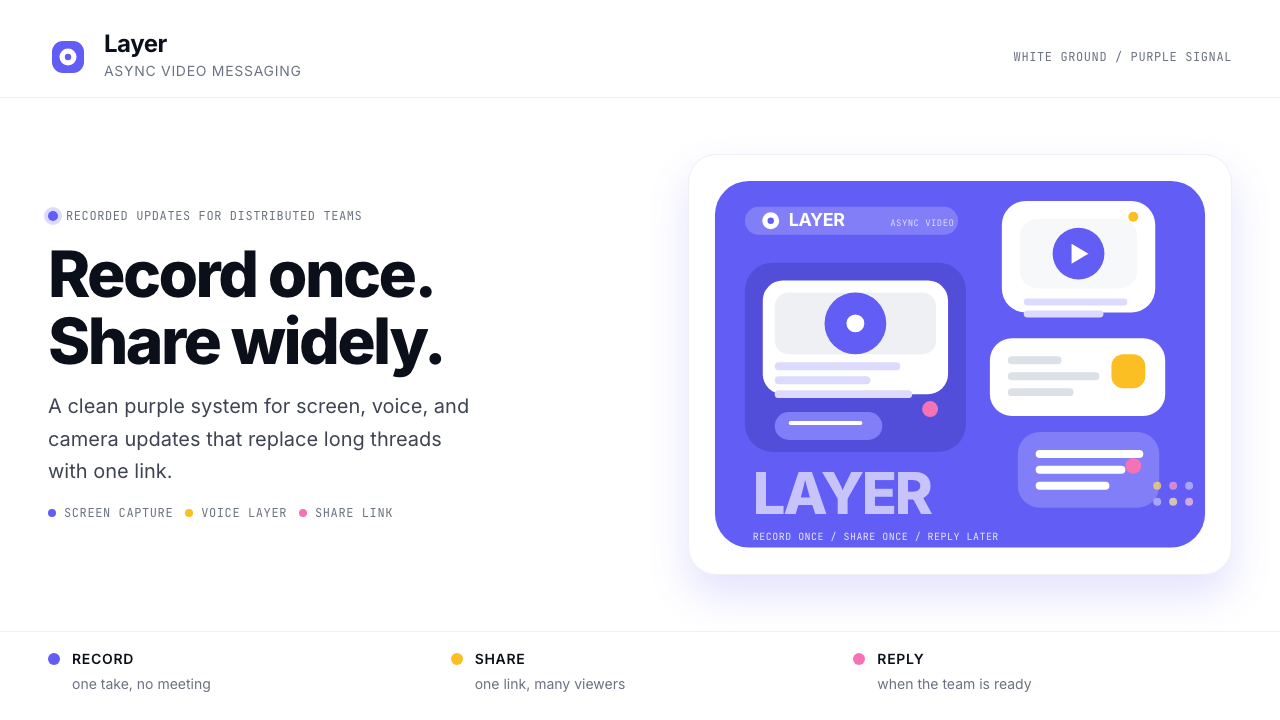 Loom Async-Video PurpleAsync, not meetings. Pure white ground, electric purple, record-button geomet…
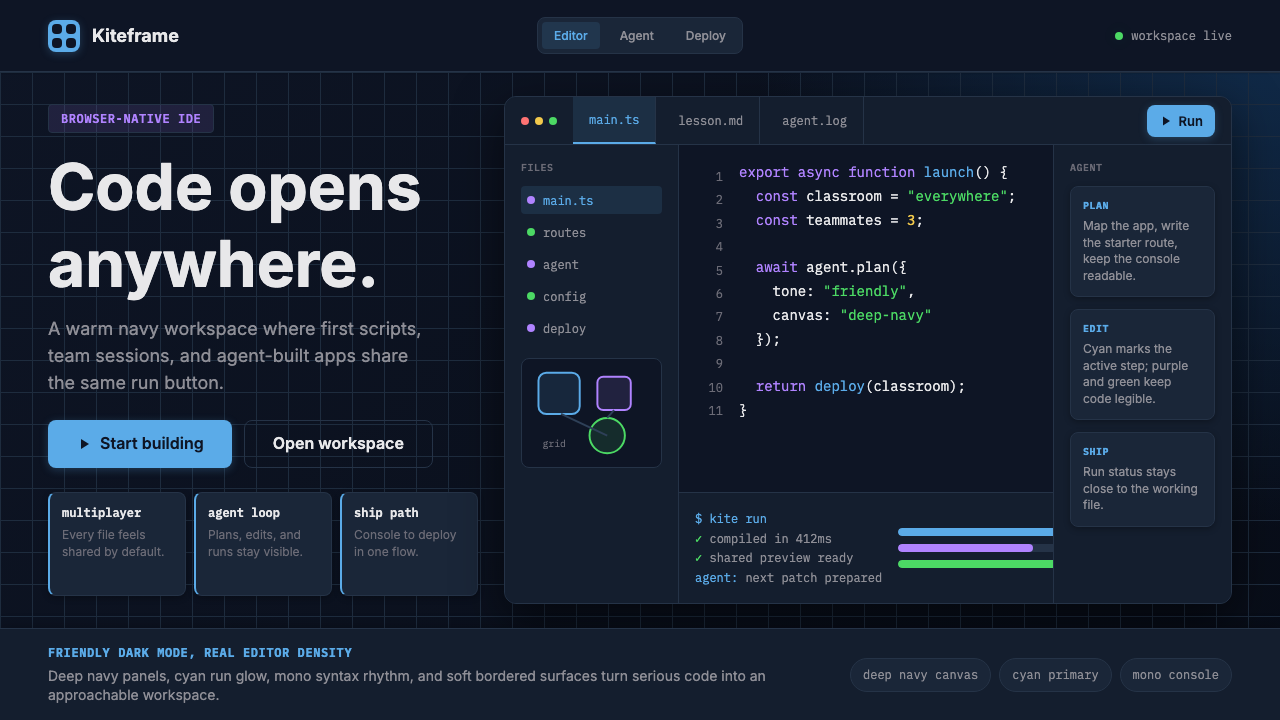 Replit Browser IDE BlueFriendly code gravity. Cyan run lights and mono panels warm the deep navy IDE…
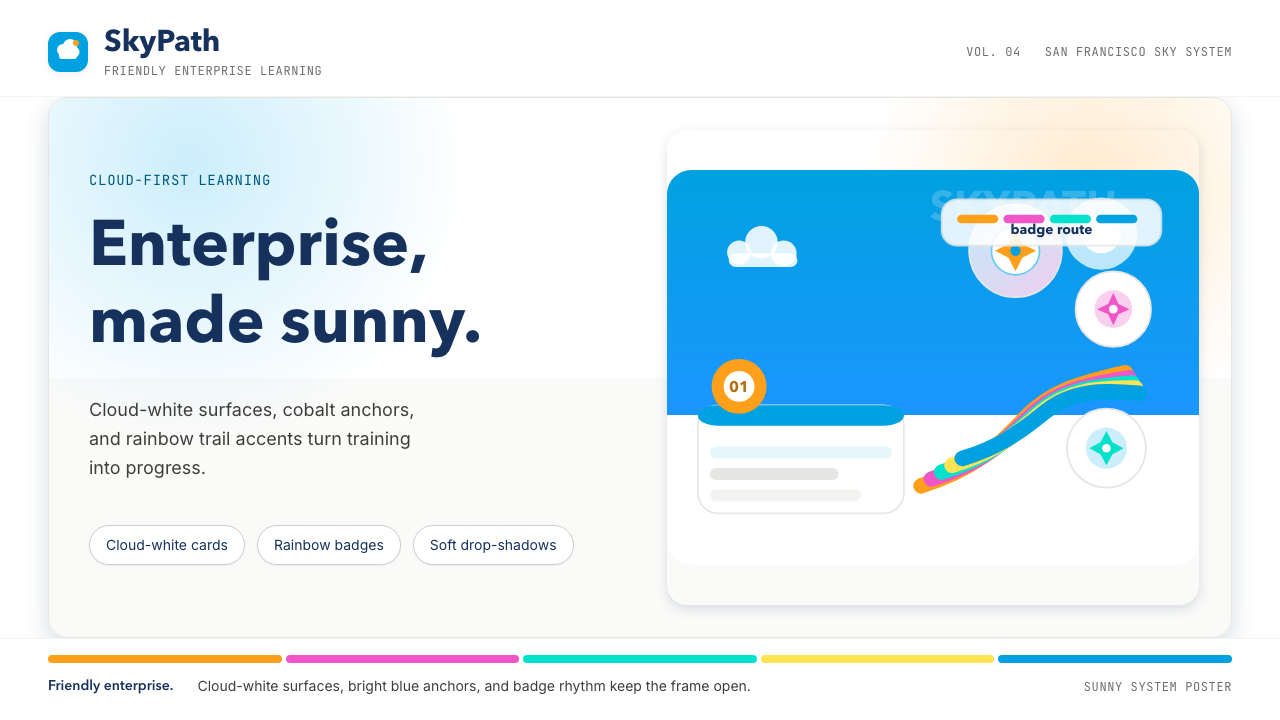 Salesforce TrailheadFriendly enterprise glows. Cloud-white, cobalt, and rainbow badges keep it wa…
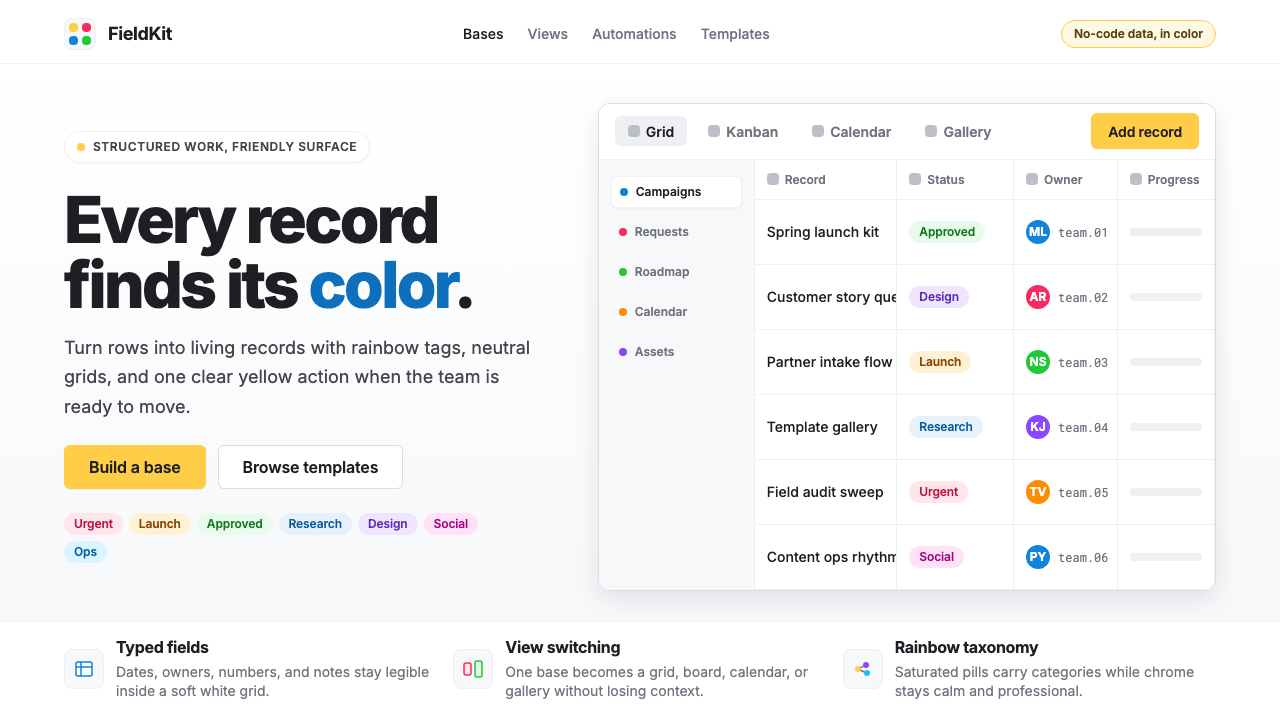 Airtable Spreadsheet-RainbowWork becomes celebratory. Inter grids stay white while rainbow pills and yell…
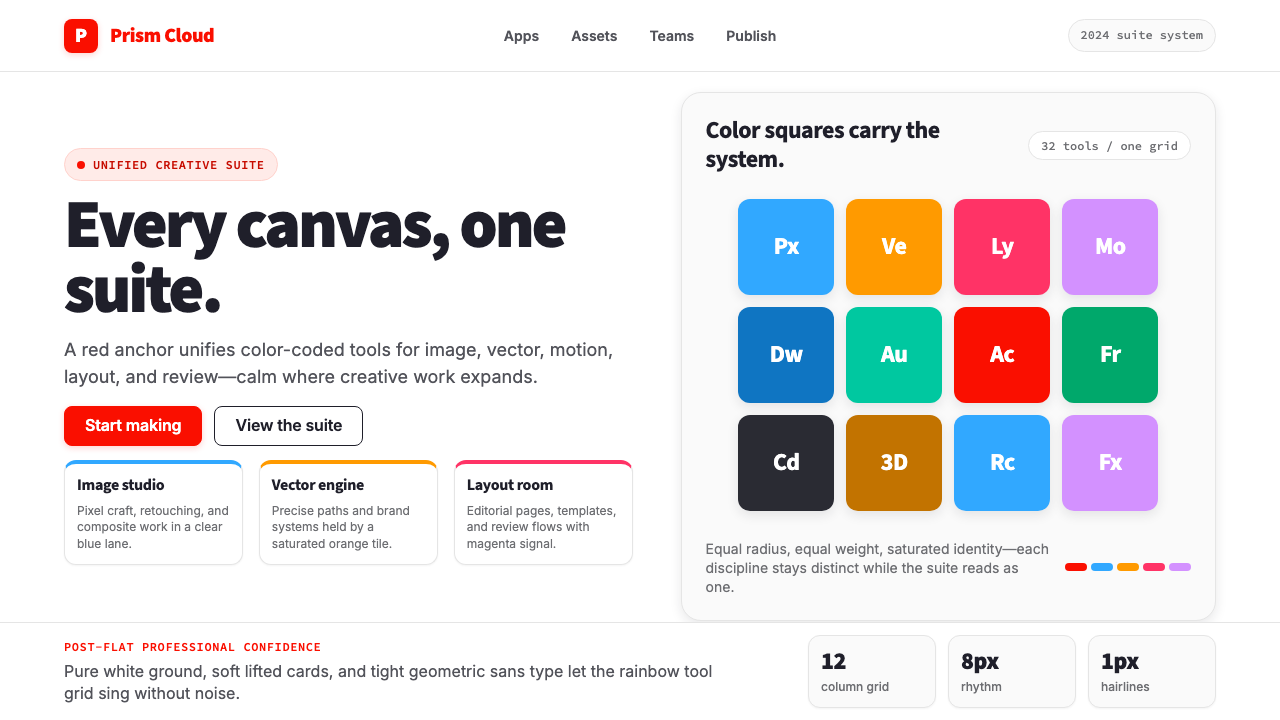 Adobe Creative CloudUnified, not uniform. Red anchor, white space, and saturated app tiles organi…