What is Loom Async-Video Purple?
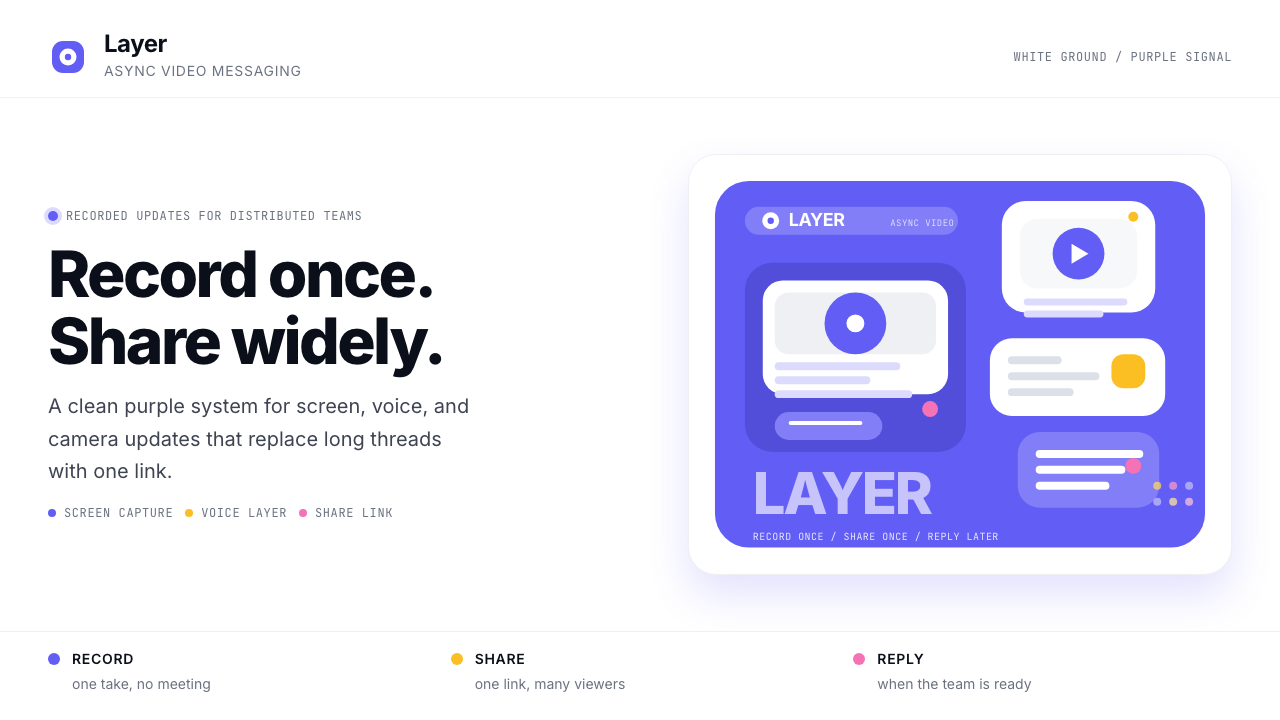
Loom made async video a category — and its electric purple-on-white identity made the record button feel as natural as sending an email.
Loom Async-Video Purple in brief
Loom Async-Video Purple is the visual language developed by Loom between its founding in 2015 and a series of refinements through the early 2020s. It centers on a single, saturated electric purple — a hue that sits between indigo and violet, charged and unmistakable — set against a pure white ground. Supporting it are a modernist sans-serif typeface, generous rounded corners on every interactive element, and a compact iconographic vocabulary built around record buttons, video thumbnails, and playback controls.
The aesthetic belongs squarely to the friendly modernist SaaS wave that crested during the pandemic era, when distributed teams needed tools that felt approachable rather than corporate, casual rather than formal. Loom's identity resolved a tension that many productivity tools still struggle with: it needed to look professional enough for enterprise sales while feeling light enough that a startup founder would happily record a two-minute update instead of writing a long email. The electric purple solved this by being confident without being severe — energetic without being playful.
What distinguishes the style from generic SaaS purple is its discipline. The palette is genuinely minimal: primary purple for emphasis and brand moments, pure white for backgrounds and cards, near-black for body text and structural elements, with a controlled range of soft grays for secondary surfaces and dividers. There are no gradients for decoration, no drop shadows for texture — only subtle elevation cues that reinforce interactive affordances. Every visual decision points back to one product truth: this is software that records, shares, and plays back video, and nothing in the interface should distract from that clarity.

Where does Loom Async-Video Purple come from?
Loom was founded in San Francisco in 2015 by Joe Thomas, Shahed Khan, and Vinay Hiremath. The founding insight was deceptively simple: most of what people use meetings and emails for could be handled better by a short, asynchronous screen recording. The early product was raw and the early brand was provisional, but the company grew steadily on the strength of the idea alone — a Chrome extension that let you record your screen and face simultaneously and share a link in seconds.
The brand found its definitive visual form roughly between 2019 and 2022, during a period of rapid user growth accelerated by the shift to remote work. The electric purple emerged as the signature color during this phase, anchoring a comprehensive redesign that replaced the startup's earlier, less distinctive palette. The choice of purple was not arbitrary: in the broader SaaS color landscape dominated by blues and greens, a confident purple stood out clearly on a crowded app dock and in a cluttered email inbox. It communicated something different from productivity-tool blue — more creative, more personal, less infrastructural.
Loom's visual identity was shaped in part by the constraints and expectations of the video medium it was built around. Unlike a project management tool or a cloud storage service, Loom's core interface is always adjacent to a camera and a screen — its product UI needed to feel comfortable alongside a user's face. This pushed the design toward warmth and approachability rather than the colder rationalism of enterprise dashboards. Rounded corners, generous whitespace, friendly iconography, and that electric purple all work together to signal that recording yourself is a perfectly normal, low-stakes activity.
The Atlassian acquisition in October 2023, at nine hundred seventy-five million dollars, marked the end of Loom's independent brand chapter and the beginning of its integration into the Atlassian ecosystem alongside Jira, Confluence, and Trello. The visual language has evolved under Atlassian's stewardship, but the electric purple and the core iconographic vocabulary — the record button, the play triangle, the video thumbnail grid — remain recognizable anchors, a testament to how effectively the original identity encoded the product's purpose into visual form.
What defines the Loom Async-Video Purple look?
Signature Purple
The electric purple at the heart of the system is a high-saturation, blue-leaning violet that reads as energetic and distinctive without veering into aggression. It is used purposefully and sparingly: primary calls to action, active states, brand moments, and key iconography. Against pure white, it achieves maximum contrast and presence; against light gray surfaces, it anchors hierarchy without overwhelming secondary content. The color's personality — confident, creative, slightly warm — defines the emotional register of the entire visual system.
Pure White Ground
The background palette commits to pure white rather than off-white or cream. This is a product-driven decision: video content — with its natural photographic color variation — needs a neutral, predictable container. Pure white ensures that thumbnails, avatars, and screen recordings sit cleanly without color contamination. Secondary surfaces use a very light, nearly imperceptible gray to create gentle separation between panels and cards, maintaining the overall sense of openness and air.
Rounded Corners
Every container in the system — cards, buttons, input fields, modal dialogs, video thumbnail frames — carries a consistently generous rounded corner radius. The effect is immediately legible as friendly and approachable rather than formal or authoritarian. Rounded corners also serve a functional purpose in a video-forward interface: they mimic the natural aspect of a camera viewfinder or a television screen, softly signaling that this is a space where recorded moments live. The consistency of the radius across all interactive elements creates visual cohesion without requiring additional unifying devices.
Record-Button Iconography
The visual vocabulary is organized around a small set of highly legible icons: the filled circle that means record, the triangle that means play, the square that means stop, the camera outline, the screen-share frame. These are not decorative — they are functional symbols drawn with enough weight and simplicity to be immediately parsed at any size. The record button, in particular, becomes a brand device: a filled circle inside a ring, rendered in electric purple, is Loom's most reduced and most recognizable mark.
Modernist Sans-Serif Typography
The typeface system uses a neutral, geometric sans-serif that prioritizes readability and screen legibility over expression. Type is set with clear hierarchical contrast: large, moderately heavy headings communicate section structure at a glance, while body text is sized for comfortable reading without crowding. The overall typographic tone is clean and functional, avoiding the expressive extremes of display typefaces on one end and the invisible blandness of system defaults on the other. Letter-spacing is close to optical rather than mathematical, giving text blocks a natural, editorial feel.
Subtle Elevation and Shadow
Unlike the flat, zero-shadow commitment of strict minimalist systems, the Loom aesthetic uses a very restrained soft shadow to distinguish interactive elements — cards, dropdowns, modals — from the background plane. The shadows are diffuse rather than hard-edged, small rather than dramatic, and used only to encode interaction affordance rather than to create decorative depth. The effect is a clean sense of layering — foreground from background, active from passive — without the heaviness of skeuomorphic depth effects.
Video-Native Layout Logic
Layouts in the Loom style are organized around the video thumbnail as a primary content unit. Grids of thumbnails — typically displayed in two-up or three-up arrangements on desktop — drive the spatial logic of the interface, with text labels, duration badges, and avatar chips arranged in close proximity to each video card. This thumbnail-grid logic differs fundamentally from text-list or icon-grid interfaces: proportions are dictated by the widescreen aspect ratio of video rather than by typographic line heights or icon sizes, giving Loom-style layouts their distinctive, gallery-like horizontal rhythm.

Who shaped Loom Async-Video Purple?
Co-founder and CEO of Loom through its independent years. Thomas was the primary public voice of the company's mission — the conviction that video is a better communication medium than text for a large class of workplace interactions — and his leadership shaped both the product direction and the brand ethos. The friendly, unhurried quality of the Loom visual identity reflects the same argument: recording a message should feel no more formal than sending one.
Co-founder of Loom, responsible in the early years for growth and go-to-market thinking. Khan's perspective on viral product loops — the idea that every Loom video sent is itself a product demonstration to the recipient — influenced the identity's emphasis on the shareable link and the playback experience as brand surfaces as important as the recording interface itself.
Co-founder and CTO of Loom. Hiremath's engineering leadership addressed the deep technical challenge of making low-latency video recording and instant link sharing feel effortless — a challenge that made the product's friendly, casual brand promise technically non-trivial to keep. The visual language's emphasis on speed cues (instant thumbnails, real-time record indicators) reflects the technical architecture beneath it.
Following the 2023 acquisition, Loom's visual language began a process of alignment with Atlassian's broader design system — itself a mature, blue-dominant enterprise palette built around Jira and Confluence. The ongoing negotiation between Loom's electric purple identity and Atlassian's more utilitarian blue vocabulary is a live case study in what happens to an acquired brand's design language when it must integrate into a larger system while preserving recognizability.
How do you use Loom Async-Video Purple today?
Loom Async-Video Purple is highly legible as a design reference for any product in the async communication, screen-recording, or knowledge-sharing space. More broadly, it represents a mature formulation of the friendly modernist SaaS aesthetic — making it directly applicable to any tool that needs to feel both professional and approachable: onboarding flows, collaboration dashboards, tutorial platforms, and lightweight productivity apps.
For presentation slides, the style works best when the electric purple is used as a focused accent rather than a dominant field. Cover slides benefit from a strong typographic statement on white, with the purple applied to a single headline word, a geometric shape accent, or an icon. Content slides should organize information in thumbnail-friendly proportions — think wide cards rather than tall lists — reflecting the video-native spatial logic of the source aesthetic. Data slides work well in this system when charts are kept to clean outlines and filled only in purple for the primary data series, with grays for supporting series. Avoid filling backgrounds with purple; its power comes from contrast against white, not from saturation.
For web UI, dashboards and settings pages are the most natural fit. Define a layout grid with generous column gutters and use pure white as the page background. Reserve the electric purple exclusively for primary action buttons, active navigation states, and key badges or indicators — do not distribute it across decorative elements. Card components should use a very light shadow for lift rather than heavy borders. For pricing pages, the purple naturally signals the recommended tier when applied to a highlighted card, following the convention Loom itself uses to distinguish its paid plans.
For editorial and marketing applications, the style supports confident, video-forward compositions. Feature announcement pages work well with alternating white and very light gray section backgrounds, broken by full-bleed video preview moments in a widescreen frame outlined in purple. Social cards and email headers benefit from a white background with a single purple element — a record-button icon, a headline word, an underline accent — that reads at thumbnail scale. Avoid using photographic backgrounds behind the purple; it is calibrated for white and loses its charge on complex textures.
The most common mistake when applying this style is treating the electric purple as a background color. Loom uses it almost exclusively as a foreground element — on white, it is unmistakable; as a full background, it becomes heavy and loses the fresh, spacious quality that defines the system. A related error is reaching for additional accent colors to compensate for a perceived lack of variety — the system's restraint is deliberate. If a layout feels monotonous, the solution is better typographic contrast and more considered spacing, not the introduction of a secondary palette.

Loom Async-Video Purple — FAQ
How is Loom Async-Video Purple different from other SaaS purples?
Most SaaS purples lean either cooler and more blue (toward a corporate indigo) or warmer and more pink (toward a consumer violet). Loom's purple sits at a distinctive midpoint — saturated enough to be unmistakable, blue-leaning enough to stay professional, and deployed with enough restraint that it never overwhelms the white ground it lives on. The key differentiator is disciplined scarcity: in genuine Loom-derived work, the purple appears on perhaps ten to fifteen percent of the surface area, concentrated in high-value moments. Imitators tend to increase saturation and surface coverage simultaneously, which is exactly what dilutes the color's authority.
Does this style work for a dark-mode version of a product?
A dark variant is feasible but requires significant rethinking rather than simple color inversion. On a dark background, the electric purple needs to be lightened slightly — its full-saturation version against pure black can read as harsh — and the white text elements need careful hierarchy calibration. The video thumbnail problem is also different in dark mode: thumbnails that looked clean on white can appear muddy against dark surfaces, requiring more deliberate framing. Loom itself offers a dark mode, but the electric purple shifts perceptibly in that context — if you are building a dark variant, treat it as a separate design problem rather than an automatic inversion.
Can this aesthetic work for a product that has nothing to do with video?
The foundational principles — electric purple on white, modernist sans-serif, rounded corners, restrained shadow, clean iconography — transfer well to any async or remote-work tool, and broadly to any SaaS product that wants to feel approachable and contemporary. What does not transfer cleanly is the video-native spatial logic: thumbnail grids and widescreen proportions are meaningful in a video context and can look arbitrary in, say, a text-heavy analytics tool. Use the color system and typographic approach freely; adapt the layout proportions to your actual content unit rather than importing the thumbnail-grid rhythm wholesale.
How should motion and animation be handled in this style?
Motion in the Loom aesthetic is purposeful and quick. Transitions are brief — just long enough to confirm state change — and use ease-out curves that feel snappy rather than elastic or springy. The record button's pulsing ring when active is the canonical motion reference: it communicates a live state through a simple, repeating radial animation rather than complex morphing. Avoid long entrance animations for content, decorative particle effects, or any motion that draws attention away from the video content itself. If in doubt, halve the duration and simplify the easing — the aesthetic values clarity over spectacle.
Is the style appropriate for enterprise or regulated-industry contexts?
The Loom aesthetic sits at the approachable end of the professional-to-enterprise spectrum — it signals modernity and usability before it signals authority or seriousness. For enterprise contexts, the style can be tightened: reduce corner radii slightly, increase typographic weight for headings, use the electric purple more sparingly, and ensure all data displays prioritize density and precision over visual comfort. For strictly regulated industries — healthcare, legal, financial compliance — where the aesthetic convention leans toward established neutrality, the electric purple may signal too much personality for the context, and a more restrained blue or gray-dominant system may be preferable.
Related design styles
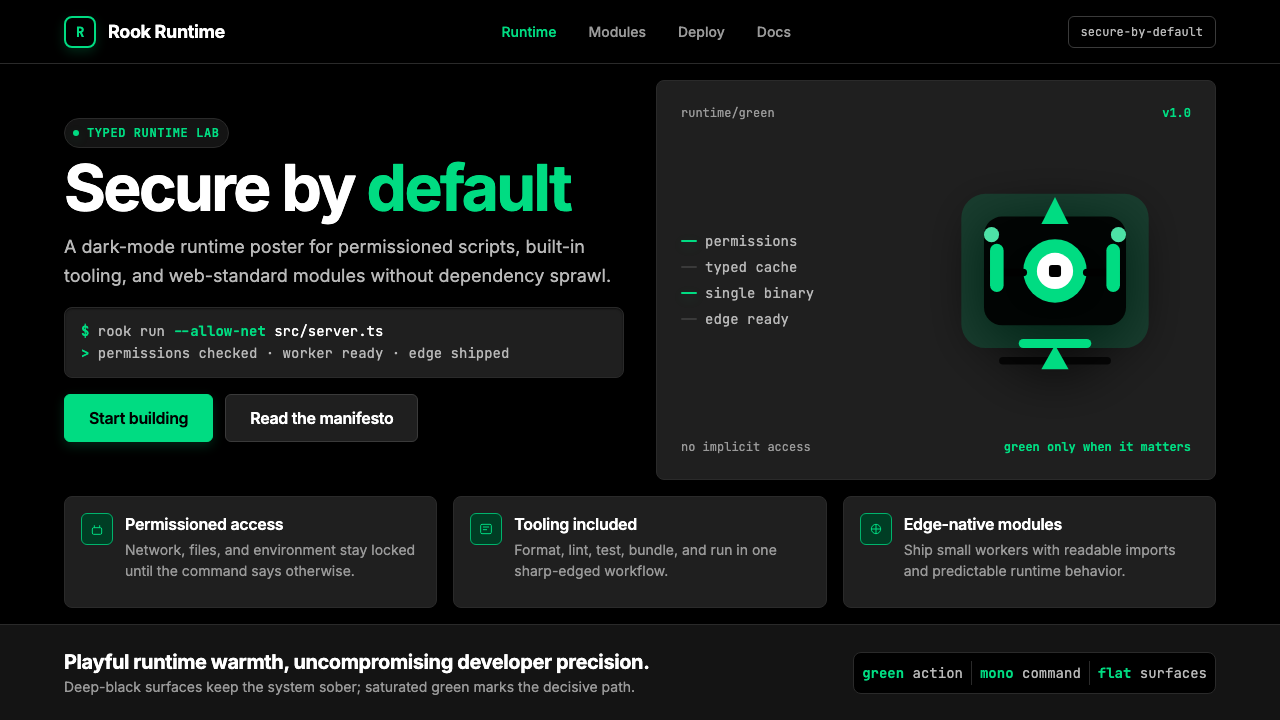 Deno Runtime-GreenWarm precision on black. Saturated green, Inter, and mono code turn security…
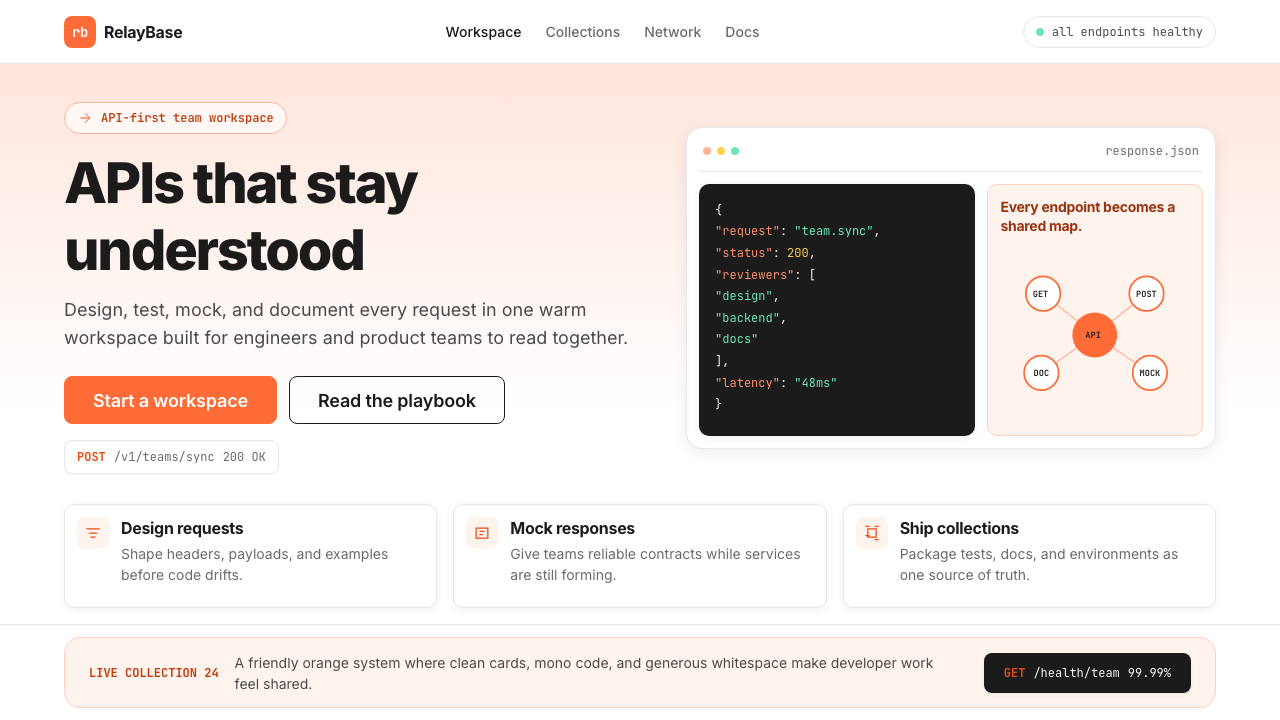 Postman 2024Warm APIs feel approachable. Orange gradients, Inter headlines, and dark mono…
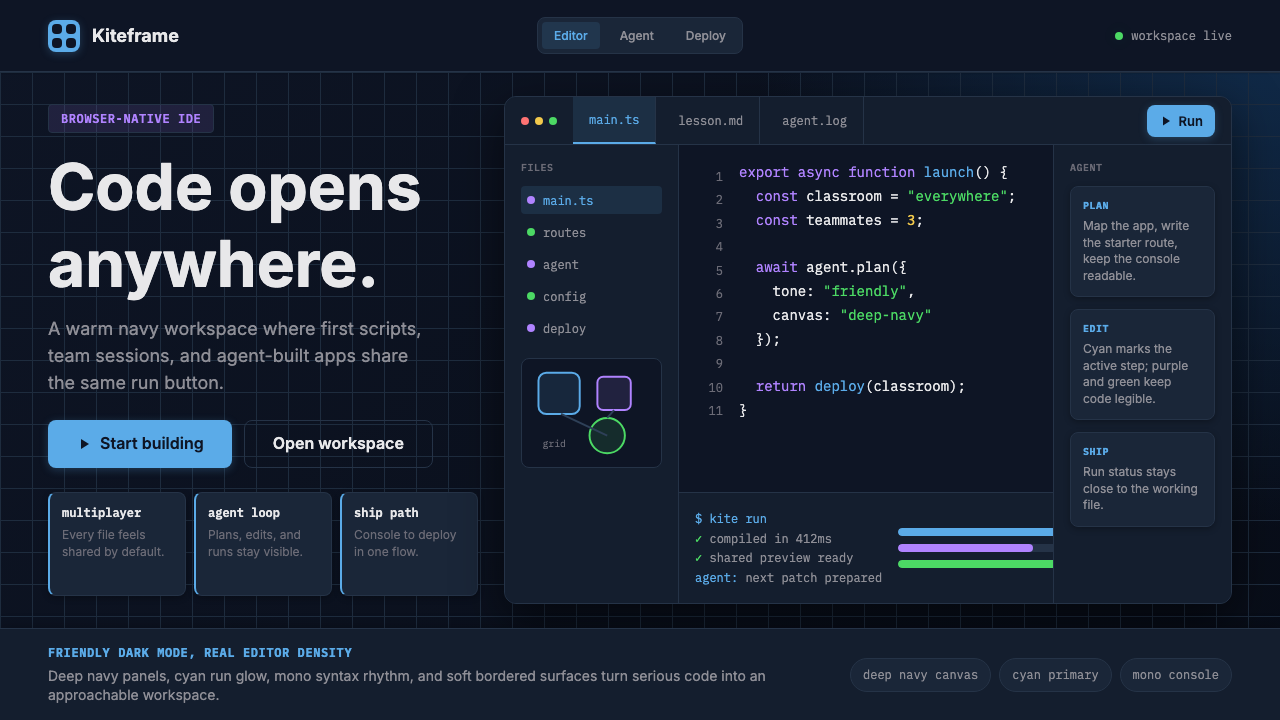 Replit Browser IDE BlueFriendly code gravity. Cyan run lights and mono panels warm the deep navy IDE…
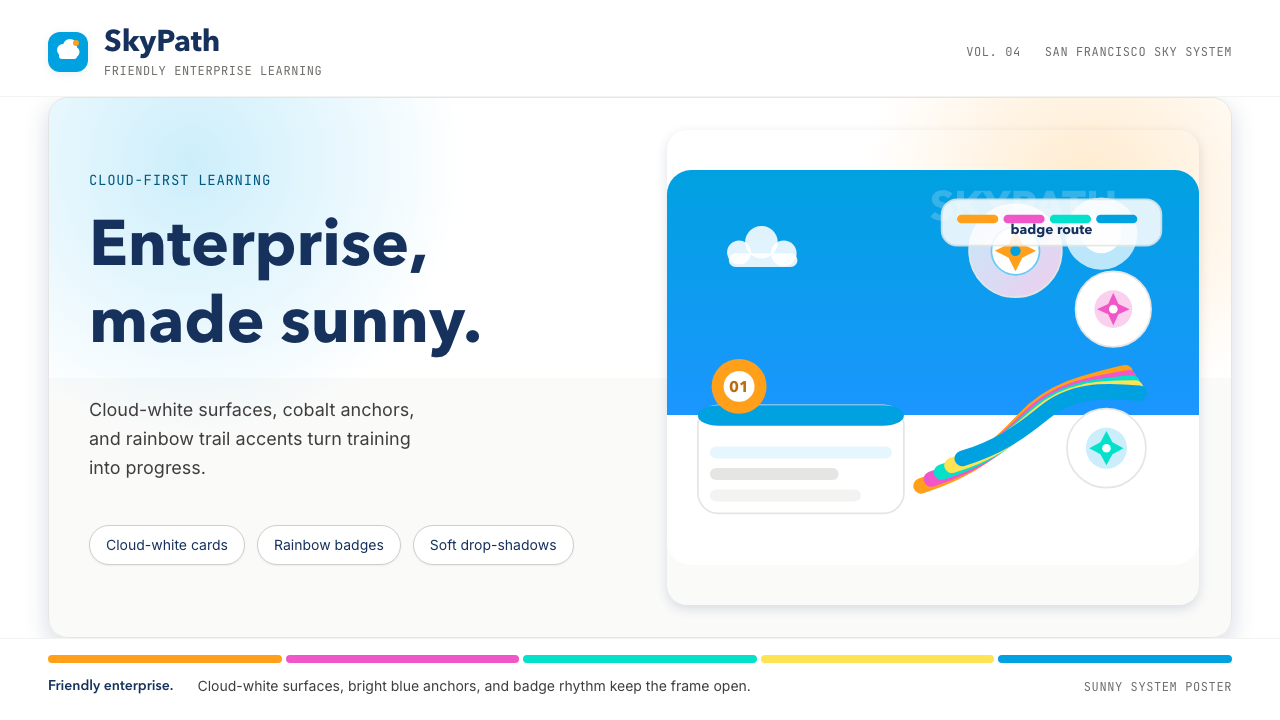 Salesforce TrailheadFriendly enterprise glows. Cloud-white, cobalt, and rainbow badges keep it wa…
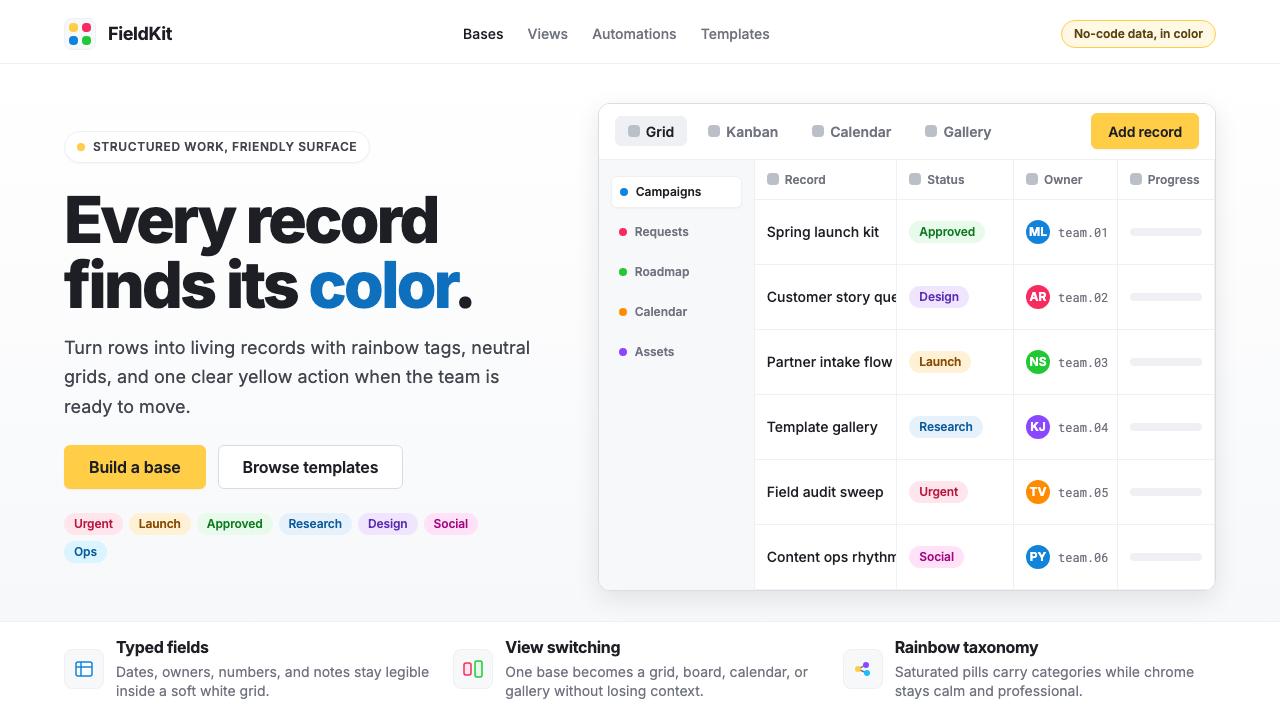 Airtable Spreadsheet-RainbowWork becomes celebratory. Inter grids stay white while rainbow pills and yell…
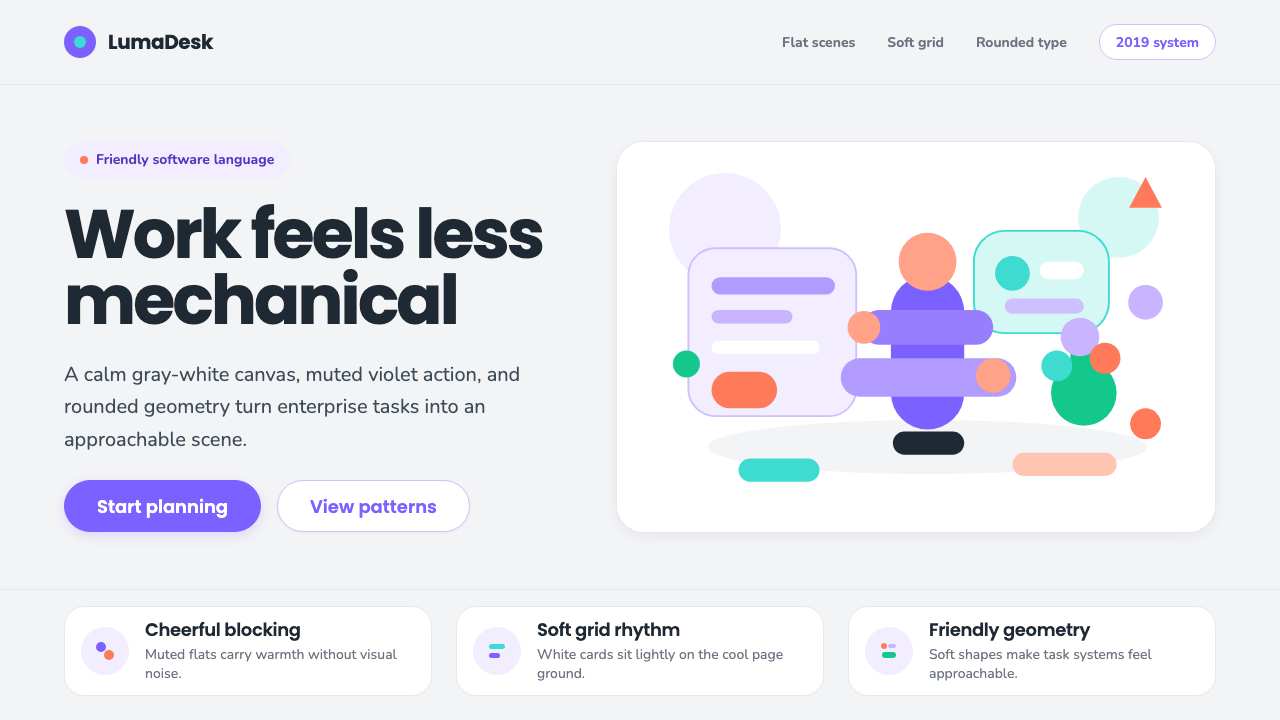 Corporate Memphis (Alegria)Friendly by design. Violet flats and rubber-hose geometry soften the SaaS gri…