What is Salesforce Trailhead?
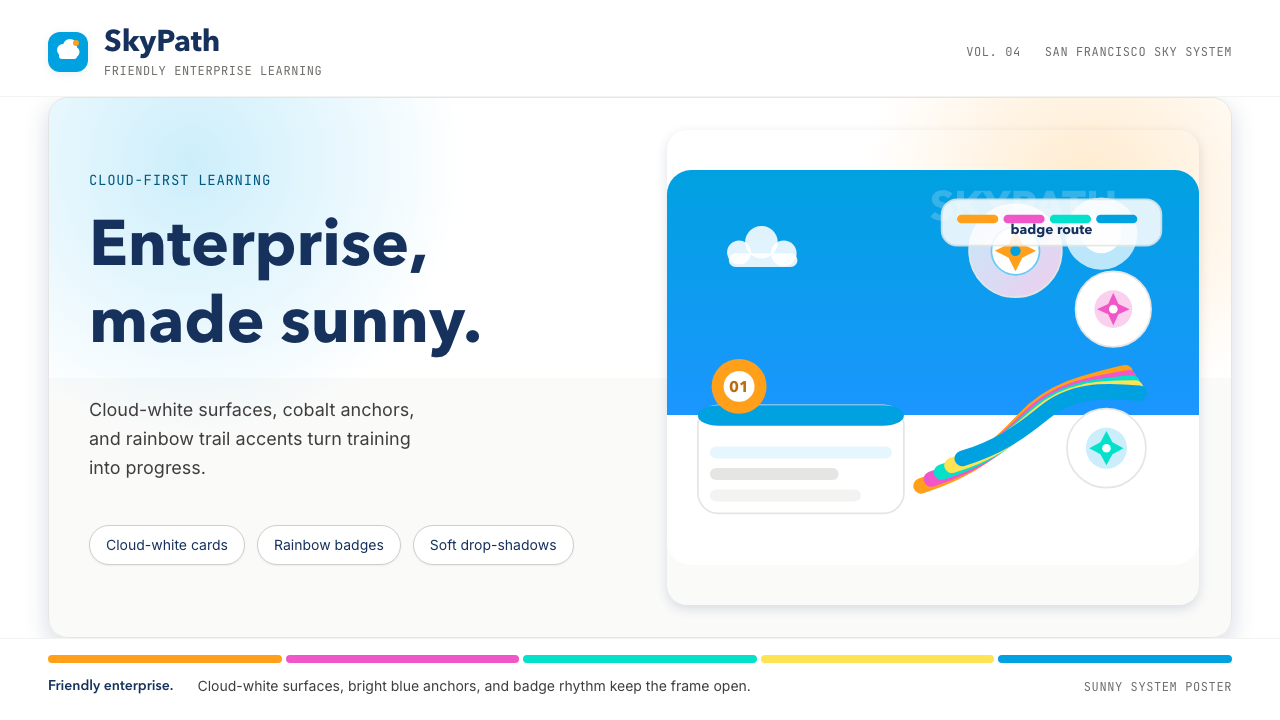
Trailhead proves that enterprise software can be warm, playful, and genuinely inviting — swapping cold corporate gloss for sunny skies, rainbow badges, and a cast of Pixar-flavored mascots.
Salesforce Trailhead in brief
Salesforce Trailhead is the visual identity system anchoring Salesforce's online learning platform and, more broadly, the friendliest expression of its enterprise brand. The system marries a signature cobalt blue — instantly recognizable as the Salesforce corporate color — with cloud-white surfaces, a warm trail-accent palette that spans orange, magenta, cyan, and bright yellow, and a family of three-dimensional mascots rendered in a style clearly indebted to contemporary animated film. The result is a design language that occupies rare territory in enterprise software: it is unambiguously professional and simultaneously inviting to newcomers who might otherwise find CRM tools intimidating.
At its structural core, Trailhead draws on the Lightning Design System, Salesforce's open design framework. The visual vocabulary includes generously rounded card corners, soft layered drop-shadows that suggest elevation without harsh contrast, badge rosettes that gamify progression through learning trails, and a typographic system rooted in clean, open sans-serif letterforms with comfortable line spacing. Illustrations and mascots are deliberately three-dimensional and warm-lit, recalling the character design of studio animation rather than the flat icon systems common in business software.
What distinguishes Trailhead aesthetically is not any single element but the consistency with which warmth is layered into an otherwise structured system. Sky-gradient hero panels evoke an outdoor trail rather than a quarterly dashboard. Mascots — each with a distinct personality — appear throughout to guide, celebrate, and humanize otherwise dry procedural content. Badges function as both achievement markers and miniature design objects, their circular rosette forms drawing from heraldic and merit-badge traditions. Together, these choices construct a visual argument: learning difficult enterprise tools should feel like an adventure, not a compliance exercise.

Where does Salesforce Trailhead come from?
Salesforce was founded in San Francisco in 1999 by Marc Benioff and Parker Harris, among others, with a deliberate mission to disrupt the enterprise software market by delivering CRM entirely through a web browser — eliminating the costly on-premise installations that defined the industry at the time. From the outset, the company cultivated an unusually expressive brand for a B2B software vendor, including the prominent use of a cloud icon as both logo and cultural shorthand for its delivery model. The 'No Software' slogan and a casual, conference-culture energy set a tone that would eventually find its fullest expression in Trailhead.
The Trailhead learning platform launched in 2014, initially as a way to help Salesforce customers and partners ramp up on the company's rapidly expanding product suite. The visual identity that emerged around it was more playful than the main Salesforce brand — introducing trail metaphors, outdoor-adventure iconography, and a modular badge system modeled loosely on scouting and professional certification traditions. The badge rosette design, with its layered rings and central emblem, became the platform's most distinctive visual motif, appearing on physical merchandise, event installations, and digital interfaces alike.
The mascot program took shape around 2016 with the introduction of Astro, the raccoon in a spacesuit and cowboy hat — a character designed to be simultaneously adventurous, approachable, and slightly absurd in the way that the best animated sidekicks are. Codey the blue bear, Cloudy the pink cloud, Genie the blue spirit, and others followed, each associated with specific product lines or learning tracks. The mascot aesthetic drew explicitly from the character pipelines of studios like Pixar: characters are built with simplified but volumetric forms, warm and directional lighting, expressive faces, and a color palette that remains legible even at small sizes on mobile screens.
The current visual system, consolidated roughly between 2022 and 2024, reflects a matured version of those founding impulses. The Lightning Design System provides the structural scaffolding — consistent spacing rhythms, accessible color contrast ratios, component libraries for both web and mobile — while the Trailhead layer adds the warmth, personality, and gamification elements that differentiate the learning experience from the main product UI. Sarah Franklin, who served as president of Salesforce and chief evangelist, and creative lead Tim Mason were among the voices shaping the platform's tone during its most expansive growth phase. Dreamforce, Salesforce's annual conference in San Francisco, serves as the largest live expression of the visual system, where mascots appear as oversized installations and the full color range of the trail palette saturates the event environment.
What defines the Salesforce Trailhead look?
Signature Blue and Cloud White
The Salesforce cobalt blue — a saturated, mid-range blue with slight warmth — functions as the system's primary anchor. It appears in hero panels, primary buttons, navigation bars, and brand-identifying elements. Against it, cloud white provides the dominant surface color, giving the overall palette an airy, sky-like quality. The blue-white relationship is not the cold contrast of purely corporate palettes; it reads as daylight, not fluorescence.
Rainbow Trail Accent Palette
Beyond the core blue and white, Trailhead employs a structured accent range that spans warm orange, vivid magenta, bright cyan, and energetic yellow-green. These hues appear in badge coloring, data visualizations, category tags, and hero illustrations. They are deployed individually — rarely all at once — to differentiate trails, modules, and skill tiers. The effect is celebratory and navigational simultaneously: color means something specific rather than being purely decorative.
Badge Rosette Gamification
The badge is Trailhead's most iconic design object. Each badge is a circular rosette — layered rings radiating from a central emblem — rendered with enough dimensional detail to feel like a physical award even in digital form. Badges are organized by module, trail, and superbadge tier, using color and emblem iconography to signal their category. The form language borrows from scouting merit badges, military decorations, and professional certification seals, translating that vocabulary of earned achievement into a software learning context.
Pixar-Inflected 3D Mascots
Astro the raccoon, Codey the blue bear, Cloudy the cloud, and Genie are modeled with the character-design principles of contemporary animated film: simplified but volumetric silhouettes, warm three-point lighting, large expressive eyes, and a proportional system that reads as friendly rather than realistic. They appear in hero illustrations, loading states, error pages, and event installations. Each mascot has a defined personality — Astro is adventurous, Codey is earnest, Cloudy is nurturing — which gives the system emotional range beyond a single tone.
Rounded Cards and Soft Elevation
UI components in the Trailhead system use generously rounded corners and layered soft shadows to communicate elevation and grouping. This stands in deliberate contrast to the sharp-edged, flat interfaces common in enterprise dashboards: the rounded card reads as approachable and modern rather than authoritative and rigid. Shadows are subtle and multi-layered, suggesting depth without creating visual heaviness. The combined effect is a surface that feels like it exists slightly off the background — lifted, inhabitable.
Sky and Gradient Hero Panels
Hero panels and section backgrounds frequently use sky-gradient treatments — gentle transitions from a lighter tone at the top to a richer blue or complementary hue toward the bottom, occasionally punctuated by illustrated cloud elements. These gradients are not the hard-edged or neon gradients of other contemporary styles; they are naturalistic and calm, evoking an actual sky rather than a digital effect. The device consistently reinforces the trail-as-outdoor-adventure metaphor that underlies the entire platform.
Open Sans-Serif Typography with Expressive Scale
The typographic system favors open, humanist sans-serif forms with generous letter spacing and comfortable line heights — qualities that prioritize readability across varied screen sizes and proficiency levels. Hierarchy is established through scale and weight contrast: large, bold headlines signal a new section or achievement moment, while body text maintains an unhurried, accessible rhythm. The type system never feels compressed or corporate; there is whitespace around everything, reinforcing the platform's promise that learning here is comfortable and self-paced.

Who shaped Salesforce Trailhead?
Benioff co-founded Salesforce in 1999 and has remained its most visible spokesperson, establishing the cultural tone that made Trailhead's warmth and mission-driven language possible. His early insistence on cloud delivery, philanthropic branding, and the Ohana (family) concept of corporate culture created the conditions within which a learning platform built around adventure metaphors and cartoon mascots could feel authentic rather than grafted on. Dreamforce, the annual conference he championed, is the platform's largest physical expression.
As Salesforce's co-founder and long-serving CTO, Harris oversaw the technical architecture underlying the Lightning Design System — the structural framework on which Trailhead's visual consistency depends. His team's decision to build and open-source a comprehensive design system ensured that the Trailhead identity could scale across hundreds of product surfaces without fragmenting. The design system's accessibility commitments, embedded at the engineering level, also reflect values consistent with Trailhead's inclusive learning mission.
As Salesforce president and chief evangelist during Trailhead's highest-growth years, Franklin was instrumental in shaping the platform's voice, mission framing, and community culture. She championed the Trailblazer identity — the term applied to Salesforce learners and community members — which gave the platform's users a name and a narrative about themselves as pioneers. Her public presence at Dreamforce and in Trailhead marketing helped establish the platform's tone as aspirational, inclusive, and career-transforming rather than narrowly technical.
Mason served as a key creative lead during the period when the Trailhead visual system took its mature form. His work on the mascot program, badge design language, and the overall illustration direction helped establish the Pixar-inflected warmth that distinguishes the platform from conventional enterprise design. The mascot roster — with its distinct personalities and product associations — reflects a character design philosophy that treats each figure as a long-term brand asset rather than a one-off campaign device.
Astro the raccoon in a spacesuit and cowboy hat is Trailhead's flagship mascot and the clearest single expression of the platform's design values. The character's hybrid costume — part astronaut, part cowboy — literalizes the platform's dual promise of frontier exploration and grounded community. Astro's design balances broad cultural legibility (the raccoon is mischievous but friendly in North American popular culture) with the volumetric, warmly lit character aesthetic of modern animation. As a mascot, Astro demonstrates how the Trailhead system uses character as a carrier for brand values in contexts where typography and color alone would feel insufficient.
How do you use Salesforce Trailhead today?
Trailhead is one of the more technically complex enterprise design styles to apply outside its native context, because so much of its warmth derives from the mascot and illustration layer rather than from the structural components alone. Applying it well means understanding which elements are transferable — the color logic, card architecture, badge motif, and typographic warmth — and which require purpose-built illustration work that cannot simply be substituted with stock imagery.
For presentation slides, the Trailhead system works best when the cover slide commits fully to the sky-and-blue hero treatment: a gradient background moving from lighter to richer blue, a mascot or bold illustrative element anchoring one side, and a large, confident headline in white or cream. Content slides should follow a clean card grid — each section framed as a lifted panel with soft shadow — with accent colors used to tag distinct categories or progression stages. Data slides benefit from the badge motif: progress metrics, completion rates, and certification counts are natural candidates for circular rosette framing, which makes numbers feel like achievements rather than statistics.
For web dashboards and product UI, the approach translates into generous border-radius on all interactive components, a white or very light blue primary surface, and the cobalt blue reserved for primary actions and key navigational anchors. Soft multi-layer shadows distinguish cards from backgrounds without hard dividers. The accent palette — orange, magenta, cyan, yellow — should be used systematically: one hue per category or data series, never mixed casually. Error and warning states work well in the warmer accent tones; success states align naturally with the brand blue. For pricing pages, the badge form can structure tier comparison: circular tier markers at the top of each column give the layout a gamified, achievement-oriented reading.
For editorial and marketing work, the style supports a hero-driven layout where full-width panels alternate between the core blue and white, with mascots or large illustrations breaking the horizontal rhythm. Body copy should be set with above-average line height and comfortable measure, reinforcing the platform's unhurried, accessible voice. Pull quotes or callouts work well as badge-styled medallions or as text set in the accent palette against a white card. Marketing headlines should be short, active, and aspirational — matching the Trailblazer tone of self-improvement and frontier possibility rather than feature-listing.
A common mistake when applying Trailhead outside its native context is reaching for the full rainbow accent palette all at once, producing a layout that feels chaotic rather than celebratory. Authentic Trailhead usage treats each accent color as a category signal — one color per trail, one hue per data series — and maintains large expanses of white or blue to let those accents breathe. A second common error is substituting soft generic stock illustrations for the three-dimensional mascot aesthetic: flat icon illustrations read as generic enterprise design, not Trailhead. If original character illustration is not feasible, it is better to lean into the badge and typography system and let the mascot layer remain absent than to approximate it with mismatched visual styles.

Salesforce Trailhead — FAQ
Is Trailhead appropriate for products outside the Salesforce ecosystem?
Yes, with care. The Trailhead system is best understood as a template for friendly, gamified learning and community platforms rather than as a Salesforce-specific corporate style. The underlying principles — cobalt-and-white color structure, badge-based achievement framing, rounded warm UI components, sky-gradient heroes — transfer well to any platform where the experience is built around skill development, progression, and community belonging. EdTech products, professional certification platforms, onboarding flows, and developer documentation sites are all natural fits. The mascots are proprietary to Salesforce and cannot be borrowed; original character work in the same spirit would be needed.
How does Trailhead differ from standard enterprise design systems like Material or Fluent?
Material Design and Microsoft Fluent are general-purpose systems built to accommodate a vast range of applications and contexts, optimized for neutrality and extensibility. Trailhead is a purpose-built identity system for a specific emotional register — warmth, encouragement, adventure — layered on top of the Lightning Design System's structural components. Where Material and Fluent are deliberately quiet so that application content speaks first, Trailhead is deliberately expressive: the mascots, badge forms, and sky gradients are not decoration on top of a neutral system but the primary carriers of the platform's value proposition. The trade-off is that Trailhead's expressiveness makes it less neutral and therefore less appropriate for contexts that require emotional restraint.
Can the Trailhead aesthetic work in dark mode?
The canonical Trailhead experience is light-mode: cloud white and cobalt blue on light surfaces, with sky metaphors that depend on a light ground. A dark inversion is possible and has been explored in Dreamforce event environments, where navy and deep indigo grounds are used with bright mascot lighting and luminous badge colors. The key is to treat the dark ground as a night sky rather than a corporate dark theme — retaining the warmth and character rendering quality of the mascots, using the accent palette as luminous spot colors, and keeping badge rosettes bright rather than muting them to fit the background. A dark Trailhead variant fails when the mascots are dimmed and the badges desaturated: that strips the warmth that defines the system.
What kinds of products or brands should avoid the Trailhead style?
Trailhead struggles in contexts where authority, formality, or sobriety are the primary values — legal services, financial compliance tools, healthcare clinical systems, or security-focused enterprise products. In these contexts, the rounded warmth and mascot energy can undermine user confidence rather than build it: a user asked to review a compliance report or authorize a financial transaction needs to feel that the system is serious, not encouraging. The style is also a poor fit for luxury or premium positioning, where restraint and refinement communicate value; Trailhead's celebratory richness reads as populist rather than exclusive. Finally, highly data-dense analytical tools benefit from neutral typography and color systems that prioritize information density over emotional warmth — Trailhead's generosity with spacing and color expression works against legibility at high data volumes.
How important are the mascots to the overall system — can Trailhead work without them?
The mascots are not structurally essential to the system but they are emotionally central to it. Without Astro and company, the remaining Trailhead elements — cobalt and white palette, badge rosettes, rounded card components, sky gradients — cohere into a friendly but generic enterprise-meets-consumer design language rather than a fully distinctive one. The mascots are what make the system feel inhabited and alive rather than merely styled. For applications that cannot license or create equivalent character work, the best strategy is to lean into the badge architecture and the sky-gradient hero vocabulary, which carry the most of the system's identity without requiring original illustration. Attempting to substitute the mascots with stock photography or generic icon packs will produce a result that feels like a Trailhead approximation — recognizable but without the warmth that makes the original compelling.
Related design styles
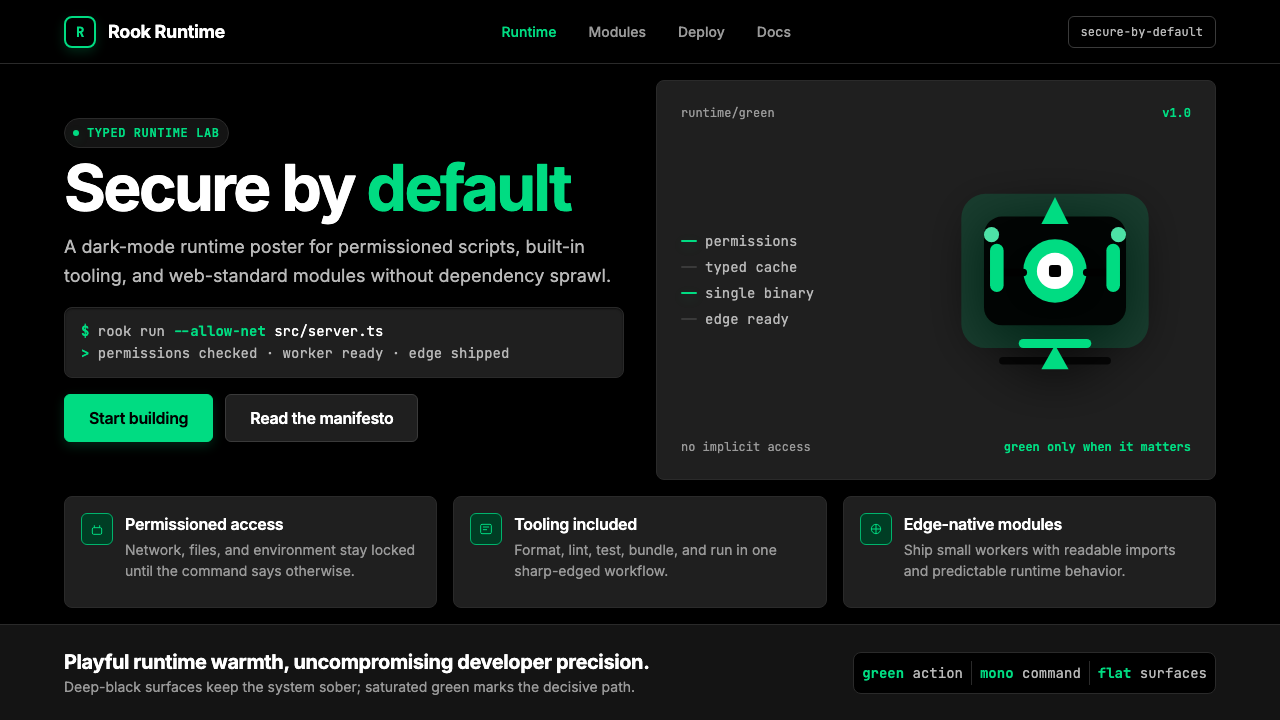 Deno Runtime-GreenWarm precision on black. Saturated green, Inter, and mono code turn security…
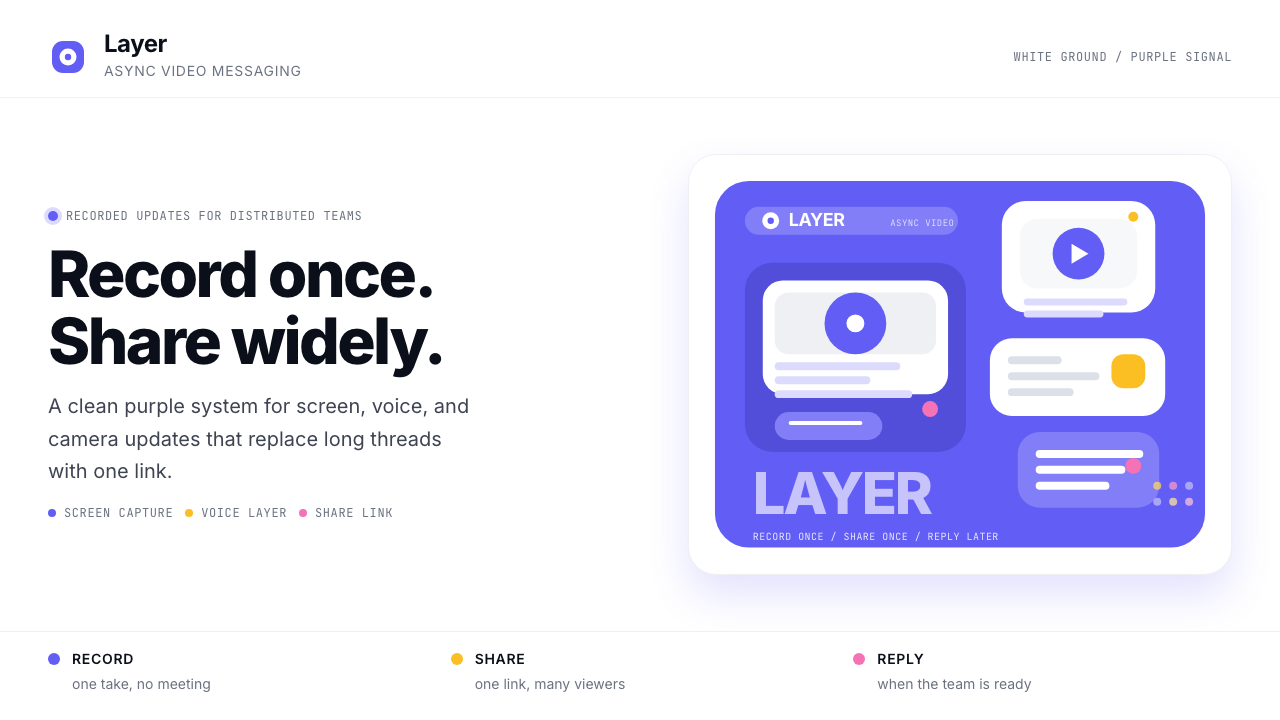 Loom Async-Video PurpleAsync, not meetings. Pure white ground, electric purple, record-button geomet…
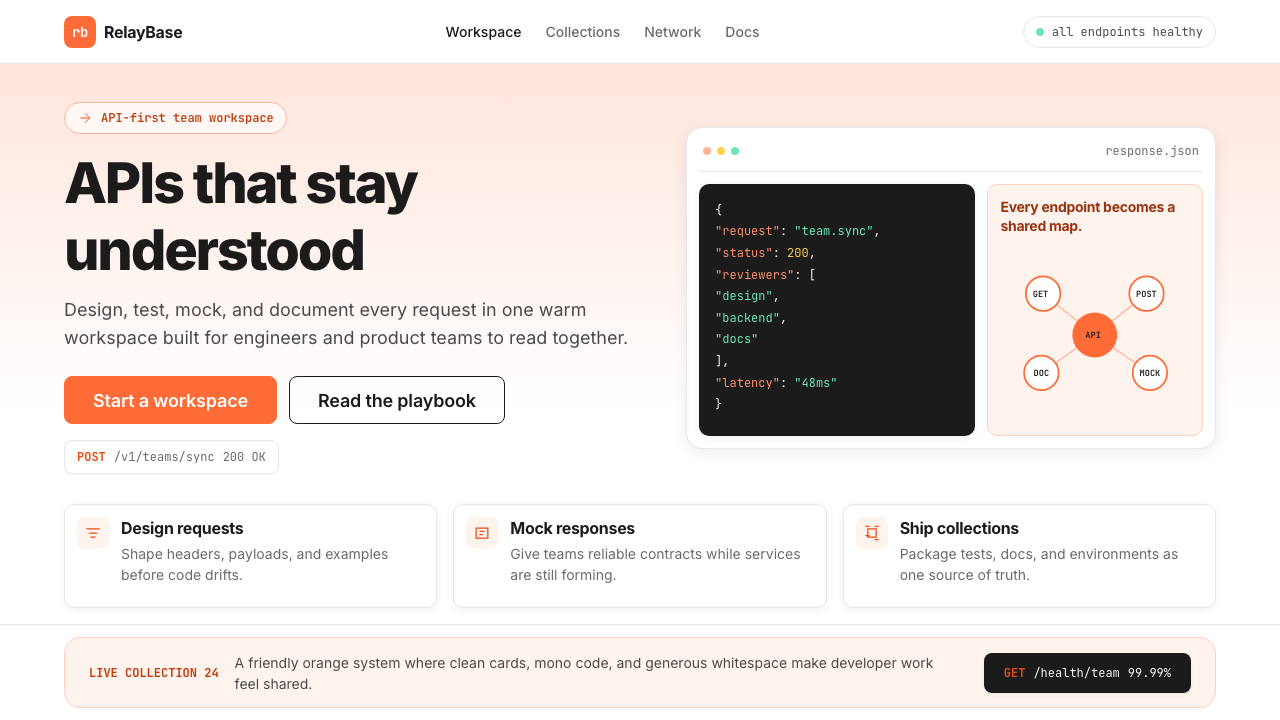 Postman 2024Warm APIs feel approachable. Orange gradients, Inter headlines, and dark mono…
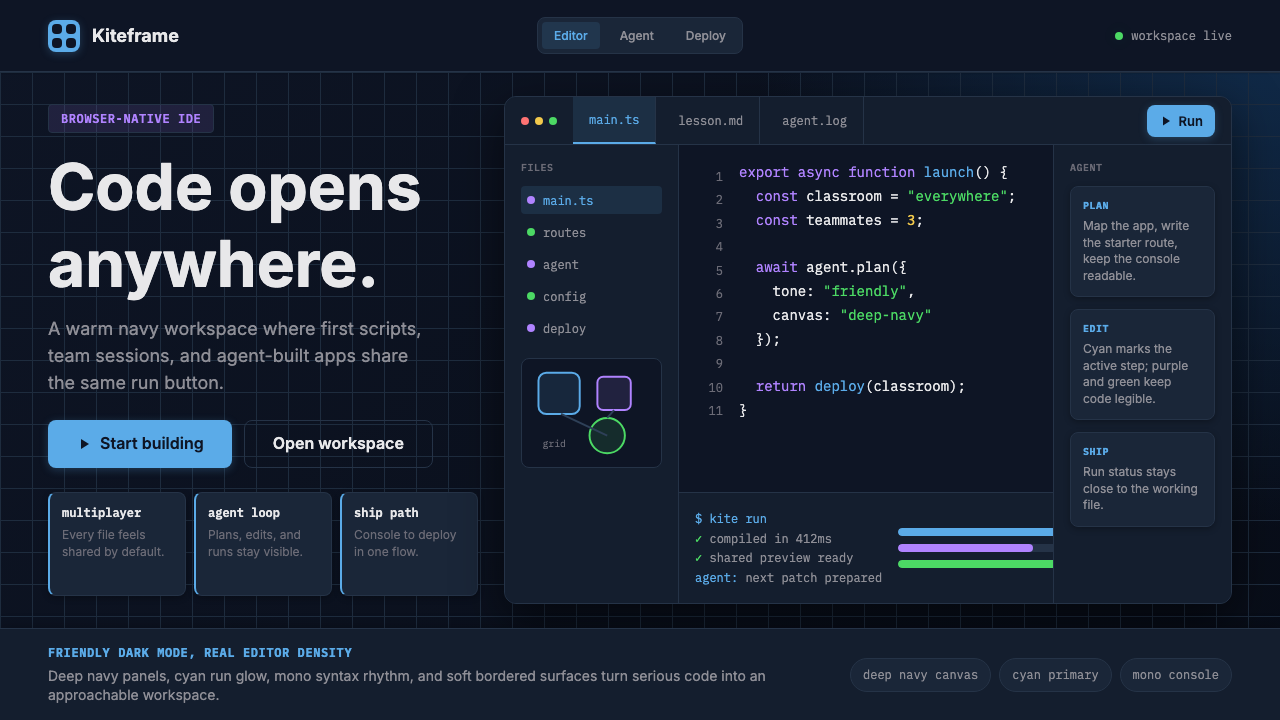 Replit Browser IDE BlueFriendly code gravity. Cyan run lights and mono panels warm the deep navy IDE…
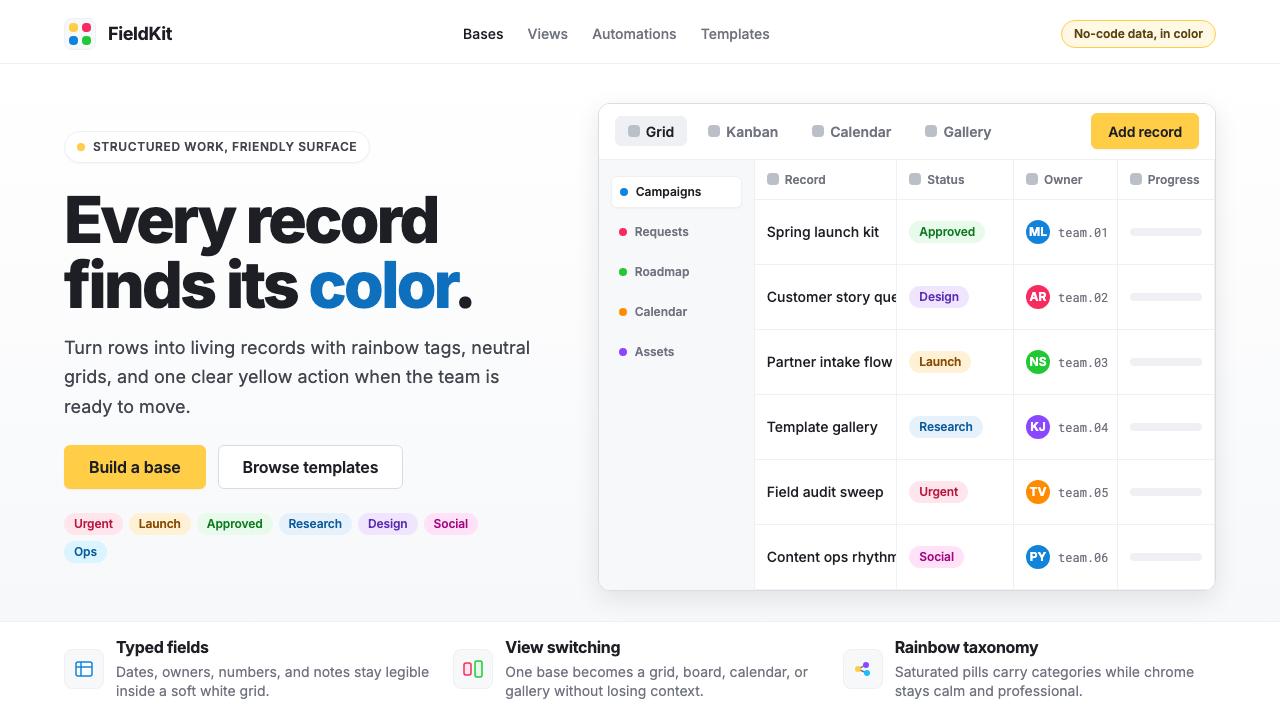 Airtable Spreadsheet-RainbowWork becomes celebratory. Inter grids stay white while rainbow pills and yell…
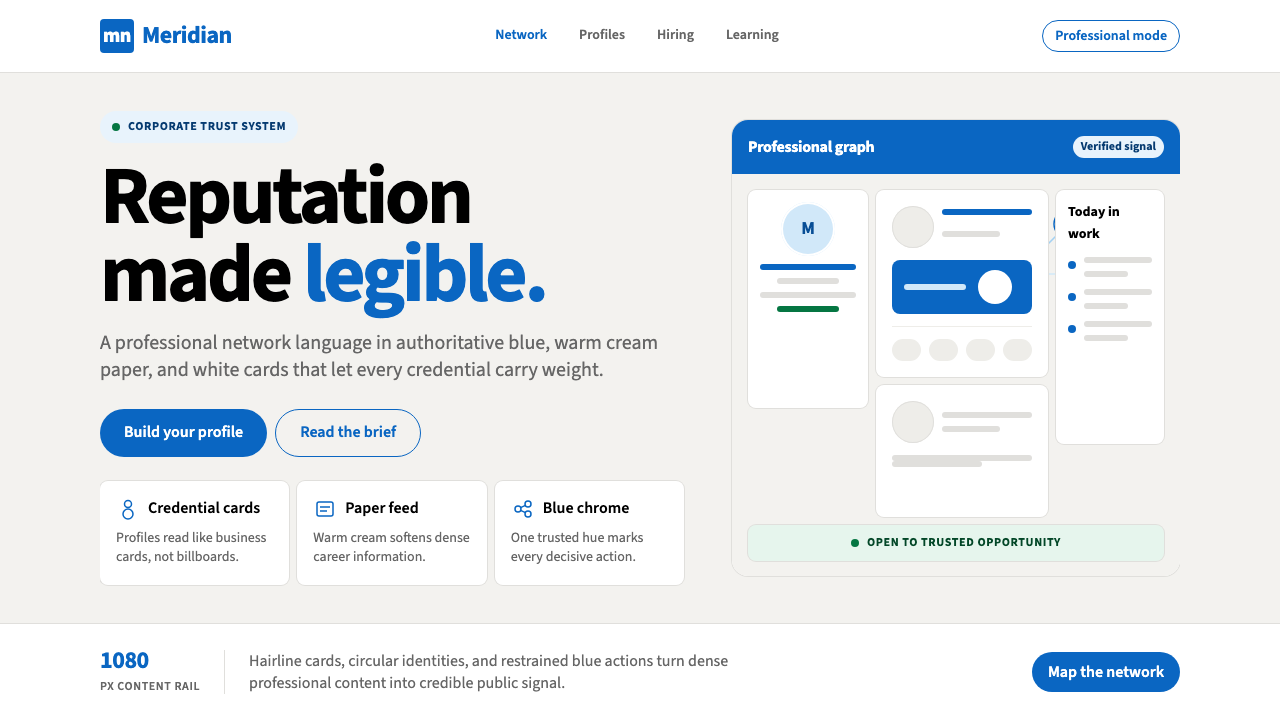 LinkedInCorporate trust, digitized. Authoritative blue frames white cards on warm cre…