What is Persian Gabbeh Rug?
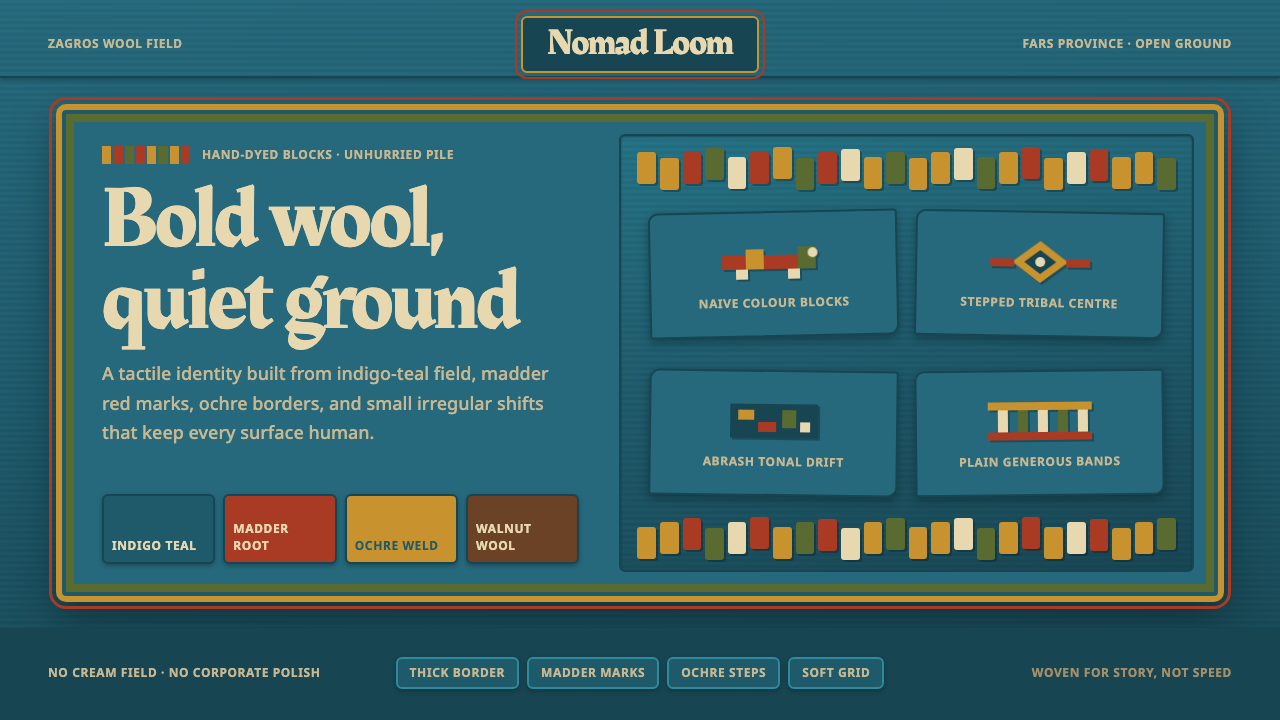
Persian Gabbeh brings the warmth of hand-knotted mountain wool to the screen: bold motifs, deep open ground, and a confidence that never needs ornament to fill silence.
Persian Gabbeh Rug in brief
Gabbeh are thick, high-pile tribal rugs hand-knotted by Qashqai and Luri nomadic weavers in the Zagros mountains of Persia. Their visual language begins with wool rather than linework: lanolin-rich fibers create a dense, tactile surface, while natural dyes give color a living, slightly unsettled character. Fine urban-rug detail gives way to broad fields, emphatic blocks, and motifs that feel discovered in the open landscape rather than drafted in a workshop.
The defining contrast is between a quiet, expansive ground and a small number of direct marks. Lions, birds, and other animals may appear as simple, childlike presences, floating apart from one another in generous empty space. A border can step around the field with tribal rhythm, but it does not turn the composition into a crowded frame. The rug feels bold because its forms are clear, not because every surface is busy.
As a screen style, Persian Gabbeh Rug translates this textile voice into a deep indigo-teal field, madder-red and ochre motifs, stepped border structures, and gentle tonal drift. It should feel warm, slow, and materially grounded. The goal is not to simulate a rug literally, nor to turn every interface into folk illustration; it is to preserve the balance of open ground, hand-made irregularity, and decisive color-block form.
Where does Persian Gabbeh Rug come from?
Gabbeh belongs to the long-standing nomadic pile-weaving tradition of the Zagros mountains in Fars province, Persia, now Iran. The source tradition is associated with Qashqai and Luri weavers, whose rugs were made by hand from wool and colored with natural dyes. The style is documented from around 1880 onward, while its visual vocabulary carries the continuity of a much older nomadic practice.
Its setting matters because Gabbeh is not a style born from a fixed urban studio system. Nomadic weaving favors portable material knowledge, repeated hand processes, and motifs that can remain legible from a distance. The resulting compositions do not depend on intricate floral density or formal courtly symmetry. They make room for open field, simple animal presence, and broad borders that can hold a design together without enclosing it too tightly.
The wool itself is part of the aesthetic argument. Lanolin-rich pile produces a surface with physical depth and softness, while natural dyeing introduces tonal variation across what might otherwise be a uniform field. This gentle drift is not a defect to be corrected. It is evidence that color has passed through fiber, weather, handling, and time rather than arriving as a perfectly standardized surface.
For contemporary design, the historical lesson is one of restraint with character. Gabbeh does not require elaborate illustration to feel expressive, and it does not need polished corporate neutrality to feel organized. Its authority comes from a few memorable relationships: deep ground against warm motif, empty field against symbolic figure, and hand-made variation against simple structural order.
What defines the Persian Gabbeh Rug look?
Deep Wool Ground
The visual field begins with a deep indigo-teal ground that should feel absorbent rather than flat. It is a place for motifs to rest against, not an empty backdrop waiting to be decorated. Preserve a subtle sense of tonal drift so the field suggests hand-dyed wool: calm at first glance, quietly varied on longer viewing.
Madder and Ochre Motifs
Warm madder-red and ochre motifs provide the main visual event against the dark field. Use them as substantial blocks, markers, and directional forms rather than a scattering of small accents. Their warmth should feel mineral and dyed, not synthetic or glossy, with each color given enough surrounding quiet to remain legible.
Open Field
Space is active in Gabbeh. Large areas of uninterrupted ground make a lion, bird, or geometric mark feel more present, not less finished. Resist the urge to balance every empty area with an icon, label, or decorative pattern. The field is part of the composition's emotional register: quiet, spacious, and unhurried.
Naive Animal Forms
Animals are simplified into memorable signs rather than rendered as naturalistic illustrations. A lion or bird can carry personality through silhouette, placement, and contrast alone. Keep forms direct and slightly irregular, as if made by hand with confidence. Their charm depends on clarity and solitude, not anatomical detail or decorative realism.
Stepped Tribal Borders
Borders use stepped, block-like rhythm to define an edge without becoming ornamental lace. They work best as a structural perimeter, repeated with enough irregularity to retain a woven character. A border should support the open field and guide the eye back inward; it should never compete with the central motifs for attention.
Hand-Dyed Drift
Gentle tonal variation is essential to the style's material honesty. It should read as abrash-like movement through a wool field, not as a polished digital gradient or a dramatic lighting effect. Keep the shifts quiet and broad, allowing the surface to feel lived-in and tactile while the motifs remain clear.
Warm Imperfection
Gabbeh should never feel corporate, overly precise, or fussy. Slight asymmetry, uneven motif spacing, and restrained texture make the system feel made rather than manufactured. This is not an excuse for visual disorder: structure remains strong, but it carries the softness of wool and the patience of hand work.
Who shaped Persian Gabbeh Rug?
Qashqai nomadic weavers are named in the source tradition as makers of Gabbeh rugs in the Zagros mountains. Their work establishes the style's essential relationship between hand-knotted wool, natural dye, broad open fields, and direct symbolic motifs.
Luri nomadic weavers share the Gabbeh tradition of the Zagros region. Their inclusion keeps the style rooted in a living tribal weaving context rather than reducing it to a generic Persian decorative pattern.
Together, Qashqai and Luri weavers represent the shared authorship behind Gabbeh's visual language. The style's warmth, apparent simplicity, and tonal irregularity should be understood as qualities of a hand-made nomadic textile tradition, not decorative effects detached from their material source.
How do you use Persian Gabbeh Rug today?
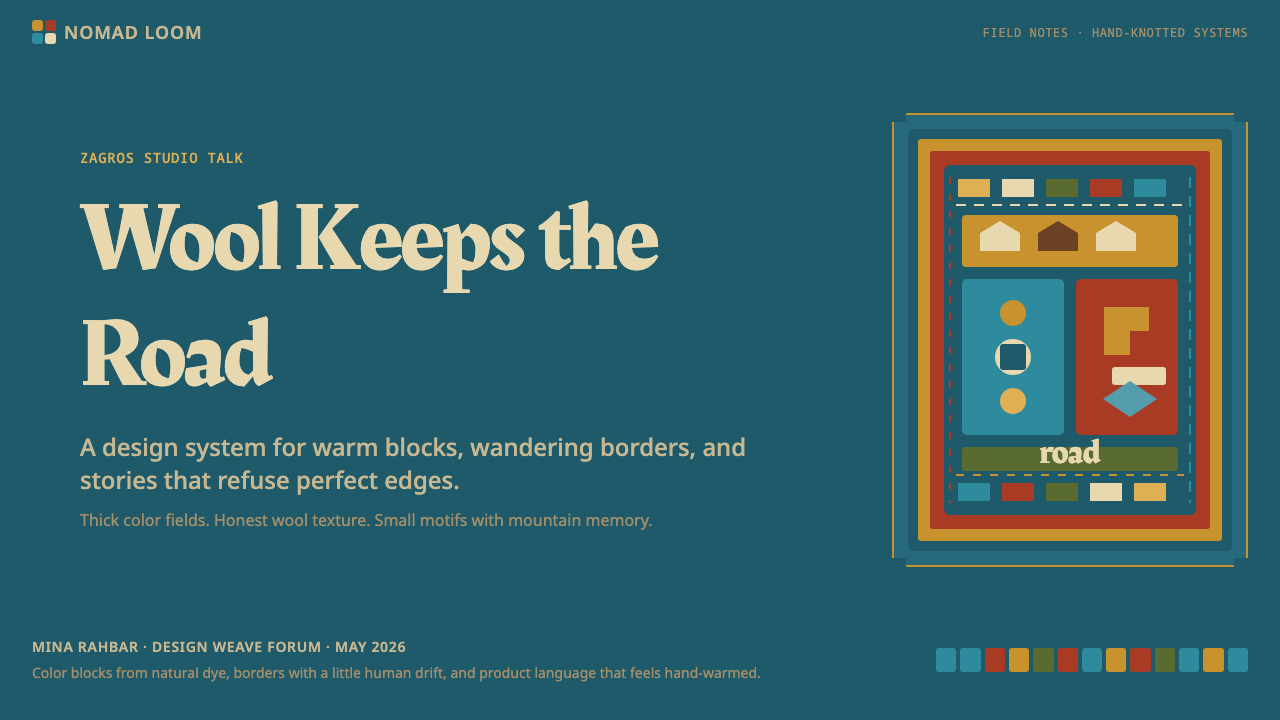
For presentation covers, treat the slide as an open wool field. Let a deep indigo-teal ground carry one large title area, then introduce a small group of madder-red or ochre marks with the confidence of a woven motif. A stepped border can establish the edge, but keep the center spacious. On content slides, use repeated blocks and simple sectional marks rather than elaborate dividers; the visual rhythm should remain calm enough for reading.
Data slides benefit when charts are reduced to broad, legible forms. Use the dark field as the stable background, assign warm colors to the most important comparison, and let less critical information recede into quieter marks. Avoid dense ornamental chart treatments. A small animal-like symbol or geometric motif may identify a category or section, but data must remain the primary figure in the composition.
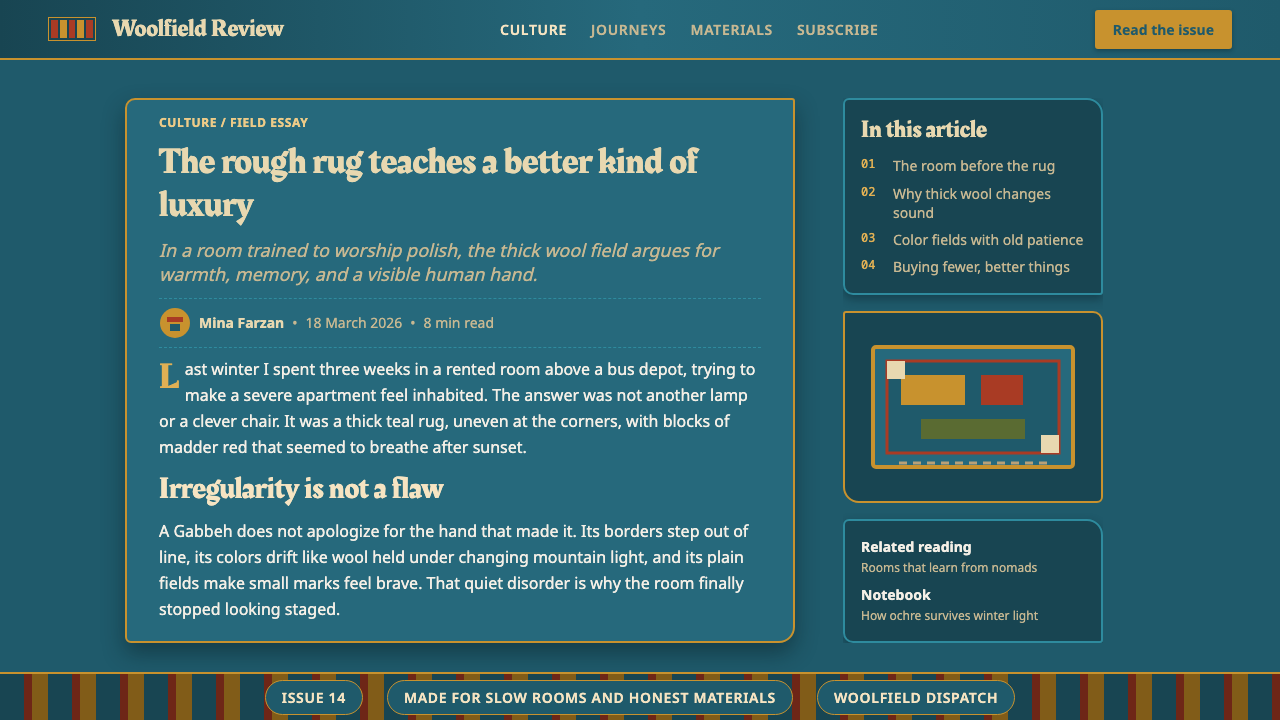
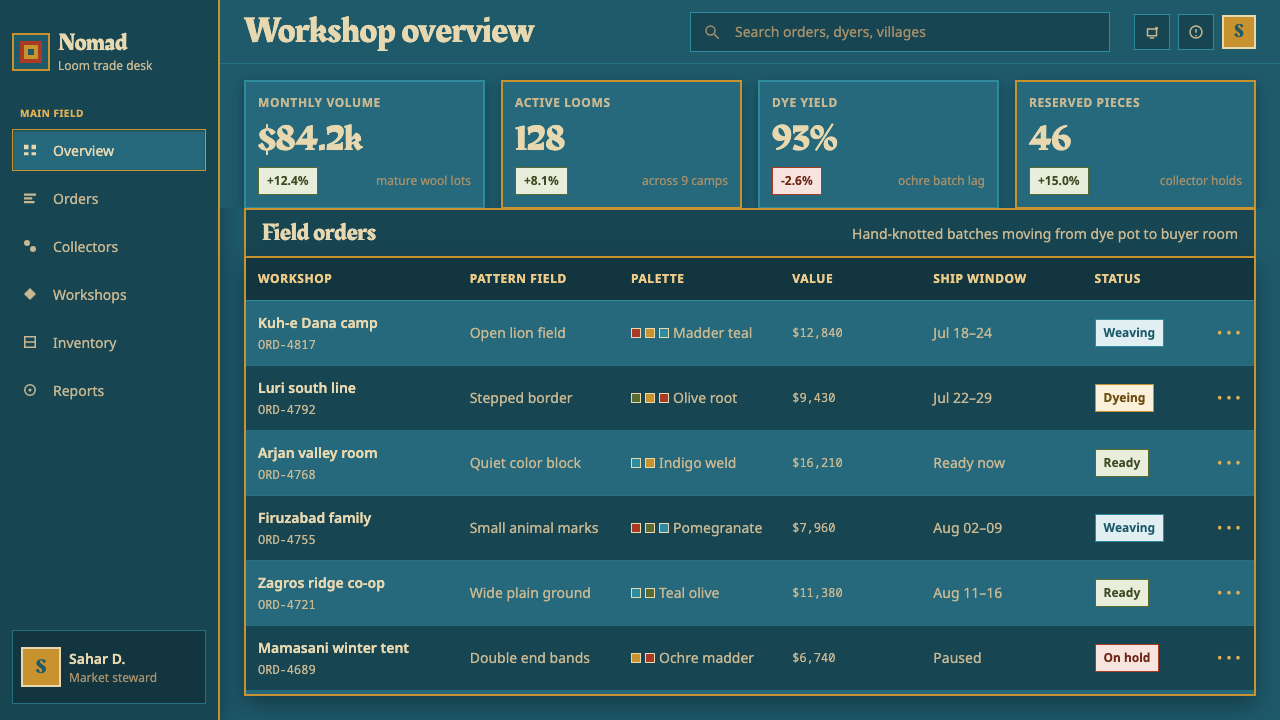
For web interfaces, this style suits dashboards, collection browsers, and pricing pages that need warmth without losing hierarchy. The deep field can unify navigation and content zones, while ochre and madder can distinguish active states, featured tiers, or important actions. Cards should feel like substantial textile blocks with modest variation, not polished floating panels. Leave room around labels and controls so the interface keeps Gabbeh's open-field calm.
Editorial and marketing work can use the style's storytelling strength. Pair a wide, quiet background with a single symbolic motif, a short headline, and a compact passage of copy. Campaign sections may move between deep fields and warm motif-led panels, but the palette should remain disciplined. The effect is especially effective when a product or story needs to feel human, grounded, tactile, and patient rather than fast, sleek, or corporate.
The common mistake is turning Gabbeh into a crowded ethnic pattern. Filling every gap with repeated animals, ornamental borders, distressed texture, and many competing warm colors loses the original system's quiet force. Another mistake is making the field perfectly uniform and the motifs mechanically aligned; that removes the hand-dyed, hand-made character. Choose fewer, larger forms, protect the open ground, and let subtle irregularity do its work.
Persian Gabbeh Rug — FAQ
Is Persian Gabbeh Rug the same as a general Persian carpet style?
No. In this source material, Gabbeh is specifically tied to thick, high-pile tribal rugs hand-knotted by Qashqai and Luri nomads in the Zagros mountains. Its defining traits are broad color fields, simple animal motifs, natural-dye variation, and open space rather than fine, dense decorative detail.
Why should the background remain dark and expansive?
The deep indigo-teal field is the style's visual ground. It gives madder-red and ochre motifs warmth and contrast, while its open expanse preserves the slow, unhurried character of Gabbeh. Replacing it with a pale neutral ground would weaken the woolen depth and the sense of motifs floating in space.
Should the style imitate woven texture everywhere?
No. The material reference should be felt through tonal drift, blocky form, warmth, and restrained irregularity, not through a blanket texture layer. Overly literal fibers or distressed effects make the screen feel noisy and can obscure the open-field composition that gives Gabbeh its clarity.
Can Gabbeh work for a modern dashboard or pricing page?
Yes, when its structural principles are retained. Use the deep field to create a stable environment, reserve warm motif colors for hierarchy and action, and keep cards, labels, and data blocks broad and easy to scan. The interface should borrow Gabbeh's confidence and spaciousness, not disguise functional information as decoration.
Related design styles
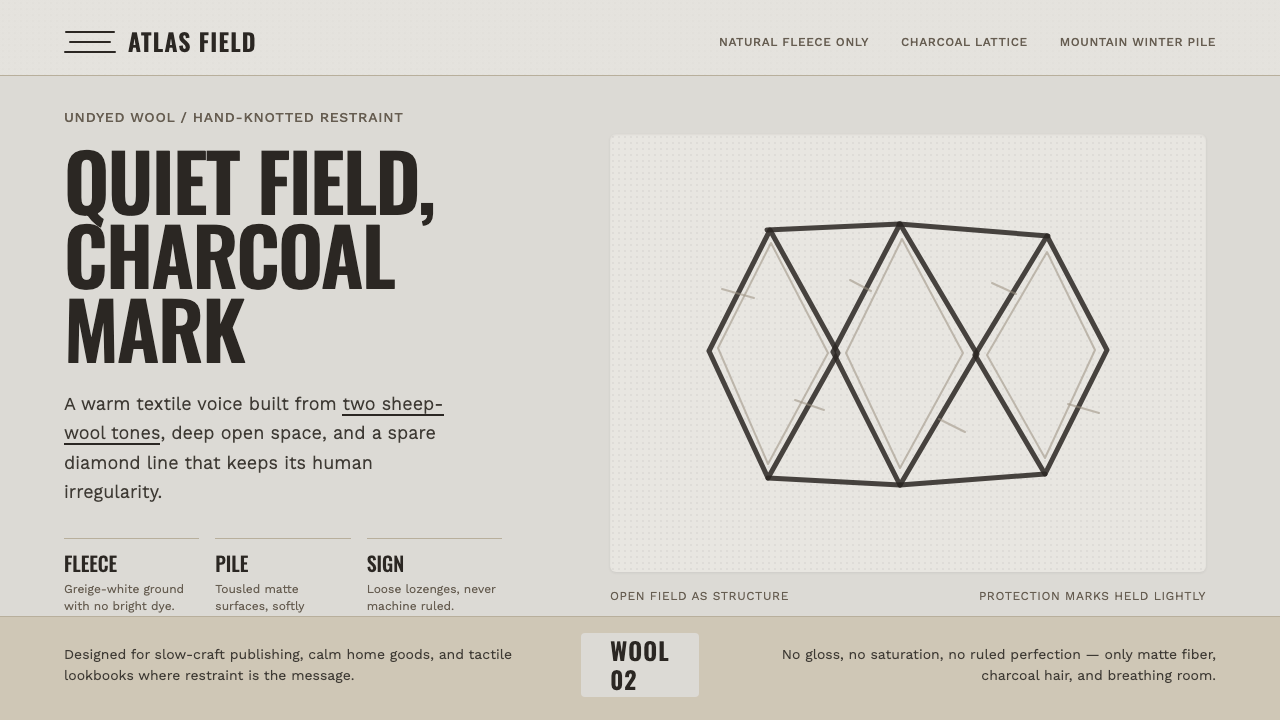 Beni Ourain Berber CarpetRestraint feels tactile. Greige wool field, Oswald type, and a loose charcoal…
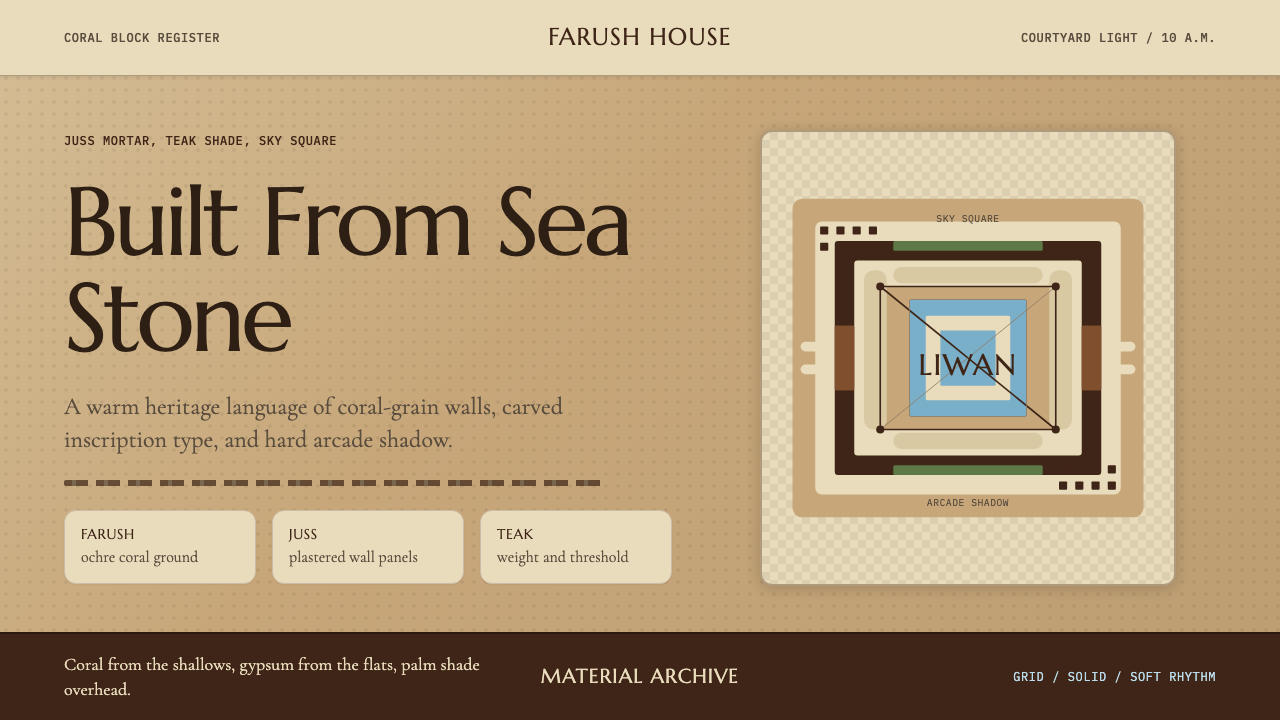 Emirati Bait Al Naboodah Coral HouseFeels built, not styled. Coral ochre, teak brown, and a sky-square courtyard…
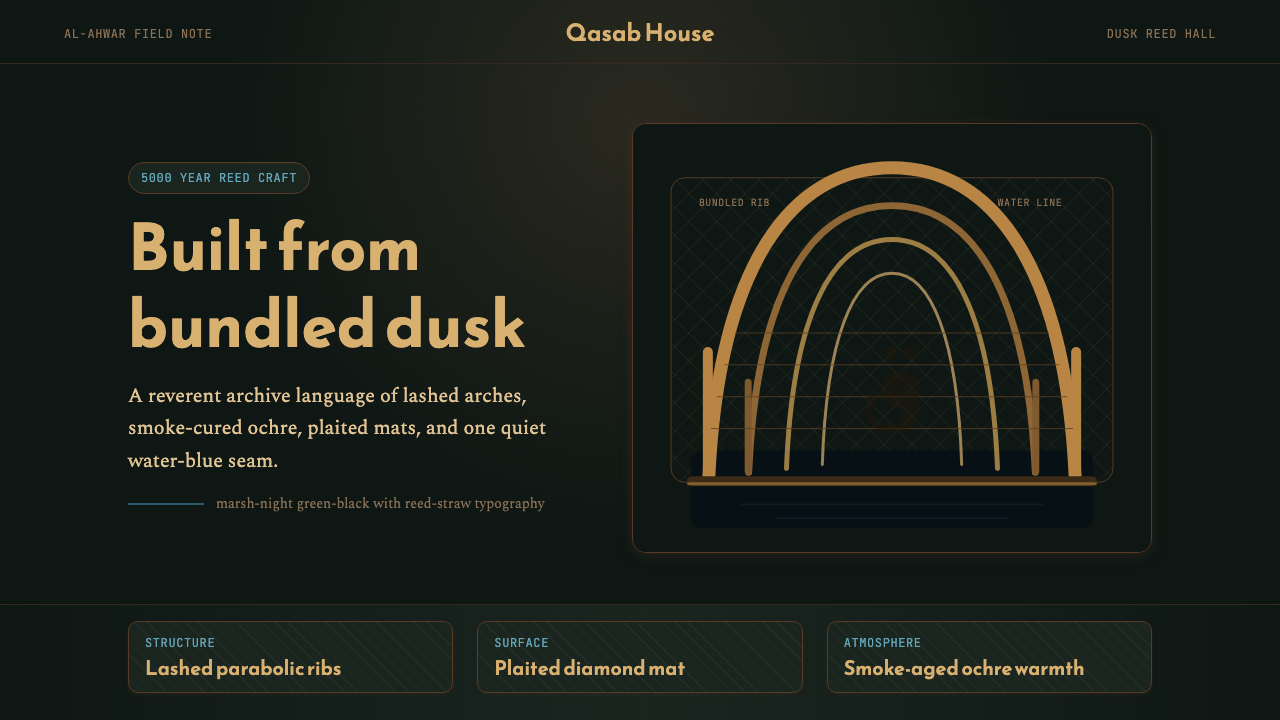 Iraqi Marsh Arab Mudhif ReedReverent reed darkness. Kufi arches, ochre lattice, and one water-blue line h…
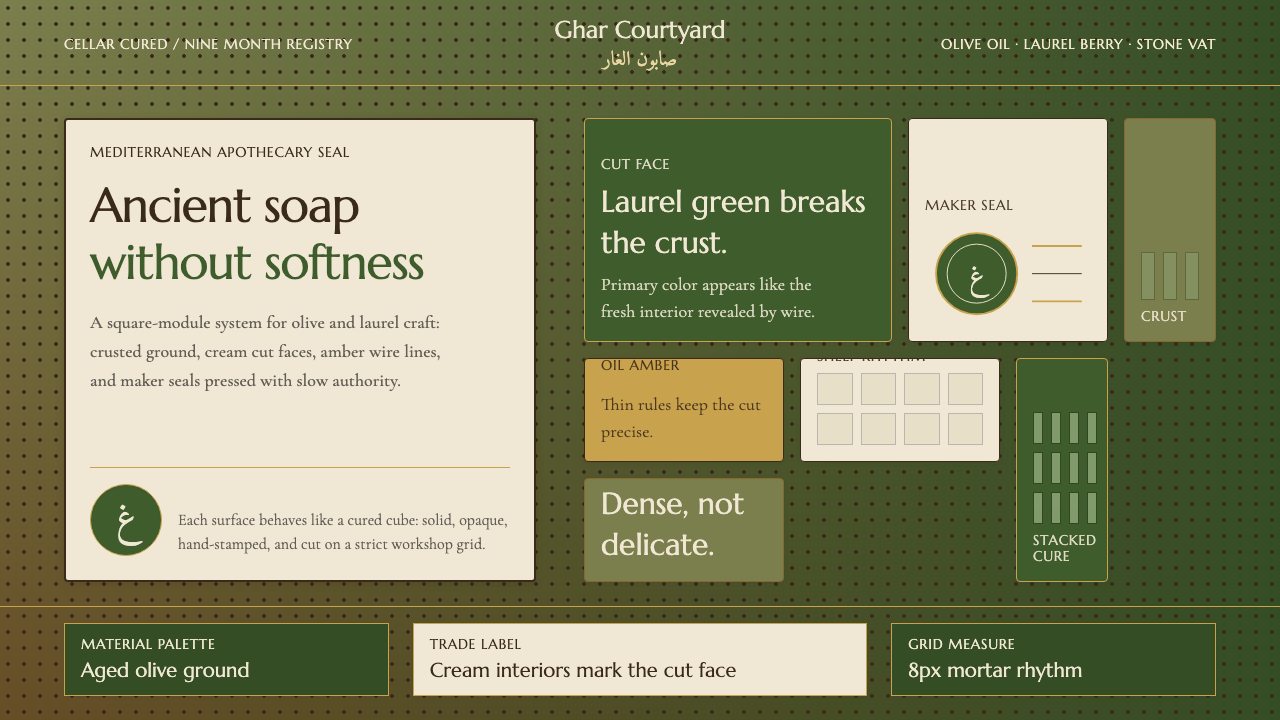 Syrian Aleppo Laurel SoapAncient without softness. Olive crust, laurel green, and stamped circles hold…
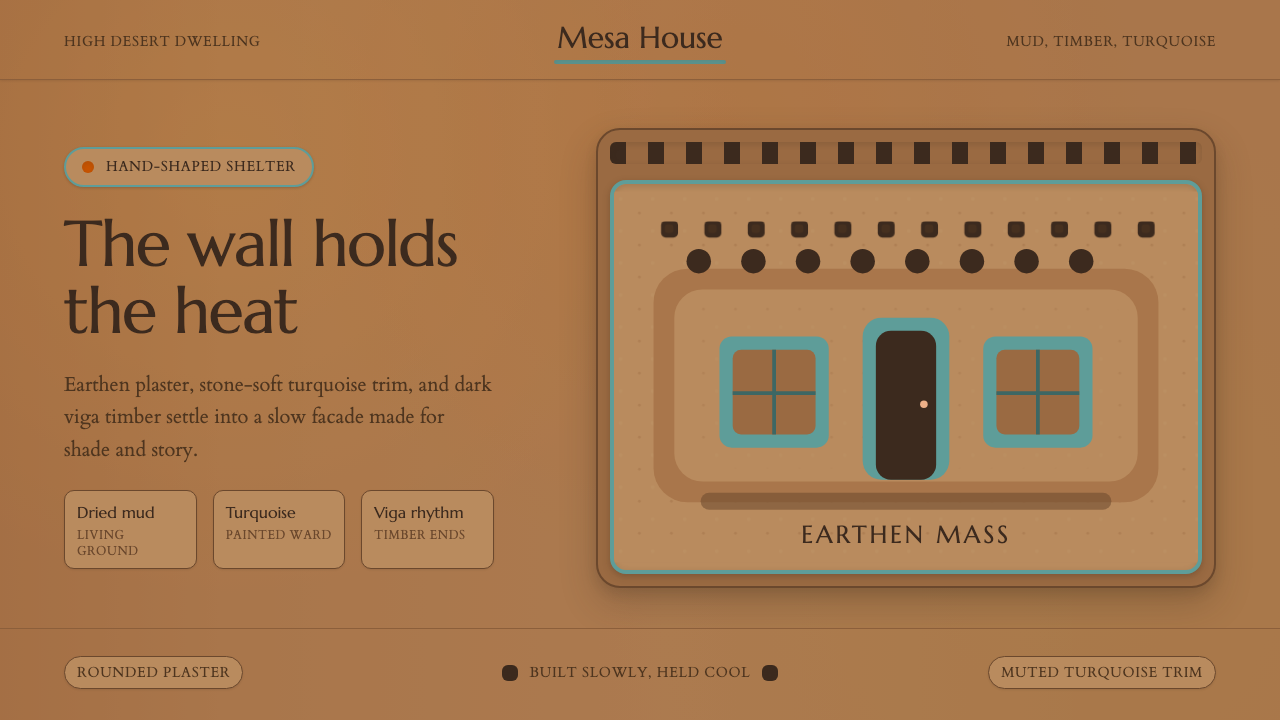 Adobe Pueblo SouthwestFeels made by hand. Earthen tan, turquoise trim, and viga rhythm shape the fr…
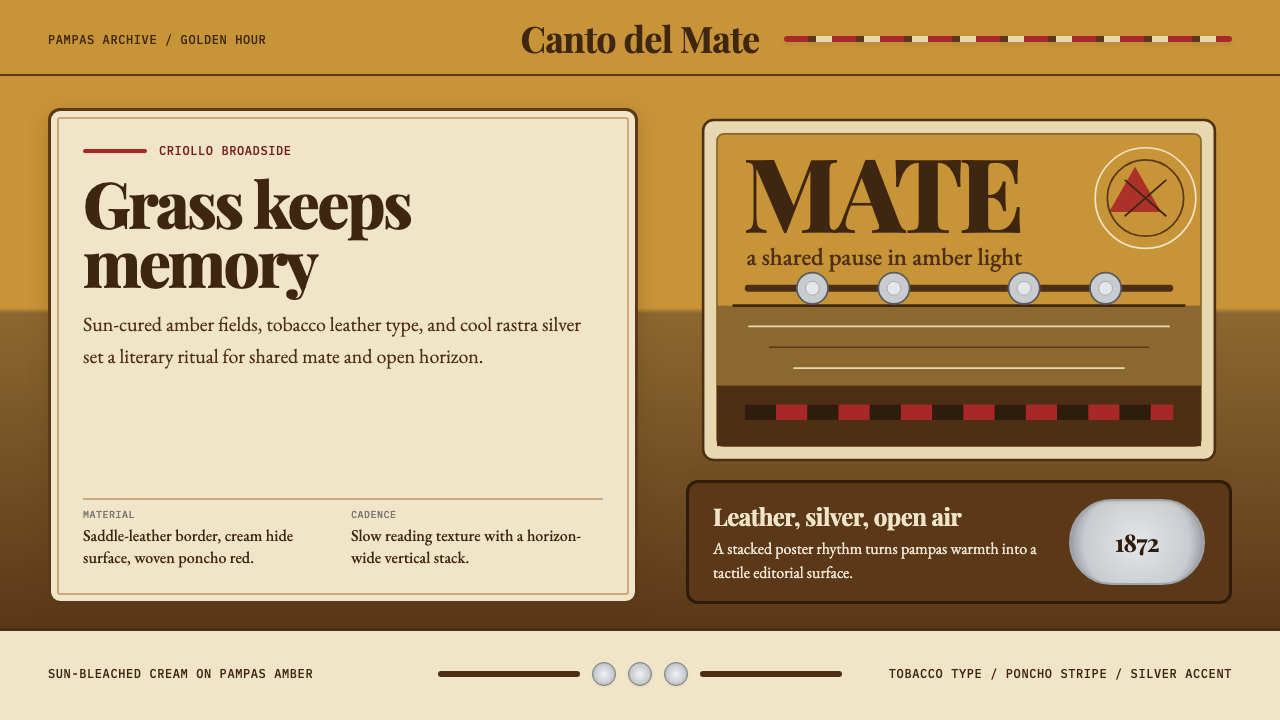 Argentine Gaucho (Pampas Mate Culture)Open grassland, printed warm. Amber fields, Playfair serif, and silver rastra…