What is Beni Ourain Berber Carpet?
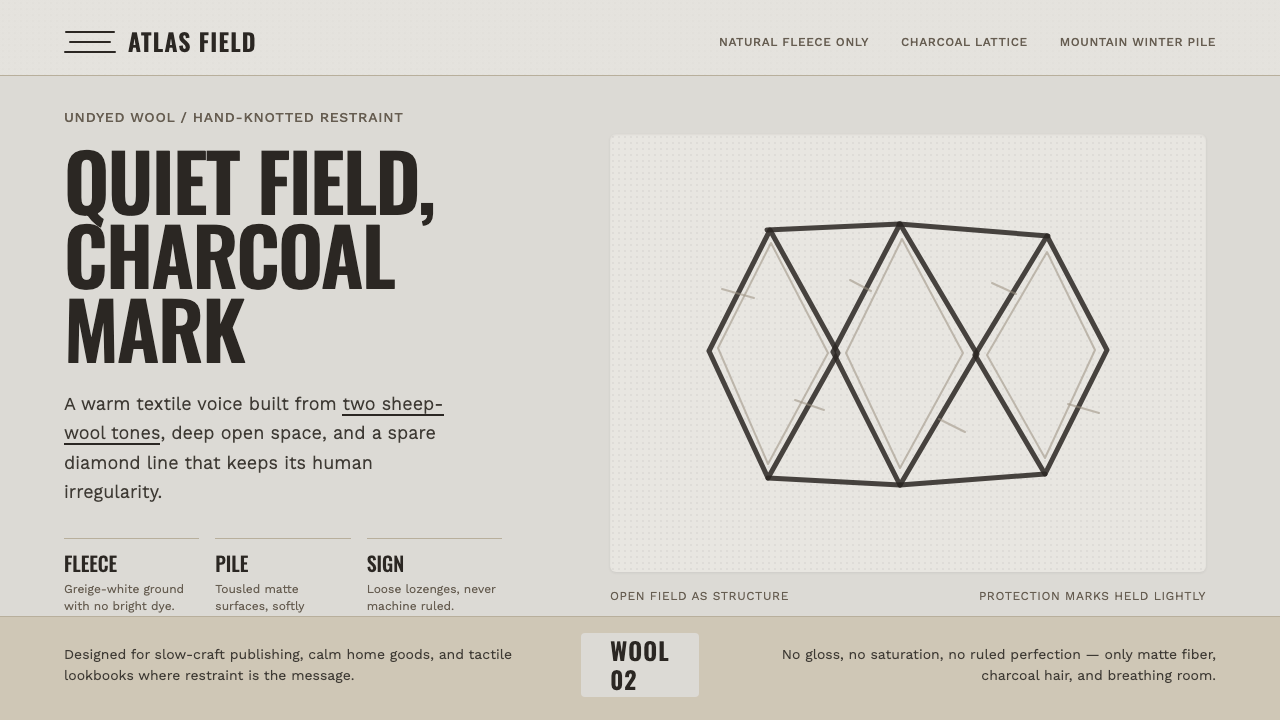
Beni Ourain design makes restraint feel tactile: greige wool, a loose charcoal lattice, and the quiet warmth of something made by hand.
Beni Ourain Berber Carpet in brief
Beni Ourain refers to a long-standing weaving tradition from Morocco’s Middle Atlas Mountains, where thick hand-knotted rugs were made from undyed sheep’s wool to withstand cold mountain winters. The visual language is deliberately narrow: warm off-white fleece, darker charcoal-brown hair, deep shag, and an open field interrupted by irregular diamonds and lozenges.
The pattern is not a ruled geometric system. Its lattice is drawn through loose, hand-woven lines whose slight shifts preserve the presence of the maker. The abstract marks function as protection symbols passed down through oral tradition, so the surface carries both practical warmth and cultural memory. Geometry is present, but it remains human, softened by the material and by the unevenness of the hand.
As a design style, Beni Ourain is built from restraint rather than emptiness. Its quiet palette, tactile surface, and generous field create a sense of shelter without visual heaviness. The style works when every element feels grounded: natural color instead of artificial saturation, a relaxed grid instead of mechanical precision, and typography that supports the textile character rather than competing with it.

Where does Beni Ourain Berber Carpet come from?
The tradition belongs to the Beni Ourain tribal confederation in the Middle Atlas Mountains of Morocco. Its starting point is practical rather than decorative: thick wool provides warmth in a cold mountain environment, while the pile gives the rug a substantial, protective presence. The visual calm of the style grows from this function. Nothing is added merely to fill a surface; the material already carries enough character.
Beni Ourain rugs are hand-knotted by Amazigh women on simple looms. Their palette comes directly from the fleece itself: warm off-white wool set against the darker charcoal-brown hair of the same sheep. Because no dyes are used, color is inseparable from material. The result is not a printed image placed onto a textile but a surface whose appearance emerges from the wool, the knotting, and the difference between fibers.
Across the deep, tousled field, irregular diamonds and lozenges form a loose lattice. These abstract marks function as protection symbols and are passed through oral tradition, giving the pattern a meaning beyond ornament. The enduring Beni Ourain style therefore joins material necessity, women’s handwork, and inherited symbolism. Its contemporary appeal comes from that complete unity: the aesthetic is not applied over the object but grows out of how the object is made.
What defines the Beni Ourain Berber Carpet look?
Color
The palette stays close to the fleece: warm off-white, greige, and charcoal-brown. Contrast is present but never theatrical. Dark marks should feel like wool emerging from wool, not like graphic ink placed on a neutral background.
Material
Material honesty is central. The surface should suggest undyed wool, visible fibers, and a natural variation that cannot be perfectly standardized. Smooth artificial surfaces weaken the style because they remove the relationship between appearance and making.
Lattice
Diamonds and lozenges form the principal graphic vocabulary. They should be irregular, loosely connected, and allowed to drift across the field. The pattern creates structure without becoming a rigid diagram.
Texture
The deep, tousled pile is not secondary decoration; it is part of the identity. In visual applications, texture can be suggested through soft irregularity, layered fiber-like forms, and quiet tonal variation rather than glossy effects or simulated luxury.
Typography
Oswald provides a narrow, upright counterpoint to the generous wool field. It should be used with discipline, giving headings a calm vertical presence while leaving enough softness around them for the textile character to remain visible.
Open Field
The empty wool field is an active compositional element. It gives the lattice room to breathe, keeps the palette calm, and prevents the pattern from becoming busy. Beni Ourain depends on the tension between mark and unmarked surface.

Who shaped Beni Ourain Berber Carpet?
The Beni Ourain tribal confederation provides the cultural setting for this enduring weaving tradition in Morocco’s Middle Atlas Mountains. Its identity is expressed through a continuity of material, method, and inherited symbols rather than through a single author or signature style-maker.
The tribal weavers preserve the essential visual grammar: thick hand-knotted construction, undyed fleece, and the loose lattice of diamonds and lozenges. Their work demonstrates that irregularity can be a form of precision when the goal is warmth, continuity, and human presence.
Amazigh women weavers make the rugs on simple looms, turning local fleece into a surface that is both functional and symbolic. Their labor connects the tactile character of the textile with the oral transmission of its protective marks.
How do you use Beni Ourain Berber Carpet today?
Beni Ourain is highly transferable because its logic is material and structural. Begin with a warm, quiet field, introduce one loose charcoal lattice, and let texture carry much of the emotional weight. The style works best when the composition feels inhabited rather than perfected: marks may shift, spacing may breathe, and the palette should remain close to natural fleece.
For presentation slides, use the open wool field as the foundation across cover, content, and data pages. A cover can place a large, relaxed lattice partly off the edge while Oswald type establishes a firm vertical anchor. Content slides should keep one clear reading path and generous breathing room. Data slides can treat bars, dividers, or highlighted figures as fragments of the same charcoal weave, avoiding bright categorical colors that would break the material mood.
For web interfaces, Beni Ourain suits dashboards and pricing pages that want to feel calm, considered, and human. Keep the main surface light and warm, use charcoal for text and structural marks, and reserve stronger contrast for active states or important actions. Cards should feel substantial rather than glossy; borders can be irregular or softly interrupted, while the lattice becomes a quiet background device instead of a repeated ornamental wallpaper.
For editorial and marketing work, the style supports stories about craft, home, material, and considered living. Use a narrow measure for text, broad areas of open field, and occasional lattice fragments to guide the eye. Marketing layouts can pair a strong Oswald headline with a close crop of the shag surface, letting the contrast between upright type and soft fiber create the central rhythm.
The common mistake is to imitate the diamond pattern while discarding the material logic. A perfectly regular grid, stark black-and-white contrast, glossy gradients, or excessive decorative texture may look related but will feel synthetic. The lattice should remain loose, the ground should retain warmth, and every mark should seem to belong to the same undyed wool world.

Beni Ourain Berber Carpet — FAQ
Is Beni Ourain simply a black-and-white minimalist style?
No. Its palette is restrained, but the character comes from natural wool, warmth, and irregular handwork. The field is closer to greige and warm off-white than stark white, while the darker marks feel like charcoal-brown fleece. Removing that material relationship leaves only a generic geometric pattern.
Why should the lattice remain irregular?
Irregularity connects the pattern to the simple loom and the hand-knotted process. It also preserves the distinction between a protective symbol passed through tradition and a decorative geometric repeat generated by software. The pattern can be organized, but it should never look mechanically ruled.
How can Oswald be used without making the style feel harsh?
Use its narrow upright form as a counterpoint, not as the entire personality of the page. Keep headings clear and grounded in charcoal, then surround them with generous open field and tactile softness. The contrast between firm type and wool-like space is what makes the pairing work.
Can the style be used on a dark background?
It can be adapted, but the light wool field is fundamental to the source style. A dark version should preserve the sense of natural material and avoid turning the lattice into a high-contrast graphic overlay. If the background becomes too dark or polished, the warmth, openness, and textile identity quickly disappear.
Related design styles
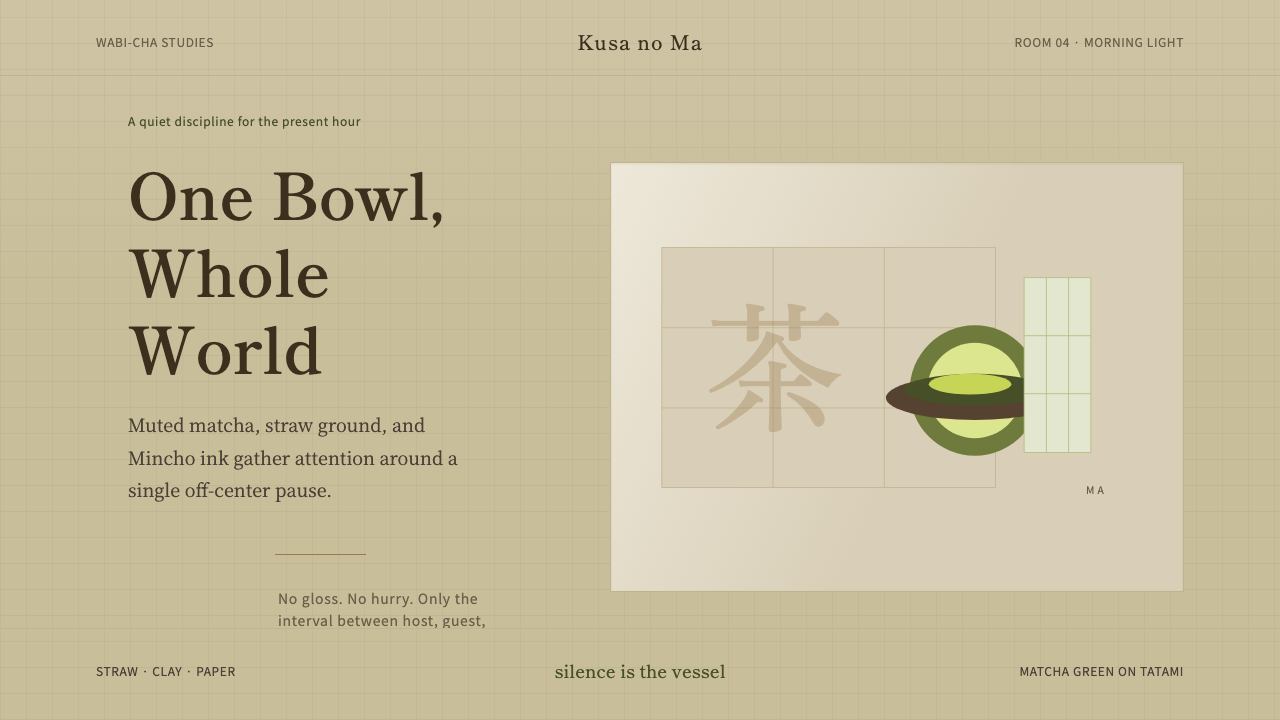 Japanese Tea CeremonyStillness has weight. Tatami straw, matcha green, and Mincho type leave room…
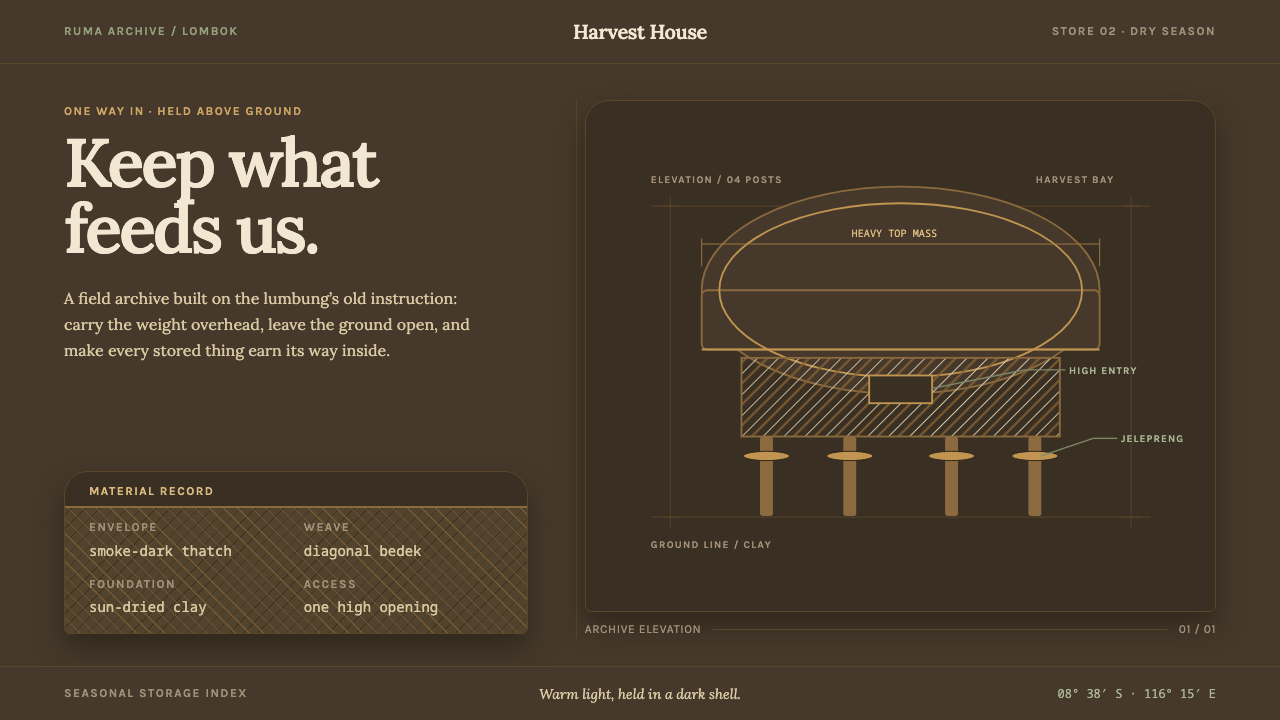 Sasak Lumbung GranaryStorage carries its weight. Smoke-dark ground, warm Lora type, and a four-pos…
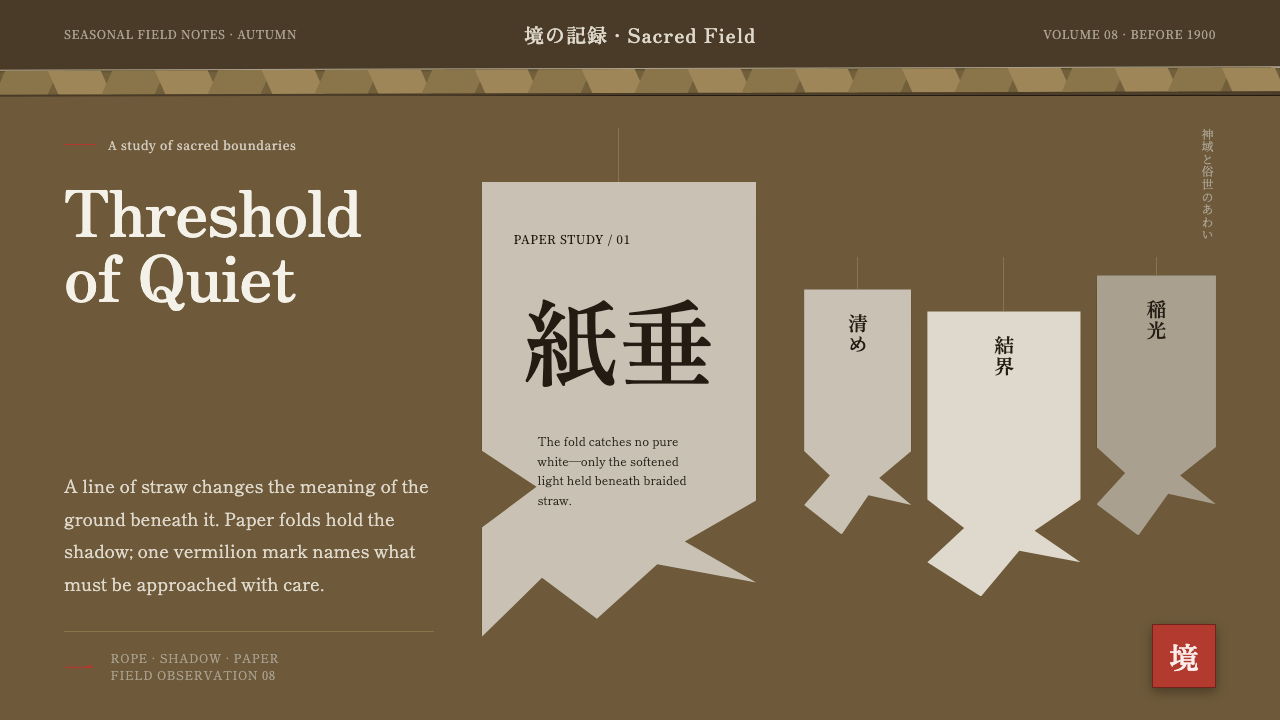 Shinto Shide Paper StreamerQuiet becomes sacred. Shadowed washi hangs from a straw-gold line, marked onc…
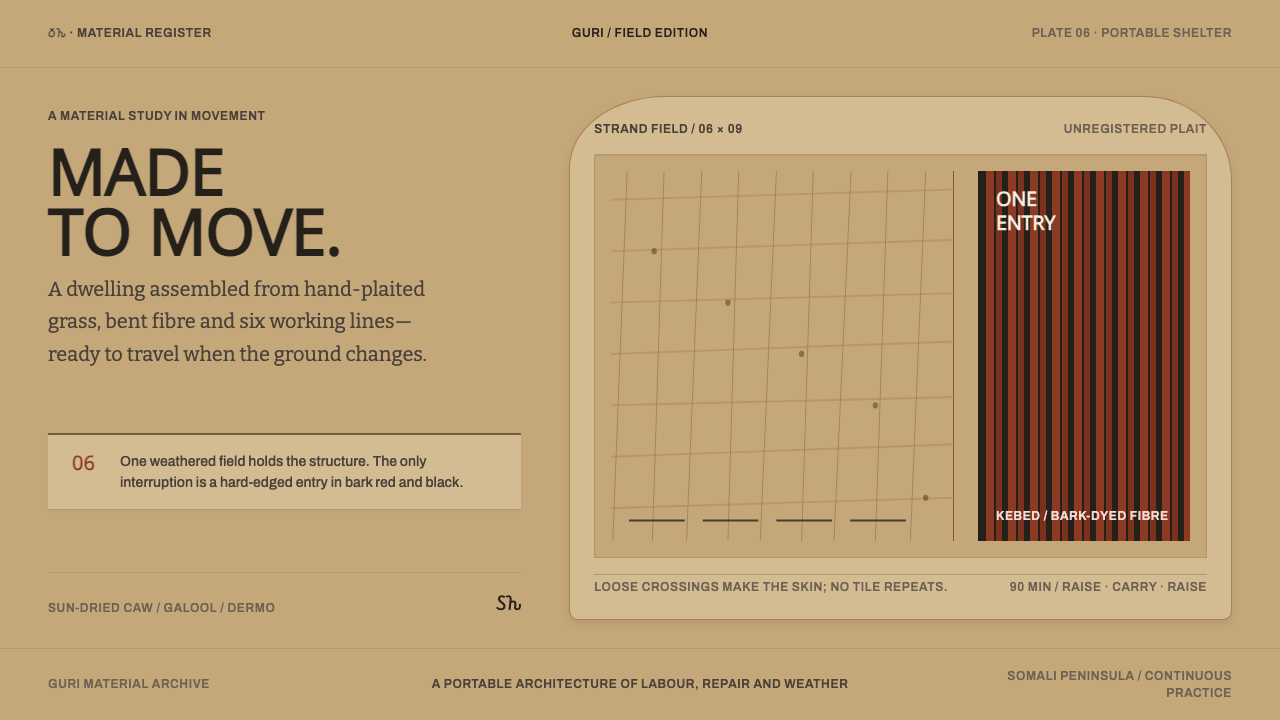 Somali AqalA house made to move. Sun-dried mat fields yield once to a bark-red, black en…
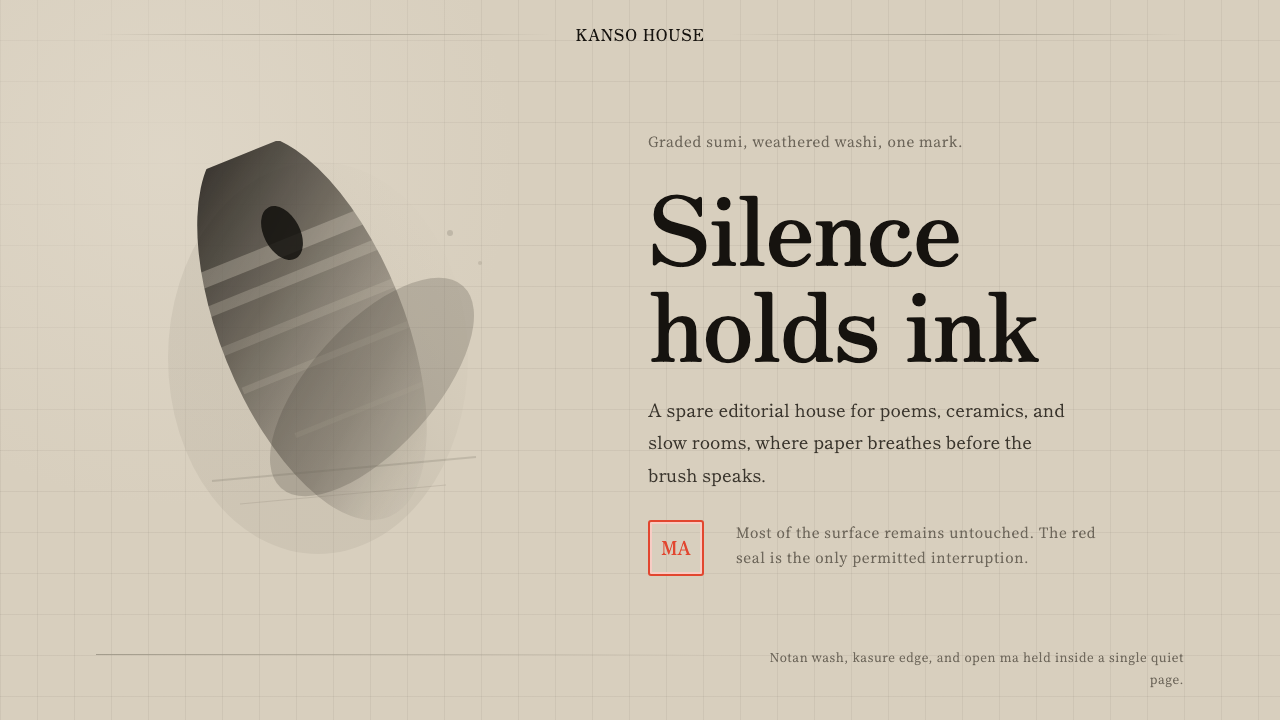 Sumi-e Ink WashRestraint carries weight. Washed black ink floats on oatmeal washi, anchored…
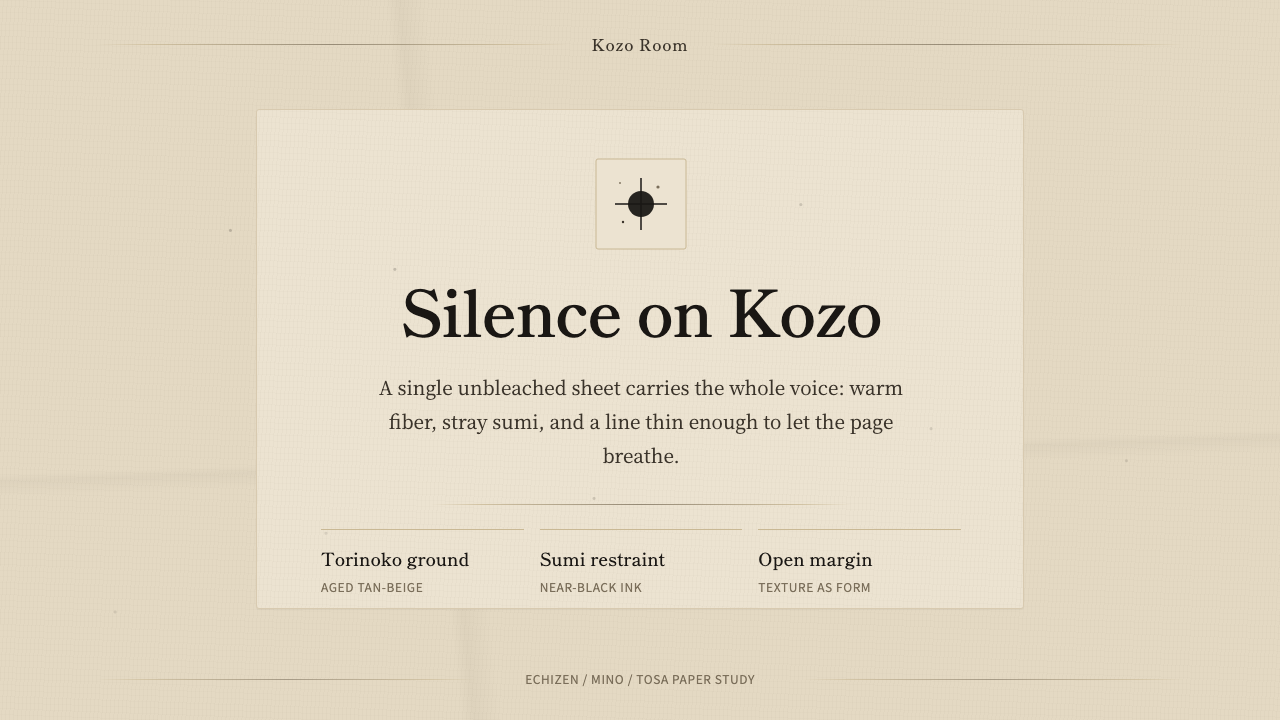 Washi Paper MinimalQuiet is material. Warm kozo grain, sumi specks, and hairline rules hold the…