What is Shinto Shide Paper Streamer?
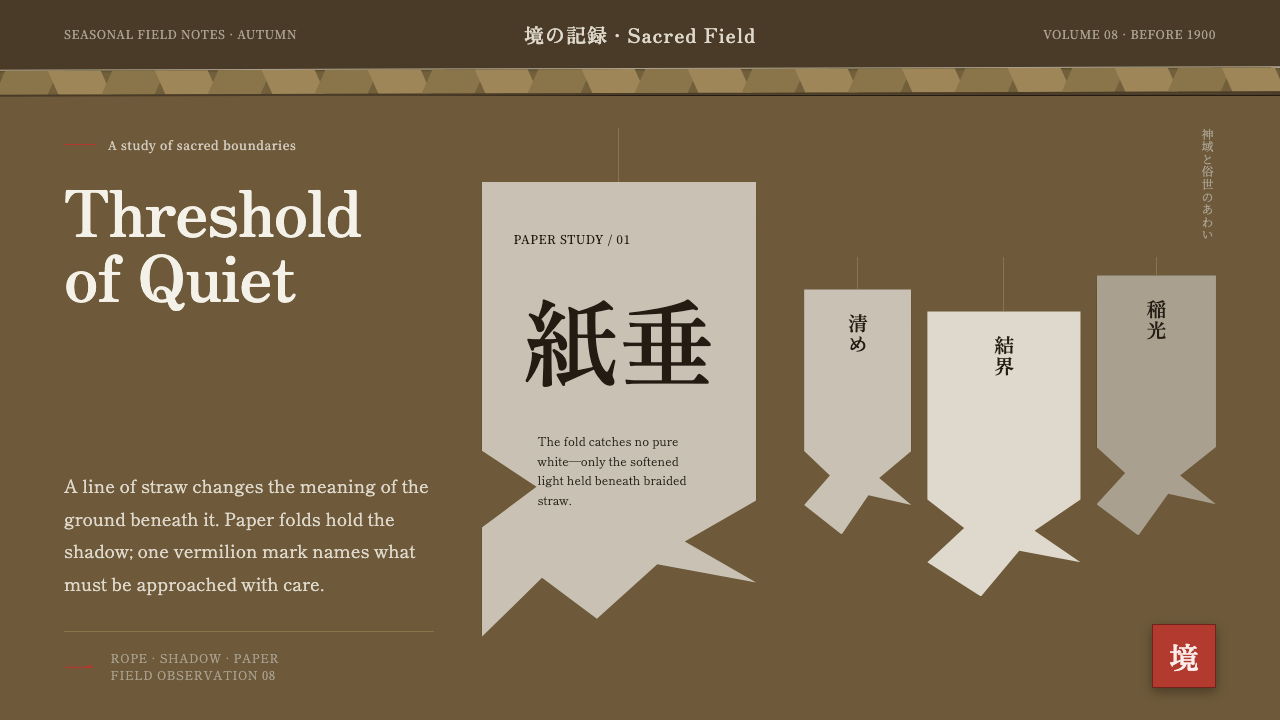
Quiet becomes sacred when shadowed washi hangs from a straw-gold line and a single vermilion mark defines the threshold.
Shinto Shide Paper Streamer in brief
Shide are folded zigzag streamers of white washi paper, hung from a braided rice-straw shimenawa to mark sacred ground at Shinto shrines in pre-1900 Japan. Their lightning-shaped folds turn a simple sheet into a visible boundary: a sign that the space beyond the rope is set apart from ordinary passage and use.
The visual system begins with the rope, not with the paper. A warm golden-tan shimenawa crosses dark timber like a suspended horizon, while near-white shide hang beneath it. The paper is not presented as a blank field. Its creases catch the rope’s shadow, producing a softened gray-white that gives the composition restraint, gravity, and material presence.
This is an aesthetic of demarcation rather than display. The top line establishes order; every hanging element acknowledges it. Dark wood supplies depth, straw introduces warmth and hand-made texture, folded washi gives the eye rhythm, and vermilion appears only where sacred significance must be made unmistakable. The result is spare without becoming empty.
Where does Shinto Shide Paper Streamer come from?
The style is rooted in ancient Shinto ritual practice and belongs to the visual culture of sacred-space demarcation in Japan. Its setting is not a neutral decorative backdrop but a ritual threshold. The shimenawa establishes that threshold physically, while shide make it legible at a glance through repeated folded forms suspended from the rope.
The material vocabulary follows the conditions of the shrine. Braided rice straw supplies the line that carries the system. White washi becomes a folded streamer rather than a flat sign. Dark timber gives the hanging forms a recessive field, allowing the pale paper and warm rope to remain distinct without visual excess. Each material keeps its own recognizable character.
Shide belong alongside shimenawa, gohei, and harae purification rites. In that context, their zigzag silhouette is not an ornamental pattern detached from meaning. It participates in a ritual language concerned with purification and the visible marking of sacred ground. The design therefore gains force from placement, sequence, and association rather than from pictorial illustration.
There is no single named designer behind this language. It was carried through shrine practice by anonymous shrine carpenters, known as miyadaiku, and Shinto priests, known as kannushi. Their roles place making and ritual together: the structure that supports the rope and the rites that give the boundary meaning are inseparable parts of the same visual order.
What defines the Shinto Shide Paper Streamer look?
The Suspended Line
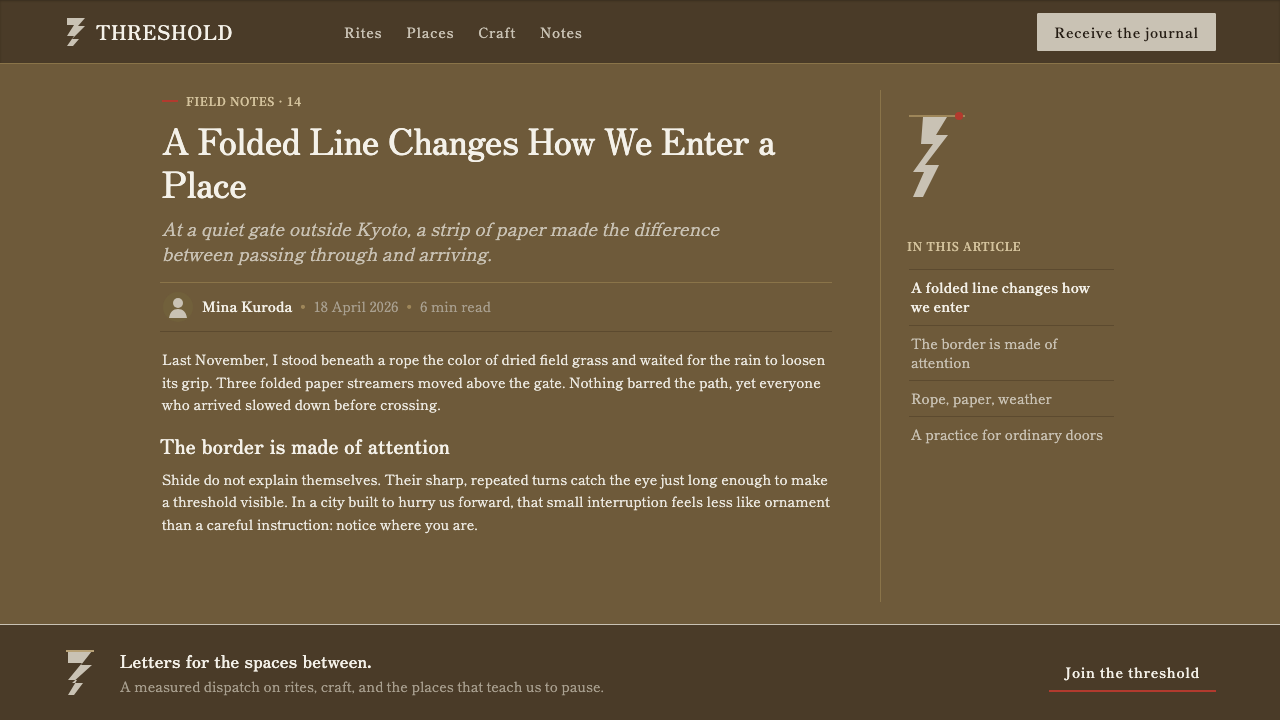
The shimenawa is the compositional origin. It crosses the upper field with the weight of braided straw, establishing a clear threshold from which every other element descends. The design reads from support to hanging form, never from scattered decoration upward.
Shadowed Washi
Shide should feel near-white rather than clinically blank. Their folds hold shadow, and the gray-white produced by those creases is the signature tone of the system. The paper appears quiet, tactile, and responsive to the dark timber behind it.
Zigzag Fold
The streamer’s folded silhouette gives the system its rhythmic contour. It suggests a sudden change of direction rather than a soft drape, making each hanging form feel deliberate. Repetition creates ceremony, but variation in shadow keeps the repetition from becoming mechanical.
Straw and Timber
Warm straw-gold rope and dark timber form the material frame around the paper. Their contrast is not flashy: straw carries dryness and handwork, timber carries recess and shelter. Together they give the pale shide an environment rather than an isolated background.
Vermilion Reserve
Vermilion is reserved for the sacred mark. Because it is scarce, it does not compete with the rope or paper; it punctuates them. The color functions as a boundary signal, concentrating attention where ritual significance needs to be most explicit.
Reverent Restraint
The system avoids decorative accumulation. Its authority comes from a small set of visible relationships: line and hanging form, straw and paper, light surface and deep shadow, quiet field and sacred accent. Nothing needs to be added once the boundary can be read.
Who shaped Shinto Shide Paper Streamer?
Miyadaiku represent the anonymous makers named in the source tradition. Their contribution is structural as much as visual: dark timber provides the architectural field against which the shimenawa and shide can define sacred space. Their anonymity matters because the system belongs to continuing shrine practice rather than individual authorship.
Kannushi connect the visible boundary to ritual purpose. In the setting of shimenawa, gohei, and harae purification rites, the rope and folded paper are not free-floating motifs. They are elements whose placement and recognition depend on sacred practice and the distinction between ordinary and consecrated ground.
Although not an individual maker, the shimenawa is the decisive actor in the visual system. It supplies the top line, the straw-gold warmth, and the physical support for the streamers. Treating it as secondary reverses the logic of the style, because shide derive their order and meaning from the rope.
How do you use Shinto Shide Paper Streamer today?
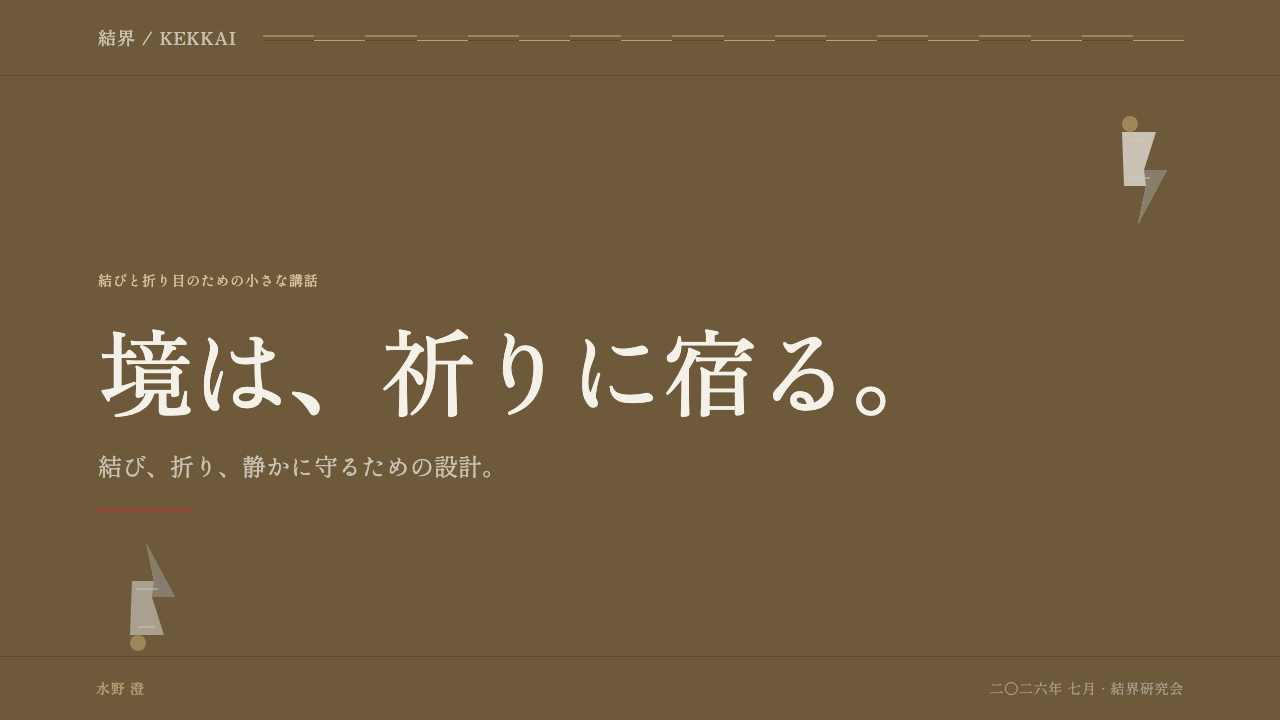
For presentation covers, begin with a dark timber-like field or an equivalent deep, quiet ground. Place one braided horizontal line near the upper area and allow a small number of folded paper forms to descend. Keep the title subordinate to the threshold rather than turning the composition into a decorative paper pattern. A restrained vermilion mark can identify the central idea or section.
On content slides, use the suspended line as an organizational principle. Section labels can align to a top rule, while body material descends in calm vertical groupings beneath it. Data should remain sober: let pale forms, dark ground, and limited sacred emphasis establish hierarchy instead of adding ornamental symbols or busy illustrative treatment.
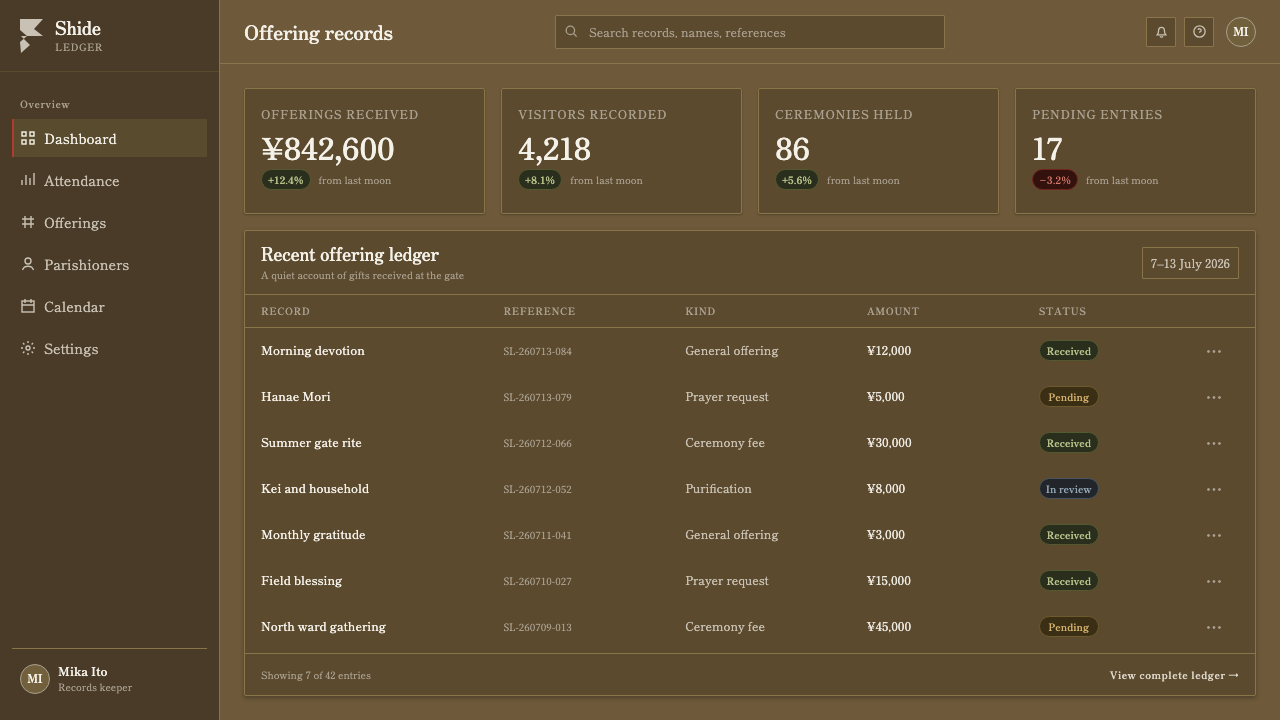
For web interfaces, the style suits spaces where threshold, ceremony, or focused attention are meaningful values. A dashboard can use a stable upper boundary to organize navigation and let panels hang below as related units. A pricing or membership page can use the contrast between dark structure and pale content to make choices feel deliberate rather than aggressively promotional.
Editorial and marketing work benefits most when the style is treated as a sequence of pauses. Use dark timber-like fields for opening moments, near-white paper-like areas for reading, and a warm rope motif to join sections. Copy should feel placed beneath a supporting line, while vermilion remains a rare signal for a key label, invitation, or sacred point of attention.
A common mistake is to isolate zigzag shapes from their ritual and structural context. Repeating paper streamers across a page, using vermilion as general decoration, or treating straw texture as a rustic backdrop loses the system’s discipline. The essential relationship is always rope first, folded paper second, and the sacred mark only where it carries real emphasis.
Shinto Shide Paper Streamer — FAQ
Are shide simply decorative paper ornaments?
No. In the supplied tradition, shide hang from shimenawa to mark sacred ground at Shinto shrines and belong to a ritual system involving purification and demarcation. Their folded shape is visually striking, but its design significance comes from that function and placement, not from ornament alone.
Why should the rope lead the composition?
The rope is the system’s physical and visual support. It establishes the upper boundary, carries the streamers, and introduces the warm straw tone against dark timber. If the paper becomes the background or dominant field, the design loses the suspended threshold that gives shide their order.
Can vermilion be used throughout a Shinto shide-inspired design?
It is more faithful to reserve vermilion for the sacred mark. Its scarcity is what makes it decisive against the quiet relationship of dark timber, straw-gold rope, and shadowed gray-white paper. Broad decorative use weakens its role as a concentrated signal of sacred significance.
Does the style require a light background?
No. The source material specifically places the system against dark shrine timber. The pale paper is most effective as a hanging element in shadow, not as a large bright ground. A deep field helps the rope read as the threshold and lets the creased washi retain its reverent gray-white character.
What makes an application feel respectful rather than merely Japanese-inspired?
Respect comes from preserving the system’s meaning: sacred ground is marked through a supporting rope, folded paper, shadow, and carefully reserved vermilion. Avoid using the zigzag merely as a novelty motif. Let restraint, placement, material contrast, and the distinction between ordinary and set-apart space guide the work.
Related design styles
 Japanese Tea CeremonyStillness has weight. Tatami straw, matcha green, and Mincho type leave room…
 Sumi-e Ink WashRestraint carries weight. Washed black ink floats on oatmeal washi, anchored…
 Washi Paper MinimalQuiet is material. Warm kozo grain, sumi specks, and hairline rules hold the…
 Beni Ourain Berber CarpetRestraint feels tactile. Greige wool field, Oswald type, and a loose charcoal…
 Wool FeltingHandmade stillness. Oatmeal-gray felt, humanist serifs, and soft rolled panel…
 Guérande Fleur de SelCrystal white is the exception. Mineral serif and hairline grids rise from we…