What is Somali Aqal?
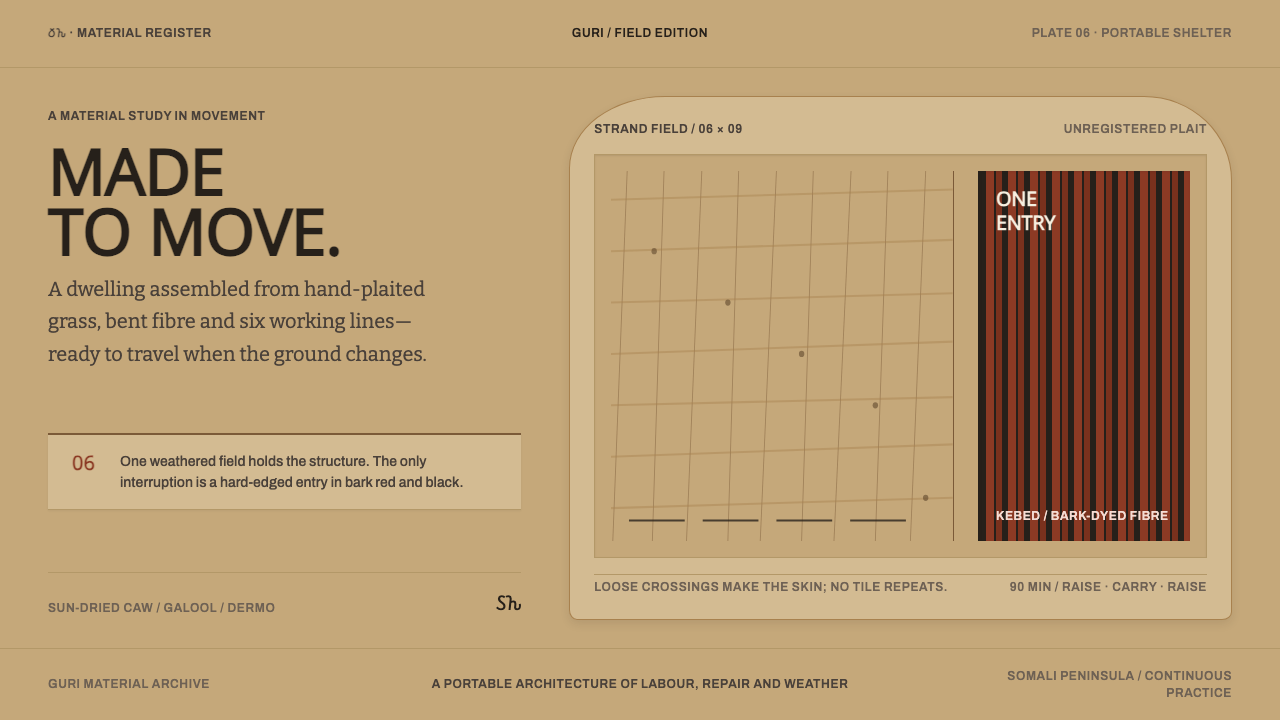
Somali Aqal is a design language for a house made to move: sun-dried grass-mat tan from edge to edge, patched with hide where it wears, and a single bark-dyed doorway in black and red.
Somali Aqal in brief
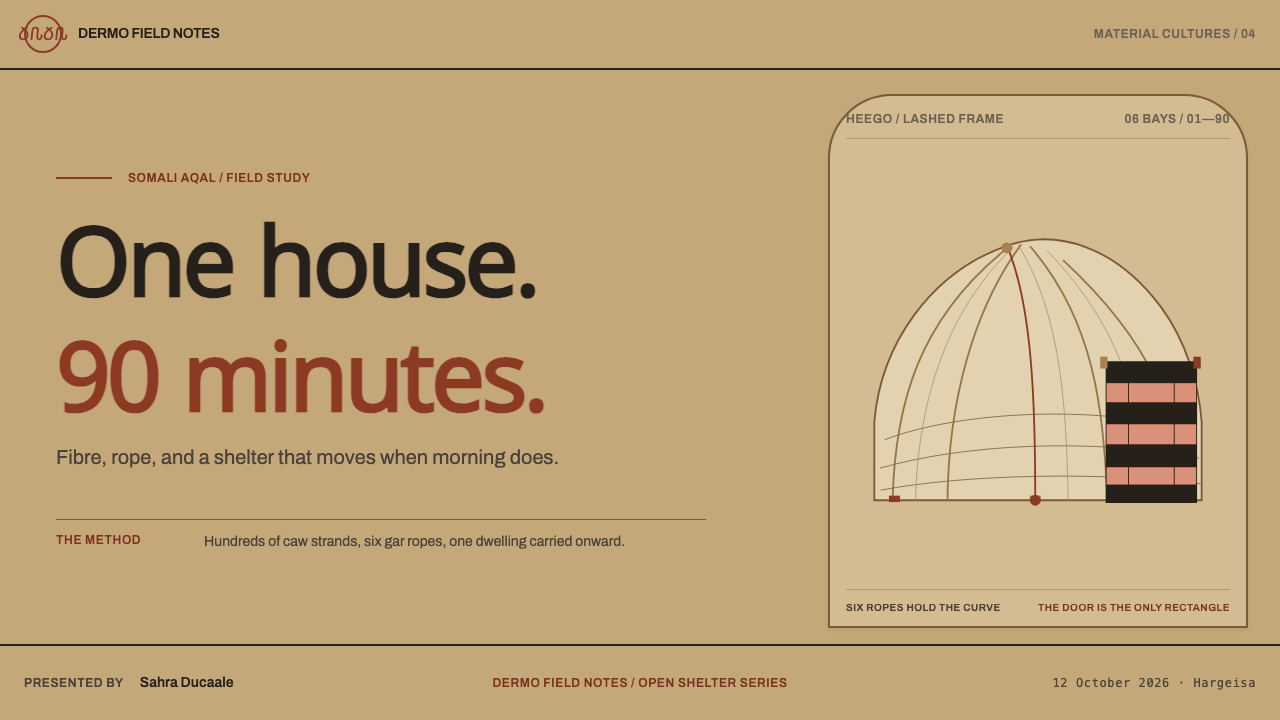
Somali Aqal is a light-ground design system modelled on the aqal Soomaali, the portable domed house of Somali pastoral nomads. The aqal has no plans and no fixed site. It is a skeleton of bent saplings covered with plaited grass mats and lashed with rope, raised in about ninety minutes and taken down onto the back of a single camel. The design system treats that mat skin as its page.
Almost everything is one tone: a dry, matte, slightly dusty tan, the colour of grass dried in the sun. The exception is the door. The kebed is the one rectangle in a structure otherwise made of curves, and it is the only part dyed black and red from the bark of the galool tree, set into one side of the dome. In the system this becomes a rule of scarcity: one dominant neutral field, one point of dark colour, and that point appears once, at one side.
The aesthetic is warm without being soft. Surfaces feel woven rather than printed. Wear is visible and repaired in place with patches of hide instead of being hidden. Nothing is glossy, new or perfect. It is a style of craft, portability and weathered use, and it asks designers to let a layout look as though it could be packed up and carried.
Where does Somali Aqal come from?
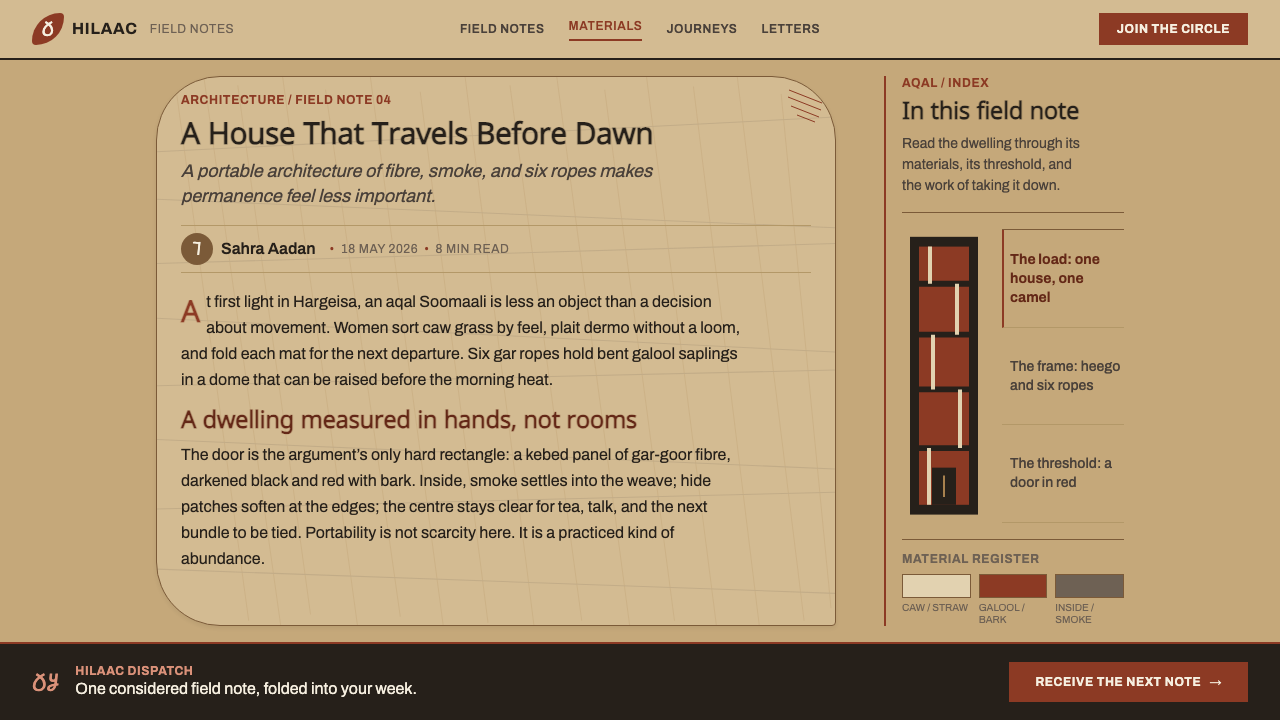
The aqal Soomaali is architecture without drawings. Women plait the mats, known as dermo, from hundreds of strands of caw grass, by hand, with no loom and no frame. The mats are then lashed with six gar ropes over a frame of bent galool saplings. The women's craft is at the centre of this tradition, and designers who work with the system should treat the aqal as skilled making, not as anonymous texture.
The house is the product of a way of life, Somali pastoral nomadism, in which a household moves with its herds. A house that cannot be carried is of no use to such a family, so the aqal is designed around transport: a frame that can be bent and unbent, mats that can be rolled, ropes that can be coiled, and a load that one camel can bear. The source dates the tradition to before 1900 and describes it as in continuous nomadic use. In other words it was never revived, because it never stopped.
The setting is the Somali Peninsula in a wide sense: Somalia, Somaliland, the Ogaden, northern Kenya and Djibouti, a territory defined by a shared pastoral culture and language rather than by any single state border. The source also notes the Osmanya script, devised in the 1920s by Osman Yusuf Kenadid, alongside the aqal tradition. It is a reminder that Somali visual culture includes designed writing as well as portable architecture.
The source names three movements that stand behind the look: Somali pastoral nomadism, portable dome architecture, and Horn of Africa grass-mat weaving. Mat weaving gives the system its surface, and portable dome architecture gives it its logic of assembly: parts, joints and coverings, designed to be put up and taken down again. A good Somali Aqal layout should feel assembled from panels that could be moved, not poured as a single block.
What defines the Somali Aqal look?
Sun-dried field
The page is the mat: a dry, matte, slightly dusty tan, the colour of grass that has been left in the sun. It has no sheen and no glow. Almost everything sits in this one tone, with only small shifts of lightness to separate regions, which gives the style an unusual calm and makes the single dark element on a page unmistakable.
Plaited surface
The mats are plaited by hand from hundreds of strands, and the system suggests this through rhythm and irregularity rather than through literal texture. Surfaces should feel handmade, with slight variation from one area to the next, never perfectly uniform. Heavy photorealistic grass patterns are not the point; the feeling of a woven skin is.
Hide patches
Where a mat wears through, it is patched with hide, sheep and camel hide in the source. The system adopts this as a visible repair logic: exceptions, annotations and secondary panels appear as patches laid over the field, in a slightly different, darker or warmer tone, with no attempt to blend them in. Wear is information, not a defect to be removed.
The one dark door
The kebed door is woven from harder fibre and dyed black and red from galool bark. It is the only dark element in the structure and the only rectangle, and it opens on one side of the dome. In layout this is the signature move: one rectangular dark block, placed off to one side, carrying the single most important thing on the page. Using it twice weakens it.
Curves with one corner
The dome is made of bent saplings, so the structure is round, and the door is the only straight-edged form. The system borrows this contrast. Soft, rounded shapes and loose groupings dominate; hard right angles are rare and meaningful. When a rectangle does appear, the viewer reads it as a threshold, a place where something is entered or decided.
Rope lashing
Six ropes hold the mats on the frame, and the system treats lines in the same spirit. Rules and connectors are few, functional and visibly binding things together; they are not used as ornament. A thin line that crosses a field should look like something that is holding the surface down, not like a decorative border added afterwards.
Made to be moved
The aqal goes up in about ninety minutes and comes down onto one camel, and that portability shapes the style's logic. Layouts are built from a few simple parts that could be rearranged. Components are light, self-contained and easy to separate, and nothing in the composition depends on being fixed permanently to a particular place.
Who shaped Somali Aqal?
Kenadid devised the Osmanya script, which the source dates to the 1920s. He appears in this system as proof that Somali design includes writing and graphic invention as well as architecture. For a designer, his name is a reminder that the Somali visual tradition is not only pastoral and portable but also modern, deliberate and authored.
The mats are plaited by women, by hand, from hundreds of strands of caw grass, without a loom or a frame. They are the makers of the aqal's skin and the real authors of the style. When the system is used in public work, naming the craft and the women who practise it is part of using the style well, in place of treating the result as anonymous tribal texture.
The source lists Elmi Leedo among the key figures connected to this system. This article does not attach dates, works or biography to the name beyond what the source gives, and it is better to say so than to guess. Designers who want to cite the tradition should go to Somali sources for the person and the context.
Shafi Said is another name the source lists among the key figures for the style. As with Elmi Leedo, this article does not add details beyond what the source supports. The name is useful as a starting point for reading, and it signals that the system draws on named people and not only on an anonymous craft.
How do you use Somali Aqal today?
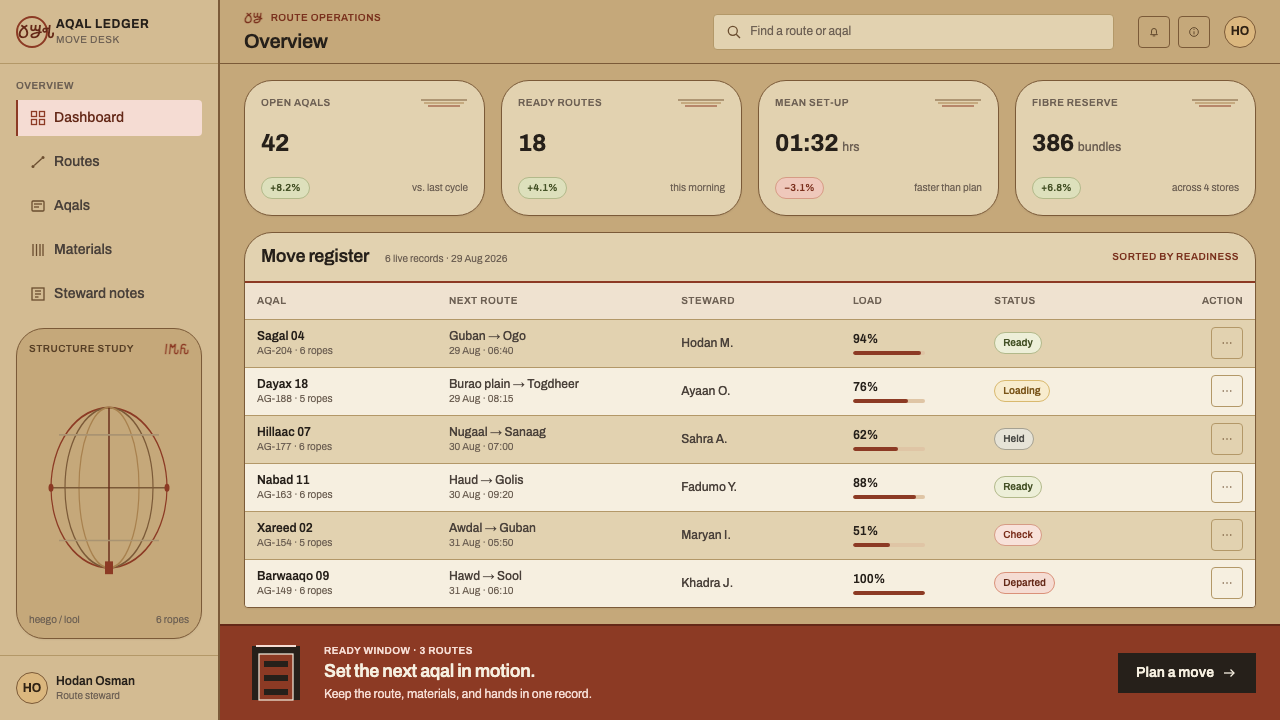
Somali Aqal suits work that wants warmth, craft and a sense of movement without sentimentality. Its strengths are a single calm field, one strong focal point, and a feeling of things made by hand and made to travel. It is one of the few styles in which a plain, almost monochrome page is the goal and not a lack of ideas.
On slides, make the cover an open tan field with one dark rectangle placed at the side as a title block or a single key phrase. Content slides can keep the same field and use hide-toned patches for call-outs, so that exceptions look like repairs and additions rather than like boxes. Data slides work well when one bar, one number or one row is set in the door colours and everything else stays in the field, because the viewer is immediately shown where to look.
In web interfaces, the style fits documentation, craft and marketplace sites, travel and outdoor products, and offline-first or portable tools whose message is that your work goes with you. A dashboard can use the neutral field for everything and reserve a single dark door-block for the current state or primary action. A pricing page can put every plan on the same matte tone and mark the recommended one with the dark rectangle. Motion should be calm, with things sliding into place like panels being lashed on.
In editorial and marketing work, the style suits heritage and craft stories, documentary and humanitarian features, textile and weaving projects, and brands about movement, shelter or hospitality. Photography should be natural and unglossy. Where the subject is the Somali aqal itself, credit the tradition and the women who make it, use the Somali terms accurately, and avoid generic safari or desert clichés.
The most common mistake is to treat the door colours as a general accent. Once black and red appear in many places, the focal point disappears and the style turns into an ordinary earth-toned scheme. A second mistake is to make it glossy, with sand gradients, 3D tents or soft shadows; the material is matte and flat. A third is to read it as generic desert or boho beige, ignoring the specific craft, the single dark door and the visible repairs that define it.
Somali Aqal — FAQ
What is an aqal?
The aqal Soomaali is the portable domed house of Somali pastoral nomads. Its frame is made of bent galool saplings and its walls are plaited dermo mats of caw grass, lashed on with six gar ropes. It goes up in about ninety minutes and comes down onto one camel. In this design system, the mat skin is the page and the dyed door is the only dark element.
Why is the door the only dark element?
Because in the real structure the kebed door is the one part woven from harder fibre and dyed black and red from galool bark, and it is the one rectangle in an otherwise rounded form. The system turns that fact into a focal-point rule: one dark rectangle, placed at one side, carrying the most important thing on the page. Repeating it would dilute the effect.
Is this just a beige minimal style?
No. Beige minimalism usually aims for neutrality and smoothness. This style is specific: the tan is a dried-grass tone, the surface is handmade and visibly patched with hide, the structure is built from curves with a single rectangular door, and that door carries bark-dyed black and red. Without those features it becomes a generic neutral palette and loses its meaning.
How should I credit or respect the culture behind it?
Name the tradition by its proper terms, aqal Soomaali, dermo, kebed and galool, and credit the Somali pastoral communities and the women who plait the mats. Avoid treating the style as a generic African or desert look. When the project is only inspired by the aesthetic, say so; when it is about the aqal itself, check the details against Somali sources.
Does the style work with a dark background?
It is designed as a light-ground style, and that is part of its logic: the dark door only works because it stands out against a pale, sun-dried field. A dark version would lose the contrast that makes the focal point read, and would no longer feel like a mat. If a dark mode is needed, keep the same one-dark-point idea inverted rather than copying the palette directly.
Related design styles
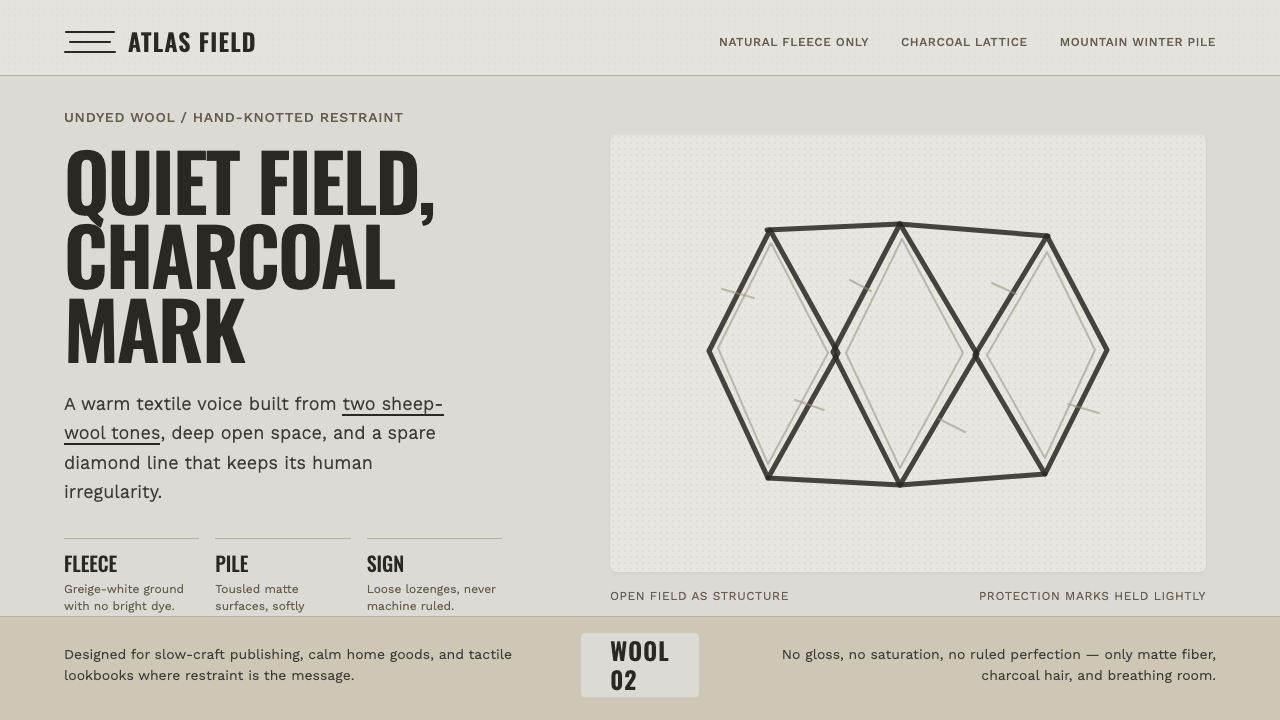 Beni Ourain Berber CarpetRestraint feels tactile. Greige wool field, Oswald type, and a loose charcoal…
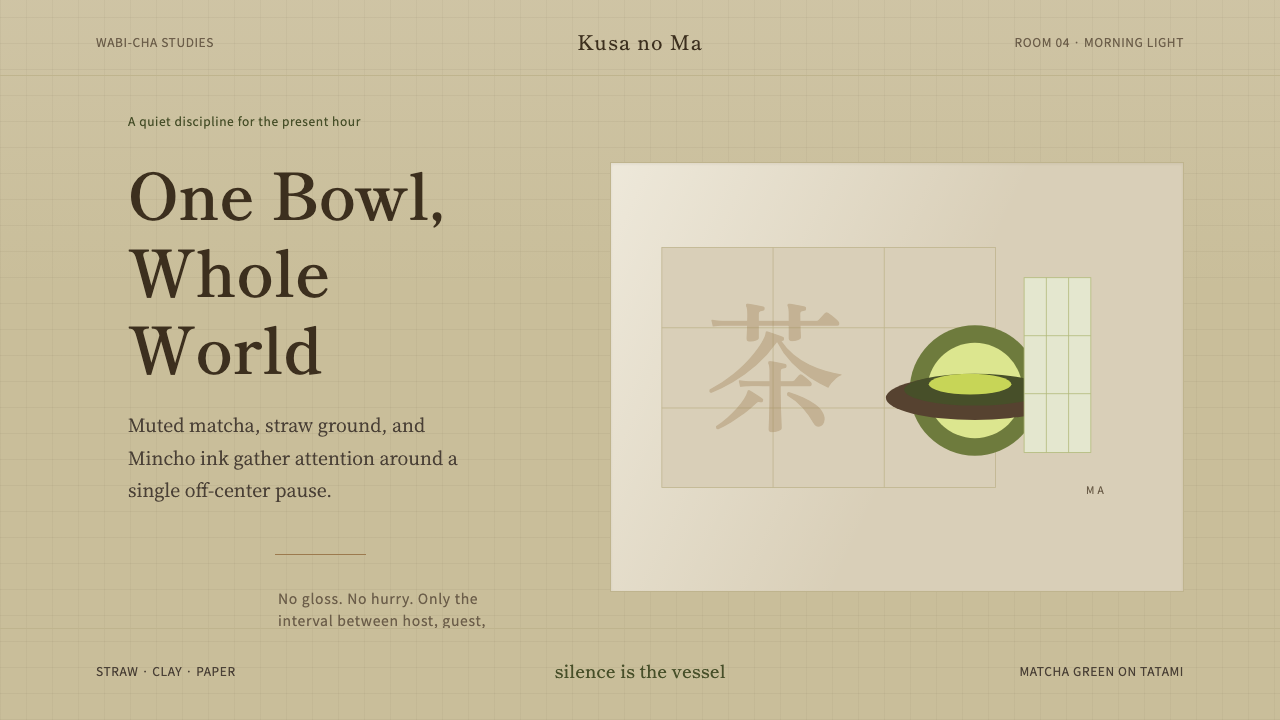 Japanese Tea CeremonyStillness has weight. Tatami straw, matcha green, and Mincho type leave room…
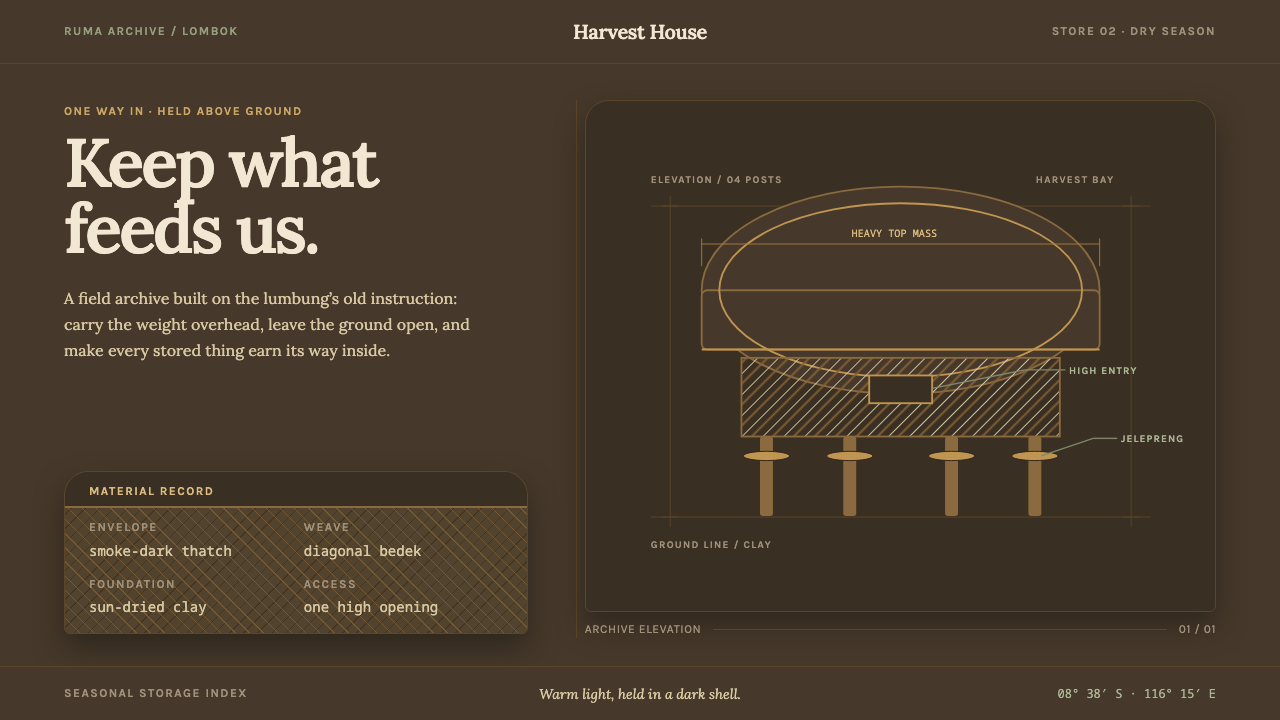 Sasak Lumbung GranaryStorage carries its weight. Smoke-dark ground, warm Lora type, and a four-pos…
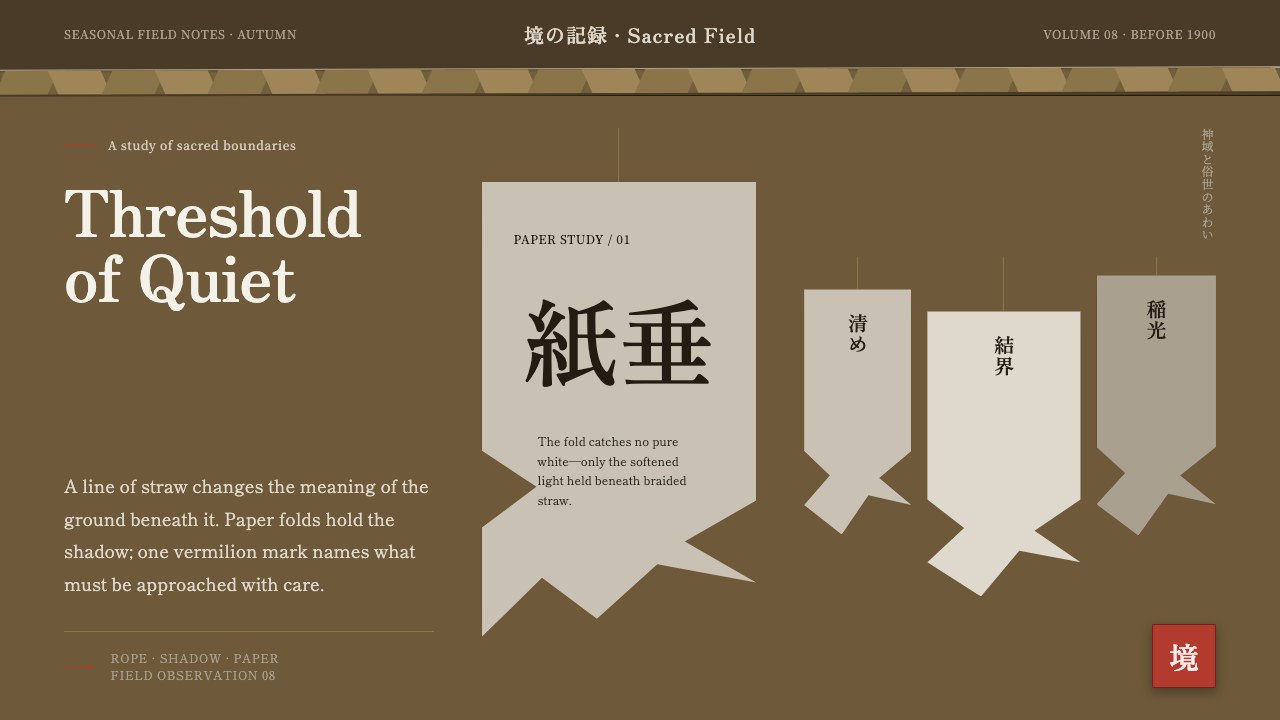 Shinto Shide Paper StreamerQuiet becomes sacred. Shadowed washi hangs from a straw-gold line, marked onc…
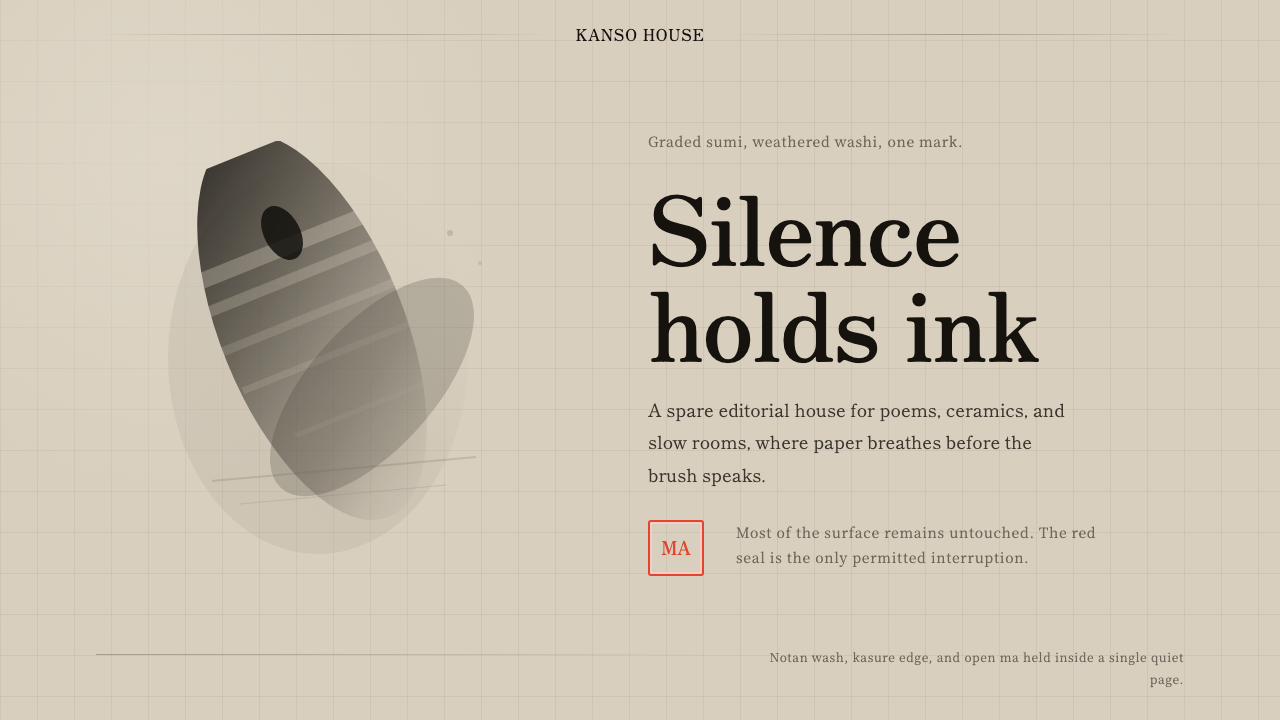 Sumi-e Ink WashRestraint carries weight. Washed black ink floats on oatmeal washi, anchored…
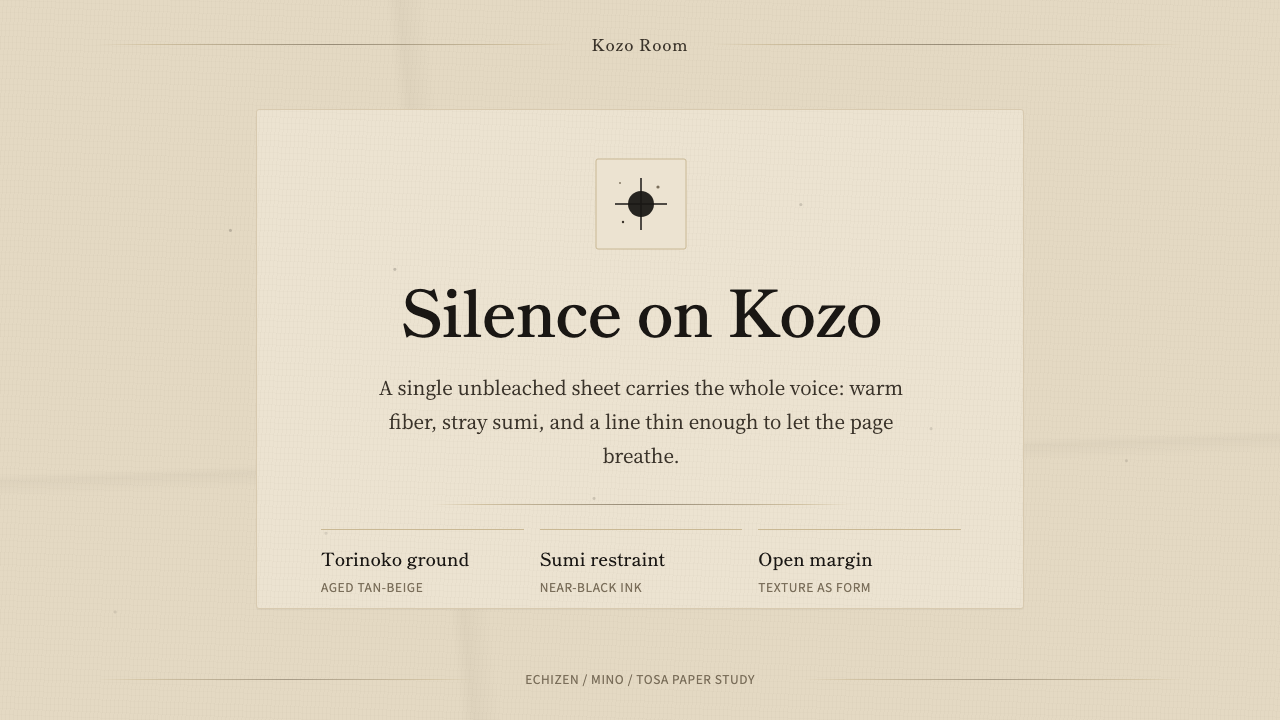 Washi Paper MinimalQuiet is material. Warm kozo grain, sumi specks, and hairline rules hold the…