What is Pepto-Bismol Pink (1901)?
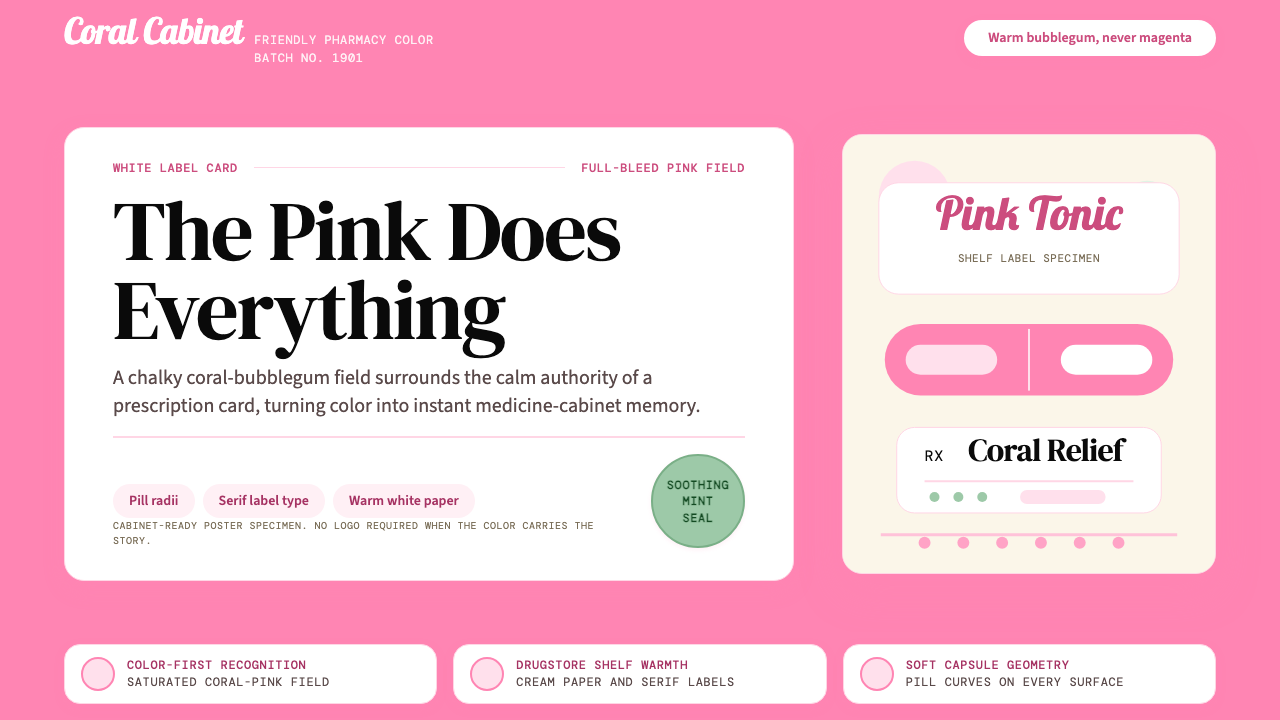
Since 1901, one saturated pink has done the work of an entire brand — proof that when a product's color is inseparable from the product itself, no logo is needed.
Pepto-Bismol Pink (1901) in brief
Pepto-Bismol Pink is an American commercial color system rooted in the visual identity of the stomach-remedy brand launched in 1901. The defining hue is a warm, coral-tinged bubblegum pink — deeply saturated, never sugary-pale, never drifting toward magenta or lavender — that functions simultaneously as product color, packaging color, and brand identifier. It is one of the rare cases in design history where the color of a substance is the brand.
The system pairs that full-bleed pink field with white prescription-card surfaces, serif label typography borrowed from early twentieth-century American pharmacy conventions, and pill-shaped corner radii that echo the rounded forms of tablets and capsules. The result is a visual language that reads as simultaneously clinical and comforting — the warmth of the pink is domesticated by the orderliness of the white label and the quiet authority of serif letterforms.
What distinguishes this aesthetic from broader candy-pink or millennial-pink trends is its specificity and its institutional weight. The pink is not decorative; it is diagnostic. It carries over a century of association with relief, trust, and the reassuring familiarity of the American medicine cabinet. Designers who borrow from it are borrowing not just a color but a feeling: the quiet confidence of something that has been on the shelf since your grandparents were children.

Where does Pepto-Bismol Pink (1901) come from?
The story begins in 1901 in Norwich, New York, where Dr. Wendell Lawrence compounded a pink oral suspension intended to treat infant cholera. The pink color was not a branding decision — it was a consequence of the formula's bismuth subsalicylate base reacting with trace minerals in the mixture. The product was initially sold as 'Bismosal: Mixture Cholera Infantum' by the Norwich Pharmacal Company, and for its first two decades it circulated primarily among physicians and pharmacists rather than general consumers.
Commercial mass marketing of the product began in earnest around 1919, and with it came the deliberate elevation of the pink into an identity asset. By the mid-twentieth century, Pepto-Bismol had become a fixture of American drugstore shelves, and its pink — warm, unmistakable, distinct from any competitor — had achieved the status of a trade color. The brand was acquired by Procter and Gamble in 1982, and P&G's brand-consistency discipline further standardized the shade across every touchpoint: bottle, label, television advertising, and eventually digital media.
The visual system that evolved around the color drew heavily from early twentieth-century American pharmacy aesthetics: the serif typefaces of prescription labels, the white enamel surfaces of drugstore fixtures, the rounded edges of pill bottles and medicine cabinets. Walt Cunningham, credited as a key figure in formalizing the brand's visual language in the mid-twentieth century, helped translate these vernacular pharmacy references into a coherent commercial identity. The system was never avant-garde; its power came from familiarity and continuity.
By the time P&G assumed ownership, the pink had transcended mere product identification. It had entered American cultural memory as a shorthand for digestive comfort — appearing in film and television as a visual joke, a cultural reference, and a symbol of domestic medicine. This cultural saturation is itself a design phenomenon: a color so consistently deployed, over so long a period, that it achieves the rare status of a proprietary hue recognized without context. The design lesson is not about the pink itself but about the discipline of using one color, consistently, for a century.
What defines the Pepto-Bismol Pink (1901) look?
Color Field
The system leads with a full-bleed pink ground — warm, coral-inflected bubblegum, saturated enough to read as bold in a crowded retail environment but soft enough to avoid aggression. The pink is never used as an accent; it is always the environment. White appears as the surface of label cards and information panels, creating sharp figure-ground contrast. No tertiary palette, no gradient transitions — the shift from pink to white is clean and immediate.
Corner Radius
Rounded corners are not a decoration but a structural reference: every container, card, and panel echoes the pill capsule and the medicine bottle. The radius is generous — approaching a stadium or lozenge shape at smaller scales — so that even rectangular elements read as soft and pharmaceutical rather than sharp and bureaucratic. This rounding is consistent across all scales, from small data badges to large hero containers.
Typography
Serif letterforms carry the weight of institutional trust. The typeface conventions derive from early American prescription label design: upright, legible, slightly condensed serifs that read as authoritative without being rigid. Labels are centered on white card surfaces, echoing the format of a pharmaceutical package insert or a vintage apothecary jar label. Display text is used sparingly; when it appears, its scale is large enough to anchor the composition without competing with the pink field.
Surface Vocabulary
The white prescription card is the system's primary information container — a rectangular panel with rounded corners that floats on the pink field, suggesting a physical label affixed to a bottle. Multiple cards may stack or overlap slightly, creating the sense of layered pharmaceutical documentation. The surfaces are flat and matte in feeling; no glass effects, no gradients, no dimensional sheen. The card has a clinical cleanliness associated with medical environments.
Iconography and Form
Illustrative elements, when present, draw from the iconographic vocabulary of mid-century American pharmacy: pill shapes, capsule outlines, bottle silhouettes, and medicine spoon forms. These appear as flat, simplified line forms rather than detailed illustrations. The style is diagrammatic — enough detail to identify the object, no detail beyond that. Decorative illustration in the contemporary sense is absent; all graphic elements serve as functional signifiers.
Tone and Trust
The overall affect is warm authority — the visual equivalent of a pharmacist who is both kind and competent. The pink signals approachability and domesticity; the serif type and clinical white surfaces signal knowledge and reliability. Neither register dominates: the system holds both in balance, which is precisely what makes it suitable for a health remedy consumed in moments of discomfort. The aesthetic never condescends to cheerfulness nor intimidates with austerity.
Temporal Depth
The aesthetic carries visible age — not as decay but as continuity. Slight vintage warmth in the pink, reference to early twentieth-century type conventions, the pharmacy shelf as an organizing metaphor: together these create the impression of something that has been proven, not invented. This temporal quality is a design asset; it communicates that the system has survived long enough to be trusted, which is a rare thing to achieve through purely visual means.

Who shaped Pepto-Bismol Pink (1901)?
Lawrence compounded the original pink bismuth mixture in Norwich, New York in 1901, initially as a treatment for infant cholera. His formula's accidental color — produced by the interaction of the active ingredient with trace minerals — became the visual foundation of a brand that would outlast every deliberate branding decision made in its wake. Lawrence represents the class of origin figures whose most consequential contribution was unintentional: he did not design a color; he made a medicine that happened to be pink.
The pharmaceutical firm that first commercialized Lawrence's formula and began the deliberate process of building a consumer identity around the product's distinctive color. Norwich Pharmacal's early marketing efforts — transitioning the product from a physician-prescribed remedy to an over-the-counter consumer brand — established the conventions of white label on pink ground, serif pharmaceutical typography, and the reassuring visual grammar of the home medicine cabinet that the brand would carry for over a century.
P&G's 1982 acquisition of the brand brought the resources and brand-management discipline of one of the world's largest consumer goods companies to a color that had already been accumulating cultural weight for eight decades. P&G's contribution was standardization: the systematic locking of the pink across every medium, market, and production technology. In an era before comprehensive digital color management, maintaining consistent color across television, print, and physical packaging at global scale was a significant brand engineering achievement.
Credited with formalizing key elements of the brand's visual language in the mid-twentieth century, Cunningham worked to translate the vernacular conventions of American pharmacy aesthetics — the prescription label, the apothecary jar, the drugstore shelf — into a coherent branded system. His work represents the moment when the brand's color shifted from being an inherited accident to being a consciously managed asset, a transition that most long-lived brand colors must eventually make.
How do you use Pepto-Bismol Pink (1901) today?
Pepto-Bismol Pink is a system built on a paradox: it uses a color strongly associated with playfulness and sweetness to communicate medical seriousness and institutional trust. Applying it well means holding both registers simultaneously. The pink should never feel clinical by itself — it is the white label surface, the serif type, and the pill-radius rounding that introduce the pharmaceutical authority. Strip any one of these elements and the system collapses toward either generic candy-pink or generic medical white.
For presentation slides, the system is most effective as a cover and section-divider treatment. A full-bleed pink cover with a centered white card panel containing the title — set in a legible serif at generous scale — immediately signals warmth, confidence, and distinctiveness in a landscape dominated by neutral or dark presentation templates. Content slides should shift to a white or near-white ground with the pink appearing only as an accent — pill-shaped badges for labels, rounded containers for callout text, a pink rule as a section marker. Data slides work well with pink as the primary data color against white grounds, particularly for bar charts and donut diagrams where the rounded forms complement the system's aesthetic logic.
For web interfaces and dashboards, the system suits contexts where the user needs to feel both informed and reassured — health tracking applications, pharmacy e-commerce, wellness dashboards, and benefit or insurance pricing pages. The approach: use white as the primary background for data-dense content areas, deploy the pink as a header environment or hero background with white card containers floating within it, and use rounded corner radii throughout to maintain formal consistency. Navigation and interactive elements in this system should lean on the white-card vocabulary rather than introducing flat pink buttons, which can read as overly casual. Reserve pink button treatments for primary calls to action only.
For editorial and marketing applications, the system's strongest register is the bold, full-bleed poster mode: pink saturating the entire background, a white label card centered or offset-centered in the composition, large serif type inside the card, and minimal supporting elements. This configuration works well for product launch announcements, healthcare campaign headers, and any editorial context where the design needs to arrest attention immediately. Marketing email headers in this mode perform well because the pink is distinctive enough to be recognizable in preview panes even at thumbnail scale. Pairing the system with clean, open white body-text areas in long-form content prevents the pink from fatiguing the reader.
A common mistake is pushing the pink too far toward either extreme: making it so pale that it loses its pharmaceutical specificity and becomes generic millennial pink, or so saturated and cool that it drifts toward magenta and loses the warmth that makes it trustworthy. A second frequent error is abandoning the serif typography and white card vocabulary in favor of sans-serif type directly on the pink ground — this produces something that feels more like a cosmetics brand or candy packaging than a health system. The pill-radius detail is also often underused; designers who apply round corners timidly produce something that reads as merely trendy rather than as a considered reference to the pharmaceutical form language that gives the system its meaning.

Pepto-Bismol Pink (1901) — FAQ
Is Pepto-Bismol Pink just millennial pink by another name?
No — and the distinction matters for application. Millennial pink (the soft, desaturated blush that dominated design from roughly 2016 to 2019) is a cool, low-energy hue that communicates softness and accessibility. Pepto-Bismol Pink is warmer, deeper, and more saturated — a coral-inflected bubblegum that carries institutional weight rather than lifestyle aspiration. Millennial pink says 'approachable luxury'; Pepto-Bismol Pink says 'trusted remedy'. Using one in a context that calls for the other produces a category mismatch that careful observers will sense even if they cannot name it.
Can this system work for brands outside healthcare and pharmacy?
Yes, but with awareness of what the color carries. The system's associations — comfort in discomfort, domestic familiarity, institutional trust — transfer well to food and beverage, insurance and financial products, hospitality, and any brand that wants to position itself as reliable and warmly authoritative rather than cool and aspirational. The risk lies in brands that operate in categories where the pharmaceutical association creates unintended connotations — for example, a premium fashion or spirits brand would likely find the medicine-cabinet reference undermining. The question to ask is: does your brand want to feel like something people reach for when they need help?
How do you keep the pink from feeling childish or kitsch?
The pink is held in check by three things: the serif typeface, the white clinical surface, and the restraint of the overall system. Remove any of these and the pink's playful associations take over. Practically: always pair the pink with at least one typographic element set in a legible upright serif rather than a rounded or script face; always provide white label surfaces as information containers rather than placing text directly on the pink ground; and resist the temptation to add secondary colors, gradients, or illustrative decoration that would push the system toward candy or cosmetics territory. The discipline of the white card is what keeps the whole composition medicinal rather than whimsical.
Does the system work in dark mode or inverted layouts?
The canonical form is pink ground with white surfaces — a light-dominant system. Dark inversions are possible but require significant rebalancing. On a dark or near-black ground, the pink behaves differently: it loses the field-saturation that gives it authority and reads instead as a bright accent. A workable dark variant treats the dark background as the pharmaceutical container (evoking a dark glass medicine bottle rather than the white enamel shelf), uses the pink sparingly as a highlight and typographic accent, and maintains the serif type and rounded corners as the primary system identifiers. This is a different composition, not simply an inversion of the original.
What makes this color system different from other pink brand systems?
Most pink brand systems use pink as a personality signal — a marker of femininity, playfulness, luxury, or modernity. Pepto-Bismol Pink uses pink as a performance guarantee: the color promises the same thing the medicine promises. This is the distinction between a color that has been chosen for its associations and a color that has earned its associations through over a century of consistent deployment. The practical implication for designers is that this system carries pre-existing cultural credit: audiences over a certain age bring their own trust to it before any design element is processed. This is both its greatest strength (trust is hard to design from scratch) and its greatest constraint (the system cannot drift too far from its referents without cashing out the credit).
Related design styles
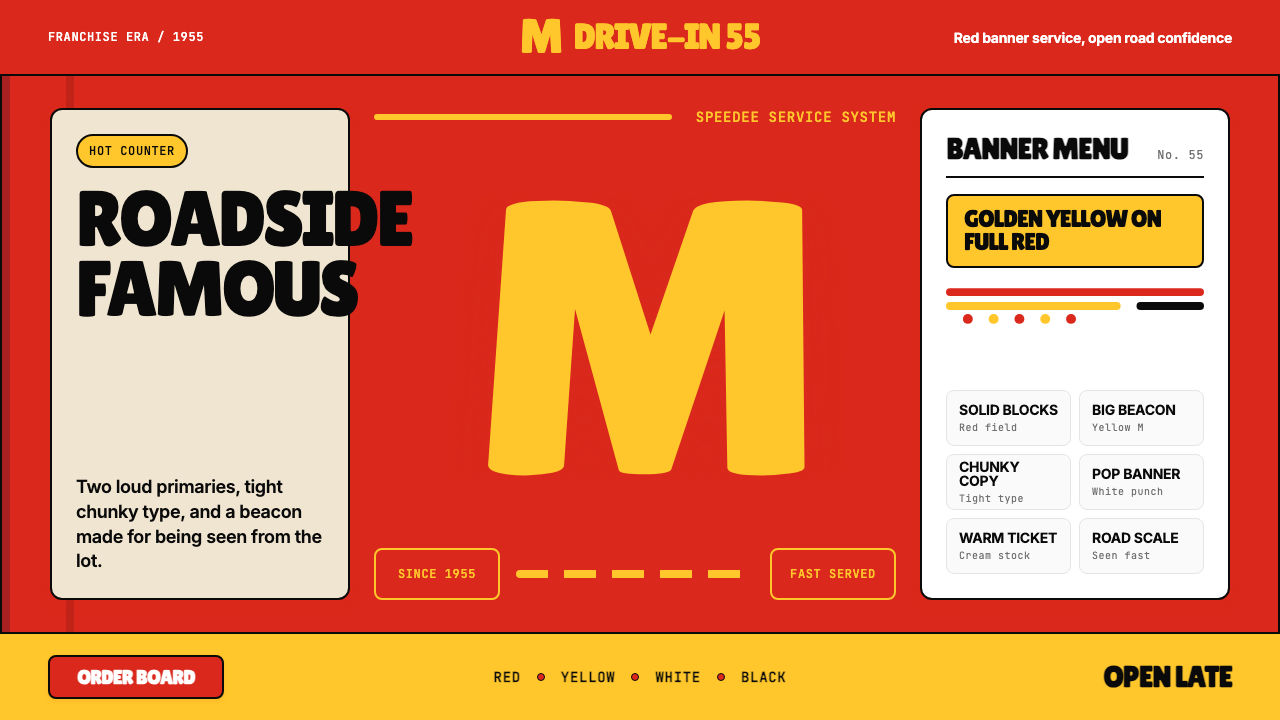 McDonald's Golden ArchesRoadside famous. Saturated red, hot yellow, and chunky type shout from 1955.
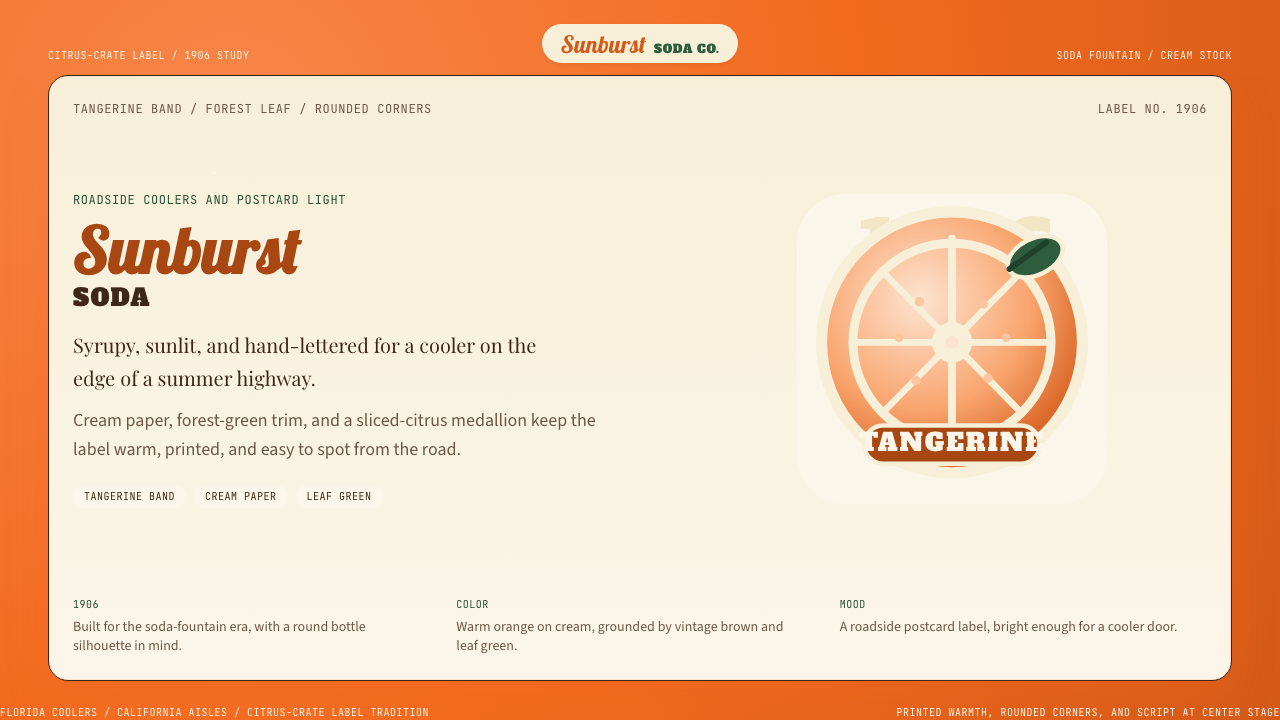 Orange Crush Soda (1906)Syrupy nostalgia. Tangerine, cream, and script make it a postcard label.
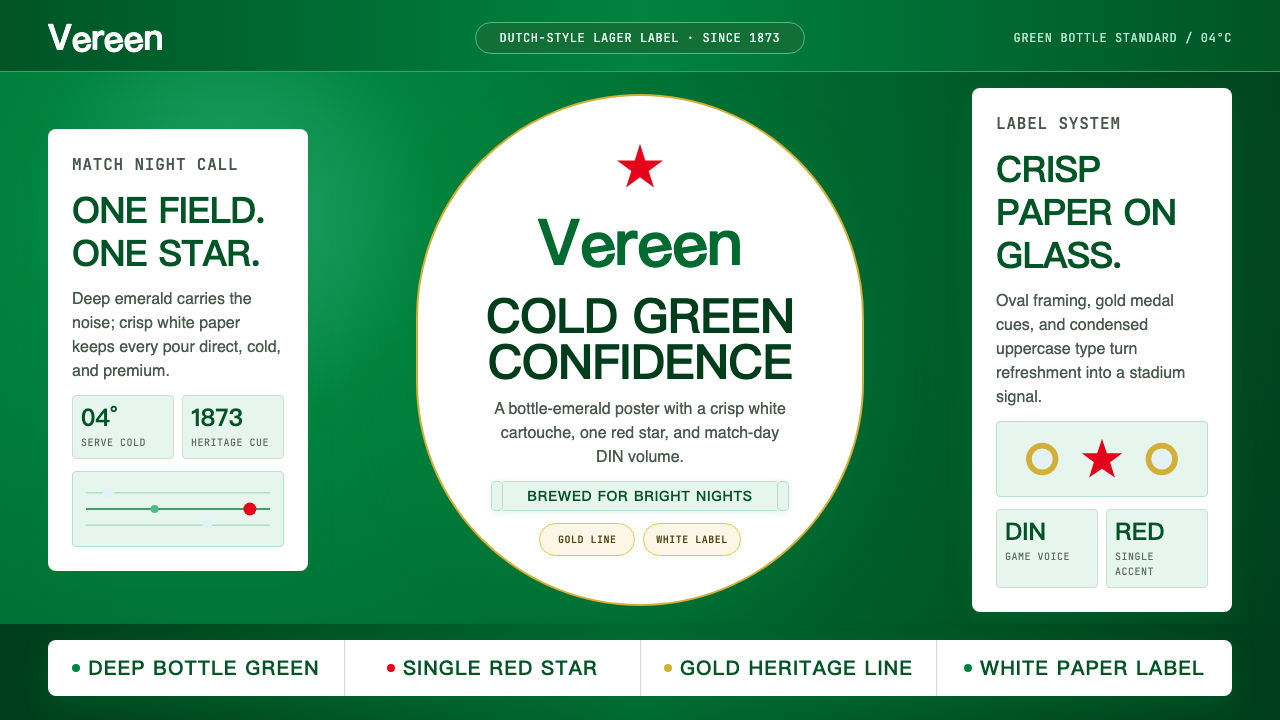 HeinekenEmerald owns the field. White label, red star, gold line, and condensed type…
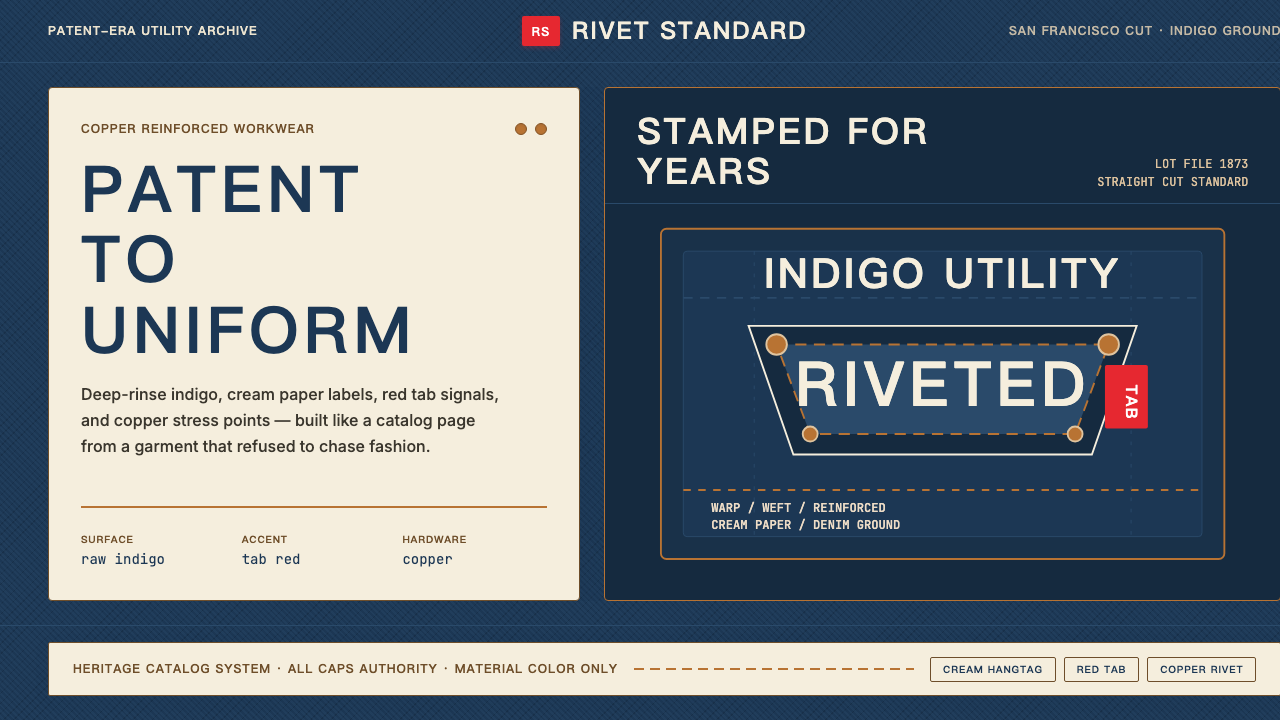 Levi's 501Utility becomes permanent. Indigo ground, cream hangtag panels, red tab and c…
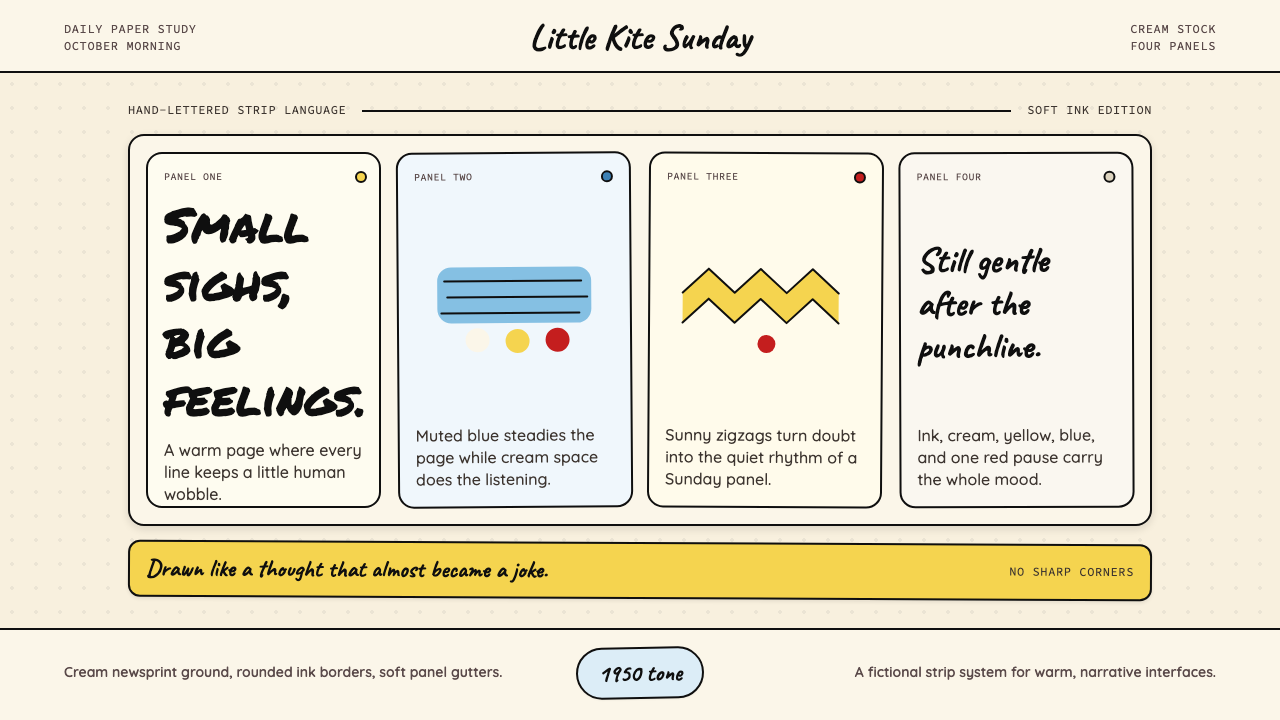 Peanuts Comic Schulz (1950)Gentle melancholy on newsprint. Caveat lettering, cream panels, yellow and bl…
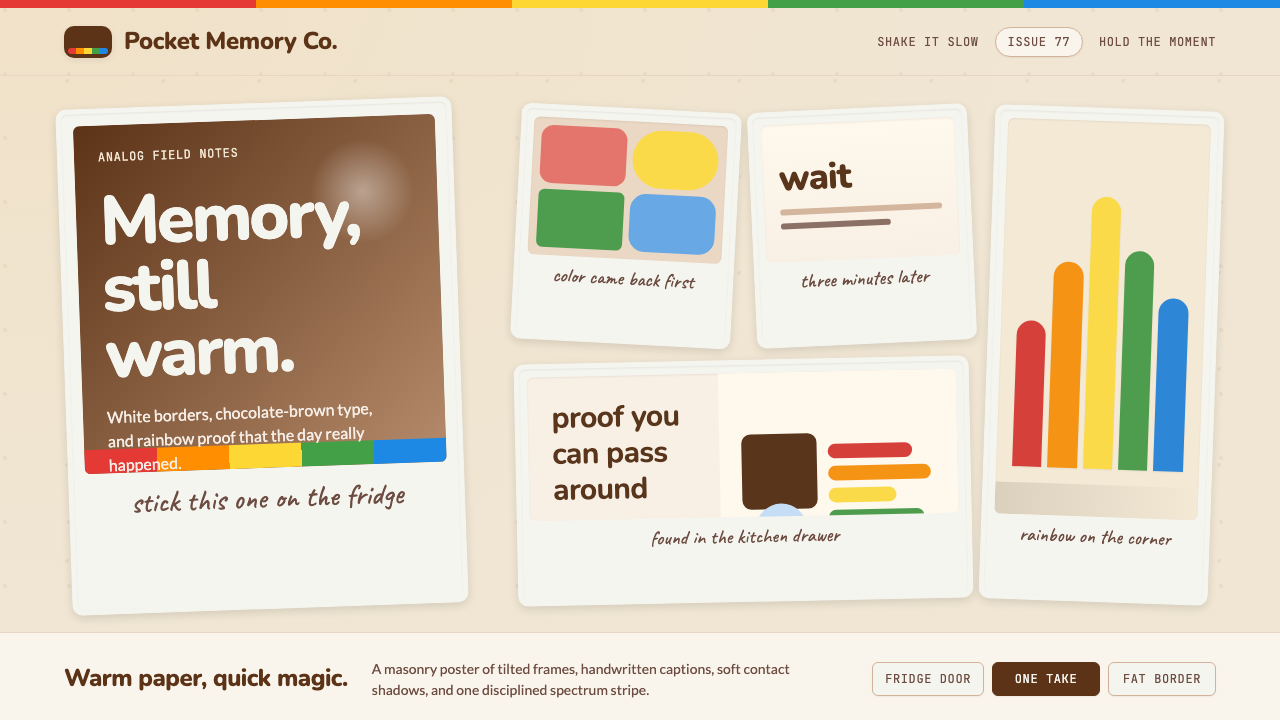 Polaroid InstantMemory made tangible. Photo-white frames tilt on aged paper with a warm rainb…