What is Heineken?
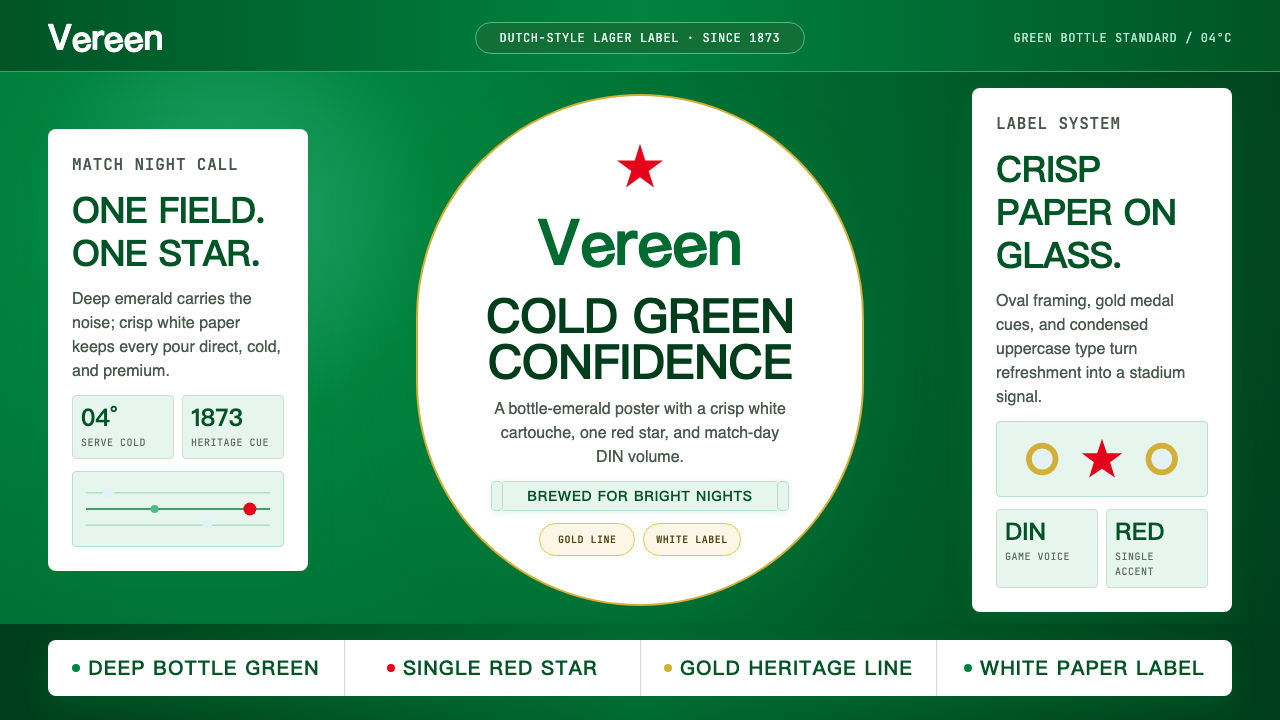
One bottle, one shade of green, and a tilted wordmark turned a Dutch lager into the world's most recognizable beer brand.
Heineken in brief
Heineken's visual identity is one of the most disciplined color-brand systems ever built for a consumer product. Its palette is ruthlessly simple: a deep, saturated bottle green anchors everything, supported by crisp white and a single red accent. Gold appears as a heritage flourish — recalling competition medals — but never overwhelms the trio. The result is a brand that reads clearly at the speed of a refrigerated shelf scan, a sports-stadium hoarding, or a six-second television cut.
The system's emotional register sits at the intersection of sport-sponsorship confidence and Dutch directness. It does not whisper premiumness through restraint the way a luxury fashion house might; instead it announces itself — cool, slightly cocky, and certain of its own quality. The oval label, the crown cap, the condensation-beaded bottle shot: every touchpoint reinforces the same sensation of cold, refreshing certainty.
Two distinct typographic voices coexist within the identity. A bold condensed sans-serif — associated with match-day headlines and promotional callouts — shouts energy and urgency. The script wordmark, with its characteristic tilted letterforms, counters that directness with warmth and approachability. The tension between these two voices — one mechanical, one human — is what keeps the brand from reading as either purely corporate or purely casual.

Where does Heineken come from?
The Heineken story begins in 1873, when twenty-two-year-old Gerard Adriaan Heineken purchased the De Hooiberg brewery in Amsterdam and began systematically transforming it into a modern industrial enterprise. From the outset, Gerard was interested in scientific brewing — he hired the chemist Hartog Elion, a student of Louis Pasteur, to develop a proprietary yeast strain that would ensure consistency across batches. That yeast, known internally as Heineken A-yeast, is still used today and represents one of the most durable pieces of intellectual property in the beverage industry.
The brand's visual identity, however, remained relatively modest through the early decades. Labels changed incrementally, and the green bottle — which became so central to the brand's identity — was adopted partly for practical reasons: amber glass was in short supply after the Second World War, and green glass became a workable substitute that Heineken eventually made iconic. By the postwar period, the brand had established strong distribution across Europe and was beginning its expansion into the American market, where imported lagers commanded a premium over domestic brands.
The pivotal moment in the brand's visual history came in 1964, when Alfred Henry Heineken — known universally as Freddy — took a direct personal interest in redesigning the wordmark. Freddy Heineken was an instinctive marketer who understood that the brand's label was its most powerful communication tool. His most celebrated contribution was the so-called 'smiling e': the observation that tilting the three e's in the Heineken wordmark slightly backward gave them a jaunty, human quality — as if the letters themselves were grinning. This seemingly small adjustment transformed a functional logotype into a personality.
The red star that crowns the oval label predates Freddy's tenure and carries contested origin stories — some accounts link it to European brewing guild traditions, others to the postwar period when Heineken sought to signal solidarity with Eastern European markets. Whatever its origin, the star became an indispensable element of the lock-up, providing a vertical anchor to the horizontal sweep of the wordmark. The Amsterdam-based agency VBAT has been a long-standing steward of the identity in its modern iterations, maintaining visual coherence across an increasingly complex sponsorship and licensing portfolio.
What defines the Heineken look?
Signature Green
The deep, saturated bottle green that defines the brand is neither forest green nor lime green — it occupies a specific middle territory that reads as simultaneously cool, natural, and premium. It is dark enough to convey substance and heritage, saturated enough to command attention across large-format outdoor media. The green is the brand's single most powerful asset: instantly recognizable across markets, cultures, and contexts without any supporting text.
The Smiling Wordmark
The defining characteristic of the Heineken logotype is the backward tilt of the three lowercase e's — a deliberate design decision made in 1964 that gives the letters a jaunty, almost animated quality. The effect is subtle enough to feel organic rather than contrived, yet it is the single element that most distinguishes the wordmark from generic script lettering. The tilt creates an impression of forward movement and good humor, directly encoding the brand's personality at the letterform level.
Oval Label Architecture
The oval label is a container that organizes a remarkably complex set of elements — red star, script wordmark, white scroll banner, heritage text, decorative gold rule — into a coherent, legible unit. The oval itself implies completeness and quality: it is a format associated with heritage European product labels across wine, spirits, and condiments. Within the brand system, the oval functions as a seal of authenticity, and its proportions have been carefully maintained through decades of iteration.
Red Star Accent
The five-pointed red star positioned at the top of the oval label serves multiple compositional functions: it punctuates the vertical axis of the label, it provides the only warm-toned element in an otherwise cool palette, and it creates a visual focal point before the eye drops to the wordmark. The star reads simultaneously as a symbol of quality (the European quality-star convention), as a geometric form, and as a brand mark. Its scale relative to the wordmark is precisely calibrated — large enough to lead the eye but small enough not to compete with the name.
Gold Heritage Detailing
Gold appears in the Heineken system as a tertiary accent — present but subordinate. Gold rules separate sections of the label; gold border lines frame the oval; gold referencing the brand's medal-winning history at world expositions nods to long-established quality. Unlike the assertive green or the punctuating red, gold's role is atmospheric: it ages the brand, lending it a sense of history and earned authority without triggering the codes of ultra-luxury that would contradict the product's accessible positioning.
Condensed Type for Activation
Beyond the wordmark, the brand deploys bold condensed sans-serif type for promotional and sponsorship contexts — campaign headlines, stadium graphics, event branding, and digital advertisements. Condensed type shares the brand's directness: it takes up less horizontal space while projecting more visual weight, making it ideal for match-day environments where legibility at distance matters. The contrast between the human warmth of the script wordmark and the mechanical authority of condensed sans-serif gives the brand two distinct communicative registers for different contexts.
Condensation Photography
A persistent visual language within Heineken's advertising is the close-up of a cold, condensation-beaded bottle or glass — drops of water on cold green glass being one of the most effective sensory-transfer devices in beverage marketing. The photography style tends toward high contrast, clean studio backdrops, and precise lighting that emphasizes the cold, glassy surface of the product. This photographic vocabulary reinforces the core brand promise at a visceral, pre-verbal level: refreshment, coldness, and quality.

Who shaped Heineken?
The founder purchased the De Hooiberg brewery in Amsterdam in 1873 at age twenty-two and began the systematic industrialization of the brewing process that would turn a local Amsterdam operation into a national and eventually international brand. Gerard's most consequential early decision was scientific: hiring a Pasteur-trained chemist to develop the proprietary yeast strain that ensures consistency across every bottle of Heineken produced anywhere in the world. This foundational commitment to process quality established the brand's authority before its visual identity had been formalized.
The third-generation family steward and the single individual most responsible for shaping the brand's modern visual identity. Freddy Heineken joined the company in 1942 as a young man and, after returning from studying in the United States, brought American marketing sensibility to a European brewing tradition. His 1964 observation about tilting the e's in the wordmark — creating what became known as the 'smiling e' — stands as one of the most celebrated moments of intuitive brand thinking in consumer goods history. Freddy also drove Heineken's aggressive international expansion and its transformation into a premium global lager rather than merely a Dutch export.
The Amsterdam-based branding and design agency that has served as the long-term custodian of the Heineken visual identity through its contemporary iterations. VBAT's role has been primarily one of stewardship rather than reinvention: maintaining the coherence of the oval label system, the smiling wordmark, and the brand's color hierarchy across an enormous range of applications — from stadium hoardings for UEFA Champions League sponsorship to limited-edition bottle collaborations. In an era of brand restlessness and frequent identity redesigns, Heineken's commitment to evolutionary refinement rather than periodic reinvention is itself a strategic statement.
The chemist whose scientific contributions underpinned the brand's claim to consistent quality. A student of Louis Pasteur, Elion was hired by Gerard Heineken specifically to bring a scientific approach to the brewery's yeast management and fermentation process. The proprietary yeast strain he developed gave Heineken a technical edge that translated, over time, into a marketing edge: the ability to claim genuine batch-to-batch consistency across a global production network. The invisible science behind the bottle is as much a part of the brand's identity as the green glass and the smiling wordmark.
How do you use Heineken today?
Applying the Heineken visual language to presentation work requires understanding its fundamental logic: the system derives its power from color contrast and typographic confidence, not from decorative complexity. A cover slide should deploy the deep bottle green at full bleed, with the title rendered in bold condensed type in white — the same dynamic used in Heineken's own large-format advertising. The single red accent, used sparingly, provides the only punctuation. Avoid the instinct to soften or dilute the palette; the strength of this aesthetic comes from its directness.
Content slides within a Heineken-inflected deck should be treated as clean information fields: white or very light ground, green used only for section headers or key callout text, body copy in neutral dark. The structural discipline here mirrors the brand's product label — every element present for a reason, nothing decorative. Data visualizations benefit from the palette's limited range: use green for primary data series, red for alerts or contrasting metrics, and white-on-green for summary call-outs. The result feels authoritative and sport-adjacent — well-suited to sales decks, sponsorship proposals, and brand partnership presentations.
For web interfaces and digital products, the Heineken aesthetic translates most naturally into bold, high-contrast layouts — landing pages for events, promotional campaign microsites, or sports-themed applications. The approach: green backgrounds for hero sections, white for content areas, condensed sans-serif for navigation and CTAs, and the script-style treatment reserved for brand moments or identity-heavy components. Pricing pages benefit from the palette's inherent legibility: green tiers carry authority, white tiers read as open and accessible, and the red accent marks featured or recommended plans. Dashboard applications can use green as a status-positive indicator, with the red reserved for alerts or negative states.
In editorial and marketing contexts, the style works particularly well for sports coverage, beverage-related content, event promotion, and lifestyle editorial with a young-adult energy. An editorial spread using this language would feature photography with the high-contrast, cool-toned quality of condensation photography; typographic hierarchy in condensed sans-serif for headlines and a legible text typeface for body; and color used in blocks rather than gradients. Marketing materials — out-of-home advertising, social cards, email campaigns — benefit from committing to the full-bleed green field: the color itself is the communication, and any content placed on it arrives pre-credentialed by the brand's global recognition.
A common mistake when working in this aesthetic is over-indexing on green at the expense of white space. The Heineken system is disciplined about giving the green color room to breathe — it works on white, framed, on product labels, not necessarily as an all-over environment. Flooding every surface with bottle green produces a claustrophobic, heavy result. Equally, introducing additional colors beyond the three-color system — purples, oranges, teals — immediately dilutes the brand's characteristic authority. The system's power comes from restriction; every addition is a subtraction from the palette's coherence.

Heineken — FAQ
What makes the Heineken green different from generic green in branding?
The specificity of the green is inseparable from its association with the glass bottle — the color was originally a material property of the container, and decades of brand association have made that particular deep, cool-toned saturation inseparable from the Heineken name. Generic green in branding tends toward the associations of nature, sustainability, or health. Heineken green carries different codes: coldness, refreshment, European brewing heritage, and sport-sponsorship authority. The difference is not in a measurable color value but in what that color has come to mean through decades of consistent use across a single highly visible product.
Can the Heineken visual style work for non-beverage or non-sports brands?
The style is transferable but context-dependent. Its core visual vocabulary — high-contrast color pairing, condensed bold type, confident use of a dominant signature color, oval or badge framing — is not inherently beverage-specific. It works well for any brand that wants to project authority, energy, and international confidence: professional services firms, sports leagues, event brands, or consumer technology products with a premium-but-approachable positioning. It struggles in contexts requiring softness, intimacy, or cultural specificity — luxury personal care, children's education, or community-centered brands would find the palette's assertiveness tonally misaligned.
Why does Heineken's identity remain so stable compared to other global brands that rebrand frequently?
The stability is strategic rather than conservative. Heineken's brand equity is inseparably tied to the green bottle and its associated visual system — the smiling wordmark, the oval label, the red star. Any substantial departure from those elements risks destroying accumulated brand recognition that took over a century to build. The brand has also demonstrated that significant emotional impact can be achieved through communication and activation (advertising, sponsorship, experiential) rather than identity change. Major competitors in the global beer category — Budweiser, Corona, Stella Artois — have followed similar patterns of evolutionary refinement, suggesting that for brands anchored in physical packaging, visual stability is itself a competitive advantage.
How does the Heineken system handle dark and light mode in digital contexts?
The Heineken palette is inherently a light-context system — the canonical presentation is the green bottle against a white or light background, and the oval label itself is a light-on-dark composition (white scroll on green ground) nested inside a larger light field. For digital dark-mode contexts, the brand's deep bottle green functions well as a background, with white and gold providing foreground contrast. The red accent remains effective on dark grounds as a call-to-action or status marker. What does not translate cleanly to dark mode is the label's white scroll element, which risks visual busyness when inverted — digital adaptations typically simplify the badge to its essential elements: wordmark, star, and color.
Is the Heineken visual style appropriate for sustainability or environmental messaging?
This is a nuanced question. Green carries environmental associations in contemporary visual culture, and Heineken has actively used its signature color in sustainability campaigns — leaning into the coincidence of brand color and ecological coding. However, the Heineken green reads primarily as cold and premium rather than organic and natural — its saturation and depth are more associated with glass and metal than with foliage and earth. Environmental messaging that relies on the natural-warmth register of sustainability communication may find the Heineken palette tonally incongruent. The brand works best in sustainability contexts when the messaging is confident and assertive rather than gentle and community-oriented — reporting carbon commitments and operational targets rather than evoking pastoral natural imagery.
Related design styles
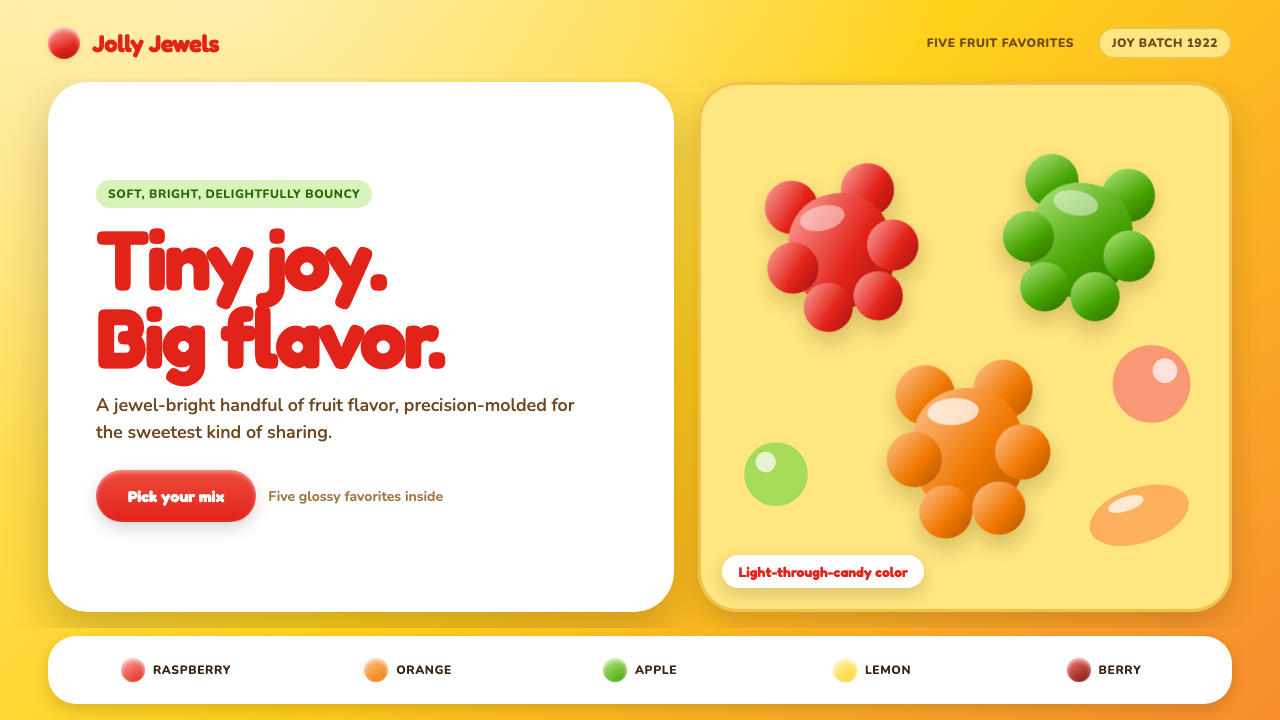 Haribo Goldbears (1922)Childhood joy, precision-molded. Glossy fruit colors tumble across a foil-gol…
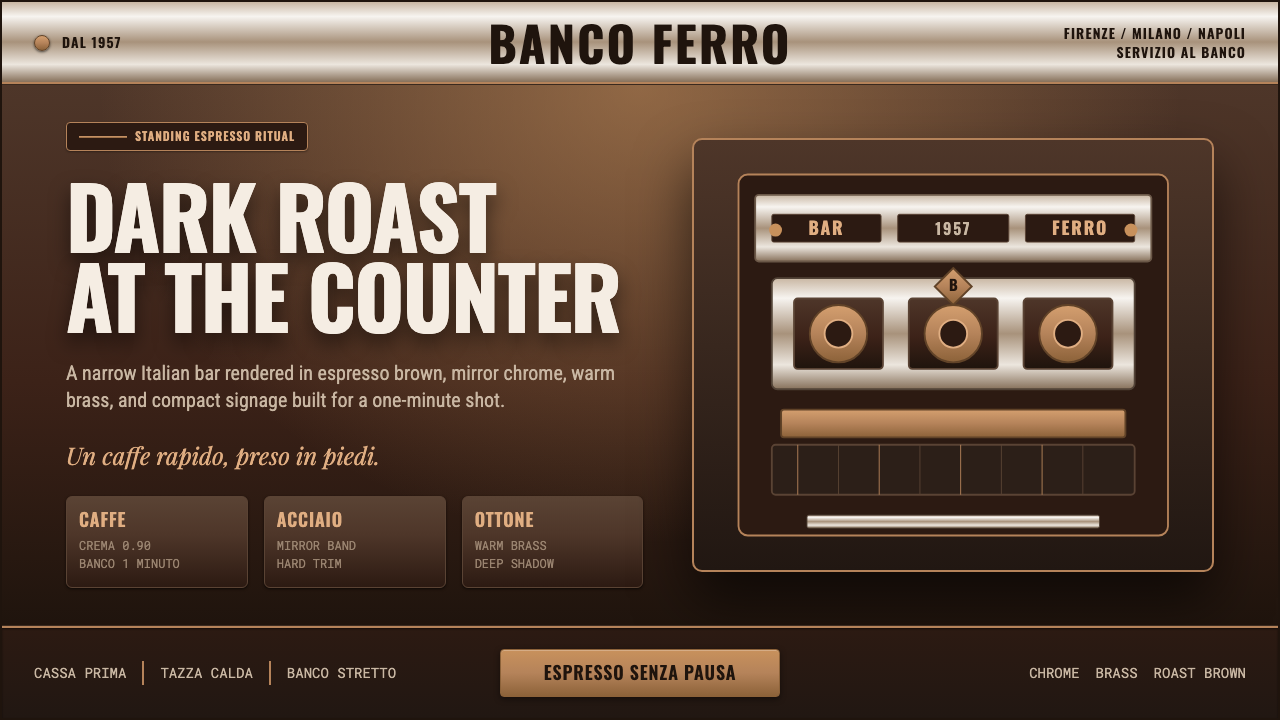 Italian Espresso BarDark roast, hard metal. Brass lines and Oswald signage slice a deep espresso…
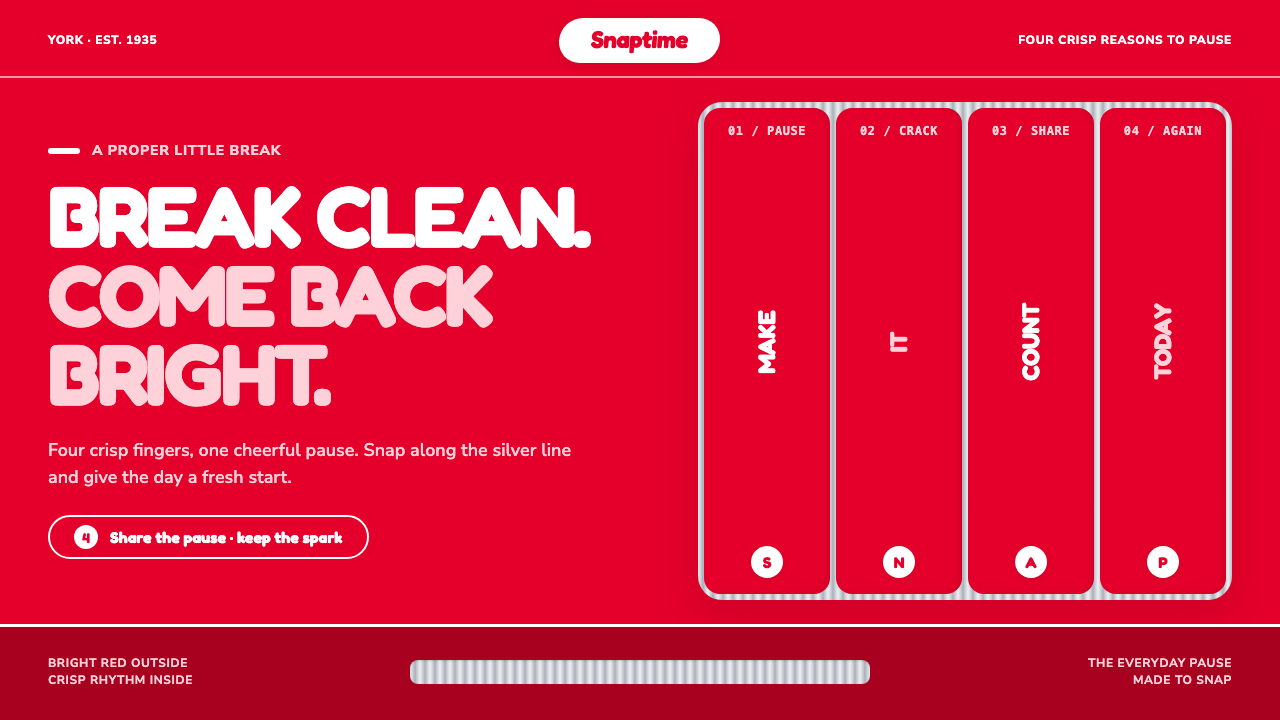 KitKat (1935)A break you can hear. Pillar-box red, plump white type, and silver grooves se…
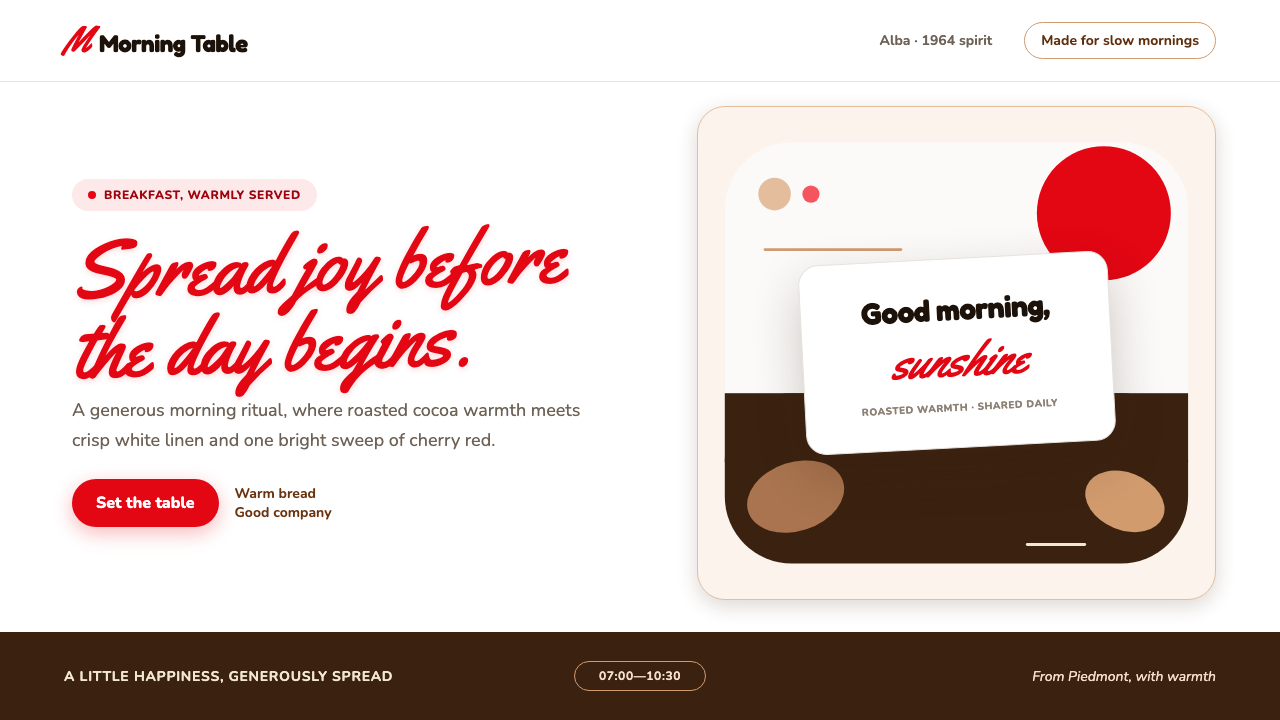 Nutella (1964)Breakfast feels brighter. Cherry script and roasted-hazelnut brown warm a cri…
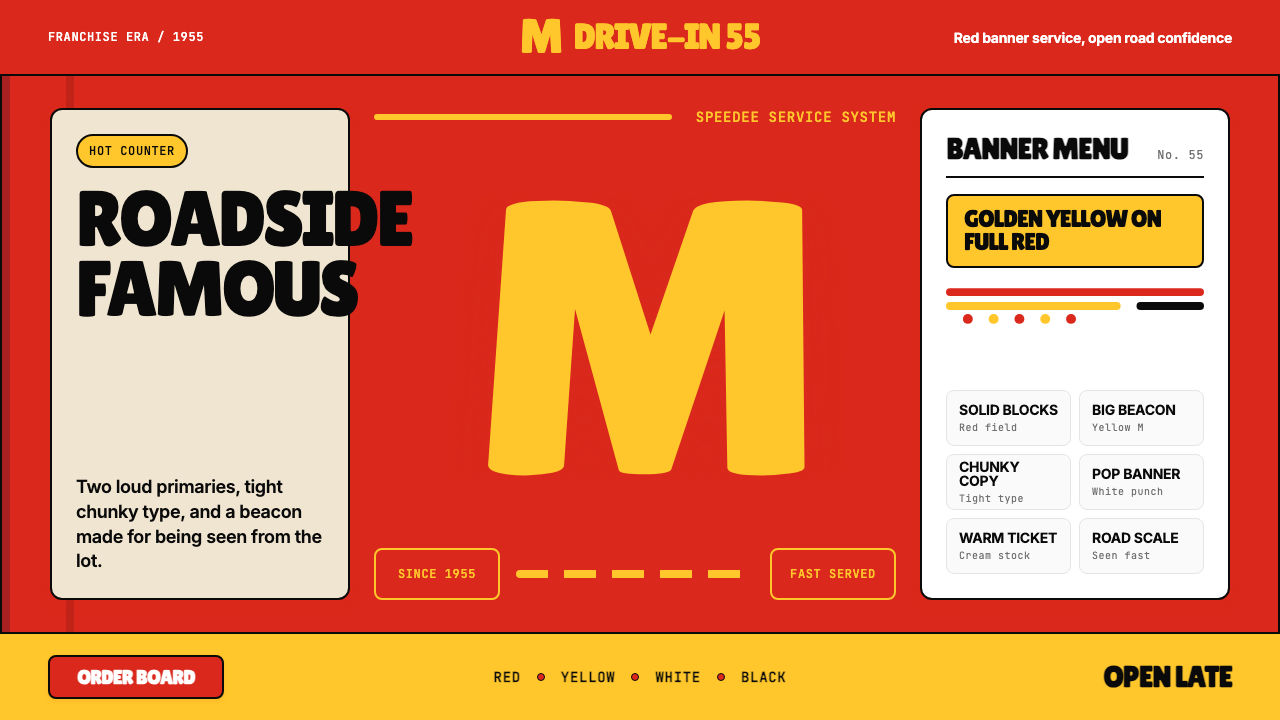 McDonald's Golden ArchesRoadside famous. Saturated red, hot yellow, and chunky type shout from 1955.
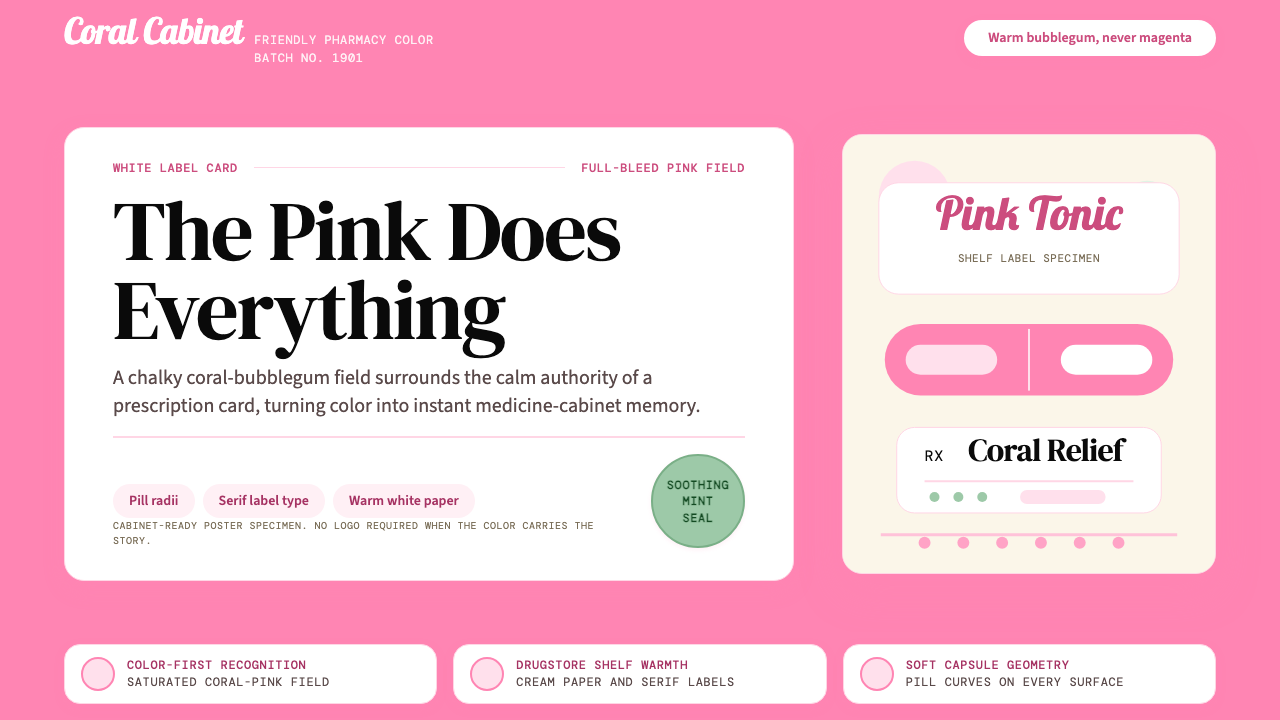 Pepto-Bismol Pink (1901)Color is the cure. Bubblegum pink floods the field; white label cards and pil…