What is Parsi Gara Embroidery?
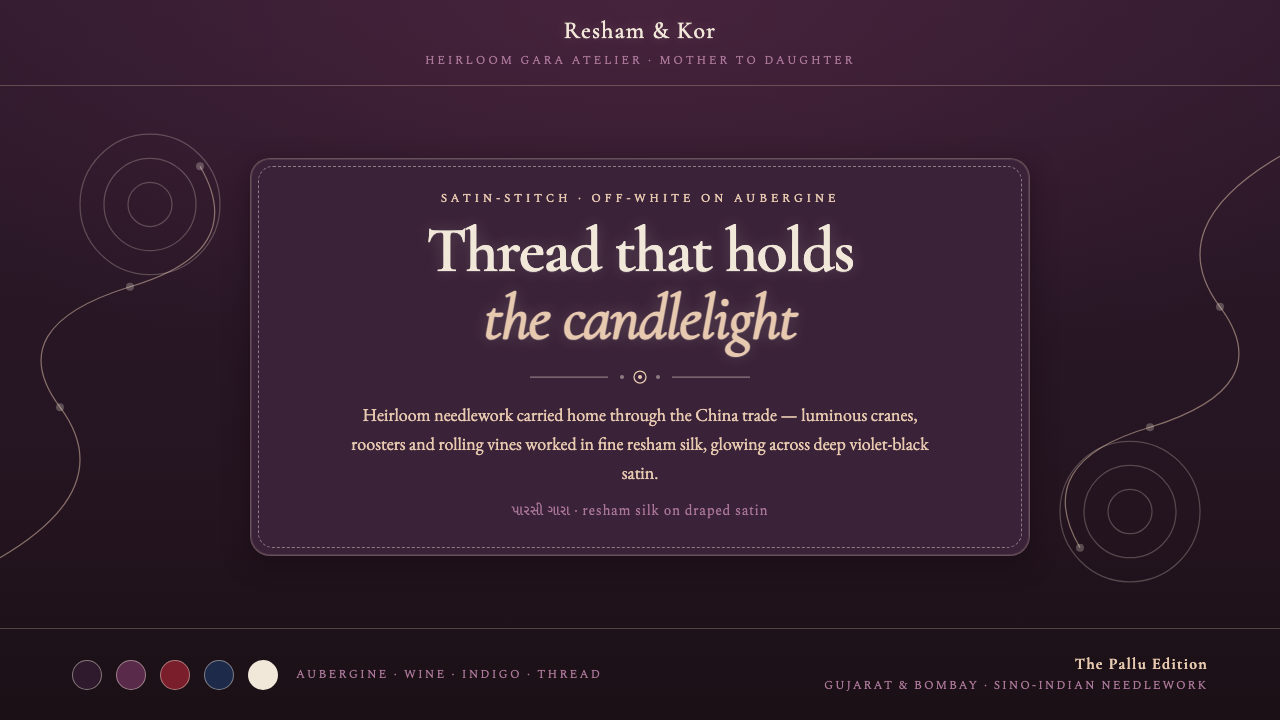
Parsi gara embroidery turns a sari into a night garden: pale silk vines, birds, and scalloped edges glowing over deep violet-black satin.
Parsi Gara Embroidery in brief
Parsi gara embroidery is a Chinese-influenced textile tradition associated with the Zoroastrian Parsi community of western India. At its center is a distinctive contrast: fine resham silk thread is worked over dark sari grounds in aubergine, wine, and violet-black, so that the embroidery appears to emerge from the surface like light held inside satin. Cranes, roosters, flowering vines, and continuously rolling vegetal forms give the work its narrative richness without turning it into a busy decorative field.
The tradition belongs to an heirloom world rather than a disposable one. A gara is valued for accumulated labor, material delicacy, and the sense that a garment can carry family memory across generations. The embroidery is not simply placed on cloth as an illustration. It follows hems, frames edges, travels through broad sari fields, and concentrates meaning at the pallu, where a draped garment becomes a visible stage for needlework.
As a digital design language, Parsi gara is not a literal fabric simulation. It translates the craft through a dark, satin-like visual ground; luminous off-white and soft pastel detail; flowing vine rhythms; scalloped kor borders; and refined Garamond serifs. The result should feel intimate, ceremonial, and patiently made. Its richness comes from contrast, contour, and repeated handwork-like detail, not from bright backgrounds, loud color blocking, or generic luxury decoration.
Where does Parsi Gara Embroidery come from?
The history of Parsi gara embroidery is inseparable from the nineteenth-century China trade. The Parsi Zoroastrian community of Gujarat and Bombay moved through commercial routes that connected western India with China, and textiles became one of the places where exchange could be carried home, worn, and passed on. Gara embroidery preserves that encounter in visual form: Chinese-influenced birds and botanical motifs entered the dress culture of a South Asian community and became part of its own ceremonial and domestic inheritance.
Its technical character is grounded in satin-stitch and couching needlework. Fine resham silk makes possible the close, luminous surfaces that distinguish the tradition, while the dark sari ground gives pale thread its unusual radiance. The relationship is essential: thread is not a separate accent laid over a neutral field, but the bright counterpart to a deep, absorptive textile surface. This is why the palette reads as nocturnal and jewel-like even when the embroidery itself is pale.
The craft was sustained by many hands rather than a single authorial style. Parsi sari embroiderers, Parsi jhabla makers, and Chinese master embroiderers belong to the story as linked makers within a wider Sino-Indian textile exchange. Their roles point to a tradition built through circulation: motifs, materials, skills, garments, and expectations moved between communities and were transformed through use.
Although its strongest association is with the peak of nineteenth-century trade, gara remains a living heirloom tradition. That continuity matters when adapting it for contemporary design. The aim is not to treat historic motifs as detached exotic ornament, but to preserve the relationship between dark cloth, fine silk, border, drape, and patient visual accumulation. Digital work can borrow its vocabulary responsibly only when it retains the sense of care and containment that made the textile language meaningful.
What defines the Parsi Gara Embroidery look?
Dark Satin Ground
The visual field begins in darkness: aubergine, wine, and violet-black suggest a dense satin ground that receives light rather than reflecting it broadly. This ground must remain dominant. It gives the design its depth, makes pale ornament feel stitched rather than printed, and prevents the system from drifting into a generic cream-paper heritage look.
Luminous Silk Thread
Off-white thread is the principal light source in the composition. Soft pastel notes may accompany it, but they should read as variations within embroidery, not as independent blocks of interface color. The contrast should feel tactile and restrained, like silk catching light against satin, with each pale line carrying more presence than its visual area would suggest.
Bird and Vine Motifs
Cranes, roosters, and rolling vines provide the central motif vocabulary. They are most convincing when they seem to grow, perch, or travel through the composition rather than appearing as isolated symbols. A vine should establish continuity across a border or panel; a bird should create a pause, directional turn, or focal moment within that movement.
Scalloped Kor Borders
The kor border is a framing device, not a disposable decorative trim. Its scalloped contour softens the severity of a rectangular screen or page and establishes a garment-like edge. Use it to hold titles, separate ceremonial sections, or define the perimeter of a featured panel. Repeating it everywhere weakens its authority and turns a crafted boundary into wallpaper.
Garamond Serif
Garamond supplies the typographic counterpart to fine needlework. Its serif structure brings refinement and quiet literary warmth without competing with the embroidery. Titles should feel composed rather than theatrical, and body text should preserve a calm reading rhythm. Heavy, industrial lettering or aggressively modern display type breaks the link between the digital surface and the intimacy of a sari pallu.
Heirloom Density
The style welcomes accumulation, but it is ordered accumulation. Fine motifs, curls, and stitched-looking contours can make a panel feel richly worked, especially around edges and focal areas. Yet the center of a composition still needs quiet space. The effect should suggest labor collected over time, not an interface attempting to fill every available surface.
Who shaped Parsi Gara Embroidery?
Parsi sari embroiderers are central to the tradition because gara is inseparable from the garment that carries it. Their work joins fine silk thread, dark sari grounds, bird imagery, and vine patterns into an heirloom surface whose meaning depends on drape as much as on motif. In a design interpretation, they stand for the patience, continuity, and garment-scale thinking that the style requires.
Parsi jhabla makers belong to the wider making culture surrounding Parsi textile inheritance. Their presence emphasizes that the tradition is not only about decorative motifs but also about clothing, construction, and objects made for intimate use. For contemporary designers, this is a reminder to treat the style as a material language with edges, seams, borders, and care, rather than as a collection of detachable icons.
Chinese master embroiderers represent the technical and visual influence carried through the nineteenth-century China trade. The presence of cranes, roosters, and rolling vines within gara points to a textile exchange in which motifs and needlework knowledge crossed regions before taking root in Parsi dress culture. Their role makes the tradition explicitly Sino-Indian rather than reducible to one isolated national aesthetic.
How do you use Parsi Gara Embroidery today?
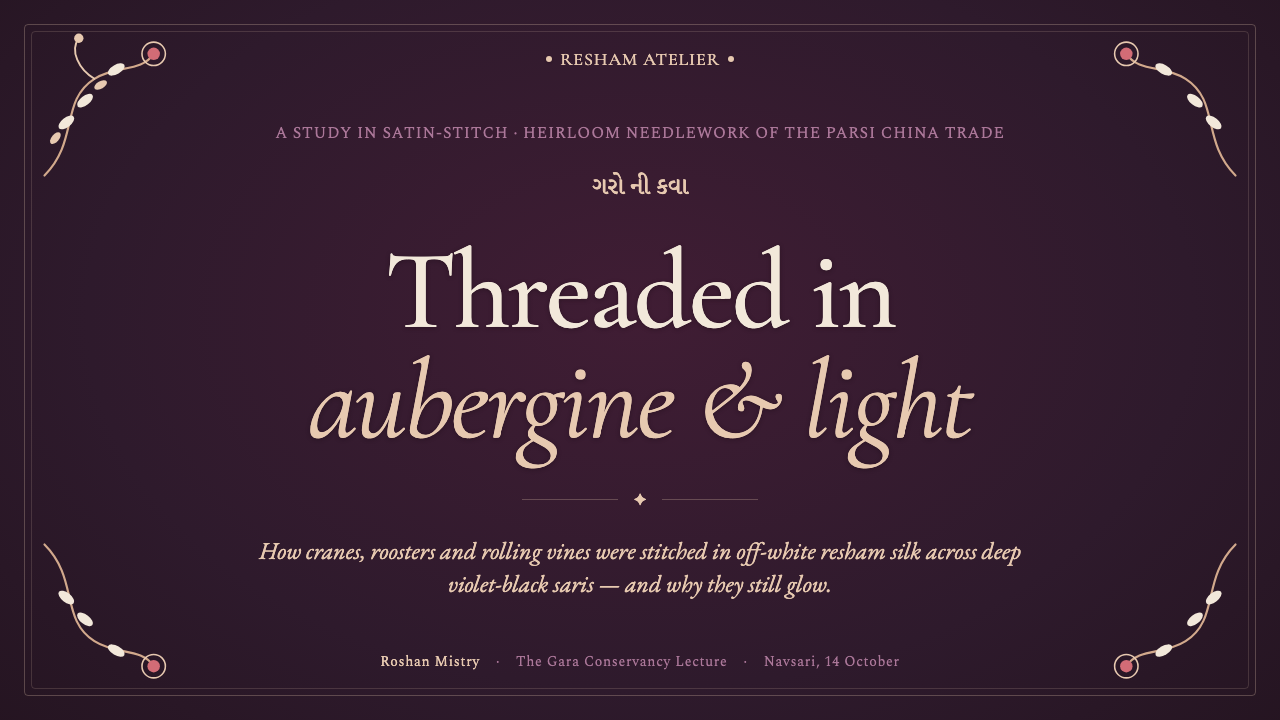
For presentation covers, treat the page as a dark textile field rather than a poster waiting to be filled. A title in Garamond can sit within or just inside a restrained scalloped border, while a pale vine enters from one edge and guides the eye toward a crane or rooster motif. Keep the composition ceremonial and concentrated. For content slides, let headings, body text, and small embroidered dividers create the hierarchy; the motif should frame information, not compete with it.
Data slides need particular restraint. Use the dark ground as the stable field and reserve luminous thread-like marks for the data itself, labels, and key distinctions. A chart can borrow the elegance of stitched lines and gently curving botanical continuity, but its categories must remain readable at first glance. Decorative birds and dense borders belong outside the analytical center, where they can establish context without obscuring comparison.
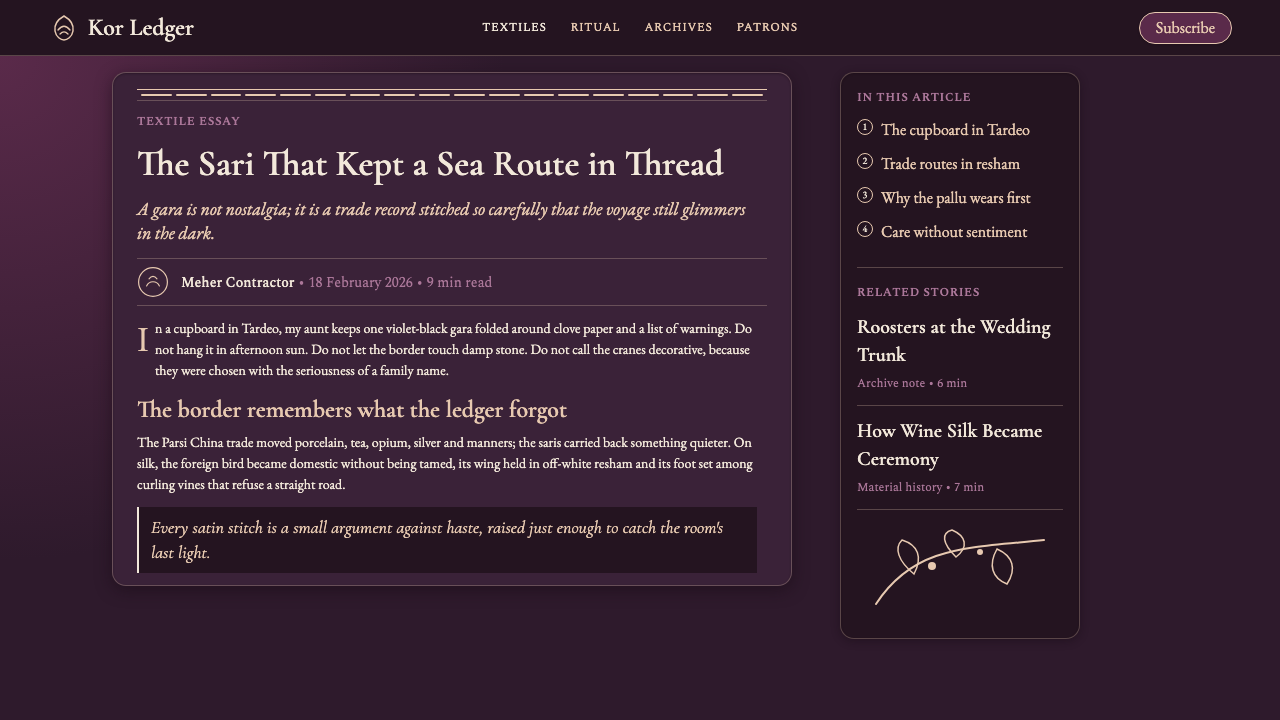
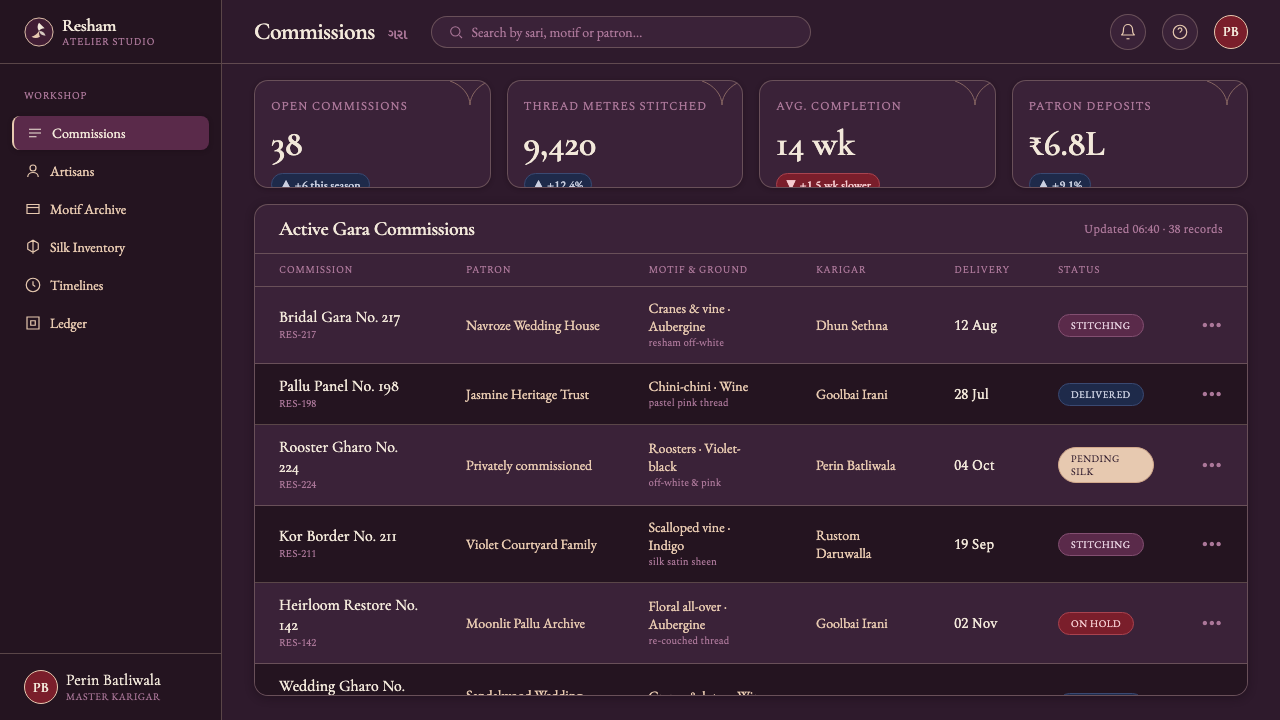
In web interfaces, the system suits editorial dashboards, member spaces, premium collections, and pricing pages that benefit from intimacy and perceived craft. Panels can feel like framed textile sections, with kor edges marking major modules and pale linework guiding attention through navigation or status. Keep interaction states clear and spare. The dark background should create depth and focus, while off-white remains a precious accent rather than becoming an all-purpose surface.
For editorial and marketing work, Parsi gara is especially effective when a story needs heritage, ritual, continuity, or a sense of considered luxury. Article pages can use long, calm text passages broken by vine-framed quotations or motif-led section transitions. Campaign pages can let one embroidery field carry the visual identity across banners, product storytelling, and calls to action. Repetition should feel like a family of related stitches, not like a repeated decorative stamp.
The most common mistake is to treat the style as dark purple plus floral ornament. That loses the textile logic. A faithful application keeps the deep ground, pale silk-like contrast, Chinese-influenced bird and vine vocabulary, scalloped border discipline, and serif restraint working together. Avoid white or cream page backgrounds, excessive metallic glamour, generic peacock imagery, or dense motifs behind every line of text. The style becomes convincing through controlled glow and carefully protected empty space.
Parsi Gara Embroidery — FAQ
Is Parsi gara embroidery simply an Indian floral style?
No. It is a Parsi textile tradition from western India shaped through nineteenth-century trade with China. Flowers and vines are important, but the visual system also includes Chinese-influenced cranes and roosters, fine silk needlework, dark satin sari grounds, and scalloped border structures. Reducing it to floral decoration misses both its Sino-Indian exchange and its relationship to heirloom dress.
Why should the digital version avoid light backgrounds?
The style depends on the visual relationship between a deep sari ground and pale resham thread. A light page reverses that relationship and makes the embroidery language read more like printed stationery than luminous needlework. Off-white works best as the thread-like highlight, text accent, or border detail that appears to glow because the surrounding field remains dark.
Can the motifs be used in a minimalist interface?
Yes, if minimalism means selective use rather than removal of identity. A single vine along an edge, a restrained kor border around a featured module, or one bird motif at a section transition can carry the system effectively. The interface should simplify the number of motif placements, not flatten the motifs into generic line art or strip away their relationship to the dark textile ground.
Does every layout need cranes, roosters, vines, and scallops together?
No. The tradition is stronger when its vocabulary is distributed with purpose. A quiet reading page may need only a border and a small vine. A campaign cover can support a larger bird motif and richer embroidery field. What should remain consistent is the underlying logic: dark satin-like depth, luminous pale detail, graceful continuity, and the sense that ornament has been stitched into a larger surface rather than scattered over it.
Related design styles
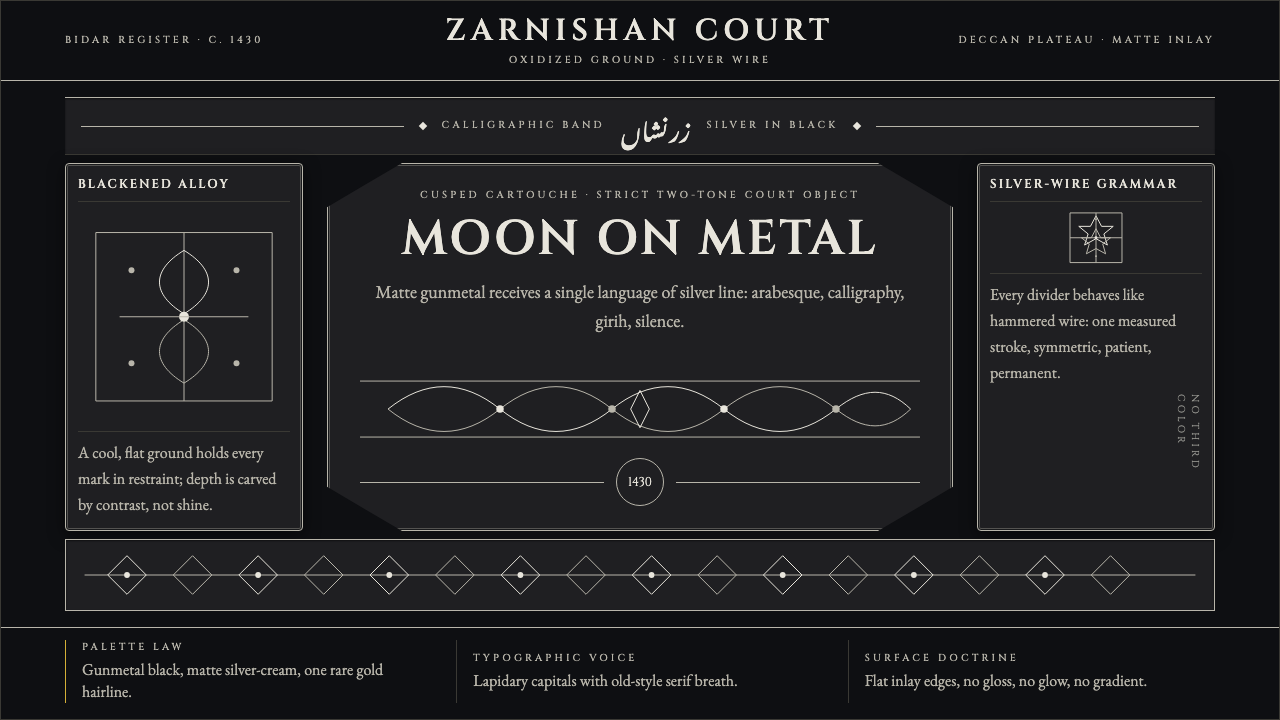 Bidri Deccan MetalworkCourtly darkness, tooled by silver. Cinzel caps and hairline arabesques cut g…
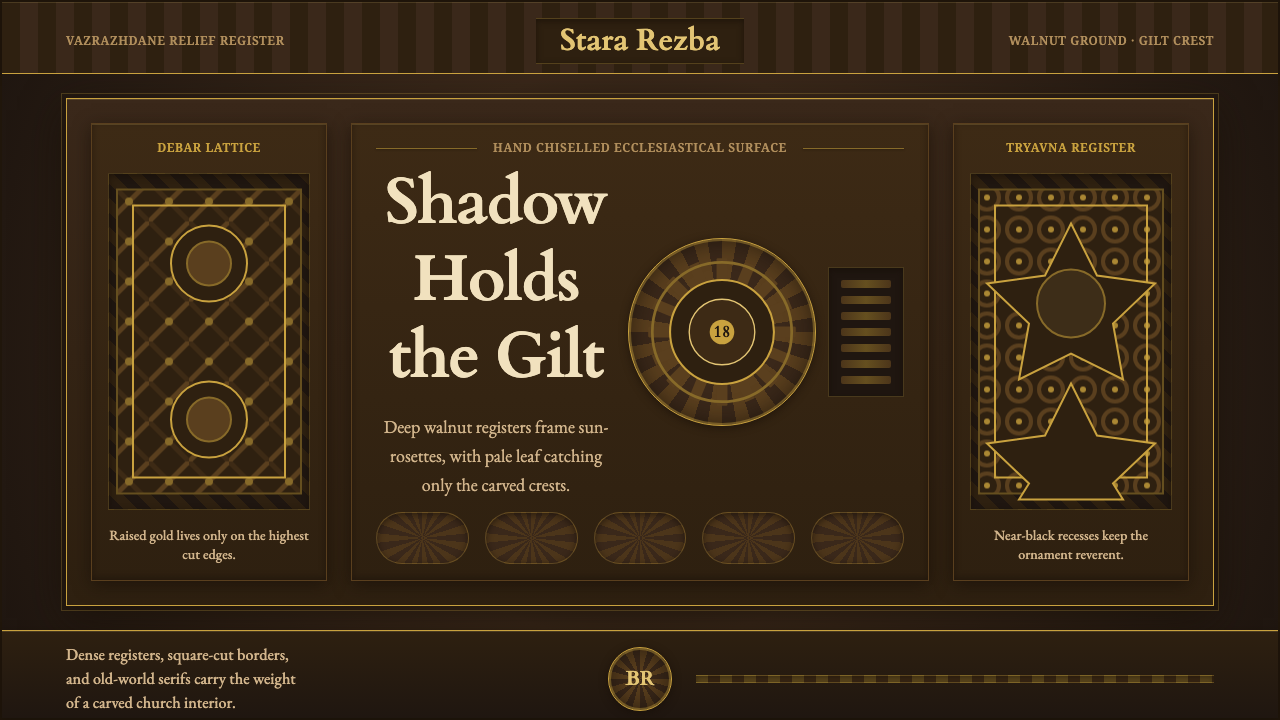 Bulgarian Revival WoodcarvingDark devotion in relief. Walnut panels, Cardo serifs, and gilt rosettes catch…
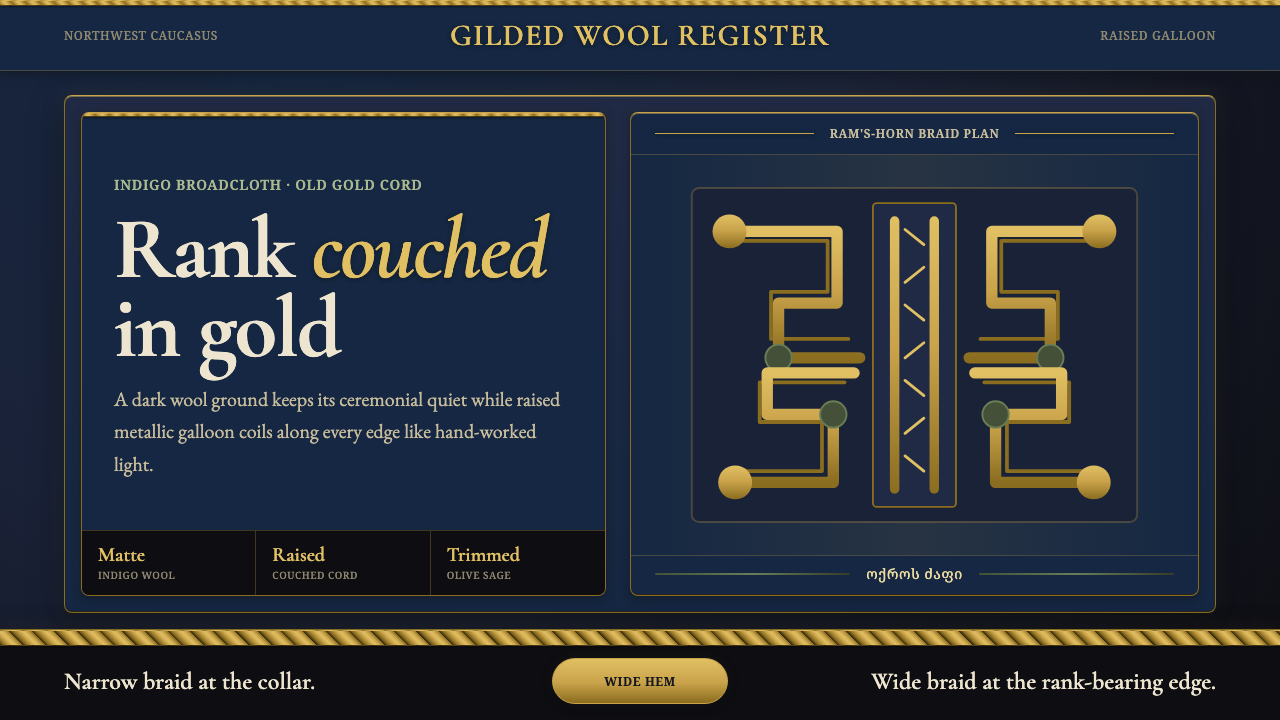 Circassian Adyghe Gold BraidCourtly gold on dark wool. Raised braid edges coil over indigo-black panels.
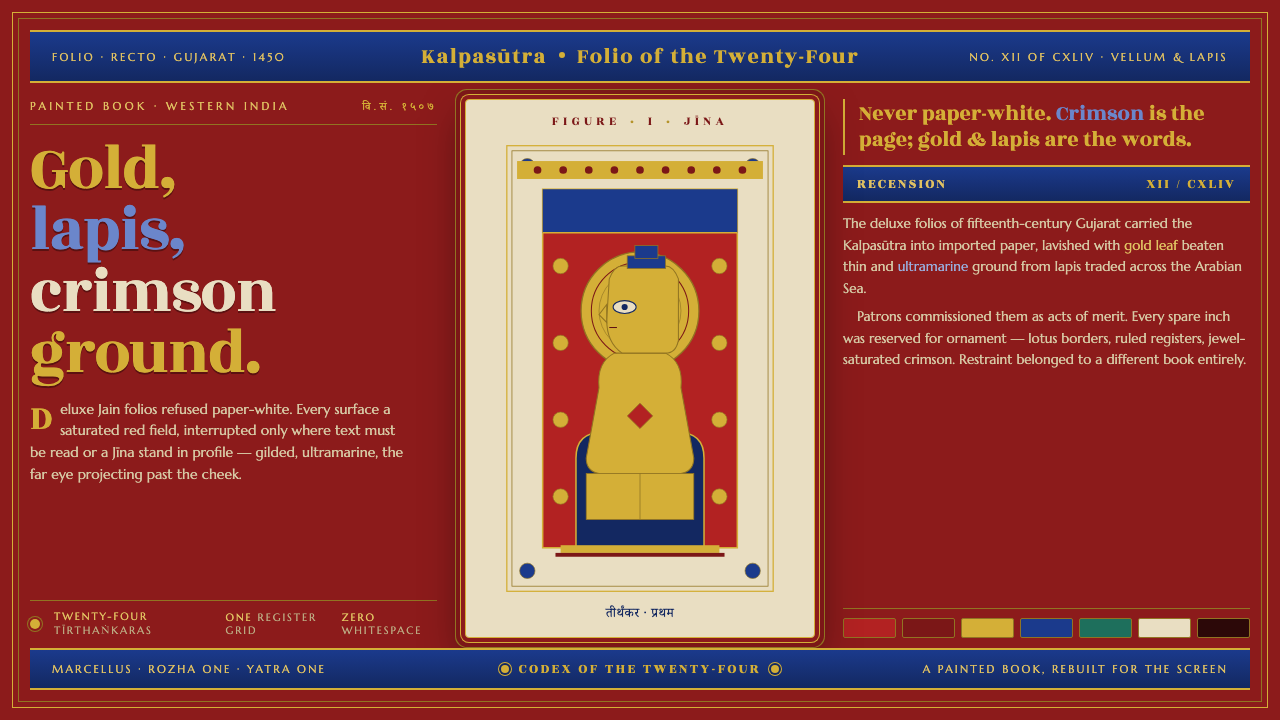 Jain Kalpasutra ManuscriptNever paper-white. Gold leaf and lapis figures on jewel-crimson, lotus-ruled…
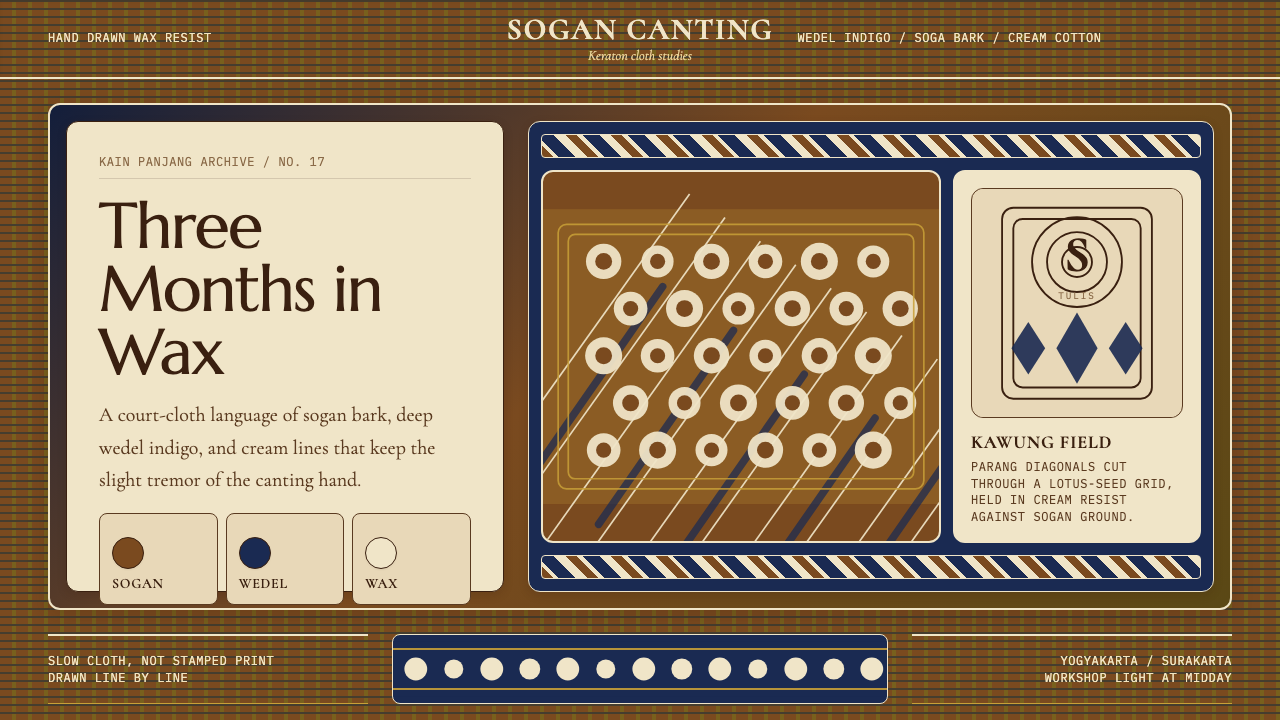 Javanese Batik Tulis (Keraton Sogan)Patience made visible. Sogan brown, indigo, and cream wax-lines form dense co…
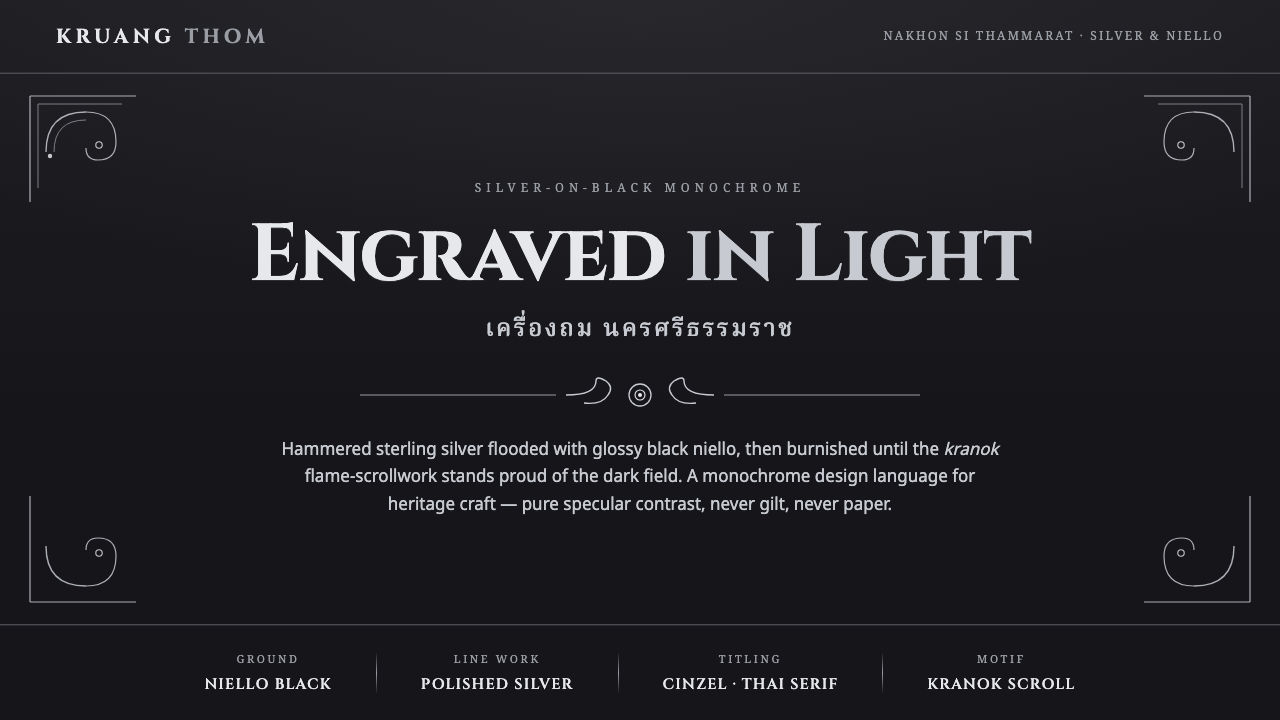 Thai Nielloware ThomSilver-on-black, never gilt. Polished kranok scrollwork glints proud of a glo…