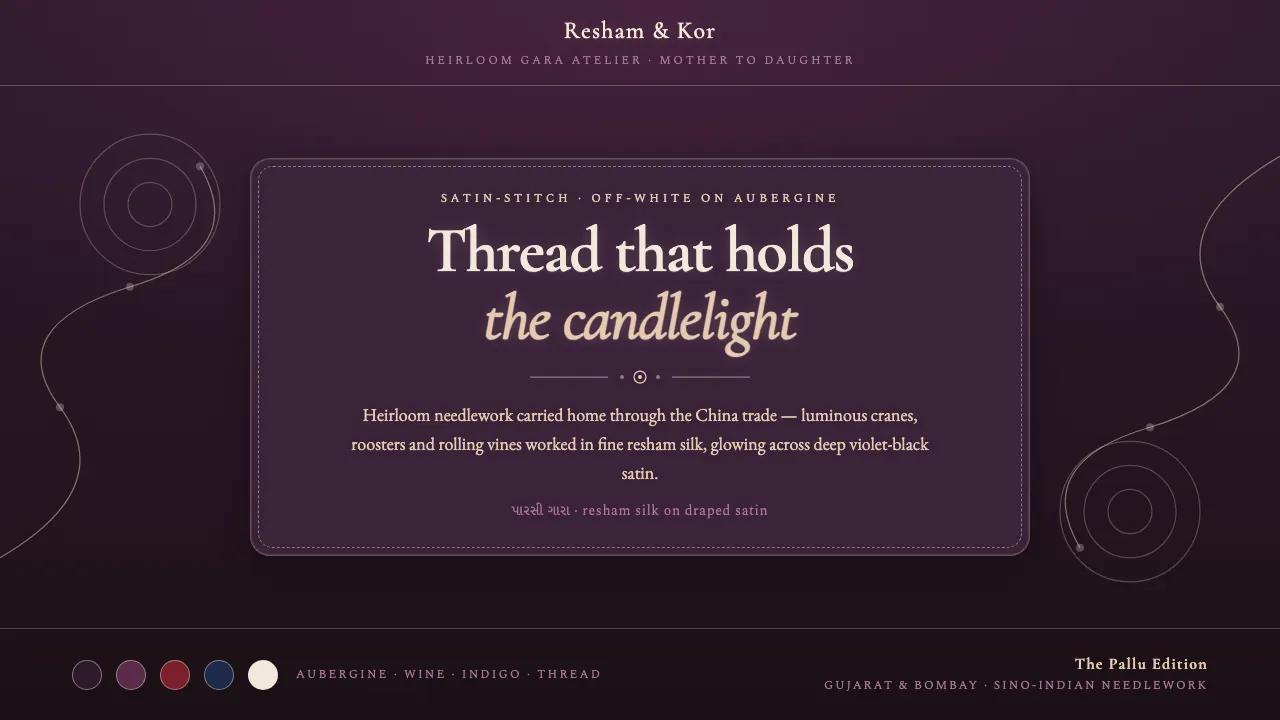
About Parsi Gara Embroidery
Parsi *gara* embroidery is the Chinese-influenced satin-stitch tradition the Zoroastrian community of western India brought home through the 19th-century China trade. Worked in fine resham silk on deep aubergine, wine and violet-black sari grounds, it renders cranes, roosters and rolling vines in off-white and pastel thread that glows against the dark satin.
This design system distills that heirloom craft into digital form — violet-black grounds, luminous off-white needlework, scalloped *kor* borders, and refined Garamond serifs that carry the intimacy of a stitched sari pallu.
- Origin
- South Asia — Parsi Zoroastrian community of Gujarat and Bombay, via trade with China
- Era
- pre-1900 (peak of the 19th-century Parsi China trade; living heirloom tradition)
- Key figures
- Parsi sari embroiderers · Parsi jhabla makers · Chinese master embroiderers
- Movements
- Parsi gara embroidery · satin-stitch and couching needlework · Sino-Indian textile exchange
Parsi Gara Embroidery design spec
Colors
Typography
The other 11 sections — buttons, cards, spacing, motion, techniques and more — open once you unlock. Download the DESIGN.md or send it to your AI in one click. Unlock once, yours forever.
Sign up nowStyles similar to Parsi Gara Embroidery
Also inspired by crafts & folk art, with a close feel.
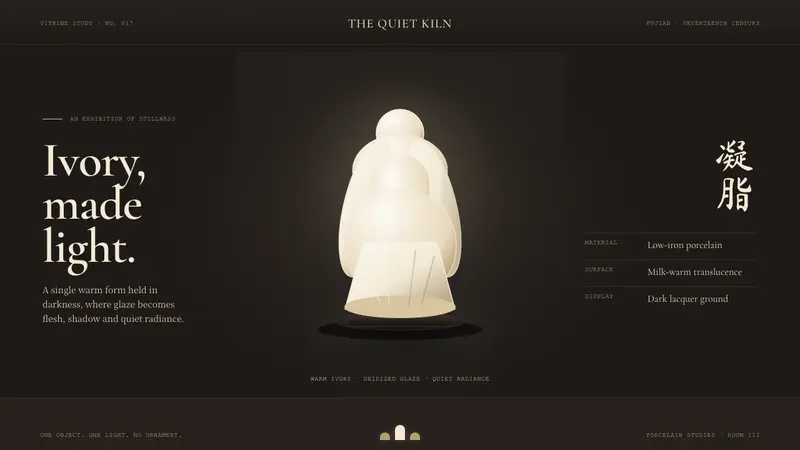 Dehua Blanc de ChineIvory becomes light. Warm porcelain glows as one quiet form against a near-black ground.
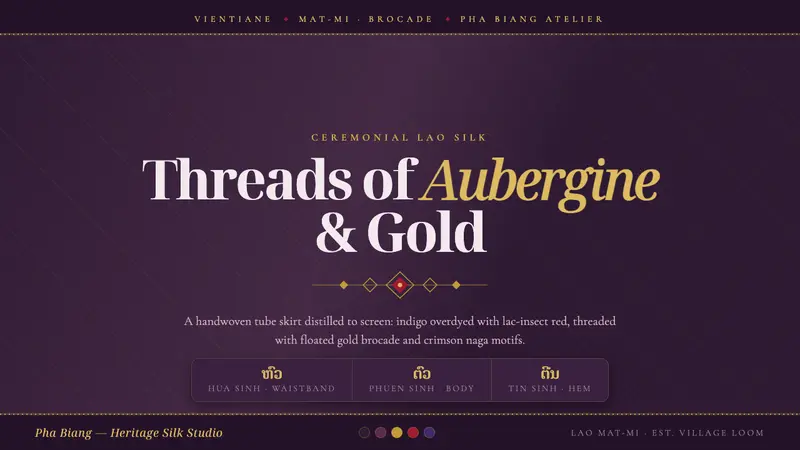 Lao Sinh Silk WeaveCeremonial Lao silk on screen. Dark aubergine ground threaded with gold mat-mi diamonds and lac red.
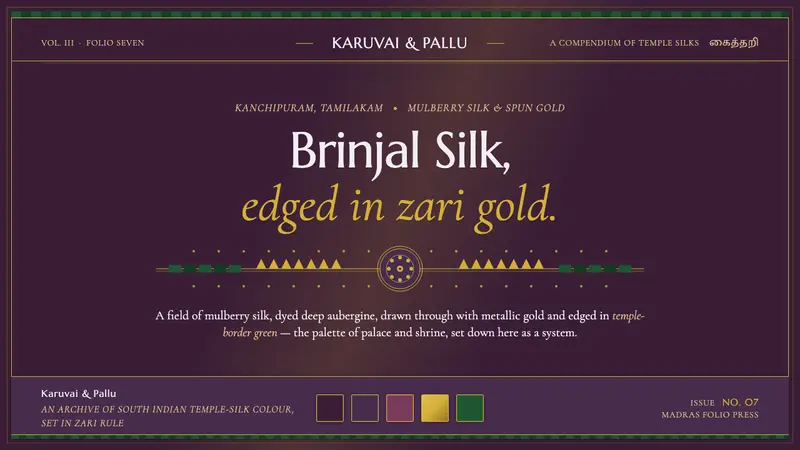 Indian Brinjal Temple TextilePalace silk, systematised. Brinjal violet ground edged in zari gold, korvai green at every border.
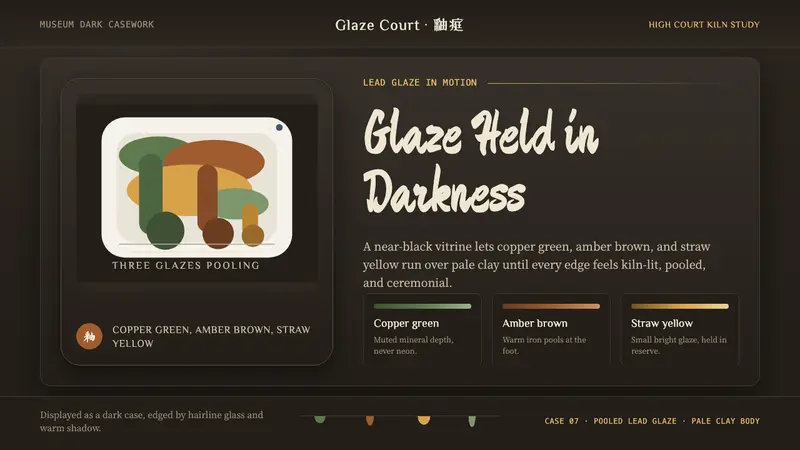 Tang Sancai 唐三彩Museum-dark and molten. Copper green, amber, and straw pools glow in bordered vitrines.