What is Pantone Very Peri (2022)?
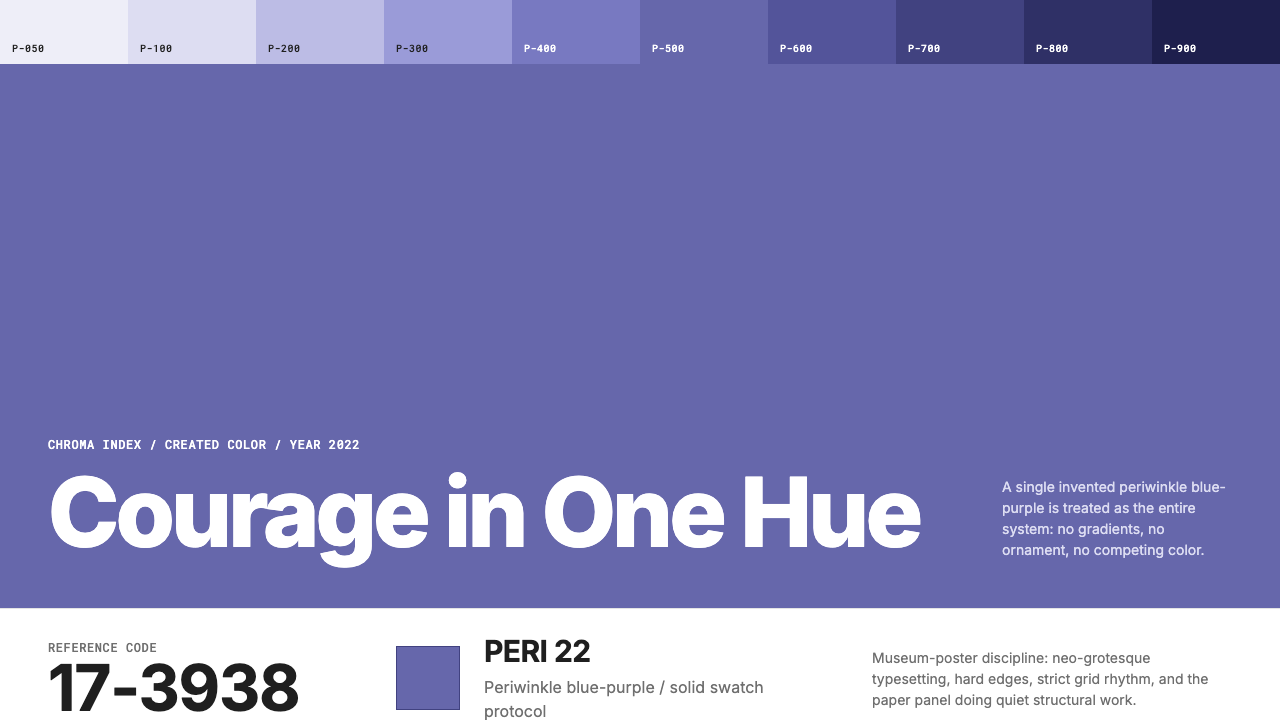
Pantone Very Peri is the first Color of the Year ever invented from scratch — a periwinkle blue-violet that declared the era of digital-physical blending had its own authoritative hue.
Pantone Very Peri (2022) in brief
Pantone Very Peri is the Color of the Year 2022 — and unlike every previous selection in the program's history, it was not drawn from an existing Pantone formula. The company's color experts invented it: a warm blue-violet that sits at the periwinkle register, carrying both the trust and depth of blue and the imaginative energy of violet-red. The name itself was coined for the occasion. Very Peri entered the world already dressed in institutional authority.
The visual system built around Very Peri follows Pantone's house idiom, which descends from Swiss International Style filtered through the discipline of industrial color matching. The language is stark and self-assured: a dominant solid-color field occupies most of a composition, Helvetica-adjacent sans-serif typography delivers reference codes and short descriptors with laboratory precision, generous white paper grounds everything, and ornament is categorically absent. The swatch card is the genre, and every design decision refers back to it.
What distinguishes Very Peri from earlier Colors of the Year visually is its position in the spectrum. It is not the clear, recessive blue of corporate trust, nor the aggressive warmth of red-adjacent hues. It occupies a liminal zone — simultaneously cool and warm, simultaneously anchored and reaching — which makes it uniquely suited to compositions that want calm authority without coldness, and energy without aggression. The color's ambiguity is a feature, not an accident.

Where does Pantone Very Peri (2022) come from?
The Pantone Color of the Year program launched in 1999, emerging from the company's long-established role as the global authority in color standardization for printing, manufacturing, and design. Pantone — founded in 1962 in Carlstadt, New Jersey, by Lawrence Herbert, who bought out the graphics division of M&J Levine Advertising — had spent decades building a proprietary color-matching system that let manufacturers in different countries and industries reproduce identical hues without ever meeting. The Color of the Year extended that authority into culture: an annual declaration that a specific shade carried the mood of the coming year.
The selection process, overseen by Leatrice Eiseman as executive director of the Pantone Color Institute and Laurie Pressman as vice president, involves monitoring influences across entertainment, art, fashion, travel, consumer products, and socioeconomic conditions. It is simultaneously a cultural observation and a commercial intervention — the announcement generates licensing revenue, design trend coverage, and product partnerships that cement Pantone's relevance in consumer markets well beyond its industrial printing origins.
Very Peri was announced in December 2021, during a period the Pantone team described as a global inflection point: the accelerating merger of physical and digital life, the proliferation of virtual worlds and augmented environments, and a widespread appetite for creative reinvention following pandemic-era constriction. The decision to invent a new color rather than select an existing one was deliberate — it was presented as a formal declaration that the current moment required something that had not previously existed.
The color's visual lineage sits partly in the long tradition of periwinkle as a transitional hue — a blue that leans toward violet, historically associated with contemplation and creative ambiguity — and partly in Pantone's own institutional aesthetic. The swatch-card design language it arrived in, with its heavy reliance on clean fields of solid color, precise typographic annotation, and white-paper formality, connects Very Peri to decades of Swiss-influenced corporate color communication. The form and the content reinforce each other: a new color announced with maximum certainty.
What defines the Pantone Very Peri (2022) look?
Periwinkle Field
The defining characteristic of Very Peri is its position between blue and violet — warm enough to feel approachable, cool enough to command authority. It is not a recessive background hue; it advances from the page, creating immediate visual presence. When used as a dominant field, it establishes mood before a single word is read, functioning the way a theatrical lighting wash functions: everything that sits on it inherits its emotional register.
Swatch-Card Formality
The visual system associated with Very Peri is organized around Pantone's swatch-card idiom: a large solid-color block occupies the dominant zone, precision typography delivers the color's name and reference codes, and white space acts as a formal surround rather than merely empty air. This compositional grammar signals institutional authority — the same authority that makes a paint chip in a hardware store feel definitive. Applied outside color branding, this structure conveys expertise and precision.
Typographic Restraint
Typography in the Very Peri system is deliberately subordinate to color. Sans-serif letterforms in a single weight carry color codes, short names, and descriptors — nothing more. Letter-spacing is open, creating breathing room between characters and reinforcing the laboratory-report quality of the annotations. Hierarchy is minimal: the color is the subject, the type is the label. This restraint makes the system immediately scalable — from a small swatch card to a full-bleed poster, the proportional relationship between color field and type annotation remains legible.
White-Paper Ground
The white or near-white ground is not neutral in the Very Peri system — it is a deliberate material reference to paper, the substrate on which Pantone built its original color authority. It functions as both a technical necessity (color perception is relative; a white surround gives the eye a reference point) and a brand signal (this is where certified color lives). Compositions that swap the white ground for a colored or textured background lose the system's clinical precision and slide toward decoration.
Single-Hue Protocol
The Pantone Color of the Year system is built on the premise that one color, used with discipline, can carry an entire composition. Very Peri follows this protocol strictly: the periwinkle field does not share compositional authority with a secondary accent color. Supporting tones, if any, are achromatic — white, cream, or near-black — which allow the primary hue to remain undiluted. This single-hue discipline is the core difference between the Pantone visual language and more broadly chromatic design approaches.
Zero Ornamentation
Every element in the Very Peri visual system exists because it must. Borders, decorative rules, gradient transitions, textural overlays, and illustrative elements are entirely absent. The aesthetic severity is not minimalism in the contemporary consumer sense — it is the functional austerity of a measurement instrument. A spectrometer does not have decorative flourishes. The color-matching system that Very Peri belongs to inherits this discipline: the color itself is the entire message, and anything added to it is noise.
Institutional Tone
Very Peri arrives with an institutional tone that few designed hues possess: it is a declared standard, not a fashion choice. This gives the color a kind of immovable authority when applied to contexts that benefit from perceived expertise — data presentations, professional reports, certification materials. The institutional tone also creates a specific challenge: applied carelessly, Very Peri can feel bureaucratic rather than visionary, which is why the surrounding white space and typographic restraint are not optional elements but load-bearing ones.

Who shaped Pantone Very Peri (2022)?
Eiseman has served as executive director of the Pantone Color Institute since its establishment and is the primary public voice of the Color of the Year program. She developed the methodology by which Pantone's color forecasters survey global cultural signals — from runway collections and street photography to automotive design and consumer electronics — to identify a single hue that captures the coming year's collective mood. Her books on color psychology, including work on the relationship between color and emotional response, form the intellectual framework behind the COTY program's cultural claims. Very Peri was announced under her direction as a deliberate act of invention — a declaration that forecasting the present requires creating something new.
As vice president of the Pantone Color Institute, Pressman oversees the commercial and licensing dimensions of the Color of the Year program — the partnerships with manufacturers, the brand collaborations, and the communication strategy that turns a color announcement into a global trend moment. Very Peri's commercial rollout was notably extensive: collaborations spanned home goods, stationery, apparel, and digital platforms. Pressman's role in bridging Pantone's technical authority and its market positioning makes her central to understanding why Very Peri landed as both a design system and a consumer phenomenon.
Herbert founded the modern Pantone system in 1962 when he reorganized and eventually bought the graphics division of M&J Levine Advertising in Carlstadt, New Jersey. His core insight was that color had to be standardized at the level of the formula rather than the sample — a printed swatch could fade, shift under different lighting, and be interpreted differently by different eyes, but a numbered formula with precise ink mixing ratios would produce the same result in Tokyo as in Toronto. This shift from perceptual color to codified color created the institutional authority that the Color of the Year program, launched decades later, continues to trade on. Every Very Peri communication that deploys a reference code rather than a descriptive adjective is an inheritance of Herbert's original systematization.
Though not affiliated with Pantone, Müller-Brockmann's development of the Swiss grid system and his advocacy for white space as an active compositional element in the mid-twentieth century directly inform the visual language that Pantone inherited and institutionalized. His principle that a composition should be reducible to its structural skeleton — with no element present that cannot be justified by the underlying grid — is visible in every Pantone swatch card. Very Peri's austere precision and its reliance on a single dominant field, clean type, and surrounding white are a Swiss International Style inheritance, translated from the editorial page to the color authority context.
Birren was a mid-twentieth-century American color consultant and theorist whose work on color forecasting and its application to consumer markets and industrial design established the intellectual scaffolding for the color authority industry that Pantone would eventually come to lead. His books — including work on color psychology and color and human response — argued that color decisions in designed environments are never neutral, and that systematic, research-backed color guidance could and should replace intuitive individual choice. This professionalization of color advice is the direct precursor to the Pantone Color of the Year's cultural authority model, and it explains why Very Peri was released not merely as a trend forecast but as a considered, evidence-backed cultural declaration.
How do you use Pantone Very Peri (2022) today?
Very Peri's institutional tone and single-hue discipline make it exceptionally well-suited to presentation work — provided the application respects the underlying system rather than treating it as a color accent. A cover slide in the Very Peri register works best with a full-bleed solid field in the primary hue, a title set in a clean sans-serif at substantial scale, a reference-style sub-label in a smaller weight, and nothing else. The white frame or margin around the slide acts as the swatch card's paper ground — remove it and the composition loses its source authority. Content slides should be predominantly white or cream, with the periwinkle reserved for structural accents: a single rule, a section label, a highlighted data point. The color's job on content slides is not to fill space but to mark hierarchy.
For data visualization, Very Peri follows the single-hue protocol strictly. A dashboard or data slide built in this system uses the primary hue for the most important metric or series, and achromatic tones — ranging from near-black through grays to white — for supporting series and axis labels. This is not a limitation: the contrast between a vivid periwinkle bar and a neutral comparison series produces faster comprehension than a multi-colored chart, because the eye immediately knows what to read first. Pie charts and donut charts should use the primary hue for the dominant segment and reserve desaturated tones for all other segments. Avoid introducing a complementary or contrasting accent color — it breaks the single-hue contract and dilutes the system's authority.
In web UI applications, Very Peri performs well as a primary brand color for platforms where expertise, trust, and creative ambition intersect — professional tools, educational platforms, research products, and portfolios. The system works best when the interface background is white or very light, the primary hue appears in navigation elements, primary buttons, and active states, and all other interactive affordances are achromatic. Pricing pages benefit particularly from the color's institutional quality: a highlighted tier in Very Peri against white tiers in neutral tones signals the recommended option with authority rather than urgency. Card components should use minimal shadow — hard-edged and subtle rather than diffuse — to maintain the system's flat, clinical quality.
For editorial and marketing contexts, the style supports strong cover treatments and feature openers. A full-bleed periwinkle background with a short headline in white or near-white, a precise subhead in a smaller weight, and nothing else creates an immediately authoritative opening. Inside pages work best with a white ground and the primary hue used sparingly as section color or pull-quote accent — not as a background color for body text blocks. Marketing materials benefit from the color's dual nature: it reads as both innovative and trustworthy, which makes it effective for product launches, brand refresh campaigns, and thought-leadership content that wants to signal both expertise and forward vision.
A common mistake when applying Very Peri is treating it as a conventional accent color and pairing it with a contrasting warm tone — coral, gold, or amber — to create visual interest. This collapses the single-hue discipline and turns a system built on institutional authority into a color story built on complementary harmony. The second and more subtle mistake is importing the color without importing its system: placing Very Peri on a textured background, setting type in a humanist serif, or softening edges with diffuse shadows all work against the clinical precision that the color arrives with. Very Peri without its surrounding white space and typographic restraint is just a purple-blue — the authority comes from the complete system.

Pantone Very Peri (2022) — FAQ
Why was Very Peri invented rather than selected from existing Pantone formulas?
Pantone's team described the decision as a response to a genuinely unprecedented cultural moment: the merging of physical and digital life had reached a point where no existing color in the catalog felt adequate to capture it. Selecting an existing hue would have implied that the current era resembles a previous one closely enough to share its color. Inventing Very Peri was a formal claim that the present moment required its own visual vocabulary. It was also, practically, a demonstration of Pantone's core authority — the ability to create a new standard, not merely identify an existing one.
How does Very Peri differ from earlier blue-based Colors of the Year?
Earlier blue-based selections from the Pantone program have typically sat in the clear, recessive register — blues that suggest depth, calm, and reliability without projecting warmth or creative energy. Very Peri is a warmer blue, pushed toward the violet end of the spectrum in a way that introduces a sense of imagination and creative tension absent from its predecessors. The violet component also means it behaves differently in composition: it advances more than a pure blue, competes for attention more actively, and requires more careful management of surrounding achromatic tones to maintain legibility.
Can Very Peri work in a dark-background layout?
A dark inversion is possible but requires deliberate adjustment. The Pantone system is fundamentally a light-ground system — white paper is both the technical reference and the brand signal. On a dark ground, Very Peri loses some of its clinical authority and begins to feel more atmospheric, which can work for creative or editorial contexts but undermines the institutional precision that makes the color distinctive in professional applications. If a dark variant is needed, the most coherent approach is to treat the periwinkle as a luminous accent against near-black, keeping all type in white or pale achromatic tones and maintaining the same typographic restraint as the light version.
Is the Very Peri design system the same as Swiss International Style?
They share a common lineage but serve different purposes. Swiss International Style, as developed by figures like Müller-Brockmann and Armin Hofmann from the 1950s onward, is primarily a typographic and grid system — its color use is broad, including photography and multiple hues, but its organizing logic is the mathematical grid. The Pantone visual language is narrower and more color-centric: the dominant logic is single-hue authority, not grid mathematics. Very Peri's system is Swiss Style stripped to its most minimal expression and rebuilt around color as the primary carrier of meaning. Think of it as Swiss Style distilled through an industrial color-matching discipline.
What types of projects are a poor fit for Very Peri?
Very Peri carries institutional authority and a cool-warm ambiguity that is genuinely versatile, but it struggles in contexts requiring sensory warmth, organic texture, or cultural intimacy. Food and beverage branding, children's educational products, wellness and self-care applications, and any context where the user experience depends on approachable humanity rather than expert authority will find the color's clinical precision working against them. It also sits awkwardly in contexts with strong cultural color codes — for instance, financial products in East Asian markets where specific reds and golds carry established meaning — because its authority is Western and institutional rather than culturally embedded.
Related design styles
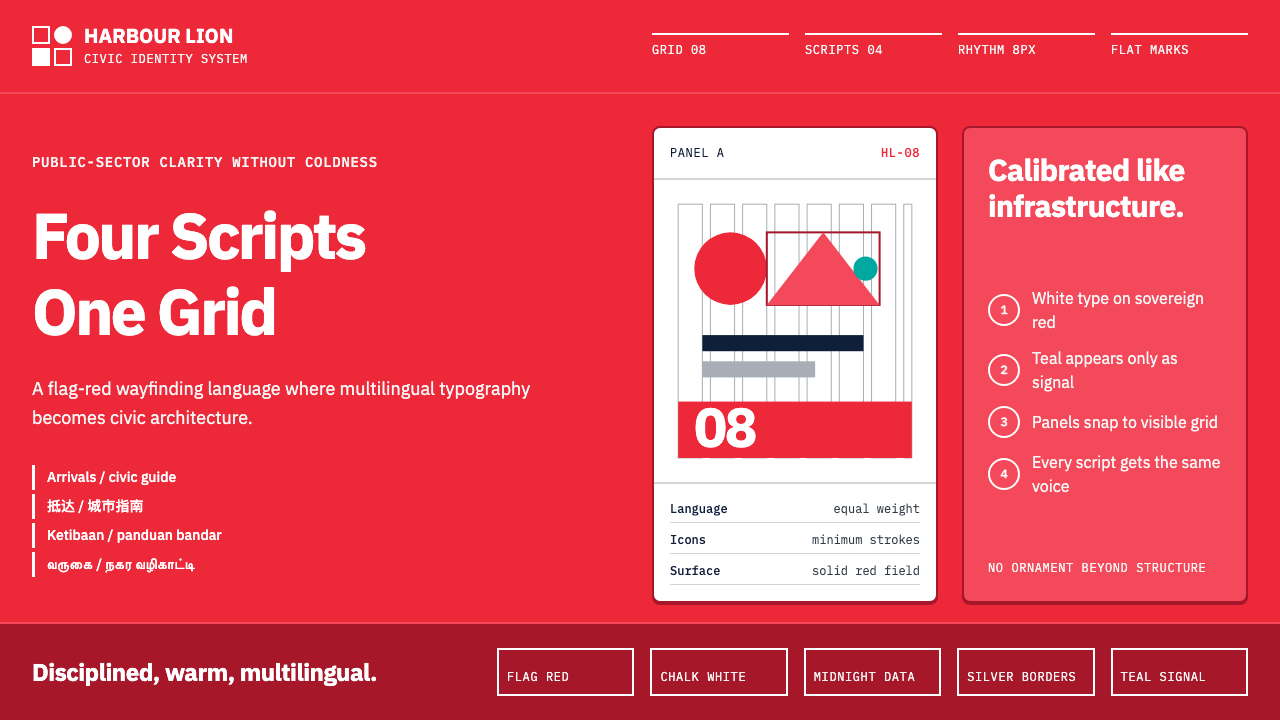 Singapore Merlion BrandPrecision with civic warmth. Flag red and geometric sans lock into a four-scr…
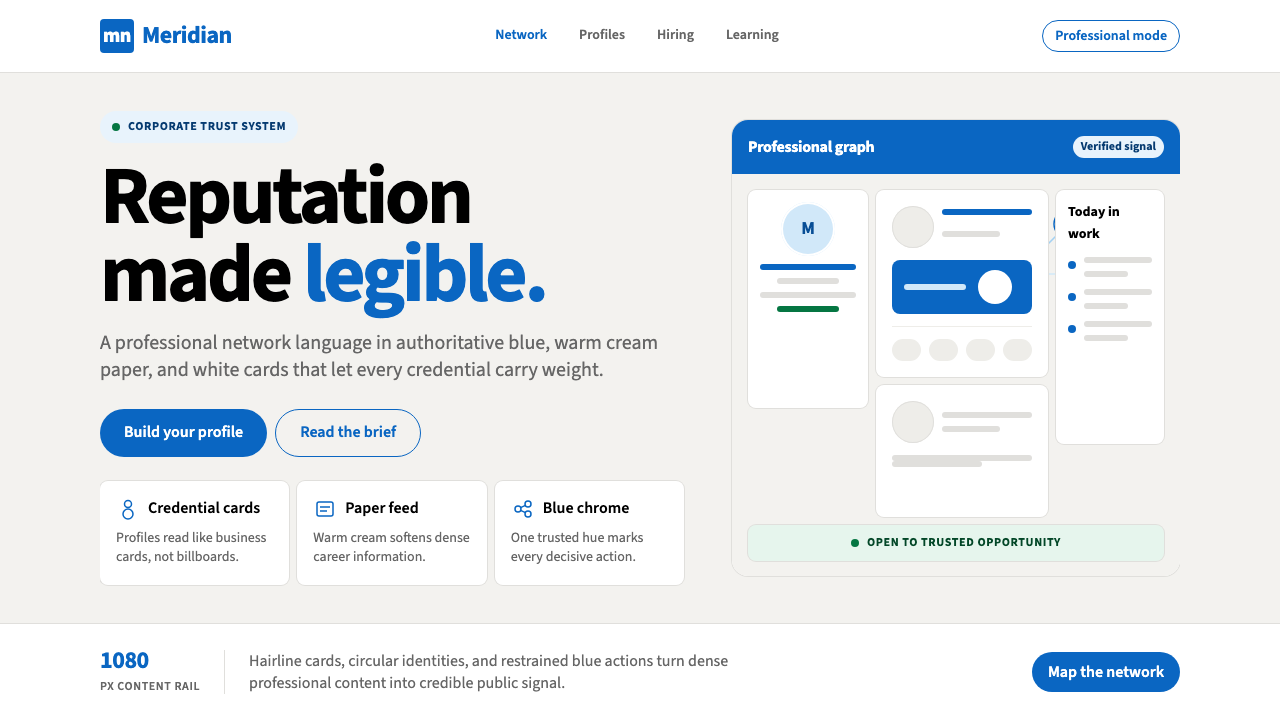 LinkedInCorporate trust, digitized. Authoritative blue frames white cards on warm cre…
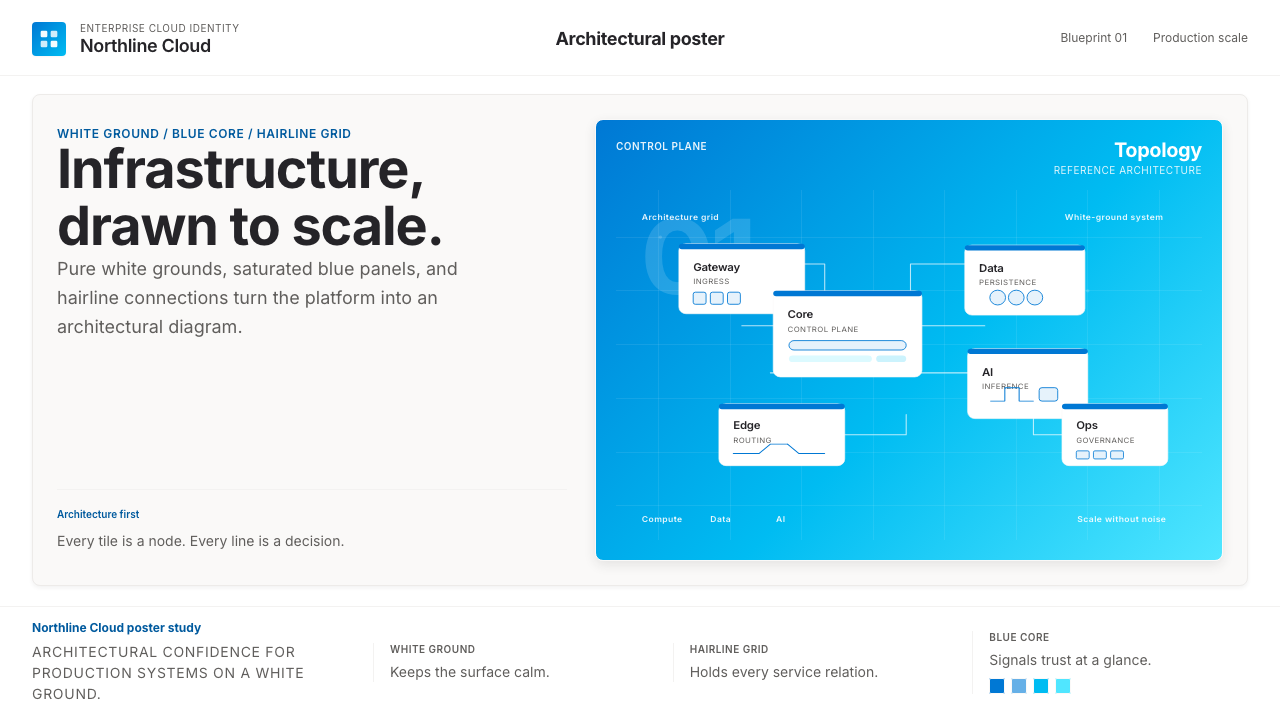 Microsoft AzureEnterprise calm, sharply diagrammed. White ground, saturated blue, hairline l…
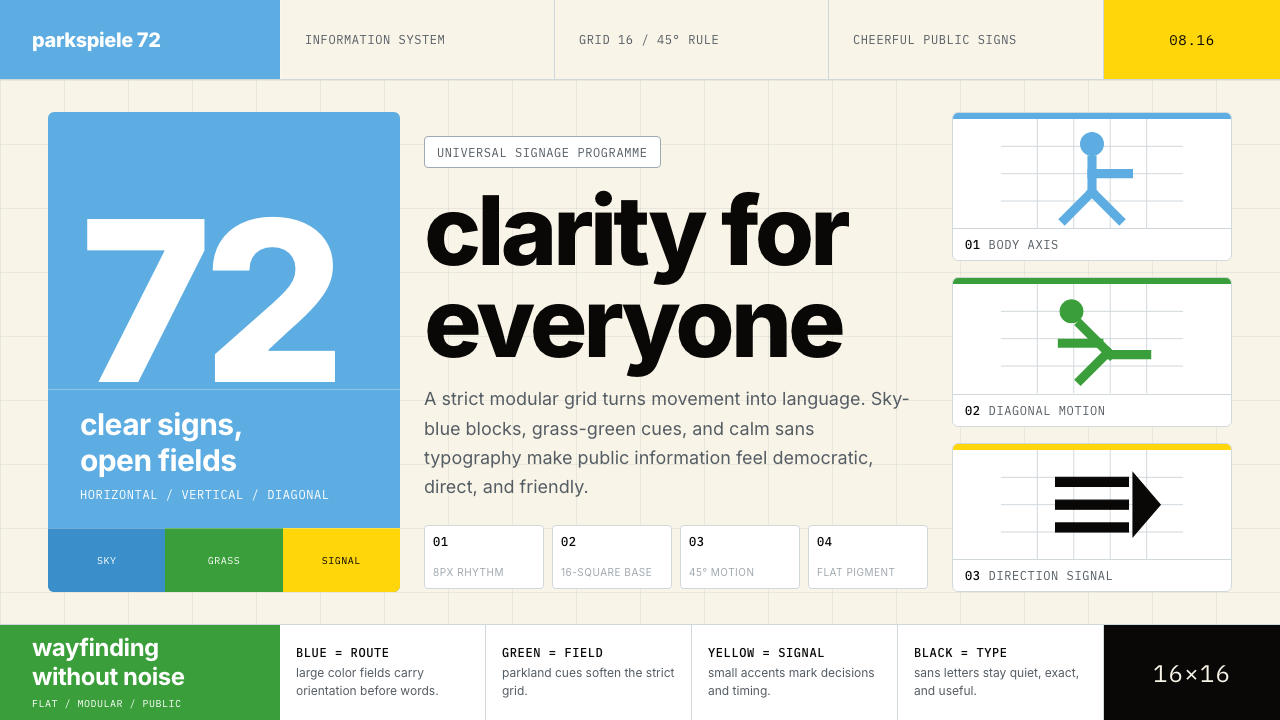 Otl Aicher Munich OlympicsFriendly rigor. Sky-blue grids and straight-line pictograms make public infor…
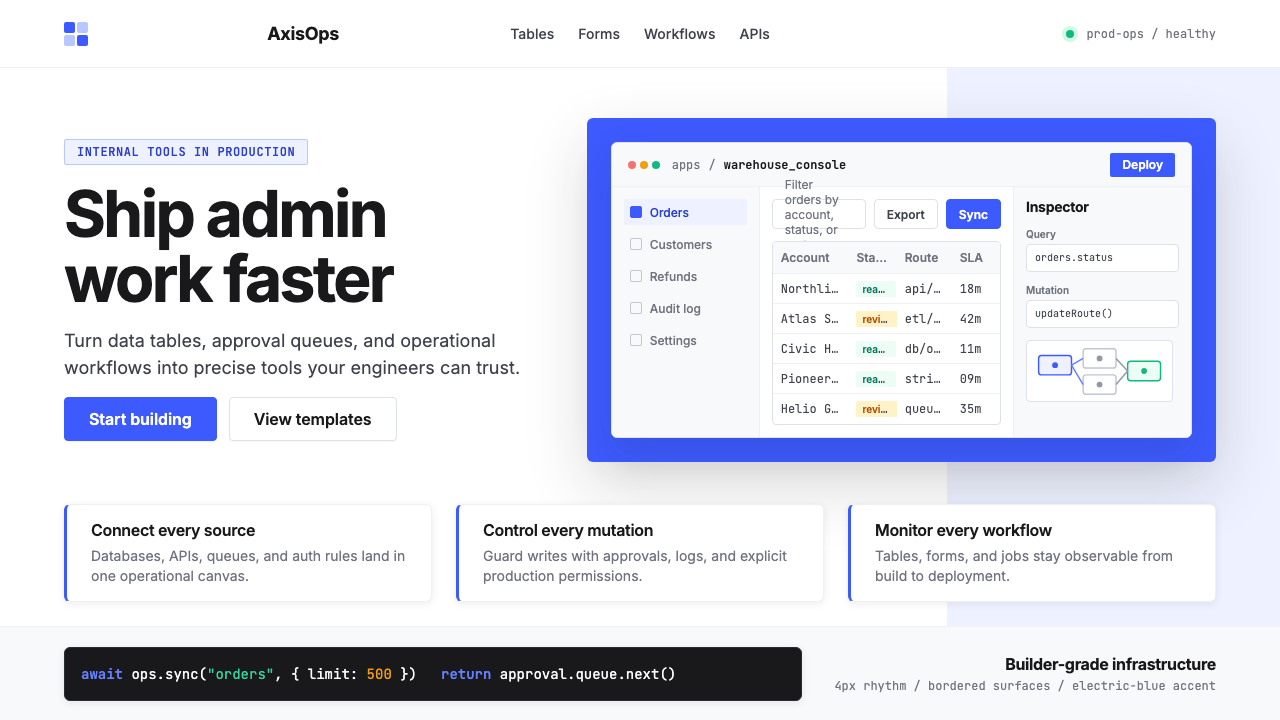 Retool Internal-Tools RedPrecision ships fast. Electric blue panels, Inter type, and bordered UI mocku…
 Tableau (Business Intelligence)Enterprise clarity. Navy workbook chrome, hairline panes, and 10-color marks…