What is Oracle Corporate Red?
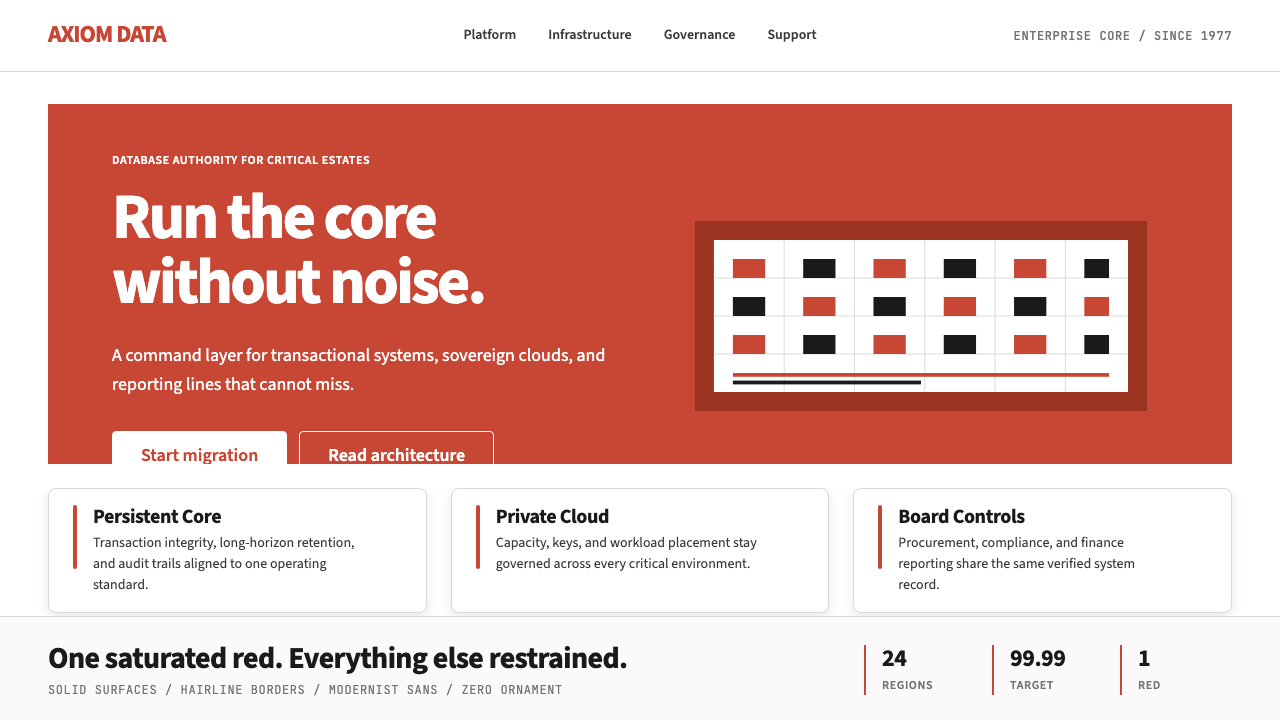
Oracle Corporate Red says 'we have run the world's databases since 1977' — through a single saturated anchor color, disciplined neutrals, and an almost aggressive rejection of ornament.
Oracle Corporate Red in brief
Oracle Corporate Red is the visual identity system of Oracle Corporation — the enterprise software and database giant founded in 1977. Its defining quality is concentration: where most corporate brands accumulate accent colors, supporting palettes, and expressive type families over time, Oracle has done the opposite. The system anchors everything to a single saturated red, pairs it with deep charcoal and pure white, and lets generous white space do the organizational work. The result is one of the most immediately recognizable technology identities in the world.
The aesthetic is enterprise-conservative by design. Deep saturated red serves as the sole brand anchor; all other tones are restrained slate neutrals, near-black, or pure white. Typography relies on bold, tightly-set geometric sans-serif wordmarks that convey authority rather than friendliness. There is no playfulness, no approachability signaling, no gradient transitions — just the weight of institutional confidence built over decades of running mission-critical infrastructure.
What makes the system coherent rather than merely severe is its internal logic. The red is not used decoratively — it marks boundaries, signals navigation, and identifies the brand at a glance. The white space is not emptiness — it is structure, giving each element room to assert itself. The type does not charm — it informs. Every choice eliminates ambiguity, which is precisely the message an enterprise database company needs to send to the IT departments and procurement officers who are its actual audience.

Where does Oracle Corporate Red come from?
Oracle Corporation was founded in 1977 in Santa Clara, California, by Larry Ellison, Bob Miner, and Ed Oates — then operating under the name Software Development Laboratories. The company's initial product was a relational database based on a research paper by IBM's Edgar Codd, and it reached market before IBM's own implementation of the same concept. From those early years, Oracle's identity was built around technical primacy: the company that got there first, that ran faster, that handled more data with more reliability than any competitor. The visual language that emerged over the following decade reflected this positioning — nothing soft, nothing tentative, nothing that would look out of place in a data center.
The distinctive red-and-black wordmark identity took shape through the 1980s and 1990s as Oracle expanded from a single database product into a global enterprise software empire covering middleware, applications, hardware, and cloud infrastructure. The red — a deeply saturated, warm-leaning crimson — was not an arbitrary choice. Red in corporate contexts carries connotations of urgency, confidence, and dominance; in the context of enterprise software, it reads as a declaration rather than an invitation. As Oracle grew through aggressive acquisitions — PeopleSoft, Siebel Systems, Sun Microsystems, and many others — the brand absorbed new product lines while the core red-and-charcoal-on-white identity held firm, serving as a unifying force across an increasingly sprawling portfolio.
A significant refinement came in 2014 with the introduction of Oracle Sans, a custom typeface developed specifically for the brand. Oracle Sans replaced the mix of licensed geometric sans-serif faces that had been in use and gave the identity a single, consistent typographic voice — tightly spaced, moderately weighted, with the slight humanist warmth of its predecessor Source Sans 3 tempered by engineering precision. The typeface introduction was part of a broader brand consolidation effort as Oracle shifted its marketing emphasis from on-premise enterprise software to cloud services, competing directly with Salesforce, SAP, and Microsoft Azure. The goal was to appear simultaneously modern and institutional — newer than the mainframe era, more dependable than a startup.
Oracle's headquarters relocated from Redwood Shores, California, to Austin, Texas, in 2020, part of a broader corporate migration that reshaped its workforce and reinforced its identity as a company operating at continental scale. Through all of these transitions — from database startup to database monopoly to cloud contender — the visual identity has remained remarkably stable. The saturated red, the white ground, the tight sans-serif wordmark: these have been constants across nearly five decades of product evolution, acquisition cycles, and market repositioning. That stability is itself a strategic asset, communicating institutional endurance to an enterprise customer base that values predictability above almost everything else.
What defines the Oracle Corporate Red look?
Brand-Anchor Red
The entire system pivots on a single deeply saturated, warm-leaning crimson. It appears on wordmarks, navigation bars, primary call-to-action buttons, and structural dividers — never as decoration, always as a functional marker. The saturation level is unusually high by corporate standards, projecting confidence and finality rather than approachability. Because the red is used so sparingly in context (deployed against white or near-white grounds), it commands attention whenever it appears without needing to compete for it.
Controlled Neutral Palette
Beyond the brand red, the palette is strictly neutral: a range of cool-leaning grays from near-white through mid-slate to deep charcoal, with pure white serving as the dominant ground. These neutrals do not carry visual interest — they recede, creating a stage for red and black to perform. The restraint is total; warm tints, beige undertones, and anything that suggests informality or human warmth are absent. The coolness of the neutrals reinforces the impression of machine precision.
Geometric Sans-Serif Authority
Oracle's typographic voice is built on bold, tightly tracked geometric sans-serif letterforms. Wordmarks sit at heavy weights with minimal spacing, projecting solidity rather than elegance. Body text drops to a lighter weight and more open tracking, but the overall typographic temperature remains cool and institutional. There are no script flourishes, no humanist warmth curves, and no decorative ligatures. The typeface system does one thing: communicate hierarchy and information without ambiguity.
White Space as Structure
Generous white space is one of the system's most consistent features, and it serves a structural rather than merely aesthetic function. Margins are wide, padding around interactive elements is ample, and sections are separated by clear breathing room rather than decorative dividers. This space communicates that Oracle does not need to fill the screen to prove its worth — it can afford restraint because its authority is assumed. The white space also improves scannability for enterprise users who need to locate information quickly across complex interfaces.
Flat, Hard-Edged Surfaces
Oracle's interface surfaces are flat and hard-edged. Card components, button borders, and table rows use crisp, defined boundaries rather than soft shadows or rounded corners that might suggest friendliness. When depth cues appear, they are minimal and structural — a subtle border, a slight background tint — never a diffuse glow or a skeuomorphic lift. This flatness is not a concession to trend; it is consistent with the brand's decades-long refusal to signal approachability over competence.
Zero Decorative Embellishment
There are no gradients, no illustrative motifs, no ambient textures, no expressive icon styles, and no brand mascots anywhere in the Oracle corporate identity system. Every visual element justifies its presence through function alone. This is not minimalism as a fashion choice — it is a deliberate communication that Oracle is a company for serious enterprise work, not a consumer product competing for emotional engagement. The absence of decoration is itself a statement of institutional confidence.
Typographic Hierarchy by Scale
Information hierarchy in Oracle materials is achieved almost entirely through typographic scale and weight contrasts, not through color or decorative separators. A large, bold section header sits against compact, light-weight body text with a visible but not dramatic size jump between levels. This reliance on scale rather than color for hierarchy means that the brand red remains uncontested when it does appear — it is never competing with multiple colored hierarchy markers. The result is a reading experience that feels organized and efficient rather than expressive.

Who shaped Oracle Corporate Red?
Co-founder and long-serving CEO of Oracle, Ellison shaped the company's identity through his own persona as much as through product strategy. His confrontational competitive style — famously targeting IBM as the primary enemy in Oracle's early marketing — translated directly into a brand voice that never apologized, never hedged, and never softened its claims. The saturated red of Oracle's identity reflects the aggressive confidence Ellison embodied: a brand that occupies space rather than requests it. After stepping down as CEO in 2014 while remaining executive chairman and CTO, his influence on the company's posture toward enterprise customers remained central.
Catz joined Oracle in 1999 and became co-CEO in 2014, taking on primary responsibility for the company's financial operations and many of its landmark acquisitions. Her leadership style — precise, operationally focused, and publicly understated — mirrors the brand's own aesthetic logic: authority communicated through competence and discipline rather than charisma or warmth. Under her tenure as sole CEO from 2019, Oracle's cloud transformation accelerated, and the brand identity she inherited maintained its core vocabulary even as the product portfolio expanded dramatically.
The technical co-founder of Oracle, Miner was the primary architect of Oracle's early database engine, overseeing the engineering work that gave the company its foundational claim to technical superiority. While Ellison handled sales and marketing, Miner focused on building software that worked — reliably, at scale, on hardware the competition considered inadequate. His engineering-first ethos became embedded in Oracle's institutional DNA, which in turn influenced the brand's rejection of decorative or emotive identity elements in favor of functional clarity. Miner died in 1994, but his technical legacy shaped Oracle's self-presentation for decades afterward.
The third co-founder of Oracle, Oates contributed to the company's early technical and strategic direction before departing in the 1980s to pursue other ventures. His role in Oracle's founding reflects the collaborative technical origin of an identity that would later become synonymous with institutional scale and corporate dominance. The fact that Oracle's brand endured so consistently across decades — outlasting its founders' active involvement — speaks to how deeply the visual and cultural identity became self-sustaining once established.
The in-house design organization responsible for Oracle Sans, the current UI component libraries, and the overall coherence of Oracle's brand across thousands of product surfaces. The development of Oracle Sans in 2014 represented a significant institutional commitment: rather than licensing existing geometric sans-serif faces, Oracle invested in a custom typeface that could carry the brand's specific tonal requirements — professional but not cold, modern but not fashionable — consistently across print, screen, and marketing materials at global scale. This kind of in-house typographic investment is rare among enterprise software companies and reflects the seriousness with which Oracle treats its visual identity as a competitive asset.
How do you use Oracle Corporate Red today?
Oracle Corporate Red is most effective when the design brief calls for enterprise authority, institutional trust, and a deliberate signal that the product is for serious professional use rather than consumer engagement. It belongs to a narrow category of corporate identities that communicate through restraint: every element that does not belong is removed, and what remains carries concentrated weight. Applying the style correctly requires internalizing its logic — function justifies presence, and anything that cannot be functionally justified should not be there.
For presentation slides, the system works well on both cover and content pages, but the logic differs between them. A cover page benefits from bold, single-color asymmetry: the brand red occupies a structural area — a header band, a sidebar, a geometric block — while the title sits in large, tightly tracked type against a white or near-white field. The composition should feel declarative, not exploratory. Content slides should be treated as information grids: two or three type hierarchies defined entirely by scale and weight, no decorative rules or icon clusters, and data visualized as clean geometric objects — bar charts and tables treated as structural diagrams rather than expressive graphics. A common error is using red as a highlight color on content slides, which fragments the brand anchor's authority; red should remain reserved for structural framing, not for calling out individual data points.
For web interfaces — especially dashboards, pricing pages, and product documentation — Oracle Corporate Red provides a strong framework for information density. The approach: a strict column grid, near-white background, black body text, and the brand red deployed only for navigation states, primary action buttons, and tier-labeling. Table-heavy interfaces benefit from the style's clean border logic: defined rows and columns with minimal padding variation, no alternating row colors beyond a very subtle tint, and sortable column headers marked by weight and position rather than icon decoration. Pricing page architectures work particularly well under this system because the visual hierarchy supports rapid comparison: tier names in red, feature lists in body text, and call-to-action buttons in solid red with white type — the only moments of color intensity on an otherwise restrained page.
For editorial and marketing applications, the style supports large-scale layouts where the red functions as a structural headline element. Full-width section blocks that alternate between white-ground and deep-charcoal-ground create rhythm without requiring additional accent colors; the brand red appears only at section entry points — headers, labels, navigation anchors — rather than distributed throughout. Marketing headlines should be set at genuinely large scale, with the type weight doing the work that decorative effects would otherwise accomplish. Photography, when used, should be high-contrast and cropped tightly to geometric proportions — treated as a flat graphic element rather than an atmospheric image. Avoid lifestyle photography or any image that imports warmth and human softness into a visual system built on precision and institutional confidence.
The most common mistake when applying Oracle Corporate Red is misunderstanding the function of the saturated red. Many designers treat it as a general accent color — using it for hover states, inline highlights, decorative dividers, icon fills, and data chart segments simultaneously. This distributes the red's visual weight so broadly that it loses its authority. Authentic to the system, the red should appear in very few places: the wordmark or logo area, primary navigation, and primary call-to-action surfaces. A second common error is importing softness — rounded corners, soft drop shadows, gradient backgrounds — in an attempt to make the style more approachable for a consumer audience. This hybrid approach satisfies neither the enterprise authority the style is built for nor the warmth a consumer product requires. When a softer visual register is genuinely needed, the honest solution is to choose a different design system rather than diluting this one.

Oracle Corporate Red — FAQ
Is Oracle Corporate Red the same as any other tech company red?
Not in system terms. Many technology companies use red as an accent or signal color, but Oracle's identity is unusual in making a deeply saturated, warm-leaning crimson the single primary brand anchor rather than one color among several. The closest structural parallels are other mono-color enterprise identities — IBM's blue, Salesforce's cloud blue — where a single hue carries the full weight of brand recognition. What distinguishes Oracle's approach is the specific temperature and saturation of its red: darker and more serious than the candy-bright reds used by consumer brands, but warmer and more assertive than the corporate maroons used by financial institutions. The system also differs in pairing its red with near-pure black and white rather than complementary tones, which maximizes the contrast and institutional weight.
Can Oracle Corporate Red work for a startup or small company that wants to appear credible?
With significant caution. The visual language works because of the institutional weight behind it — decades of enterprise credibility, global brand recognition, and an audience that already understands what Oracle is. A startup applying the same palette and typographic severity without that context risks reading as cold rather than authoritative, impersonal rather than reliable. The style can work if the product genuinely targets enterprise buyers and the team can back its visual confidence with substance — in sales collateral, customer references, and product depth. Where it breaks down is in consumer-facing contexts or early-stage products where building trust through warmth and personality matters more than projecting establishment credibility. A thoughtful borrowing of the system's structural logic — its white space, its typographic hierarchy, its functional color discipline — will produce better results than a wholesale adoption of its austere tone.
How should data visualizations be handled within this system?
Data visualizations in Oracle's system are treated as structural diagrams rather than expressive graphics. The primary approach is to use the neutral palette — various grays and the near-white background — for the bulk of a chart's visual surface, with the brand red used sparingly and strategically to highlight the single most important data series or the primary call-out value. Bar charts, line charts, and area charts all benefit from this discipline: when most series are rendered in distinct grays and only one is red, the eye goes immediately to what matters. Pie and donut charts work less well under this constraint because they typically require multiple differentiated segments — in that case, a sequential gray scale with a red highlight for the primary segment is more coherent than attempting to apply the full neutral palette. Avoid color-coding systems that require more than four distinct hues; the system's authority breaks down when it starts to look like a category-coding exercise rather than a structural representation.
Does the system work for dark-mode or dark-background applications?
Dark-mode inversion is possible but requires careful rebalancing. On a deep charcoal or near-black ground, the brand red behaves differently than on white: it can become more aggressive and harder to deploy at the same density without overwhelming the composition. The approach that works best is treating the dark ground as the stage — deep charcoal or near-black as the dominant — and allowing white and light gray to perform the roles that red and charcoal fill on light grounds. The brand red should appear even more sparingly in dark contexts than in light ones: primarily for wordmarks, primary navigation, and critical action states. A deep-charcoal-on-near-black hierarchy of tones, rather than multiple grays on white, is the structural substitute for the light-mode neutral palette. The result feels consistent with the brand's authority without importing the same saturation problems that arise when heavy red meets a black ground at the same proportions used against white.
What kinds of products or sectors are a poor match for this visual system?
Oracle Corporate Red is a poor match for any product or sector where emotional warmth, human approachability, sensory pleasure, or cultural expressiveness are primary values. Consumer wellness and health applications need visual systems that communicate care and gentleness — this system communicates precision and power, which are wrong signals. Children's educational products need warmth and playfulness; the severe typographic hierarchy and the single-anchor saturated red would read as intimidating rather than inviting. Food and hospitality brands depend on sensory richness and warmth cues that this palette structurally excludes. Creative agencies, fashion brands, and cultural institutions need expressive identity systems that reflect personality — the deliberate personality-suppression in Oracle's system would undermine the message. The fundamental test: if your product's value proposition includes warmth, joy, creativity, or sensory richness, this is not the right system. If it includes reliability, scale, authority, and professional competence, the system is a strong match.
Related design styles
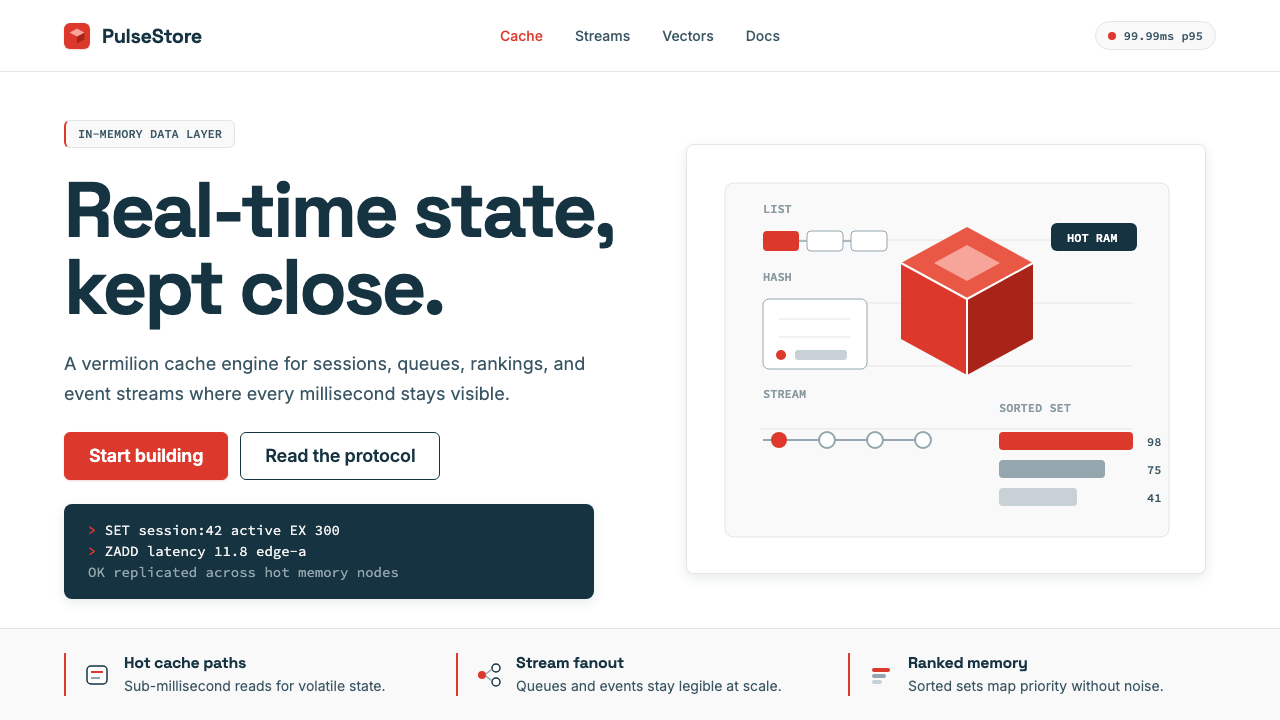 Redis Cache RedWarm database rigor. Vermilion cube, slate type, and white-space grids make s…
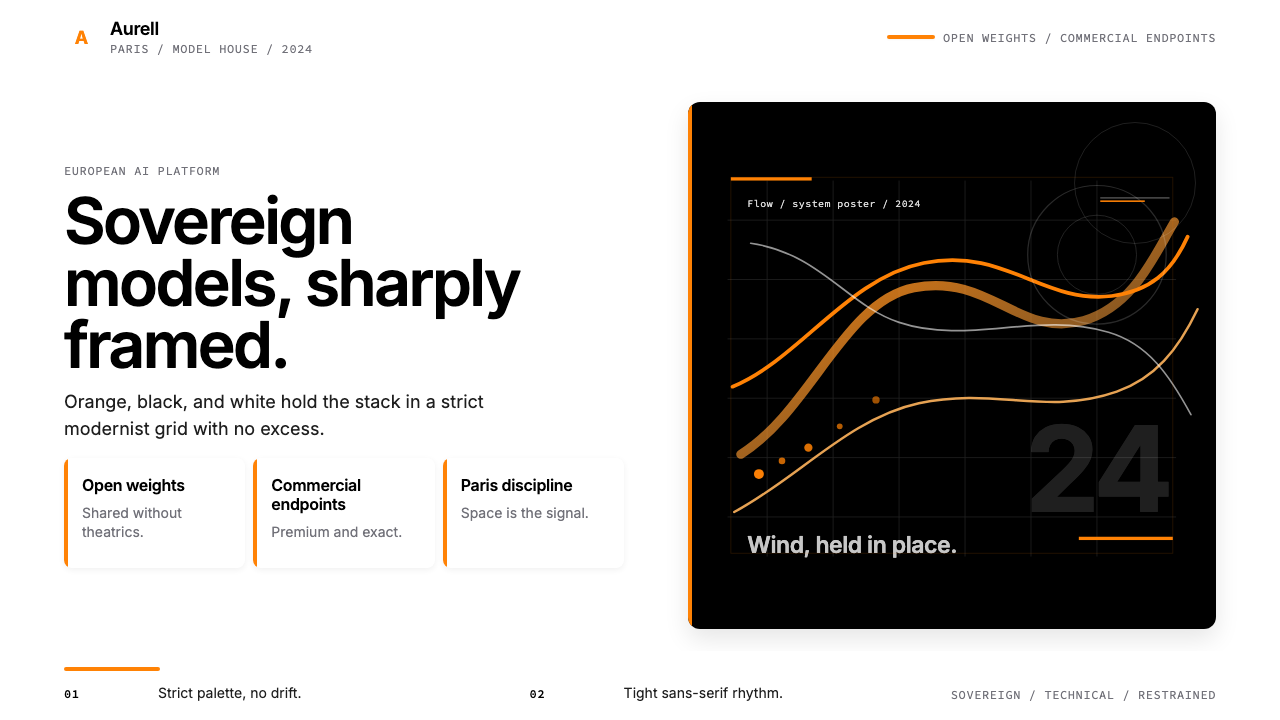 Mistral AI OrangeSovereign AI with restraint. Orange, black, and white lock the grid.
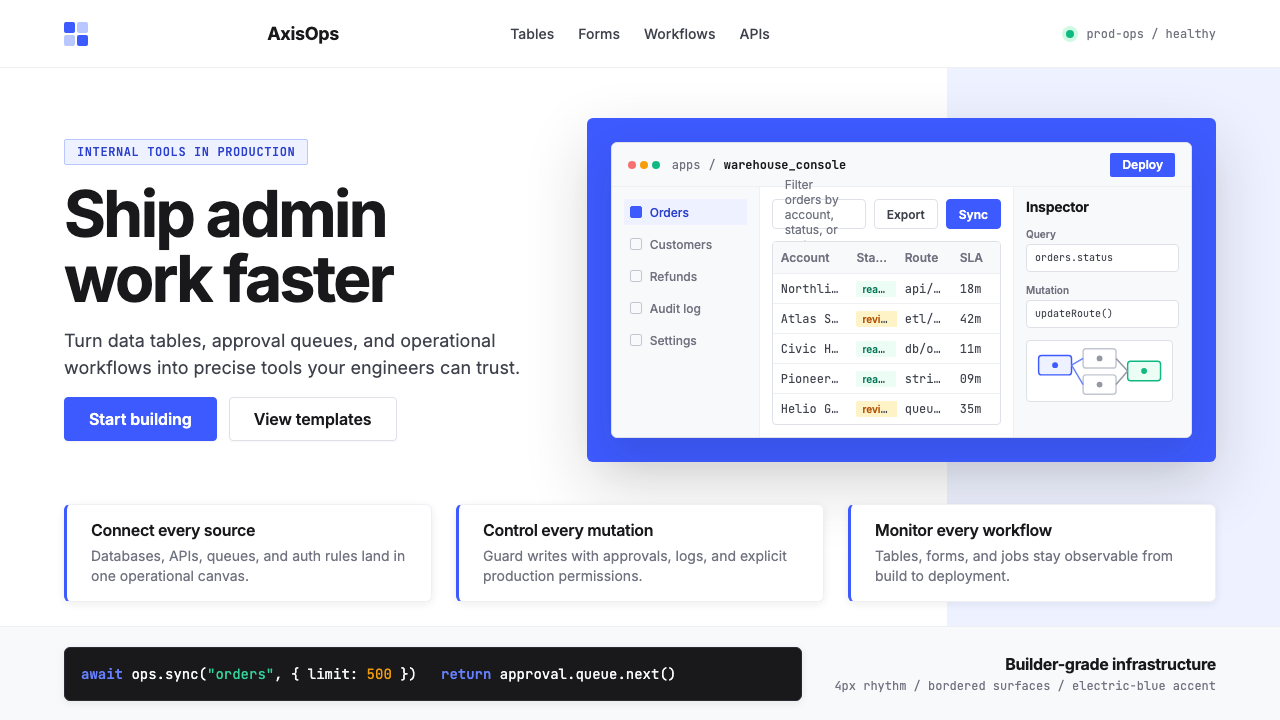 Retool Internal-Tools RedPrecision ships fast. Electric blue panels, Inter type, and bordered UI mocku…
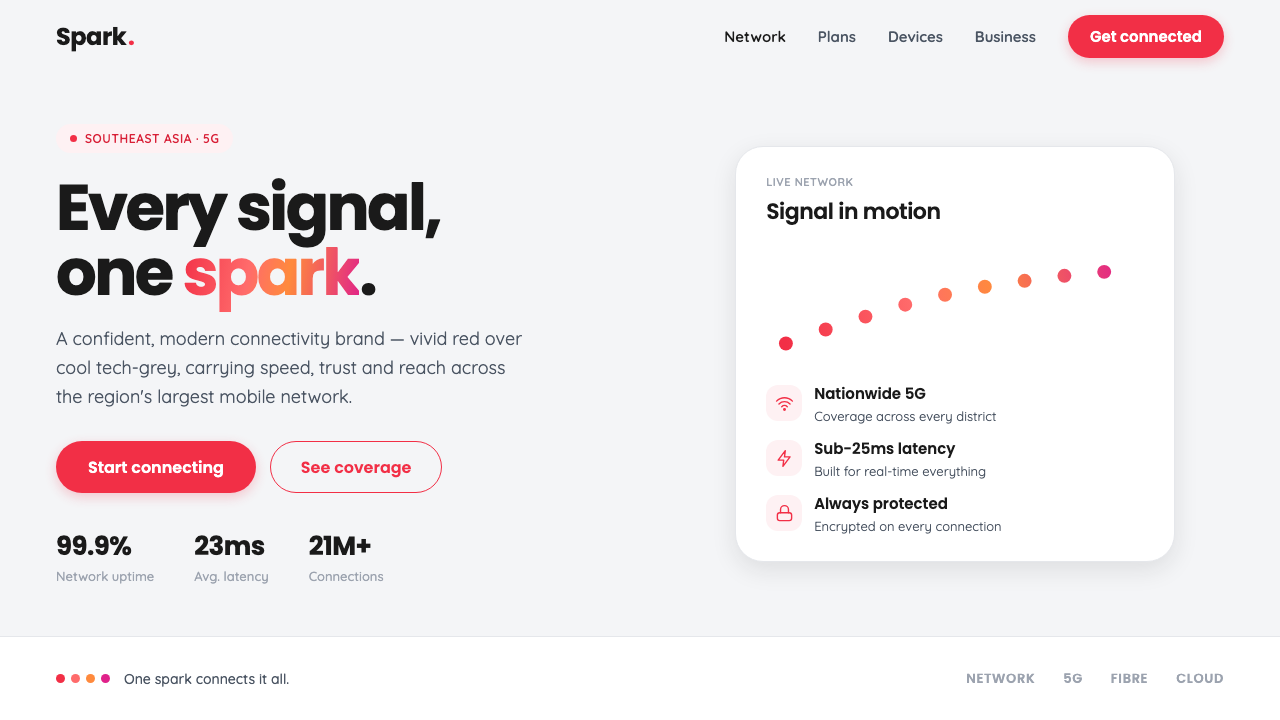 Singtel Modern BrandKeeps the red loudest on screen. Vivid Singtel red on cool tech-grey, with a…
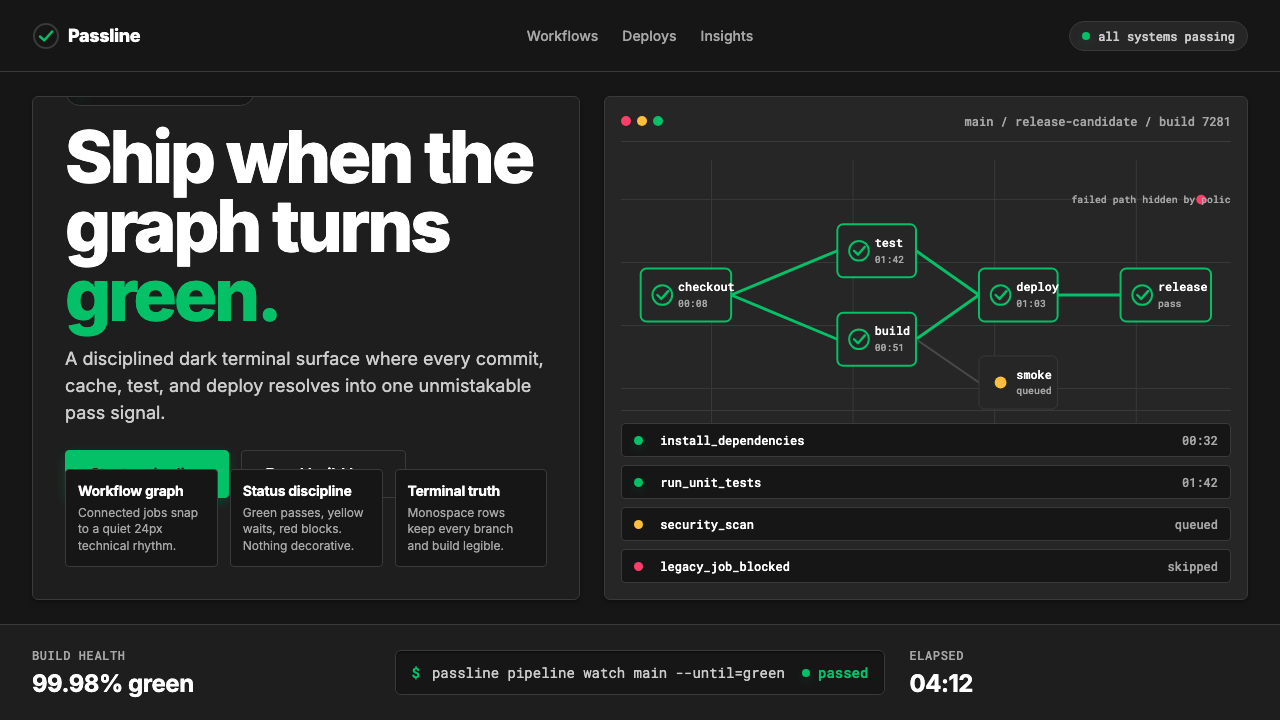 CircleCI Pipeline-GreenConfidence goes green. Emerald status lines cut through terminal-black pipeli…
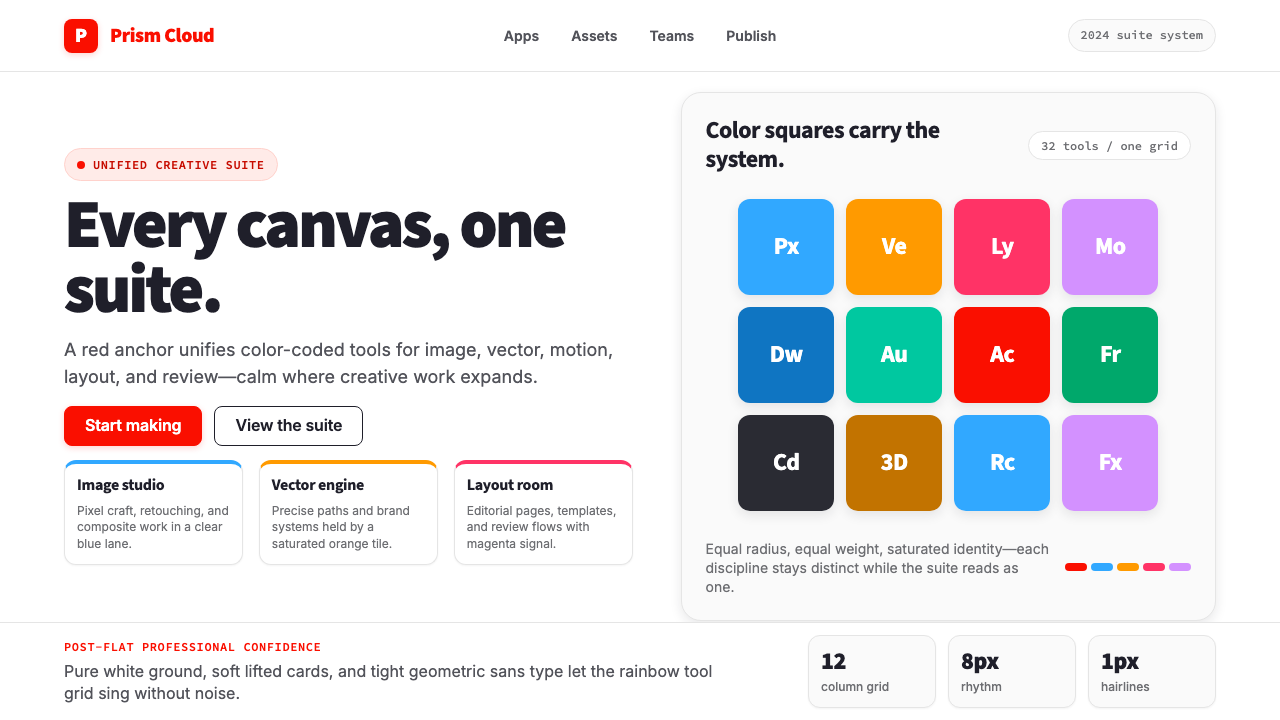 Adobe Creative CloudUnified, not uniform. Red anchor, white space, and saturated app tiles organi…