What is Mistral AI Orange?
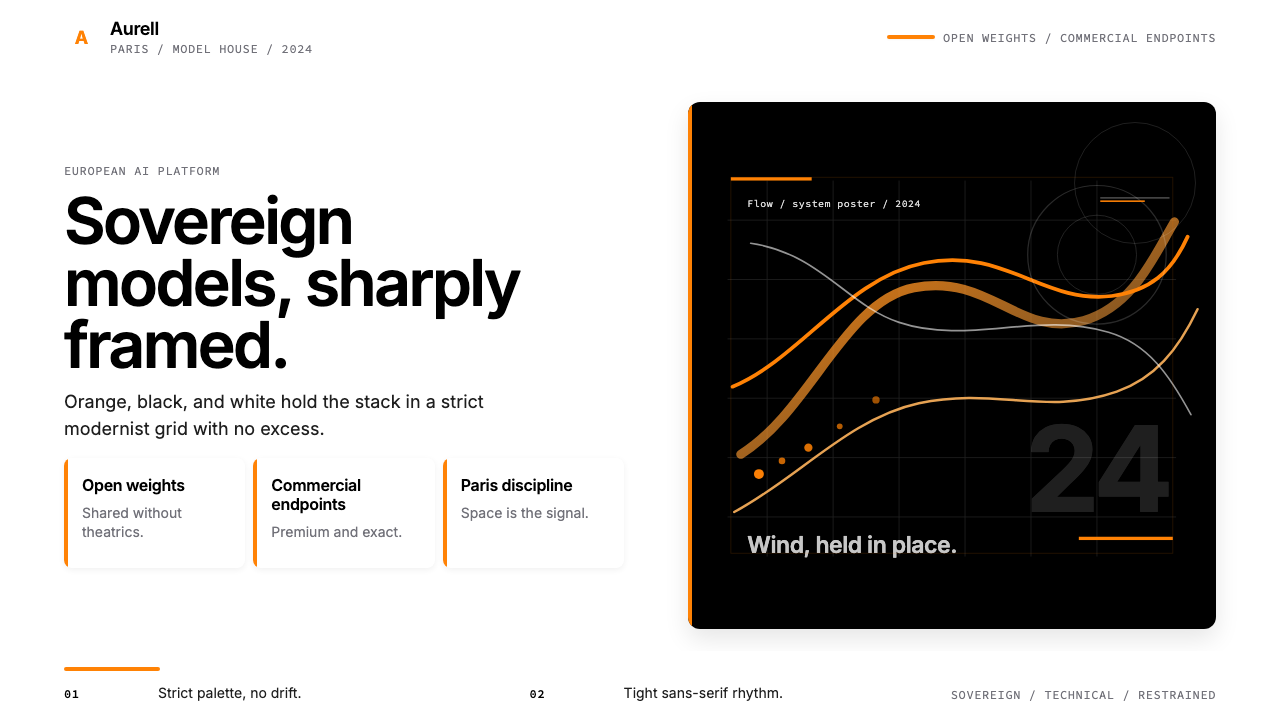
From a Paris garage to Europe's most-valued AI startup, Mistral built its entire brand identity on one unflinching orange, deep black, and the confidence to leave everything else out.
Mistral AI Orange in brief
Mistral AI Orange is the visual design system built around the brand identity of Mistral AI, the French large-language-model company founded in April 2023. The system is defined by a three-color discipline so strict it reads almost like a manifesto: a single vivid, warm orange functions as the sole accent and anchor; deep black carries structure and typography; pure white or very light cream provides the breathing ground. Almost nothing else is permitted.
The aesthetic belongs to a lineage of European modernist corporate design — rigorous, technically self-confident, sovereign in its restraint. It does not borrow the warmer, friendlier palette conventions common in American consumer-technology branding, nor does it chase the maximalist chromatic energy of many AI competitors. Instead it conveys competence through economy: the fewer elements, the more weight each one carries.
Distinct from a pure minimalism of absence, Mistral Orange includes a living decorative motif — flowing abstract curves that evoke the Mistral wind of southern France, the company's namesake. These curves are organic where the rest of the system is geometric, expressive where the rest is controlled, and they prevent the identity from collapsing into mere austerity. Used at large scale on covers or hero sections, they give the system a sense of movement and pride without violating its tonal discipline.

Where does Mistral AI Orange come from?
Mistral AI was founded in Paris in April 2023 by Arthur Mensch, Guillaume Lample, and Timothée Lacroix — alumni of Meta AI Research and Google DeepMind. Their goal was explicit from the start: to build powerful open-weight language models in Europe, under European governance, and to make them genuinely competitive with the best proprietary systems in the world. Within eighteen months the company had raised hundreds of millions of euros and achieved a valuation that made it the most valuable AI startup on the continent.
The brand identity was developed alongside the company's technical ambitions and its political positioning. Mistral's founders were vocal proponents of European AI sovereignty — the idea that Europe needed its own AI infrastructure, its own models, and its own data governance, rather than dependence on American hyperscalers or Chinese state-backed systems. The visual language they built reflects this positioning precisely. Orange was chosen as an accent with national and emotional resonance: warm, confident, European in feeling, and distinct from the cool blues and grays common among English-speaking tech brands.
The flowing-curve motif is a direct reference to the Mistral wind, the powerful, consistent northwesterly that sweeps down the Rhône valley of southern France. The wind is a defining feature of Provençal geography and culture — celebrated in literature and feared by farmers — and naming an AI company after it was a deliberate choice signaling speed, force, and rootedness in place. The visual translation of that wind into abstract curves gives the brand a natural, somewhat romantic counterweight to the otherwise rigorous typographic grid.
The design emerged in a moment when European technology identity was under active cultural negotiation. Mistral's public commitments to open-weight model releases, its challenges to American regulatory assumptions, and its public statements about digital sovereignty made it simultaneously a technical player and a political actor. The visual system supports both roles: it looks serious and credible enough for enterprise AI procurement discussions, and distinctive enough to carry a national identity argument. The orange in particular functions as a quiet assertion — this is not another grey Silicon Valley dashboard.
What defines the Mistral AI Orange look?
Signature Orange Accent
The system's defining element is a single saturated, warm orange used as the universal accent: on logos, key interface controls, call-to-action buttons, chart highlights, and decorative motifs. It is never diluted into a pastel, never darkened into a rust, and never allowed to share the accent role with another hue. The orange functions as both a brand mark and a structural signal — wherever it appears, attention should follow.
Three-Color Discipline
Beyond the orange, the palette is limited to deep black and pure white or near-white grounds, with occasional warm light grey used for secondary surface areas. No tertiary colors, no saturated blues or greens, no rainbow data-visualization palettes. When data requires multiple colors — as in a chart with several series — the system uses tints of the primary three rather than introducing new hues. This creates a coherence rare among AI products, which tend toward color proliferation.
Modern Sans-Serif Typography
Text is set in refined, geometrically influenced sans-serif typefaces with tight letter-spacing at display sizes and generous line-spacing in body text. The system uses typeface scale — dramatic differences in size between levels — as its primary hierarchy device rather than color or decorative rules. Headlines are large and confident; body text is deliberately modest and readable. All-caps labels appear for secondary navigation and metadata, following European modernist typographic conventions.
Generous Whitespace Grid
The layout system is built on a rigorous grid with wide margins and generous inter-element spacing. Content never crowds the edges; sections breathe. This whitespace is not decorative — it is structural, giving each visual element the isolation it needs to carry weight. The effect on screen is one of calm authority: the product appears unhurried, in control, and assured enough not to fill every pixel.
Flowing-Curve Wind Motif
Abstract flowing curves — evoking the Mistral wind — appear as a decorative system distinct from everything else in the identity. They are smooth and organic against the otherwise rectilinear composition; they may occupy large areas as background illustration or appear as contained graphic elements. Their function is expressive and differentiating: they are the only element that does not conform to the geometric grid logic, and they prevent the system from reading as cold or purely corporate.
Flat Surfaces, No Decorative Depth
Interface elements — cards, panels, buttons, inputs — are rendered with flat fills and clean borders rather than soft shadows, blur, or glassmorphism effects. Where depth is indicated at all, it is suggested through border contrast and layered flat planes rather than atmospheric shadow. The visual result is crisp and print-like, consistent with the European modernist tradition of treating the screen as a designed page rather than a simulated three-dimensional space.
Restrained Technical Iconography
Icons and interface symbols are drawn with consistent, moderate stroke weight, remaining geometric and minimal in form. No skeuomorphic metaphors, no playful rounded characters, no gradient icon fills. Each symbol is legible at small scale and maintains tonal neutrality — it does not call attention to itself but serves the surrounding information. The icon language reads as a tool vocabulary, not an expressive one.

Who shaped Mistral AI Orange?
Mensch is a co-founder and the CEO of Mistral AI. Before founding Mistral, he was a researcher at Google DeepMind in Paris, where he worked on large-scale model training and efficiency. His public positioning of Mistral as a European sovereign AI project — rather than merely a technical venture — gave the brand its explicit political dimension and shaped the seriousness and national confidence that run through the visual identity.
Lample is a co-founder and Chief Scientist at Mistral AI, and was previously a researcher at Meta AI Research, where he co-developed the LLaMA family of open-weight language models. His commitment to open-weight model releases — making the model weights publicly accessible — became one of Mistral's most discussed brand positions. This openness philosophy influenced the visual identity's transparency and clarity: a system with nothing to hide has no need for obfuscation.
Lacroix is a co-founder and Chief Technology Officer at Mistral AI, also formerly of Meta AI Research. His deep infrastructure expertise shaped the company's technical credibility, and by extension its brand posture: Mistral presents itself as a builder of serious, production-grade technology, and the uncompromising cleanness of the visual system — no flourishes, no apologies — mirrors that engineering culture.
The Mistral wind — a cold, powerful, and remarkably consistent northwesterly that scours the Rhône valley and the coasts of Provence — is not a person but a genuine conceptual co-author of the brand. The founders chose it as the company name deliberately: it implies force, constancy, and European geographic rootedness. In the visual system its legacy is the flowing abstract curve motif, the only organic element in an otherwise rectilinear design language. It is the brand's Mediterranean soul.
Not a single figure but a political and cultural context that is inseparable from the Mistral brand. The European Commission's AI Act, debates over data residency and model governance, and broader anxieties about dependence on American and Chinese AI infrastructure all form the backdrop against which Mistral positioned itself. The visual identity's refusal of Silicon Valley aesthetic conventions — its orange rather than blue, its restraint rather than exuberance — is as much a statement in this political conversation as a design choice.
How do you use Mistral AI Orange today?
Mistral AI Orange is a high-discipline system: its power comes precisely from constraint. Applying it correctly requires resisting the temptation to supplement the palette, soften the edges, or add decorative variety for the sake of visual interest. The fewer liberties taken with the system, the more authoritative and coherent the output. Before beginning any composition, establish the hierarchy of three: which element carries the orange, which elements are black, which areas stay white.
For presentation slides, the system yields strong covers through a simple formula: large flowing-curve graphic in orange on a deep black or pure white field, company or project name in a single bold sans-serif treatment, and no other visual information on the page. Content slides should commit to the whitespace grid — one or two text hierarchy levels, a ruled horizontal line for structure, and orange reserved for one key number or label per slide. Data slides benefit from treating charts as objects: bar and line elements in orange against a white ground, with black axis labels, and no background grid lines competing with the data.
For web dashboards and product interfaces, the system maps cleanly to a dark or light mode. In the light variant, the page ground is white or very lightly warmed, primary text is near-black, and the orange appears on primary buttons, active states, progress indicators, and key metric values. In the dark variant, the ground shifts to a very deep neutral, text becomes white, and the orange retains its same structural role. Both variants must maintain the flat-surface logic: avoid blurred panel backgrounds, soft card shadows, and gradient fills, which visually conflict with the system's tonal authority. Pricing pages are particularly well served by this aesthetic — the restrained palette reads as premium and trustworthy, the whitespace signals that the product has nothing to hide.
For editorial layouts, marketing pages, and conference materials, the system supports the kind of bold information hierarchy familiar from European modernist poster design. A cover treatment might use the flowing orange curves across the full width, with a large white headline reversed out of a black field. Section headers within a document should be typographically scaled rather than colored — large and heavy sans-serif, not orange text. Pull quotes and call-outs can use an orange left border rule as the sole color accent. The effect, sustained across a multi-page document, reads as serious and sophisticated rather than playful.
A common mistake when working with this system is treating orange as a fill color rather than an accent. When orange covers large background areas — full panels, section backgrounds, full-width bands — it becomes visually aggressive and loses its signal function. The palette works because orange is rare: it should appear on roughly ten to twenty percent of any given layout at most, with the remainder held by black, white, and negative space. A second frequent error is introducing a second accent color — a teal, a sage, a dusty purple — to 'warm up' or 'balance' what feels like a stark system. This always weakens the identity. The starkness is the point.

Mistral AI Orange — FAQ
Is this style suitable for non-AI products, or is it too tightly associated with Mistral?
The underlying visual system — orange-black-white discipline, generous whitespace, flat surfaces, modernist sans-serif — is a broadly applicable design language that predates Mistral and will outlast it. Mistral made a particularly clean and committed execution of it, but the principles are not proprietary. Products in enterprise software, fintech, data tooling, legal technology, and other credibility-first sectors can all benefit from the same discipline without reading as Mistral clones, provided the specific decorative motifs (particularly the flowing curves) are not directly copied.
How should the orange be used in dark-mode interfaces specifically?
In a dark-mode implementation, the orange retains its accent role but demands slightly more care in proportion. Against a near-black ground, saturated orange is visually loud; it carries more perceptual weight than it does on white. The solution is not to change the hue but to use it more sparingly — reserve it for primary interactive elements (the main action button, the active navigation state, the current row highlight) and let the dark field carry the structural weight everywhere else. Avoid using orange for decorative fills or large graphic areas in dark mode; the contrast ratio becomes overwhelming and loses the signal quality that makes orange useful.
Can the flowing-curve motif be removed without losing the style's identity?
The curves are differentiating but not load-bearing. The core identity — the color discipline, the whitespace, the typographic hierarchy, the flat-surface logic — survives without them and remains visually coherent. The curves add expressive warmth and a natural, almost lyrical quality that prevents the system from reading as purely corporate modernism. Omitting them produces a cleaner, more austere system that is still recognizably within the same design family. Adding them in inappropriate contexts — very dense data tables, small-format cards, heavily technical documentation — would be a mistake; they are most effective at large scale on covers, heroes, and section transitions.
How does this style differ from other monochromatic tech-brand design systems?
Many technology companies use a single-accent system, but most choose cool colors — blue, green, or purple — that align with associations of trust, growth, or intelligence in English-speaking market contexts. Mistral's choice of orange is unusual in enterprise AI, and its warmth gives the system a different emotional temperature: more confident than reassuring, more assertive than approachable. The European modernist typographic sensibility also distinguishes it from American tech brands, which tend toward a friendlier, more rounded sans-serif style. Mistral's type sits upright and tight; it does not smile.
What kinds of products or contexts should avoid this design system?
The system performs poorly in contexts where warmth, playfulness, or sensory richness are primary values. Consumer-facing wellness apps, children's educational products, food and beverage brands, and creative tools aimed at non-technical audiences will find the palette and structural discipline at odds with their communication goals. Similarly, the style is a poor fit for brands that need to convey community, informality, or accessibility — the visual gravity of deep black and saturated orange reads as professional authority, not openness. Contexts requiring diverse representation of joy, color, or cultural multiplicity are better served by a more expressive palette.
Related design styles
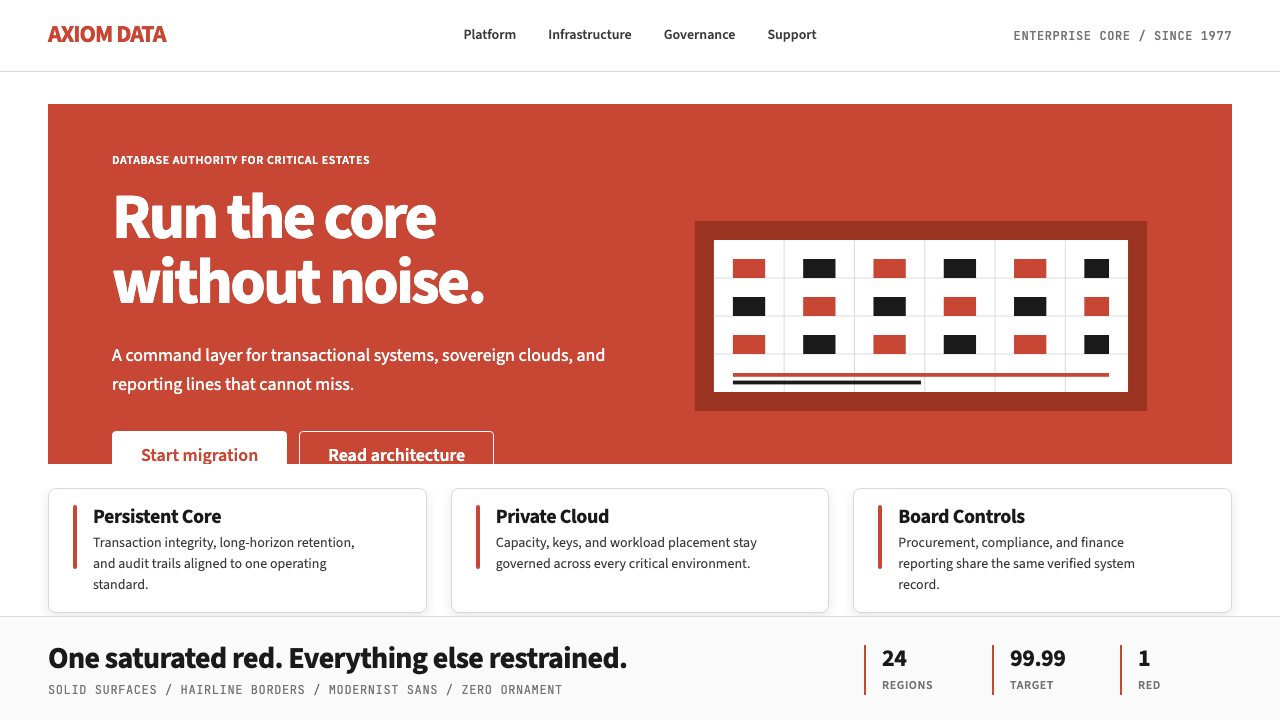 Oracle Corporate RedEnterprise certainty. Saturated red, tight sans, and white space do all the w…
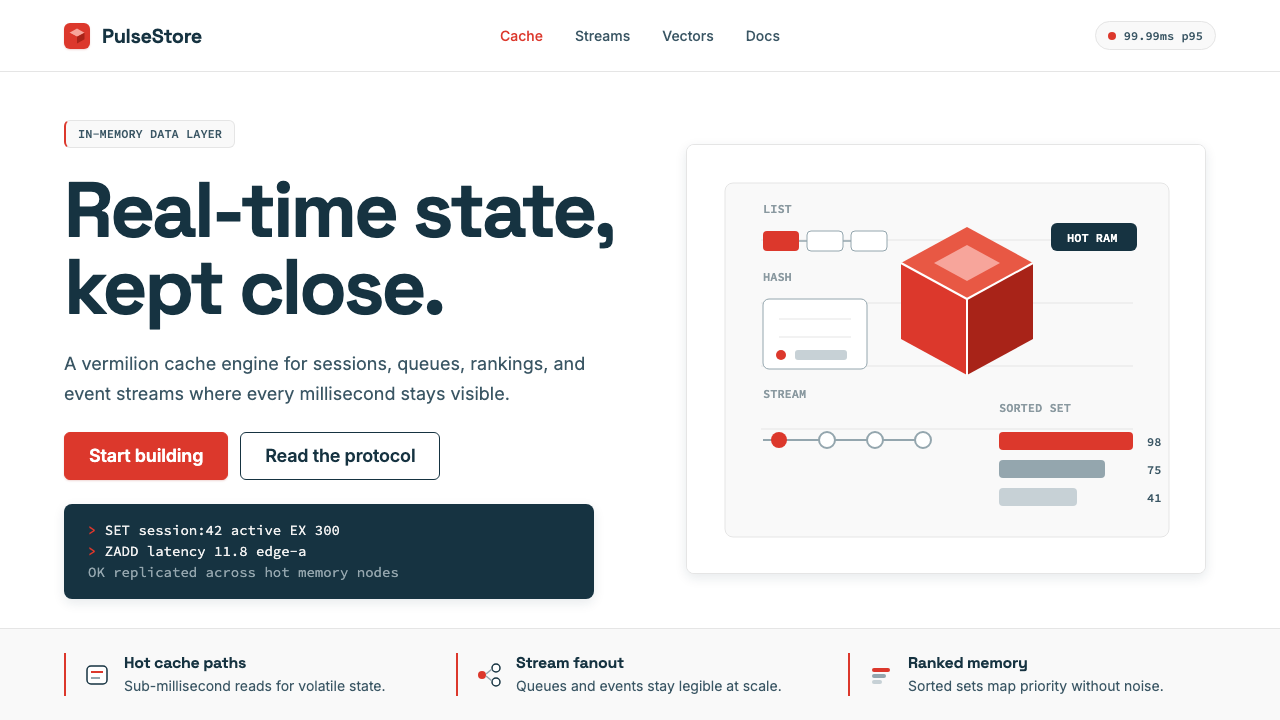 Redis Cache RedWarm database rigor. Vermilion cube, slate type, and white-space grids make s…
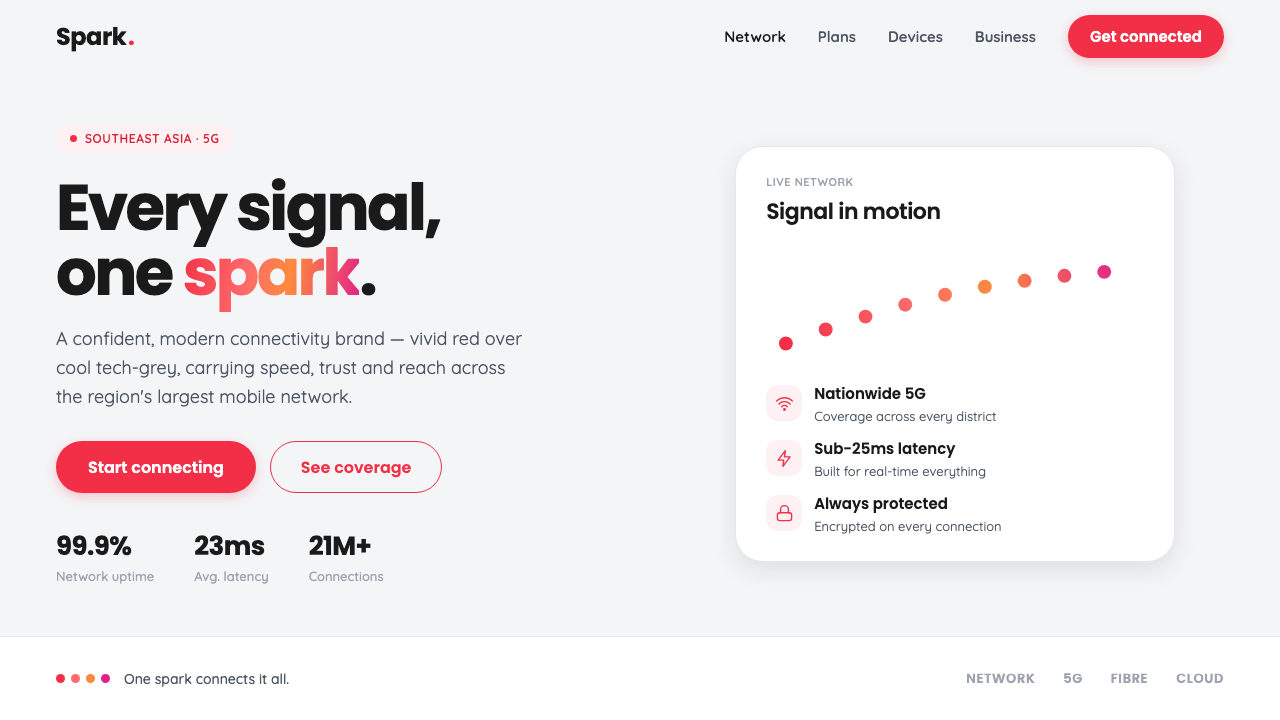 Singtel Modern BrandKeeps the red loudest on screen. Vivid Singtel red on cool tech-grey, with a…
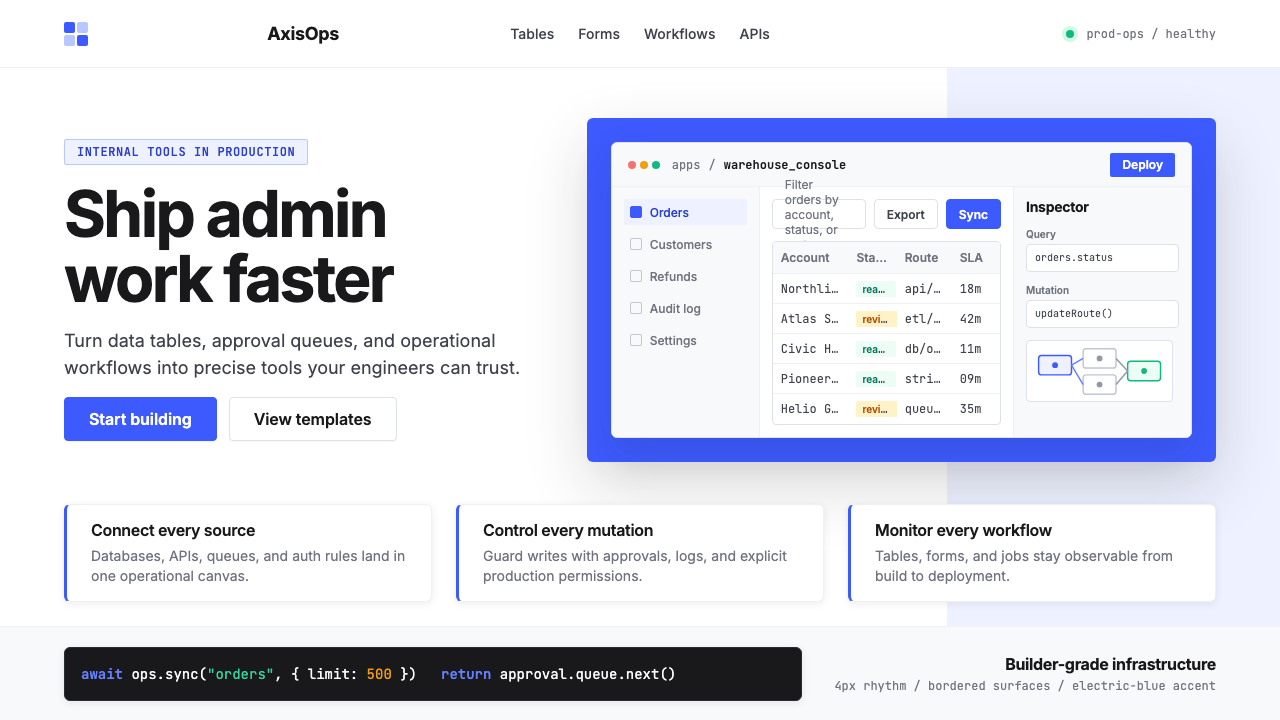 Retool Internal-Tools RedPrecision ships fast. Electric blue panels, Inter type, and bordered UI mocku…
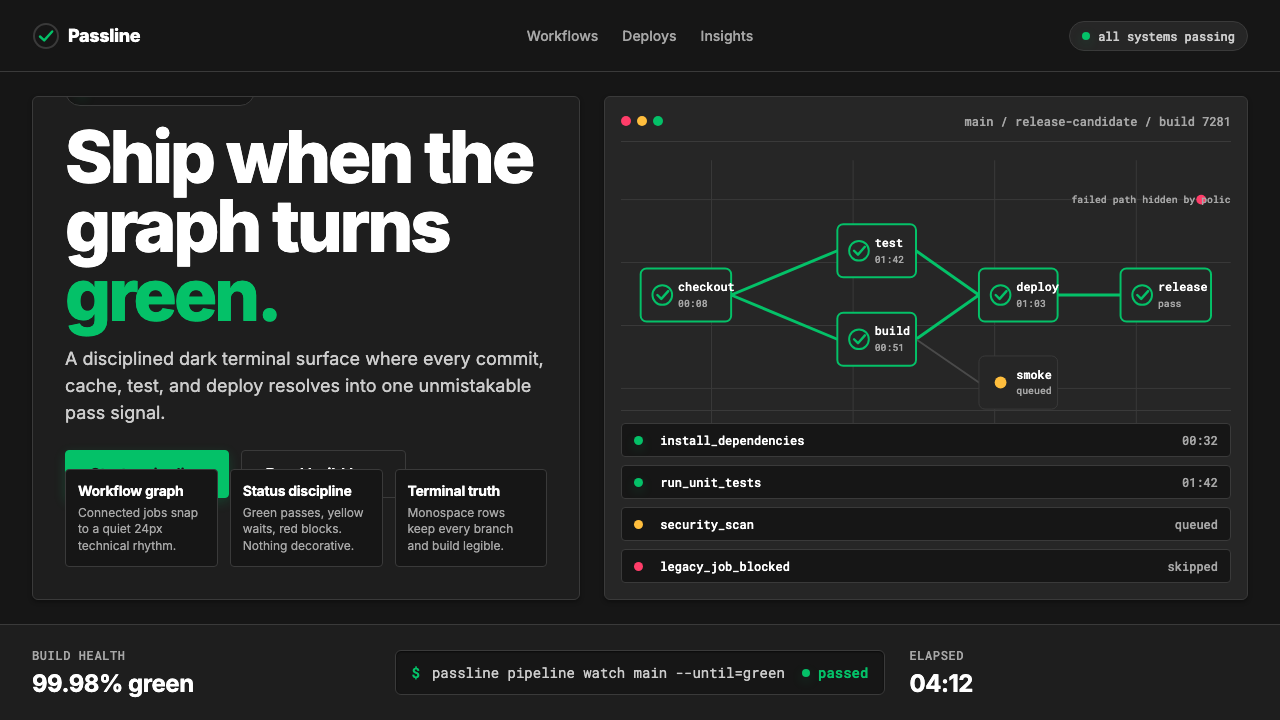 CircleCI Pipeline-GreenConfidence goes green. Emerald status lines cut through terminal-black pipeli…
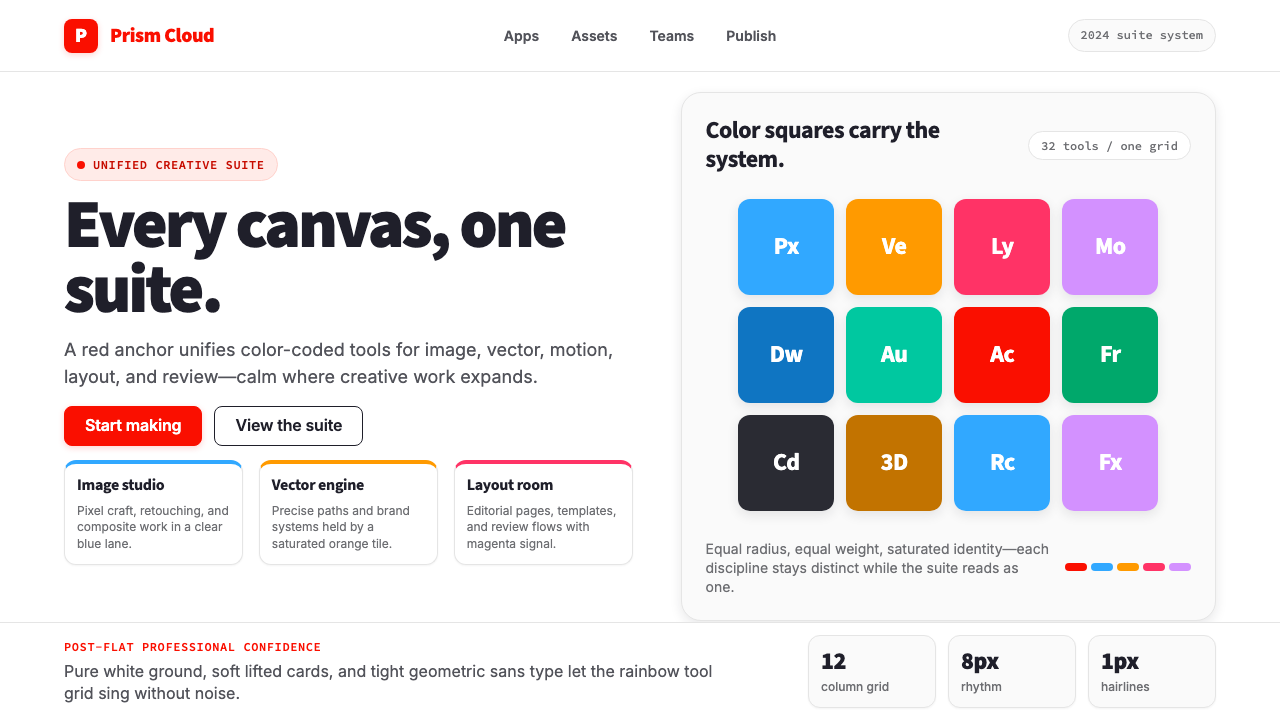 Adobe Creative CloudUnified, not uniform. Red anchor, white space, and saturated app tiles organi…