What is Databricks Lakehouse?
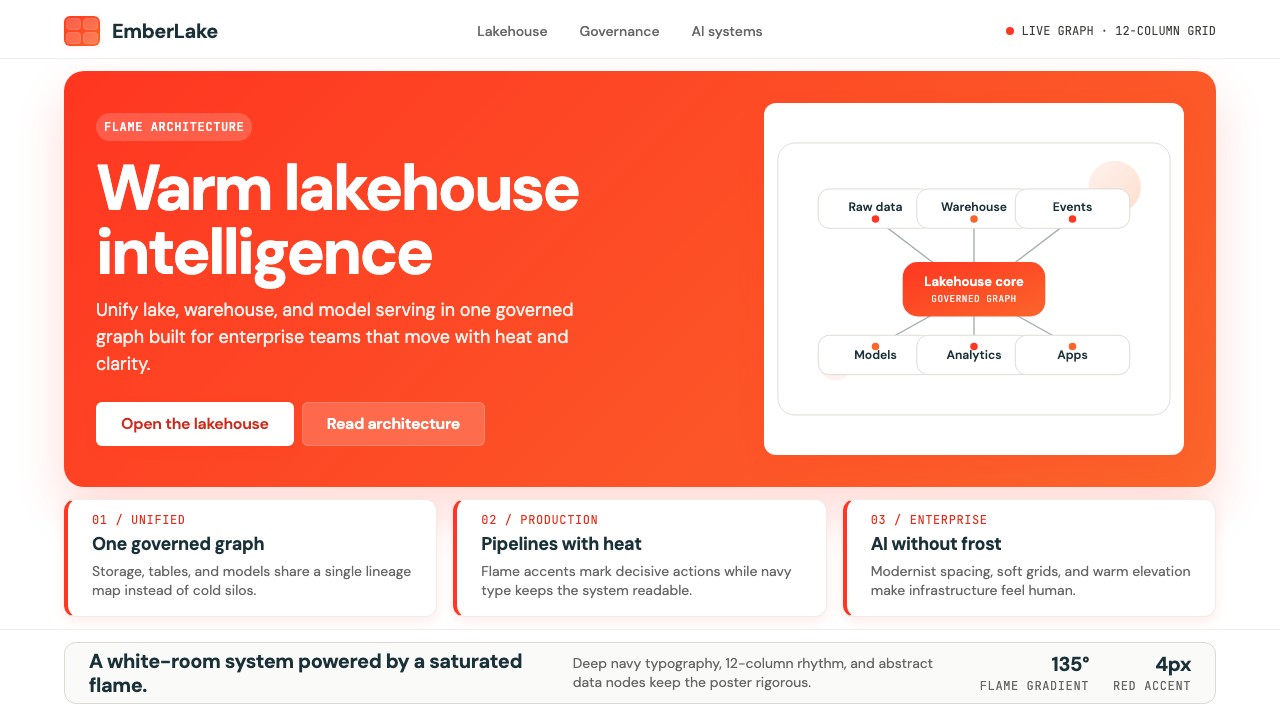
Databricks Lakehouse channels the heat of open-source data engineering into a visual identity built on flame gradients, geometric clarity, and warm enterprise confidence.
Databricks Lakehouse in brief
Databricks Lakehouse is the brand visual system of Databricks, the cloud data-and-AI platform that unified the previously separate worlds of data lakes and data warehouses into a single architecture. Founded in 2013 by the UC Berkeley AMPLab researchers who created Apache Spark, the company built its identity around a central tension: the raw energy of open-source engineering paired with the structured confidence expected of enterprise software. Its visual language resolves that tension through a distinctive combination of saturated warmth and modernist restraint.
The most recognizable element of the system is its flame gradient — a mark that moves from deep saturated red through warm orange, evoking the temperature of computation and the continuous flow of data pipelines. This gradient stands in deliberate contrast to the cool, icy palettes favored by competitors in the cloud data space. Where those brands signal precision and distance, Databricks signals heat and motion. Around that central flame, the rest of the system is governed by strict minimalism: generous white space, deep navy body text, clean geometric diagrams of data architecture, and a single modernist sans-serif typeface family.
The result is a visual identity that feels both technically rigorous and visually inviting — appropriate for a company that simultaneously publishes academic research, runs enterprise sales cycles worth hundreds of millions of dollars, and maintains a deep relationship with the open-source Apache Spark community. It is warm where most enterprise software is cold, specific where most is generic, and rooted in a genuine engineering heritage rather than assembled from SaaS design conventions.

Where does Databricks Lakehouse come from?
Databricks was founded in 2013 in San Francisco by Ali Ghodsi, Matei Zaharia, Reynold Xin, Ion Stoica, and fellow researchers from the UC Berkeley AMPLab. The founding team had created Apache Spark — the open-source distributed computing framework that would go on to become one of the most widely adopted data processing engines in the world. This origin in academic research and open-source infrastructure shaped everything about how the company presented itself: as a technical authority, not a vendor, and as a community contributor, not merely a commercial product.
The visual identity that the public now associates with Databricks — the flame gradient mark, the clean white ground, the geometric data diagrams — emerged and consolidated through the early-to-mid 2020s as the company grew into a multi-billion-dollar enterprise and the Lakehouse architecture concept gained traction across the data industry. The timing aligned with a broader maturation moment in the company's positioning: it was no longer just the company that made Spark accessible in the cloud, but the platform making a specific architectural argument about how data and AI workloads should be unified. The visual system needed to carry that argument visually.
The flame gradient carries specific semantic weight in the context of Spark. Apache Spark's own logo uses a similar flame motif, and the Databricks gradient is a direct visual inheritance from that heritage — a signal to the technical community that the enterprise product and the open-source project share an origin and a philosophy. The choice of red-to-orange rather than blue or green also distinguishes the brand in a competitive landscape dominated by cool colors: Snowflake uses icy blue, many cloud vendors default to various shades of corporate blue, and Google Cloud's data products lean on primary-color variety. The flame is a deliberate counterstatement.
The modernist minimalism of the non-gradient portions of the system — the heavy reliance on white space, the strict typographic hierarchy, the abstract diagrammatic illustration style — reflects the influence of contemporary enterprise software design norms but applied with unusual discipline. Many enterprise platforms accumulate visual complexity over time as product surface area grows; Databricks maintained a cleaner system by anchoring it to the single strong identity element of the flame. The result is a brand that reads as technically confident and visually mature — qualities that serve equally well in a Gartner analyst presentation and on a developer conference keynote stage.
What defines the Databricks Lakehouse look?
Flame Gradient
The defining visual signature of the system is a gradient that sweeps from deep, fully saturated red through a warm, energetic orange. The transition is smooth and continuous rather than stepped, creating a sense of heat and fluid motion — evoking both the computational intensity of data processing and the visual language of Apache Spark from which the brand descends. The gradient is used most prominently on the logomark and on large hero surfaces; it never appears as a subtle background texture but always as a bold, intentional statement.
White Ground and Breathing Room
Outside of the flame gradient, the dominant field is pure white. White space is used not as absence but as an active design element that gives the flame and the typography room to register with full impact. Content is never crowded. Data diagrams float in generous margins. Section breaks are marked by space rather than decorative rules. This discipline ensures the warmth of the gradient does not become visual noise, and it communicates the same quality that Databricks's architecture claims to deliver: clarity in complexity.
Deep Navy as Structural Anchor
Body text and most structural type is set in a deep navy — a dark blue that reads as near-black but carries a slight warmth that harmonizes with the flame rather than opposing it. This choice is subtle but significant: it avoids the harsh optical contrast of pure black against white while maintaining full readability, and it ensures the palette feels unified rather than split between warm flame and cold neutrals. Navy is also used for technical diagrams, table borders, and secondary UI elements.
Geometric Data Diagrams
Databricks communicates complex data architecture concepts through a distinctive diagrammatic illustration style: abstract boxes, arrows, pipeline flows, and layer stacks rendered with clean geometric precision. These diagrams use the brand's navy and a restrained set of tonal variations to show hierarchy and direction without resorting to photographic illustration or representational imagery. They function simultaneously as technical communication and as visual identity — recognizable as Databricks even before the logo appears on the page.
Modernist Sans-Serif Typography
The typographic system is built around a single geometric sans-serif family, used across all weights and sizes without mixing in secondary typefaces. Headlines are set large and with confident weight; body text is set at a comfortable reading size with ample line spacing. The system uses typographic scale as a primary organizing device — section headings, subheadings, labels, and captions are distinguished by size and weight alone, without decorative rules or color changes. This restraint produces a hierarchy that feels engineered rather than styled.
Warmth Without Ornamentation
The overall emotional register of the system is warm — an unusual quality in enterprise data software, where cool efficiency typically dominates. But this warmth comes entirely from the flame gradient and the restrained navy-white palette, not from decorative elements. There are no rounded corners taken to extremes, no illustrated characters, no playful secondary palettes. The warmth is structural: it lives in the gradient itself and in the choice to use navy rather than black. Everything else remains disciplined and precise.
Scalable System Discipline
The Databricks Lakehouse visual system is engineered to function coherently across an unusually wide range of surfaces: investor decks, developer documentation, conference booth graphics, product dashboards, marketing websites, and social cards. The discipline that enables this scalability is the limitation of the palette's complexity: one gradient for warmth, one dark for text and structure, white for ground. Each surface borrows from the same limited vocabulary and reads as part of the same family even without the presence of the logo.

Who shaped Databricks Lakehouse?
Ali Ghodsi is the CEO of Databricks and one of its co-founders, having previously been a researcher and faculty member at UC Berkeley. As the company's public face, Ghodsi is closely associated with the Lakehouse architecture thesis — the argument that separating data lakes and data warehouses was an unnecessary fragmentation that a unified platform could resolve. His communication style and the company's brand positioning share an emphasis on confident technical clarity over marketing abstraction, a quality that is legible in the visual identity's directness.
Matei Zaharia co-created Apache Spark as his PhD dissertation at UC Berkeley, and that technical act of creation is the origin point of both Databricks as a company and the flame visual motif that defines its brand. Zaharia's ongoing research — in machine learning systems, in what he has called the future of AI agents, and in the infrastructure that connects foundation models to enterprise data — continues to shape the technical roadmap that the Databricks brand must represent. The brand's visual warmth is in many ways a reflection of the thermal energy implied by Spark.
Reynold Xin was a co-founder of Databricks and played a central role in building its early engineering culture and technical identity. His influence is present in the systematic, architecturally-minded quality of how Databricks communicates technical concepts — the diagrammatic illustration style that breaks down complex distributed systems into legible geometric flows reflects the same engineering clarity that Xin and his colleagues brought to the Apache Spark codebase itself.
Ion Stoica, a faculty member at UC Berkeley and a co-founder of Databricks, represents the academic lineage that distinguishes Databricks from purely commercial software companies. His ongoing role bridges the research community and the enterprise product. The Databricks brand's combination of technical rigor — expressed in the precision of its data architecture diagrams and the discipline of its typographic system — and accessible warmth — expressed in the flame gradient — mirrors the dual audience that Stoica's background represents: researchers and enterprise practitioners simultaneously.
How do you use Databricks Lakehouse today?
Databricks Lakehouse translates effectively to presentation design because its core identity is built around data communication. A deck cover in this style works best when it leads with the flame gradient as a primary field — spanning most of the cover surface or used as a bold angled band — while the company or product name is set in clean, heavy sans-serif against a white or deep navy zone. The contrast between the gradient's energy and the typographic restraint is where the style's authority lives. Avoid reducing the gradient to a small accent or a thin stripe; it needs mass to read correctly.
Content slides should be structured as systems, not compositions. Use a consistent grid — left-aligned headings, body text in a measured column, data diagrams or supporting visuals occupying a distinct zone. Charts and graphs should be treated as geometric objects: bars in the brand's deep navy or a single accent derived from the flame, minimal axis labels, no decorative gridlines. Architecture diagrams — the kind that show data flowing between layers or services — suit this style exceptionally well and should be designed with the same geometric precision as the brand's own technical documentation.
For web user interfaces, the style is especially well-suited to dashboards, analytics views, and pricing pages where information density and scannability are paramount. The approach requires a strict grid, white or near-white backgrounds for all content areas, and navy for all body text. The flame gradient should appear sparingly in UI — on primary call-to-action buttons, on selected or active states, on progress indicators — but not as a decorative background for sections or cards. Component shadows, if used, should be subtle and directional rather than diffuse; the visual vocabulary is precise, not atmospheric. Marketing pages can use the gradient more liberally in hero sections to establish brand warmth before pulling back to clean white layouts for feature content.
In editorial and marketing contexts — conference materials, white papers, social cards, event signage — the style supports bold, poster-like visual statements. Full-width gradient sections work as visual anchors between text-heavy content blocks. Pull quotes and statistics can be displayed at large scale in white type reversed out of a flame background. For social media formats, a single strong diagram or a data visualization set against a partial flame gradient reads as distinctively on-brand without requiring extensive compositional complexity.
A common mistake when applying this system is conflating the flame gradient's warmth with a license to add additional warm colors or decorative elements. The gradient does all the warmth work; everything around it should remain cool, white, or neutral. Adding amber backgrounds, orange type, or warm-tinted illustrations alongside the gradient creates visual confusion rather than brand coherence. A related error is applying the gradient as a subtle, desaturated tint — it loses its identity entirely when diluted. Use it fully saturated and at confident scale, or not at all.

Databricks Lakehouse — FAQ
Is the flame gradient always required, or can it be used as an optional accent?
The flame gradient is the load-bearing identity element of the Databricks Lakehouse visual system — without it, the design reverts to a competent but generic enterprise minimalism that is indistinguishable from dozens of other data platforms. It should be present in any designed artifact that intends to read as this brand. The correct question is not whether to include it, but where and at what scale. It needs sufficient visual mass — a large hero zone, a prominent logomark, a full-width section — to do its work. Used only as a thin accent line or a small corner treatment, it fails to signal anything meaningful.
How does this style handle dark-mode or dark-background layouts?
The Databricks Lakehouse system is fundamentally a light-ground system — white backgrounds are canonical, and the flame gradient derives much of its impact from the contrast against white. A dark-mode adaptation is possible and appears in the product itself, but it requires rebalancing. On a very dark navy or near-black ground, the flame gradient retains its warmth and visual prominence, but white type becomes the primary text color and the middle-range tonal values in the system need to be remapped to avoid everything collapsing toward the same dark value. The risk in dark mode is that the gradient becomes the only distinguishing element on an otherwise undifferentiated dark surface — discipline in spacing and typographic scale becomes even more critical.
Can this style work for a product or company that is not in the data or AI space?
The Databricks Lakehouse visual identity carries strong signals of technical confidence and data-engineering heritage. The flame gradient's association with Apache Spark, and the overall system's emphasis on architectural diagrams and typographic precision, will read authentically in contexts where engineering authority and data-driven positioning are desirable values. In other contexts — consumer products, lifestyle brands, creative industries — the same elements will feel borrowed rather than earned. The style can be adapted: the structural principles of white ground, restrained typography, and confident gradient use transfer broadly, but the specific flame-to-orange movement is distinctive enough that it will always carry some Databricks-adjacent meaning for a technically literate audience.
How should data visualizations be handled within this system?
Data visualizations are native to this brand, not decorative add-ons, and should be treated with the same discipline as the rest of the system. Charts should use a restrained color sequence derived from the brand: the flame-adjacent warm tones for primary series, navy for structural or comparative elements, and light neutral fills for backgrounds and gridlines. Avoid rainbow color sequences, soft drop shadows on chart elements, or decorative framing. The best data visualizations in this system look like the brand's own technical architecture diagrams — geometric, precise, and focused on communicating a single clear finding per visual. Typography within charts should follow the same typeface and scale logic as the surrounding content.
What distinguishes this style from other enterprise SaaS design systems?
Most enterprise SaaS visual systems converge on a similar set of conventions: blue or purple as the dominant brand color, white or light grey grounds, geometric sans-serif type, and an increasing level of illustrative softness — rounded corners, friendly icon systems, pastel secondary palettes — introduced in the 2020s to signal approachability. Databricks Lakehouse diverges from this convention at precisely the point where most systems converge: it uses a warm, saturated gradient rather than a cool solid color, and it maintains visual severity where others add softness. The result is a system that reads as more technically serious and less marketing-softened than its peers — which is a deliberate positioning choice reflecting the company's origins in academic research and its primary audience of data engineers and platform architects.
Related design styles
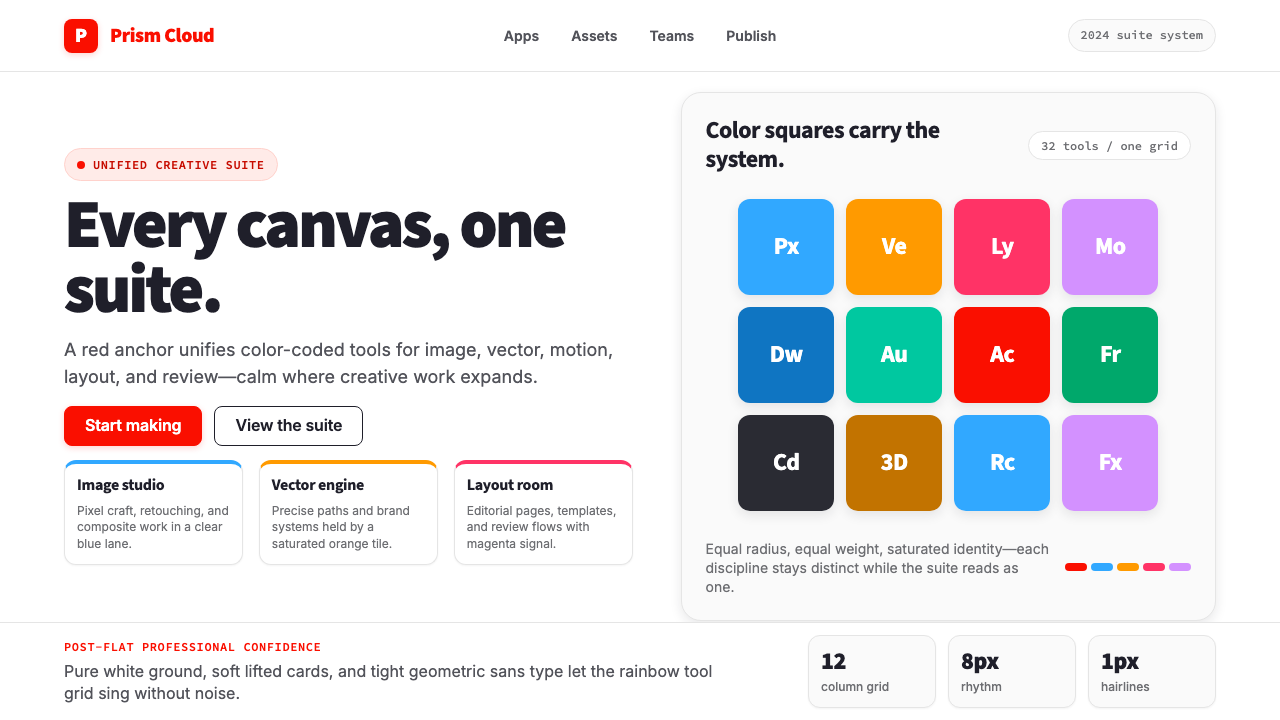 Adobe Creative CloudUnified, not uniform. Red anchor, white space, and saturated app tiles organi…
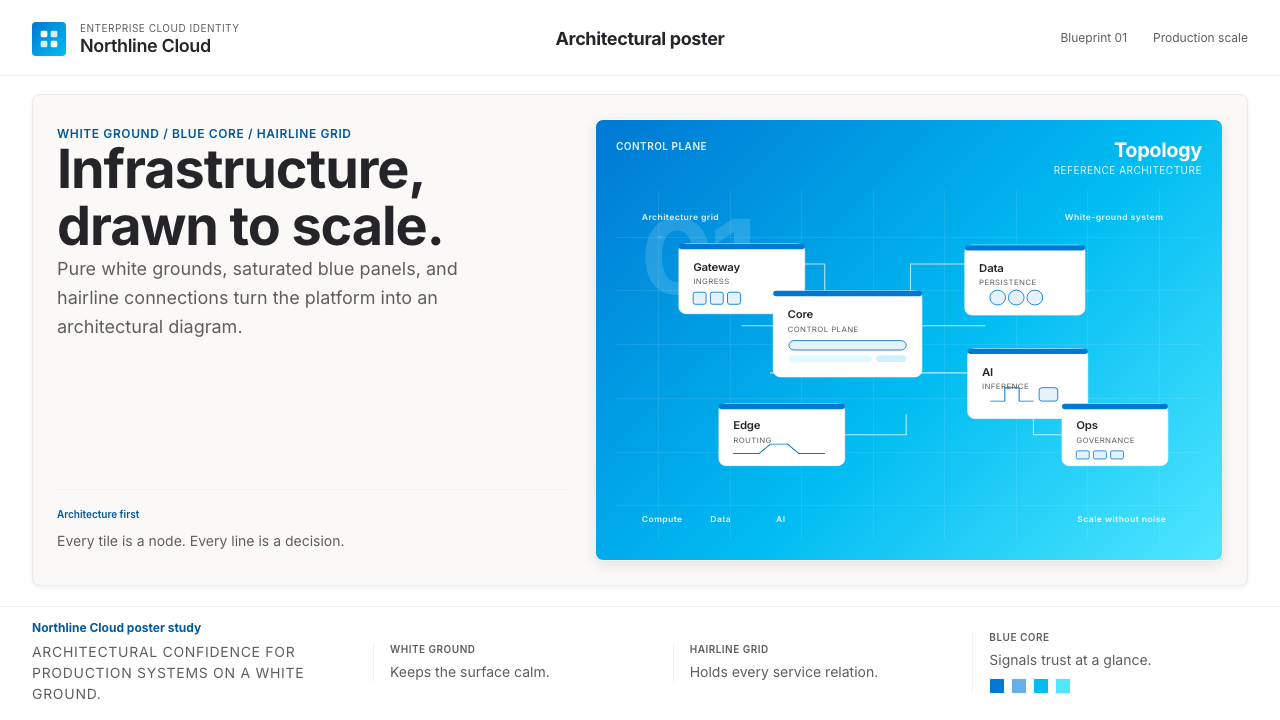 Microsoft AzureEnterprise calm, sharply diagrammed. White ground, saturated blue, hairline l…
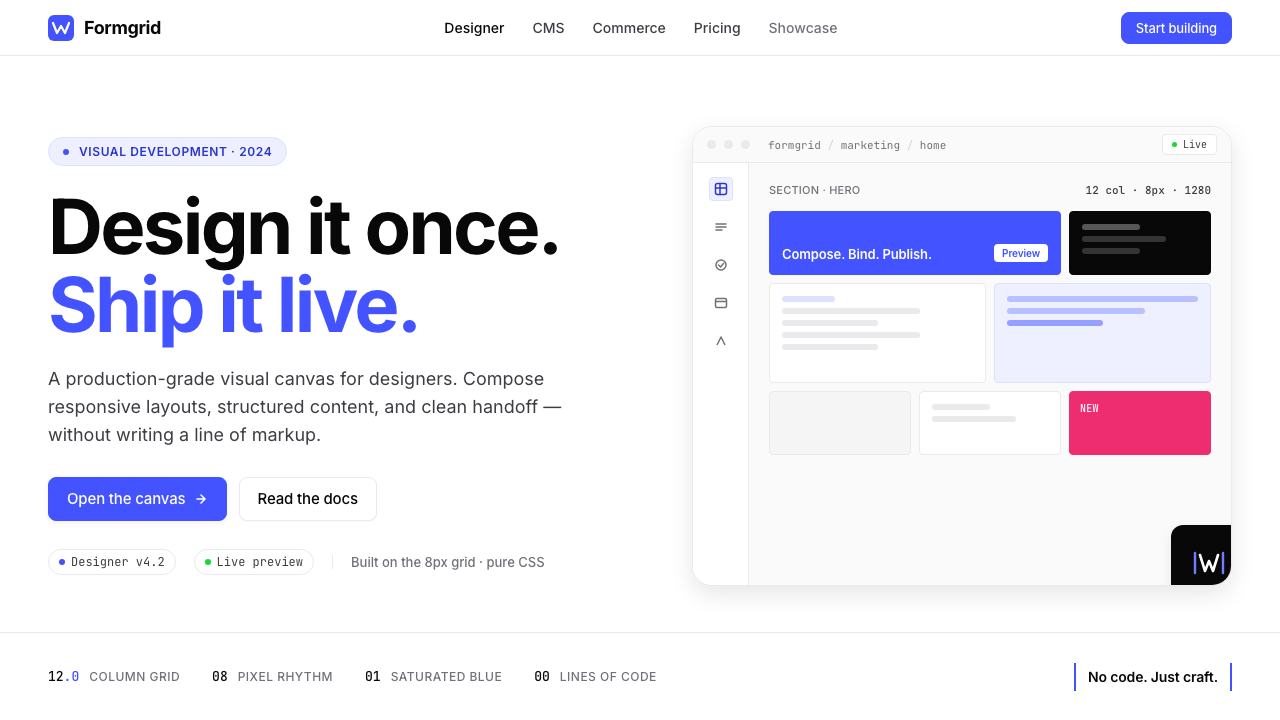 Webflow No-CodeA designer's tool, dressed like one. Saturated electric cobalt on pure white,…
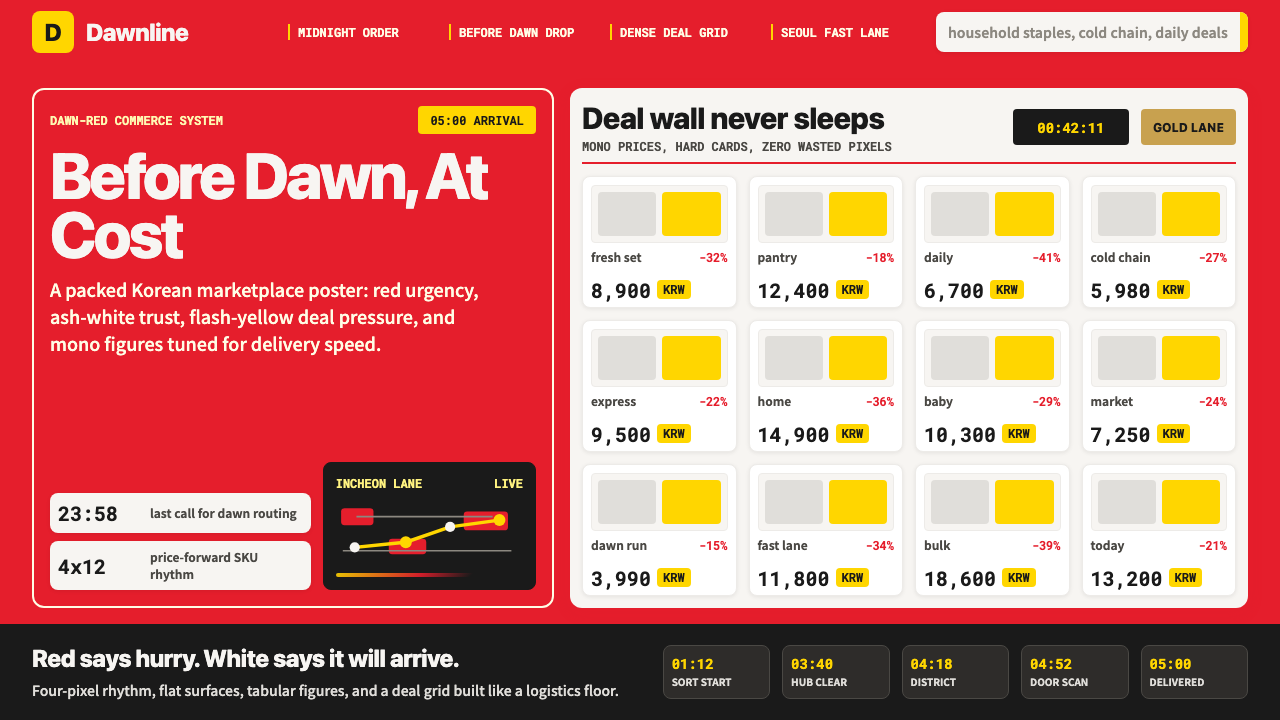 Coupang Rocket DeliveryUrgency made trustworthy. Rocket red, flash yellow, mono prices and packed gr…
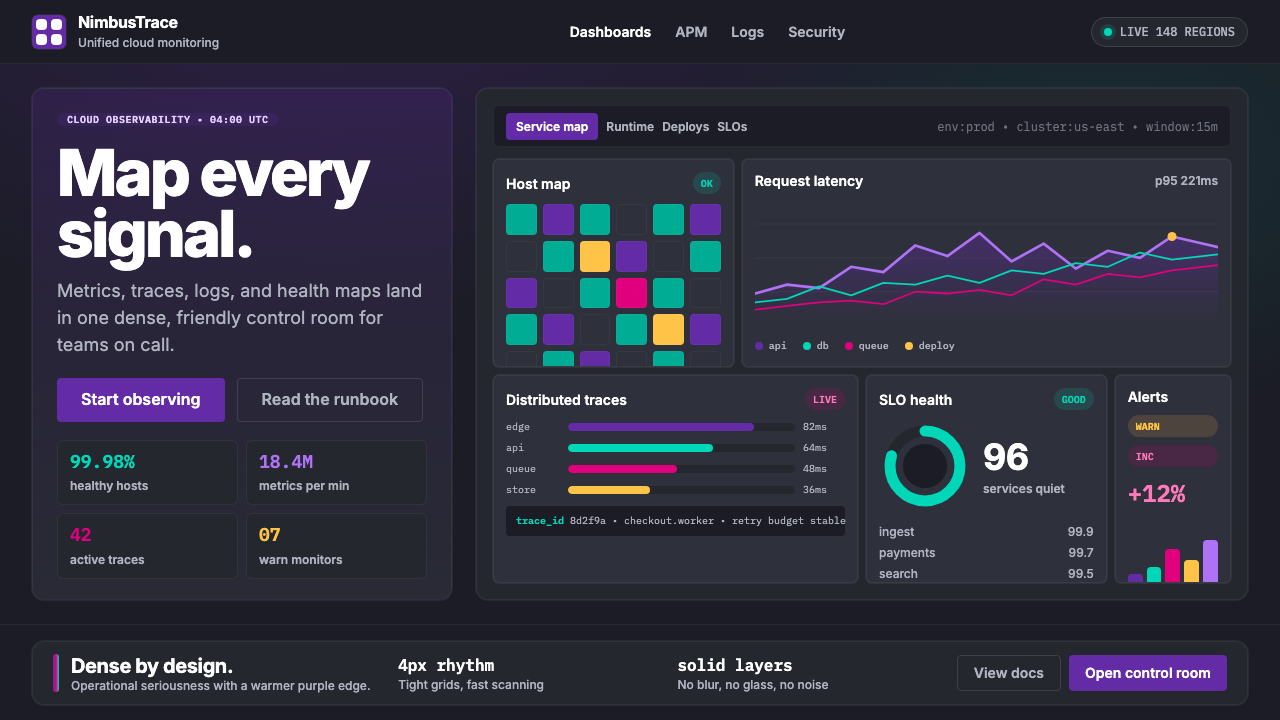 DatadogSerious telemetry, friendly pulse. Purple dark grids pack charts, badges, and…
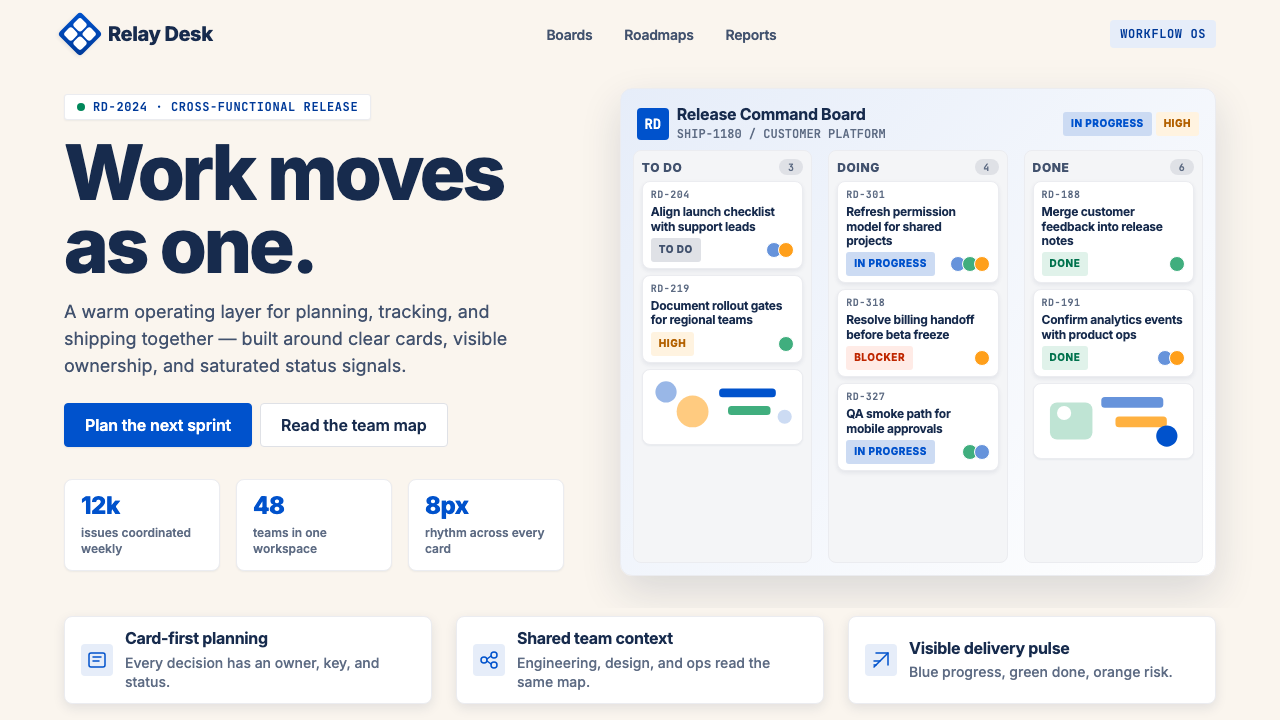 Atlassian Jira BlueWarm enterprise teamwork. Saturated blue cards on cream make status feel huma…