What is Webflow No-Code?
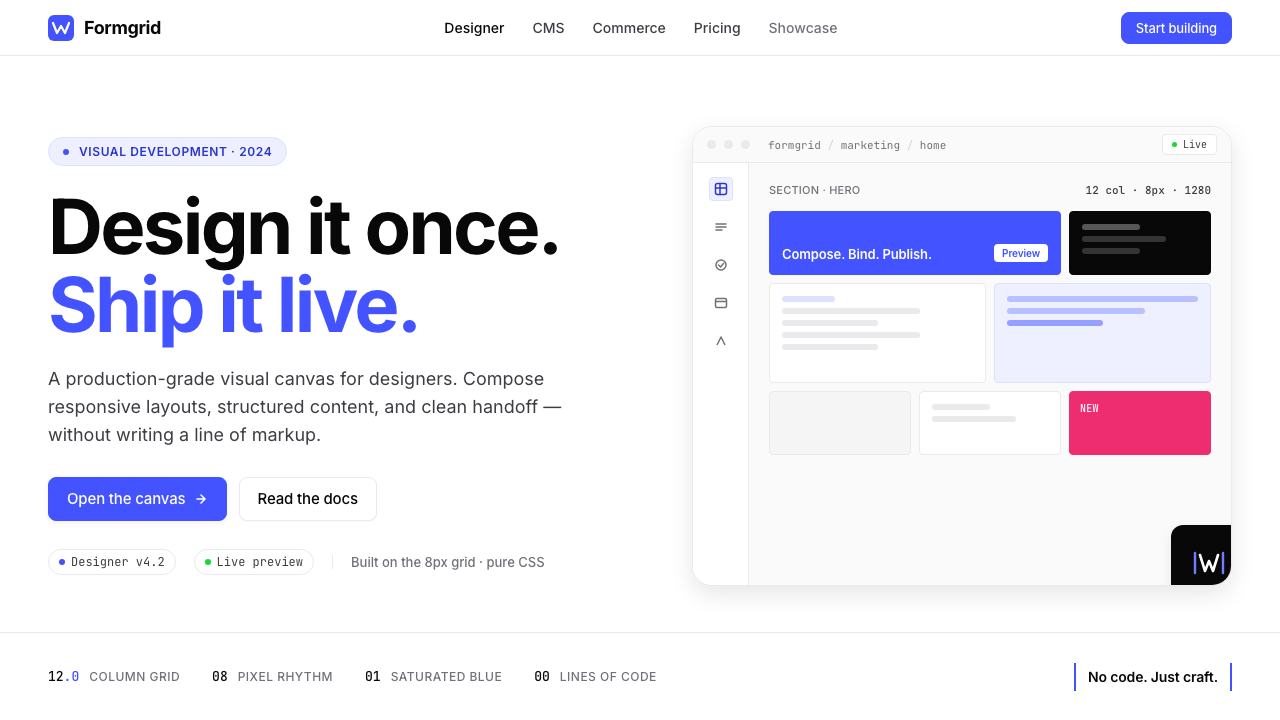
Webflow made production-grade web design a designer's game — no code required, no aesthetic compromises allowed.
Webflow No-Code in brief
Webflow No-Code is the visual identity and design language of Webflow, the San Francisco-based visual-development platform founded in 2013. Its aesthetic is immediately recognizable: a saturated electric blue set against pure white grounds, a refined modernist sans-serif typeface at tight tracking, and a compositional vocabulary built from abstract block-grid arrangements, generous white space, and crisp UI mockups as primary imagery. The overall effect is that of a designer's canvas turned into a brand — confident, precise, and uncluttered.
What distinguishes the Webflow aesthetic from generic tech-company design is its pointed coherence. The color palette is almost ascetic in its restraint: one dominant electric blue, pure white, and a near-black anchor the entire system, with secondary accent colors — a warm pink and a fluorescent green — deployed only in celebratory or special-use contexts. The bracket-W logomark anchors the identity, and the visual grammar refuses decoration that does not serve information hierarchy. Every design decision communicates the platform's core proposition: that building for the web should feel like designing, not engineering.
The style belongs to the 2020s designer-tool aesthetic — a cluster of visual languages produced by tools aimed at creative professionals who happen to need engineering-grade output. It sits in conversation with other refined SaaS identities of the period, sharing their commitment to typographic precision and systematic color use, while distinguishing itself through a particular brightness of blue and a poster-like boldness in layout that reads as simultaneously editorial and technological.

Where does Webflow No-Code come from?
Webflow was founded in 2013 by three brothers — Vlad Magdalin, Sergie Magdalin, and Bryant Chou — who shared a conviction that the gap between visual design and working web production was an unnecessary one. Vlad Magdalin's early pitch was stark: designers sketch in one tool, hand the files to developers, and spend the next weeks negotiating what gets built versus what gets compromised. Webflow proposed to collapse that handoff entirely, letting a designer manipulate layout, interactions, and responsive behavior with direct visual control, generating clean production code underneath without the designer ever touching it.
The platform's early years were defined by survival and iteration rather than aesthetic coherence. The founding team posted a demo video to Hacker News in 2013 and received a mixture of enthusiasm and skepticism — many developers argued that visual web-building tools had always produced inferior code, a reputation earned by early-generation WYSIWYG editors. Webflow differentiated itself by targeting designers first and producing genuinely clean semantic HTML and CSS output, a commitment that gradually built trust among the professional design community.
The current brand identity took clearer shape in the years around 2020, as Webflow matured from a scrappy startup into a venture-backed platform with enterprise ambitions. The visual refresh that defined the contemporary Webflow aesthetic leaned into the designer-not-developer premise more explicitly: the electric blue became more saturated and deliberate, the grid-block hero compositions more abstract and poster-like, and the typography more rigorously systematized. The identity was designed to feel like proof of concept — a demonstration that the platform's own visual output reflected the quality it enabled.
The timing of the identity's maturation coincided with a broader cultural moment in which no-code and low-code tools were being recognized as a legitimate category rather than a transitional compromise. Tools like Webflow, Figma, Notion, and Linear were all developing strong visual identities that positioned design software as a discipline worthy of the same aesthetic seriousness as any other professional domain. The Webflow look — electric blue, tight type, structural white space — became one of the defining expressions of that moment, standing for the proposition that power-user tools need not look utilitarian.
What defines the Webflow No-Code look?
Electric Blue Dominance
The central color in the Webflow palette is a highly saturated electric blue — vivid, confident, and distinctly non-corporate in its brightness. It appears on calls to action, interactive elements, and brand hero moments with an intensity that reads as both technological and editorial. The blue is not a safe mid-tone but a deliberate signal of the platform's identity: bright enough to arrest attention, saturated enough to carry weight against the white ground that surrounds it. All other colors in the system defer to it.
Pure White Grounds
Webflow compositions are built on pure white grounds — not cream, not off-white, not light grey. The white is clean and total, functioning as a kind of infinite canvas that gives every element maximum definition. Against this white, the electric blue reads at full intensity and the near-black type achieves maximum legibility. White space is not treated as absence but as active compositional element, giving the layouts an open, spacious quality that conveys both confidence and precision.
Modernist Sans-Serif Typography
Typography in the Webflow system is refined, systematic, and tightly tracked. The typeface of choice belongs to the humanist sans-serif family — rational in structure, legible at small sizes, and disciplined in its stroke weight variation. Tracking is tight by default, reinforcing a sense of precision and control. Scale contrast between headline and body levels is pronounced, with headlines commanding architectural scale while body text maintains measured restraint. The typographic system carries most of the visual work: hierarchy, rhythm, and emphasis are established through type alone, without decorative support.
Abstract Block-Grid Compositions
Hero sections and feature illustrations in the Webflow aesthetic are built from abstract rectangular blocks arranged in loose grid configurations — evocative of website layouts, design canvases, and UI wireframes, but simplified to near-geometric abstraction. These block-grid compositions appear in varying scales and color distributions, always implying the idea of structured design space without depicting any specific interface literally. They function as metaphors for the platform itself: organized, modular, and open to content.
Crisp UI Mockups as Imagery
Where other brands use lifestyle photography or decorative illustration, Webflow uses its own interface as primary visual content. Product mockups — screenshots of the Webflow editor, published websites built on the platform, and dashboard views — are presented with precision and pride, treated as design objects in their own right. They are cropped deliberately, framed with generous white space, and often shown at angles that emphasize their geometric quality. The message is implicit: the tool's output is the most compelling thing the brand can show.
Restrained Accent Colors
Beyond the electric blue, white, and near-black that constitute the core system, Webflow uses a warm pink and a fluorescent green as secondary accents. These colors appear sparingly — in celebration animations, milestone graphics, special campaigns — and their rarity gives them weight when they do appear. The discipline is notable: the brand resists the temptation to deploy secondary colors across general interface contexts, reserving them for moments where a departure from the core palette itself carries communicative meaning.
Structural White Space
White space in Webflow layouts is not a byproduct of sparse content — it is a structural decision made with deliberateness. Margins are wide and consistent. Elements do not crowd each other. Section breaks are established by space rather than lines or dividers. This spatial generosity creates a sense of precision and intentionality: nothing is crammed, nothing is accidental. The layouts model the very quality of design thinking the platform enables — considered, breathing, organized.

Who shaped Webflow No-Code?
As co-founder and long-serving CEO of Webflow, Vlad Magdalin shaped the platform's core premise and, by extension, the aesthetic philosophy embedded in its brand. His conviction that designers should have direct control over production-quality web output — without engineering intermediaries — drove every major product and identity decision. Magdalin's background in design-adjacent engineering gave him a particular sensitivity to the visual quality of tools, and the refined, anti-compromise aesthetic of the Webflow brand reflects that sensibility directly.
Vlad's brother Sergie Magdalin served as a co-founder and early creative director, responsible for much of Webflow's initial visual identity and the design language that would later be refined into the current system. His background as a designer — as opposed to a developer — was central to the team's ability to build a product that genuinely looked and felt like a designer's tool. The visual precision and aesthetic coherence that define Webflow's brand personality trace back to his early influence on the product's look and feel.
The third co-founder, Bryant Chou, provided the engineering architecture that made the Webflow premise possible — a platform that could accept visual design input and produce high-quality semantic code output. His technical decisions, particularly around how Webflow models CSS and layout in its visual editor, created the conditions under which the brand's clean, grid-rigorous aesthetic could be used to build real production websites. Without the technical integrity Chou established, the brand's visual promises would have been hollow.
Webflow's visual identity did not emerge in isolation — it was shaped by and contributed to the broader no-code movement of the 2010s and 2020s. This movement, which encompassed tools for building apps, databases, automations, and websites without writing code, developed its own aesthetic conventions: clean interfaces, systematic design, and a visual language that communicated both approachability and professional power. Webflow's particular contribution was demonstrating that no-code could produce output indistinguishable from hand-coded work in terms of quality, a proof that the brand's refined aesthetic was specifically engineered to make visible.
How do you use Webflow No-Code today?
The Webflow No-Code aesthetic is a highly coherent design system, which makes it both powerful and specific: it rewards consistent application and punishes selective borrowing. Before applying it, the essential question is whether the product or communication benefits from the associations the style carries — technological authority, design-forward thinking, professional-grade precision. Landing pages for SaaS tools, design portfolios, digital product launches, and technology editorial content all sit naturally in the style's territory.
For presentation slides, the style works best on covers and section dividers that adopt its compositional logic wholesale. A cover built in this aesthetic centers on the electric blue as a hero color — not as a background wash but as a deliberate anchoring element against white. Abstract block-grid shapes, assembled loosely, suggest the platform's structural metaphor and provide visual interest without requiring illustration. Typography handles hierarchy: one oversized headline in a humanist sans-serif, a tight subtitle two levels below it, nothing else on the slide. Data slides lean into diagrammatic precision — clean bar charts with bars filled in the core blue, pie segments distinguished by the blue and near-black only, with labels in tight type directly adjacent to the elements they name.
For web UI — dashboards, pricing tables, feature comparison pages — the style provides a disciplined framework. The approach is grid-first: establish a twelve-column structure, use the full width deliberately, and let structural white space do the work of visual breathing room that padding alone cannot achieve. Interactive elements — buttons, toggles, active states — receive the electric blue. Everything static: near-black on white. Card components in this style should have crisp, defined borders or hard-offset shadows rather than soft-diffuse shadows, preserving the visual vocabulary's flatness and structure. Navigation is typographic and minimal — no icon-only navigation, no decorative flourishes.
For editorial and marketing contexts — feature announcement posts, case study pages, newsletter headers, social cards — the style's poster-like boldness comes into full expression. Full-width content blocks alternate between white-ground and blue-ground, with the blue sections reversed out in white type. Pull quotes and statistics get oversized typographic treatment, commanding architectural scale against white space. When a campaign requires a secondary accent — celebrating a product milestone, for instance — the warm pink or fluorescent green can appear sparingly, always as a single departure rather than an additional palette layer.
The most common mistake when applying this aesthetic is confusing its confidence with permission for complexity. The style's power comes from reduction: one dominant color, one typeface family, one compositional logic applied consistently. Designers who add a second typeface, introduce soft shadows alongside hard ones, or deploy the secondary accent colors in general interface contexts will find that the coherence dissolves rapidly. The electric blue is also frequently misapplied by being used everywhere — on backgrounds, icons, body text, and calls to action simultaneously. In the authentic system, the blue is rare enough that its appearance registers as meaningful. Keeping it on no more than one or two elements per composition is essential to preserving its signal value.

Webflow No-Code — FAQ
Is the Webflow aesthetic the same as generic SaaS design?
They overlap but are distinct. Generic SaaS design of the 2020s tends toward soft gradients, rounded cards with diffuse shadows, illustrated characters, and a wide palette of semi-saturated accent colors. Webflow's aesthetic is considerably more rigorous: harder geometry, a near-monochromatic core palette centered on one electric blue, typographic hierarchy doing work that illustration handles in softer SaaS brands, and a categorical rejection of soft shadows and gradient fills. The Webflow look is designer-tool aesthetic, not consumer-tech aesthetic — it assumes a viewer who respects systematic precision and reads absence of decoration as confidence rather than poverty.
Can this style work for non-tech products and brands?
It can, but the fit requires deliberate evaluation. The Webflow aesthetic carries strong associations with technological precision, visual professionalism, and systematic thinking — values that transfer well to architecture firms, high-end creative agencies, professional tools of any kind, and educational platforms aimed at practitioners. It works less naturally for products that rely on sensory warmth, cultural specificity, or emotional softness: food brands, hospitality, children's products, wellness, or any context where users need to feel welcomed before they feel impressed. The diagnostic question is whether the brand's authority comes from being rigorous or from being warm. If rigorous, the style fits. If warm, it will likely read as cold.
How should the electric blue be used — as background, accent, or type?
Primarily as accent and interactive signal, not as type color or general background fill. In the Webflow system, the blue appears on primary calls to action, brand hero moments, and selected feature highlights — it is the color that fires when something demands attention or invitation. Using it as type color makes most content harder to read and dilutes the blue's signal power. Using it as a full-page background works only for deliberate feature sections — an alternate color field, not a default ground. The most effective deployments give the blue a single, prominent role per composition and let white carry the rest of the page.
Does this aesthetic work in dark mode?
Dark mode presents genuine challenges for this aesthetic. The system was designed around the tension between electric blue and pure white — a tension that reverses unpredictably on dark grounds. On a very dark background, the electric blue can either dominate aggressively or appear to recede depending on its saturation level, and the tight typographic tracking that reads as refined on white can become claustrophobic on dark. A dark variant works best when the near-black ground is used as a deliberate brand moment — a hero section or campaign, not a persistent app theme. In that context, reducing typographic density, introducing more white space, and using the electric blue more sparingly than in light mode preserves the style's structural logic without fighting the reversal.
What is the most important single rule to follow when applying this aesthetic?
Commit to white space above all else. The Webflow aesthetic can survive a less-than-perfect typeface choice, a slightly less saturated blue, or a composition that is not quite as bold as the canonical examples. What it cannot survive is crowding. The moment elements begin competing for territory — when type is too close to an image, when cards are packed edge to edge, when the grid's columns are all occupied simultaneously — the style's central quality, its sense of confident, considered precision, collapses. In a crowded layout, the electric blue loses its signal value, the type hierarchy becomes noise, and the block-grid compositions read as clutter rather than structure. Give everything room, and the rest of the system falls into place.
Related design styles
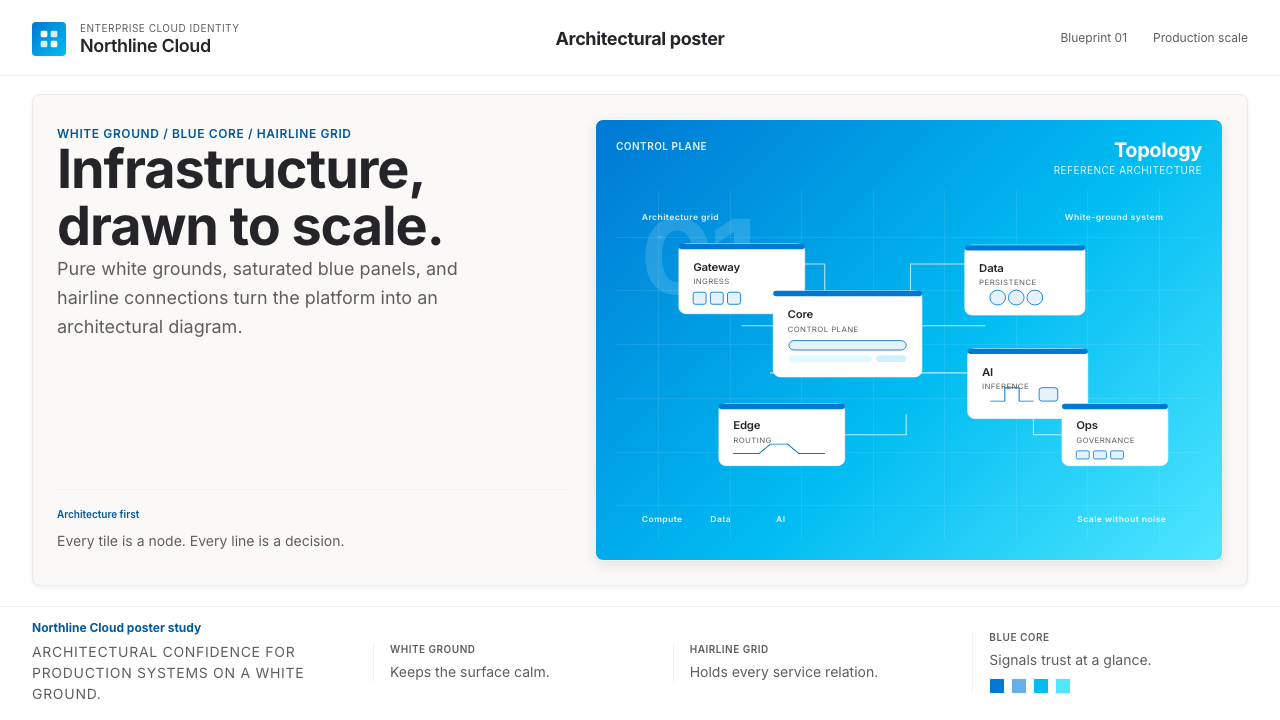 Microsoft AzureEnterprise calm, sharply diagrammed. White ground, saturated blue, hairline l…
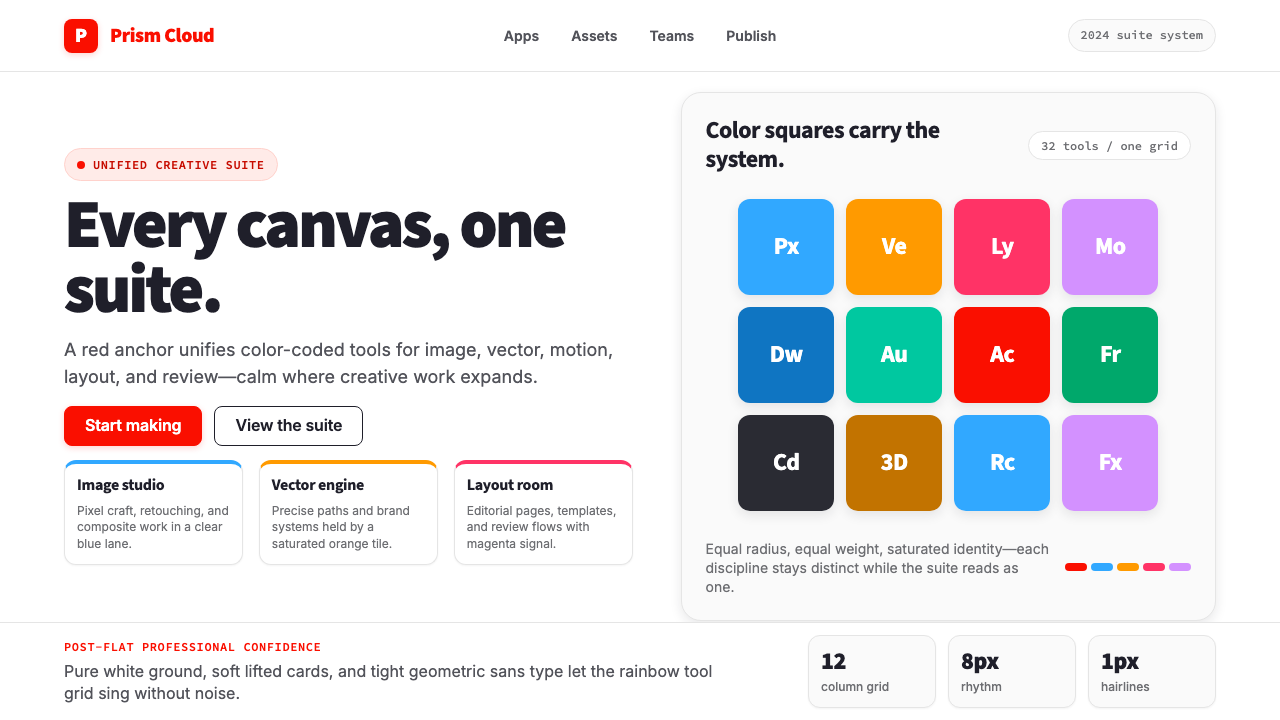 Adobe Creative CloudUnified, not uniform. Red anchor, white space, and saturated app tiles organi…
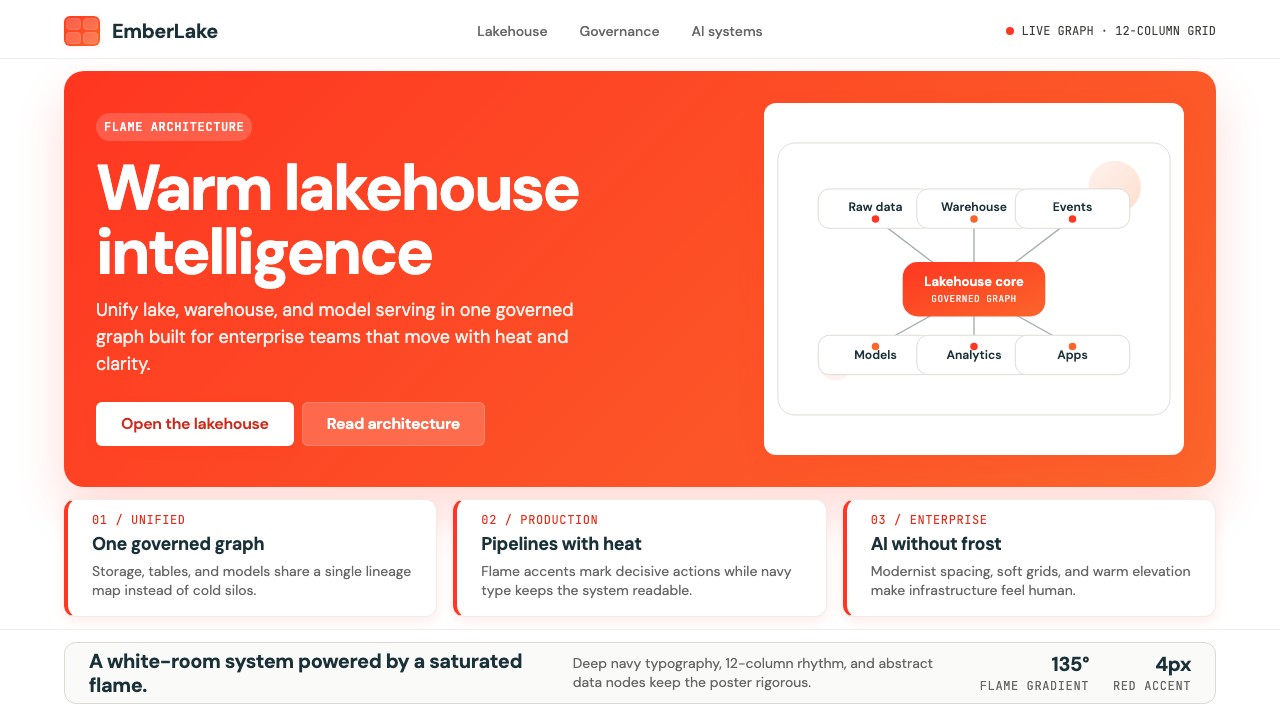 Databricks LakehouseWarm enterprise confidence. Flame red-orange gradients meet DM Sans and clean…
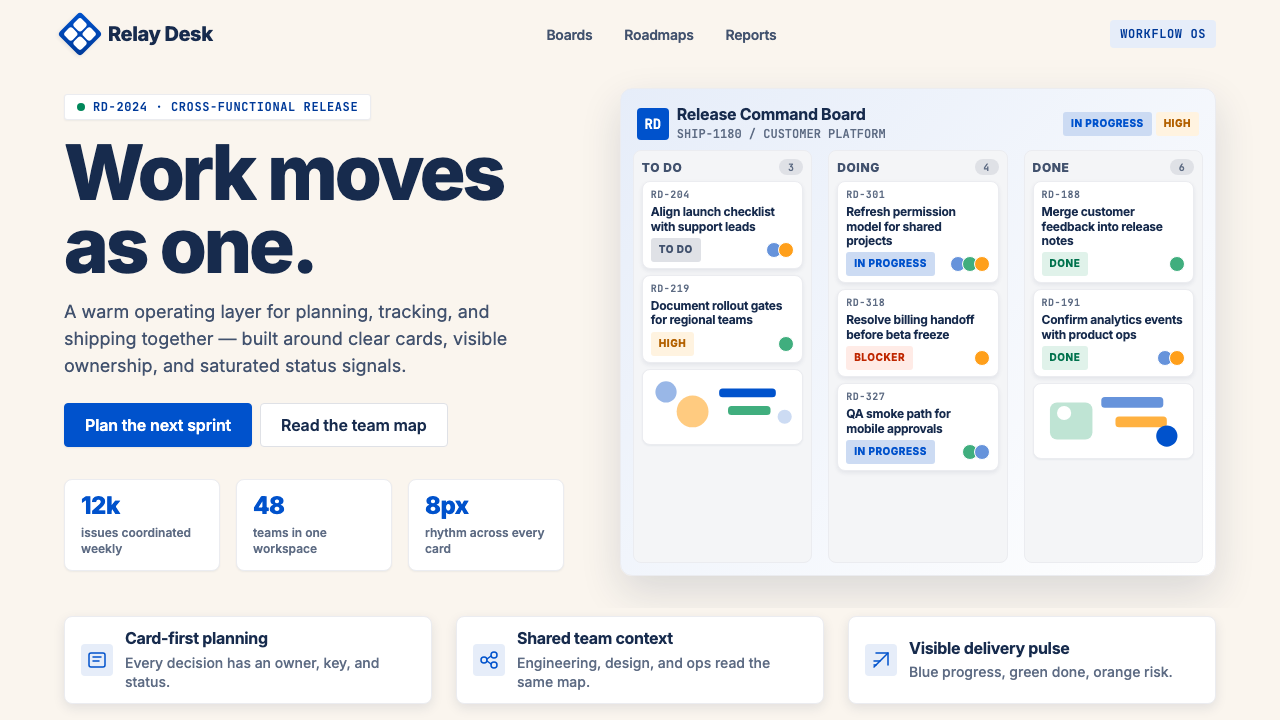 Atlassian Jira BlueWarm enterprise teamwork. Saturated blue cards on cream make status feel huma…
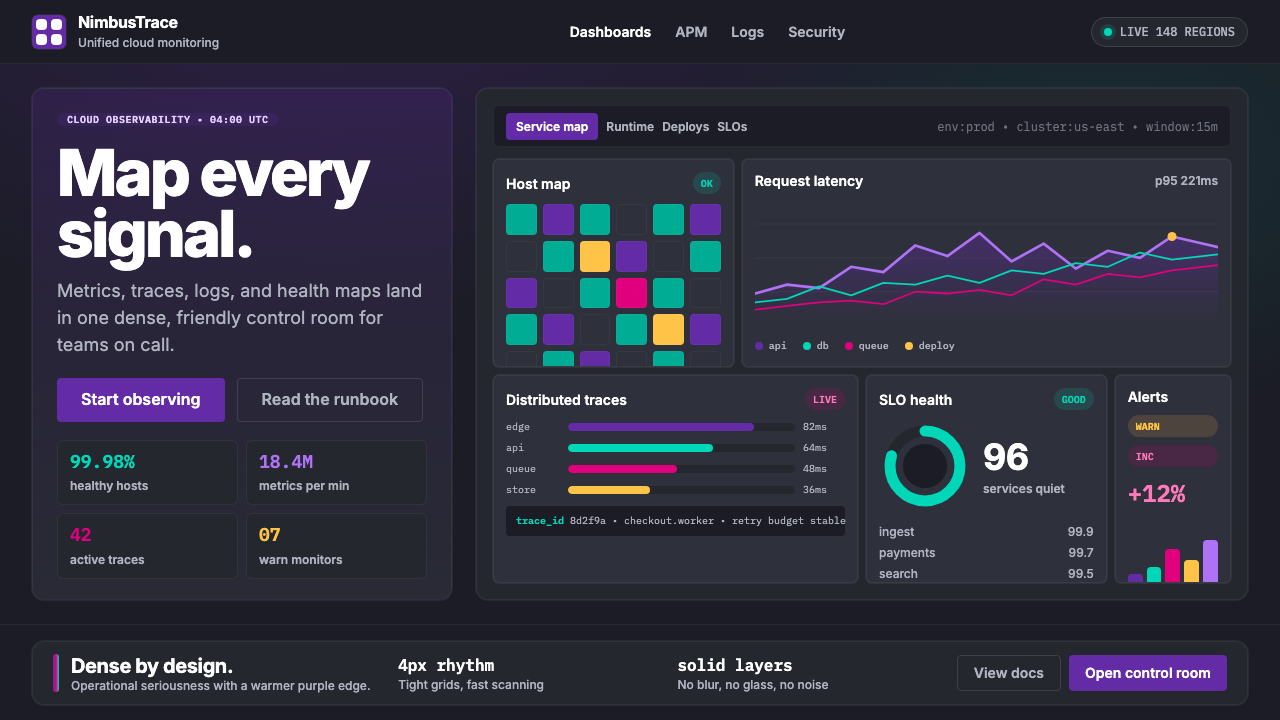 DatadogSerious telemetry, friendly pulse. Purple dark grids pack charts, badges, and…
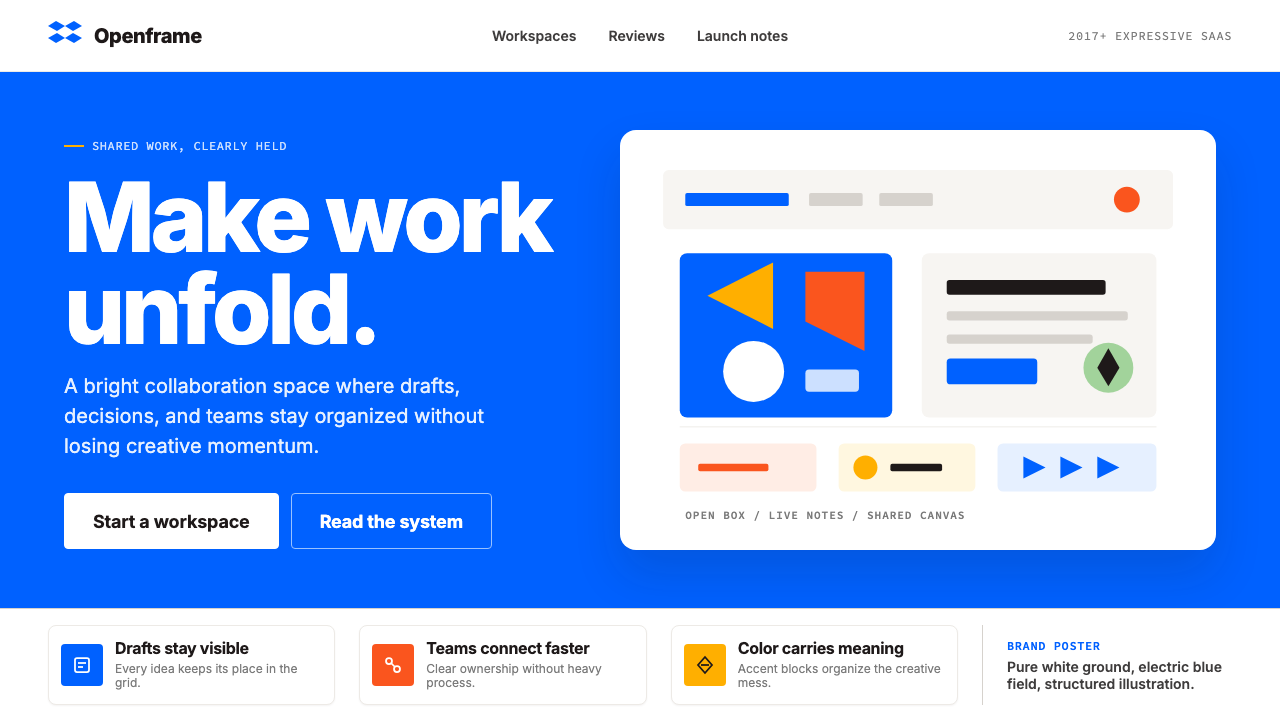 Dropbox ModernFriendly SaaS gets loud. Electric blue and Sharp Sans drive a structured geom…