What is Coupang Rocket Delivery?
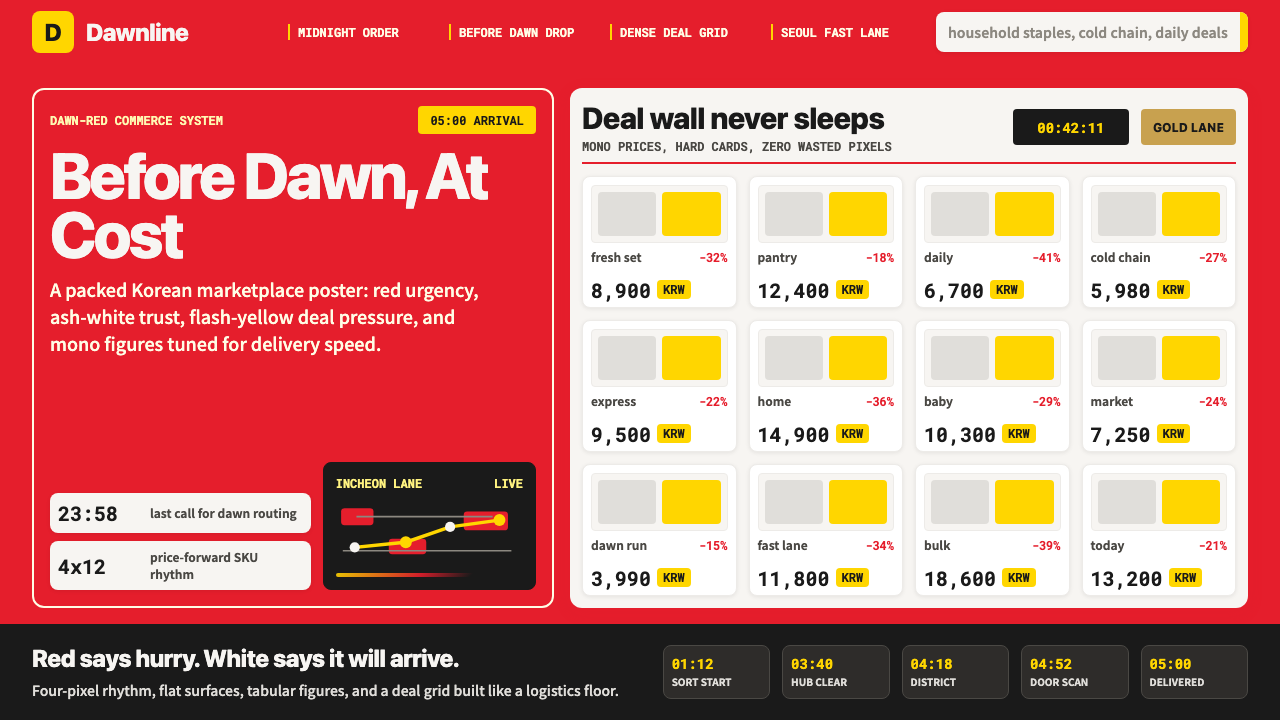
Coupang's Rocket Delivery design language weaponizes urgency into trust — rocket red, flash pricing, and a photographic grid so dense it runs at the speed of a predawn conveyor belt.
Coupang Rocket Delivery in brief
Coupang Rocket Delivery design is the visual identity of South Korea's dominant e-commerce platform, built entirely around a single operating promise: order at midnight, receive before sunrise. Every element in the system — the branded carton, the mobile top-bar, the product grid, the price callout — exists to make that promise visible and believable. The result is a design language that is dense, photographic, price-forward, and saturated with urgency without ever tipping into anxiety.
The aesthetic is defined by three interlocking pillars. First, a bold primary red that functions as both brand color and operational signal — red here does not mean danger, it means speed and reliability. Second, a photographic grid philosophy that fills every viewport with real product images, prioritizing visual abundance over breathing room, because abundance communicates availability. Third, a typographic hierarchy that places price and discount rate at the visual apex of every card, treating the number itself as the primary design object.
What makes the system distinctive is not any single element but the way these pillars reinforce each other at scale. A page of Coupang product listings reads as a single rhythmic field — red accents pulsing across a photographic grid, prices bold and immediate — that communicates operational speed through visual density rather than through animation or empty white space. It is the aesthetic of a logistics machine that has been tuned to perfection.

Where does Coupang Rocket Delivery come from?
Coupang was founded in Seoul in 2010 by Bom Kim, a Harvard Business School dropout who had observed the dominance of Amazon and Groupon and believed a similar model, adapted to South Korea's extreme urban density and its consumers' expectation of near-instant service, could redefine Korean commerce. The company's early years were defined by rapid iteration on business model rather than visual identity: it tried group buying, social commerce, and open marketplace formats before committing to the vertically integrated direct-retail model that would power Rocket Delivery.
The Rocket Delivery service launched in 2014, and with it came the first clear articulation of the visual system. The name and concept were Kim's deliberate provocation — rocket as literal aspiration, not metaphor. The branded carton became the first physical expression of the identity: a white box with a bold red stripe and the Coupang logotype, designed to be unmistakable at 5 AM on a doorstep in Songpa-gu. The delivery window — order before midnight, receive before 7 AM — was the constraint around which the entire visual language was engineered. Urgency had to be communicated in every element, from the app push notification typography to the checkout button color.
The current visual identity matured between 2018 and 2021, a period that coincided with SoftBank Vision Fund's major investment, the explosive growth of Coupang's Fulfillment and Logistics by Coupang (CLC) infrastructure, and the global acceleration of e-commerce during the pandemic years. Design lead Tony Kim and logistics architect Kil Hyung-jin worked in parallel — supply chain and visual system evolving together — producing a design language that is, in a deep sense, the visual face of an operational system rather than a marketing exercise. The red of Rocket Delivery is the red of the branded box truck at 3 AM, not the red of an advertising campaign.
Coupang's NYSE listing in March 2021 brought the brand to international attention and cemented the visual identity as a corporate asset. The IPO materials, investor presentations, and subsequent brand rollouts all maintained the density, the photographic grid, and the price-forward hierarchy that had defined the app since 2018. It became the first major e-commerce brand to demonstrate that a design system could be built directly from logistics logic — that the fastest supply chain and the boldest visual identity could be expressions of the same underlying ambition. Analysts noted that Coupang was the only e-commerce company to have forced Amazon to exit a developed market, and that its design language was a material contributor to the trust that made this possible.
What defines the Coupang Rocket Delivery look?
Rocket Red as Operational Signal
The dominant hue is a saturated, warm red drawn directly from the Coupang brand system and applied at maximum presence: header bars, call-to-action buttons, discount badges, delivery promise banners, and the branded carton all share the same red. Unlike reds used in danger or sale contexts elsewhere, Coupang red carries a specific semantic payload — speed, reliability, and arrived. It is not used sparingly as accent; it is the ground against which everything else reads.
Flash Yellow for Price Urgency
A high-energy yellow, almost electric, appears exclusively in price-urgency contexts: countdown timers, limited-time deal badges, and lightning-deal event headers. Its role is strictly functional — to signal that a price or window is temporary and demands immediate attention. Yellow never migrates into structural or decorative use. The combination of rocket red and flash yellow across a product grid produces the visual temperature of a trading floor or a sports scoreboard: high-stakes, real-time, never static.
Photographic Grid Density
Product photography fills every available cell in the grid with minimal margin. Images are shot clean — products on white or near-white fields, cropped tightly — so that each card reads as a flat, legible object rather than a styled editorial image. The density is deliberate: a full viewport of forty product images communicates warehouse abundance and immediate availability more effectively than any headline. Coupang's grid does not breathe; it accumulates.
Price-First Typography
Within each product card, the typographic hierarchy is unambiguous: the discounted final price is set at the largest size, in the heaviest weight, positioned immediately below the product image. The original price appears struck-through and smaller. The discount percentage — rendered in the flash yellow or brand red — sits adjacent to the final price as a validation signal. Product name and seller details occupy a smaller, lighter tier beneath. This ordering reverses the conventional editorial hierarchy in which product identity leads and price follows.
Persistent Navigation Anchoring
The top navigation bar remains fixed during scroll and carries the Rocket Delivery promise persistently — a banner or badge that communicates expected delivery time relative to the current hour. This is not a conventional UI pattern applied decoratively; it is an operational readout embedded in the interface. On desktop, the equivalent is a delivery-promise strip directly below the global header. The effect is that every page state, regardless of content, communicates the platform's core differentiator without requiring the user to seek it out.
Rocket and Chevron Motion Language
Directional chevrons and stylized rocket icons appear as recurring micro-motifs across the interface — in category navigation, delivery progress indicators, and promotional banners. They are not illustrative; they function as directional signals in a wayfinding system. The rocket symbol specifically anchors the Rocket Delivery sub-brand within the broader Coupang interface, appearing on packaging, order-tracking screens, and app icons. This consistent motif vocabulary makes the delivery promise legible at a glance across every surface.
White Space as Exception, Not Rule
Coupang's interface treats white space instrumentally rather than aesthetically. It appears between cards to prevent visual merge, around price figures to isolate them for immediate legibility, and in checkout flows where cognitive clarity is paramount. It does not appear as a general compositional value or as a signal of premium positioning. This inverts the conventional relationship between density and quality: Coupang's density communicates operational confidence rather than cheapness, because every element in the grid is earning its place through price and availability information.

Who shaped Coupang Rocket Delivery?
Bom Kim founded Coupang in 2010 after dropping out of Harvard Business School, having identified that South Korea's extreme urban density and consumer expectations for fast service created a structural opening for a vertically integrated e-commerce platform. His decision to own the last mile — rather than outsourcing delivery — was the strategic move that produced the Rocket Delivery brand, the Coupang Logistics Service driver corps (Coupang Friends), and ultimately the design language that made the logistics promise visible. Under his leadership, Coupang became the only e-commerce company to have displaced Amazon in a developed market.
As Coupang's design lead during the 2018–2021 consolidation period, Tony Kim was responsible for systematizing the visual language that had emerged from rapid iteration into a coherent brand system. His key contribution was aligning the design system with logistics reality rather than with conventional e-commerce aesthetics: the red came from the delivery carton, the density came from the fulfillment center floor, and the price hierarchy came from the consumer research showing that Korean shoppers scanned price before product name. The result was a design system in which every rule had an operational justification.
Kil Hyung-jin architected the logistics infrastructure that made Rocket Delivery operationally possible, including the fulfillment center network, the Coupang Friends driver system, and the overnight sortation processes that underpin the dawn delivery promise. His work is relevant to the design history because the visual identity was built backward from the logistics capability: designers were given the delivery window as a constraint and asked to make it visible and trustworthy. The design system is, in this sense, a translation of Kil's engineering into consumer-facing language.
SoftBank Vision Fund's investment in Coupang — ultimately exceeding three billion dollars — provided the capital to build the fulfillment center network at scale and to establish the Coupang Friends driver corps as a full-time employed workforce rather than gig workers. This capital decision had a direct design consequence: because Coupang owned the entire delivery chain, the brand could appear on every physical touchpoint from the sortation center uniform to the doorstep carton, creating a coherent physical-to-digital brand experience that no marketplace model could replicate. The SoftBank relationship also accelerated the push toward the NYSE listing and the brand formalization that followed.
How do you use Coupang Rocket Delivery today?
Coupang Rocket Delivery design is most effective when applied to contexts where operational speed and price confidence are the primary value propositions. It is an aggressive, trust-through-density style that works against contexts calling for premium restraint, editorial calm, or aspirational lifestyle positioning. Before applying it, identify whether the product's core promise is efficiency and value — if yes, the style reinforces that promise at every visual level; if no, the density and urgency will feel misaligned.
For presentation slides, the style is best deployed in sales decks, logistics capability presentations, e-commerce pitch decks, and investor materials for operational businesses. A cover slide in this language uses a full-bleed photographic background — warehouse interior, delivery vehicle at speed, doorstep carton — with the deck title set in heavy, large-scale type against a red or dark overlay. Content slides should adopt the card-grid logic: information organized into equal-weight cells, each with a metric or claim at the typographic apex and supporting detail beneath. Data slides treat charts as operational dashboards: axis labels minimal, key figures set at headline scale, color used only for the rocket red data series that represents the core metric.
For web interfaces and digital dashboards, the style translates well to e-commerce admin panels, fulfillment tracking interfaces, pricing comparison tools, and marketplace management systems. Apply the persistent-header pattern: a fixed top bar that always displays the most time-critical information — current SLA status, pending orders, next pickup window. Use the product-grid density for inventory views. Deploy rocket red for active states, alerts, and primary call-to-action elements; reserve flash yellow for threshold warnings and countdown contexts. Keep background fields white or very light; the color weight of the red and the typographic weight of the price figures provide all the visual structure needed.
For editorial and marketing applications — launch announcements, promotional landing pages, event materials — the style works at poster scale. A promotional banner in this language is photographic at full bleed, with a bold price or percentage figure dominating the composition, the Rocket Delivery promise set in a red band across the lower third, and a high-contrast call-to-action button at the anchor point. Marketing pages for operational products benefit from the alternating content-block pattern: a section establishing the product grid against white, alternating with a red-ground section where the delivery promise is stated in maximum-scale type. Countdown timers with flash yellow accents can anchor limited-time offers.
The most common mistake when applying this design language is treating the density as aesthetic rather than informational. Designers who import the visual density without importing the underlying information structure produce layouts that feel cluttered rather than abundant — a grid full of large images with no price hierarchy reads as noise, not speed. The second common mistake is applying the full red-and-yellow palette simultaneously across structural elements; in the authentic system, flash yellow appears only in time-urgency contexts, and rocket red is consistent rather than layered with competing accent colors. The system's power comes from the discipline of each color having a single clear semantic role.

Coupang Rocket Delivery — FAQ
Is Coupang Rocket Delivery style appropriate for luxury or premium products?
No — and the tension is structural rather than superficial. Luxury design communicates value through scarcity signals: generous white space, restrained color use, small-scale precision typography, and deliberate slowness of visual rhythm. Coupang design communicates value through abundance signals: density, immediacy, price prominence, and speed. These are not compatible approaches. Applying the Coupang system to a luxury product would undercut the premium positioning at the level of the visual grammar, not merely in color choices. The style is appropriate for value, convenience, and operational excellence propositions — categories where trust comes from transparent efficiency, not from exclusivity.
Can this design language work in a Western or European market context?
The core mechanics — price-forward hierarchy, photographic grid density, urgency color coding — are not culturally specific to Korea and translate well across markets where e-commerce is value-driven. Amazon, Shopee, Flipkart, and Temu all operate in similar design registers, suggesting that the high-density, price-prominent approach resonates across geographic markets when the value proposition is speed and savings. What may require adaptation is the red dominance: in some European markets, red carries stronger stop or danger connotations that may require modulating the saturation or using it more selectively. The typographic hierarchy and grid density principles apply universally.
How does Rocket Delivery design differ from generic promotional e-commerce design?
Generic promotional e-commerce design uses urgency as decoration — countdown timers applied to products without real scarcity, red applied to prices that are not meaningfully discounted, density used because convention dictates it. Coupang's system uses urgency as operational truth: the countdown reflects a real delivery window tied to the fulfillment center cutoff time, the red reflects a real brand anchored in physical logistics infrastructure, the density reflects a real inventory depth. The visual language is credible because it has an operational referent. When designers apply this style without that operational grounding, the result tends to read as aggressive rather than trustworthy — urgency without substance, density without abundance. The discipline of the authentic system is what separates confident from chaotic.
What happens to this style in a dark-mode context?
The Coupang system was designed for light backgrounds — white and very light grey fields against which rocket red and flash yellow operate at full signal strength. A dark inversion presents specific challenges: on dark grounds, rocket red loses some of its assertiveness and can shift toward warmth rather than urgency; flash yellow on dark becomes very dominant and may need to be used even more selectively. A dark variant works best when the background is a deep neutral rather than pure black, rocket red is used at slightly reduced surface area, and the photographic product images — which remain light-ground in their own composition — provide the visual anchor. The delivery promise banner remains the strongest element to retain at full red in a dark context.
Is it possible to apply this style without using the exact Coupang red?
Yes — the design language is defined by its structural logic and information hierarchy, not by a proprietary color value. The red in the system functions as a consistent, saturated, warm-toned primary that signals operational presence and reliability. Any color can play this role provided it meets the same functional criteria: high saturation for visibility at distance, warm-to-neutral tone for trustworthiness rather than alarm, and consistent application across every brand touchpoint from packaging to interface. The flash yellow accent role can similarly be filled by any high-energy contrasting hue that reads as urgent and temporary. The constraint is consistency — whatever primary color is chosen must appear at every operational touchpoint without variation, because the system's credibility comes from that consistency.
Related design styles
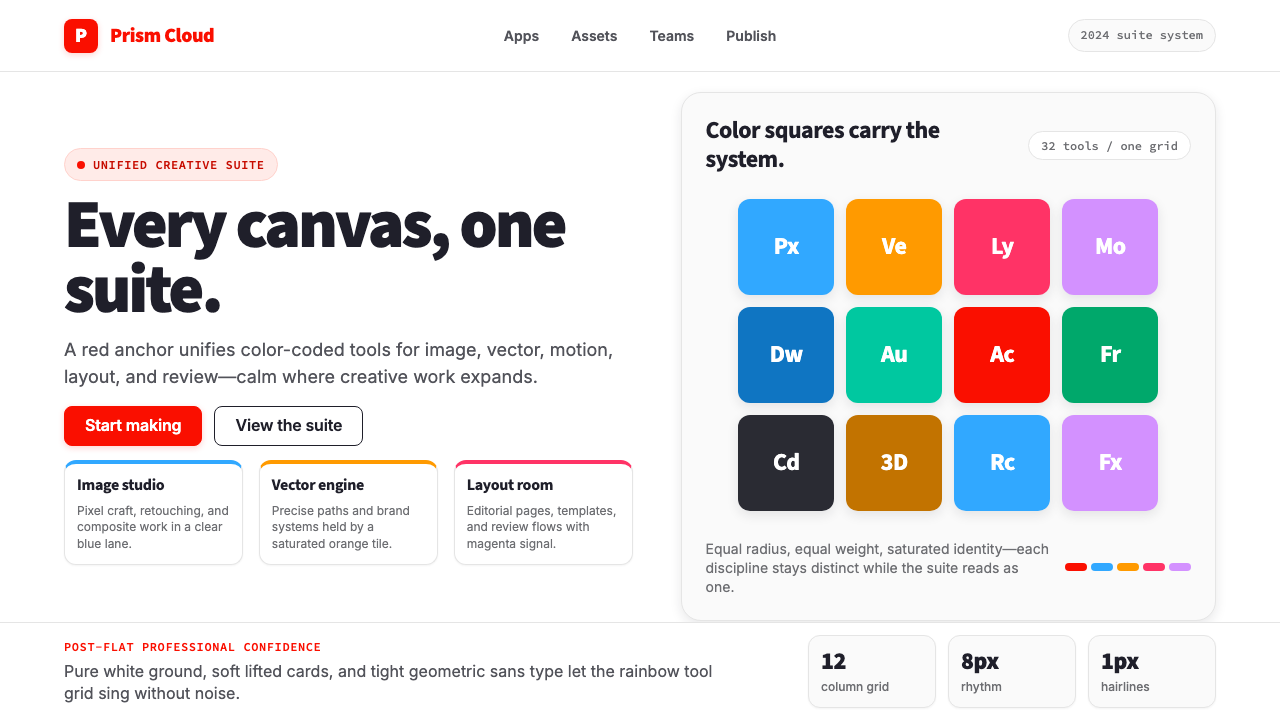 Adobe Creative CloudUnified, not uniform. Red anchor, white space, and saturated app tiles organi…
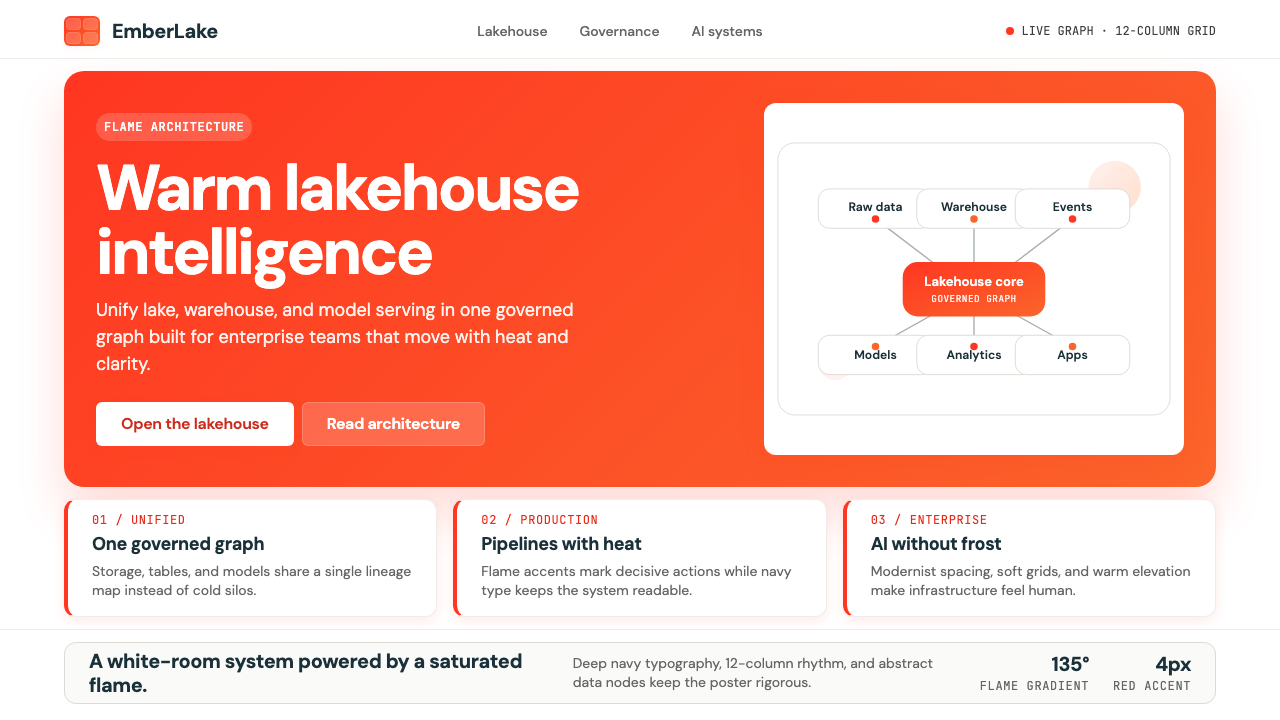 Databricks LakehouseWarm enterprise confidence. Flame red-orange gradients meet DM Sans and clean…
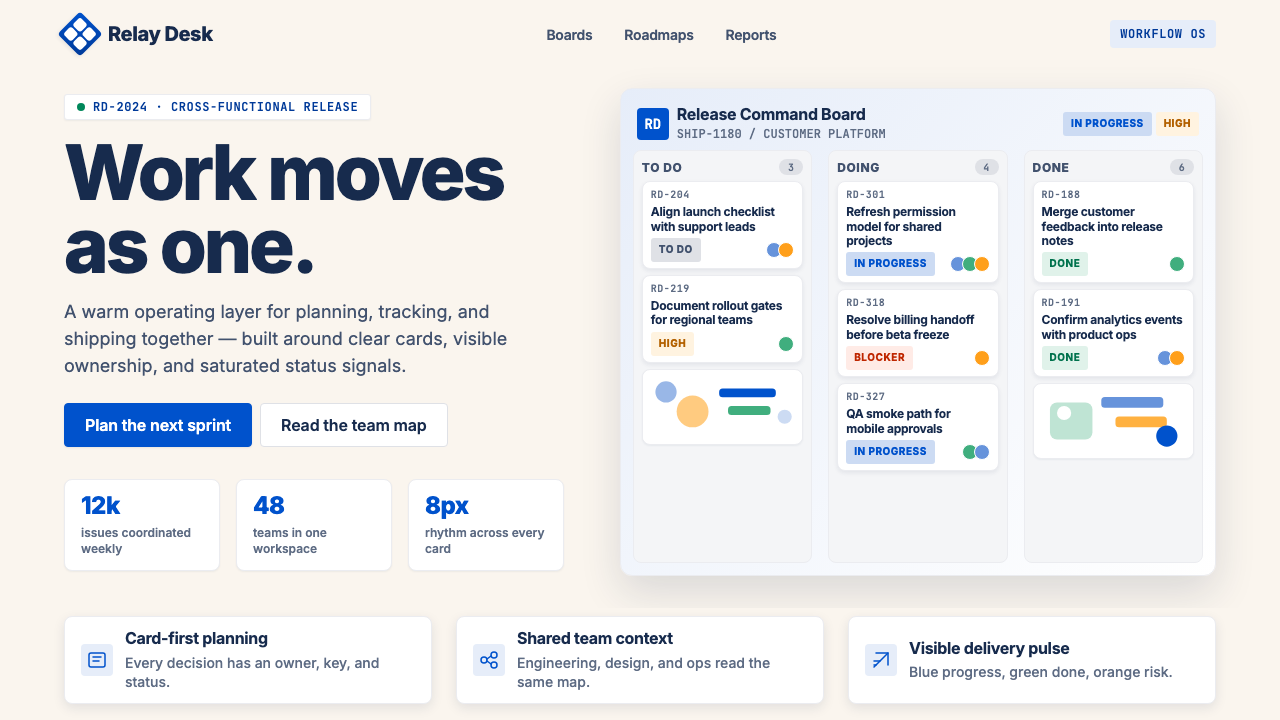 Atlassian Jira BlueWarm enterprise teamwork. Saturated blue cards on cream make status feel huma…
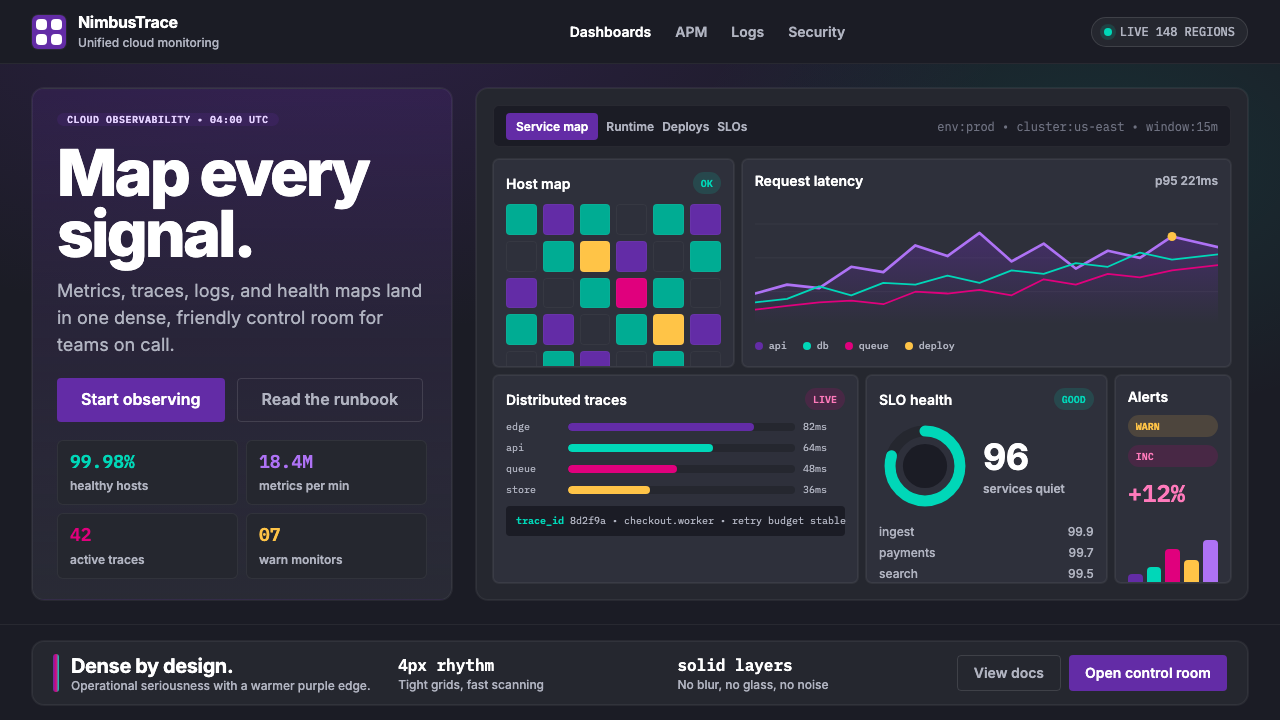 DatadogSerious telemetry, friendly pulse. Purple dark grids pack charts, badges, and…
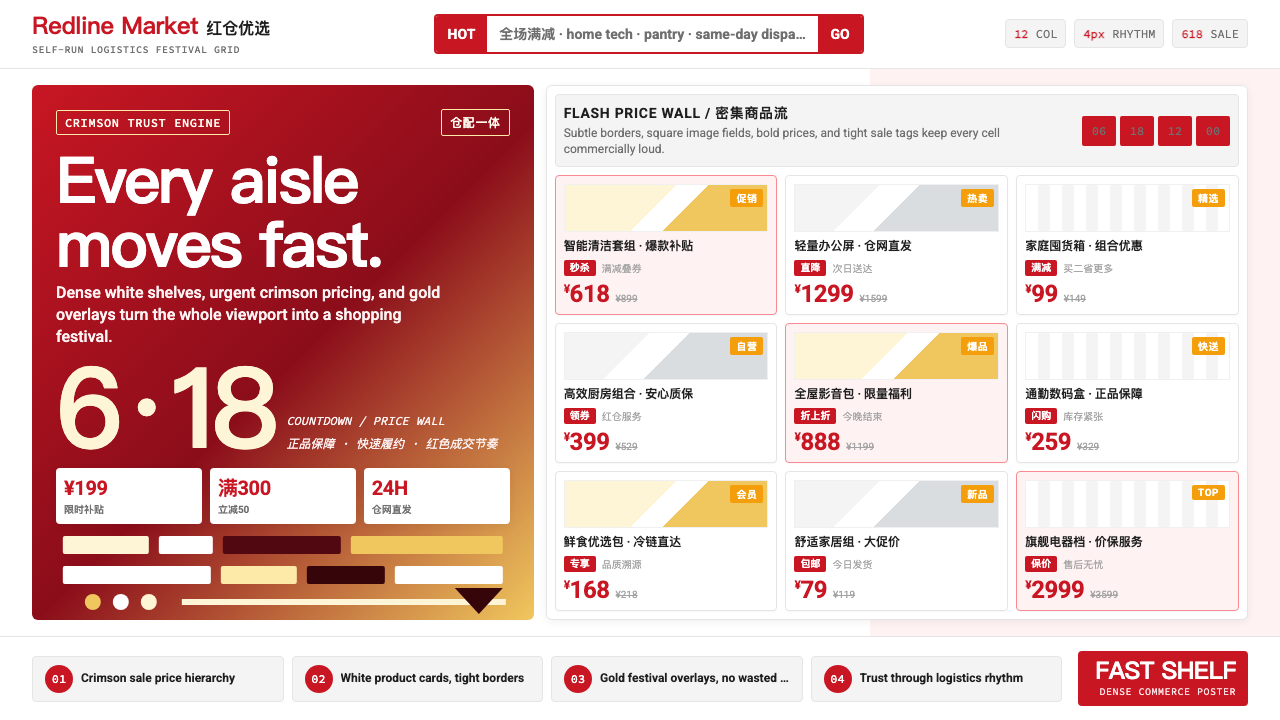 JD.com (京东)Urgency earns trust. Deep red prices pack a white 12-column grid with gold fe…
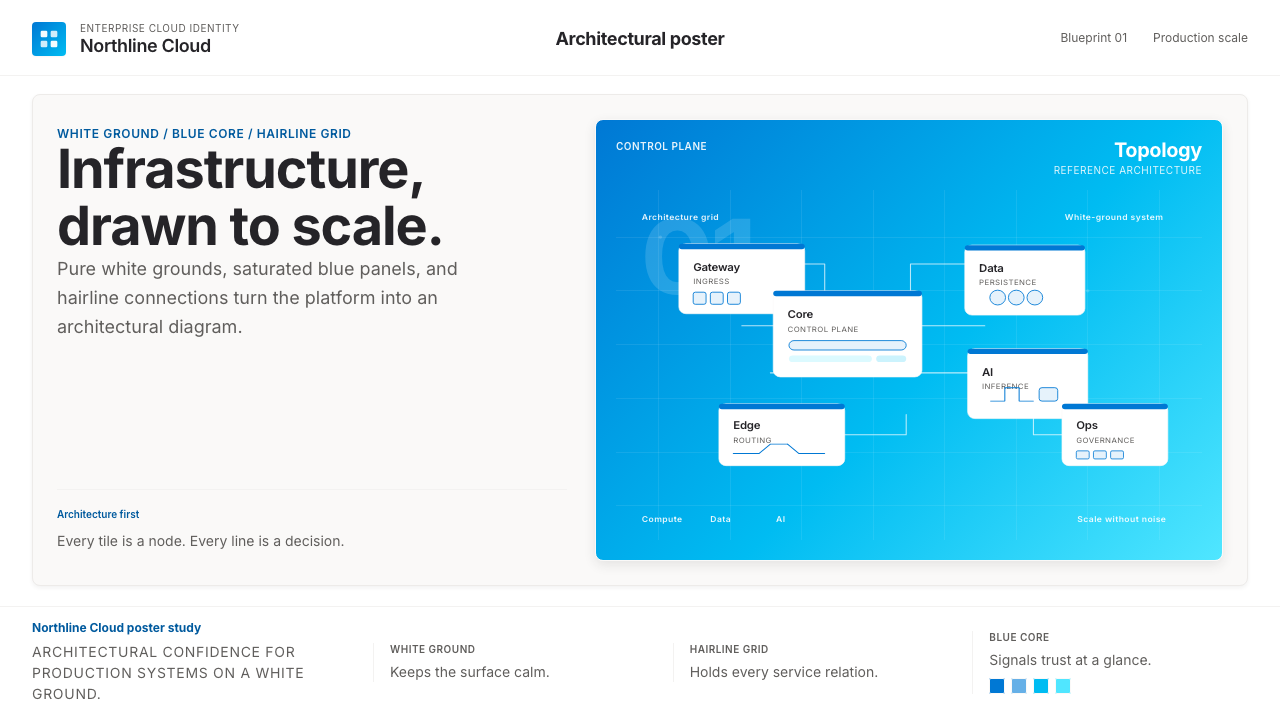 Microsoft AzureEnterprise calm, sharply diagrammed. White ground, saturated blue, hairline l…