What is OpenAI 2024?
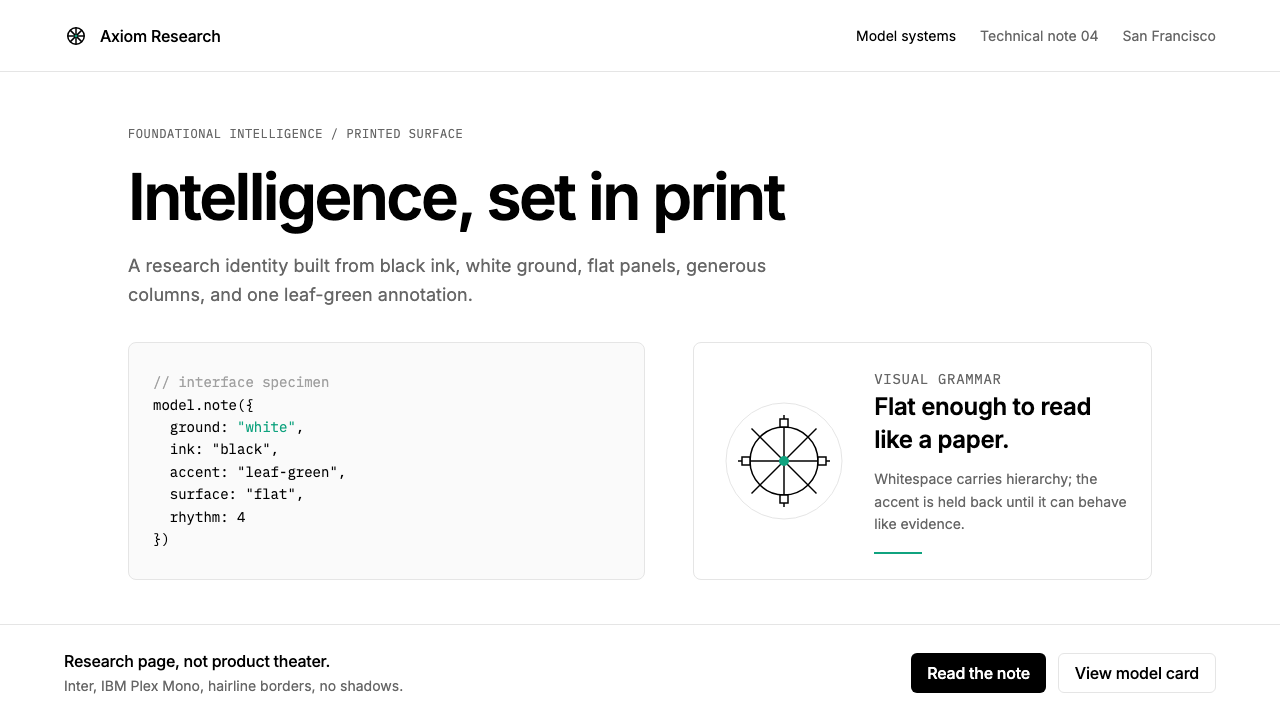
OpenAI's 2024 visual identity treats restraint as a research credential — black text on white ground, a single green accent, and typography that borrows its authority from academic publishing.
OpenAI 2024 in brief
OpenAI 2024 is the visual identity system developed by the artificial intelligence research company OpenAI, reaching its most refined expression with the October 2024 rebrand that introduced the 'Blossom' logomark. The system is built on radical subtraction: pure black type on white ground, generous white space, monospace code panels, and a single leaf-green accent color that descends from the ChatGPT product identity. Everything that cannot be justified by communication or structure has been removed.
The aesthetic philosophy positions OpenAI not as a technology consumer brand — with the gradients, glows, and visual spectacle that category typically deploys — but as a foundational research institution whose visual language should feel closer to a scientific journal than to a software storefront. The result is a design system that signals authority through what it refuses to include as much as through what it presents.
In practical terms, the style is characterized by wide reading columns that treat the screen like a printed page, flat surfaces with no shadows or dimensional effects, a typographic hierarchy built on weight and scale rather than color, and code blocks rendered in monospace type that appear as self-contained documentary evidence rather than decorative syntax highlighting.

Where does OpenAI 2024 come from?
OpenAI was incorporated in San Francisco in December 2015 as a nonprofit artificial intelligence research laboratory, co-founded by Sam Altman, Greg Brockman, Ilya Sutskever, and others. The founding ambition was explicitly research-oriented: to develop artificial general intelligence in a way that would be safe and beneficial for humanity. This institutional self-conception — as a research lab with a civilizational mandate rather than a product company with a revenue mandate — shaped every subsequent design decision. The earliest visual presentations reflected academic norms: plain white documents, technical figures, and typographic hierarchy borrowed from scientific publishing conventions.
Through the late 2010s and early 2020s, as the company launched the GPT model series and eventually ChatGPT in November 2022, its visual identity evolved incrementally. ChatGPT introduced the leaf-green accent that would become the single permitted color in the broader brand system — a deliberate echo of terminal-green and of the natural world, threading a connection between computational intelligence and something organic. The original hexagonal logomark, derived from a stylized letter O, served adequately but felt more like a placeholder than a considered brand statement.
The October 2024 rebrand replaced that hexagonal seal with the 'Blossom' logomark: a fluid, petal-like form derived from rotating and layering simplified curves. The name and form together signal growth, generative process, and organic complexity — aspirations that contrast deliberately with the mechanical connotations the original mark carried. Yet the surrounding identity system moved in the opposite direction of the logo's softness, becoming even more restrained: the palette shed any remaining accent colors except the inherited green, the typography leaned harder into academic-publishing weight conventions, and the layout system doubled down on generous white space and wide columns.
The movements that shaped OpenAI 2024 are less about graphic design history than about institutional positioning. The dominant influences are the visual languages of elite research institutions — scientific journals, university press publications, think-tank reports — where authority is conveyed through typographic restraint and the absence of commercial visual persuasion. A secondary influence is the minimalist strain of Silicon Valley product design, though OpenAI's version deliberately strips out the warmth and accessibility cues that consumer technology companies use to soften that minimalism. The resulting identity occupies a rare position: a commercial entity that visually insists it is not primarily a commercial entity.
What defines the OpenAI 2024 look?
Monochrome Foundation
The base system operates in black and white with no intermediate grays used for decoration. Black is reserved for all text and primary structural elements; white or near-white grounds provide the field. This is not the soft warm-white of lifestyle brands or the cool blue-white of enterprise software — it is the neutral, unmodulated white of a printed academic document. The commitment to this foundation is what makes the single green accent legible as a meaningful signal rather than incidental color.
Single Accent Color
Leaf green — inherited from the ChatGPT product — functions as the sole permitted accent, and its usage is disciplined to the point of scarcity. It appears in the logomark, in select interactive states, and occasionally as a marker for key terms or calls to action. Because it never competes with a second accent color, its presence carries genuine weight: any element touched by green is, by definition, important. The color sits in a range that reads as natural and alive without tipping into either the aggressive brightness of lime or the muted seriousness of forest green.
Editorial Typography
The typographic system draws its authority from the conventions of long-form publishing rather than from the display-heavy traditions of advertising or consumer technology. Text is set at reading weights — light to regular — across generous column widths that allow the eye to settle into sustained reading. Hierarchy is established through size and weight alone, with no color differentiation between heading levels. The overall effect is a page that asks to be read rather than scanned, positioning the company's communications as documents worth studying rather than messages worth glancing at.
Monospace Code Panels
Code blocks appear throughout OpenAI's communications — in research papers, product documentation, and marketing pages alike — rendered in monospace type against a lightly differentiated background panel. These panels carry a documentary function: they present the actual outputs of the company's systems as evidence rather than illustration. The flat, borderless-or-lightly-bordered treatment avoids skeuomorphic terminal simulation while maintaining clear typographic distinction from running prose. The presence of code within marketing and editorial content signals that the intended reader is technically literate — a deliberate positioning choice.
Flat Surfaces and Zero Shadow
Every surface in the system is resolutely flat. Card components, input fields, modal overlays, and image containers carry no drop shadow, no inner glow, and no simulated material depth. This is not merely the contemporary design fashion of reducing shadows — it is a more absolute commitment. Even the subtle, diffuse shadows that remain common in most modern design systems are absent. The effect is that content appears to exist on the same plane as the page rather than floating above it, reinforcing the printed-document metaphor that structures the entire identity.
Wide-Column Layout Logic
Body text is set in columns that are wider than typical web convention, evoking the measure of a printed journal or book page rather than the narrow mobile-optimized columns common in consumer web design. This choice communicates that the content is intended for sustained reading, not quick mobile consumption. Margins are used for captions, footnote-style annotations, and secondary navigation — a hierarchy borrowed directly from academic book design. The wide-column approach also creates the large expanses of white space that give the identity its characteristic sense of breathing room.
'Blossom' Logomark
The October 2024 logomark departs from the geometric precision of the original hexagonal mark, replacing it with a form derived from overlapping and rotating petal-like curves. The visual result reads as simultaneously organic and constructed — natural in its softness, deliberate in its symmetry. In the context of an otherwise severely restrained identity, the logomark's gentle curves function as the single point of warmth. It is rendered in black or in the leaf green, never in any other color, maintaining the system's strict palette discipline while allowing the brand's central form to carry the identity's only gestural energy.

Who shaped OpenAI 2024?
Sam Altman joined OpenAI as president in 2019 and became CEO, overseeing the company's transition from a small research nonprofit to one of the most prominent artificial intelligence organizations in the world. His public communications — interviews, blog posts, social media — became part of the brand's visual and rhetorical identity: plain, direct, and stripped of promotional language in a way that matched the identity system's own restraint. The brand's insistence on presenting itself as a research institution rather than a product company reflects Altman's consistent public framing of OpenAI's mission as civilizational rather than commercial.
Greg Brockman co-founded OpenAI and served as president and chief technology officer through the formative years of the company's identity development. His role bridged research and engineering culture, and the technical orientation of OpenAI's visual communications — the presence of code, the monospace aesthetic, the documentary treatment of model outputs — reflects the engineering-first culture he helped establish. Brockman's public writing and presentations modeled the kind of precise, evidence-forward communication that the brand identity system was built to house.
Ilya Sutskever co-founded OpenAI and served as chief scientist, leading the core research programs that produced the GPT series. His presence in the founding team anchored the company's identity as a serious research institution at a time when the artificial intelligence industry was still widely perceived as an extension of consumer software culture. The visual identity's insistence on academic-publishing conventions over consumer-technology conventions is inseparable from the research credibility that Sutskever and his colleagues established through published work.
Mira Murati served as chief technology officer and for a period as interim CEO during the November 2023 board crisis. Her role overseeing product development placed her at the intersection of research culture and commercial application — the same tension that the visual identity navigates by maintaining research-institution restraint while serving a product that reached hundreds of millions of users. The identity's ability to function across research papers, developer documentation, and consumer product interfaces reflects the organizational synthesis her tenure helped consolidate.
The November 2022 launch of ChatGPT was the moment that transformed OpenAI from a research institution known primarily within the machine learning community into a global consumer brand. The ChatGPT interface — white ground, light typography, the leaf-green identity mark — established the visual conventions that would be formalized and extended in the 2024 rebrand. In this sense, the product team that designed and shipped ChatGPT made the most significant contribution to what OpenAI 2024 looks like: they established the palette, the typographic register, and the flat, generous-space layout principles that the rebrand then refined into a comprehensive identity system.
How do you use OpenAI 2024 today?
OpenAI 2024 is among the most imitable contemporary design systems precisely because its ingredients are so few: white ground, black text, one accent color, generous space, flat surfaces, and a typographic hierarchy derived from reading weight rather than display weight. Applying it well requires understanding the discipline behind that simplicity. The system's authority comes from what it refuses, and successful application means internalizing those refusals rather than treating them as arbitrary constraints.
For presentation slides, the style rewards a strict separation between cover and content treatment. A cover slide should be near-empty: a large, light-weight title in the upper third, the organization name or logo in the lower third, and nothing in between except white. The leaf-green accent, if used at all, belongs on a single mark or underline — not as a background wash. Content slides should be typographic documents: a clear heading, a reading-weight body paragraph or two, and perhaps a code block or data table rendered in monospace. Avoid decorative dividers, icon grids, and image collages — every element that cannot be justified as content weakens the system. Data visualization should be flat, with chart elements colored in a single green or black without gradients.
For web interfaces, dashboards and developer documentation pages are the natural home for this style. The approach: commit to a wide content column — wider than most web defaults — with large margins used for navigation, footnotes, or secondary metadata. Keep backgrounds pure white rather than off-white or gray. Typography should do all the hierarchical work, with heading sizes that create genuine scale contrast against body text. Pricing pages work well with the identity's spare boldness: a minimal table or tier layout in black and white, with the recommended tier marked in the leaf green. Navigation should be typographic — no icon libraries, no decorative elements beyond the logomark itself.
For editorial and marketing materials — reports, whitepapers, event materials, social cards — the style's roots in academic publishing make it especially well-suited to long-form content. An editorial layout should treat white space as structural: wide outer margins, a narrow body column, and section breaks marked by scale changes in type rather than ruled lines or color blocks. Marketing pieces can leverage the style's poster-like confidence: a full-bleed white background, large-scale type at reading weight, a single green element as focal anchor, and nothing else. The absence of photography, illustration, or decorative pattern is part of the statement.
A common mistake when applying this style is confusing restraint with emptiness and then compensating by adding subtle design moves that individually seem minor but collectively break the system — a soft drop shadow here, a light gray card background there, an icon set introduced for visual interest. Each of these additions represents a concession from a different design philosophy, and the accumulation destroys the identity's coherence. Another frequent error is using the green too liberally, applying it to headers, highlights, link text, borders, and backgrounds simultaneously. In the source system, green is used at most in one or two places per view. Scarcity is what gives it signal value.

OpenAI 2024 — FAQ
Is OpenAI 2024 just minimalism, or is there a specific philosophy behind it?
It shares minimalism's preference for subtraction, but the motivation is different. Contemporary minimalism in consumer design typically removes elements to feel calm, premium, or effortless. OpenAI 2024 removes elements to signal institutional seriousness — the visual language of a research laboratory rather than a lifestyle brand. The distinction matters in practice: a minimalist consumer brand might use warm off-whites, organic curves, and soft shadows to maintain approachability while reducing clutter. OpenAI 2024 uses neutral white, no curves except in the logomark, and zero shadow — choices that read as colder and more authoritative than most minimalism because authority, not warmth, is the target.
Can this style work for a company that is not an AI research laboratory?
Yes, with the caveat that the style works best when the brand genuinely wants to project authority, technical credibility, and intellectual seriousness rather than warmth, accessibility, or sensory pleasure. Companies in fields like scientific instruments, academic publishing, advanced engineering, professional legal or financial services, and developer tools can apply the style authentically. Consumer brands — especially in food, wellness, fashion, and entertainment — will likely find the style's coldness working against their core positioning. The test is simple: would this company's ideal customer feel reassured or alienated by a webpage that looks like a research paper?
How does the 'Blossom' logomark fit an otherwise cold, typographic system?
The logomark functions as a deliberate contrast point — the single organic element in a system that is otherwise geometric and typographic. This contrast is not a failure of consistency but a considered design decision: a system that is uniformly severe risks feeling mechanical and inhumane. The soft petal curves of the Blossom mark introduce a suggestion of growth, creativity, and organic process that the stark typographic environment on its own would suppress. The key is that the logomark's softness is contained — it appears as a small mark, in black or green, and is never repeated as a pattern or expanded into a decorative vocabulary. One gesture of warmth, precisely placed, reads as intentional; scattered through the system, it would dissolve the identity's discipline.
What distinguishes an authentic OpenAI 2024 application from a generic tech-minimal look?
Several specific commitments separate this system from generic tech minimalism. First, the typographic weight register: OpenAI 2024 uses light-to-regular weights at large sizes rather than the medium-to-semibold weights that dominate most tech-minimal branding. The effect is more literary than product-like. Second, the column width: the wide reading columns are wider than typical tech interfaces, referencing publication design rather than app design. Third, the absolute exclusion of shadow: most tech-minimal systems retain at least subtle card shadows; OpenAI 2024 does not. Fourth, the presence of code: authentic applications include monospace code blocks as a natural part of the content vocabulary. Fifth, the scarcity of the green accent — not as an active interface color but as a rare signal. Generic tech-minimal looks tend to use multiple grays, rounded cards, and subtle shadows that are entirely absent from this system.
Can dark mode work within this identity system?
Dark mode is technically supported in ChatGPT and OpenAI's products, but it operates as a functional inversion rather than an equal design expression. The canonical identity is light: black on white is the authoritative form. A dark inversion — near-black ground, white or light-gray text, green accent — can maintain the system's discipline if the same principles apply: no shadows, no gradients, no decorative elements, code panels lightly differentiated from the background. The risk in dark mode is that the leaf-green accent, which reads as restrained against white, can become more dominant against a dark ground. The solution is to use it even more sparingly in dark contexts — as a logo mark or a single key element — rather than expanding its presence to compensate for the changed contrast relationships.
Related design styles
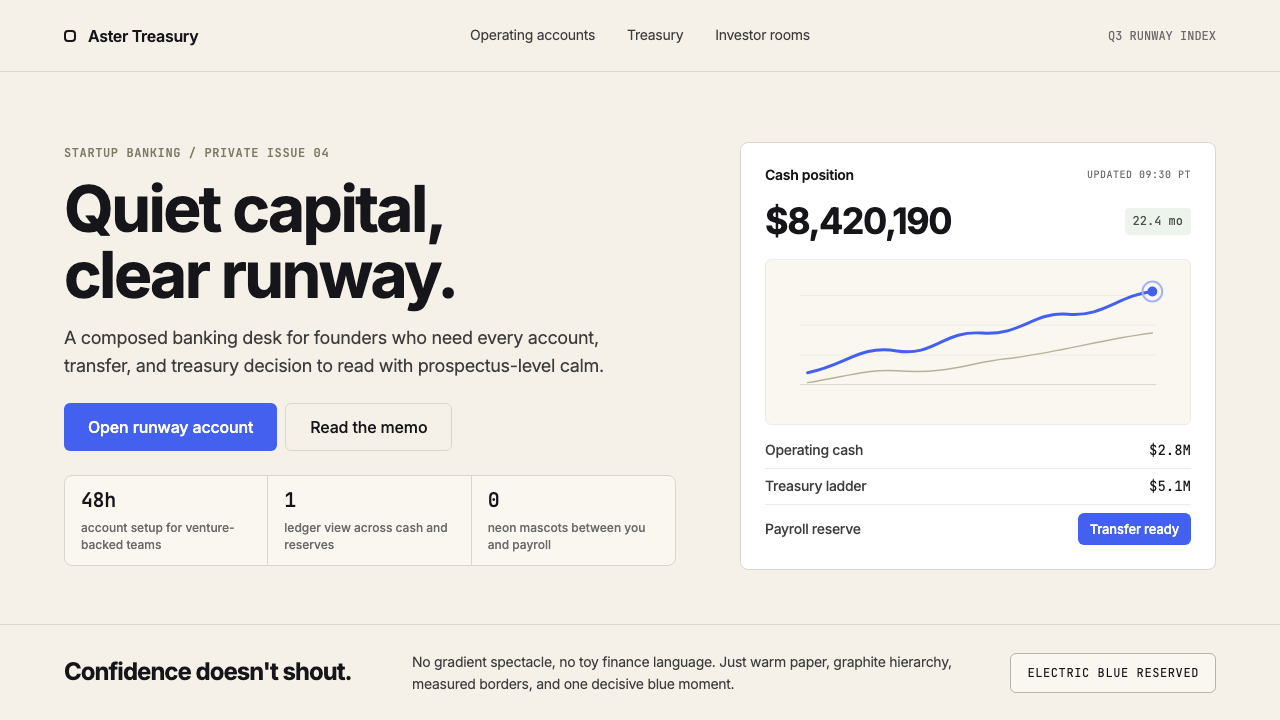 Mercury BankQuiet precision wins. Cream paper, charcoal Inter, and one electric-blue spar…
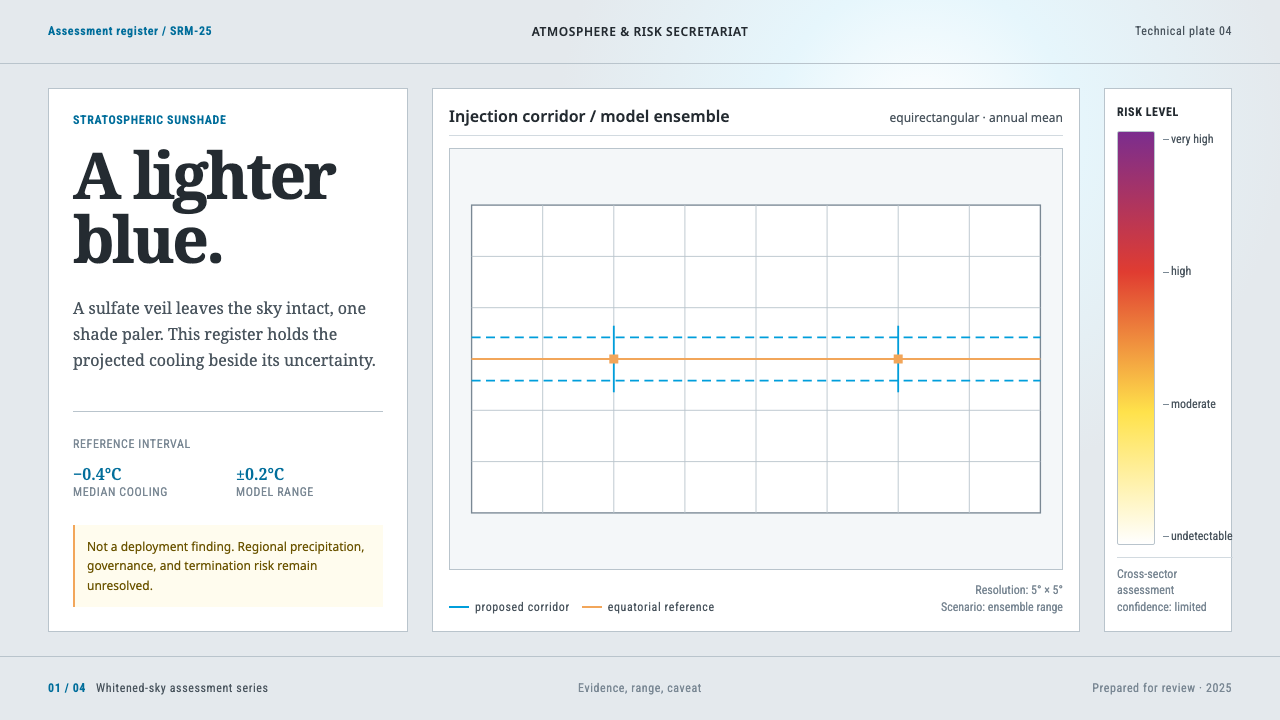 Stratospheric SunshadeUncertainty is the message. Pale sky stock, UN blue corridors, and an IPCC ri…
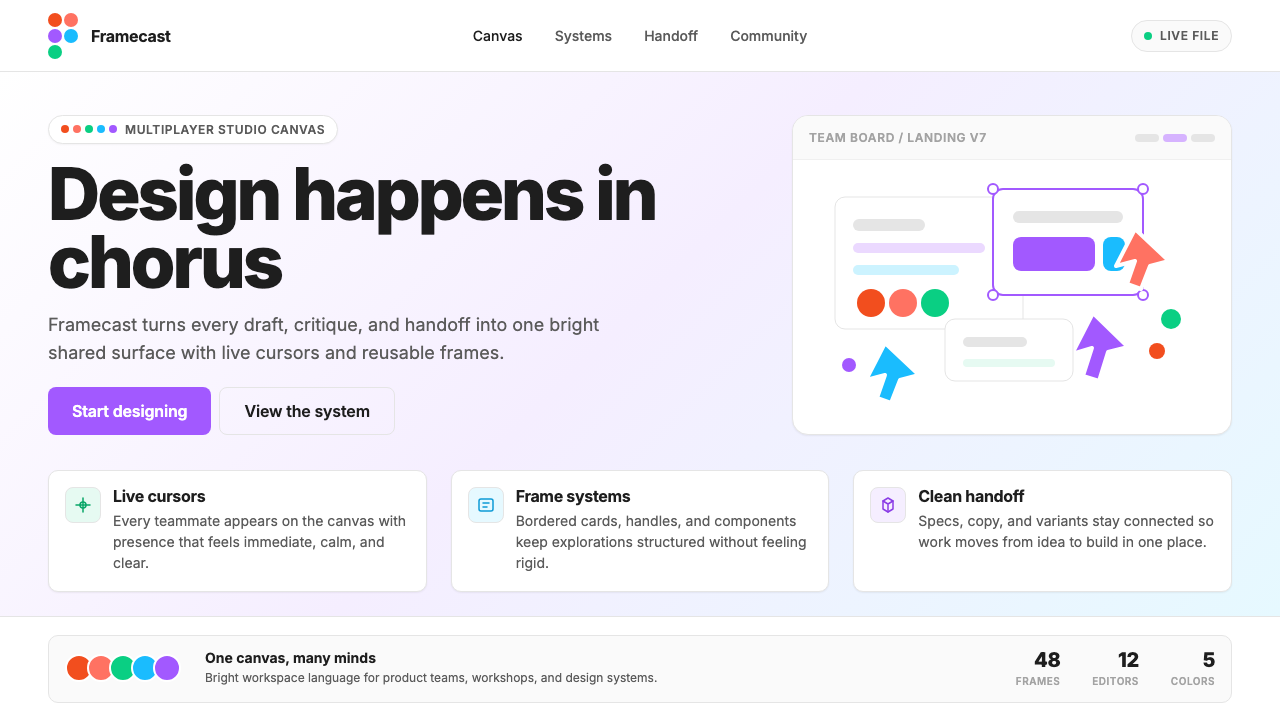 Figma 2024A brand that looks like its canvas. Five dots scatter like cursors, soft card…
 The OrdinaryNo promise, only the formula. Cool lab white, Space Mono labels, color as rar…
 Threads (Meta)Restraint is the brand. Black Inter type, narrow feed, thin connectors, white…
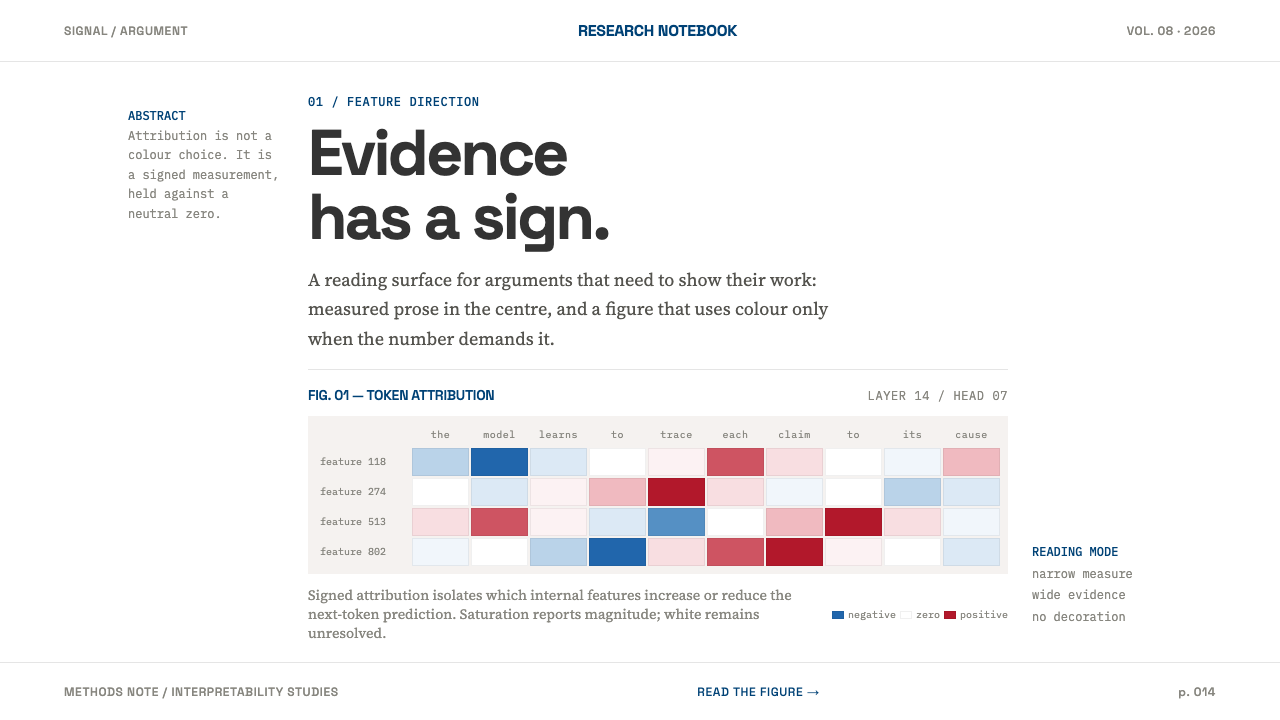 AI Alignment LabEvidence has a sign. Narrow serif prose yields to a red-blue attribution matr…