What is NYC Subway Graffiti (1983)?
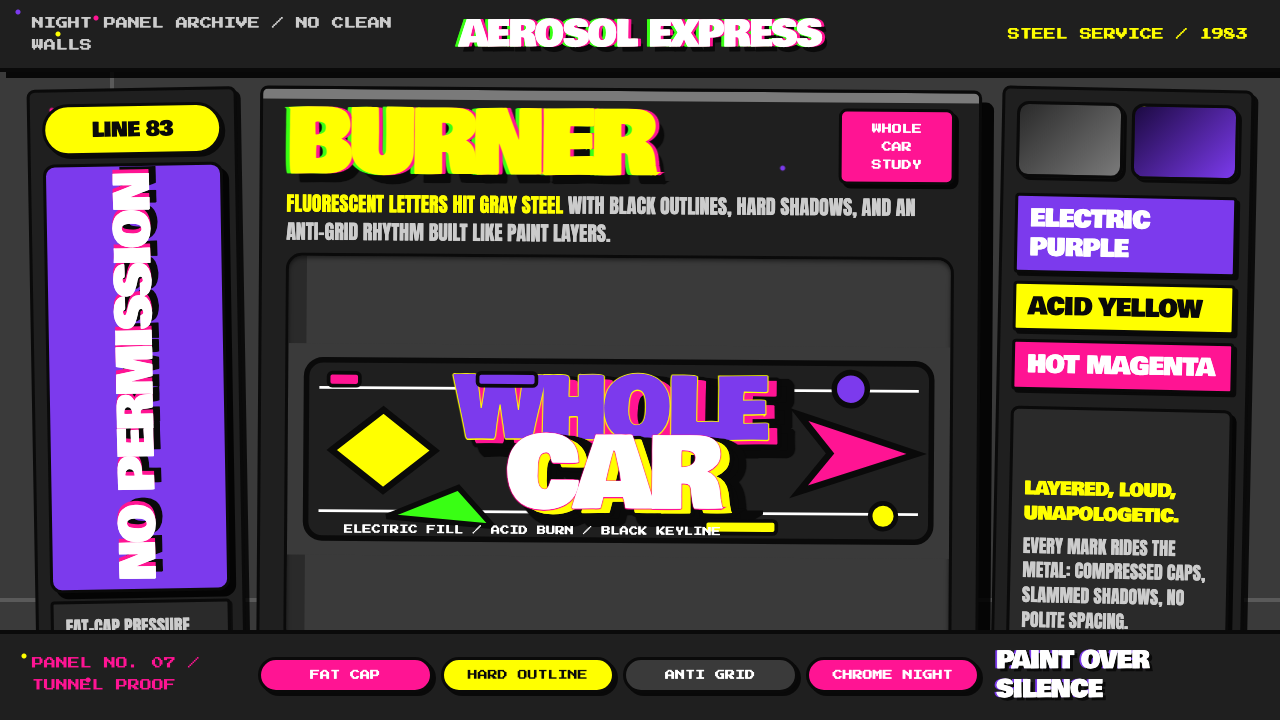
In 1983, New York's subway system was the world's loudest gallery — every train a rolling canvas of wildstyle lettering, fluorescent flares, and pitch-black outlines that announced a new visual language born from the streets.
NYC Subway Graffiti (1983) in brief
NYC Subway Graffiti at its 1983 peak represents the most explosive typographic movement America ever produced. Writers working under names like DONDI, LEE Quiñones, PHASE 2, and FUTURA 2000 transformed MTA rolling stock into mobile masterworks — fluorescent paint layered over industrial gray steel, every surface pushed to visual saturation. The style reached its international audience through two landmark documents released in that same era: the Style Wars documentary film and the Subway Art photo book by Martha Cooper and Henry Chalfant.
The visual system is built on controlled tension. Background grounds in the dark, weathered tones of subway metal — corroded charcoal, industrial gray, the blackened grime of underground tunnels — serve as the foil against which electric colors explode. Fills range from deep electric purple and acid yellow to hot magenta, chrome-silver, and fire-engine red, each bounded by thick pitch-black outlines that give every form its structure and legibility. The effect is simultaneously dense and readable: information packed to maximum density yet organized by a rigorous internal logic of outline, fill, and highlight.
At its core, this is a typographic art form. Letters are the primary subject, not backgrounds or figures. Wildstyle compositions push individual letterforms to their formal limits — arrows pierce and extend strokes, interlocking elements create three-dimensional depth, highlights and burnished fills suggest volume and speed. The best pieces read simultaneously as abstract surface design and legible signature, a balance that took years of study within the writer community to achieve.

Where does NYC Subway Graffiti (1983) come from?
The movement traces its roots to 1971, when a teenager named TAKI 183 — living on 183rd Street in Washington Heights — began writing his tag on surfaces throughout the city's subway system. Journalists noticed the proliferation of the name and interviewed TAKI for The New York Times, inadvertently publishing the first mainstream account of what would become a global subculture. Other young writers quickly adopted the formula: a name plus a street number, repeated obsessively across every available subway surface. Within two years, the competition had escalated from simple tags to more elaborate lettered pieces.
By the mid-1970s, the social conditions in New York City had made the subway system a unique canvas. Municipal fiscal crisis had left the MTA underfunded and the trains largely unmaintained; yards went unguarded at night, and writers discovered they could work for hours on a single train car. The physical context shaped the aesthetic — writers needed paint that would read from platform level as a train passed at speed, which drove the adoption of the largest possible letterforms and the most saturated available colors. Phase 2, one of the earliest innovators, developed bubble letters precisely because their rounded, inflated forms held legibility at distance and speed.
The period from 1979 to 1984 is widely considered the movement's golden age. Writers had developed a sophisticated internal vocabulary of styles — simple tags at one extreme, elaborate wildstyle pieces at the other, with throw-ups and masterpieces occupying the range between them. The wildstyle, developed and codified by writers including Tracy 168 and subsequently elaborated by hundreds of practitioners, pushed letterforms into near-abstraction: interlocking arrows, interlocking forms, three-dimensional fills, and chrome-and-black highlight systems that created an illusion of metallic depth on flat steel. The 1983 Style Wars documentary, directed by Henry Chalfant and Tony Silver, captured this moment at its apex, filming writers including DONDI, SKEME, and SEEN executing full-car masterpieces in the Bronx and Brooklyn yards.
The movement ended not through aesthetic exhaustion but through administrative suppression. New York City Mayor Ed Koch declared war on graffiti in 1984, implementing a Clean Train Movement that buffed — painted over — every tagged car before it could re-enter service. By 1989, the MTA had achieved a graffiti-free fleet. Many writers responded by moving to canvases, gallery walls, and commissioned work; others carried the visual vocabulary to cities across Europe, where a second generation had already adopted and was transforming the New York style into regional variants that would eventually be recognized as a global urban art form.
What defines the NYC Subway Graffiti (1983) look?
Color
The palette is built on maximum chromatic contrast against a dark industrial ground. Electric purple, acid yellow, hot magenta, chrome silver, and fire-engine red appear as fill colors, each pushed to the highest available saturation. Colors are never blended softly — they are stacked in hard-edged fills separated by black outlines, or layered as highlights and burnished reflections that create an illusion of metallic surface. The ground itself is the dark, corroded tone of painted steel — not neutral gray but the specific charcoal of underground grime — which makes every saturated fill appear to vibrate.
Typography
Letterforms are the entire subject of the art. Wildstyle letters are pushed far beyond legibility thresholds into structures where arrows extend and pierce strokes, where adjacent letters share and merge components, and where the overall composition reads first as visual field and second as word. Bubble letters occupy the more accessible end of the spectrum: inflated, rounded forms with consistent thick fills, thick outlines, and highlight marks that suggest three-dimensional inflation. Both styles treat the letter as an architectural object — a structure with walls, depth, and volume — rather than as a flat mark.
Outline and Structure
The thick black outline is the structural logic of the entire system. Every form — letter, arrow, highlight, fill region — is bounded by a bold, consistent outline that creates figure-ground separation against the dark background and holds the composition together when fills are at maximum saturation. Outlines are not uniform strokes but expressive calligraphic marks: wider on structural load-bearing edges, narrower on decorative extensions. A second lighter outline in white or pale color often appears outside the black, creating a halo that further separates the piece from the background.
Depth and Dimension
Despite being spray-painted on flat surfaces, the best subway pieces create a convincing illusion of three-dimensional form. This depth is achieved through two techniques: drop shadows cast at a consistent angle in a dark or contrasting color, and chrome-style highlights — curved white or light-colored fills placed inside letterforms to suggest a reflective, cylindrical surface. The combination of hard drop shadow and interior highlight makes letters appear to float above the surface and bulge outward toward the viewer. Chrome-style pieces, which extend this logic to a full silvered-surface effect, represent the highest technical achievement of the style.
Layering and Density
The surface of a finished subway masterpiece is never empty. Background fills are frequently decorated with clouds, stars, geometric shapes, or abstract patterns that create visual texture without competing with the foreground lettering. Over these backgrounds, the main letters are constructed, and over the letters, highlights and arrows are added as a final layer. The compositional logic is additive — layer upon layer — with each level maintaining its position in the hierarchy through scale, contrast, and the unifying black outline. The total effect is of maximum density that never collapses into illegibility.
Arrows and Extensions
Arrows are not decorative afterthoughts in wildstyle — they are structural extensions of the letterforms themselves. Horizontal strokes extend beyond their natural endpoints and terminate in stylized arrowheads; serifs mutate into directional spurs; curves twist into ribbon-like tails. These extensions give the composition a sense of explosive outward force, as though the letters are in the process of breaking free from the rectangle of the train panel. In the most complex wildstyle pieces, the arrows and extensions are as legible as the core letters — a second layer of visual syntax operating simultaneously.
Ground and Context
The industrial ground of the subway car — corroded metal, painted steel, the grime and surface damage of years underground — is not a neutral white page. The ground has texture, color, and history, and the most sophisticated writers accounted for it as part of the composition. Pieces were planned to work with the panel seams, door edges, and window frames of specific car models, using the physical structure of the train as an organizing element. When applied to contemporary design contexts, this quality translates to a willingness to treat background texture not as error but as material — an active participant in the visual field rather than a surface to be erased.

Who shaped NYC Subway Graffiti (1983)?
Donald White, known as DONDI, is widely regarded as one of the most technically accomplished subway writers of the early 1980s. His pieces demonstrated an exceptional control of letter structure and color blending rare among spray-can practitioners, and his Children of the Grave series — executed across multiple connected subway cars — established a benchmark for compositional scale and narrative ambition that influenced an entire generation. DONDI was among the first writers to exhibit work in gallery settings, helping to legitimize graffiti as a fine art practice in New York and internationally.
Lee George Quiñones became one of the most recognized figures of the New York graffiti era through his large-scale whole-car and whole-train compositions that often incorporated political and social commentary — anti-nuclear imagery, civil rights themes, and urban social critique — into the wildstyle visual language. His collaboration with filmmaker Charlie Ahearn led directly to the 1983 film Wild Style, the first feature film centered on New York hip-hop culture, in which Quiñones played the lead role. This film served as a primary vehicle through which New York graffiti, breakdancing, and hip-hop music were exported to European and global audiences.
Lonny Wood, known as PHASE 2, is credited as one of the originators of the bubble letter style — the rounded, inflated letterforms that became the most widely recognized visual element of New York subway graffiti. He developed this approach in the early 1970s as a solution to the practical problem of creating readable letters at speed and distance, and his formal innovations proved foundational to virtually every subsequent wildstyle development. Phase 2 was also an early theorist and documentarian of the culture, publishing zines and writings that articulated the internal logic and values of the writer community at a time when outside commentary was almost uniformly dismissive.
Leonard Hilton McGurr, known as FUTURA 2000, distinguished himself from many contemporaries by moving away from letterforms toward increasingly abstract compositions — geometric shapes, cosmic imagery, and gestural mark-making that drew on abstract expressionism and science fiction visual culture simultaneously. This made him one of the first subway writers to develop a practice that translated directly into the gallery context without requiring formal translation. His subsequent collaborations with The Clash and his design work in streetwear and sneaker culture gave the subway graffiti tradition a sustained presence in popular culture through the 1980s and beyond.
Joseph Fer, known as SEEN, earned the title 'Godfather of Graffiti' through sheer volume and consistency — thousands of pieces executed across decades, maintaining technical quality from the early 1970s subway era through to the present day. His work demonstrated that the visual vocabulary of subway graffiti was not a moment but a discipline, capable of sustained practice and refinement. SEEN was prominently featured in the Style Wars documentary, and his ongoing activity through the 1980s transition from subway to canvas helped define what a professional career rooted in graffiti culture could look like.
How do you use NYC Subway Graffiti (1983) today?
NYC Subway Graffiti is one of the most powerful available options when a design needs to communicate authenticity, energy, and unapologetic visual force. Because the style is rooted in specific cultural history rather than abstract formal principles, applying it well requires understanding what it actually communicates — not just visual loudness, but the specific tension between structure and improvisation, between community-coded meaning and broad visual impact. Used casually as pure decoration, it reads as pastiche; used with understanding, it brings a charge that clean digital styles cannot replicate.
For presentation slides, the style demands a deliberate commitment. A cover slide benefits from a dark near-black or deep industrial-charcoal ground with a central wildstyle-inspired typographic treatment in one electric fill color — electric purple or acid yellow — bounded by thick outlines and given a hard drop shadow offset at a consistent angle. Supporting type should be kept bold, clean, and minimal to prevent visual competition with the hero treatment. Content slides work best with the dark ground maintained, one or two fill colors used consistently for data categories or call-outs, and generous negative space on each slide — the style's density should appear as a deliberate focal point, not as a default background condition.
For web interfaces, the style is most effective on marketing landing pages, event sites, limited-edition product launches, and any context where an immediate emotional impact is the primary goal. Dashboard and productivity interfaces are generally unsuitable because the style's density and energy work against sustained readability in information-dense environments. Where it does apply: hero banners and section breaks benefit from the explosive typographic energy; CTA buttons styled with thick outlines, bright fill colors, and hard drop shadows carry a physical weight that soft modern button styles lack; section backgrounds alternating between the dark industrial ground and single-color fills create a scrolling rhythm that matches the visual momentum of the style.
For editorial and marketing work, the style supports campaign identities and limited-run printed materials better than it supports ongoing brand systems. A campaign poster or event flyer in this visual language can achieve an immediacy and memorability that more refined typographic styles struggle to match. The key is committing fully: half-applied graffiti aesthetics look accidental rather than intentional. Marketing materials that use the style effectively typically treat the entire surface as a composition — no unused corners, no orphaned white space — with type and graphic elements unified by the consistent structural logic of outline, fill, and layering.
The most common mistake is treating the style as a collection of surface textures — adding a spray-paint brush stroke here, a graffiti font there — without engaging with its underlying compositional logic. Authentic subway graffiti is structurally rigorous: every element has its place in a hierarchy of outline, fill, highlight, and background, and the overall composition is as planned and deliberate as any canonical modernist poster. A second common mistake is using the style in contexts that call for trust, calm, or premium positioning — financial services, healthcare, high-end hospitality — where the aesthetic's associations with urban resistance and rule-breaking actively undermine the communication goals.

NYC Subway Graffiti (1983) — FAQ
Is this style appropriate for professional or corporate design contexts?
It depends entirely on what the brand or project is communicating. The style carries strong associations with authenticity, urban energy, youth culture, and counter-cultural positioning — qualities that can be genuinely valuable for streetwear brands, music and entertainment platforms, sports and fitness campaigns, and cultural institutions seeking to reach younger audiences. It is actively unsuitable for contexts requiring conventional authority — financial services, healthcare, legal, or premium luxury positioning — where the visual vocabulary's associations with resistance and rule-breaking work directly against the communication goals. The most successful applications commit to the style fully rather than applying it as a surface treatment, and they choose it because its values align with the project's values.
How does this style differ from contemporary street art or modern graffiti-inspired design?
The 1983 NYC subway style is historically specific: it emerged from a particular set of material constraints — spray can technology of the era, the physical surface of subway steel, the viewing conditions of a passing train — and a particular community with its own internal vocabulary, hierarchy, and standards. Contemporary street art and graffiti-inspired design often borrow surface elements — spray texture, tag-like type, urban color palettes — without the underlying structural logic. The 1983 system is characterized by the dominance of letterforms over all other elements, the specific relationship between thick black outline, saturated fill, and metallic highlight, and the compositional logic of layering. Design work that references these structural principles will read as historically grounded; work that borrows only surface textures will read as illustration.
Can the style work effectively on light or white backgrounds?
The canonical subway graffiti aesthetic is fundamentally dark-ground — the dark industrial metal of the train panel is not incidental but structural. The chromatic relationships between the saturated fill colors and the dark ground create the specific visual tension that defines the style. On a white or light background, the same color palette becomes less charged, the outlines lose some of their structural urgency, and the overall impression shifts toward illustration or decorative graphic design rather than the raw confrontational energy of the original. A light-background variant is possible and can read as a cleaned-up, gallery-context version of the style — which itself has historical precedent in the canvas and poster work that many subway writers transitioned to in the mid-1980s — but it should be understood as an interpretation rather than a direct application.
How should the wild letter forms be approached without imitating specific writers' signatures?
The signatures — the specific ways individual writers formed their particular letters — are proprietary in a cultural and often in a legal sense. Design work should engage with the structural principles of wildstyle rather than copying individual letterform solutions. The principles are: letters as three-dimensional architectural objects rather than flat marks; extensions and arrows as integral to the letterform rather than decorative additions; the consistent system of outline, fill, and highlight as the organizational logic; layering as a compositional method. These principles can generate an unlimited range of wildstyle-adjacent letterforms without reproducing anyone's specific tag or signature. Working with a type designer who specializes in expressive lettering, and briefing them on the structural logic rather than asking them to replicate existing work, will produce more legally and culturally appropriate results.
What is the relationship between this style and hip-hop culture more broadly?
Subway graffiti is one of the four foundational elements of hip-hop culture as originally articulated by DJ Afrika Bambaataa and the Universal Zulu Nation in the South Bronx in the early 1970s — the others being DJing, MCing (rapping), and breakdancing. These four elements did not develop independently; they shared social spaces, practitioners, and values, and their formal vocabularies influenced one another. The cut-and-layer logic of DJing — taking existing material and recombining it into new compositions — has an equivalent in the graffiti writer's use of existing visual conventions recombined into individual styles. The improvised, competitive, and community-evaluated character of all four elements gave rise to a shared set of values: authenticity over commercial smoothness, skill demonstrated publicly, and the elevation of the vernacular into art. Using this visual style without acknowledging these cultural roots produces work that is formally competent but culturally hollow.
Related design styles
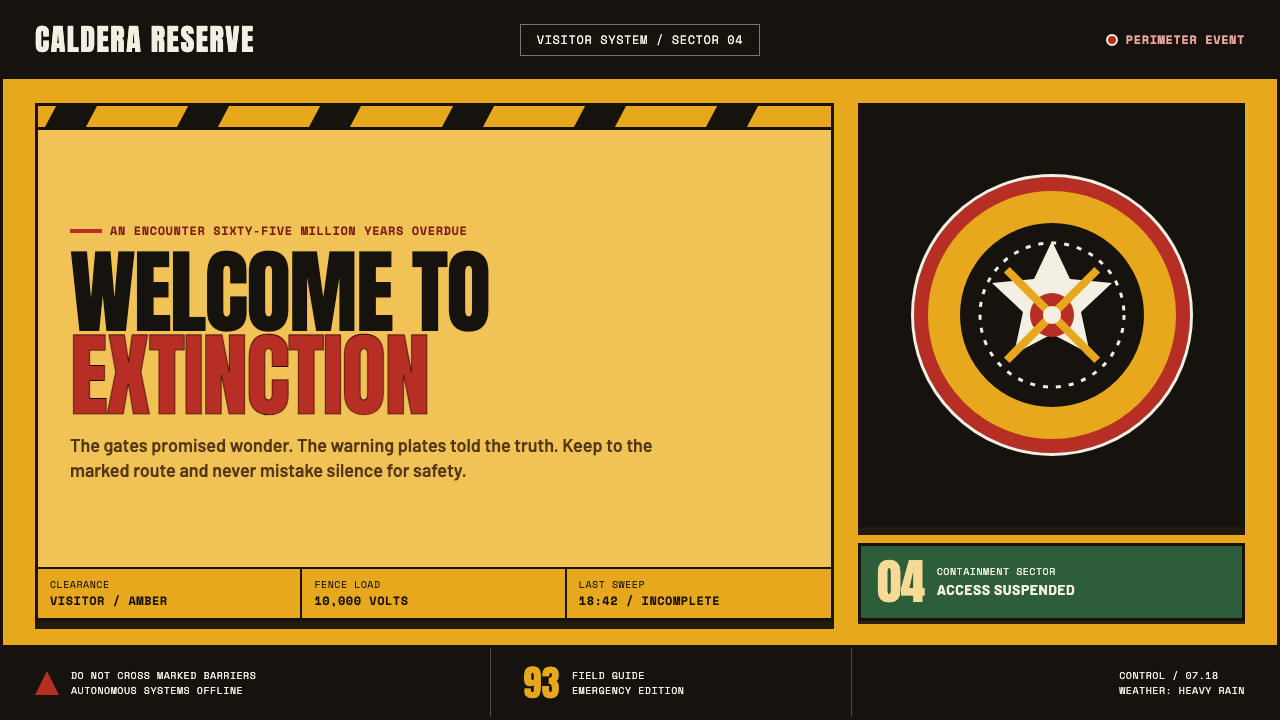 Jurassic Park (1993)Warm welcome, lethal edge. Amber plates, red rings and black chevrons turn aw…
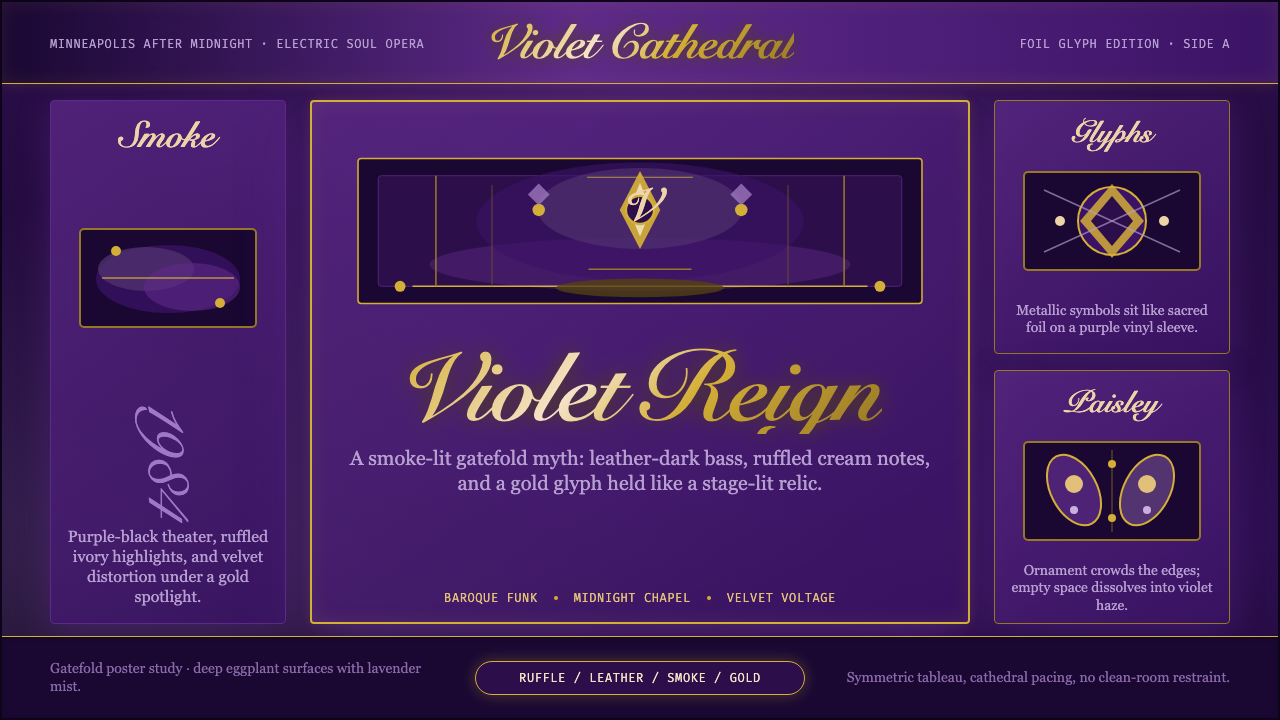 Prince — Purple Rain (1984)Decadence turns electric. Eggplant violet, gold foil glyphs, and smoky symmet…
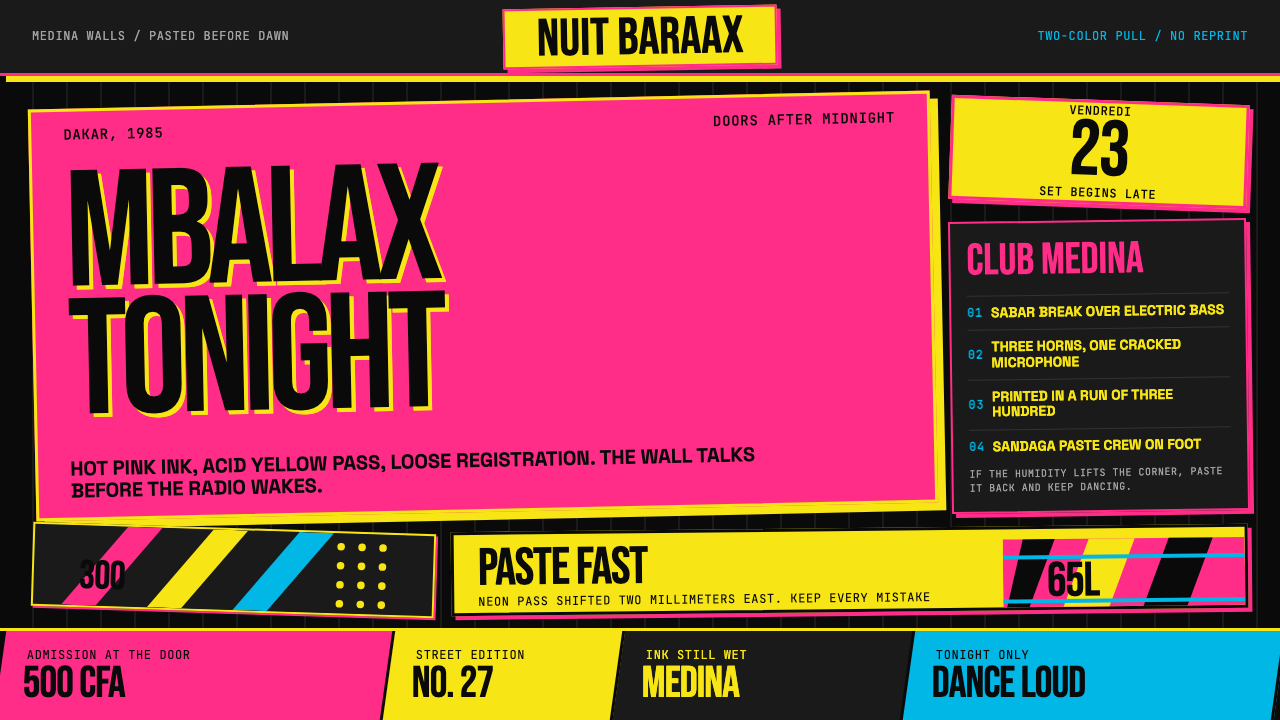 Senegalese Mbalax Poster (Dakar 1985)Street urgency, screen-printed loud. Hot pink and acid yellow drift over blac…
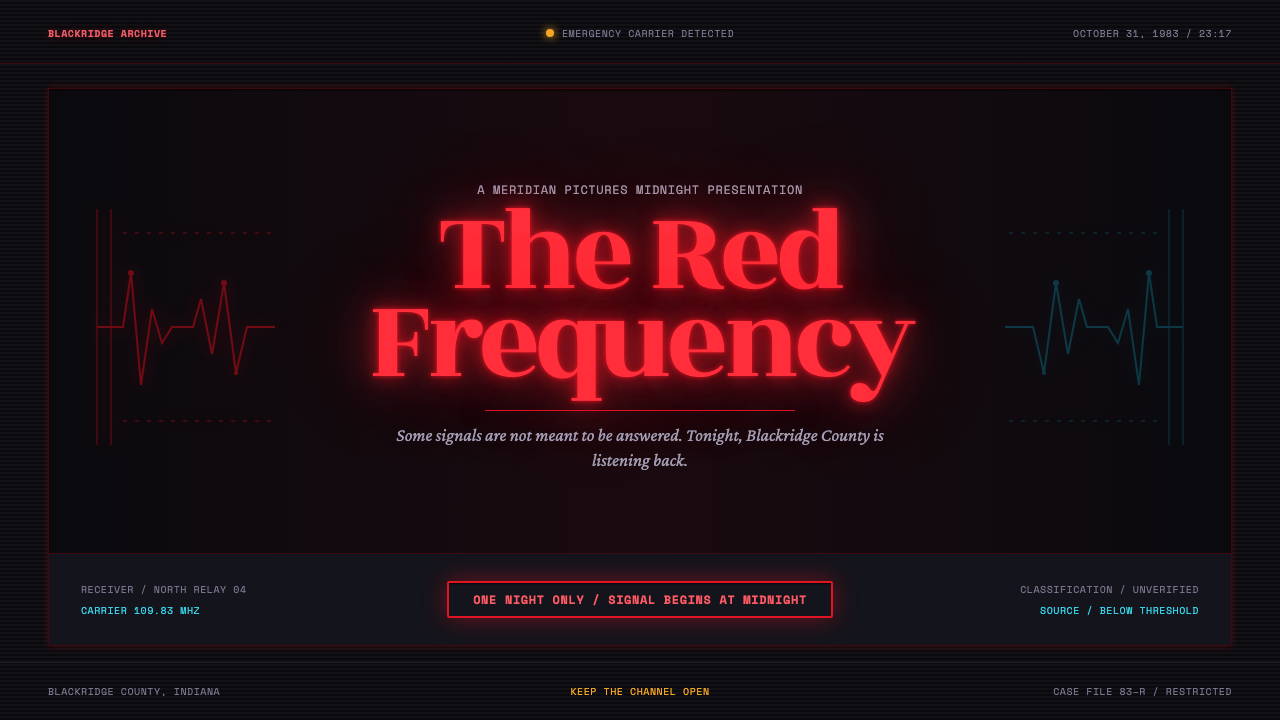 Stranger Things (1983)Red light breaks the void. A spurred serif blooms through VHS static and cold…
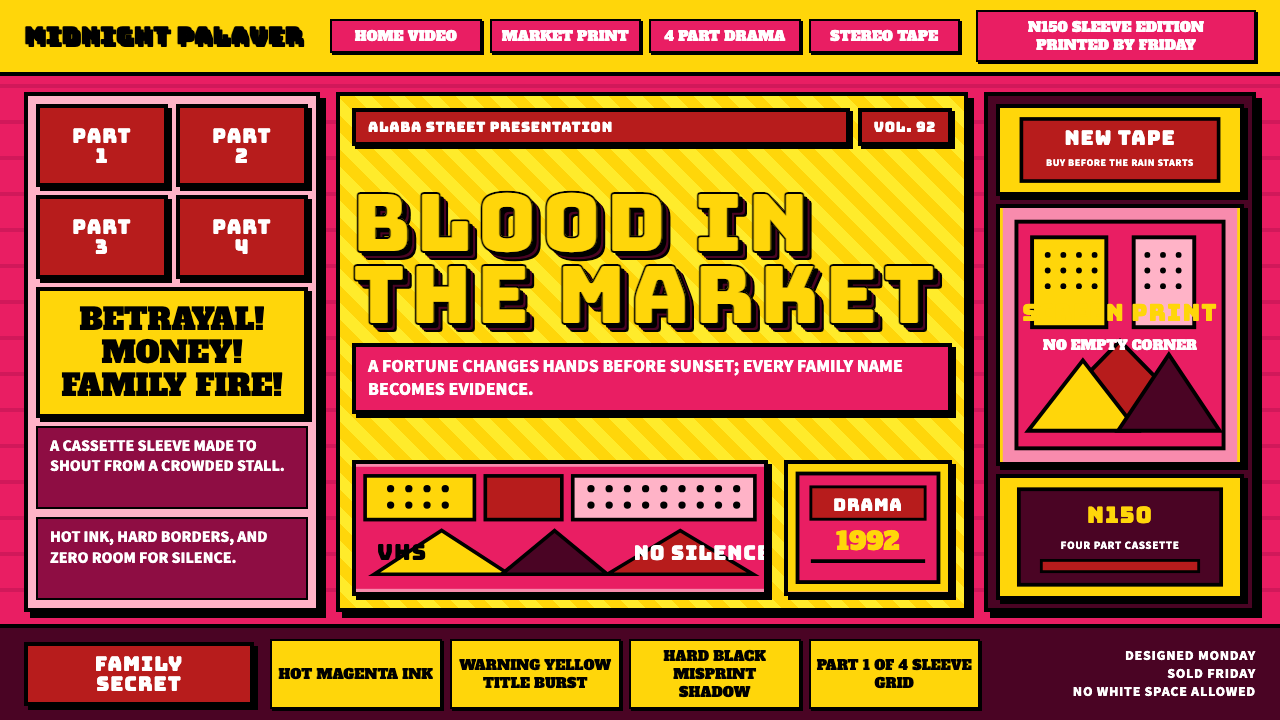 Nollywood VHS CoversEvery inch shouts. Magenta, warning yellow, hard shadows, and part stamps pac…
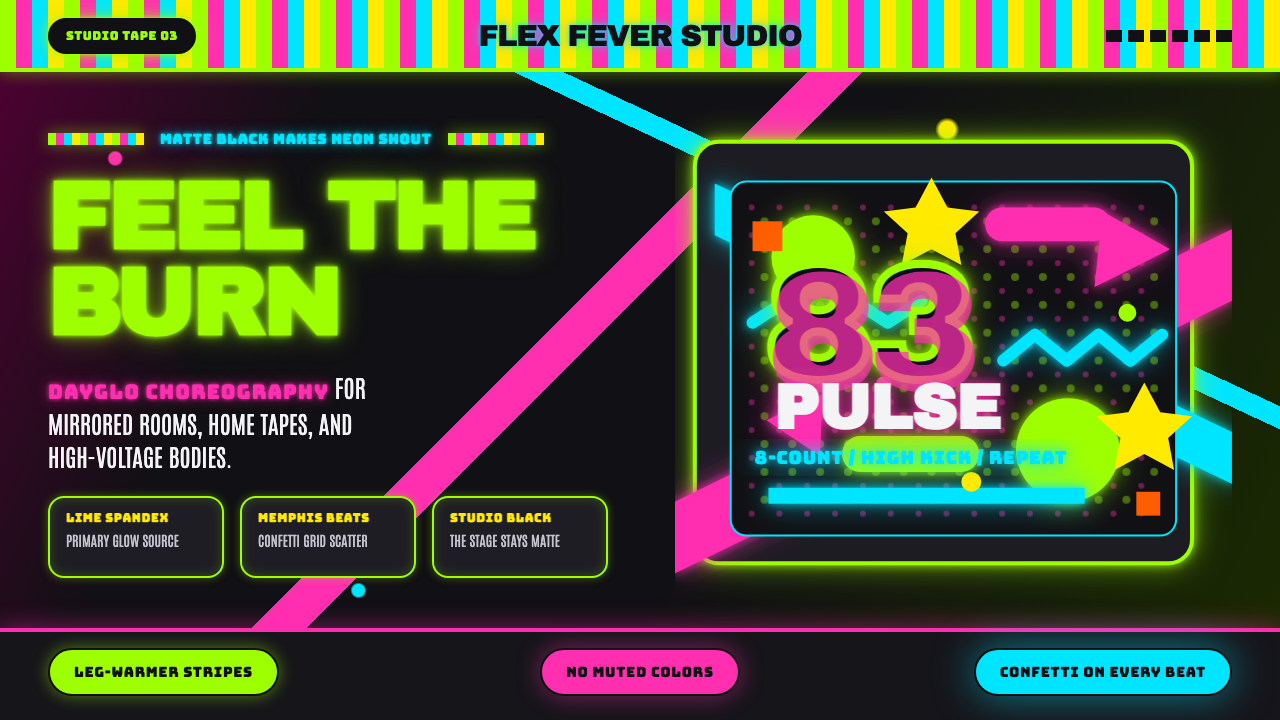 80s Aerobics Fluoro SpandexNeon refuses restraint. Lime spandex, pink-cyan confetti, and black-stage typ…