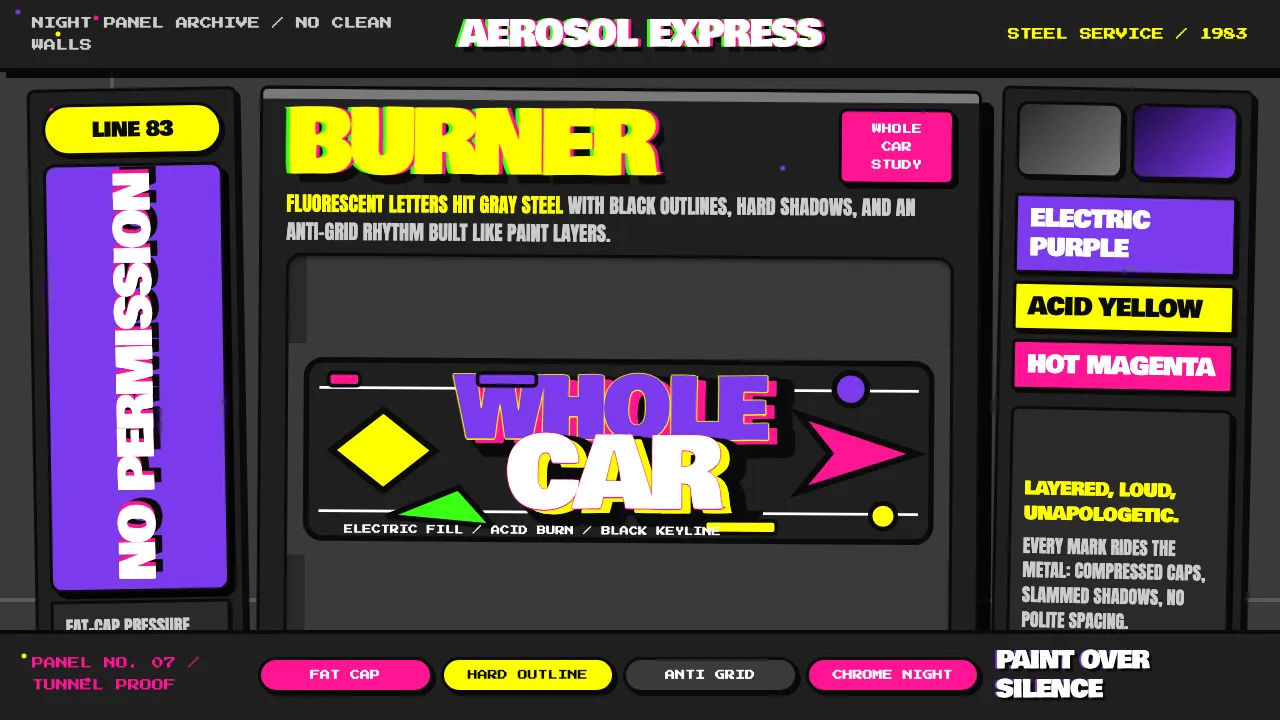
About NYC Subway Graffiti (1983)
NYC subway graffiti at its 1983 peak was the most explosive typographic movement America ever produced. Writers like DONDI, LEE Quiñones, and PHASE 2 turned MTA trains into rolling galleries — wildstyle bubble letters in fluorescent paint sprayed over industrial gray steel, exported worldwide through the Style Wars documentary and Subway Art photo book.
This design system captures that subway-car energy: electric purple fills, acid yellow burns, hot magenta flares, all outlined in pitch black against a subway-metal ground. Every surface feels like a bombed train panel — layered, loud, unapologetic.
- Origin
- New York City, United States
- Era
- 1971 (TAKI 183) → 1980s peak; 1983 Style Wars documentary year
- Key figures
- DONDI · LEE Quiñones · PHASE 2 · FUTURA 2000
- Movements
- NYC subway graffiti · hip-hop visual culture · wildstyle typography
NYC Subway Graffiti (1983) design spec
Colors
Typography
The other 11 sections — buttons, cards, spacing, motion, techniques and more — open once you unlock. Download the DESIGN.md or send it to your AI in one click. Unlock once, yours forever.
Sign up nowStyles similar to NYC Subway Graffiti (1983)
Also inspired by pop culture, with a close feel.
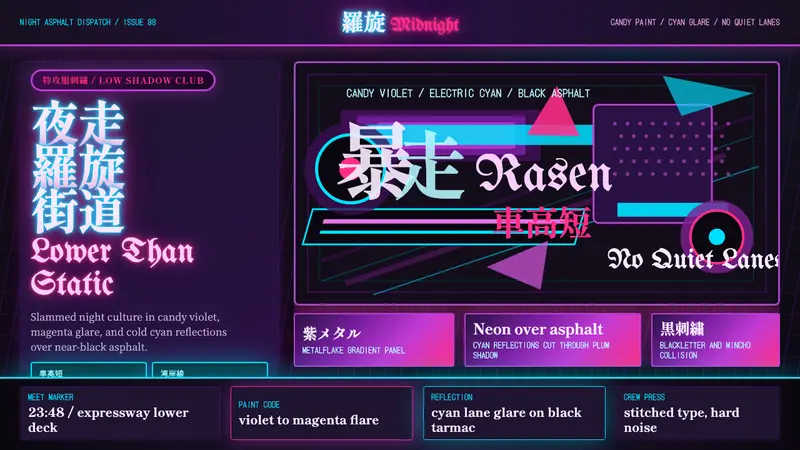 JDM BosozokuNight culture shouts. Candy violet, cyan neon, and stacked Mincho-blackletter fill asphalt.
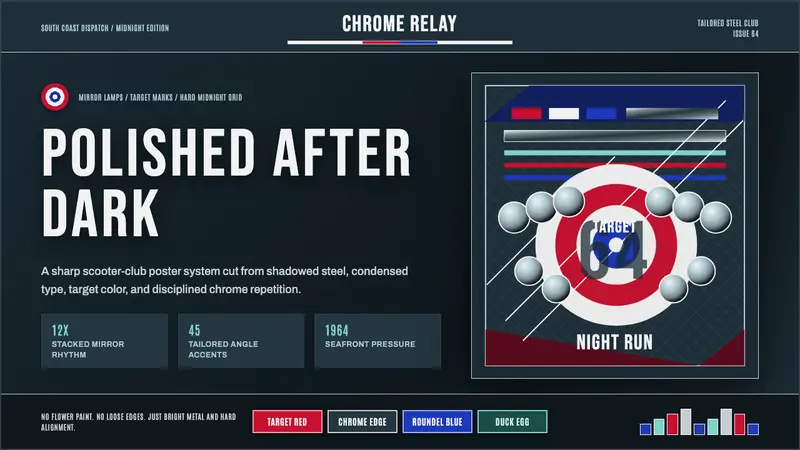 Mod Scooter ChromeSharp chrome discipline. Steel ground, roundel targets, condensed type, mirror-disc rhythm.
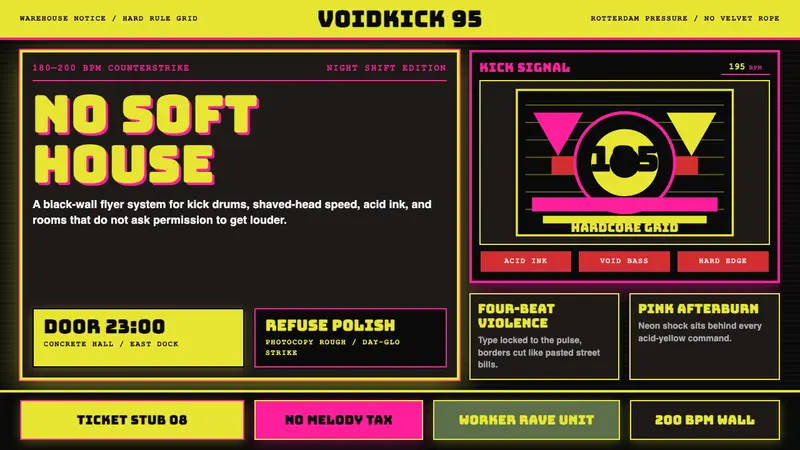 Rotterdam Gabber HardcoreHardcore refuses polish. Acid yellow, neon pink, black grid, and brutal Bungee type hit like flyers.
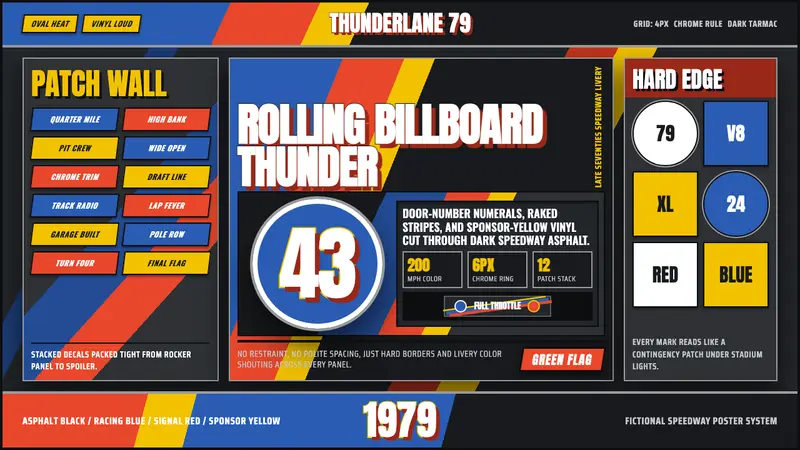 NASCAR Stock CarLoud as a rolling billboard. Blue, red, and sponsor yellow collide in a hard-grid livery.