What is Nubian House Blue (Aswan)?
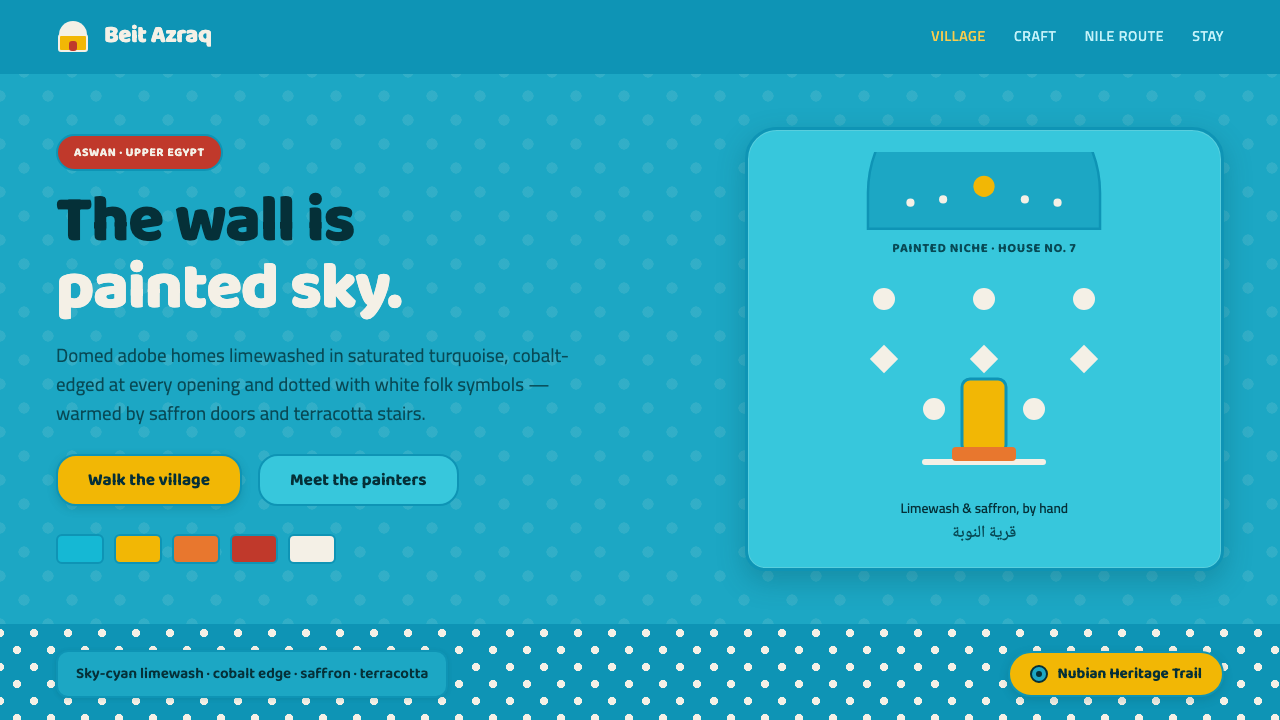
Nubian House Blue turns the wall into a sunlit canvas: sky-cyan limewash, cobalt outlines, white folk marks, and saffron doors made for welcome rather than restraint.
Nubian House Blue (Aswan) in brief
Nubian House Blue is a digital interpretation of the bright-painted domestic vernacular found in Nubian villages near Aswan in Upper Egypt. Its essential image is architectural rather than decorative: saturated sky-cyan and turquoise walls carry the composition, while openings are edged in cobalt and punctuated by warm saffron doors, terracotta stairs, and brick-red trim. The wall is not a neutral backdrop waiting to be filled. It is the visual field itself.
The style derives its character from hand-applied limewash and folk wall painting. White motifs of camels, palms, dots, and geometric bands sit directly on the colored ground, making the surface feel inhabited and handmade. These marks should read as painted signs rather than polished illustrations: friendly, slightly irregular, and clearly connected to the architecture around them.
The resulting mood is open, sunny, and communal. It avoids dark theatricality, pale cream restraint, and perfectly manufactured smoothness. Strong color is balanced by generous breathing room, rounded and approachable lettering, and details that feel placed by a human hand. A successful Nubian House Blue composition feels like a façade encountered in daylight: vivid from afar, warm when examined closely.
Where does Nubian House Blue (Aswan) come from?
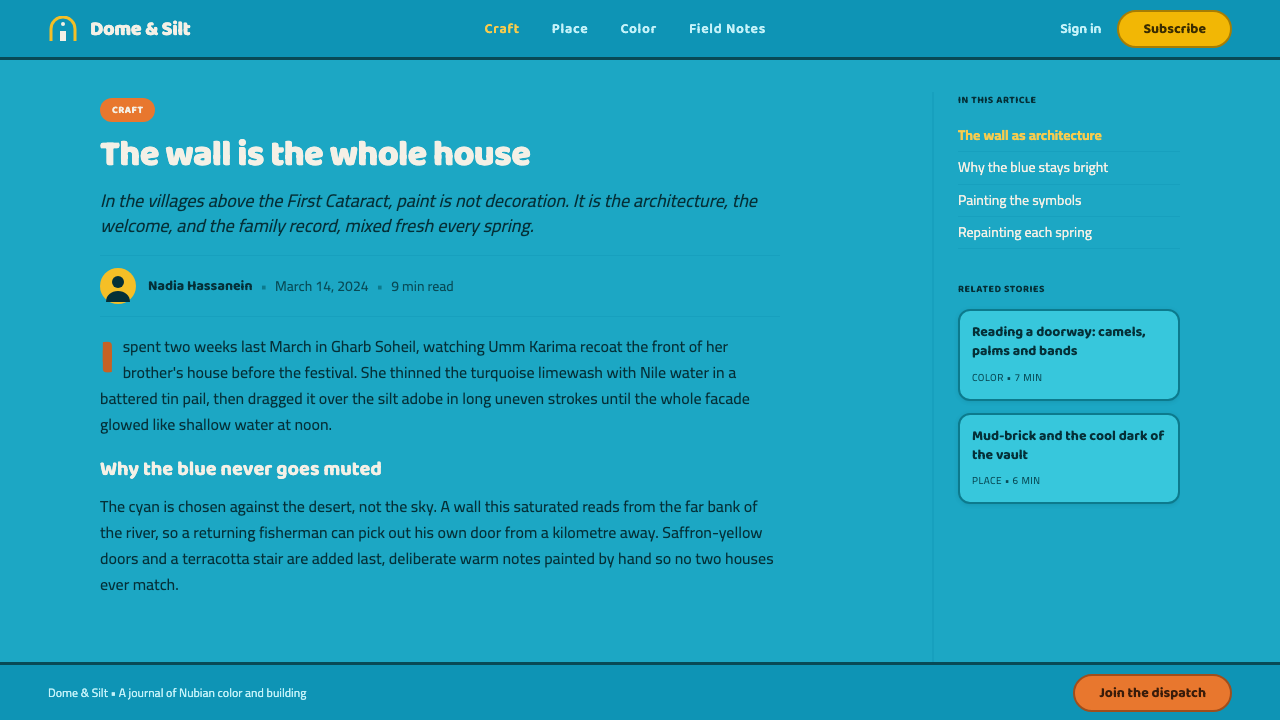
The source context is the bright-painted Nubian village vernacular near Aswan, associated here with the period from 1950 to 1990. Along the Nile in Upper Egypt, domed and vaulted mud-brick homes were limewashed in saturated sky-cyan and turquoise. Their color was inseparable from the building surface: a treatment of the exterior wall, not an applied graphic identity detached from place.
Openings supplied a second layer of structure. Doorways and windows were outlined in cobalt, creating clear edges against the bright limewash. Saffron doors, terracotta staircases, and brick-red trim introduced warmth without displacing the blue wall as the dominant field. This relationship between expansive cool color, dark framing, and warm interruption is the visual grammar the style carries forward.
Folk wall decoration gave that grammar its human scale. White symbols and bands appeared on the walls, including camels, palms, and geometric forms. Their importance lies not in dense pattern coverage but in their directness: each sign is legible against the colored surface and retains the character of a hand-painted gesture. Architecture and drawing occupy the same plane.
The key makers are collective rather than individual: Nubian householders, folk wall-painters, and vernacular adobe builders. That matters when adapting the style. It is not the signature of a single studio or a fixed historical poster language. It is a domestic visual practice shaped through painted walls, openings, steps, and familiar symbols, where brightness and irregularity belong to the construction itself.
What defines the Nubian House Blue (Aswan) look?
Wall as Ground
Sky-cyan and turquoise should occupy the largest visual field, as limewash occupies a façade. The background is active, cheerful, and sunlit rather than quiet or neutral. White remains a painted contrast and a source of air, not the default page color. The style loses its architectural conviction when bright blue is reduced to a small accent on an otherwise pale layout.
Cobalt Outlines
Cobalt defines openings, panels, image frames, and important boundaries. It should behave like a painted edge around a window: decisive, visible, and slightly more structural than ornamental. Use it to make the composition legible against the cyan field, not to trap every object inside a rigid box.
Warm Doorway Accents
Saffron, terracotta, and brick-red act as warm counterpoints. Their role is focal rather than atmospheric: a door, a stair, a call to action, or a selected state can carry the heat of the palette. The cool wall must remain dominant, otherwise the composition becomes a general multicolor scheme rather than a Nubian façade-inspired one.
White Folk Marks
Camels, palms, dots, and geometric bands are best treated as sparse painted marks. Their edges may be gently irregular, their spacing may breathe, and their scale may shift with the composition. They should enrich a wall-like field or mark a transition, never become a seamless decorative wallpaper that overwhelms text and function.
Hand-Painted Irregularity
The surface should retain a sense of hand application. Slight variation in marks, rounded corners, and non-mechanical placement make the system feel hospitable. This is not an excuse for disorder: align the information clearly, then let the color fields and folk details carry a controlled handmade quality.
Friendly Typography
Typography should be rounded, clear, and easy to approach. Strong headings can sit directly on the cyan ground, while supporting text benefits from calm, readable grouping and ample open space. The type should feel painted beside a doorway, not pressed into a luxury editorial system or an austere technical interface.
Who shaped Nubian House Blue (Aswan)?
Nubian householders are central to this visual tradition because the house wall is its primary medium. Their painted homes establish the style’s key relationship between limewashed cyan and turquoise surfaces, cobalt-edged openings, warm doors, and white folk marks. In a digital adaptation, their role reminds designers that the system should feel domestic, welcoming, and rooted in an inhabitable surface rather than merely colorful.
Folk wall-painters give the façades their direct symbolic language. Camels, palms, dots, and geometric bands do not function as detached ornament; they are visible marks placed on a living wall. Their contribution is the lesson of legibility with personality: signs can be bold and simple while still carrying the warmth, variation, and immediacy of the hand.
Vernacular adobe builders provide the architectural setting for the palette and decoration. Domed and vaulted mud-brick homes make the painted wall inseparable from volume, openings, and stairs. Their role prevents the style from becoming a flat color recipe: every outline, warm accent, and folk motif should still suggest a building surface with entrances, edges, and daily use.
How do you use Nubian House Blue (Aswan) today?
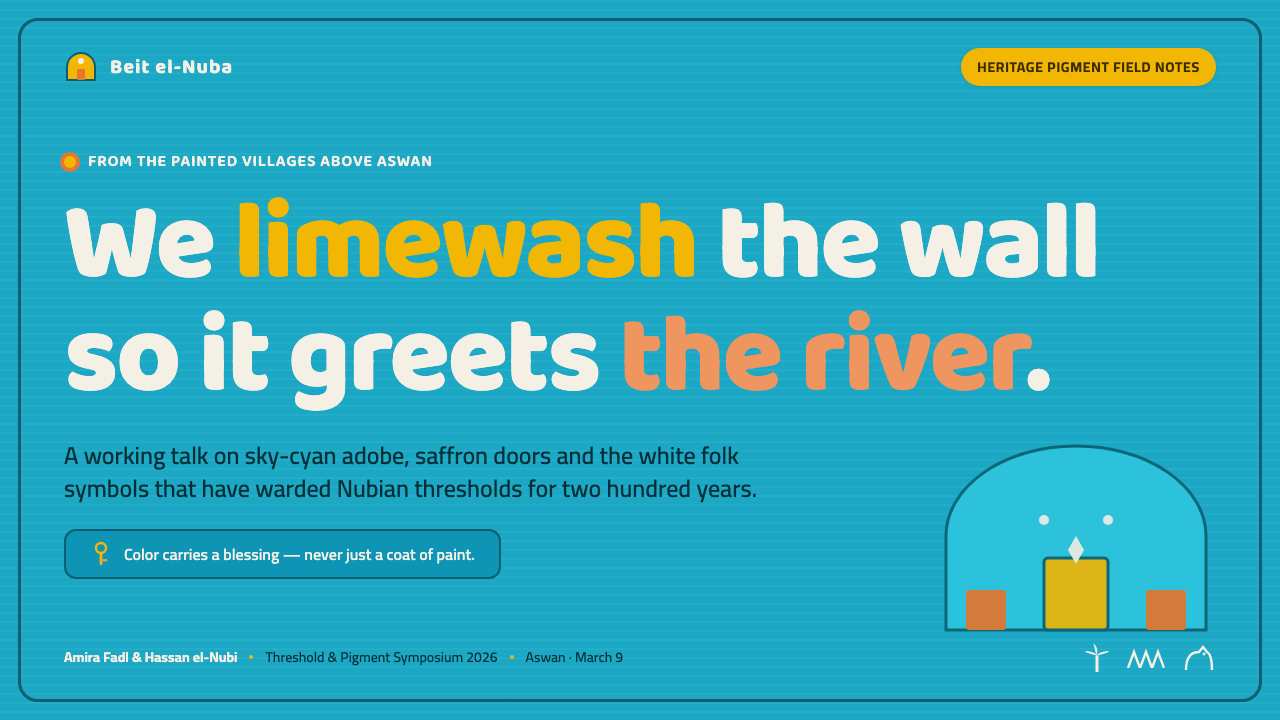
For presentation covers, let the cyan wall field establish the page immediately. Use a cobalt-edged arch, doorway, or panel to hold the title, then introduce one warm doorway accent and a restrained scattering of white marks. Content slides should become calm wall sections: clear title zones, friendly text blocks, and folk details pushed to margins so they frame rather than compete with the message. Data slides can use cobalt outlines for axes and containers, warm accents for the item that needs attention, and white motifs only as contextual punctuation.
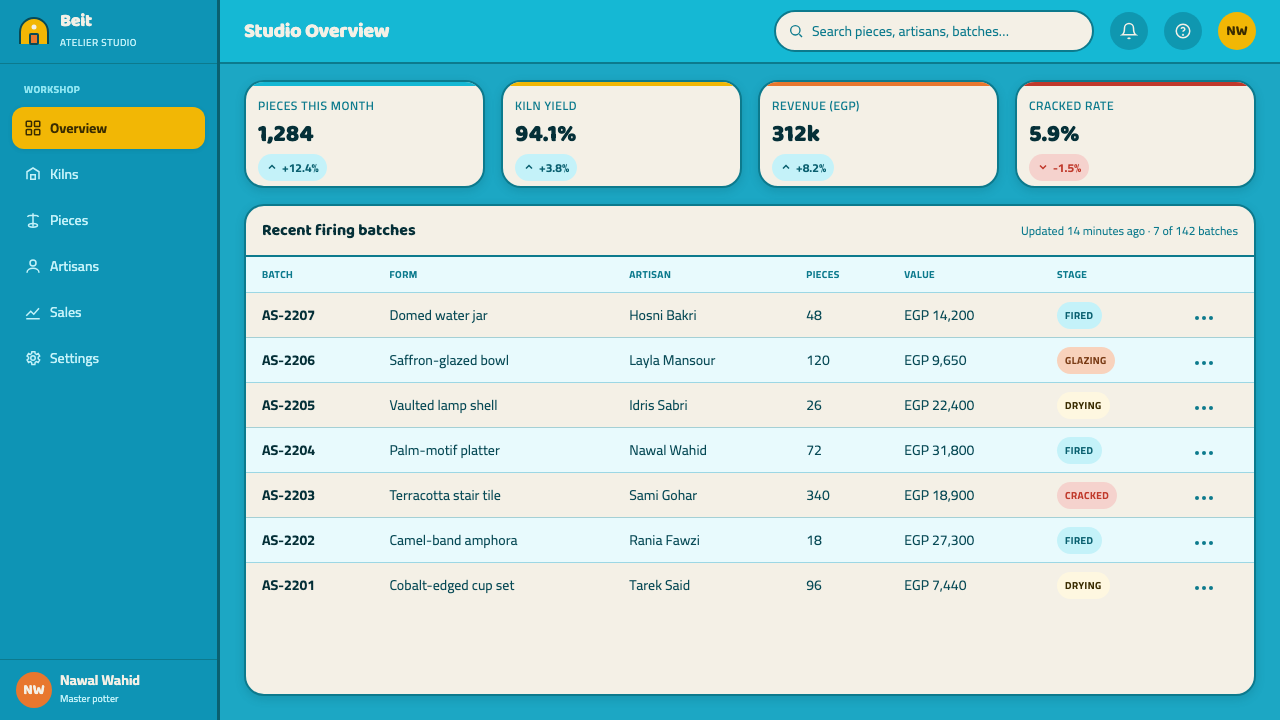
For web interfaces, Nubian House Blue works especially well for welcoming dashboards, guides, community spaces, and pricing pages that need clarity without corporate coldness. Treat major panels as painted architectural openings on a cyan ground. Cobalt can establish navigation, selected boundaries, and interactive structure; saffron can identify the primary action or preferred choice. Keep information groups spacious and make controls rounded and direct so the interface remains easy to read.
For editorial and marketing work, use the style to turn sections into a sequence of façades. A feature story can alternate expansive blue fields with white text areas, using a cobalt rule or arch-like frame to introduce each new idea. Campaign pages benefit from warm doors as visual invitations, while small white camel, palm, dot, or band motifs can anchor pull quotes, labels, and transitions. The effect should remain friendly and architectural, never exoticized into a dense ornamental costume.
The common mistake is to treat every available color and folk symbol as material for simultaneous decoration. That produces noise and erases the wall-first logic. Begin with a broad cyan or turquoise field, establish cobalt structure, select a limited warm focal point, and add white marks only where they make an area feel inhabited or guide attention. Avoid darkening the whole interface, replacing hand-painted irregularity with generic polish, or using motifs as meaningless background texture.
The style is most convincing when the product genuinely benefits from warmth, visibility, and a sense of place: cultural guides, travel stories, learning tools, local marketplaces, hospitality, and community services. It is less suited to contexts that require a neutral, severe, or deliberately anonymous tone. Before applying it, ask whether a bright painted wall and an inviting doorway strengthen the product’s promise; if they do not, borrowing the palette alone will not create a coherent experience.
Nubian House Blue (Aswan) — FAQ
Is Nubian House Blue simply a turquoise color palette?
No. Its logic comes from a painted house surface near Aswan: bright cyan or turquoise acting as the ground, cobalt clarifying openings, warm colors marking doorways and stairs, and white folk symbols giving the wall a human presence. Using blue without these relationships produces a bright interface, but not this architectural visual language.
Should every layout include camels and palms?
No. Camels, palms, dots, and geometric bands are a vocabulary, not a mandatory checklist. Use them where a wall-like area needs a gentle sign, a section needs a memorable transition, or a label benefits from hand-painted character. If the motif does not improve orientation or atmosphere, leave the cyan wall open.
Can the style work on a dark background?
A dark reinterpretation can borrow individual colors, but it moves away from the source material. Nubian House Blue is defined by bright limewashed walls that are never dark and never cream. For a faithful application, let cyan or turquoise remain the dominant field and use cobalt to define structure rather than turning the entire scene into a night-like surface.
How can a digital interface preserve the handmade feeling without becoming messy?
Keep functional information orderly, then introduce handmade variation selectively. Let navigation, text groups, and actions remain clear; reserve irregularity for painted outlines, white folk marks, rounded details, and the occasional warm accent. The reference is a lived-in façade, not uncontrolled drawing. Structure provides confidence, while variation provides welcome.
Related design styles
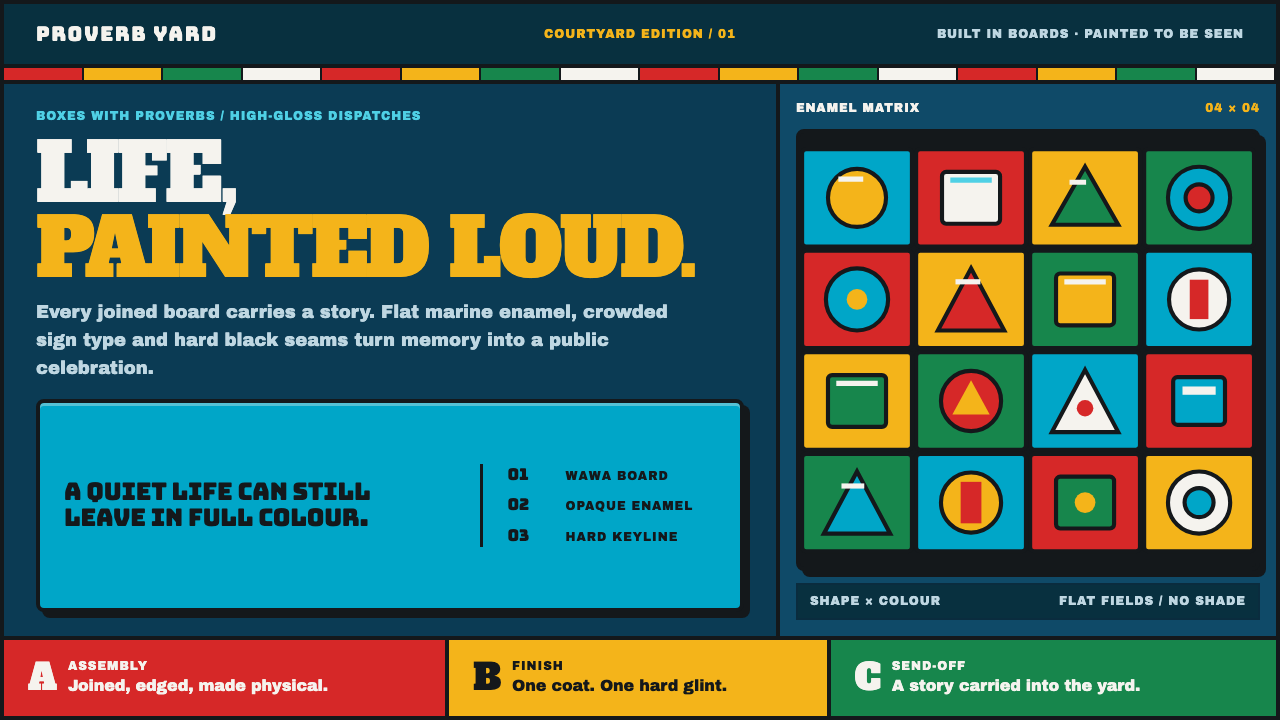 Ga Fantasy CoffinMemory refuses to whisper. Marine enamel, fat sign type and hard black seams…
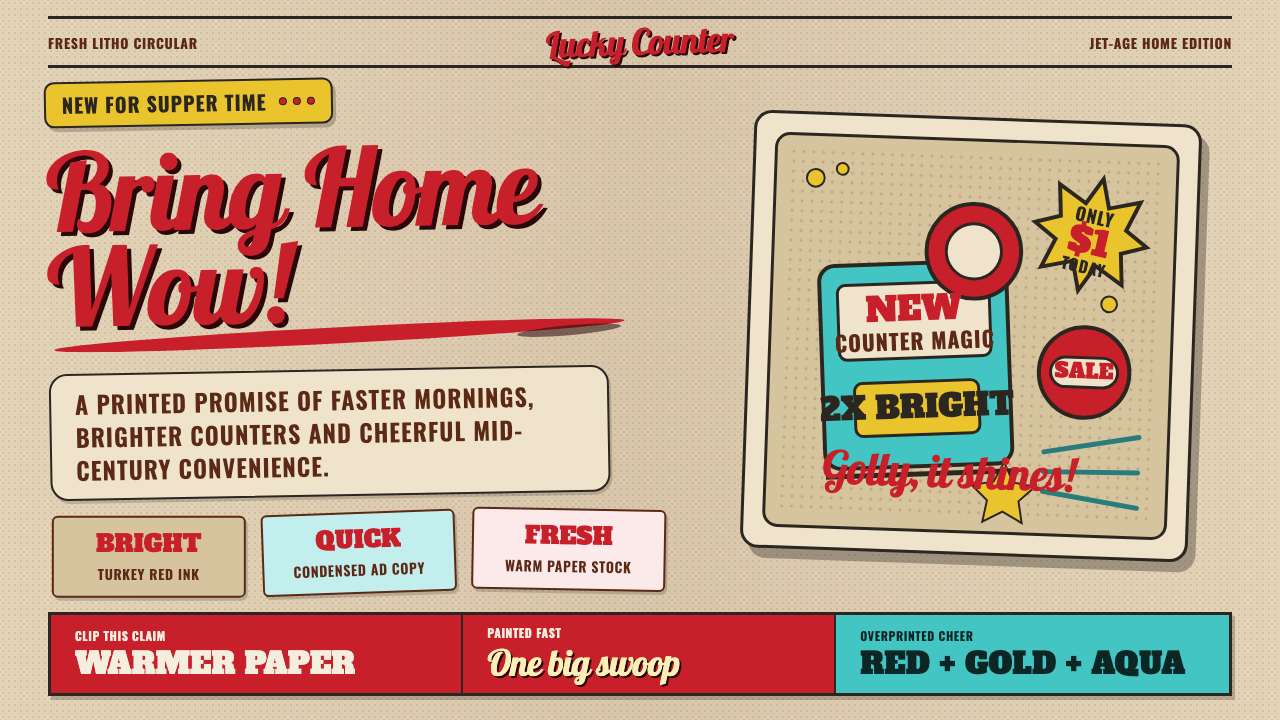 1950s Brush Script AdSells tomorrow in one swoop. Turkey red script, tan paper, starbursts, and ha…
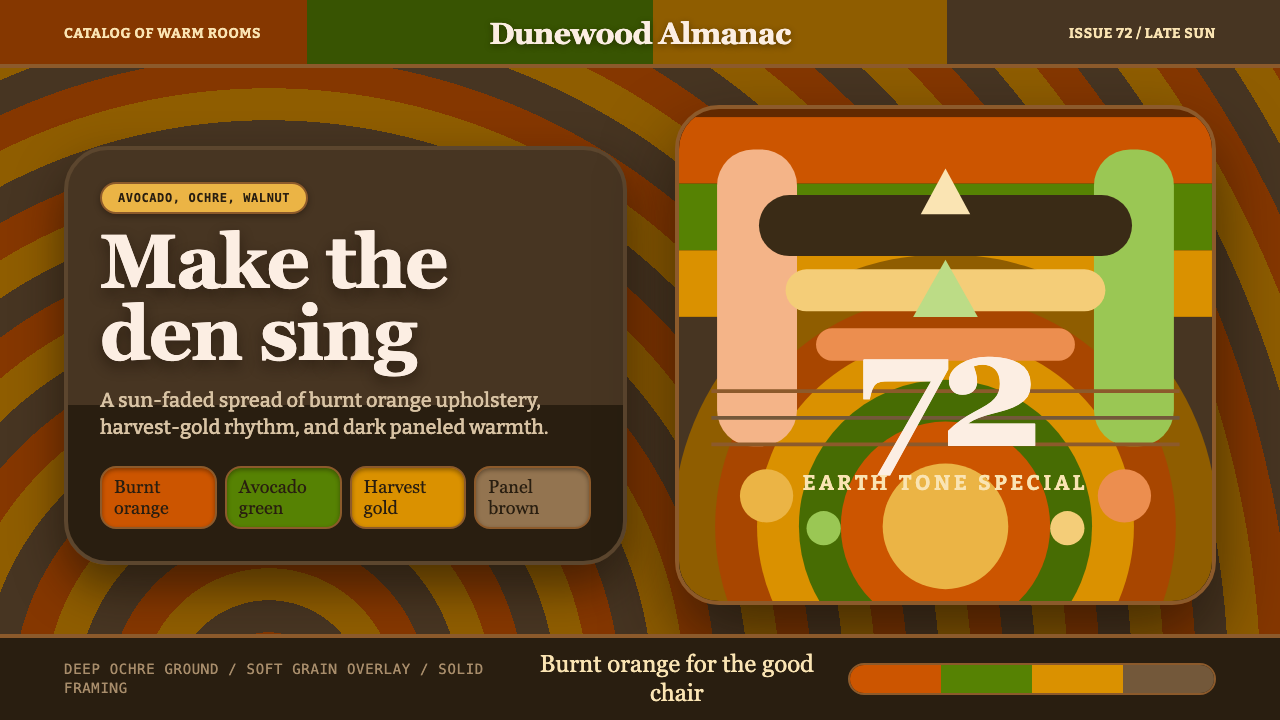 1970s Earth TonesWarm maximalism stays muddy. Bulbous slabs, avocado bands, and harvest-gold r…
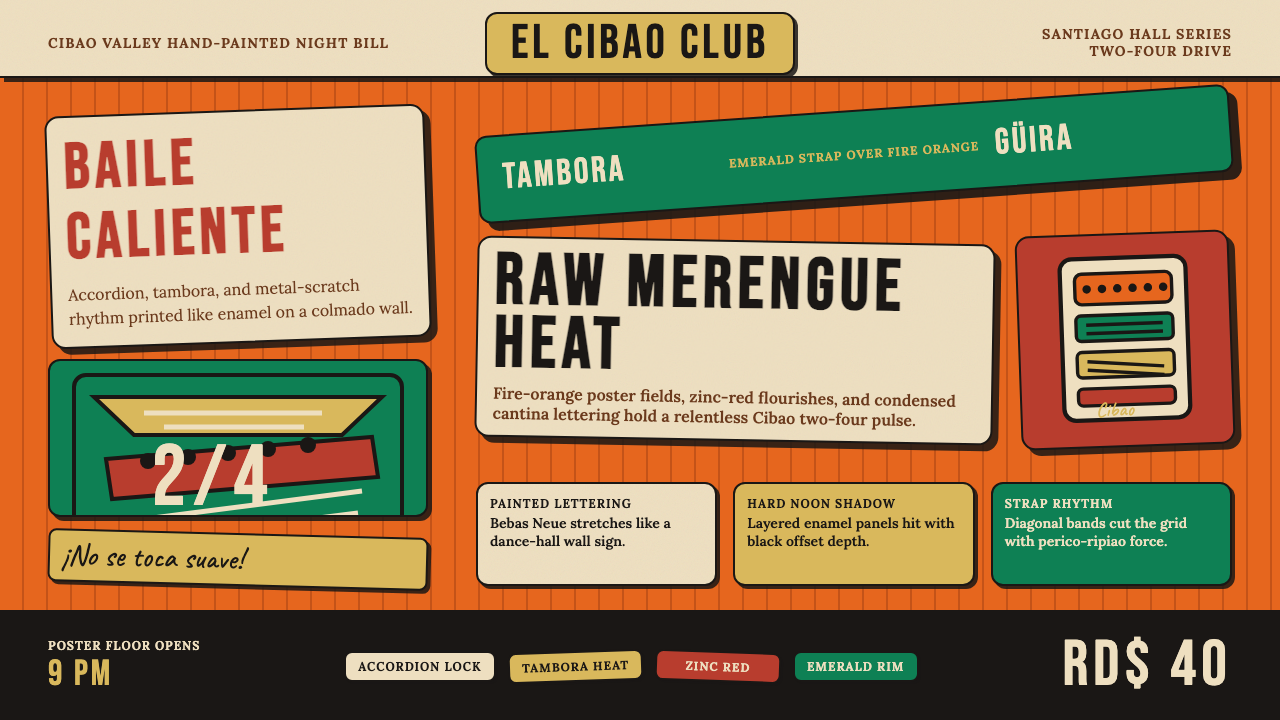 Dominican Merengue Perico RipiaoMaximalism keeps time. Fire-orange fields, Bebas Neue, and diagonal emerald s…
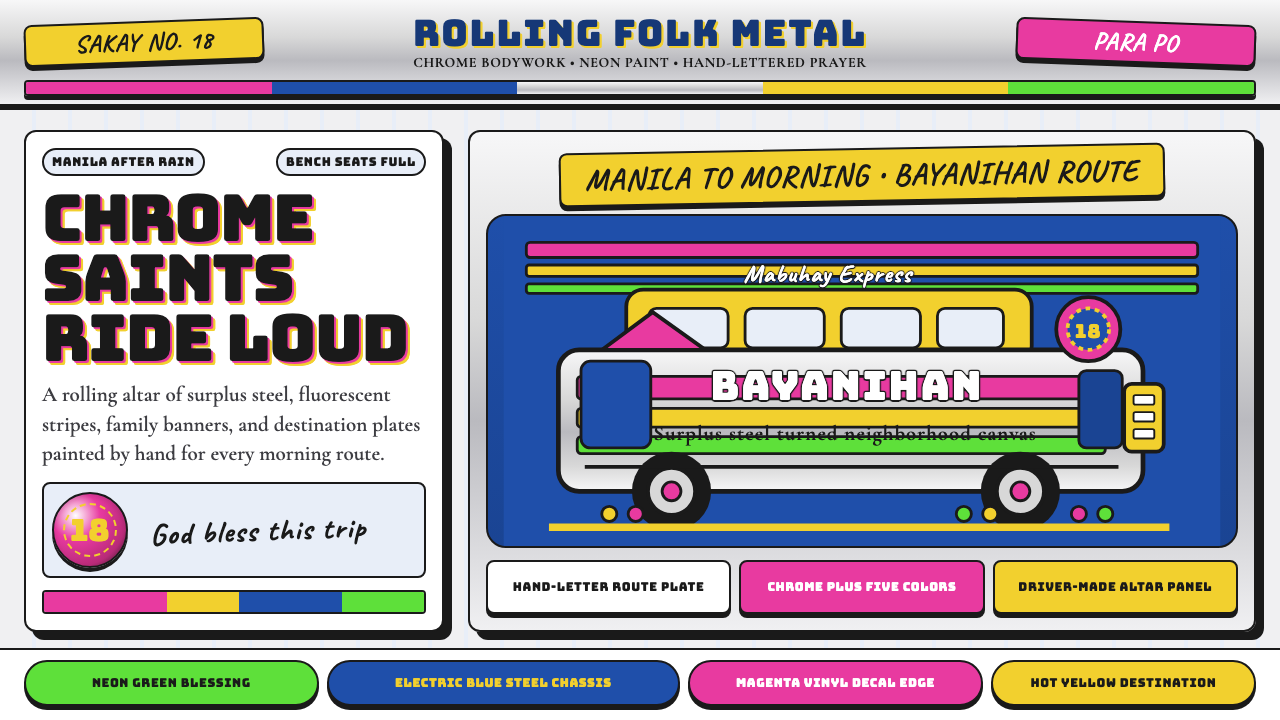 Filipino JeepneyLoud steel, made personal. Chrome gradients carry neon stripes and hand-lette…
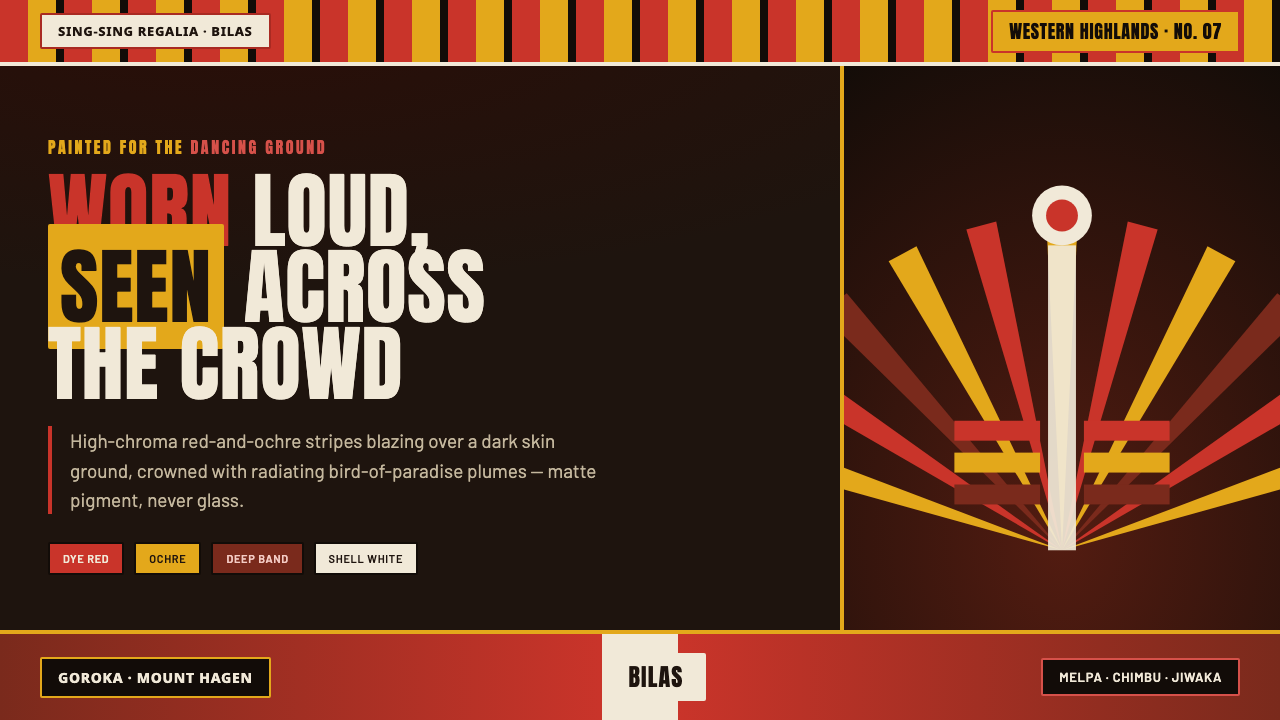 PNG Highlands BilasPainted to be seen across the dancing ground. Red-and-ochre stripes blaze on…