What is Nickelodeon Orange Splat (1984)?
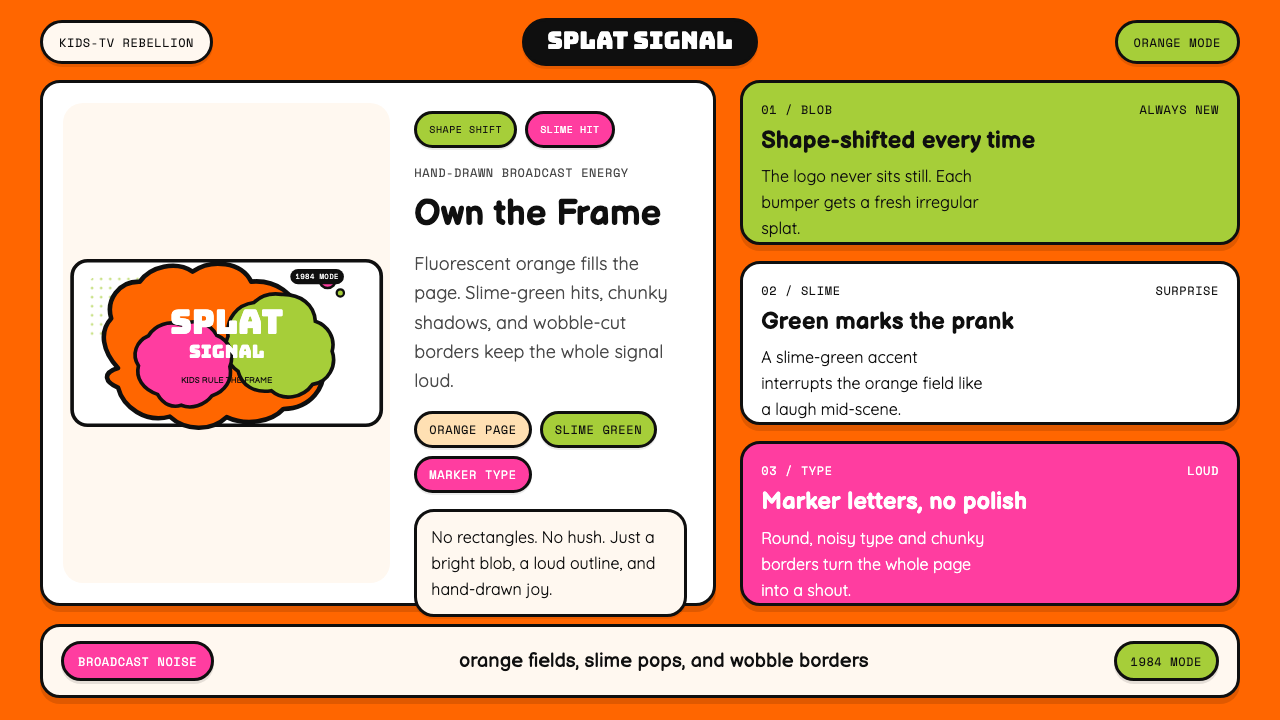
In 1984, a hand-drawn orange blob rewrote the rules of broadcast identity — proving that kids' television could be as visually anarchic as the audience it served.
Nickelodeon Orange Splat (1984) in brief
Nickelodeon Orange Splat is the visual identity system built around the irregular, hand-drawn orange blob that Nickelodeon adopted in 1984. Unlike conventional broadcast logos — which relied on clean geometric shapes and neutral typefaces to project institutional authority — the splat was deliberately imperfect: its outline wobbled, its interior filled with an almost luminescent orange, and its form changed from bumper to bumper without ever settling into a fixed silhouette. This shapeshifting quality was not a bug; it was the entire point.
The system that grew around the splat extended its anti-corporate logic into every element of Nickelodeon's on-air and print presence. Fluorescent orange dominated as the primary field color, supported by a slime-green that appeared in accents, pops, and surprise moments. Type was chunky, hand-inflected, and sometimes deliberately off-axis — the visual equivalent of a kid writing their own name in Sharpie on their lunchbox. Borders wobbled. Shadows were thick, cartoon-style, and offset at exaggerated angles. The whole system read like a declaration: this channel belongs to children, not to adults.
What made the identity culturally significant was its refusal to condescend. Most children's media of the era used saccharine pastels and overly rounded letterforms that signaled 'safe for kids' by draining out anything edgy or expressive. Nickelodeon Orange Splat went the opposite direction — it trusted that children had taste, energy, and a genuine appetite for visual noise. The result was a design system that felt genuinely irreverent, and that irreverence became a core brand promise sustained for over a decade.

Where does Nickelodeon Orange Splat (1984) come from?
Nickelodeon launched in 1979 as a channel created by and for children, a mandate that came with an uncomfortable institutional problem: how do you build a brand identity that children actually trust and claim as their own, rather than one designed by adults who imagine what children want? For the first few years, the channel's visual language was tentative — it used conventional broadcast graphics that looked indistinguishable from any other cable network. By 1983, Nickelodeon's parent company, Viacom's Group W Cable, was losing confidence in the channel's direction.
In 1984, Fred Seibert and Alan Goodman — creative directors who had already reimagined MTV's identity with its famous logo mutations — were brought in to overhaul Nickelodeon's on-air look. Working with designer Tom Pomposello, they produced the identity that would define the channel for a generation. The central insight was borrowed from MTV's own logic: a logo that changes shape signals that the channel itself is alive, responsive, and unpredictable. For Nickelodeon, that insight was pushed further — where MTV's logo mutations were cool and slightly menacing, Nick's splat was deliberately messy, warm, and joyful. Geraldine Laybourne, who was shaping the channel's programming philosophy at the same time, ensured that the visual identity matched the editorial commitment: programming that respected children's intelligence rather than talking down to them.
The orange color itself carried deliberate cultural weight. Orange was not a color that corporate America used in the 1980s for serious institutional communication — it was too loud, too warm, too associated with Halloween and construction cones rather than trustworthy brands. That was precisely the point. By claiming fluorescent orange as its primary brand color, Nickelodeon was visually announcing that it did not want to be taken seriously in the way that adult institutions wanted to be taken seriously. The color read as a provocation, and children understood it intuitively as a signal that the channel was theirs.
The slime-green accent color arrived not purely from the design system but from the programming itself. Nickelodeon had introduced green slime as a recurring physical comedy element — it appeared on Double Dare, You Can't Do That on Television, and other flagship shows as a symbol of gleeful chaos. The design system absorbed slime-green from the programming, creating a feedback loop in which the color of the identity and the color of the content reinforced each other. By the peak years of 1986 to 1998, the orange-and-green combination was so deeply embedded in children's cultural consciousness that it functioned almost as a sensory shortcut: those two colors together meant Nickelodeon, and Nickelodeon meant freedom from adult seriousness. The 2018–2024 revival of the classic splat identity drew on exactly this cultural memory, deploying the original palette and wobbly geometry to trigger nostalgia in audiences who had grown up under that orange glow.
What defines the Nickelodeon Orange Splat (1984) look?
Fluorescent Orange Field
The dominant color is an intense, warm orange that pushes toward the fluorescent end of the spectrum without quite crossing into neon. It is used as a full-bleed field rather than as an accent, which means it never recedes into the background — it is always the loudest thing in the room. This is the opposite of how most corporate design systems use color: as a supporting tint rather than the primary voice. In the Nickelodeon system, orange is the voice.
Slime-Green Accent
The secondary color is a yellow-leaning green — the exact shade associated with the physical slime that appeared throughout Nickelodeon's programming — used to signal surprise, emphasis, or delight. It appears as text highlights, border pops, and background panels in a supporting role, but it is never subtle. When slime-green appears, it is meant to be noticed. The color combination of fluorescent orange and slime-green was essentially unprecedented in broadcast design before Nickelodeon made it canonical.
Wobbly, Hand-Drawn Geometry
Where most identity systems prize perfect geometric precision, the splat and the broader Nickelodeon visual system prize deliberate imprecision. Borders are not ruled straight lines; they tremble. The splat itself has no fixed outline — its silhouette varied across every application. Shapes that might be ovals or rectangles have slightly uneven sides. This wobble is not accidental or a mark of low production quality; it requires careful craft to look consistently inconsistent. The effect communicates spontaneity and child-made authenticity.
Cartoon Shadows and Outlines
Shadows in the Nickelodeon system are thick, hard-edged, and offset at exaggerated angles — closer to cartoon cel-animation conventions than to any realistic lighting simulation. They give lettering and graphic elements a chunky, three-dimensional quality without any actual depth or gradation. Black outlines often trace the edges of colored elements, reinforcing the cartoon-panel quality. The combination of flat fill, thick outline, and hard shadow produces an effect that reads as playful and confident rather than refined.
Sharpie-Style Typography
The typographic voice of the system favors thick, chunky letterforms with an informal, hand-drawn quality — the visual equivalent of a child writing with a broad-tipped marker. Letters may be slightly uneven in weight, compressed, or stretched. All-caps settings are common, and characters are sometimes tilted or playfully misaligned. The typographic goal is legibility with personality rather than legibility with neutrality — the type should feel like it is being shouted in a good-natured way.
Density and Visual Noise
While restrained design traditions use negative space as a primary compositional tool, the Nickelodeon system treats density as a virtue. Compositions tend toward full, layered, and busy — backgrounds are filled with color, foregrounds carry type and graphic elements simultaneously, and decorative details like starbursts, dots, and wavy lines occupy spaces that a more austere system would leave empty. This density is calibrated to the attention economy of children's programming, where visual richness signals excitement and rewards sustained looking.
Shapeshifting Brand Form
Perhaps the most unusual characteristic of the Nickelodeon identity system is that its central mark — the splat — has no fixed form. Where most brand standards manuals define a logo as an exact, invariant shape, the splat was intentionally variable. Different applications, different bumpers, different printed materials all showed a slightly different blob. The brand was unified by color, energy, and attitude rather than by geometric consistency. This approach was radical in 1984 and remains unusual even by contemporary standards.

Who shaped Nickelodeon Orange Splat (1984)?
Seibert was the creative force behind both the MTV and Nickelodeon identity overhauls of the early 1980s. His key insight — that a logo could be a mutable, living thing rather than a fixed mark — was first applied at MTV and then pushed further at Nickelodeon, where the splat changed shape with every use. Seibert later co-founded Frederator Studios, continuing to work at the intersection of animation and broadcast design, and his work on the Nickelodeon identity remains one of the most influential acts of brand thinking in American television history.
Pomposello was the designer who gave the splat its physical form, working with Seibert and Goodman to translate the strategic brief — a logo that belongs to kids, not adults — into a specific visual language. The technical challenge of the splat was producing something that looked casually hand-drawn while still functioning as a legible, reproducible brand mark across television, print, and merchandise. Pomposello's ability to calibrate the wobble — irregular enough to feel spontaneous, consistent enough to be recognizable — was central to the identity's success.
Goodman partnered with Seibert at what would become Fred/Alan Inc., the creative consultancy that handled both the MTV and Nickelodeon identity projects. His contribution was primarily strategic: defining what kind of channel Nickelodeon should be communicating that it was, and what visual signals would most effectively reach a child audience that had been underestimated by broadcast television. The insistence that the identity should feel genuinely anarchic — not adult-designed fake-anarchy — was central to Goodman's framing of the brief.
Laybourne was the programming executive who defined Nickelodeon's editorial philosophy during its most formative years. While not a designer, her insistence that Nickelodeon's content should treat children as intelligent, capable people rather than passive consumers directly shaped the brief that Seibert and Goodman received. The visual identity and the programming philosophy were developed in parallel, and Laybourne's influence ensured they reflected the same value system: irreverence, trust, and the conviction that children's culture deserved to be taken seriously on its own terms.
How do you use Nickelodeon Orange Splat (1984) today?
Nickelodeon Orange Splat is a deliberately loud, high-energy design system, and applying it well requires understanding that its loudness is structural, not decorative. The system is built for contexts where enthusiasm, playfulness, and visual confidence are genuine values — children's educational platforms, youth-oriented events, gaming and entertainment brands, and any product that needs to communicate that it is on the user's side rather than performing seriousness at them. Reaching for this system in a context that actually calls for calm authority — a financial dashboard, a medical tool, a legal platform — will produce a mismatch between visual promise and user expectation that no amount of execution quality can fix.
For presentation slides, the system works best when it commits fully to its energy. A cover slide built in this style should use fluorescent orange as the primary field, with the title treated in thick, informal lettering at large scale. Wobbly border elements and a splash of slime-green as a secondary accent — used sparingly, as a pop rather than a second dominant field — will read as purposeful rather than cluttered. Content slides should carry the typographic boldness of the system without trying to fit as many elements as possible; the style's density reads well in motion or on screen but can feel overwhelming in static multi-column layouts. Data slides benefit from treating charts and graphs as cartoon objects — bold outlines, flat fills in the brand palette, exaggerated label sizes — rather than defaulting to the thin-line, muted-color conventions of business charting software.
For web interfaces and dashboards, the system is best deployed in contexts aimed at younger audiences or where the product personality is explicitly playful. A youth-facing gaming dashboard or a children's learning platform could use the style's full vocabulary: orange hero sections, slime-green interactive states, chunky card components with hard offset shadows and visible borders. For a general consumer product that wants energy without the full commitment, selective use of the orange-and-green palette with more neutral typography and tighter geometry can borrow the system's vitality without its maximum intensity. Pricing pages and feature showcases can use alternating orange and white sections to create rhythm, with slime-green reserved for the highlighted tier or the primary call-to-action.
In editorial and marketing contexts, the system's poster-like boldness supports strong visual hierarchy. A campaign using this style might lead with a large-scale type treatment on a full-bleed orange background, with supporting imagery that has been given thick outlines and cartoon-flat color treatment. Marketing emails and social cards built in this system perform well when the composition is kept simple — one big graphic idea per unit, with type large enough to be the dominant visual element. The style does not support nuance or subtext well; it is built for direct, legible, enthusiastic communication.
A common mistake when applying this system is treating orange as one color among several in an otherwise neutral layout, rather than as the dominant field. The system only works when orange takes over; a button or heading in orange on a white background with conventional grey text around it will look like a broken palette, not a deliberate design system. A second frequent mistake is using the wobbly, irregular elements as purely decorative detail while keeping the rest of the layout conventional — the wobble needs to propagate through borders, type treatment, and graphic elements consistently to read as a system rather than ornamentation. The third mistake is visual overload: the system can tolerate density, but only when every element at every density level has clear purpose. Adding multiple competing focal points, several competing accent colors, and busy background patterns simultaneously will collapse into chaos rather than productive noise.

Nickelodeon Orange Splat (1984) — FAQ
Is this system appropriate for adult audiences, or is it strictly for children's products?
The Nickelodeon system was designed for children, but its vocabulary has migrated into adult contexts where youthful energy and anti-corporate irreverence are desired values — streetwear branding, music festival identity, gaming platforms, and certain kinds of consumer technology. The key question is whether the product's value proposition aligns with what the style communicates: enthusiasm, playfulness, and the rejection of institutional gravity. If those are genuine product values, adult audiences will read the style as confident and deliberate. If they are not, the style will read as infantilizing or unserious.
How do you use slime-green without the composition looking accidental?
Slime-green functions as a signal color in the Nickelodeon system — it marks the moments of surprise, emphasis, or delight. Treat it as a pop rather than a field: it should appear in a limited number of locations per composition, used to highlight specific elements rather than to fill background areas. A useful rule is to decide in advance what slime-green means in your layout — it might mark the most important number in a data display, or the primary call-to-action, or a key illustrative element — and use it consistently for that purpose throughout the design. When slime-green appears everywhere, it stops being a signal and starts being wallpaper.
Can the wobbly border style work in a digital product, or does it only suit print and broadcast?
The wobbly border style works in digital products, but it requires different implementation thinking than print. In broadcast, the wobble was often achieved through animation — the border actually trembled on screen, reinforcing the hand-drawn quality. In static digital UI, a border that looks hand-drawn needs to be executed carefully to avoid looking like a rendering artifact or an error. The approach that works best is treating the irregular shapes as intentional graphic elements — defined, consistent within a session of the design, and clearly belonging to a system — rather than as truly random imperfection. Illustrated border assets used consistently across components will read as a design choice rather than a mistake.
What is the difference between Nickelodeon Orange Splat and other retro-kids styles like Lisa Frank or Garfield?
The key distinction is structural versus illustrative. Nickelodeon Orange Splat is primarily an identity system built around color, form, and typography — it works without any characters or illustrations, because its visual energy comes from the palette, the irregular shapes, and the typographic treatment. Lisa Frank's aesthetic is almost entirely illustration-driven: the palette and the sparkle effects are inseparable from specific character imagery. Garfield's visual language is tied to a single licensed character. The Nickelodeon system is more versatile because it is abstract enough to be adapted to new content without requiring its iconic characters. Its wobble and orange are the characters.
Why did the 2018–2024 revival resonate so strongly, and what does that say about how to use nostalgia in design?
The revival worked because it was referential rather than reproductive. Rather than simply reissuing the 1984 identity unchanged, the revival used the original palette, the splat form, and the wobbly geometry as a set of signals that activated cultural memory without trying to pretend that thirty years had not passed. Adults who had grown up with Nickelodeon recognized the system immediately and felt the emotional resonance of childhood ownership — this was our channel. The lesson for using nostalgia in design more broadly is that the most effective approach is to identify the specific visual elements that carry emotional memory — often a color combination, a typographic voice, or a characteristic shape — and use those precisely and consistently, rather than trying to recreate an entire era. Nostalgia works through triggers, not through total reconstruction.
Related design styles
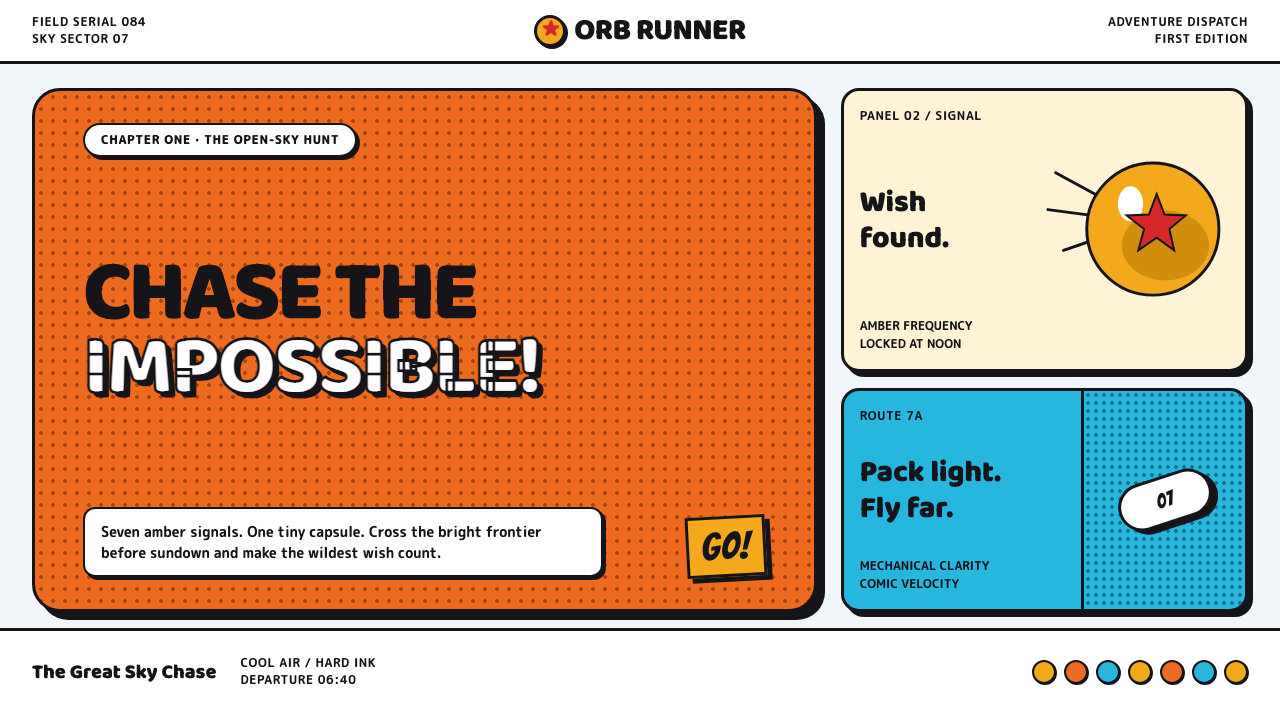 Dragon Ball (1984)Adventure lands with comic force. Gi-orange panels, amber spheres and crisp h…
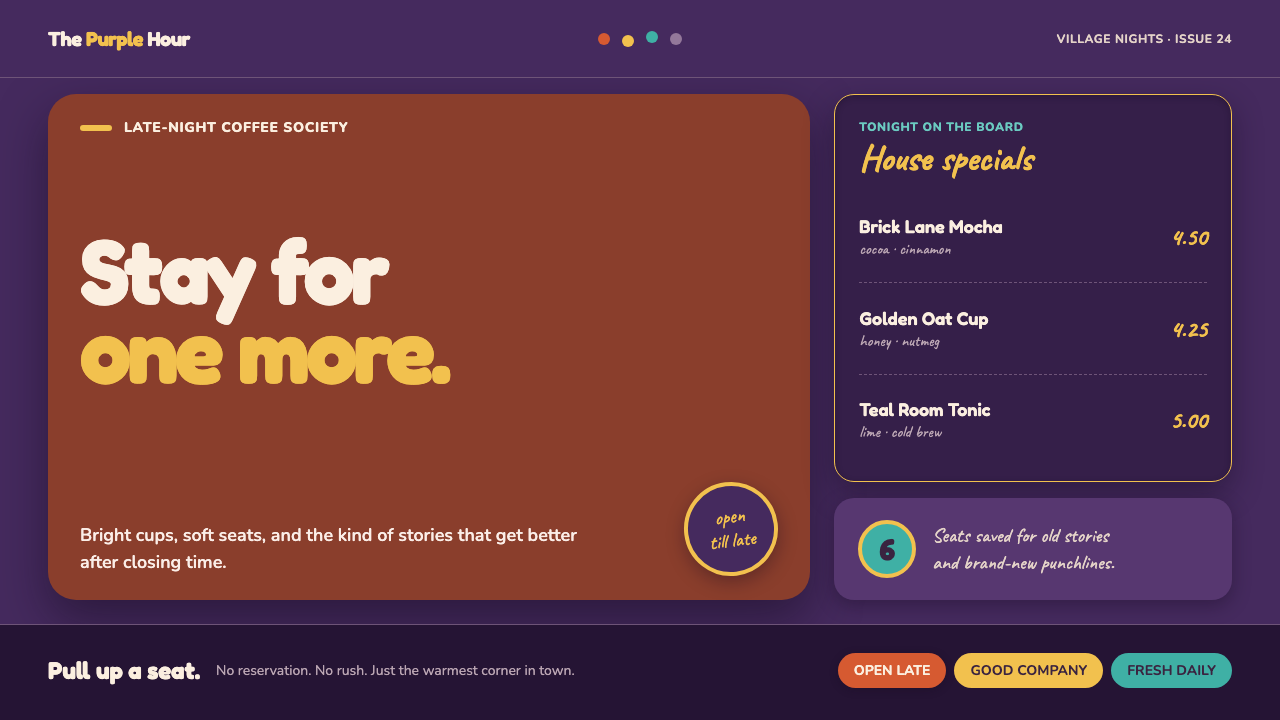 Friends Central Perk (1994)Sitcom warmth, turned TV-bright. Grape walls, couch orange, and bouncing colo…
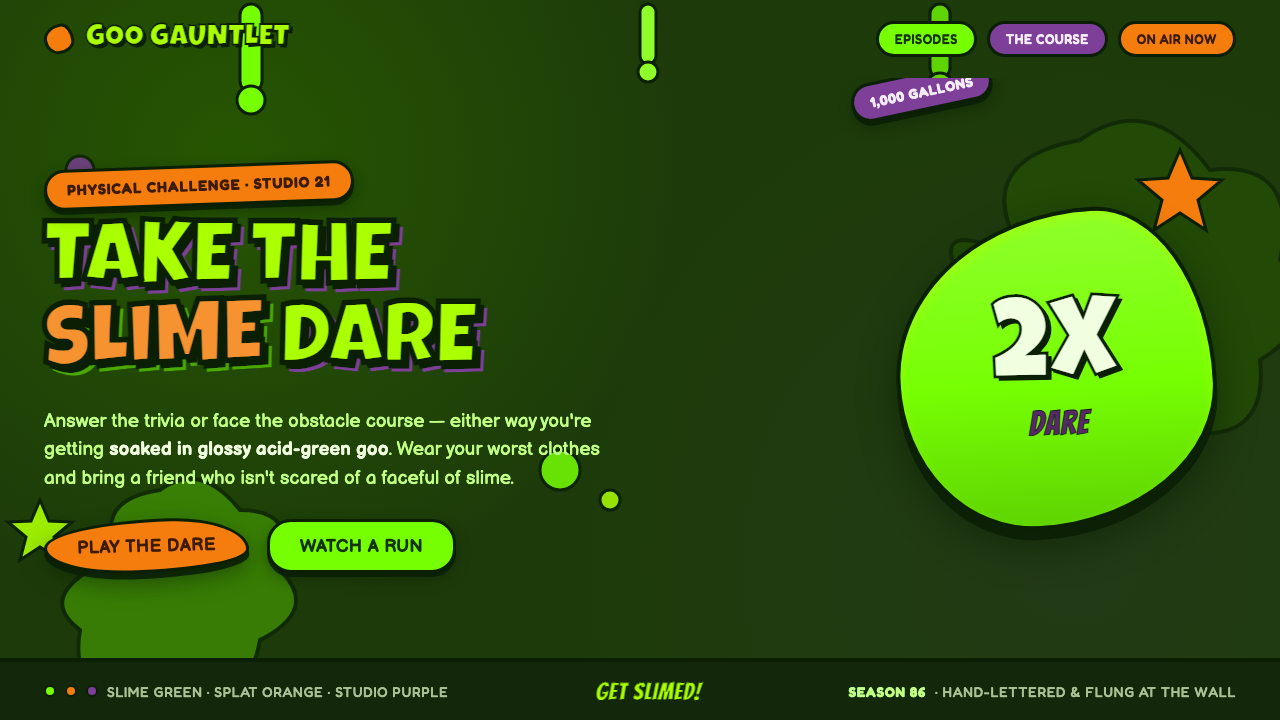 Nickelodeon Double Dare SlimeGet slimed. Glossy acid-green goo on deep slime ground, balloon caps and spla…
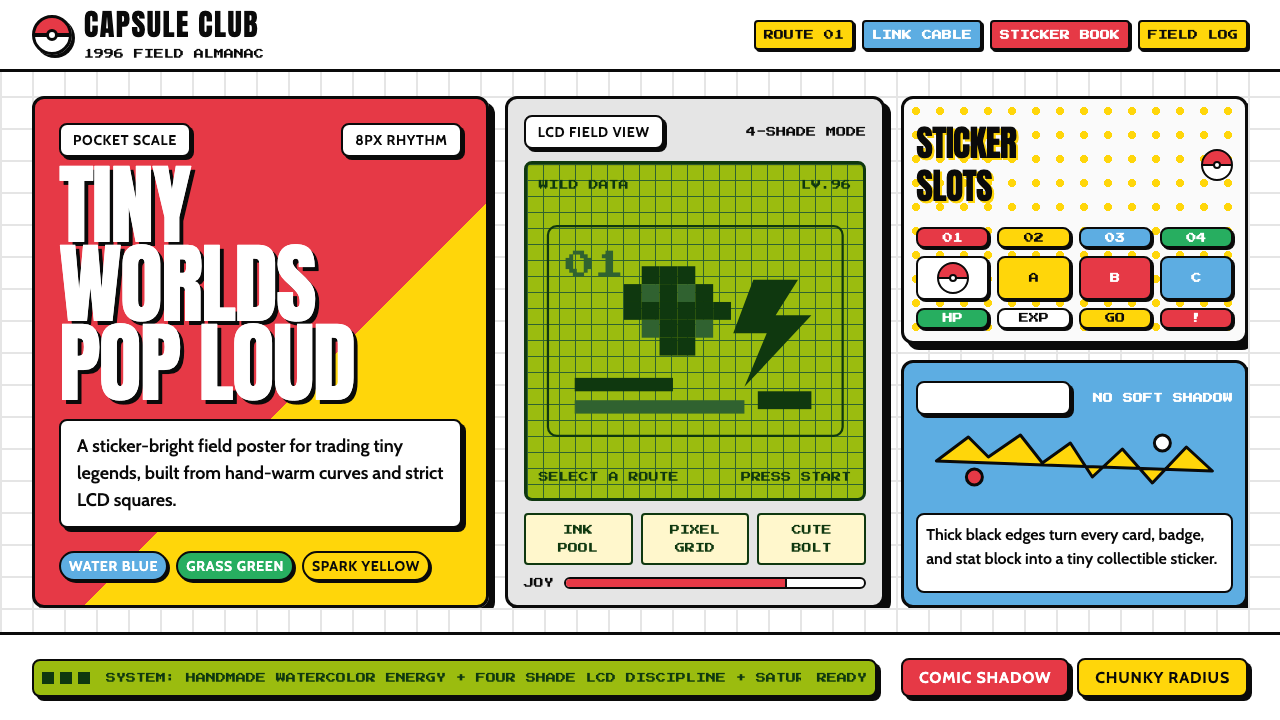 Pokémon Game BoyKawaii meets cartridge logic. Capsule red, LCD green, Anton heft, and 8px gri…
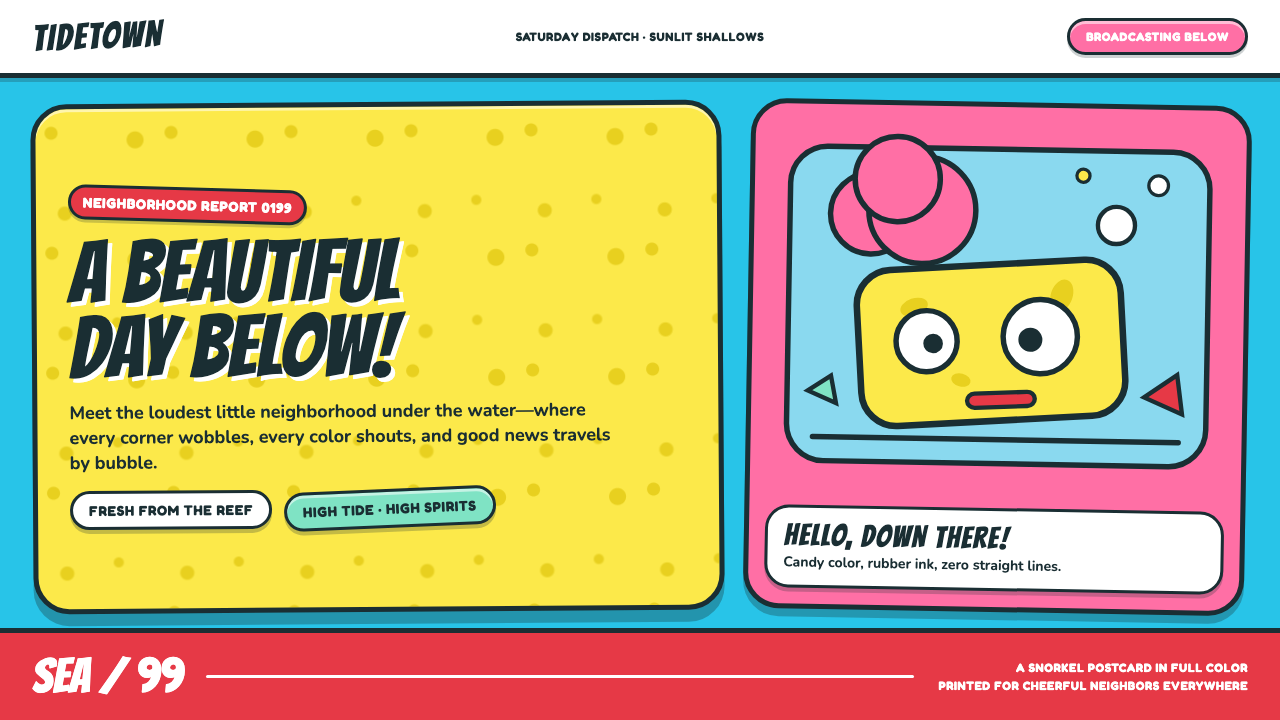 SpongeBob Bikini Bottom (1999)Undersea suburbia shouts with joy. Banana yellow and cyan bounce inside fat,…
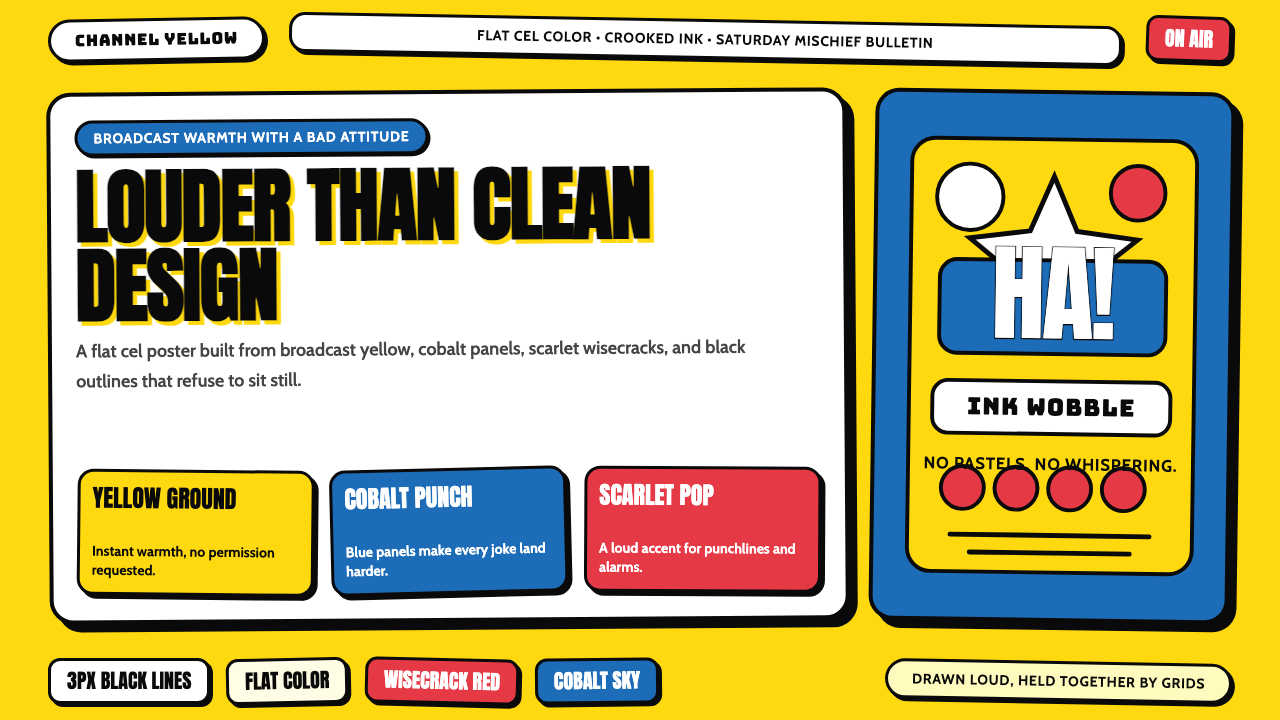 The Simpsons YellowCartoon warmth misbehaves. Yellow ground, cobalt panels, thick wobbly black l…