What is Pac-Man (Namco 1980)?
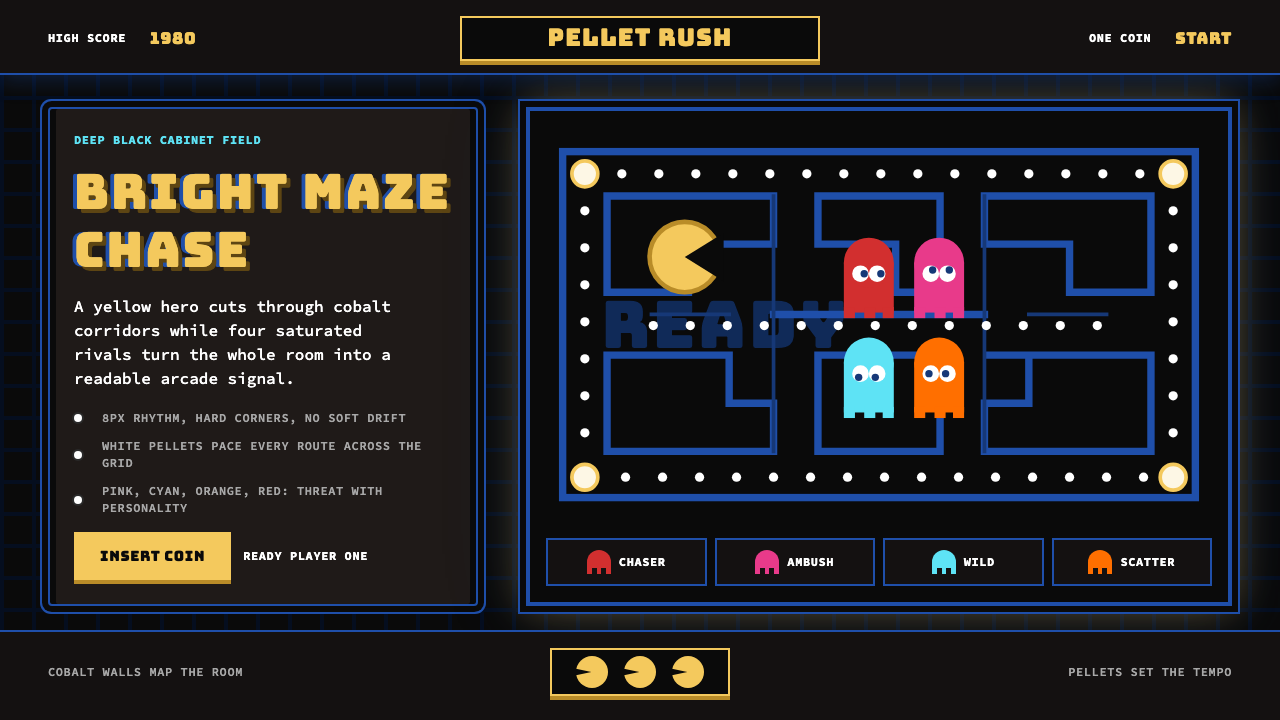
A yellow disc, a cobalt maze, and four ghost hues on pure black — Pac-Man's 1980 arcade palette turned four colors into a universal visual language.
Pac-Man (Namco 1980) in brief
Pac-Man (Namco 1980) is a design system derived directly from the visual grammar of Toru Iwatani's 1980 arcade game — one of the most recognized artifacts of twentieth-century popular culture. Its defining elements are instantly legible: a deep-black field, a saturated golden-yellow disc protagonist, a cobalt-blue maze of corridors and walls, and four ghost characters each carrying a distinct saturated hue — pink, cyan, orange, and red. Every element is drawn with pixel-sharp edges and zero anti-aliasing, giving the entire system a quality of hard geometric precision that no hand-drawn style can replicate.
The palette is not subtle. It belongs to the world of arcade-cabinet phosphor screens, where colors needed to sing through ambient fluorescent light from three meters away. This is design that performs at distance, built for maximum pop against a void. The black background is not a neutral ground — it is an active participant, creating the illusion of depth and making each saturated color appear to float and glow. The result is simultaneously joyful, populist, and graphically bold in a way that more refined design traditions rarely achieve.
What distinguishes the Pac-Man aesthetic from simple retro nostalgia is its structural coherence. The visual system has clear rules: the black field always dominates; color appears in bold, contained shapes rather than gradients or washes; type is chunky, display-weight, and treated with the same pixel logic as the game sprites; spacing is generous, giving each element room to read at a glance. Applied deliberately, this system carries genuine graphic authority — not because it quotes an era, but because its underlying logic is sound.

Where does Pac-Man (Namco 1980) come from?
Pac-Man was designed by Toru Iwatani at Namco, the Japanese amusement company founded in 1955 in Tokyo. The game was released in Japan in May 1980 under the title Puck Man — a name derived from the Japanese onomatopoeia 'paku paku', describing the sound of a mouth opening and closing. Midway Games licensed the title for North American distribution, renaming it Pac-Man to prevent vandalism of the cabinet lettering. Within a year, the game had become the highest-grossing arcade title ever released, a record it held for years.
Iwatani's design decisions were both practical and visionary. The maze was drawn to fill a vertical monitor — the same aspect ratio used by most arcade cabinets of the period — and the palette was constrained to what the Namco hardware could drive at full brightness: a small set of pure, fully saturated hues against a black phosphor background. There was no option for gradients, soft shadows, or intermediate tones. These hardware limitations became the style's most enduring characteristics. The chunky, pixel-grid letterforms used for the score and labels were similarly products of constraint: the display chip handled characters as fixed-width bitmap grids, and designers worked within those grids to produce type that was instantly readable under arcade conditions.
The game's four ghost antagonists — Blinky (red), Pinky (pink), Inky (cyan), and Clyde (orange) — each received a distinct hue for a purely functional reason: players needed to track all four simultaneously from across a loud, visually busy arcade floor. Color-coding was the only reliable differentiator at that scale and distance. The decision to give each ghost a unique behavioral personality — Blinky chases directly, Pinky attempts to get ahead of the player, Inky behaves unpredictably, Clyde wanders — added a layer of strategic depth that made the game far more replayable than its contemporaries. The color-personality pairing is one of the earliest examples of what contemporary UX designers would call 'semantic color assignment'.
The cultural impact of Pac-Man extended well beyond the arcade. By 1982, the character had appeared on television, in licensed merchandise, on breakfast cereals, and in animated form. The visual identity — the yellow disc, the maze, the four ghost colors — became among the most globally recognized graphic symbols of the decade. Namco, which merged with Bandai in 2006 to form Bandai Namco, has maintained the visual system with remarkable consistency across four decades of sequels, remakes, and brand collaborations. The 1980 arcade palette remains the canonical reference for all subsequent iterations.
What defines the Pac-Man (Namco 1980) look?
Color Field
The black background is the system's first and most important design decision. Unlike a neutral or tinted ground, pure black makes every adjacent color appear to radiate light rather than simply reflect it. Yellows become incandescent, blues become electric, pinks and reds glow. All color work in this system should be evaluated against a black field — colors that read well on white or grey will often appear washed out or inadequate here, and the palette must be recalibrated accordingly.
Saturated Primary Palette
The system operates on a set of fully saturated, unmodified hues: a warm golden yellow, cobalt blue, hot pink, bright cyan, vivid orange, and pure red. These are arcade-CMYK colors — not the desaturated, dusty, or muted variants common in contemporary branding. No tinting with white, no shading with black, no opacity reductions. Each color appears at its maximum chromatic intensity. This approach demands discipline: the palette works because each hue occupies its own lane in the spectrum, and mixing or blending destroys the visual separation that makes the system legible.
Pixel-Grid Geometry
All shapes in the system are drawn on an implied pixel grid. Curves are not smooth arcs but stepped approximations of arcs — a quality that is immediately visible in the Pac-Man character himself, whose circular outline is a precise digital approximation rather than a mathematically perfect circle. Corners are sharp or stepped, never rounded. Lines have visible weight determined by grid units rather than continuous stroke values. This pixel-grid discipline is the quality that most distinguishes authentic applications of this style from casual imitations.
Display Typography
Type in this system is chunky, display-weight, and treated as a graphic object on the same visual plane as the colored shapes. Letterforms carry deliberate weight — thin strokes are not welcome. Type sizing follows a binary logic: there is a large display size for headlines and scores, and a small but still highly legible size for labels and secondary information. Mid-range type sizes that would create typographic hierarchy in a conventional layout are largely absent. The letter-spacing is tight, and type tends to sit in horizontal runs that align to the grid.
Contained Color Blocks
Color never bleeds, gradients, or transitions. Each colored zone is a hard-edged, fully contained shape with a definite boundary — a wall, a character, a score digit, a UI element. There is no color bleeding into adjacent areas, no soft glow, no halo effect. Even where two colors are adjacent, the boundary between them is a single pixel line. This containment principle is what gives the system its graphic cleanliness and makes it readable at small sizes or across visual noise.
Semantic Ghost Colors
The four ghost hues — pink, cyan, orange, and red — are not decorative variety. Each was assigned to communicate a specific identity and behavioral role, and audiences learned to associate each color with a distinct personality within minutes of play. This is semantic color at its most efficient: no legend required, no explanation needed, instant recognition through pattern repetition. When applied outside the game context, these hues should carry differentiated meaning — category labels, status indicators, or entity types — rather than being used as a generic variety palette.
High-Contrast Legibility
Every element in the Pac-Man system is designed for instantaneous recognition under adverse viewing conditions — bright ambient light, peripheral vision, competitive visual noise from adjacent cabinets. The result is a system where legibility is almost aggressive: nothing is subtle, nothing is soft, nothing requires sustained attention to decode. This high-contrast, high-visibility approach is both a historical necessity and a genuine design virtue. It makes the system particularly effective in contexts where the viewer's attention is divided or where the display surface is imperfect.

Who shaped Pac-Man (Namco 1980)?
Iwatani joined Namco in 1977 and designed Pac-Man as a deliberate attempt to attract female players and couples to arcades, which in 1980 were perceived as exclusively male spaces. His visual and conceptual choices — the rounded protagonist, the eating mechanic, the colorful antagonists with distinct personalities — were all oriented toward accessibility and broad appeal. Iwatani has stated that the character's shape was inspired by a pizza with a slice removed. He later designed Libble Rabble (1983) and worked on various Namco titles, but Pac-Man remains his singular contribution to design history.
Namco was founded in 1955 on the rooftop of a Tokyo department store as a two-horse merry-go-round operator. Through the 1970s it became a leading arcade game developer and manufacturer in Japan, distributing Atari products in the region before developing its own hardware. The company's technical teams developed the display and color hardware that defined Pac-Man's visual palette. Namco's design culture — pragmatic, player-centered, commercially focused — produced one of the most visually coherent arcade canons of the 1980s, including Galaga (1981), Dig Dug (1982), and Pole Position (1982).
Midway was the Chicago-based distributor that licensed Pac-Man for North American release and was responsible for the renaming from Puck Man. Midway's manufacturing and distribution infrastructure was essential to the title's North American dominance — the company produced over 100,000 cabinets for the US market alone. Midway's team also made minor visual adjustments to the North American cabinet artwork and attract screen, decisions that have since become part of the canonical Pac-Man visual identity as much as the original Japanese materials.
The 2006 merger of Namco and Bandai created Bandai Namco Entertainment, which has stewarded the Pac-Man intellectual property and visual system through more than four decades of sequels, HD remakes, mobile ports, and brand licensing. The company has maintained the canonical 1980 palette with notable consistency — a rare achievement in a media landscape that frequently updates classic IPs beyond recognition. Bandai Namco's brand management of Pac-Man offers a case study in how a purely functional, hardware-constrained aesthetic can sustain cultural relevance when its core visual logic is preserved rather than modernized.
How do you use Pac-Man (Namco 1980) today?
The Pac-Man visual system is among the most high-impact historical styles available for contemporary design work, but it demands a particular kind of discipline: commitment to the black field, resistance to the temptation to soften or desaturate, and willingness to work with a palette that was designed for maximum contrast rather than refined taste. Applied with integrity, it produces work that is genuinely striking and immediately legible. Applied superficially — as a thin layer of retro signaling over a conventional layout — it produces work that reads as costume rather than system.
For presentation slides, this style excels at covers and section dividers. A cover built on a pure-black field with the title in large, bold, warm-yellow type and a simple geometric accent in cobalt blue achieves the arcade poster quality that is the system's hallmark. Content slides should commit to the same black field: white or near-white body text against black reads cleanly and maintains the system's visual coherence. Data slides are where the ghost-color palette earns its keep — series in bar charts, line charts, and pie charts can be assigned the four ghost hues directly, providing instant differentiation without any legend ambiguity. The pixel-grid logic should govern chart borders and grid lines: thick, visible, hard-edged.
For web UI, dashboards and pricing pages are the strongest natural fit. The approach: a pure-black or very dark background as the base; primary navigation and structural elements in cobalt blue; call-to-action elements and primary metrics in warm yellow; status indicators distributed across the ghost palette. Typography should be heavy and display-weight for headlines, with generous size contrast between hierarchy levels. Interactive states — hover, active, selected — are expressed through color shift rather than opacity or blur effects. Ghost-button variants and soft shadows are incompatible with this system; bordered, solid-background components are the correct choice.
For editorial and marketing work, the style is best deployed at full commitment rather than as a subtle accent. A marketing page or social card in this system uses full black bleeds, avoids any white or cream panel breaks that would undercut the palette's intensity, and treats type as a graphic element in its own right. Section headers and callouts in the yellow or ghost colors provide rhythm without requiring decorative ornaments. The style is particularly effective for gaming-adjacent brands, entertainment products, youth-oriented campaigns, and any context where high energy and immediate visual impact are primary values rather than secondary ones.
The most common mistake when applying Pac-Man aesthetics is using the palette without committing to the black field. When the system's hues are placed on a white, grey, or neutral background, they lose the incandescent quality that makes them work — they become merely bright rather than luminous. A second frequent error is softening the pixel-grid sharpness through border-radius, gradient fills, or box-shadow blur, which converts the system's defining precision into generic retro decoration. The palette is not the style; the black field and the hard edges are equally load-bearing. A third mistake is treating the four ghost colors as interchangeable decoration rather than as a semantic set — if they are used, each should carry a consistent and distinct meaning throughout the composition.

Pac-Man (Namco 1980) — FAQ
Can this style work for a professional or enterprise product, or is it too playful?
It depends entirely on whether the product's values align with the style's values. Pac-Man aesthetics signal energy, immediacy, and populist boldness — qualities that are genuine assets for gaming platforms, entertainment dashboards, youth-oriented SaaS tools, and any brand that wants to position itself as approachable and high-energy rather than conservative and refined. For enterprise products where trust, sobriety, and institutional authority are the primary emotional goals, the style is a poor match — not because it is technically wrong but because it communicates the opposite of what those products need to say. The question is not whether the style is too playful but whether 'playful' is part of your brand's honest promise.
How do I use the ghost colors without making everything feel like a game?
The ghost colors lose their arcade connotation when they are deployed with semantic clarity and visual restraint. Use each hue consistently for a single type of meaning — one color for warnings, one for positive states, one for a particular data category — and never use all four simultaneously in a single layout section. When the colors are doing clear information work, they read as a deliberate design system rather than a game reference. Also consider that the game context fades quickly when the surrounding typography, spacing, and layout structure are treated with discipline; the palette alone does not make a design feel like Pac-Man.
Does the style work at small sizes — icons, mobile UI, dense data tables?
Remarkably well, precisely because the system was designed for hostile viewing conditions. The hard edges, high contrast, and contained color blocks all scale down without loss of legibility — there are no soft gradients to disappear or subtle tonal distinctions to collapse. At small sizes, the pixel-grid discipline becomes even more important: shapes must be drawn on clean grid increments to avoid the visual fuzz that occurs when continuous-coordinate shapes are rendered at low resolution. For dense data tables, the approach of reserving the ghost palette for status or category differentiation works at any density level, since the colors retain their distinctiveness even when they appear as small chips or dots.
Is there a light-background version of this style, or does it only work on black?
A light-background version is possible but represents a significant departure from the system's logic, not merely a cosmetic inversion. On a white or near-white ground, the fully saturated arcade hues become harsh and garish rather than luminous — they lack the dark context that makes them glow. A workable light variant requires desaturating the palette moderately and reducing it to two or three hues rather than the full set, which effectively produces a different style that shares some DNA with the original. If your use case requires a light background, it is more honest to treat this as a Pac-Man-inspired palette applied to a different layout system, rather than claiming it as the canonical arcade style.
How is Pac-Man style different from general pixel art or retro gaming aesthetics?
Pixel art is a broad category that includes many visual languages — the earthy palettes of early RPGs, the dithered gradients of 16-bit era graphics, the high-fantasy illustration styles of adventure games. Pac-Man style is a specific subset defined by its particular combination: the black field, the pure arcade-CMYK palette without earth tones or pastels, the simple character-based shapes rather than complex pixel illustrations, and the display-game context of scores, mazes, and status indicators. Applying 'pixel art' generically imports a jumble of era-associations; applying the Pac-Man system specifically draws on a coherent, iconic, globally recognized visual language with clear semantic rules. The specificity is the point.
Related design styles
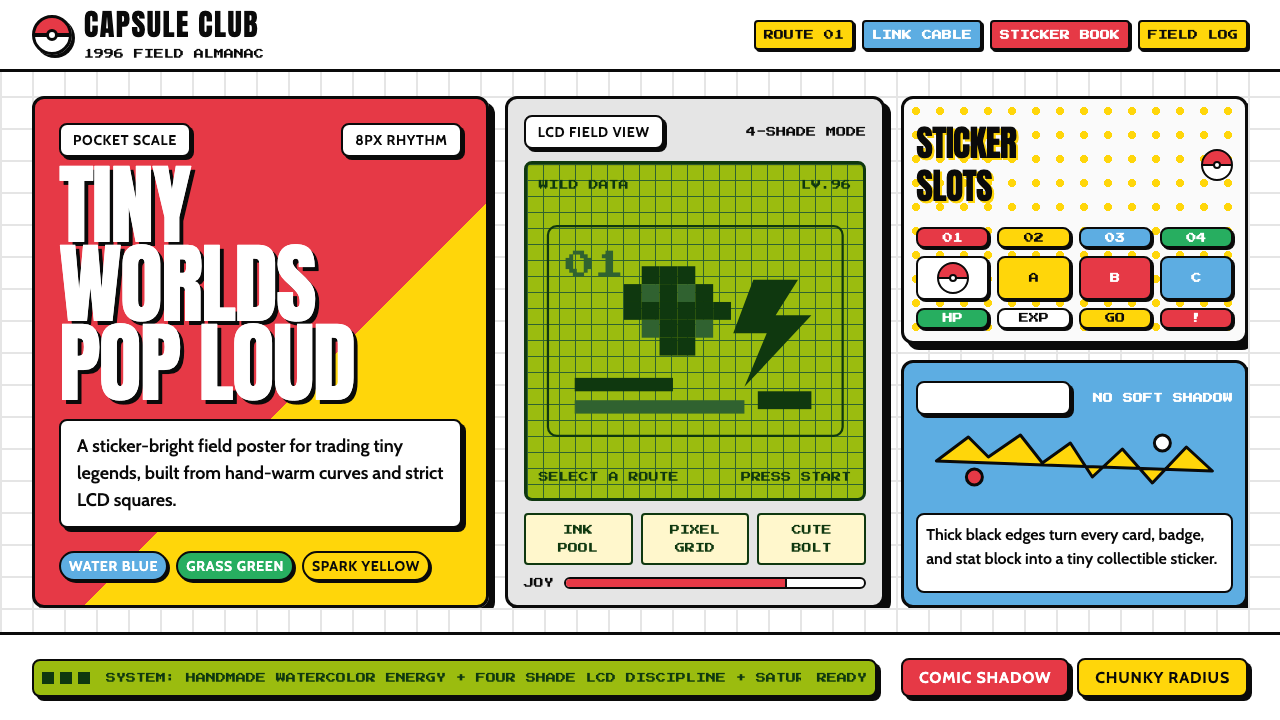 Pokémon Game BoyKawaii meets cartridge logic. Capsule red, LCD green, Anton heft, and 8px gri…
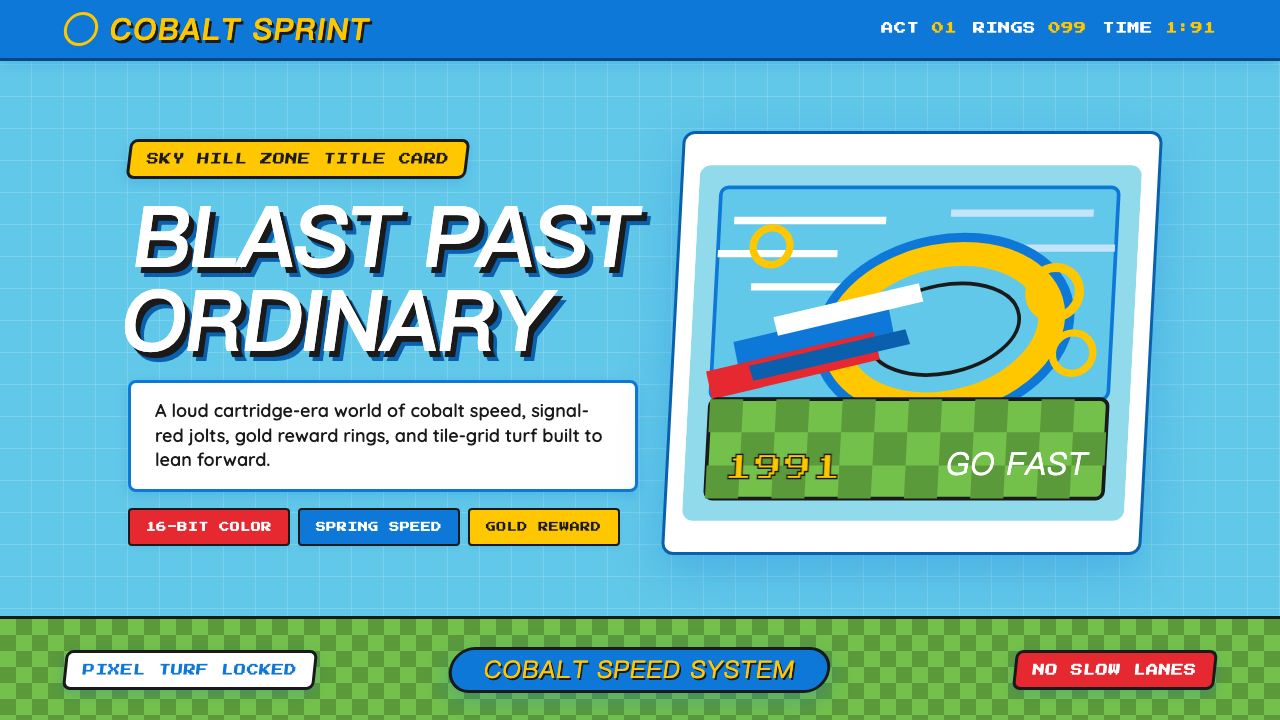 Sonic the Hedgehog (1991)Velocity has teeth. Sky-cyan, cobalt slant type, gold rings, checkerboard tur…
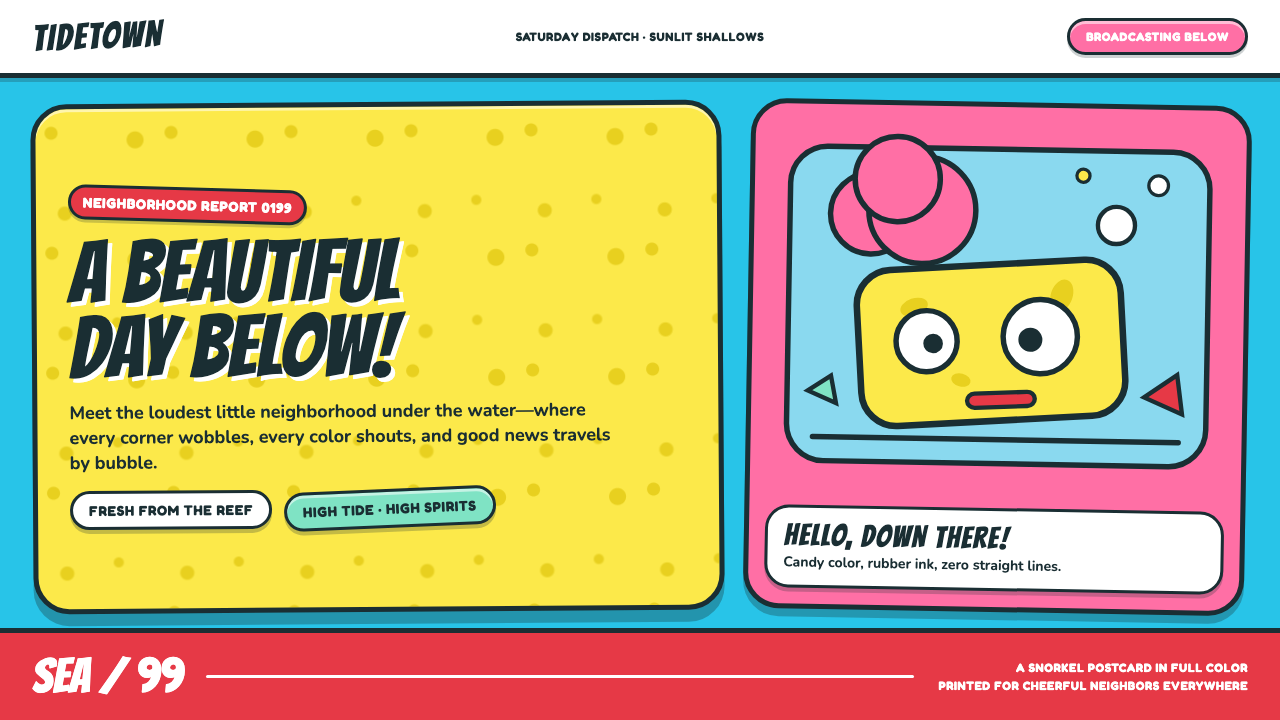 SpongeBob Bikini Bottom (1999)Undersea suburbia shouts with joy. Banana yellow and cyan bounce inside fat,…
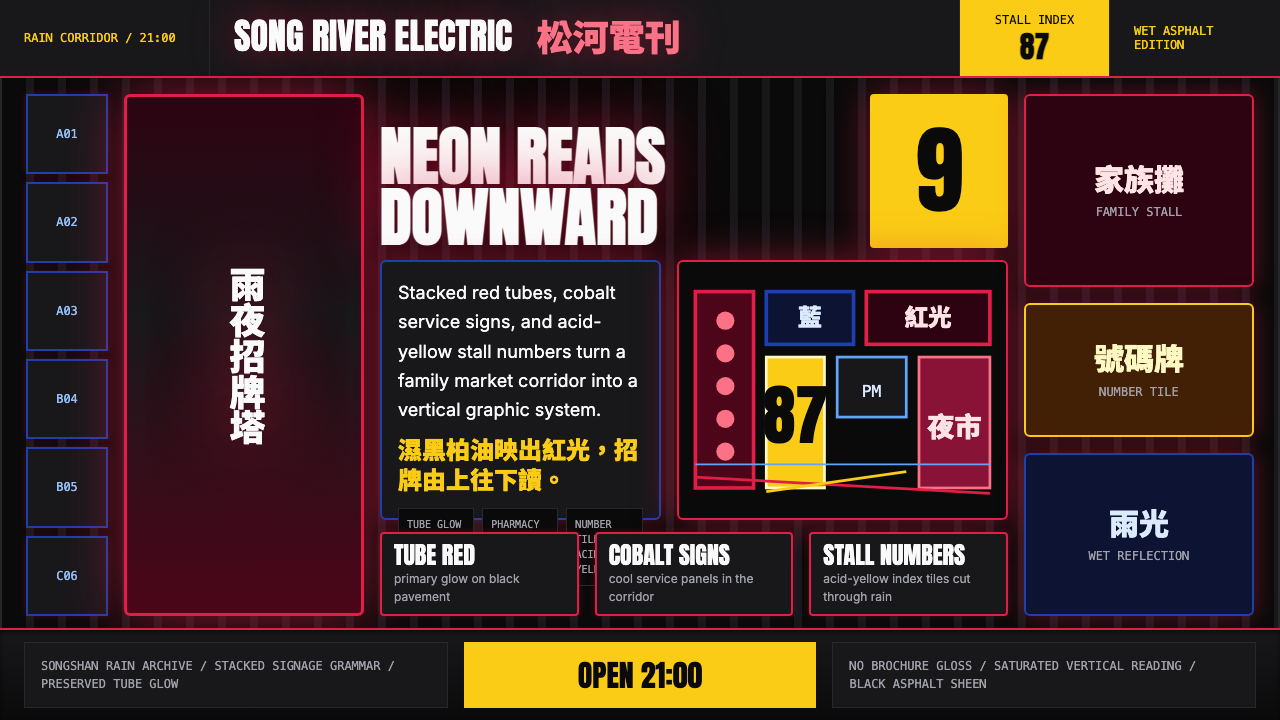 Taiwanese Raohe Night Market NeonTaipei night reads vertically. Neon red, cobalt panels, and acid-yellow numbe…
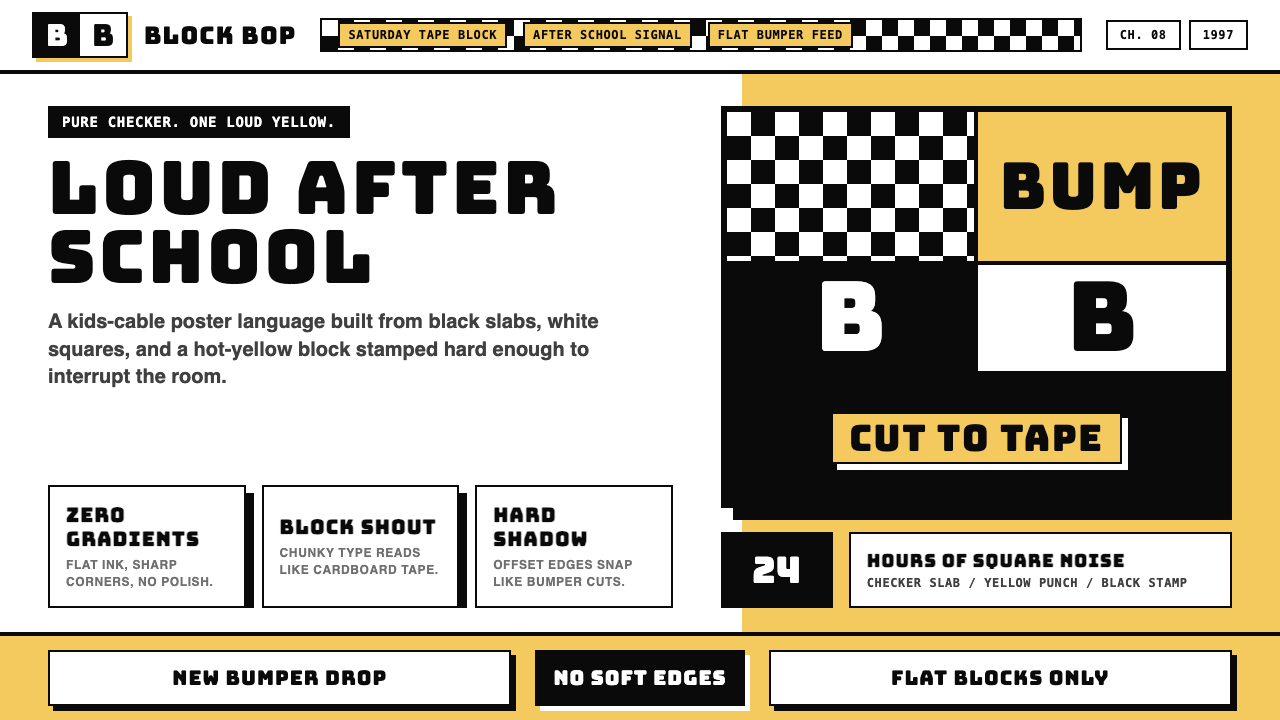 Cartoon Network 90s BlocksKids-cable noise, squared. Black-white checkerboards crash into hot-yellow Bu…
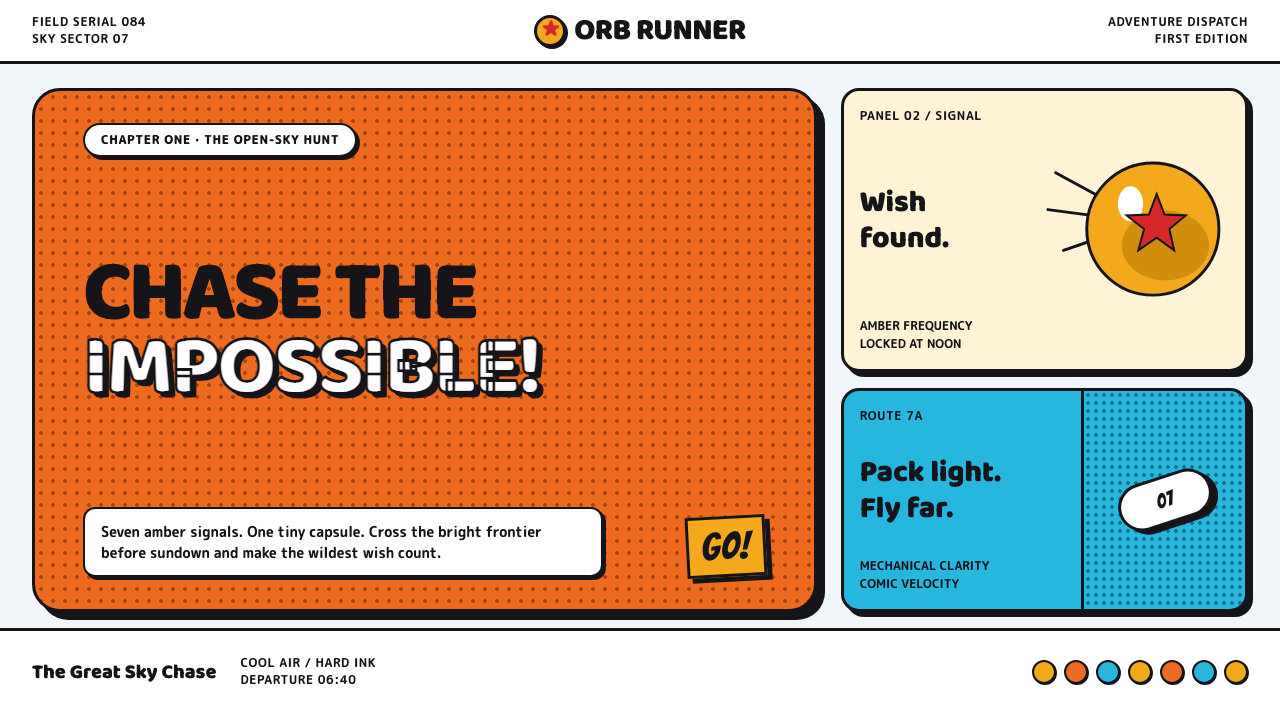 Dragon Ball (1984)Adventure lands with comic force. Gi-orange panels, amber spheres and crisp h…