What is Netflix 2024?
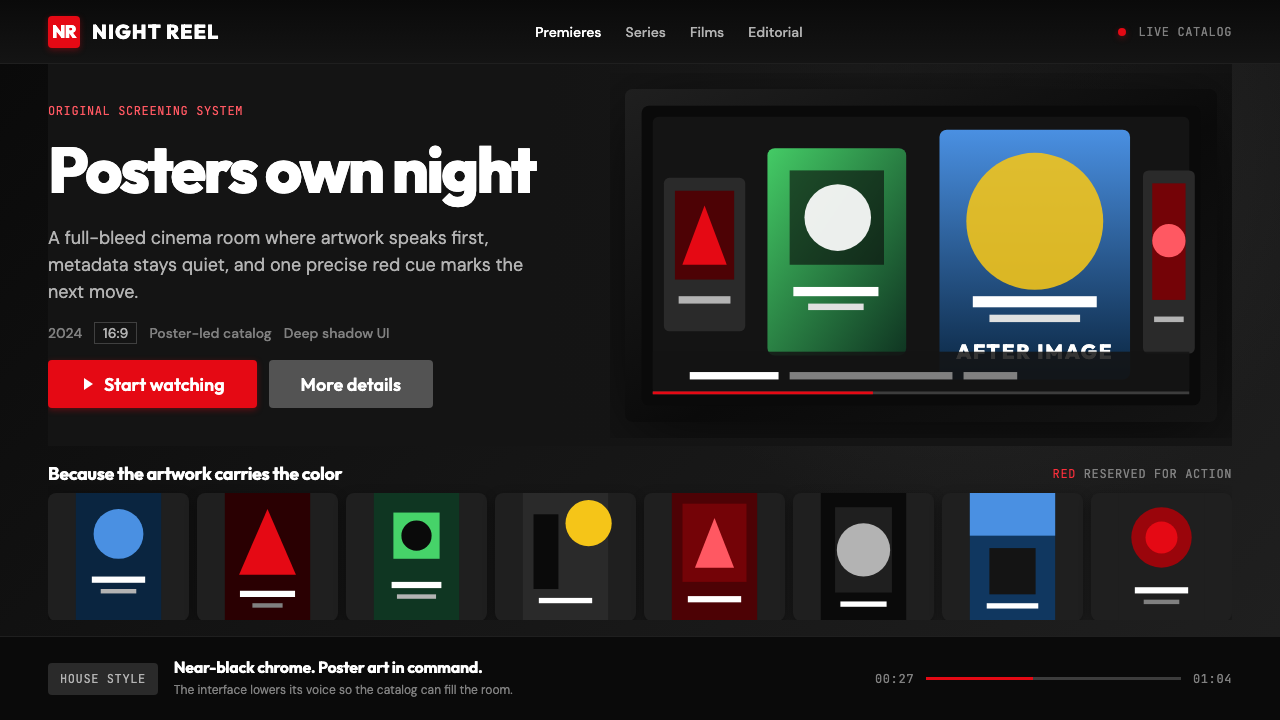
Netflix turned the streaming browser into a cinema lobby — near-black canvas, horizontal poster rails, and one precise red action cue that every rival promptly copied.
Netflix 2024 in brief
Netflix 2024 is the visual design language that defines the world's most recognized streaming interface. Built on a near-black canvas, horizontal rows of poster cards, a proprietary typeface drawn for the platform, and a single signature red reserved exclusively for primary interactive actions, it is simultaneously a product design system and a cultural template that reshaped how the entire streaming industry presents itself.
The system is built around a deliberate imbalance: the interface is intentionally quiet so that the content artwork can be loud. Background surfaces stay deep and neutral, typographic elements stay restrained in weight and size, and the signature red appears only at moments of decisive action — play buttons, progress bars, the logo itself. Everything else is handled by the colors the movie posters and thumbnail artwork themselves bring to the screen.
What makes Netflix 2024 distinctive as a design language is not any single element but the discipline with which every element is subordinated to content visibility. It is a service design in the truest sense: the interface recedes so that the catalogue can advance. This principle — the UI as cinema lobby rather than destination — is what separates it from streaming competitors who allowed their own brand color systems to compete with the artwork they were commissioned to showcase.

Where does Netflix 2024 come from?
Netflix was founded in Los Gatos, California in 1997 as a DVD-by-mail rental service under Reed Hastings and Marc Randolph. The visual identity that defined it globally did not crystallize until the streaming era arrived in earnest. When Netflix launched its streaming service in 2007, the platform inherited interface conventions from early web video — light backgrounds, standard web typography, and generic navigation patterns borrowed from e-commerce. Nothing about this early presentation hinted at the design confidence that would later define the brand.
The critical transformation came in stages across the 2010s. Netflix invested in a proprietary typeface, commissioning the London-based type foundry Dalton Maag to design Netflix Sans, which was completed and deployed around 2018. The decision to own a custom typeface was partly economic — licensing fees for widely used commercial fonts at Netflix's global scale are substantial — but it was also a signal of design seriousness. A platform that commissions its own letterforms is declaring that its visual identity is a long-term strategic asset, not a vendor selection.
The dark interface emerged from observation rather than artistic preference. Netflix's internal research showed that users watching video content in living room environments — on television screens, in dimly lit rooms — found light interfaces jarring and contrast-breaking. A near-black canvas allowed the luminous poster artwork and video previews to appear as natural extensions of the viewing experience rather than interruptions to it. By the mid-2010s, the dark-canvas, poster-rail layout had become so strongly associated with Netflix that competitors including Amazon Prime Video, Disney Plus, and Apple TV Plus all adopted variants of the same template.
The design language reached its most refined and influential form between roughly 2018 and 2024, the period the style name references. During this time, the signature red action color became more precisely deployed — appearing only at primary interactive moments rather than as a general brand application. The horizontal scroll mechanic, the autoplay hover behavior, the modal detail card, and the progressive disclosure of metadata were all refined into what became industry-standard patterns. What Netflix 2024 represents, historically, is the moment a streaming platform's UX conventions became so universally adopted that they effectively defined a genre of interface design.
What defines the Netflix 2024 look?
Near-Black Canvas
The foundational surface is not true black but a very deep, slightly warm dark tone that absorbs ambient display light without creating the harsh contrast of a pure black background. This depth serves a functional purpose: it allows luminous poster artwork and video thumbnails to appear to glow rather than simply sit on a surface. The near-black also reduces eye strain during extended browsing sessions in darkened viewing environments, aligning the interface with the physical context in which most users encounter it.
Single Signature Red
One strong red — the same hue used in the Netflix wordmark — carries every primary interactive action across the entire interface. Play buttons, progress bars, loading indicators, and selected states all share this single color. Its power comes entirely from discipline: because nothing else in the interface is red, the color functions as an unambiguous action signal that requires no label or explanation. When the red appears, the user knows something is interactive or in progress. The color is never used decoratively.
Horizontal Poster Rails
Content is organized into named horizontal rows — genre rails, mood rails, personalized recommendation rows — that extend beyond the visible viewport and invite lateral scrolling. Each rail presents uniform-sized poster or landscape cards that foreground the artwork. This structure accomplishes two things simultaneously: it allows the platform to display a very large catalogue without pagination, and it puts the visual identity of individual titles — their poster design, color palette, and photography — in direct contact with the user. The interface shape is a container; the content fills the color.
Proprietary Neutral Typeface
Netflix Sans, the custom typeface designed by Dalton Maag and deployed from around 2018, is built for legibility across the full range of display contexts the platform serves — mobile screens, tablet browsers, television displays, and desktop monitors. The letterforms are clean and geometrically informed without being overtly geometric; they carry no distinctive stylistic personality that would compete with the content alongside which they appear. The typeface is an instrument of neutral functionality, designed to recede so that titles and descriptions can communicate clearly at any size.
Content-Forward Depth Hierarchy
Netflix 2024 uses subtle depth cues — gentle scaling of cards on hover, layered modal panels for detail views, fading edge gradients on rails — to create a sense of spatial depth without ever using skeuomorphic surfaces or decorative shadows. The depth hierarchy is always in service of directing attention toward content: the focused or hovered item grows slightly, while surrounding items recede. This creates a sense of cinematic focus pull — the interface behaves like a camera lens, keeping the selected content sharp while letting everything else blur to background.
Progressive Metadata Disclosure
In the default browsing state, each card shows only artwork — no title text, no rating, no genre tags overlay the image. Information is revealed progressively: a hover or focus state surfaces the title, year, rating, and a brief description; selecting an item opens a full detail modal with cast, synopsis, and related content. This layering keeps the default visual state clean and poster-like while ensuring that users who want information can access it without navigating away. It is a pacing decision as much as a design decision.
Dark Surface Gradient Transitions
Unlike classic design systems that treat gradients as decoration to be avoided, Netflix 2024 uses gradients instrumentally: to transition between a full-bleed hero image and the dark content rails below it, to fade rail edges to signal that more content exists beyond the visible frame, and to create a vignette effect on autoplay video previews that keeps the overlay text legible. These gradients are always directional and functional — they solve a readability or attention problem — rather than applied for aesthetic richness. The discipline of purposeful gradient use distinguishes this system from interfaces that use gradients as decoration.

Who shaped Netflix 2024?
Co-founder and longtime CEO of Netflix, Hastings oversaw the company's transformation from a DVD-by-mail service into the world's dominant streaming platform. His strategic decisions — including the pivotal 2007 streaming launch and the sustained investment in original content beginning around 2013 — created the commercial context within which Netflix's design language evolved. The platform's willingness to invest in custom typography and a research-driven dark interface reflects a design culture shaped at the executive level by the belief that the viewing experience, not the interface, should be the product.
The London-based type design studio commissioned to create Netflix Sans, the proprietary typeface that replaced licensed fonts across Netflix's global interface around 2018. Dalton Maag has a broad portfolio of corporate typeface commissions — including work for Ubuntu and BMW — and is known for designing letterforms that perform across the full range of digital display sizes. Netflix Sans was designed to be legible from a mobile thumbnail caption to a television title card at viewing distance, making it one of the more technically demanding multi-context typeface briefs in contemporary streaming design.
Referenced in the context of Netflix's visual identity evolution, Carbonell represents the broader creative ecosystem that influenced the platform's approach to content presentation and visual atmosphere. Netflix's design decisions during the 2018–2024 period were shaped by collaboration between product designers, brand designers, and the broader creative community — reflecting a design culture that treats visual environment as an extension of the editorial and artistic sensibility of the content it hosts.
Netflix 2024 did not emerge from a single designer or a single manifesto but from the iterative refinement of a platform serving hundreds of millions of users across every screen type. The UX conventions it codified — dark canvas, content-rail browsing, single-action color, progressive metadata disclosure — became the shared vocabulary of an industry. The streaming platform UX movement represents the first time a digital product's interface conventions spread so completely across competitors that they constituted a recognizable design genre, in the same way that physical retail store layouts or print magazine grids became recognizable genres before it.
How do you use Netflix 2024 today?
Netflix 2024 translates well to slide decks when the content being presented has strong visual assets — photography, product screenshots, video stills, data visualizations — that can carry the slides the way movie posters carry the streaming interface. A cover slide in this style uses a full-bleed dark background, a single large title in a clean neutral typeface, and one precise red element — an underline, a geometric shape, a highlighted word — to mark the primary focus. The darkness should feel intentional and atmospheric, not like a default dark mode toggle.
Content slides work best when they treat the slide as a stage rather than a document page. Text is reduced to the minimum needed — a short headline, a three-to-five point list, a pull quote — and positioned with generous breathing room against the dark ground. Data slides benefit from treating charts as poster objects: bars and lines rendered in muted neutrals with a single strong red accent marking the most important data point. Gridlines and axis labels stay light and secondary; the data speaks at high contrast against the dark field.
For web UI applications — dashboards, admin panels, content management interfaces, pricing pages — the Netflix 2024 approach translates to a strict dark-surface layout where the primary red marks only interactive states: active navigation items, primary call-to-action buttons, selected filters, progress indicators. All other interactive elements — secondary buttons, input fields, toggles — live in neutral dark tones without color accent. The discipline is the same as the streaming interface: if everything is red, nothing is red.
Editorial and marketing work in this style works best when images are given maximum real estate. A Netflix-style editorial layout uses full-width image headers that bleed to the edges of the container, with title text overlaid using a dark-to-transparent gradient that ensures readability without obscuring the image. Marketing pages use alternating full-width sections — dark content sections with light text, occasionally punctuated by a single red call-to-action that functions as the page's only color moment. The overall pace should feel cinematic: slow, confident, letting each element land before introducing the next.
A common mistake when applying Netflix 2024 is using the dark canvas as permission to add multiple accent colors — a teal for secondary actions, a gold for premium tiers, an orange for warnings. The original system's power comes from absolute color discipline: one red, everything else neutral. Adding a second accent color immediately breaks the signal value of the first. If tier differentiation or state differentiation is needed, it should be handled through brightness, scale, and typographic weight within the neutral palette rather than by introducing new hues.

Netflix 2024 — FAQ
Can Netflix 2024 work for brands outside the entertainment industry?
Yes, but with important caveats. The style works well for any product where the primary visual content is rich imagery — real estate platforms, photography portfolios, food delivery with strong food photography, travel services. It struggles for products with sparse visual assets, because the dark canvas depends on luminous content to feel intentional rather than empty. It also needs genuine color discipline: if a brand has an established multi-color identity, forcing it into a single-accent system will either look incomplete or require abandoning too much of the existing brand language. The style is a strong fit for products positioning themselves as premium, cinematic, or content-first.
How does Netflix 2024 differ from generic dark mode design?
Generic dark mode is a light interface inverted: the same layout, hierarchy, and color system reproduced on a dark ground. Netflix 2024 is built dark from the ground up, with every compositional decision made in the context of a dark environment. The difference shows in the poster rail structure — which only makes visual sense against a dark background — in the single-accent color discipline, and in the gradient transitions that manage the boundary between dark surface and luminous content. A dark mode toggle applied to a standard web interface produces a version of the interface; Netflix 2024 produces a specific atmosphere.
What kind of typography hierarchy works best in this style?
Netflix 2024 uses a flat, scale-driven typographic hierarchy: very few type levels, distinguished primarily by size and weight rather than by style variation or color. In practice, this means a large display or title level in medium or semibold weight, a smaller subtitle or metadata level in regular weight, and body text kept to a minimum — often replaced entirely by visual thumbnail content. Color is almost never used for typographic differentiation; the signature red appears only on interactive labels or critical status text. The discipline of restricting typographic variety forces the layout to rely on space and scale for hierarchy, which tends to produce cleaner results at the display sizes the platform targets.
Is the horizontal scroll rail pattern transferable to non-streaming contexts?
The poster rail is highly effective in any context where the primary content unit is a rich visual card and the catalogue is large enough to justify non-paginated browsing: e-commerce with strong product photography, app stores, news and article aggregators, portfolio platforms, and course libraries. It works less well for text-primary content, for small catalogues where pagination would be more efficient, or for contexts where users need to compare items across rows rather than browse sequentially within rows. The key transferable element is not the horizontal scroll itself but the named-row categorization — grouping content into editorially meaningful rails that give users multiple entry points into a large catalogue simultaneously.
How should the signature red be used when the brand's primary color is not red?
The underlying principle is not specifically about red — it is about single-accent discipline. Any strong, saturated color can serve the same structural function that red serves in the Netflix system, provided it is used with equal exclusivity. Choose one accent color from the brand's existing palette, assign it exclusively to primary interactive actions and critical status signals, and remove it from every decorative or secondary use. The resulting system works by the same logic: users learn that the accent color means action, because it appears nowhere else. The failure mode is selecting a color that is already used extensively in the brand's marketing materials, because users will not learn to read it as an interactive signal if it appears decoratively throughout the interface.
Related design styles
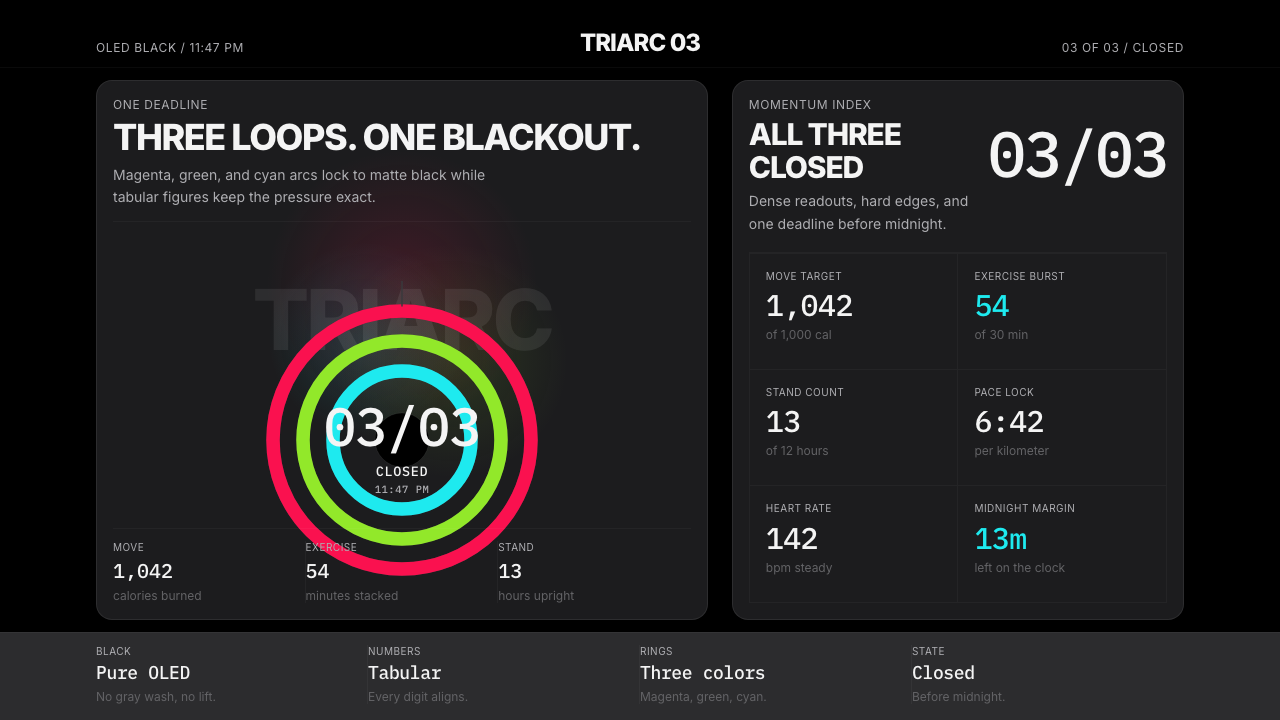 Apple Fitness Rings Closed (2024)Midnight feels exact. Magenta, green, and cyan rings lock onto OLED black.
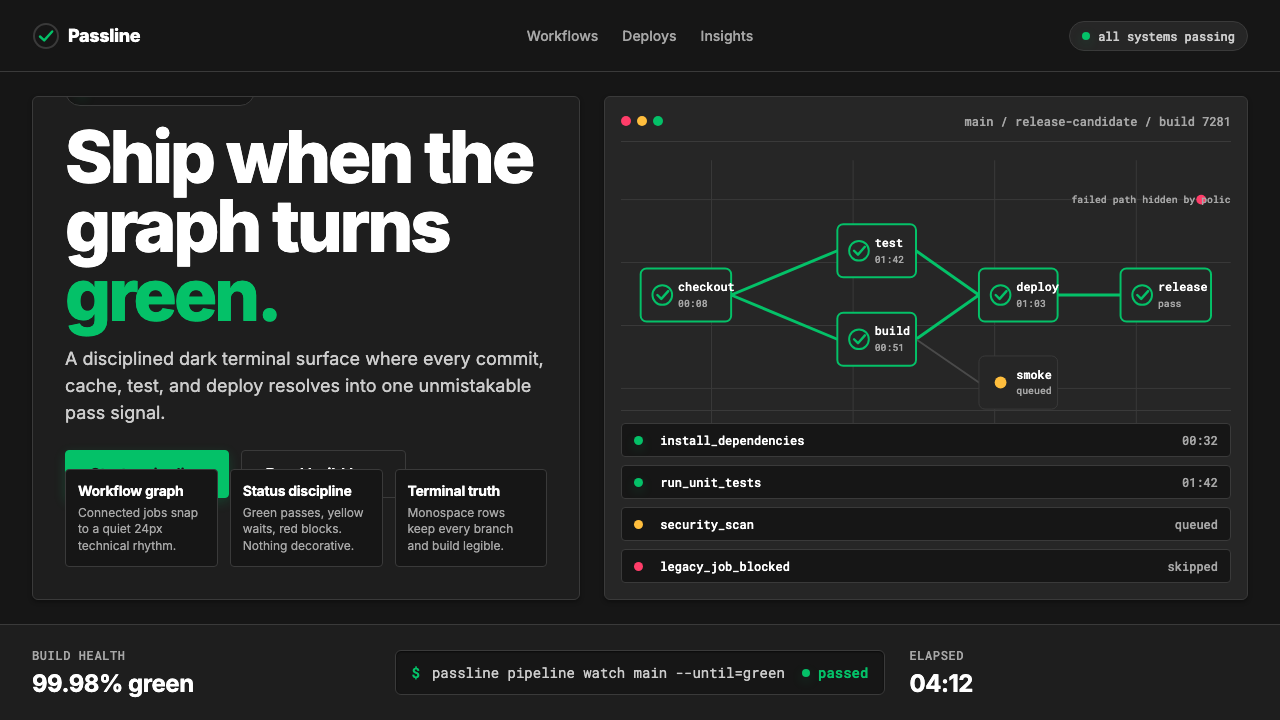 CircleCI Pipeline-GreenConfidence goes green. Emerald status lines cut through terminal-black pipeli…
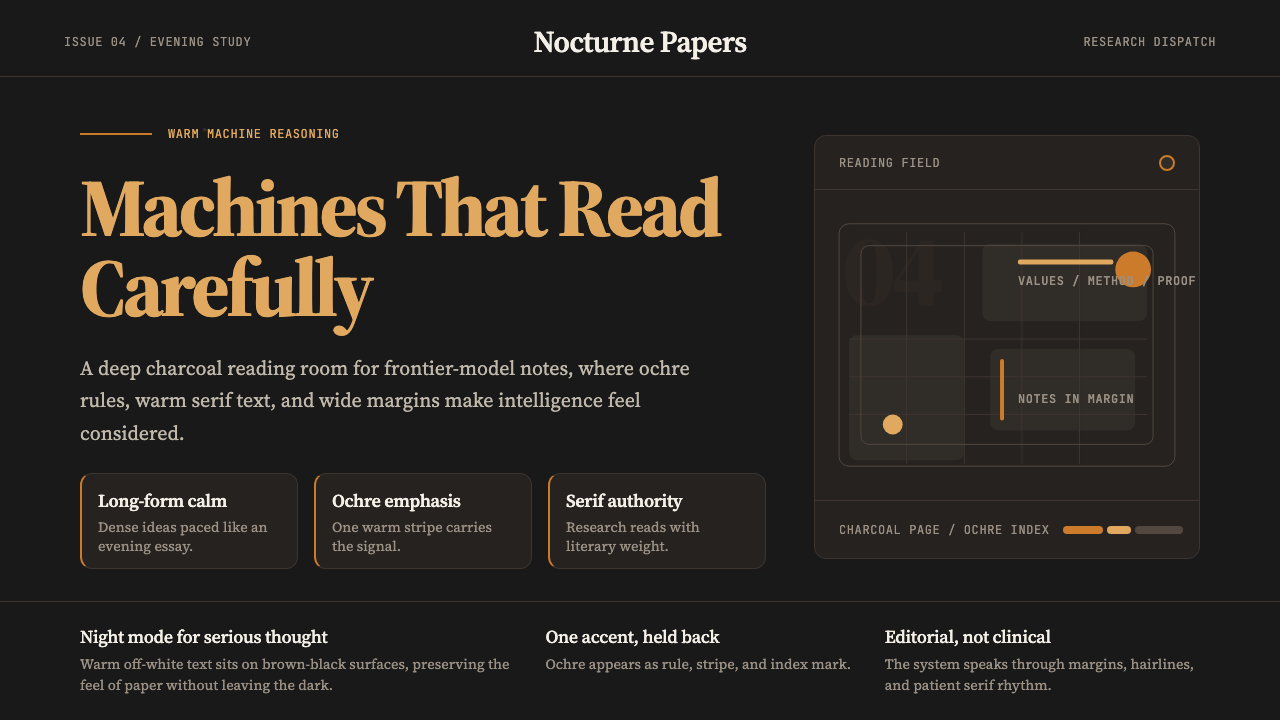 Claude / Anthropic Warm 2024Warm intelligence at night. Ochre rules and Source Serif glow on deep charcoa…
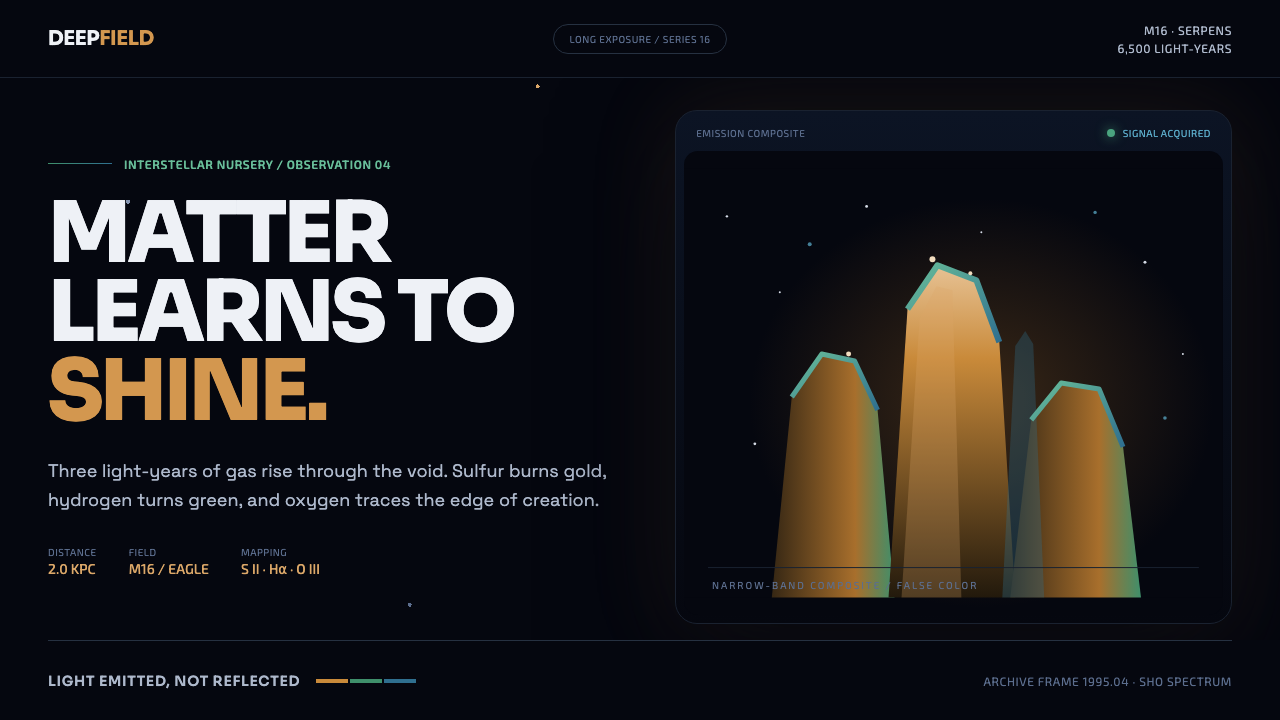 Hubble Pillars of CreationCreation glows from within. Amber towers rise through a cyan-green rim into t…
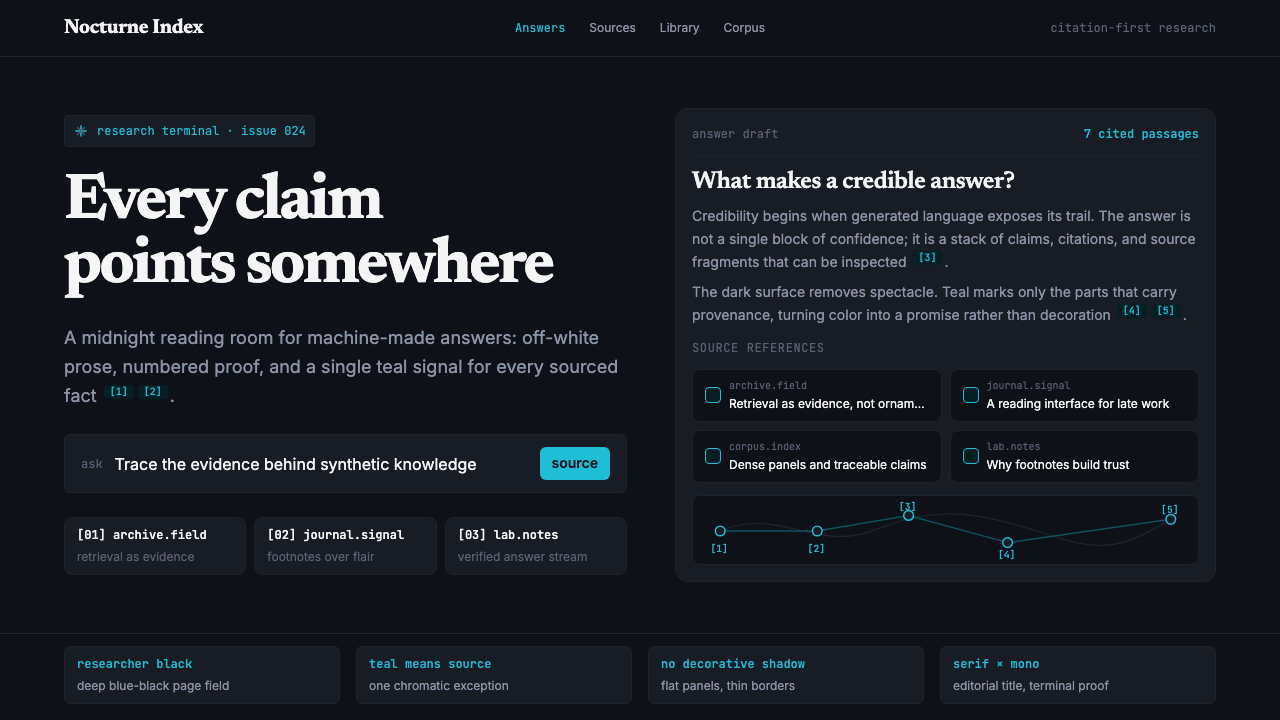 Perplexity AISerious search after midnight. Teal citations cut through black panels and de…
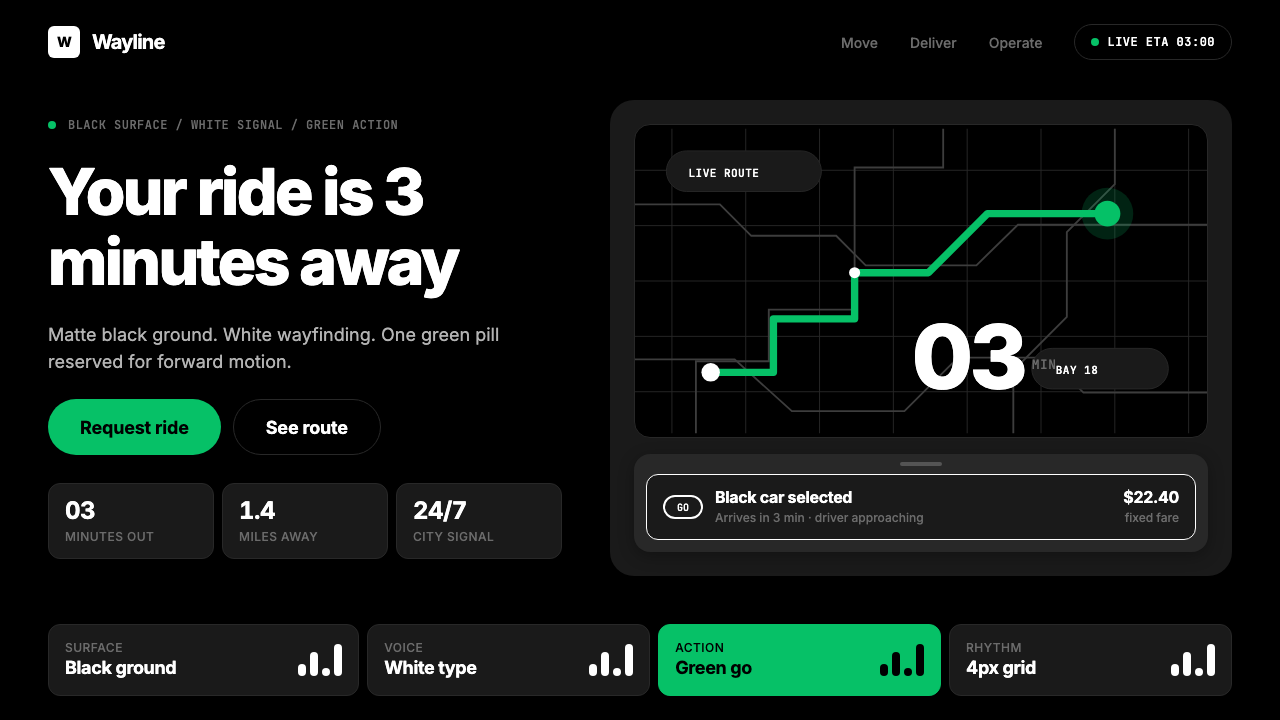 Uber 2024Motion made severe. Black surfaces, white Inter, one green pill turns the who…