What is Claude / Anthropic Warm 2024?
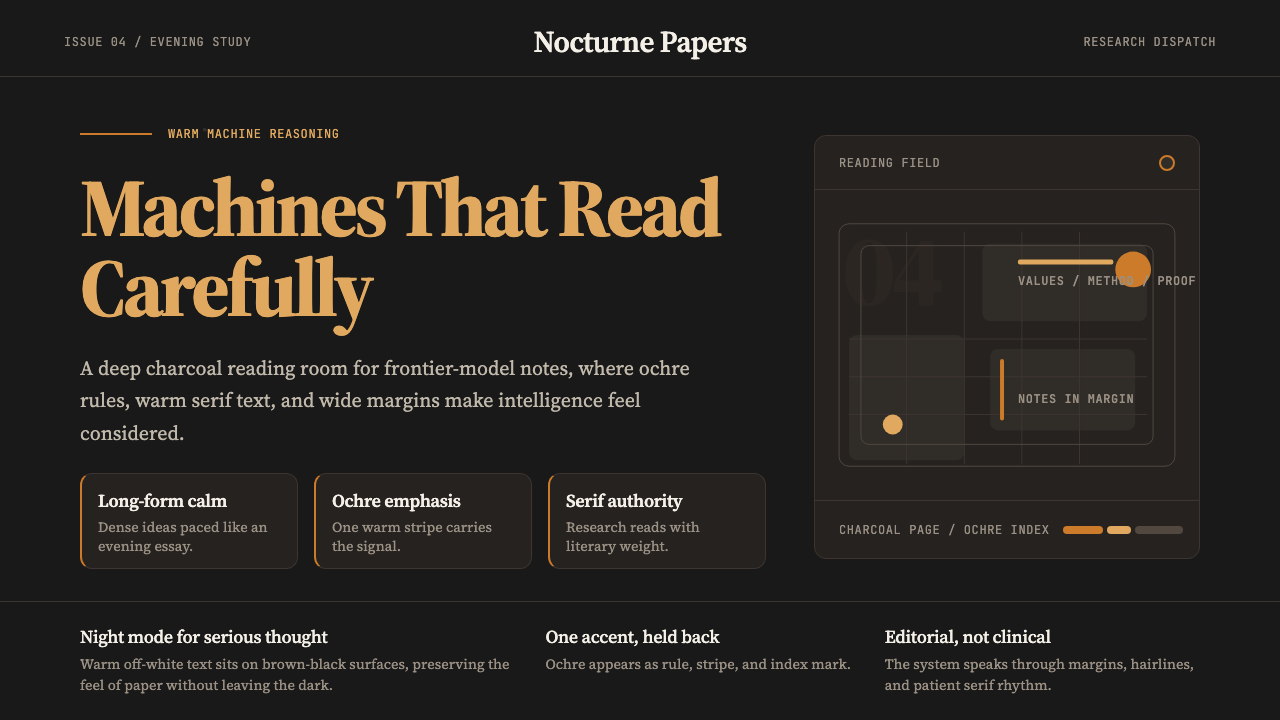
Anthropic's 2024 brand identity translates AI safety research into a visual language that feels less like a tech product and more like a late-night reading session in a well-curated library.
Claude / Anthropic Warm 2024 in brief
Claude / Anthropic Warm 2024 is the visual identity system behind Anthropic's Claude AI assistant, refined and codified through 2024. Where most AI brand identities lean into cold gradients, electric blues, and the visual grammar of machine intelligence, Anthropic made a deliberate counter-move: toward warmth, serif type, editorial whitespace, and an ochre-orange palette that evokes paper, lamplight, and the humanities. The result is a dark-mode interface that reads with the intimacy of a printed journal rather than the urgency of a live terminal.
The style is built around a deep charcoal ground — not pure black, but a dark neutral that retains a sense of material weight — against which a warm ochre accent and off-white body text glow with understated authority. The typeface choices reinforce the essayist register: a serif body type drawn from the editorial tradition delivers information with the unhurried confidence of a long-form publication, while a complementary display variant handles headings and pull quotes with proportional generosity.
This is not minimalism for its own sake. The restraint is purposeful: Anthropic's public positioning centers on safety research, interpretability, and a careful, humanistic approach to AI development. The brand had to communicate seriousness without severity, intelligence without alienation. The warm dark palette achieves this by occupying a space that feels simultaneously contemporary and timeless — a brand that could appear on the cover of a university press monograph as comfortably as on a product landing page.
Where does Claude / Anthropic Warm 2024 come from?
Anthropic was founded in 2021 by Dario Amodei and Daniela Amodei, along with several colleagues who had previously worked at OpenAI. The company positioned itself from the outset around AI safety research — particularly Constitutional AI, a training methodology that encodes explicit values and behavioral guidelines into model development. This orientation toward principled, reflective AI development would eventually find its expression in the brand's visual character.
The visual identity evolved through the early Claude model releases — Claude 1 arrived in March 2023, followed by successive generations — and reached a particular definition point in 2024 as the brand matured and the product family expanded. The 2024 design direction, led with input from brand designer Lauren Tom among others, consolidated the ochre-and-charcoal palette and the editorial serif approach into a coherent, recognizable system. The style drew deliberately from the visual culture of serious long-form publishing: the warm page of a literary review, the cream-stock covers of academic press books, the measured typographic hierarchy of a magazine essay.
The choice of a dark variant as the primary expressive register for the Claude interface reflects both practical and philosophical considerations. Practically, many users interact with AI assistants during evening and nighttime hours, in low-ambient-light environments where a warm dark background reduces eye strain while retaining readability. Philosophically, the dark-with-warm-accents aesthetic shifts the emotional register of the interface from the active, transactional feel of a typical software product toward something more contemplative — a reading environment rather than a productivity tool.
The ochre-orange accent color carries particular symbolic weight in the context of 2024 AI brand design, which had become saturated with cool blues, purples, and gradient washes. Ochre is simultaneously a very old color — one of the earliest pigments used by humans, found in cave paintings tens of thousands of years old — and a warm, organic alternative to the synthetic palette of digital-native brands. Choosing ochre was, among other things, a declaration that this AI company considered itself part of a long humanistic tradition, not just a chapter in the history of technology.
What defines the Claude / Anthropic Warm 2024 look?
Palette
The palette centers on a deep charcoal ground — dark enough to feel nocturnal, warm enough to avoid the coldness of pure black — paired with an ochre-orange primary accent that carries the visual weight of the brand. Off-white body text glows against the dark field with editorial warmth. Secondary tones stay within the warm spectrum: muted taupes, amber-inflected neutrals, and occasional use of near-cream for surface differentiation. Cool colors are largely absent; the entire palette reads as candlelit rather than fluorescent.
Typography
The typographic system is built around a serif body typeface from the editorial tradition — one whose letterforms carry the authority of a well-edited publication without feeling antiquarian. Body text is set generously: comfortable line height, a measure that invites sustained reading rather than scanning. Display type uses a complementary serif variant at sizes that reward careful spacing. The overall typographic register is that of a respected journal or university press: confident, unhurried, and literate. Sans-serif elements appear only in supporting roles — labels, captions, interface chrome — deferring always to the serif's intellectual authority.
Warmth and Restraint
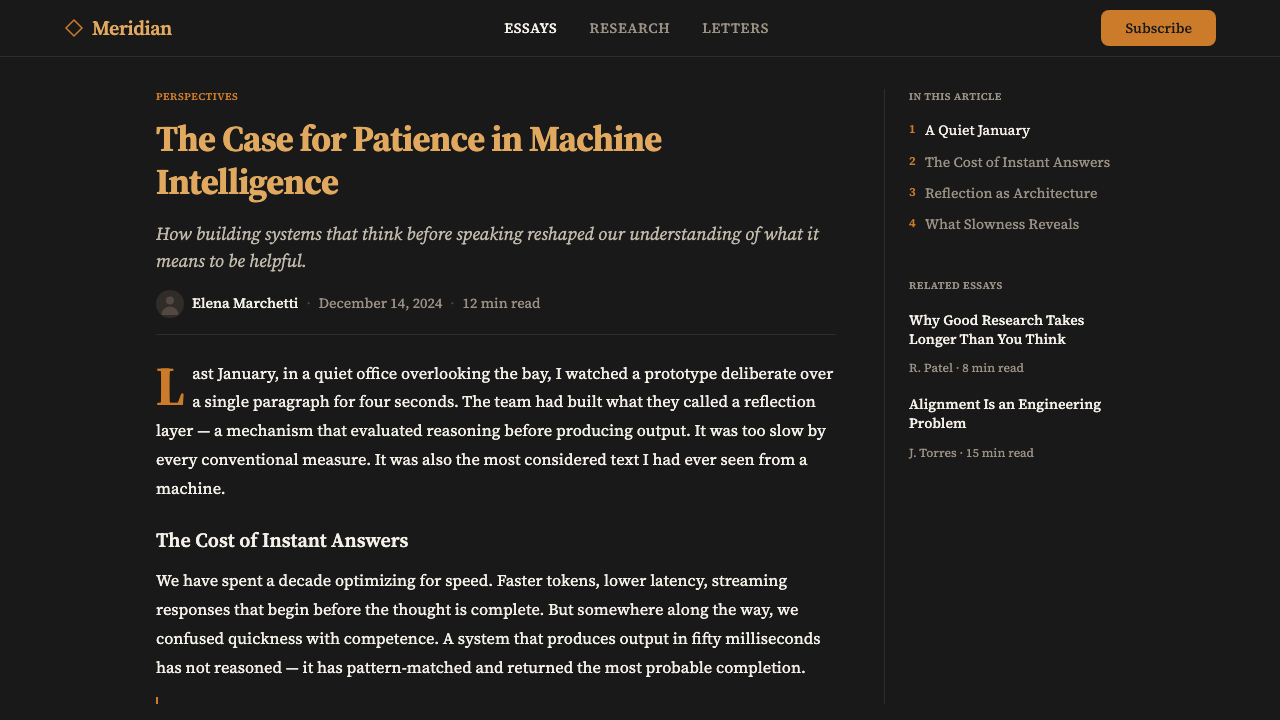
Perhaps the most distinctive quality of the style is the way it balances warmth and restraint simultaneously. The warm palette — ochre, charcoal, off-white — creates an atmosphere of comfort and intimacy. But the typographic and spatial decisions are rigorously controlled: generous whitespace, no decorative flourishes, no gradient fills, no ambient glow effects for their own sake. The warmth is earned by color and material quality, not by softening or over-humanizing the interface. This combination makes the style feel intellectually serious and emotionally approachable at the same time.
Editorial Whitespace
The style deploys whitespace — or rather, dark-space — with the generosity of a quality print publication. Elements are never crowded. Section breaks breathe. The margins are deliberately wide, giving content room to establish itself before anything else competes for attention. This spatial generosity is not empty space but structured silence: it tells the reader that what is present is there because it earned its place, and that the system is confident enough in its content not to fill every corner.
Material Warmth
Even on screen, the palette evokes tactile, material qualities — the grain of warm paper, the depth of a well-aged wood surface, the quality of ochre pigment applied by hand. This is achieved not through skeuomorphic texture overlays but through the careful selection of colors that exist in the material world: a charcoal that reads like dusk, an orange that reads like terracotta. The effect is that the interface feels made rather than generated — a considered artifact rather than a template.
Intellectual Seriousness
The overall visual effect communicates a specific kind of seriousness — not the cold authority of a financial institution or the aggressive confidence of a tech startup, but the measured, humanistic gravity of a research institution that takes its work seriously and trusts its audience to do the same. This quality comes from the combination of editorial typography, restrained decoration, and a palette that references the world of ideas rather than the world of commercial software. It is a brand that reads rather than broadcasts.
Dark Mode as Primary
Unlike most design systems that treat dark mode as a secondary variant of a light-mode original, the Anthropic Warm 2024 system elevates dark mode to primary expressive status. The deep charcoal background is not a color-inverted afterthought but the defining canvas of the visual identity. Light surfaces appear as the variant rather than the base. This inversion signals that the primary context for the product is not daytime productivity but evening contemplation — a subtle but significant statement about who the interface is for and when they are likely to use it.
Who shaped Claude / Anthropic Warm 2024?
As co-founder and CEO of Anthropic, Dario Amodei — a former VP of Research at OpenAI with a background in computational neuroscience — shaped the company's intellectual character. His public communications, published essays, and long-form interviews on AI safety and development established the essayistic, humanistic voice that the brand's visual identity ultimately expresses. The mismatch between the warmth of Anthropic's brand and the gravity of its subject matter — existential AI risk — is in part a reflection of Amodei's own intellectual style: serious but not alarmist, precise but not cold.
Co-founder and President Daniela Amodei — with a background in operations and business at scale — was instrumental in establishing Anthropic as a company that could translate frontier research into a commercially sustainable product. Her leadership shaped the product and brand direction in ways that made Claude not merely a capable model but a recognizable presence with a coherent identity. The business acumen she brought ensured that the warmth of the brand was not just an aesthetic preference but a strategically legible position in a crowded market.
Chris Olah, Anthropic's co-founder and interpretability research lead, represents the technical and humanistic combination that underlies the brand's character. His celebrated blog writing on neural network visualization and mechanistic interpretability — recognized for making complex ideas legible to non-specialist readers — established a model of technical communication as a form of intellectual hospitality. This disposition, shared across Anthropic's research communications, informs the design's aspiration to be readable, generous, and substantive rather than impressive and opaque.
Brand designer Lauren Tom contributed directly to the visual crystallization of Anthropic's identity through the 2024 design direction. The work involved translating the company's intellectual and ethical commitments into a coherent visual system — a challenge that required both aesthetic sensibility and deep understanding of what the brand needed to communicate. The success of the ochre-and-charcoal system as a recognizable and emotionally coherent brand identity in one of the most competitive visual categories of 2024 reflects the quality of that translation work.
The broader Anthropic research team — working on Constitutional AI, interpretability, and safety-focused model development — collectively shaped the intellectual character that the visual identity needed to express. Constitutional AI, the training approach that gives models explicit value guidelines, embeds a humanistic framework into the technical process itself. The brand's warmth is not incidental to this work; it is the visual articulation of a company that believes AI development is, at its core, an ethical and human project rather than merely an engineering one.
How do you use Claude / Anthropic Warm 2024 today?
The Claude / Anthropic Warm 2024 style translates most naturally into contexts where intellectual seriousness and human warmth need to coexist — where the product needs to feel capable without feeling cold, trustworthy without feeling institutional. This alignment makes it particularly powerful for AI-adjacent products, research tools, knowledge platforms, and any interface where sustained reading is part of the primary experience.
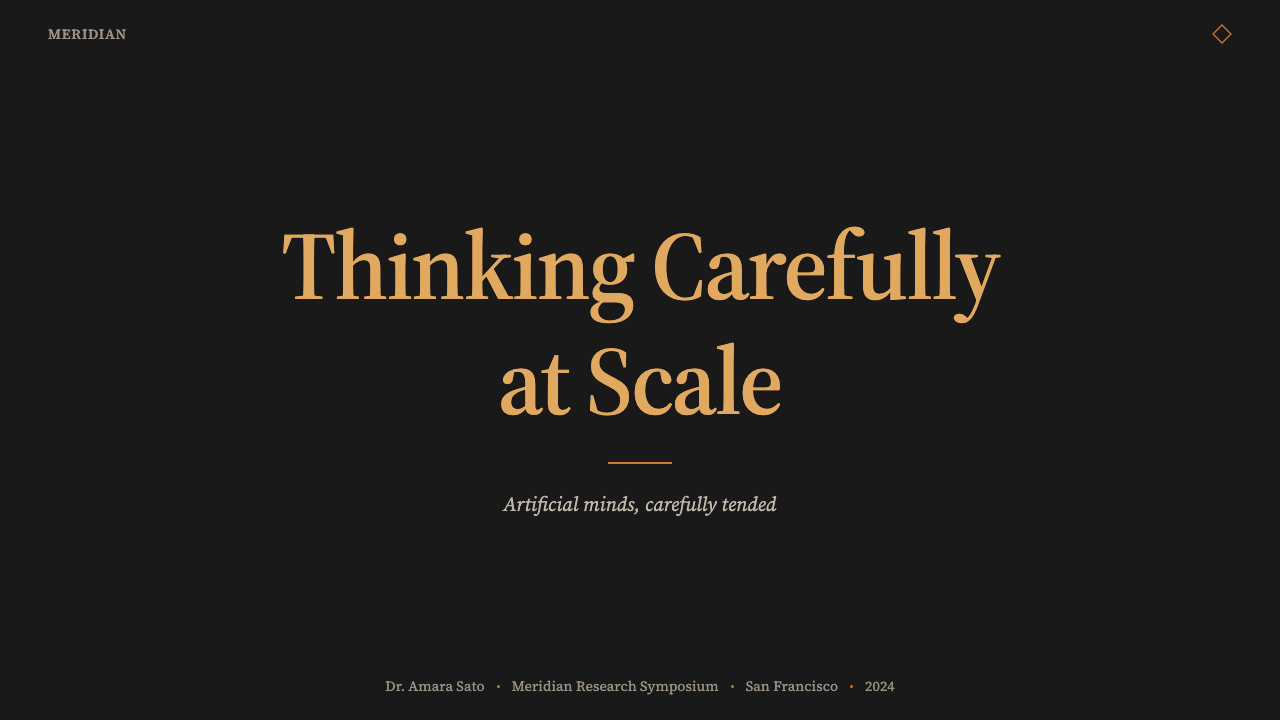
For presentation slides, the style works at its best when deployed with editorial restraint. Cover slides benefit from the full weight of the palette: a deep charcoal field with an ochre headline set in a confident serif, and generous breathing room around every element. Content slides should be treated like well-designed journal pages — one primary idea per slide, type hierarchies communicated through size and weight rather than decoration, and plenty of dark space around the content block. Data visualizations take on a warm, document-like quality when the ochre accent is used to highlight the key series while supporting data remains in the off-white and muted neutral range. Avoid filling slides to their edges; the margin is part of the design.
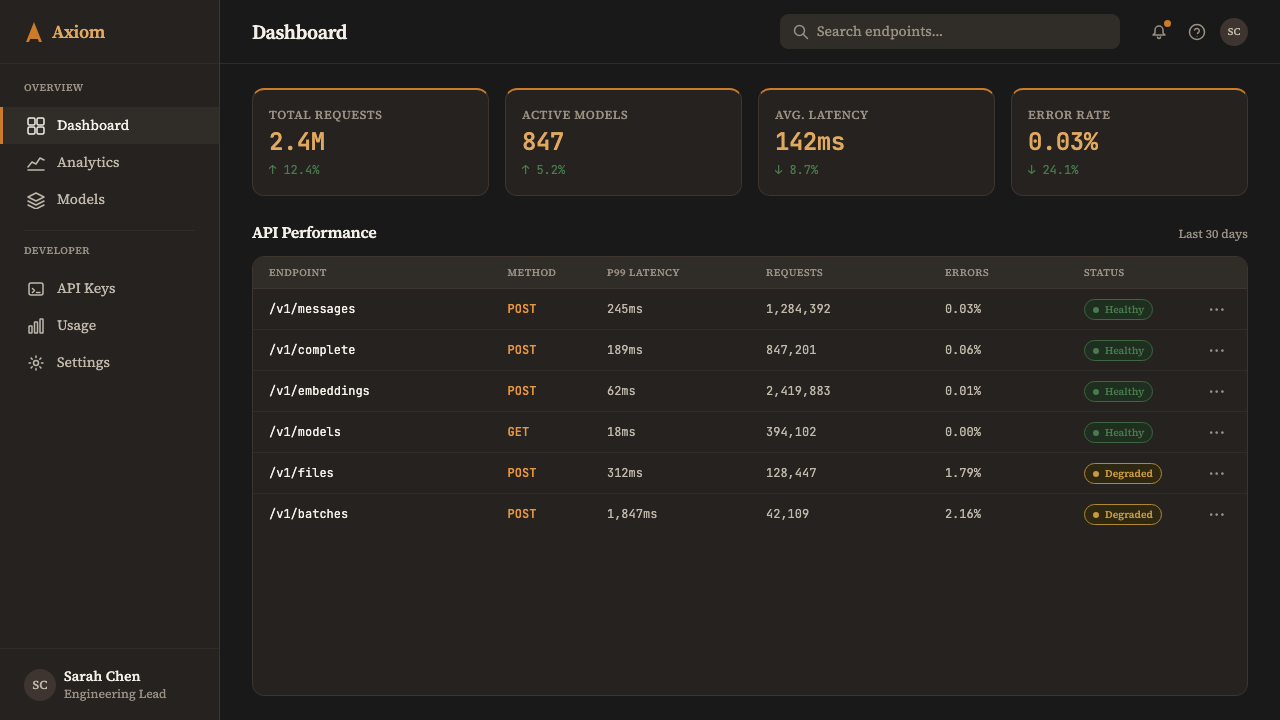
For web interfaces and digital products, the style suits knowledge-intensive contexts: documentation pages, research summaries, long-form article layouts, pricing and comparison tables where credibility matters as much as conversion. Applied to a dashboard or analytics interface, the deep charcoal background reduces visual fatigue during extended sessions, while the ochre accent provides a reliable and non-distracting focal color for key metrics and interactive states. Navigation should be typographic and restrained — the brand's authority comes from the type, not from icons or decorative chrome.
For editorial and marketing applications, the style carries immediate associative weight from Anthropic's own public communications — essays, research papers, blog posts — that have established a recognizable tone of measured, thoughtful authority. Marketing pages that adopt this visual register benefit from the same associations: the brand feels like it has already done the thinking, and is now sharing its conclusions. Long-form landing pages work particularly well: alternating full-width sections between deep charcoal and slightly lighter warm neutrals, with the ochre reserved as the single action color. Pull quotes in large serif type, generous section spacing, and the avoidance of any animation that draws attention to itself all contribute to a reading experience that feels earned.
The most common mistake when applying this style is losing the restraint that makes it distinctive. The ochre accent is powerful precisely because it appears selectively; using it as a fill color for large surface areas turns the brand identifier into decoration and erases the contrast that gives it meaning. Similarly, the editorial typography demands real typographic discipline — the serif must be deployed at appropriate text sizes and with proper leading, not just chosen as a font and dropped into a crowded layout. The warmth of the palette can also tempt designers into adding soft glows, ambient shadows, or rounded corners that were not part of the original system; the authentic version of this style is crisper and more architecturally decisive than it might initially appear.
Claude / Anthropic Warm 2024 — FAQ
How does this style differ from other dark-mode AI brand identities?
Most dark-mode AI brand identities in 2024 used cool color palettes — deep navy, electric violet, mid-toned gray — with gradient accents and geometric or particle-system motion graphics that signal computational power and speed. The Anthropic approach inverts almost every one of these conventions. The background is warm charcoal rather than cool gray or navy. The accent is ochre rather than blue or purple. The typography is serif rather than sans-serif. Motion, where it appears, is slow and deliberate rather than fast and generative. These inversions are not arbitrary; each one shifts the associations of the brand away from 'powerful machine' and toward 'thoughtful institution.'
Is the ochre accent interchangeable with other warm accent colors — amber, terracotta, or gold?
Technically substitutable, but each substitution shifts the brand register significantly. Amber reads as more golden and celebratory, closer to trophy or luxury associations. Terracotta reads as more earthen and Mediterranean, closer to artisan craft associations. Gold reads as precious and possibly financial. Ochre sits in a position that is warm and material without being precious or festive — it is the color of pigment, of autumn light, of old paper, of things made rather than things bought. This specific emotional position, combined with the depth of the charcoal ground, is what gives the palette its distinctive character and distinguishes it from generic warm-dark color combinations.
Does this style work for light-mode interfaces, or is it inherently a dark-mode system?
A light-mode variant exists in Anthropic's own brand — the warm cream-page version that predated or accompanies the dark variant. When inverted to a light ground, the palette logic remains coherent: the ochre accent retains its warmth and legibility against cream or off-white backgrounds, the serif typography reads with the same editorial quality, and the generous spacing remains appropriate. However, the specific emotional quality of the dark version — that sense of evening contemplation and deep focus — does not fully transfer. The light variant reads as more open and less intimate. For applications where welcoming new users or communicating accessibility is important, the light variant may serve better; for applications where depth and sustained engagement are the goal, the dark version is the stronger choice.
What kinds of products would be a poor fit for this style?
The style struggles in contexts that depend on speed, energy, or sensory stimulation as primary values. Gaming interfaces, entertainment platforms, consumer e-commerce, food and beverage brands, children's products, and social media applications all rely on visual registers — bright saturation, fast motion, playful variation — that are structurally opposed to what this style is doing. The style is also less suited to applications where users need rapid orientation and quick scanning rather than sustained reading; the editorial pacing and generous spacing that make long-form content feel authoritative can make interaction-heavy utility apps feel slow. Most importantly, the style communicates a kind of institutional seriousness that fits AI research and knowledge tools perfectly but would feel incongruous or overly formal in casual or highly personal consumer contexts.
How should the serif typography be balanced against the need for interface legibility at smaller sizes?
The editorial serif that anchors this style is optimized for reading sizes — the comfortable range for sustained body text consumption. At very small sizes, for labels, captions, metadata, and interface micro-copy, the serif can lose legibility on screen, and the style's own practice is to deploy a complementary sans-serif for these supporting roles. The key is maintaining a clear hierarchy: serif for anything the user is meant to read carefully (articles, explanations, headings at reading scale), sans-serif for anything the user is meant to scan or reference quickly (timestamps, tags, field labels). The transition between the two type registers should feel purposeful, not inconsistent — the sans-serif elements should share the palette's warmth and the overall layout's spatial generosity, even if the letterforms themselves are simpler.
Related design styles
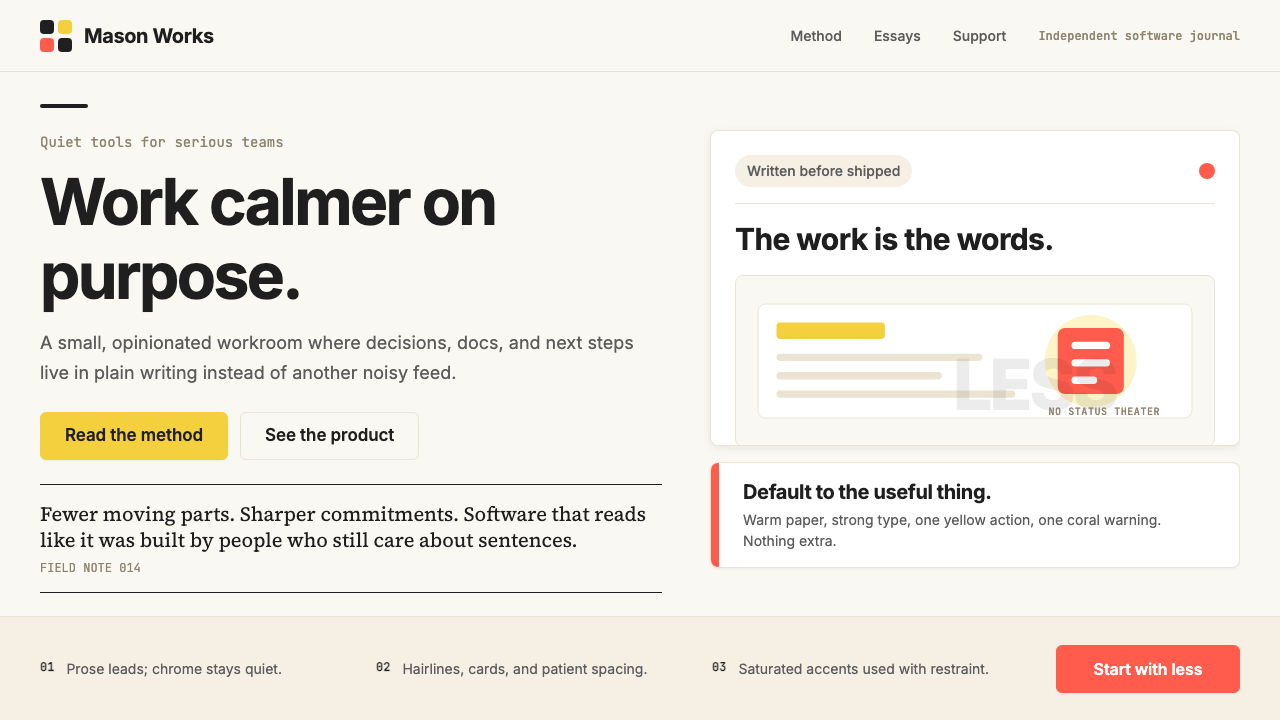 Basecamp / 37signalsQuiet craft, strong opinions. Cream paper, tight sans type, yellow and coral…
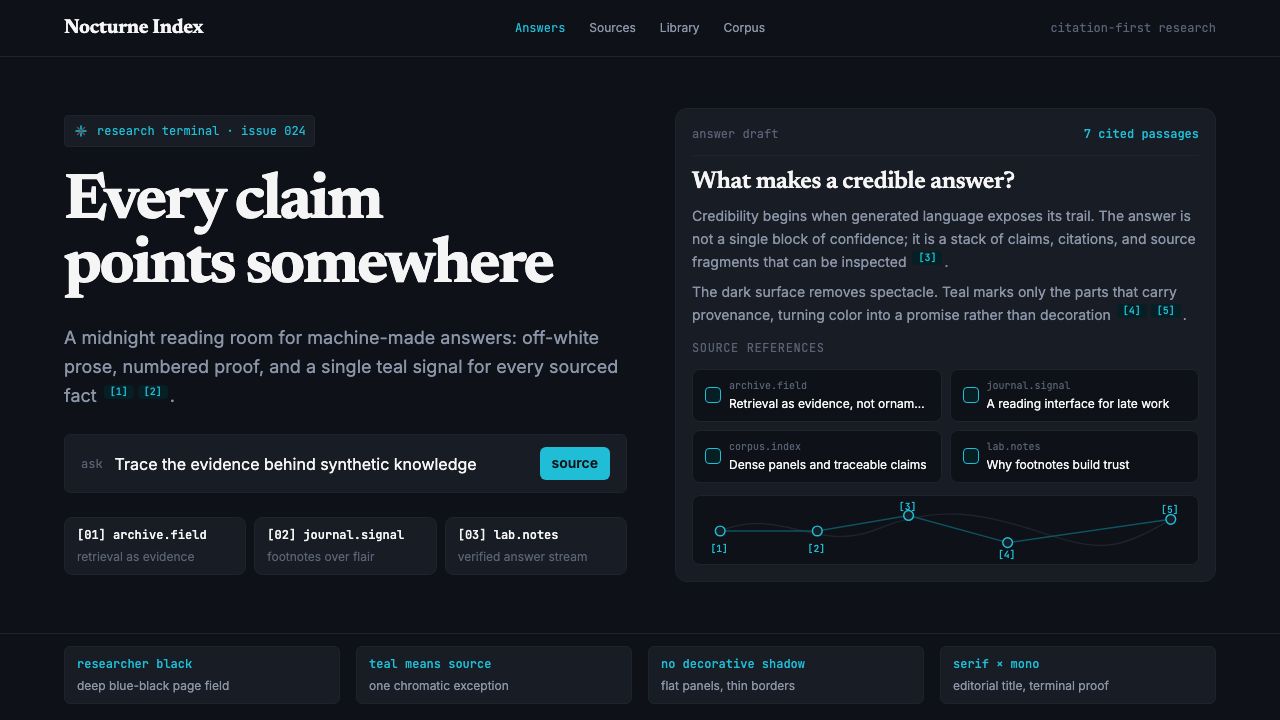 Perplexity AISerious search after midnight. Teal citations cut through black panels and de…
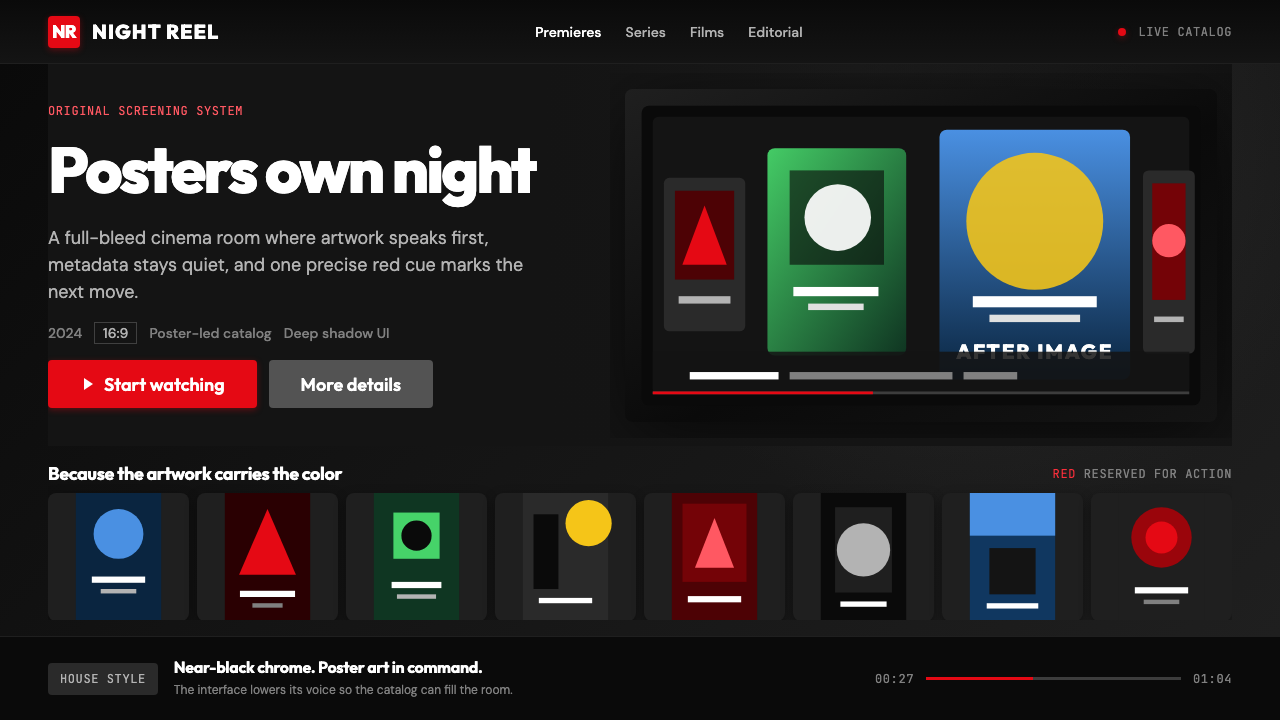 Netflix 2024Cinema UI goes dark. Near-black chrome, poster rails, and one surgical red ac…
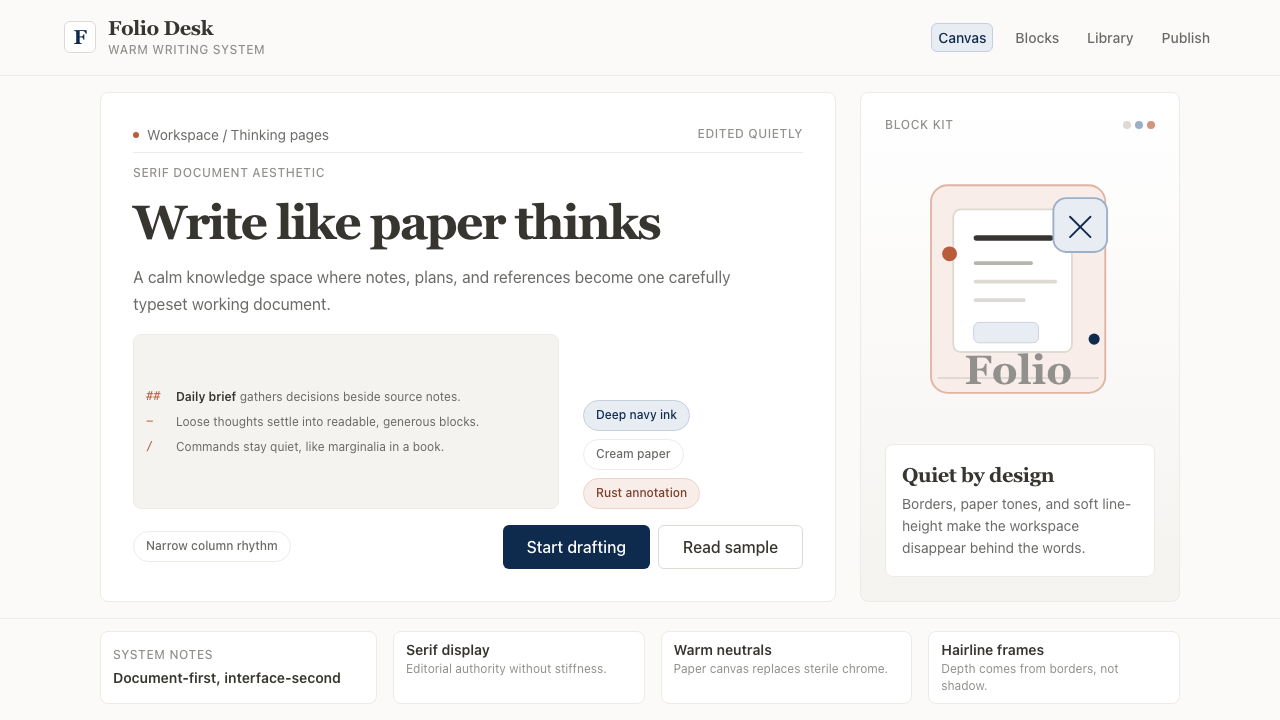 Notion ModernWriting feels papery. Source Serif on warm cream, navy ink, and hairline bord…
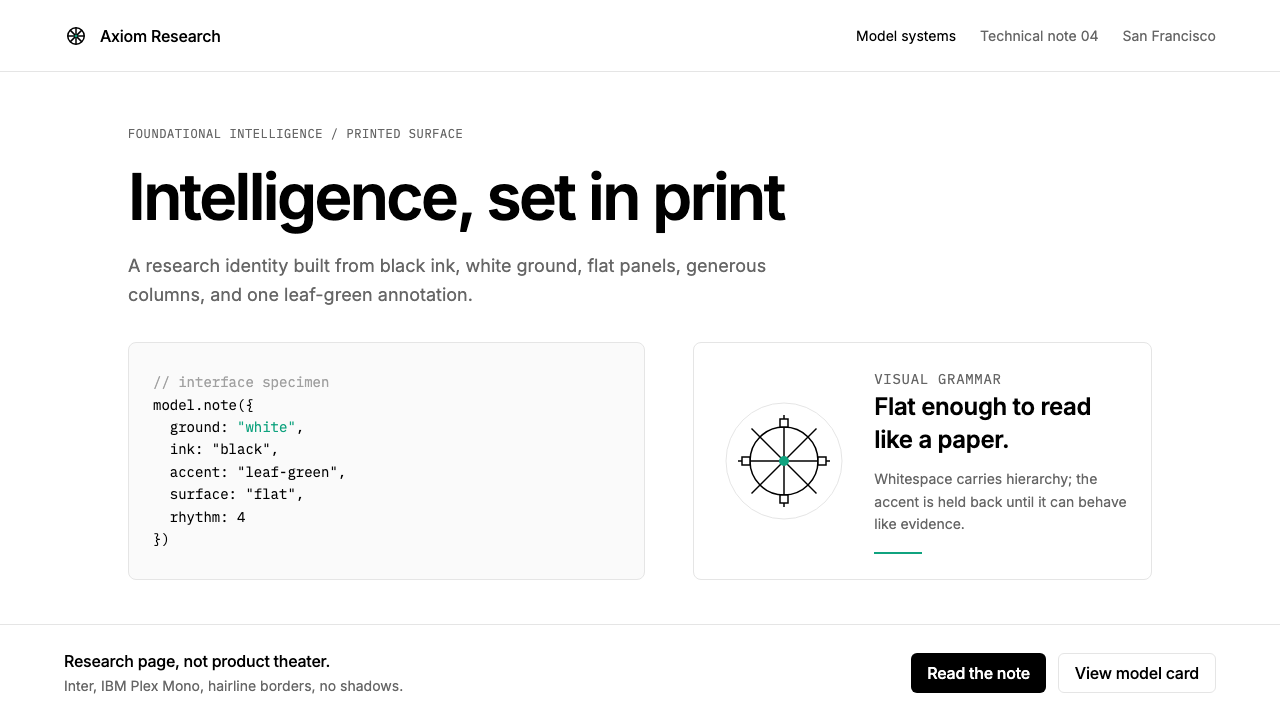 OpenAI 2024Research-grade restraint. Black-on-white Inter, flat code panels, one leaf-gr…
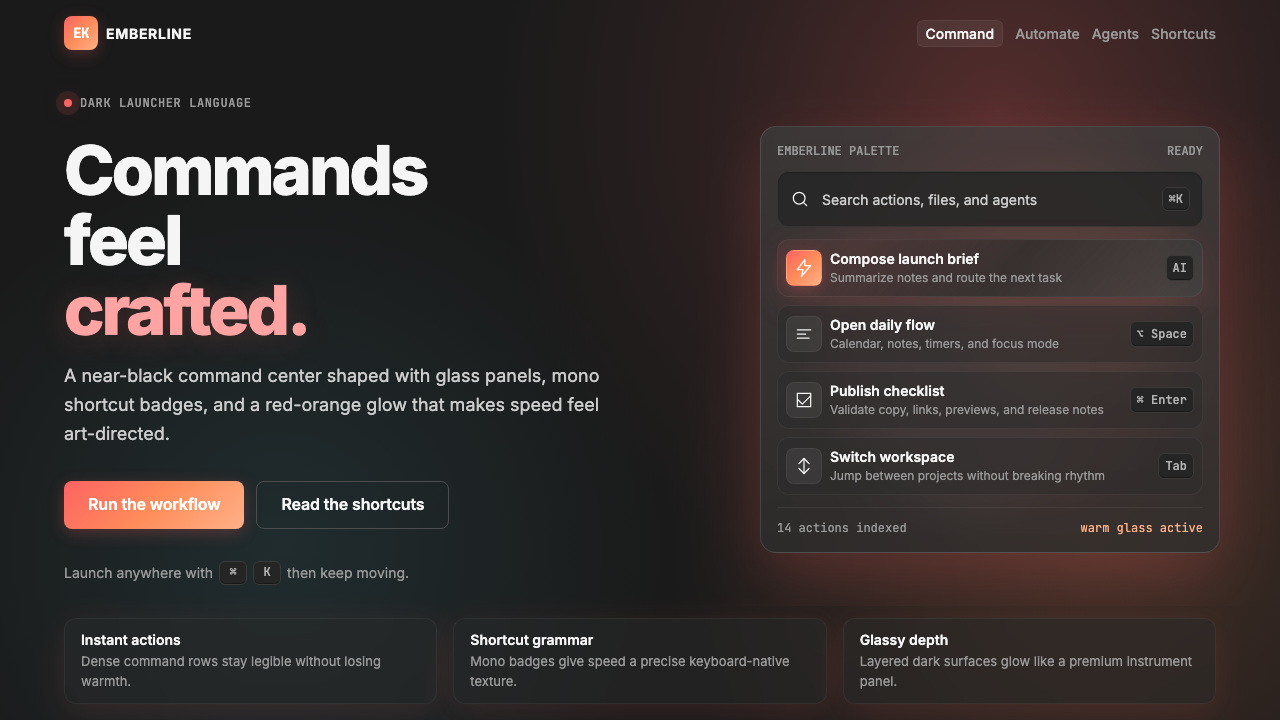 Raycast 2024Productivity feels art-directed. Red-orange glow, glass cards, and mono badge…