What is Perplexity AI?
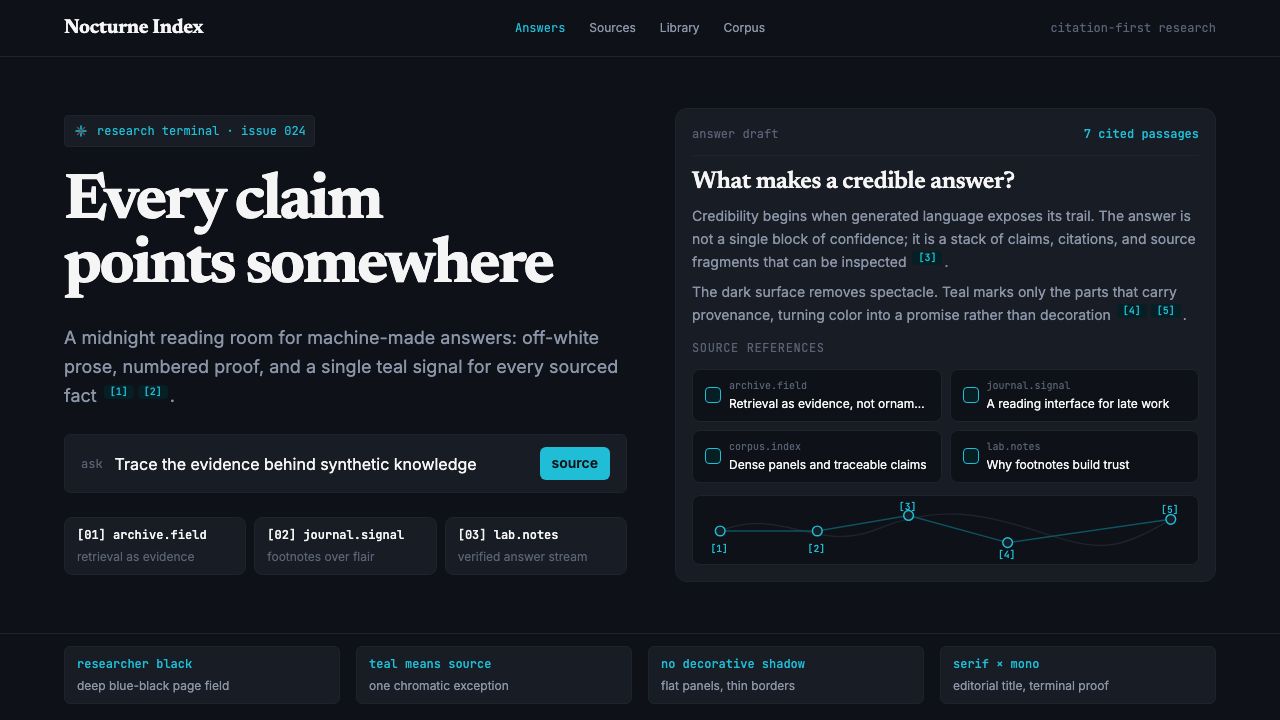
Perplexity AI dresses serious research in a library-at-midnight aesthetic — dark surfaces, electric teal citations, and the information density of an academic paper.
Perplexity AI in brief
Perplexity AI is an AI-powered answer engine whose visual identity — a deep blue-black field, a single electric teal accent, monospace citation markers, and densely set text — encodes a clear cultural message: this is where serious people search now. Founded in 2022 by a team of former Google and Meta AI researchers in San Francisco, the product pairs conversational AI with real-time source retrieval, and its design makes that combination visible. Every answer arrives with numbered citations; the interface never lets the user forget that claims have sources.
Where traditional search engines scatter color and imagery across ads, widgets, and carousels, Perplexity strips the interface to its epistemological core: a dark surface, near-white reading text, and teal hyperlinks that carry an unmistakable meaning — this fact is sourced and verifiable. The result is a design language that feels closer to an academic database or a well-maintained research terminal than to a consumer application. It is deliberately anti-playful, anti-decorative, and anti-ambient.
The aesthetic has been called a 'library at midnight' — a phrase that captures both the darkness of the interface and the scholarly seriousness of its intent. This is not a dark mode applied as a trend; it is a complete visual position. The teal accent is not an arbitrary brand color but a semantic marker: it identifies every piece of information that has been retrieved, attributed, and linked. The design makes epistemology visible.

Where does Perplexity AI come from?
Perplexity AI was founded in August 2022 by Aravind Srinivas, Denis Yarats, Johnny Ho, and Andy Konwinski — all of them researchers or engineers with deep roots in the AI research community, carrying experience from Google Brain, DeepMind, OpenAI, UC Berkeley, and Meta AI. Srinivas, who serves as CEO, had worked on reinforcement learning and generative models; Yarats on model optimization; the founding team's combined background was not in consumer product design but in the mechanics of how large language models retrieve and reason over information. That research-first background shaped everything about the product's identity.
The visual identity that emerged in 2023 and solidified through 2024 was not designed by a traditional branding agency working from a mood board. It grew from the product's function: an interface that retrieves, ranks, and cites sources in real time needed a design language that could make citation legible and primary, not secondary. The decision to use a dark base — a deep blue-black rather than the flat black of generic dark modes — gave the interface a quality closer to a late-night research terminal or a Bloomberg terminal than to a consumer social product. It signals: this is for work.
The teal accent color entered the design not as an arbitrary brand differentiator but as a functional choice. In the context of a dark interface saturated with near-white reading text, a warm neutral accent would blend into the typographic field. Teal — electric, cool, and unlike any ambient element on the screen — reads immediately as interactive, as sourced, as linked. It is the visual equivalent of a footnote superscript: a signal that this word or number points somewhere else. The entire citation system rests on the legibility of this single accent against the dark ground.
By 2024, Perplexity's visual system had attracted significant attention in the design community not because it was ornamental or trend-chasing but because it represented something rare: a product interface whose aesthetic was determined by epistemic function. The design says what the product does. That coherence between function and appearance — a version of 'form follows function' for the AI search era — placed Perplexity in a design tradition that values clarity of purpose above visual richness, and made its interface one of the most studied and referenced in the AI product wave of the early 2020s.
What defines the Perplexity AI look?
Dark Ground
The foundational surface is a deep blue-black — not the flat black of generic dark modes, but a color with perceptible blue depth that reads as space rather than void. This choice is not cosmetic; it creates the visual context in which the teal accent achieves its maximum legibility and the near-white reading text achieves its maximum contrast without becoming harsh. The dark ground signals seriousness, focus, and the absence of ambient distraction — it is the color of a research environment, not an entertainment one.
Teal Citation Accent
A single electric teal — cool, luminous, and impossible to confuse with any ambient element of the interface — serves as the sole accent color across the entire design system. Its function is semantic before it is aesthetic: teal marks everything that has been retrieved, attributed, and linked. Citation numbers, hyperlinks, interactive controls, and highlighted source references all share this color. Because only one accent exists, the user's eye learns immediately that teal means 'this points somewhere' — a learned visual grammar that makes the citation-first experience coherent.
Monospace Citation Markers
Source numbers and inline citation markers are rendered in a monospace typeface, deliberately distinguishing them from the proportional text used for answers and prose. This typographic choice carries several simultaneous meanings: monospace has a long association with code, terminals, and technical precision; it signals that the number is a reference identifier rather than a prose word; and it creates a visual texture shift that makes citations immediately scannable. The effect is like the superscript notation of an academic paper, but larger, more legible, and system-wide.
Information Density
The interface is designed to accommodate high information density without visual chaos. Text is set at a reading size that respects the length of complex answers; line spacing is calibrated to allow sustained reading rather than skimming; multiple sources, follow-up questions, and related panels can coexist in the layout without competing destructively for attention. This density is not an accident of cramped design — it is a deliberate position that says: the user who comes here is capable of reading, not just scanning.
Serif Body Type
Long-form answers are rendered in a serif typeface — an uncommon choice for a technology product and a deliberate signal. Serifs have a long association with serious reading: books, academic journals, newspapers, legal documents. Deploying a serif for AI-generated answers says these answers deserve to be read as text, not skimmed as bullet points. It also creates a strong typographic contrast with the monospace citation markers, reinforcing the visual grammar that distinguishes prose from reference.
Zero Decorative Noise
The interface contains no gradients applied for visual richness, no ambient glow effects, no illustrative imagery, no decorative borders, and no color used for anything other than semantic purpose. Background regions are flat; dividers are simple lines; panels are delineated by subtle shifts in surface value rather than drop shadows or borders. This restraint is not minimalism for its own sake — it is the visual equivalent of a library rule: everything present serves a purpose, and visual noise is a kind of lie.
Focus State Clarity
Interactive elements — input fields, buttons, citation links, source panels — have precise and consistent focus and hover states, all expressed through the teal accent and sharp edge changes rather than soft glow or opacity shifts. This precision matters for an interface used in sustained research sessions, where the user needs to know exactly what is active and what is not without visual ambiguity. The focus treatment is functional design in the strictest sense: it exists to reduce cognitive load during complex multi-step research.

Who shaped Perplexity AI?
Co-founder and CEO of Perplexity AI, Srinivas previously worked on reinforcement learning and large-scale generative models at OpenAI and Google Brain. His research background shaped the product's core proposition: AI should not just generate answers but retrieve, attribute, and surface the sources behind them. That epistemic commitment — treat every claim as something that requires a citation — is the philosophical engine behind the design system. Srinivas has consistently described the product as an 'answer engine' rather than a chatbot, a distinction that has direct visual consequences for how the interface handles information.
Co-founder and CTO, Yarats brought deep expertise in model optimization and efficiency from his time at Meta AI Research and UC Berkeley. His technical work ensured that the real-time retrieval architecture underlying Perplexity's answers could function at the latency demanded by a search-replacement product — fast enough that the interface could afford to surface multiple sources simultaneously without the user experience breaking down. The design's information density is only legible because the retrieval system behind it is fast enough to make density worthwhile.
Co-founder and President, Ho contributed expertise in machine learning infrastructure and systems from prior work at institutions including Quora and various research labs. His background in information retrieval systems directly influenced the product's approach to presenting sourced answers at scale. The citation-first visual grammar of the interface — where every answer is inseparable from its sources — reflects a systems-level understanding of information architecture that goes beyond surface visual design.
Co-founder, Konwinski brought experience from the academic and open-source AI infrastructure world — including involvement with Apache Spark and Databricks — that gave the founding team credibility with research communities and enterprise users alike. His background oriented the product toward users who have sophisticated information needs rather than casual queries, a target audience that the design reflects directly: the library-at-midnight aesthetic is not for everyone, and that is by design.
How do you use Perplexity AI today?
Perplexity AI's visual system is highly transferable to any context where authority, source transparency, and intellectual seriousness are core values. Applying it correctly means understanding what the system is actually doing: the dark ground creates focus; the teal accent creates a semantic layer on top of the typographic field; the information density signals competence. Reproducing the surface look — dark background, one bright color — without reproducing the underlying logic produces an interface that looks dramatic but communicates nothing specific.
For presentation slides, the Perplexity register works best on cover pages and data-heavy content slides. A cover in this style uses the dark ground as the field, sets the title in a large serif or neutral proportional typeface, and reserves the teal accent for a single organizing element — a date, a category label, a source credit. Content slides should be treated as reading environments: text at a generous size, ample line spacing, teal used only for links or referenced sources, no decorative imagery. Data slides adopt the aesthetic of a research brief: charts are stripped to their essential geometry, source annotations appear as monospace footnotes below the visualization, and color beyond teal is used only when the data itself requires categorical distinction.
For web interfaces — dashboards, analytics tools, documentation sites, pricing pages, and research platforms — the Perplexity system offers a strong foundation. The approach: a deep blue-black or very dark neutral as the base surface, near-white for all primary reading text, teal reserved exclusively for interactive and linked elements. Card components should use subtle surface value shifts rather than drop shadows or heavy borders to establish depth; the goal is a surface that reads as layered but never cluttered. Navigation in this register is typographic and spare — no icon-heavy sidebars, no gradient buttons, no decorative chrome around functional controls.
For editorial and marketing contexts — long-form articles, research reports, white papers, and brand materials aimed at technical or professional audiences — the Perplexity aesthetic translates into a set of decisions about information hierarchy. Body text is set in a serif typeface with generous leading; section headers are typographic rather than decorative; pull quotes and source annotations are distinguished from body text through typeface shift rather than color. The teal accent, when it appears in editorial contexts, should be reserved for citations, footnotes, and cross-references — not used for emphasis or decoration. Marketing pages in this register communicate seriousness through restraint: full-surface dark panels alternating with near-white panels, with teal appearing only at points of functional interaction.
A common mistake when working in this register is treating the dark palette as permission to add atmospheric visual effects — gradients bleeding from dark to light, glowing halos around UI elements, ambient color washes in the background. These effects undermine exactly what the system is designed to communicate. The library-at-midnight aesthetic is powerful because it is flat, precise, and unambiguous; every element of visual noise makes the interface read less like a research tool and more like a consumer entertainment product. Equally, designers sometimes mistake the teal accent for a general-purpose accent color and begin using it decoratively, for illustrations or visual interest, rather than exclusively as a semantic marker for sourced and interactive content. Once teal loses its singular semantic function, the entire citation grammar collapses.

Perplexity AI — FAQ
Is this a standard dark mode, or something more specific?
It is something more specific. Generic dark mode reverses a light interface to a dark equivalent, usually as a user preference for low-light comfort. Perplexity's dark ground is not a mode — it is the default and primary state, and it was chosen for semantic and cultural reasons, not ergonomic ones. The deep blue-black carries associations with research terminals, academic databases, and late-night focused work. The decision to build the entire visual identity around this ground rather than offering light as the primary option is a product positioning statement: this interface is for serious, focused information work, not casual browsing.
Why use only one accent color across the entire interface?
Because the accent color carries a specific semantic meaning — it marks sourced, retrieved, and linked information — and that meaning only works if the accent is singular. If a second accent color were introduced for, say, interactive controls or alert states, the user would need to learn which color means which thing, and the automatic grammar of 'teal equals citation' would be diluted. The constraint of a single accent is also what gives the interface its characteristic austerity: with only one accent against a dark near-neutral field, the design is forced to communicate hierarchy through typography, scale, and surface value alone.
Can this aesthetic work for a brand that is not an AI search product?
Yes, but only if the brand's values genuinely align with the aesthetic's values. The Perplexity visual register communicates: authority, epistemic precision, research orientation, and deliberate seriousness. It works well for analytics platforms, professional research tools, financial data products, legal technology, academic publishing interfaces, and any context where the primary user relationship is with complex, sourced information. It is a poor fit for consumer-facing products that depend on warmth, approachability, or sensory richness — food, wellness, children's products, hospitality. Applying the aesthetic without alignment between visual values and product values produces an interface that feels cold and arbitrary rather than purposeful.
How does this aesthetic handle data visualization?
Data visualizations in the Perplexity register are stripped to their structural minimum: axes are thin lines, gridlines are extremely subtle value shifts rather than visible strokes, labels are typographic and small, and the teal accent is used to highlight the primary data series or the referenced data point rather than applied to all elements. Secondary series are rendered in near-white at reduced opacity or in a muted neutral, never in a second bright accent. The overall effect is closer to a research paper figure than to a business intelligence dashboard — the visualization is subordinate to the text and citation system, not the primary carrier of meaning.
What is the most common mistake when applying this style?
Adding atmospheric visual effects that simulate depth, light, or richness — soft glows around cards, gradient bleeds across the background, luminous halos on interactive elements, color washes that evoke ambient environment. These effects are antithetical to what the system communicates. The power of the Perplexity aesthetic comes from its flatness and precision: every element is what it appears to be, every accent has a specific meaning, and nothing exists for visual pleasure alone. The moment atmospheric effects enter the system, the interface begins to read as decorative rather than functional, and the epistemic seriousness that the design is built to convey dissolves. If the design begins to feel like a dramatic piece of creative work, the register has been lost.
Related design styles
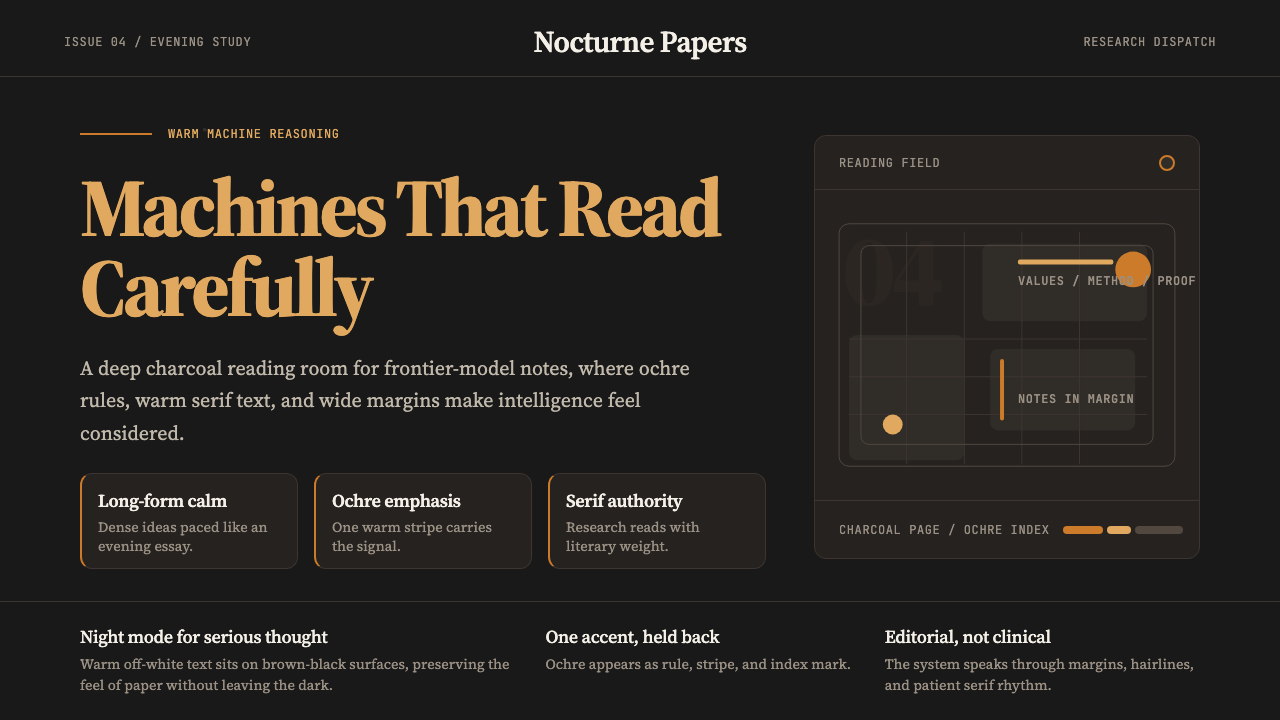 Claude / Anthropic Warm 2024Warm intelligence at night. Ochre rules and Source Serif glow on deep charcoa…
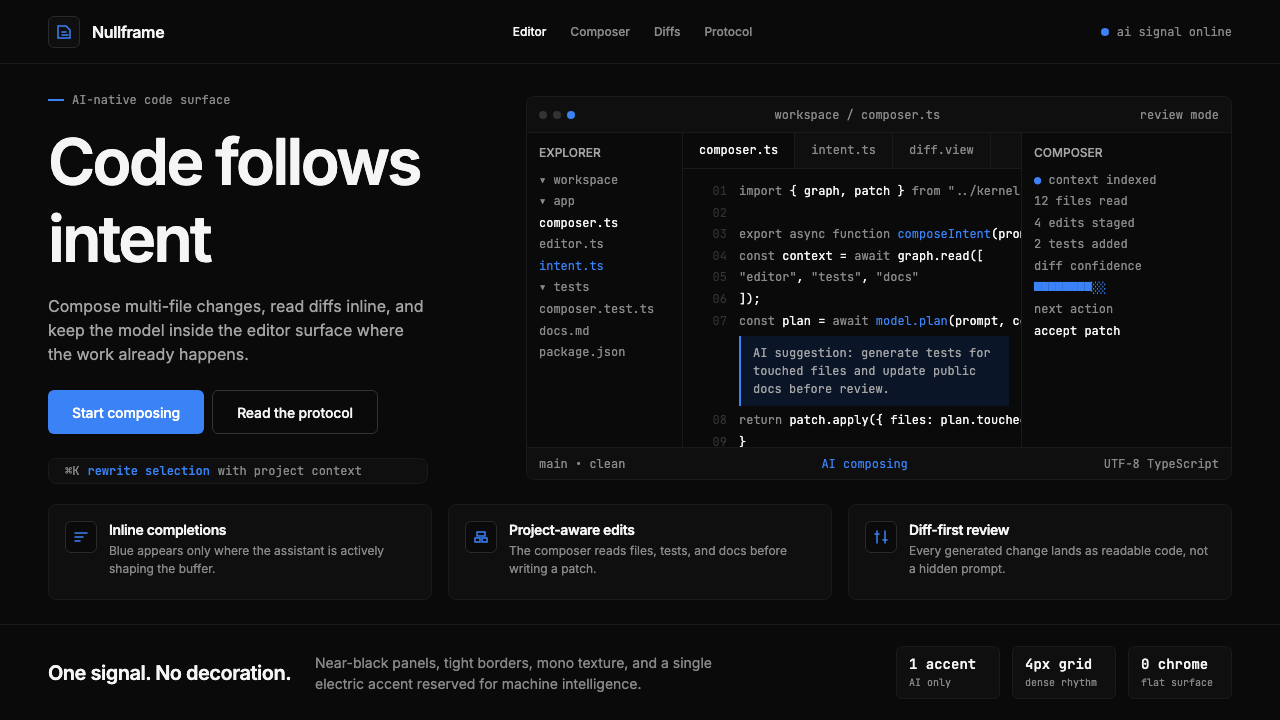 Cursor IDEAI-first code editor. Pure dark surfaces, off-white text, electric blue reser…
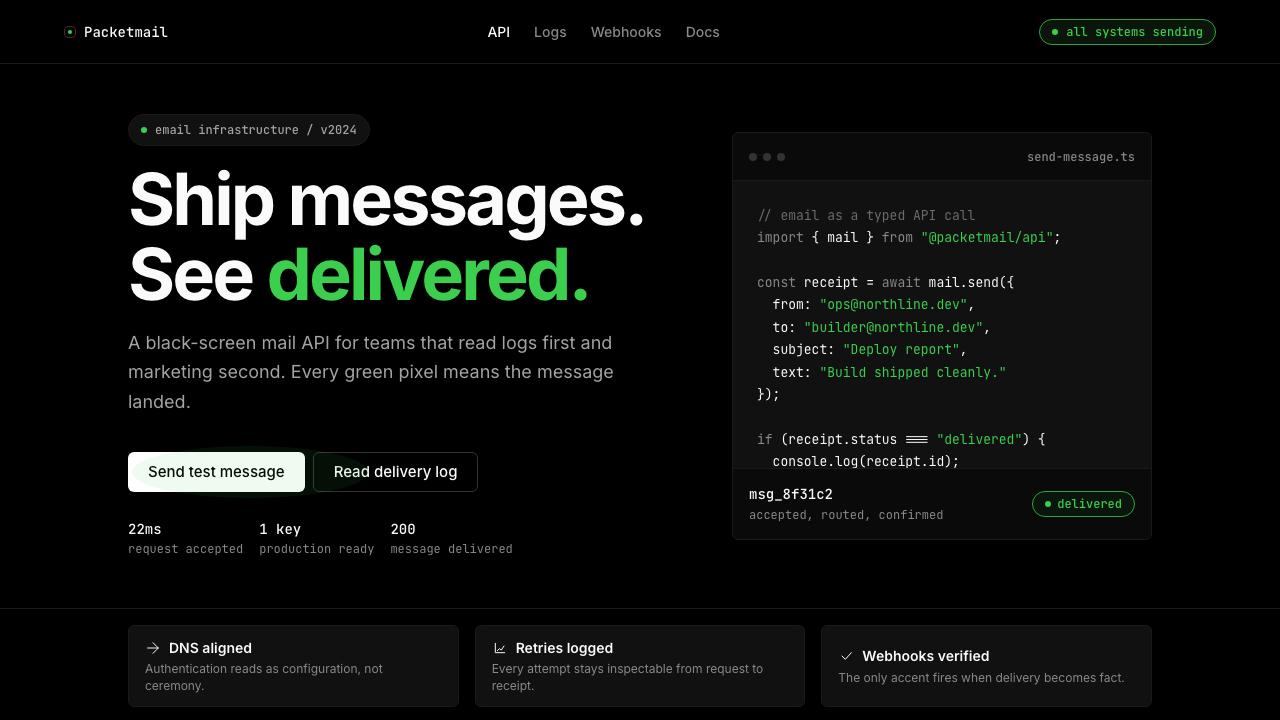 Resend 2024Clean code becomes brand. Pure black, JetBrains Mono, and one green delivered…
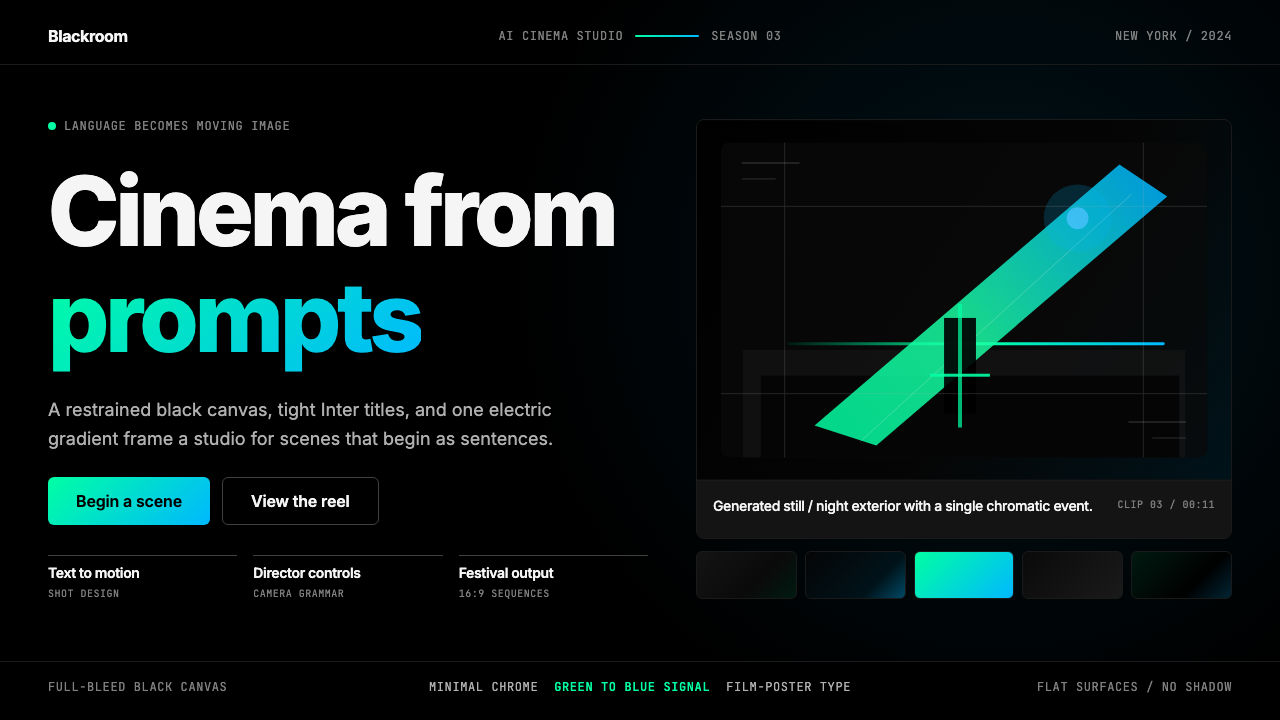 Runway MLCinema, not dashboard. Deep black frames tight Inter type and one green-blue…
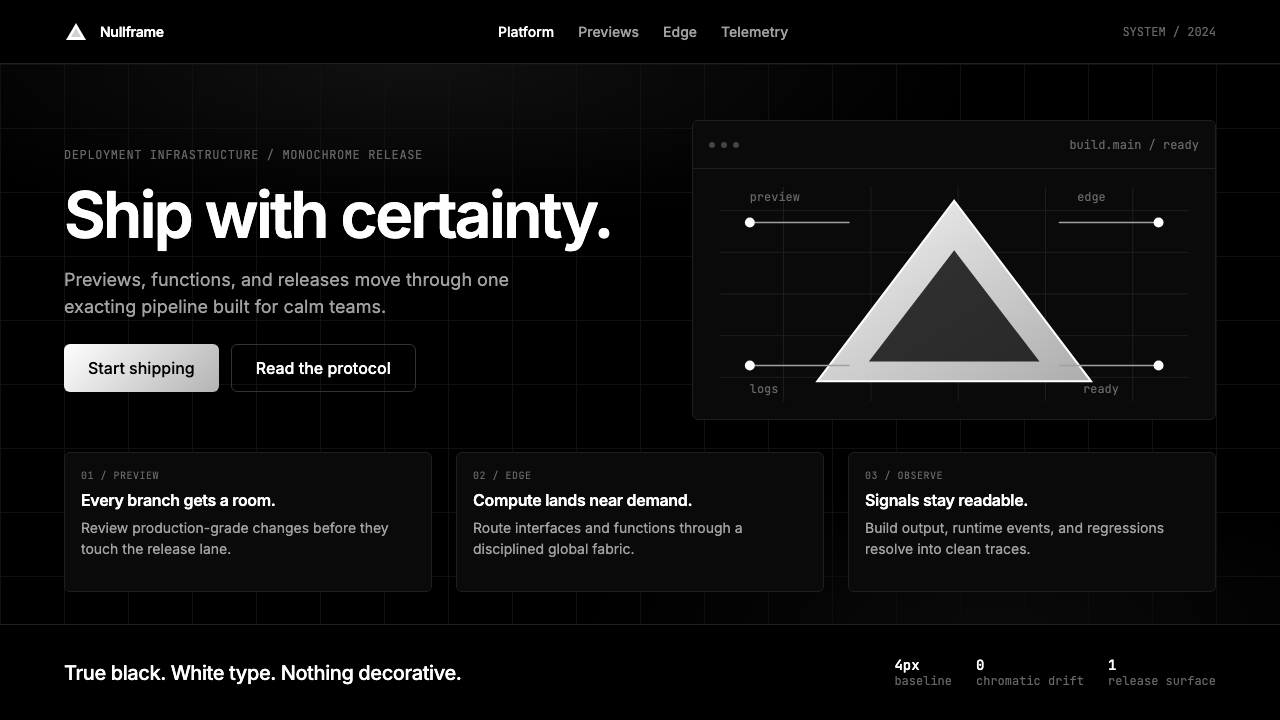 Vercel 2024Developer luxury by subtraction. Pure black, white Inter, rigid grid, triangu…
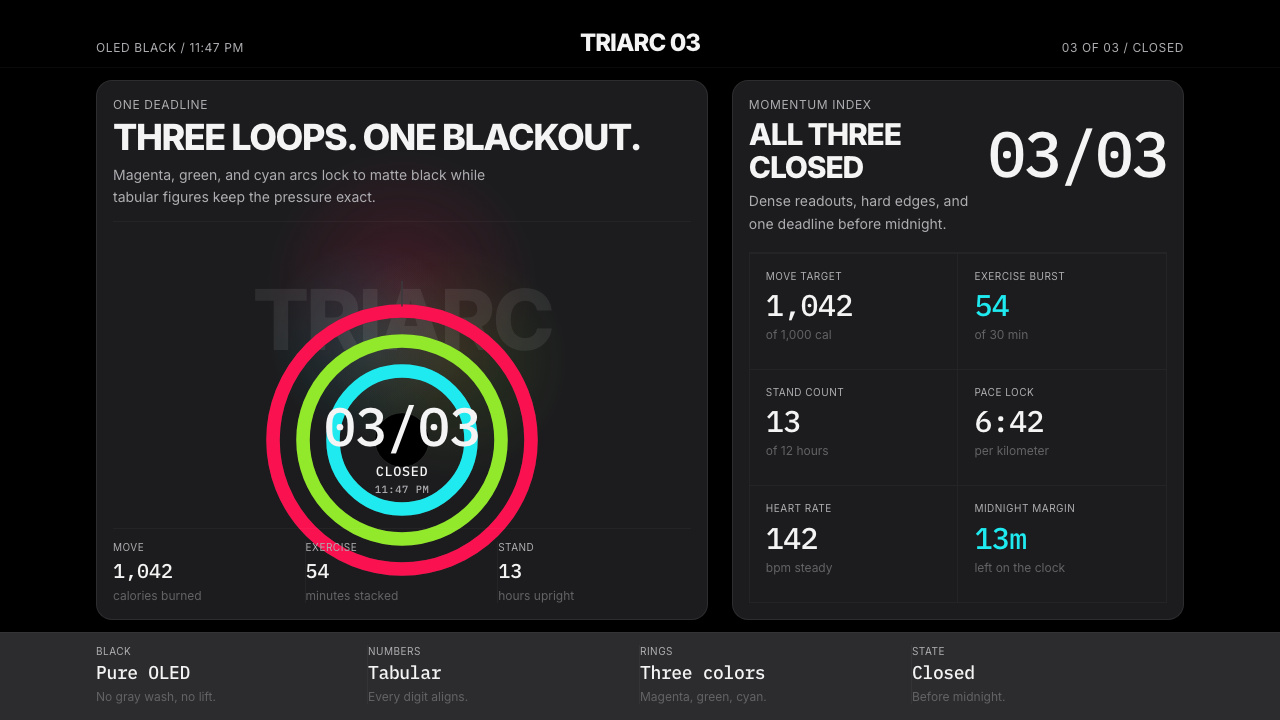 Apple Fitness Rings Closed (2024)Midnight feels exact. Magenta, green, and cyan rings lock onto OLED black.