What is Vercel 2024?
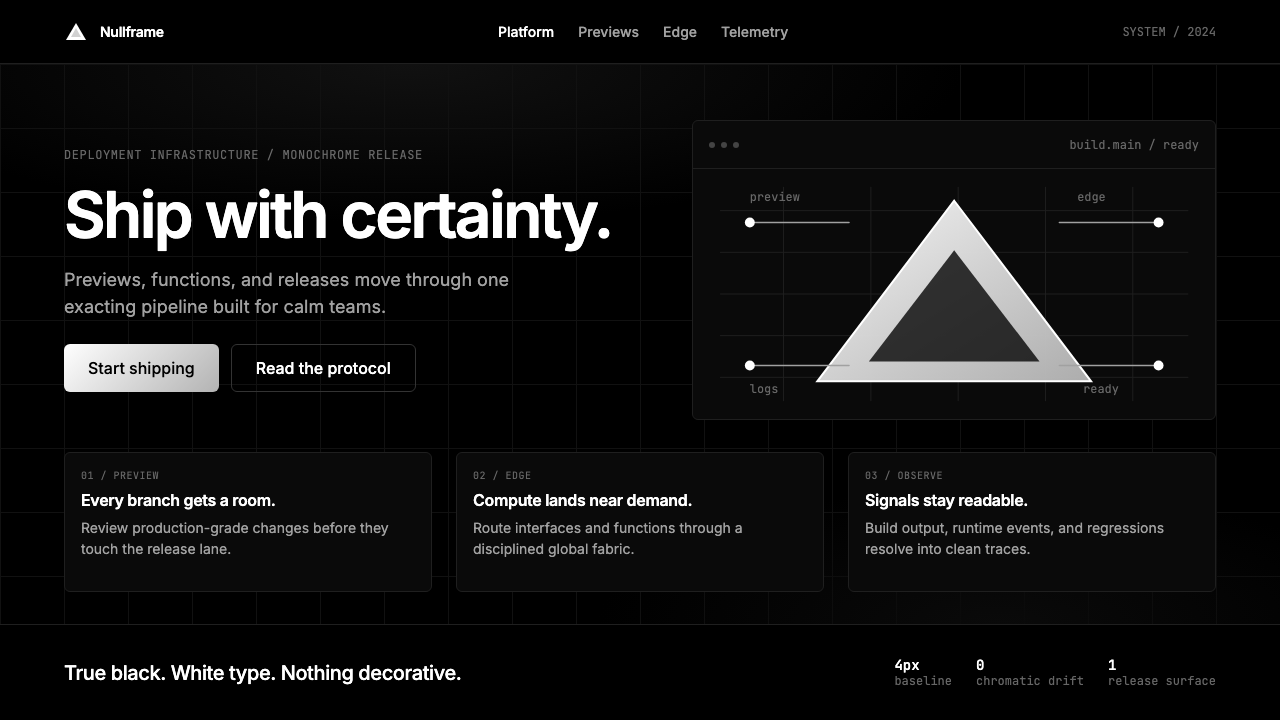
Vercel's 2024 brand speaks in two colors only — pure black and pure white — and says more than most identities manage with twenty.
Vercel 2024 in brief
Vercel 2024 is a monochromatic design system built on radical subtraction. Every visual decision in the system — palette, typography, spacing, iconography — moves in the same direction: remove anything that does not carry meaning, then remove it again. What remains is a black-and-white identity so confident in its restraint that color appears only in the logos of the customers the platform serves.
The system draws its logic from Swiss typography and the long tradition of developer tooling that prizes precision over personality. But where that tradition often produces visual blandness, Vercel 2024 achieves something rarer: austerity that reads as luxury. The product language mirrors what the engineering culture prizes — no waste, no noise, no ornament that distracts from the work. The grid is tight and exposed, the type is set with an almost obsessive sense of rhythm, and the negative space is treated as an active compositional element rather than an empty accident.
The clearest signal of the system's ambition is the triangular release mark: a small geometric indicator, derived from the company's arrow-shaped logomark, used to mark product launches and changelog entries. That a brand would choose a pure geometric symbol — rather than color, illustration, or animation — as its primary celebratory gesture says everything about the system's values. Vercel 2024 is not minimalism as trend; it is minimalism as argument.

Where does Vercel 2024 come from?
Vercel was founded in 2015 under the name ZEIT by Guillermo Rauch, an Argentine-born engineer who had built a reputation in the Node.js community for obsessive attention to developer experience. The company's early visual identity was workmanlike — functional but undistinguished, typical of infrastructure startups that prioritize product over brand. That changed as the company grew into the principal steward of Next.js, the React framework that would come to define how a generation of developers builds for the web.
The first major step in the brand's transformation came in late 2023, when Vercel released Geist — a proprietary typeface designed in collaboration with Rauno Freiberg and Basement Studio, a design collective with roots in Argentina and New York. Geist was not merely a new font choice; it was a statement of intent. The typeface carries a quality simultaneously warm and mechanical, readable at small sizes in code contexts and commanding at large display sizes on marketing surfaces. Its release marked the moment Vercel decided to treat visual design as a first-class product discipline rather than a support function.
Through 2024, the brand refresh crystallized into a complete visual system. The color palette collapsed to pure black and white — a decision that would have been commercially risky for most companies, but that Vercel executed with enough typographic and spatial conviction to make it read as authority rather than poverty of imagination. Customer logos became the only source of color in the system, a move borrowed from the luxury fashion world, where a brand's confidence is sometimes measured by what it chooses not to say.
The design direction was shaped significantly by Tom Occhino, Vercel's Head of Design, who had previously led design at Facebook and brought a disciplined systems-thinking approach to the rebrand. The involvement of Basement Studio — which had built a reputation for rigorous typographic work in the South American design scene — gave the identity an international character that departed from the Silicon Valley default aesthetic. Together, these collaborators produced a system that positioned Vercel not merely as an infrastructure provider but as a taste-maker in the developer tools industry.
What defines the Vercel 2024 look?
Monochromatic Palette
The system operates in pure black and pure white with no intermediate grays used for decoration. Tonal variation exists only where necessary to distinguish interface states — active, disabled, hovered — and even then the steps are as few as the design can sustain. Customer brand colors appear as the sole exception, isolated as deliberate color events in an otherwise achromatic field. This restraint transforms two colors into a complete design language.
Typographic Authority
The Geist typeface — released by Vercel as open source in late 2023 — anchors the entire system. It reads as both humanist and geometric, capable of carrying technical documentation at small sizes and commanding display headings at large ones. The type scale is set with an almost mathematical sense of proportion: headings establish strong hierarchy through size alone, body text is set generously to aid reading density, and caption-level text is treated with the same care as primary copy rather than as an afterthought. Typographic rhythm does the work that other systems assign to color or illustration.
Rigid Grid Structure
Every surface in the Vercel 2024 system is governed by a strict column grid. Elements align to it without exception; the grid is not a starting suggestion but a rule. This rigidity produces a sense of engineering precision — the same quality that makes a well-structured codebase feel authoritative. White space is distributed by the grid's logic rather than by feel, which means the breathing room between elements is proportional and consistent rather than intuitive and approximate.
Geometric Accent Mark
The triangular release mark — a small upward-pointing triangle derived from Vercel's logomark — functions as the system's signature celebratory gesture. Rather than using color, confetti, or illustration to signal product launches and notable updates, the system uses this single geometric form. The restraint is deliberate: a pure shape carries no noise, scales to any size, reproduces cleanly in any medium, and gains meaning through consistent repetition rather than visual complexity.
Negative Space as Content
In the Vercel 2024 system, emptiness is not the absence of design — it is design. Generous margins and deliberate white space between sections signal confidence: the layout trusts that readers will find the content rather than surrounding it with visual noise to capture attention. On marketing pages, this creates a quality that sits at the intersection of editorial and architectural — surfaces that feel curated rather than crowded, where each element's isolation gives it weight.
Structured Surface Hierarchy
The system distinguishes surface layers through subtle border lines and tonal step-backs rather than through shadows or elevation. Cards and panels are defined by a thin single-pixel border rather than a soft drop shadow — a choice that keeps the visual field flat and engineered rather than soft and physical. This approach is consistent with the system's refusal of naturalistic illusion: surfaces are design decisions, not lighting simulations.
Motion as Precision
Where animation appears in the Vercel 2024 system, it is fast, directional, and purposeful. Transitions feel mechanical rather than playful — they communicate state change and directional navigation rather than delight or personality. The timing is tight enough to feel instant but long enough to be perceptible; easing is minimal. This approach treats motion as a form of information rather than a form of entertainment, consistent with the system's overall commitment to signal over noise.

Who shaped Vercel 2024?
The Argentine-born founder and CEO of Vercel, Rauch has been the driving creative and strategic force behind the company's evolution from a Node.js deployment utility (then called ZEIT) into the platform that hosts a significant share of the modern web. His personal aesthetic — characterized by a preference for precision, restraint, and high production quality — is inseparable from Vercel's brand direction. Rauch's public communications, including his X presence and product announcements, are themselves demonstrations of the visual and tonal system the company has developed: spare, confident, and technically rigorous.
A designer with deep roots in interaction design and typographic craft, Freiberg was central to the creation of the Geist typeface and the broader 2024 visual system. His work demonstrates an unusual ability to operate across scales — from the micro-level decisions of letterform design to the macro-level architecture of a brand system. Freiberg's design sensibility aligns closely with the Vercel philosophy: remove the unnecessary, then interrogate what remains to determine whether it is truly earning its place.
As Vercel's Head of Design and a former design lead at Facebook (where he worked on React's early adoption across product surfaces), Occhino brought a rare combination of product design discipline and systems thinking to the rebrand. His experience at scale — designing for products used by billions of people — informed the Vercel system's insistence on clarity and hierarchy over expression and novelty. The 2024 visual system reflects his belief that a great design system should feel inevitable in retrospect: every decision justified, nothing arbitrary.
A design collective with roots in Buenos Aires and operational presence in New York, Basement Studio built its reputation on typographic rigour and a willingness to work at the intersection of editorial and digital product design. Their involvement in the Vercel brand — particularly in the development of Geist and the visual identity system — brought a Latin American design sensibility that differs from the prevailing conventions of Silicon Valley. Basement's work tends to be architecturally structured, typographically exacting, and resistant to the trends that dominate technology brand design.
How do you use Vercel 2024 today?
Vercel 2024 is one of the most immediately transferable contemporary design styles for professional digital output, precisely because its rules are few and unambiguous. The system does not ask for taste judgments about which color to use or how expressive to be — it removes those decisions. Applying it well means applying its constraints rigorously: maintain the monochrome palette, commit to the typographic hierarchy, respect the grid, and treat negative space as a primary design element rather than leftover margin.
For presentation slides, the style is particularly well-suited to technical and business audiences. A cover slide in this system should be almost entirely typographic: a large, high-weight headline set flush left or centered against a black or white field, with the presenter's name or company in a substantially smaller weight below. No background imagery, no gradient fill, no illustration. Content slides follow the same logic — one typographic hierarchy per slide, one idea clearly stated, generous vertical spacing between blocks. Data slides become diagrammatic: charts are rendered with clean geometric forms, labeled in the same typeface at a consistent scale, with values communicated through size and position rather than color coding. The monochrome constraint forces visual decisions that would otherwise be avoided.
For web interfaces — dashboards, pricing pages, documentation sites, and developer-facing tools — the system is nearly purpose-built. The approach: establish a strict column grid that governs every element, set all body text in a single weight of a geometric sans-serif typeface, and use border lines rather than shadows to define surface boundaries. Interactive states — hover, active, disabled — are expressed through tonal shifts and border changes rather than color changes. Navigation is purely typographic, with no decorative icons beyond functional indicators. The result is an interface that communicates engineering competence without requiring a single color decision.
For editorial and marketing work — landing pages, product announcements, launch communications — the style's poster-like confidence creates strong hierarchy across long-form content. Feature sections alternate between black-ground and white-ground layouts, creating rhythm without requiring visual novelty on each surface. Pull quotes and key statements are set at a size that makes them landmarks in the layout rather than decorations. Where customer logos or partner marks appear, they become the color moments in an otherwise achromatic environment — a technique that flatters both the customer and the host brand simultaneously.
The most common mistake when applying Vercel 2024 is mistaking restraint for emptiness and compensating by adding visual elements that the system specifically excludes: gradient overlays, colored accent bars, ambient shadows, or decorative icons used for visual interest rather than functional communication. A second frequent error is breaking the typographic system by introducing a second typeface for variety — the style's power comes from the compression of its type choices, not from their range. When in doubt, the correct response is always to remove rather than add.

Vercel 2024 — FAQ
Can Vercel 2024 work for a brand that is not a developer tools company?
Yes, but with awareness of what the style communicates. The Vercel 2024 system signals precision, technical competence, and a kind of earned restraint — qualities that read well for financial technology, professional services, enterprise software, and any brand that wants to position expertise over warmth. It works poorly for consumer brands where emotional approachability is primary, for products aimed at younger or non-technical audiences, or for any context where the absence of color reads as cold or unwelcoming rather than authoritative. The style is a values match before it is a visual match.
How do you introduce visual variety into a monochrome system without breaking its logic?
Variety in the Vercel 2024 system comes from scale contrast, density contrast, and compositional rhythm — not from color or illustration. A page gains visual interest when a large-scale typographic element sits beside a dense text block, or when a full-black section follows several white-ground sections. The grid itself can be varied by choosing different column spans for different content types. Motion — when used — provides another dimension of variety. The rule is that every source of variety must be structural: if removing the varied element would break the layout's logic, it belongs; if it is purely decorative, it should not be there.
Is it appropriate to use photography in a Vercel 2024-style layout?
Photography can work, but it must be treated consistently with the system's values. The most compatible approach is high-contrast imagery where subject matter is graphic and geometric — architectural details, close-up product shots, or abstract technical surfaces. Natural scenes, portraits with soft lighting, and lifestyle imagery all import visual warmth that conflicts with the system's cool authority. When photography appears in the Vercel system itself, it is typically used to show product interfaces (which are themselves achromatic) or customer faces in testimonial contexts where warmth serves a deliberate purpose. Color photographs of people function as the same controlled color-event logic that applies to customer logos.
How does Vercel 2024 relate to Swiss International Style?
Vercel 2024 is a contemporary descendant of Swiss International Style filtered through the specific demands of developer-product design. Both systems share a commitment to the mathematical grid, typographic hierarchy as the primary organizational tool, and the rejection of ornament. Where they diverge is in palette and cultural register. Swiss International Style developed within a tradition of color photography and broad-spectrum color use; Vercel 2024 goes further into strict monochrome. Swiss Style carries a universalist, institutional aspiration; Vercel 2024 carries a specific subcultural aspiration — the values of engineering excellence translated into visual form. Think of Vercel 2024 as Swiss Style with a product manager's discipline applied to the brand layer.
What is the biggest risk when a team tries to apply Vercel 2024 style without deep familiarity?
The biggest risk is producing something that looks empty rather than disciplined — a design that removes color and decoration but fails to replace them with the spatial and typographic precision that makes the Vercel system feel confident rather than sparse. The system's visual power comes from the quality of its spacing decisions, the exactness of its typographic scale, and the intelligence of its compositional rhythm. Without those qualities in place, monochrome restraint reads simply as effort not yet applied. The solution is to over-invest in the typographic and spatial decisions — to treat the typeface choice, the scale steps, and the grid definition as the high-stakes design decisions they are in this system, rather than treating color restraint as the only work that needs doing.
Related design styles
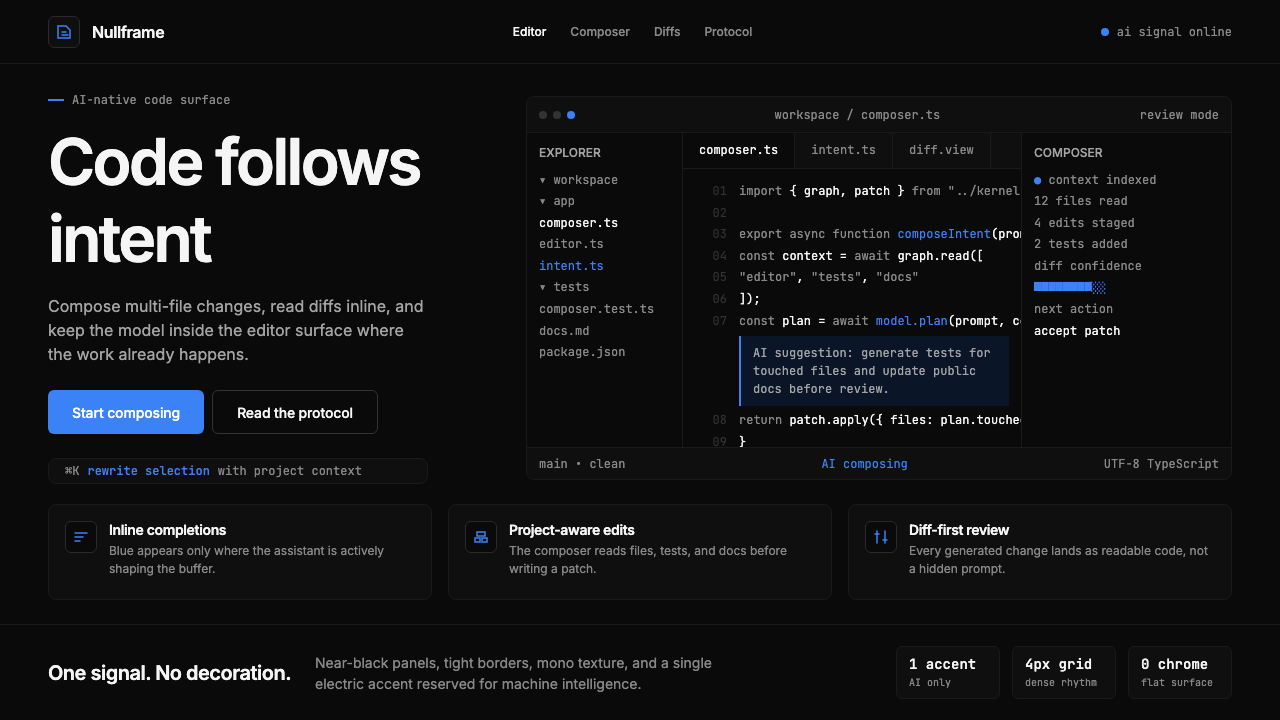 Cursor IDEAI-first code editor. Pure dark surfaces, off-white text, electric blue reser…
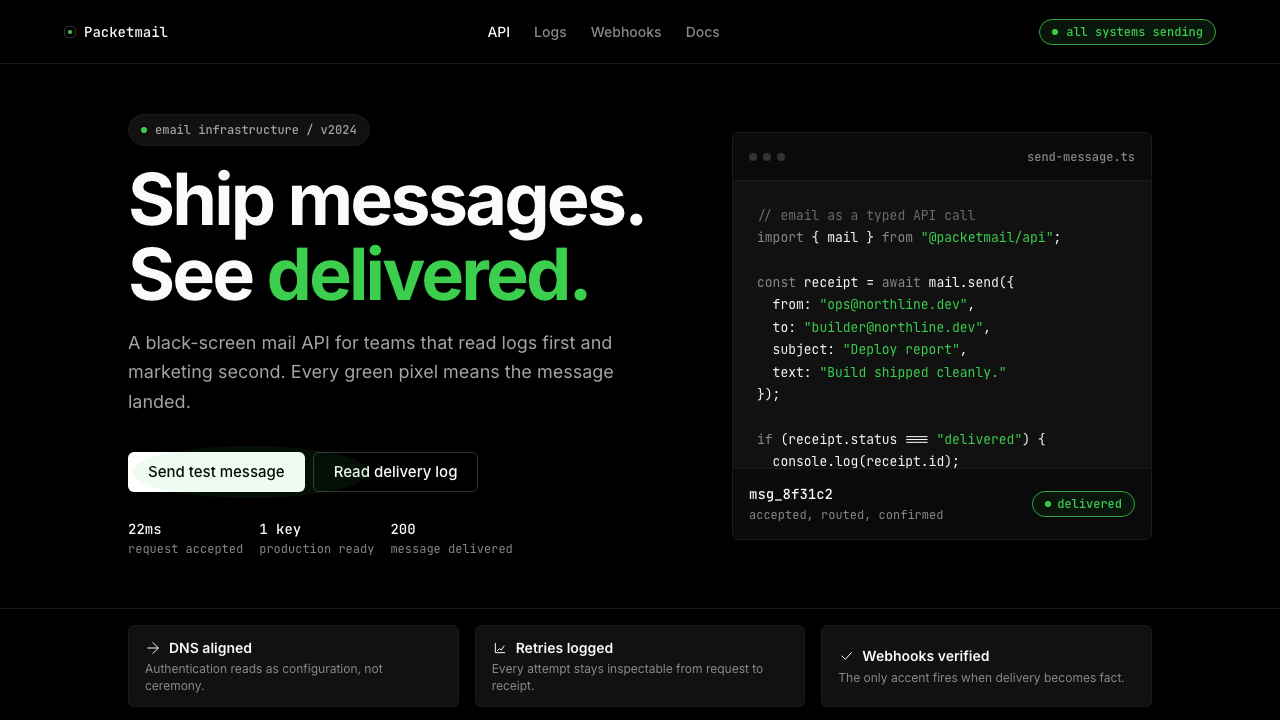 Resend 2024Clean code becomes brand. Pure black, JetBrains Mono, and one green delivered…
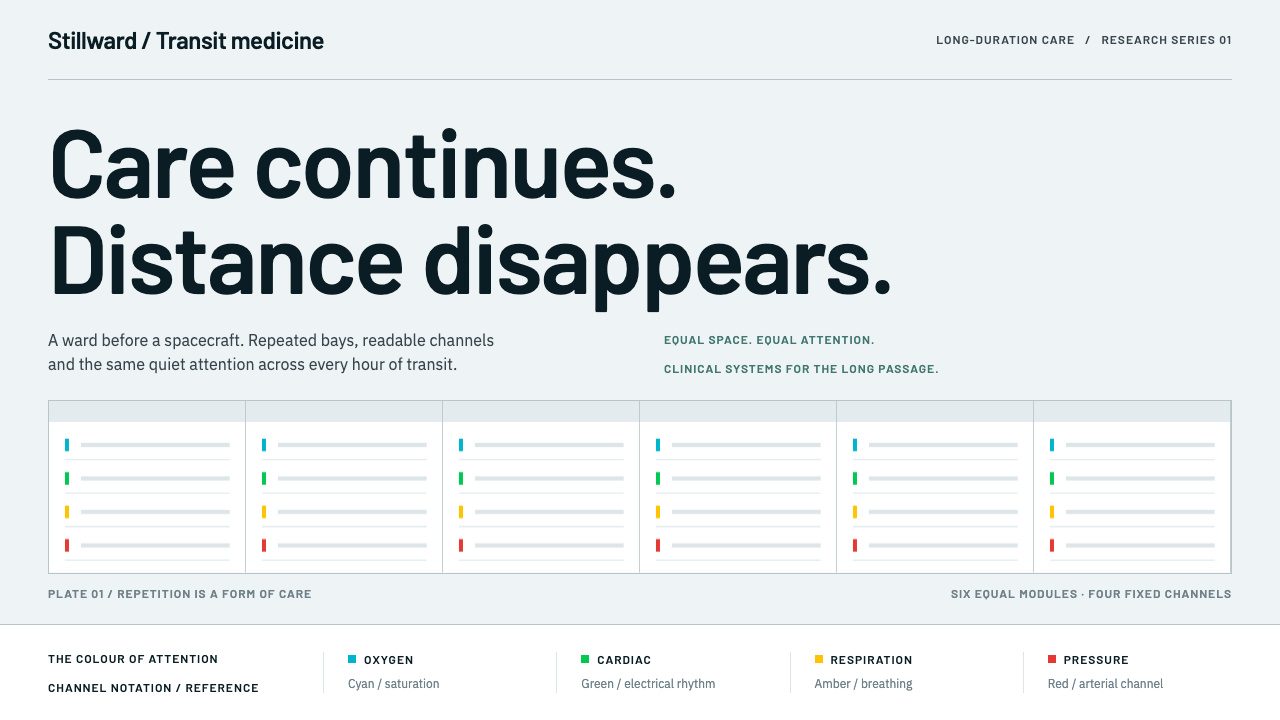 Cryosleep Transit WardCare without spectacle. Clinical white, equal bay grids and the fixed colours…
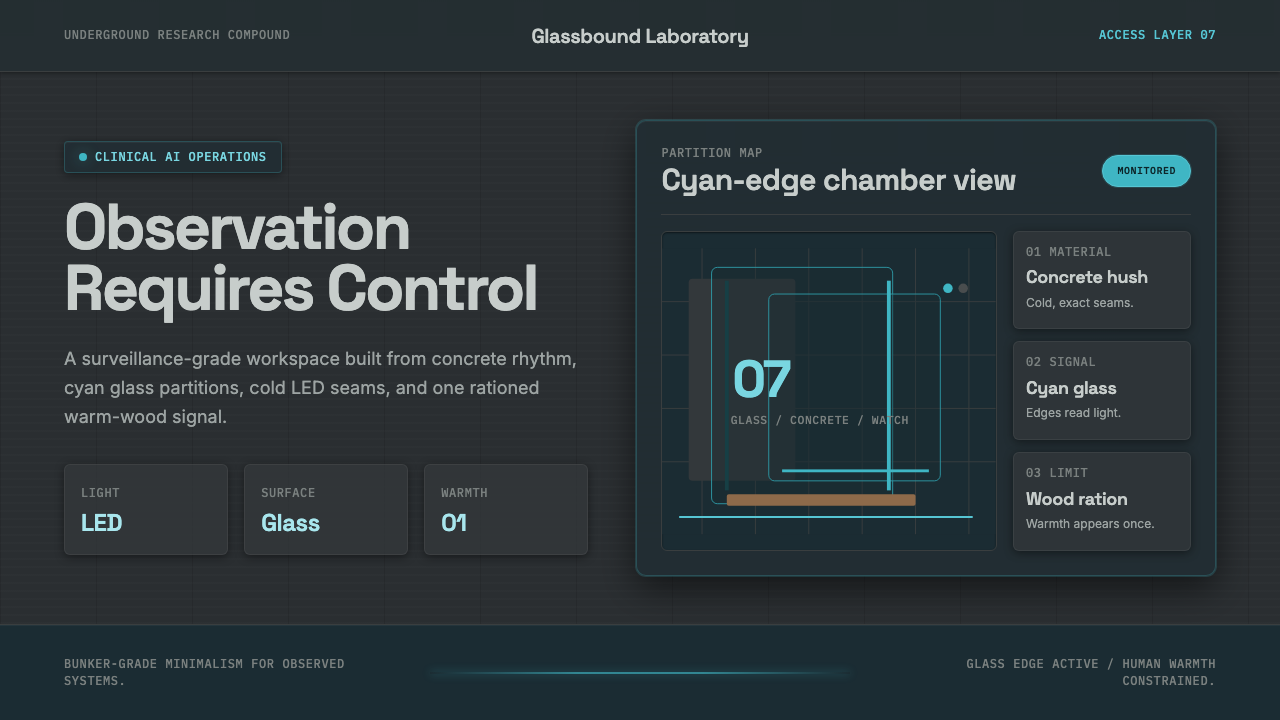 Ex MachinaClinical control, made visible. Concrete gray, cyan glass, LED seams, one woo…
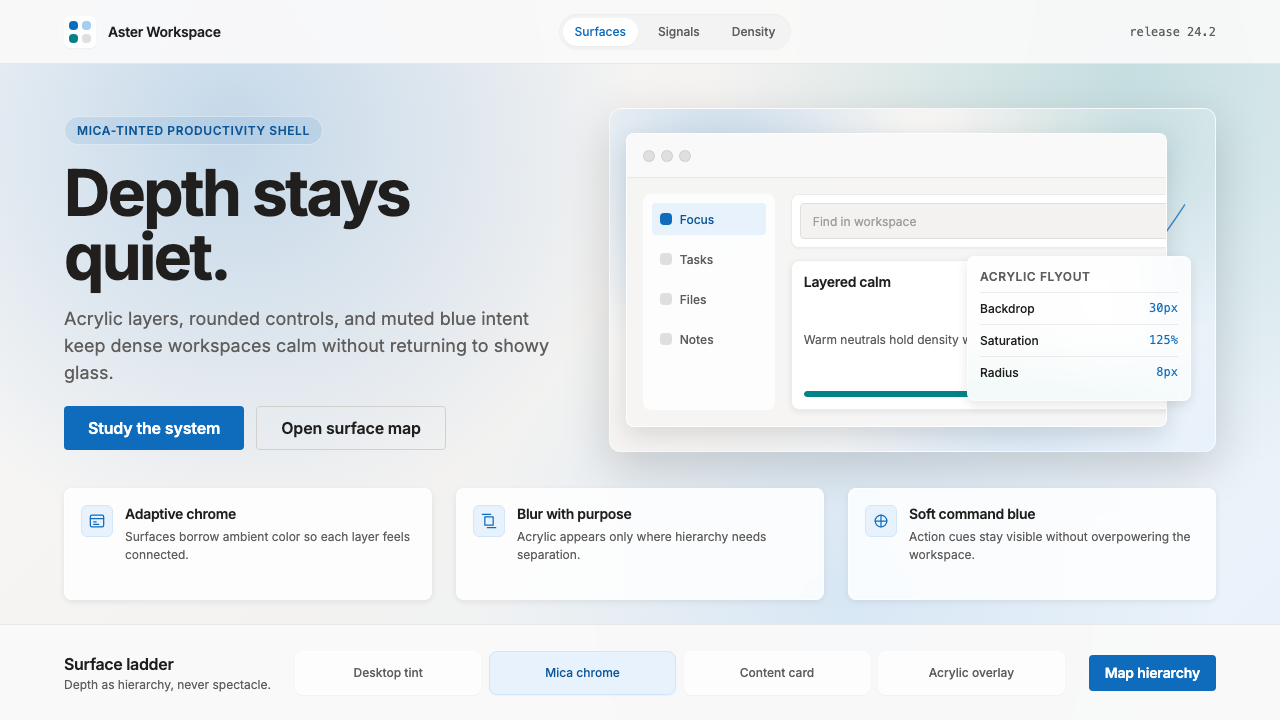 Microsoft Fluent 2Disciplined translucency. Warm Mica neutrals, acrylic blur, and muted blue cr…
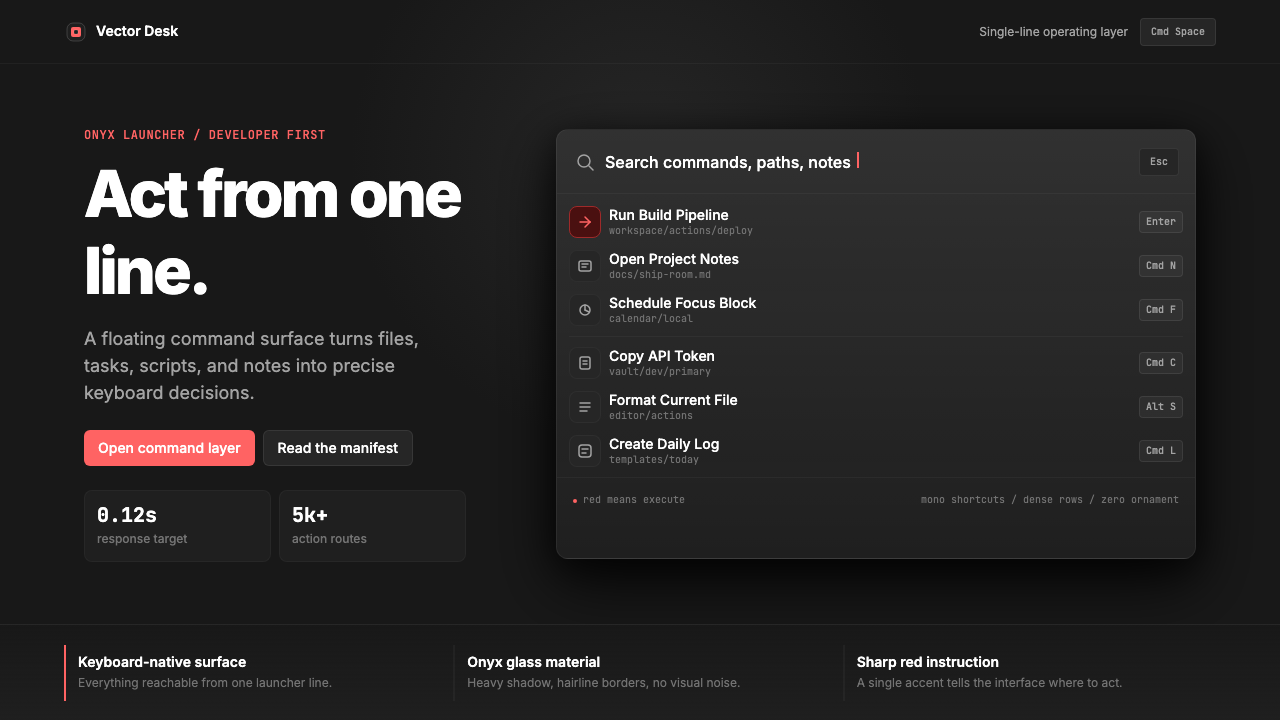 Raycast Spotlight Launcher (2023)Obsidian confidence. Sharp red cuts through Inter rows and mono shortcut chip…