What is MTV Launch Identity (1981)?
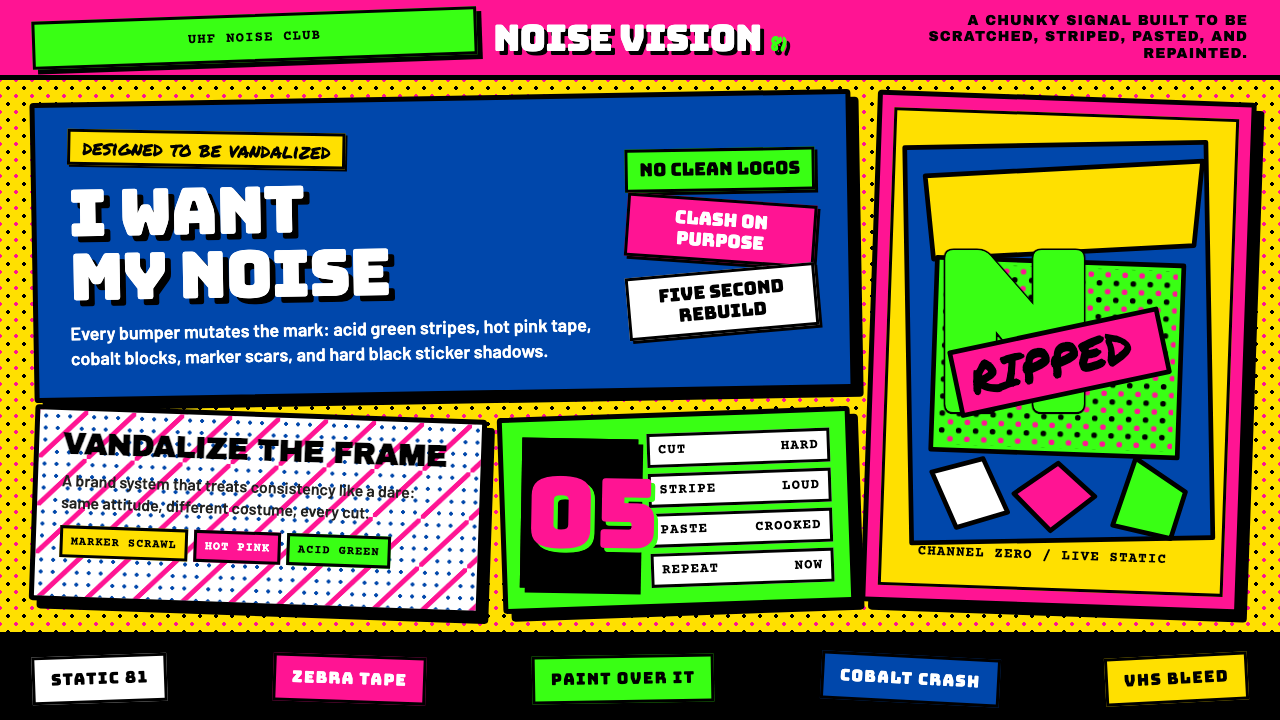
MTV's 1981 launch identity was the first major brand deliberately designed to be vandalized — a chunky block logo that invited spray paint, halftone dots, and zebra stripes every five seconds.
MTV Launch Identity (1981) in brief
MTV Launch Identity (1981) is the visual language introduced when Music Television went on air on August 1, 1981. Created by the Manhattan Design studio — Pat Gorman, Frank Olinsky, and Patti Rogoff — under creative director Fred Seibert, it replaced the idea of a fixed corporate logo with an infinitely mutable container. The blocky, hand-drawn letterforms of the 'M' became a host surface for whatever mood the channel was broadcasting: painted, scratched, on fire, polka-dotted, or slathered in graffiti. Consistency was not the point. Attitude was.
The visual system drew deliberately from post-punk street culture, the anarchic energy of fanzines, and the rough immediacy of spray-painted subway cars. Color clashed on purpose — hot pink against acid green, cobalt against electric yellow, orange punching through black — all reproduced on the soft, low-resolution glow of VHS-era cathode-ray tubes. Hand-scrawled marker lines, halftone dot screens, drip effects, and sticker-style cropped borders gave the identity a physical, made-by-hand quality that felt alien to the polished corporate graphic design of the era.
Where most brand identities of the early 1980s sought authoritative stability, the MTV mark operated as a system of controlled instability. The logo's shape stayed constant; everything applied to it changed. This made the identity both immediately recognizable and perpetually surprising — a balance that would influence motion graphics, channel branding, and music packaging for the next two decades.

Where does MTV Launch Identity (1981) come from?
By the late 1970s, American broadcast television was dominated by three networks whose visual identities were exercises in corporate caution. The emerging cable landscape offered a different opportunity. When Warner-Amex Satellite Entertainment began planning a channel devoted entirely to music videos, the question of identity was not merely cosmetic — it was definitional. What should a channel look like when its entire reason for existence was youth culture, rebellion, and the electric novelty of music video?
Fred Seibert, who joined the project in its early stages, brought in the Manhattan Design studio, a small New York collective working at the intersection of graphic design, punk aesthetics, and art. Pat Gorman, Frank Olinsky, and Patti Rogoff had backgrounds in underground publishing and fine art, and their approach to the brief was to reject the brief entirely. Rather than designing a logo that demanded protection and consistency, they designed one that invited violation. The chunky block 'M' with 'TV' scratched across its face in rough, tilted lettering was conceived from the outset as a form to be acted upon, not preserved.
The launch aired at 12:01 a.m. on August 1, 1981, with the first image on American cable television being the Apollo 11 moon landing footage recut with the MTV flag planted on the lunar surface — itself an act of graphic appropriation entirely in the spirit of the identity that followed. The interstitials and bumpers produced for the channel's first months drew on halftone printing textures, spray-paint stencil aesthetics, hand-lettered titles, and the visual grammar of concert posters and punk zines. Each treatment of the logo felt like a different person had gotten hold of it in a different mood.
The broader cultural context was decisive. Post-punk visual culture — the energy that had coursed through the Buzzcocks' sleeve designs, the Sex Pistols' Jamie Reid ransom-note graphics, and the photocopied fanzines of the late 1970s — had established a vocabulary of deliberate roughness, unexpected color, and confrontational composition. The Memphis Group, founded in Milan in 1981 the same year as MTV's launch, was simultaneously rejecting good taste through clashing pattern and aggressive ornament. MTV's identity drew from both currents, adding the specifically American vernacular of street-level commercial graphics: painted store signs, fluorescent sale banners, and the billboard culture of Times Square.
What defines the MTV Launch Identity (1981) look?
Mutating Logo
The defining formal innovation of the MTV identity is the logo-as-canvas principle. The outer silhouette of the stacked 'M' and 'TV' letterforms remains fixed, but the interior surface is treated as blank material awaiting decoration, defacement, or transformation. Each iteration — zebra-striped, drip-painted, fire-scorched, covered in polka dots or graffiti tags — reads instantly as MTV while sharing almost nothing visually with the previous version. The container is consistent; the content is anarchic.
Deliberate Color Clash
The palette operates on collision rather than harmony. Hot pink, acid green, cobalt blue, electric yellow, orange, and black are used in combinations that would be considered errors in conventional color theory — adjacent hues of similar intensity, complementary pairs pushed to maximum saturation, warm and cool tones fighting for visual dominance. This is intentional: the discomfort created by the color relationships mirrors the disruptive energy of the music the channel was built to promote.
Hand-Made Texture
The identity explicitly rejects the clean mechanical finish of professional print production. Elements throughout the system — borders, fills, type treatments — carry the evidence of physical making: ink drips, uneven spray coverage, crooked sticker edges, halftone dot screens that break apart at close range, marker lines that vary in pressure. On the low-resolution television screens of the early 1980s, this analog roughness became a form of visual warmth that polished computer graphics could not replicate.
Confrontational Typography
Type in the MTV system is set with the directness of street signage or protest placards rather than the refinement of editorial design. Letterforms are blocky and compressed, headlines are oversized and often tilted or stacked unexpectedly, and the relationship between type and image is abrupt rather than composed. The scratched, hand-drawn quality of the 'TV' component of the logo set the register for all on-air typography: rough, immediate, and unapologetically loud.
Low-Resolution Aesthetics
The visual identity was designed specifically for the cathode-ray tube televisions of 1981, not for print or high-definition display. This meant that the soft phosphor glow, color bleed at high-saturation boundaries, and gentle scan-line texture of the broadcast medium were not problems to be corrected but qualities to be exploited. Saturated color fields bled into each other pleasantly on-screen. Halftone patterns shimmered. The roughness of hand-made elements resolved into energy rather than noise.
Anti-Corporate Attitude
The identity is as much a philosophical position as a visual system. At a moment when corporate identity manuals enforced pixel-perfect logo reproduction across every application, Manhattan Design and Fred Seibert built a brand that explicitly prohibited such control. The manual, in effect, said: violate this. This stance was legible to the youth audience as a mark of authenticity — a signal that the channel was not just packaging music for a corporate audience but was itself part of the culture it was broadcasting.
Motion as Medium
Because the identity lived on television rather than in print, temporal change was a built-in property rather than an afterthought. The logo's mutations happened in real time, cutting from one treatment to another between videos. This made the brand one of the first designed specifically for duration rather than fixity — an identity that existed fully only across time, in the accumulated impression of dozens of different versions seen in sequence.

Who shaped MTV Launch Identity (1981)?
A founding partner of Manhattan Design, Gorman brought a background in fine art and underground publishing to the MTV project. Her hand was central in developing the physical, made-by-hand quality of the identity's surface treatments — the drips, the sticker borders, the layered spray-paint effects. Her understanding of how rough material aesthetics could carry emotional weight directly shaped the identity's success in communicating authenticity to a skeptical young audience.
Olinsky, another Manhattan Design partner, brought particular depth in music packaging and graphic identity to the project. His experience with album artwork had trained him to think about how visual identity functions under conditions of rapid scanning and low attention — exactly the environment of early cable television. He was instrumental in developing the structural logic of the mutating logo: keeping the silhouette inviolate while allowing the surface to be anything.
Rogoff completed the Manhattan Design trio, contributing to the overall visual language and the breadth of surface treatments applied to the MTV mark. Her work helped ensure that the system felt genuinely expansive — that the range of moods and treatments was wide enough to sustain viewer interest across months and years of on-air use — while remaining recognizably coherent as a single brand.
As creative director, Seibert was the client-side champion who convinced Warner-Amex executives that a brand built on instability and violation was commercially viable. His most important contribution was institutional: he wrote the brief that allowed Manhattan Design to work against conventional brand logic, and he protected the identity from the pressures toward standardization that followed the channel's rapid growth. Without Seibert's continued advocacy, the mutating-logo principle would likely have been replaced by a conventional fixed mark within the channel's first year.
Co-creator of the channel concept alongside Seibert, Goodman shaped the broader editorial and tonal identity that the visual design had to serve. His insistence that MTV speak to its audience as peers rather than as a broadcasting authority established the philosophical ground on which the visual identity was built. The channel's voice — irreverent, knowing, directly generational — determined that its logo would need to be equally irreverent, equally unwilling to claim polished corporate authority.
How do you use MTV Launch Identity (1981) today?
The MTV 1981 aesthetic is one of the most energetically specific styles available to a contemporary designer, which means it transfers most effectively when the product genuinely shares its underlying values: youth-facing, culturally engaged, comfortable with noise and movement, and resistant to the language of corporate authority. Applied to a brand with those qualities, it reads as authentic. Applied to a brand without them, it reads as costume.
For presentation slides, the style works on cover pages through bold compositional disruption: the title set at an unexpected scale or angle, a deliberate color clash as the background treatment, and a border or frame element that looks slightly off — sticker-cropped, hand-drawn, or asymmetrically weighted. Content slides should embrace controlled chaos: headlines that feel too large for the space, body text set against unexpected color fields, and data visualizations treated as graphic objects to be layered and jostled rather than quietly aligned. The goal is energy, not legibility-through-noise — every element should still be readable, but nothing should feel at rest.
For web interfaces and dashboards, the style demands restraint in structure paired with aggression in surface treatment. The underlying layout grid should be clear and navigable — users still need to find things — but component skins, hover states, and highlight treatments can carry the full voltage of the aesthetic: hard sticker-style borders, high-saturation color fills that clash deliberately, type that sizes up unexpectedly. Music streaming platforms, youth culture editorial sites, entertainment ticketing, and creative portfolio tools are natural fits. Analytics dashboards for corporate enterprise clients are not.
For editorial and marketing materials — event posters, campaign headers, social cards, merchandise — the style is most at home and permits the most latitude. Here the logo-as-canvas principle translates directly: the brand mark or headline can be treated as a surface to be textured, layered over, or partially obscured, provided the core shape remains recognizable. Color palettes should be built around deliberate clash pairs rather than harmonious schemes: choose two colors that fight each other and let them fight. Add a third only as a controlled accent. Hand-texture overlays, visible grain, and elements that appear to have been physically pasted or painted complete the effect.
The most common mistake when working in this aesthetic is mistaking loudness for the point. The MTV identity is loud, but it is loud with structural intention — the logo silhouette is always readable, the hierarchy of information is always recoverable, the color clashes are chosen rather than random. Designers who apply the aesthetic by simply maximizing saturation, multiplying typefaces, and layering without restraint produce work that reads as chaotic rather than energetic. Study the originals: the M always holds, the compositions always have a center of gravity, and the 'mistakes' are consistent enough to read as decisions.

MTV Launch Identity (1981) — FAQ
Is the MTV aesthetic the same as general 1980s retro style?
No, and the distinction matters practically. General 1980s retro style — as it appears in contemporary design — typically means neon gradients, chrome bevels, geometric grid lines on dark backgrounds, and a soft synthwave palette. This draws primarily from the era's computing and science-fiction aesthetics. The MTV 1981 identity has almost nothing in common with that vocabulary. It is rough where synthwave is glossy, hand-made where synthwave is digitally polished, and clashes primaries where synthwave blends neons. Applying MTV-style elements to a synthwave composition, or vice versa, produces incoherence rather than period authenticity.
Can this style work for a brand that needs to feel trustworthy and premium?
It can, but only for a specific kind of premium — the kind that derives its authority from cultural credibility rather than institutional polish. A record label, a creative agency, a streetwear brand, or an art fair might legitimately use this aesthetic to signal that their version of quality is earned through cultural engagement rather than corporate pedigree. The style will not serve a financial institution, a pharmaceutical company, a luxury goods house, or any brand whose premium positioning depends on conveying order, stability, and restraint. The visual language is fundamentally anti-authoritarian, and forcing it into an authoritarian-adjacent context produces cognitive dissonance that audiences register even if they cannot articulate it.
How does the MTV identity relate to the Memphis Group, which also launched in 1981?
The two movements share a historical moment and several attitudes — both rejected the refinement and restraint of late-modernism, both used color as an aggressive tool rather than a harmonizing one, and both were influenced by popular culture rather than fine art orthodoxy. But their material vocabularies are different. Memphis came from Italian furniture and object design, used pattern and surface ornament as its primary medium, and aimed at a design-literate European audience. MTV came from American broadcast culture, used motion and duration as its medium, and aimed at a mass youth audience with no particular design literacy. Memphis is deliberate and composed in its rule-breaking; MTV is deliberately rough and immediate. A Memphis-influenced surface applied to an MTV composition will feel overly controlled; an MTV-influenced surface on a Memphis form will feel too casual.
Why does the MTV identity continue to influence motion graphics decades later?
Because it solved a problem that became structurally permanent: how to maintain brand coherence across a continuous stream of content that changes every few minutes, in a medium where stillness reads as dead. Before MTV, broadcast identity was conceived as a fixed mark applied at fixed moments — the channel bug, the title card, the opening sequence. Manhattan Design and Seibert created something else: a brand that existed in time, across mutations, sustained by a recognizable container rather than a fixed surface. Every streaming platform, every YouTube channel, every social media content brand faces exactly this same structural problem today, and the MTV solution — consistent silhouette, variable surface, motion as native medium — remains one of the most elegant answers to it.
What is the most important single principle to understand before applying this aesthetic?
That the system's instability is disciplined, not accidental. Every version of the MTV logo is wild at the surface and locked at the structure. The silhouette never wavers. The spatial relationship between the M and TV never changes. The proportions of the letterforms are always the same. Understanding that the license to be chaotic operates within a fixed armature is what separates designers who use this aesthetic effectively from those who produce visual noise. Before you vary anything, know what cannot vary. Establish your fixed container — your consistent silhouette, your recoverable hierarchy, your legible core — and then let the surface be as loud as the content demands.
Related design styles
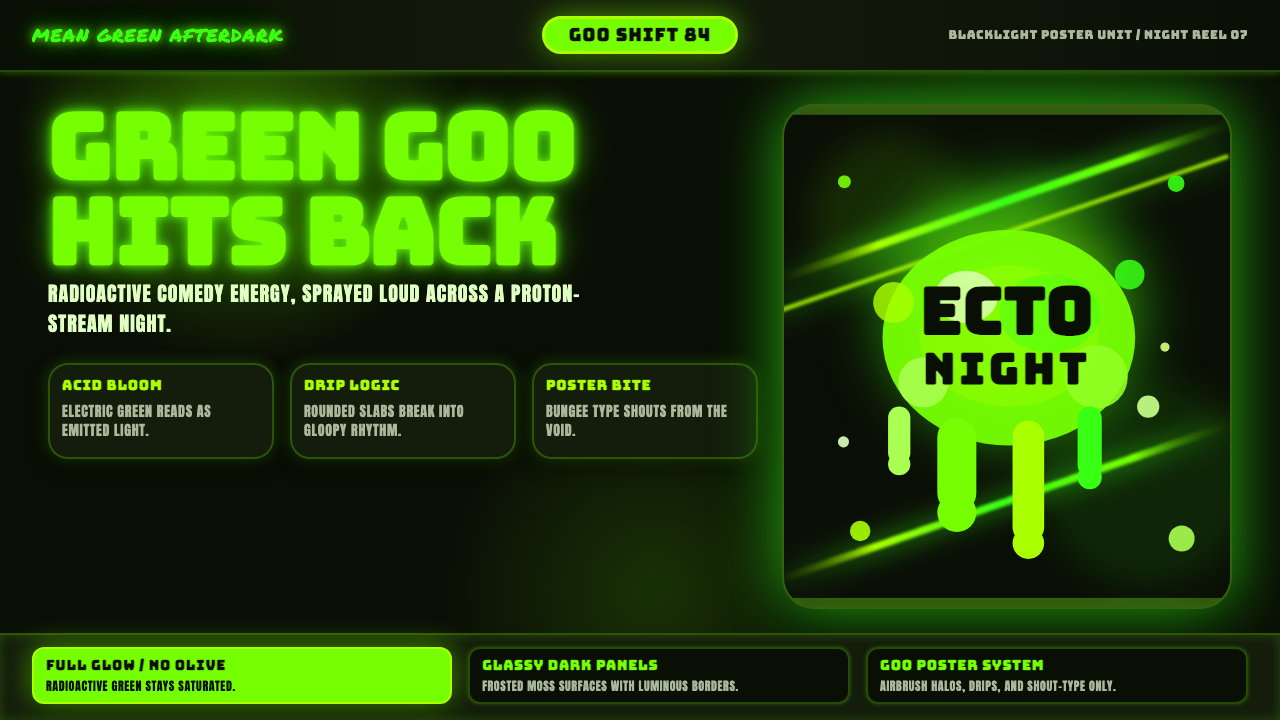 Slimer Ghostbusters GreenBlacklight goo shouts. Ecto-green Bungee type, drips, and proton streaks hit…
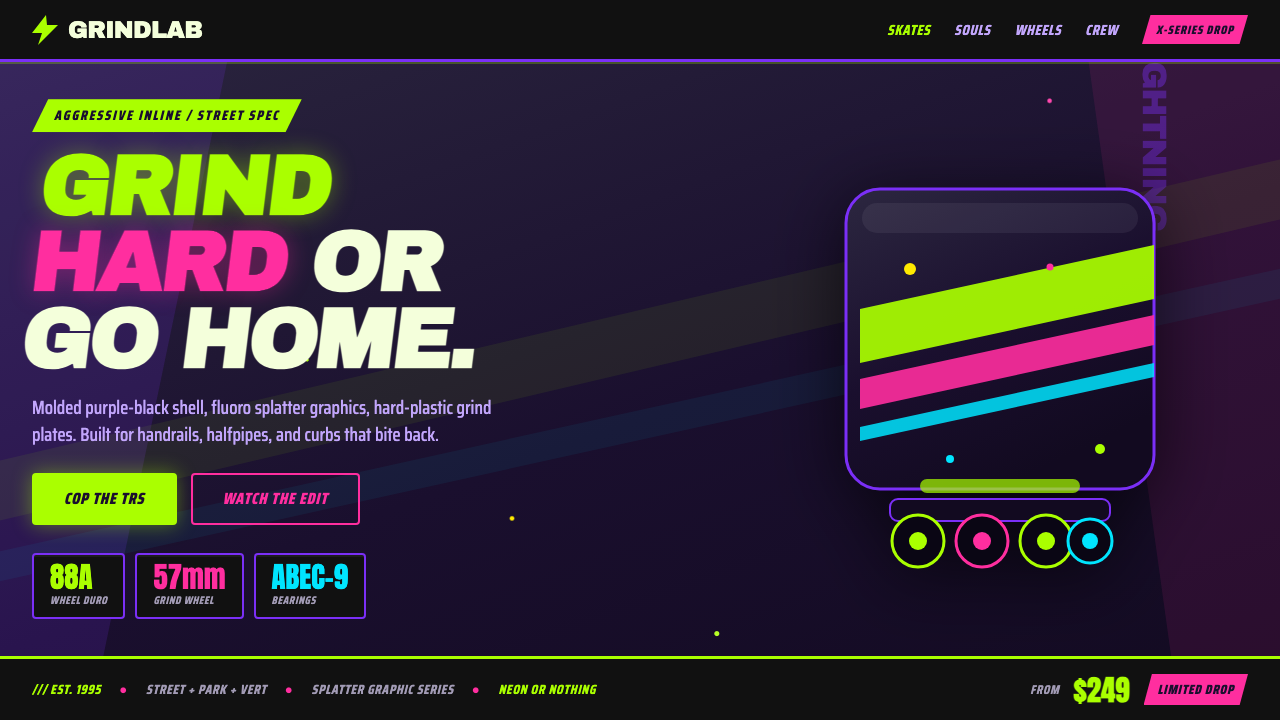 90s Aggressive Inline SkateX-Games attitude in plastic and paint. Fluoro lime and magenta slash across m…
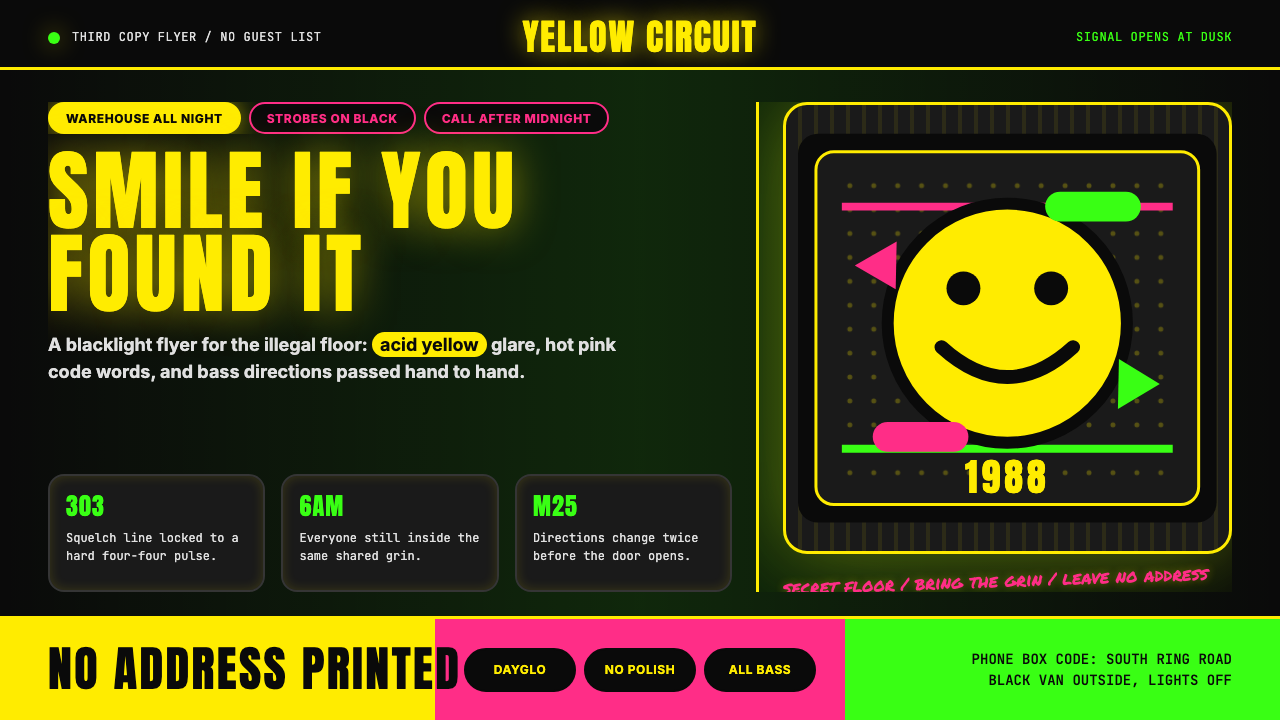 Acid House Smiley (1988)Rave energy hits first. Acid yellow on black, Anton caps, smiley glow.
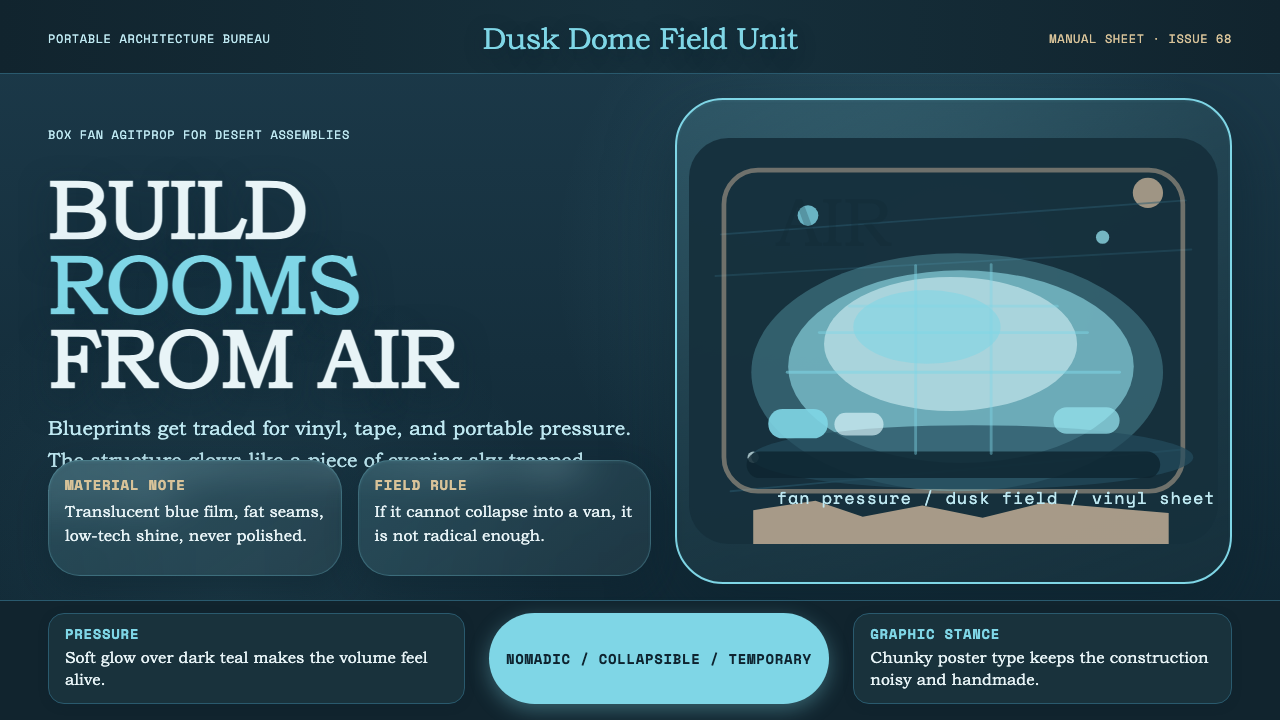 Ant Farm InflatablesTemporary architecture glows. Vinyl-blue domes swell over dark desert teal.
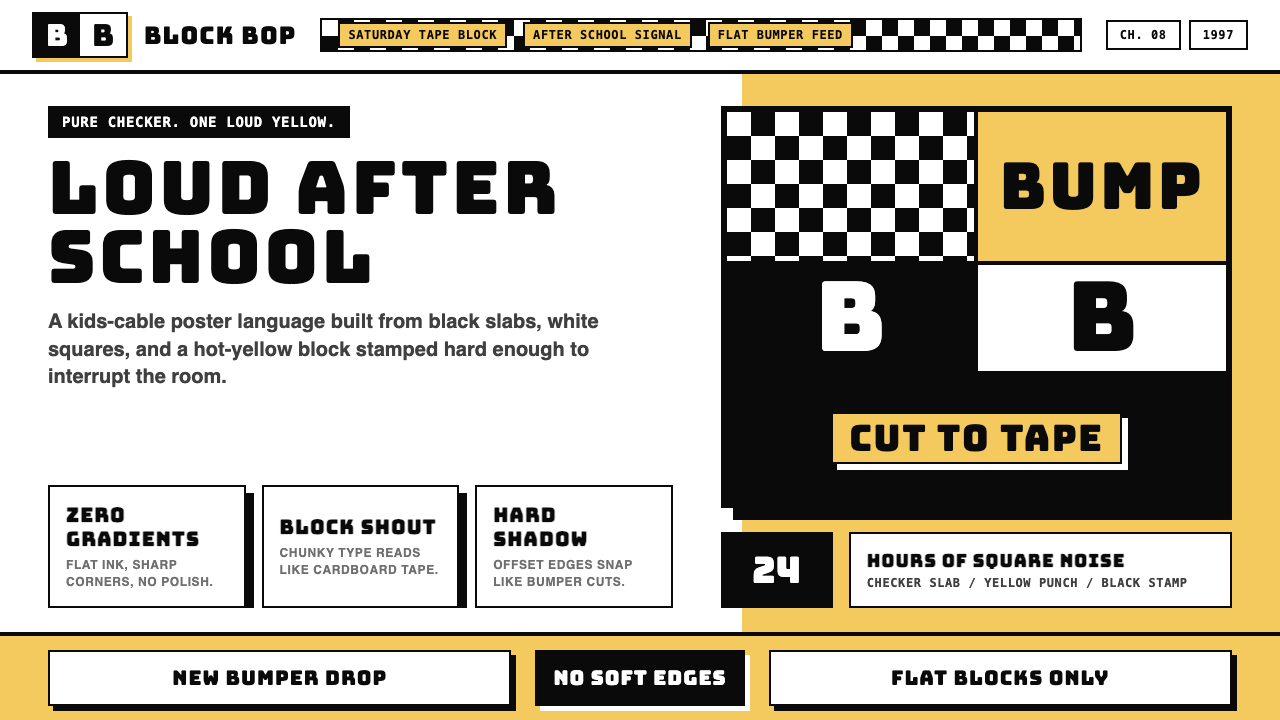 Cartoon Network 90s BlocksKids-cable noise, squared. Black-white checkerboards crash into hot-yellow Bu…
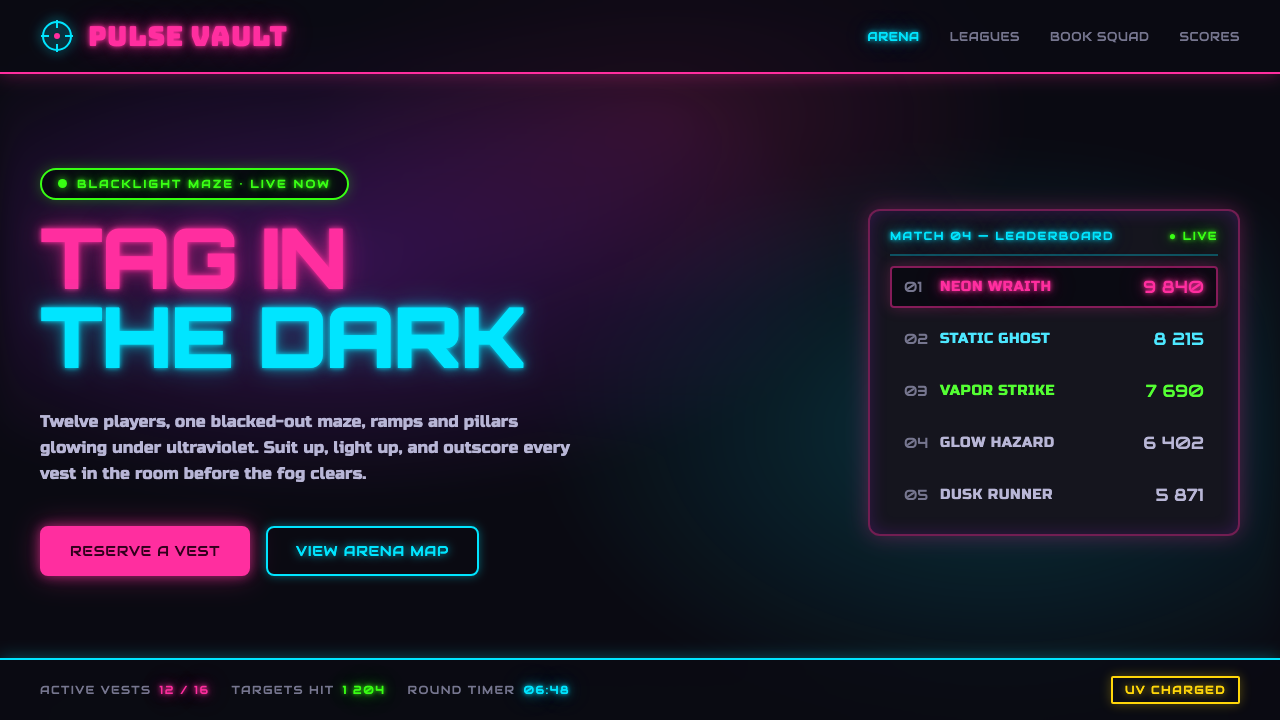 Laser Tag Arena BlacklightSuit up in the dark. UV pink, acid green and cyan glow on matte arena black,…