What is Michelin Guide Red-Stars?
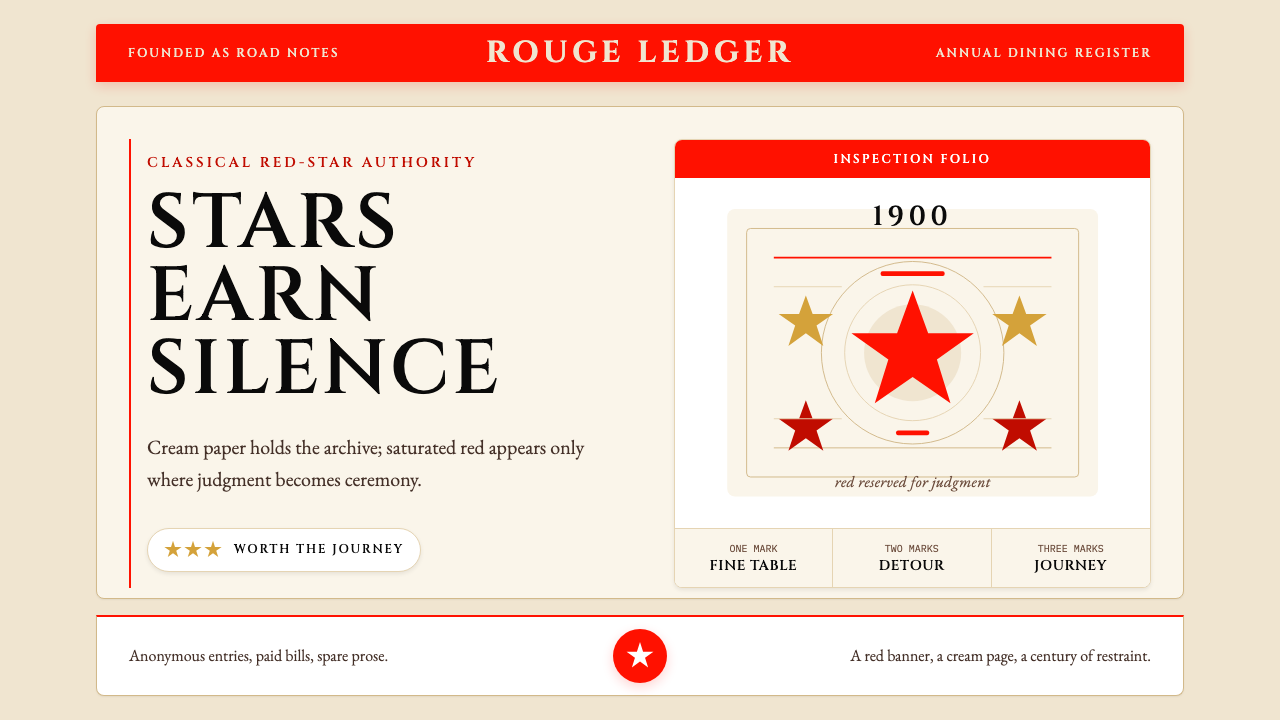
Red is earned, not spread — the Michelin Guide's century-old visual language treats restraint as the highest form of authority.
Michelin Guide Red-Stars in brief
The Michelin Guide Red-Stars aesthetic is one of the most quietly powerful visual identities in the world. It draws its authority not from abundance but from deliberate scarcity: a saturated red used only where it has been truly earned, cream-white grounds that carry classical typography with patient generosity, and the sparse star symbol placed beside a listing the way a medal is pinned to a uniform — one, two, or three, never decorative, always consequential.
This is a style built on the logic of ceremony. Every element earns its place through restraint. Negative space is not emptiness but expectation. The serif letterforms, set with wide tracking and unhurried line spacing, communicate that the institution behind them has been making judgments for more than a hundred years and sees no reason to rush. Red appears as punctuation — a banner, a star, a cover — never as wallpaper.
Unlike movements that achieved their aesthetic through manifestos and theoretical argument, the Michelin visual language arrived through institutional longevity. It was not designed in a single session but accumulated through decades of consistent editorial practice, becoming inseparable from the authority of the star ratings themselves. Applying it today means understanding that its power comes from what it withholds as much as from what it shows.

Where does Michelin Guide Red-Stars come from?
The Michelin Guide was born in 1900 in Clermont-Ferrand, France, as a promotional booklet distributed free of charge by tire manufacturers André and Édouard Michelin. The original intention was entirely commercial: encourage motorists to drive more, wear out their tires faster, and buy replacements. The small red guide contained practical information — maps, petrol stations, repair shops, and hotels — alongside the implicit message that the automobile was a vehicle for sophisticated adventure. The cover's red was a practical choice for visibility and brand recognition at a time when competing publications were typically beige or grey.
The star rating system emerged gradually. Restaurant recommendations first appeared in the guide in the early twentieth century. The iconic one-, two-, and three-star rating scale was formalized in 1926, with three stars first awarded in 1933. The symbolic weight of the stars transformed the guide from a motorist's utility into a cultural institution. By the mid-twentieth century, a Michelin star had become the highest credential in professional cooking — capable of making or, in rare cases of loss, profoundly affecting a chef's career and livelihood.
The Bibendum mascot — the rotund figure made of stacked tire rings — was not created in-house but commissioned in 1898 from the illustrator Marius Rossillon, who worked under the pen name O'Galop. The original image showed Bibendum raising a glass of road debris, with the caption 'Nunc est bibendum' (Now is the time to drink) — a toast to the tire's ability to absorb the hazards of the road. The mascot's roundness, warmth, and slightly absurdist character provided a human counterpoint to the guide's growing seriousness, and Bibendum has remained on every edition since.
The visual identity evolved alongside the institution's authority. As the guide shed its promotional origins and became an independent editorial product — inspectors began working anonymously in the 1930s; the free distribution model was retired in 1920 — the design consolidated around classical restraint. The cream-paper interior, the generous white margins, the serif type at unhurried scale: these were not the result of any single redesign but the accumulated effect of treating each editorial decision as a small act of institutional character. By the late twentieth century, the Michelin visual system was recognizable worldwide not because it advertised itself aggressively but because it had been consistent for so long that it became synonymous with the judgment it described.
What defines the Michelin Guide Red-Stars look?
Signature Red
The defining color of the system is a deep, fully saturated red — not a warm tomato nor a cool crimson, but a red that reads as both urgent and authoritative. It appears in highly controlled contexts: the cover ground, the star symbol, horizontal accent rules, and navigational headers. It is never used as a fill for large content areas, never applied to body text, and never diluted into tints. This discipline is what makes each appearance of red feel like a declaration rather than a decoration.
Cream and White Grounds
Interior pages carry a ground closer to warm cream than to clinical white — a tone that recalls quality paper stock and the physical weight of a well-produced annual. This warmth is not accidental: it softens the contrast between text and background to a level appropriate for extended reading, and it places the guide in a lineage of serious European reference publications. Against this ground, black type and red accents achieve their effect without aggression. The cream ground is as much a part of the aesthetic identity as the red cover.
Classical Serif Typography
The typographic register is firmly classical — letterforms with well-defined serifs, descended from the traditions of French fine printing. Text is set with generous letter-spacing and line-height, creating the impression that each listing has been given room to be considered rather than compressed to fit a quota. The type feels institutional without being cold, formal without being rigid. Hierarchy is established through size and weight contrast rather than through color or decorative rules. The overall effect is that of a publication confident enough in its own authority not to shout.
The Star as Emblem
The Michelin star is not a generic five-pointed star but a specific stylized form — rounder, more compact, closer to a heraldic charge than to an informal rating symbol. Its visual weight is calibrated so that one, two, or three stars beside a restaurant name read as cumulative gravity, not as a simple score. The stars never appear in decorative patterns or as background texture; their meaning depends entirely on scarcity. Overuse would drain them of significance, so the design system treats placement as a form of editorial judgment in itself.
Bibendum and Institutional Warmth
The Bibendum mascot — a figure composed of stacked pale rings, round-faced and unhurried — performs a specific function within the visual system: it humanizes an institution that would otherwise read as entirely austere. His presence on the cover and at chapter breaks signals that the guide's authority is not meant to intimidate but to guide. The mascot's rounded, almost cartoonish forms contrast deliberately with the severity of the typographic system, creating a register of approachable expertise rather than remote judgment.
Controlled White Space
Margins are wide by the standards of most reference publications, and section introductions breathe rather than rush. This is not inefficiency but editorial philosophy: a guide whose judgments carry the weight they do cannot afford to appear hurried. The white space communicates confidence — the institution is not afraid of silence. This spatial generosity is one of the most important and most difficult qualities to replicate, because it requires resisting the temptation to fill every available area with content.
Restraint Over Expression
The Michelin aesthetic is fundamentally allergic to visual noise. There are no gradient backgrounds, no decorative borders beyond structural rules, no illustrative flourishes in the margins, no color photography used gratuitously. Even the cover — bright red, the boldest element in the system — achieves its impact through simplicity: the logo, the title, the year, and Bibendum. The discipline is self-reinforcing: every element that is omitted makes the elements that remain more powerful. This is restraint understood not as limitation but as amplification.

Who shaped Michelin Guide Red-Stars?
André Michelin, along with his brother Édouard, co-founded the Michelin tire company in Clermont-Ferrand and conceived the guide as a promotional vehicle to encourage automobile travel. It was André who recognized that the guide's value lay in practical, reliable information — pushing for the inclusion of hotel and restaurant listings as the automobile industry matured. His instinct that authority required consistency and candor, not advertisement, laid the philosophical groundwork for the guide's eventual independence from its promotional origins.
Édouard Michelin managed the operational and industrial side of the Michelin company through its most formative decades. His commitment to product quality and brand precision translated directly into the guide's early visual character: the red cover was chosen under his watch to create an immediately distinctive identity on newsstands and in gloveboxes. Édouard's view that the Michelin name should stand for something reliable and authoritative — not merely something popular — shaped the guide's refusal to dilute its star ratings or expand them to satisfy demand.
Marius Rossillon, working under the pen name O'Galop, created the Bibendum character in 1898 based on a sketch André Michelin had noticed at an exhibition — a figure made of tire rings waiting for its proper context. Rossillon's genius was to give the industrial material a personality: round, cheerful, slightly pompous, and entirely comfortable with itself. The Bibendum image has been revised many times over 125 years but has never been fundamentally reconceived, a testament to the original character's durability and the Michelin institution's understanding that consistency in mascot identity reinforces the broader visual system.
The Michelin inspectors — full-time employees who dine anonymously and report according to rigorous internal criteria — are not named figures but are as central to the visual system as any named designer. Their anonymity is itself a designed condition: it removes the personality of the evaluator from the equation, reinforcing the authority of the institution over any individual. The visual system's restraint and formality mirror this institutional commitment to impersonality. When the guide's design strips away all self-promotion and ornament, it is making the same argument the inspector embodies: the judgment is what matters, not the judge.
How do you use Michelin Guide Red-Stars today?
The Michelin Guide visual language is among the most transferable fine-dining and authority aesthetics in contemporary design, provided the core logic is understood: red earns its place, never claims it. Before applying any element of this system, establish the hierarchy of ceremony — what in your design has actually been earned and therefore deserves the red accent, and what is simply content that should recede into cream and black. Getting this hierarchy wrong produces the most common failure mode: red everywhere, meaning nowhere.
For presentation slides — both cover and content — the Michelin approach rewards deliberate composition. A cover slide benefits from simplicity bordering on austerity: the title set in a well-spaced classical serif against a cream ground, with a single red horizontal rule or star-like accent as the only color element. Content slides should treat white space as structural — wide margins, generous leading, text hierarchies established by size contrast rather than color variety. Data slides become more powerful when charts are treated as graphic objects: clean axes, minimal gridlines, and the red accent reserved for the single most important data point or trend line rather than applied to every series.
For web UI — dashboards, pricing pages, editorial headers — the system works best when the background stays warm and light, typography anchors the hierarchy, and red is used with extreme economy: one active state, one highlighted tier, one critical alert. Navigation should be typographic and spaced rather than icon-heavy. Card components benefit from a thin border rather than a shadow, and table rows from subtle alternating grounds rather than strong color fills. The overall effect should feel like a reference document rather than a marketing interface — authoritative, legible, and confident enough not to explain itself.
For editorial and marketing applications — printed materials, social assets, email headers, marketing pages — the Michelin aesthetic supports strong information hierarchy when applied with discipline. An editorial layout uses a narrow body column with a wide outer margin for annotations or pull quotes, section breaks marked by a red rule rather than ornamental dividers, and headlines in classical serif at a scale that commands attention without aggression. Marketing pages work well with the asymmetry of alternating blocks: cream ground with dark text followed by a red ground with white type for a single feature statement, never extending the red ground beyond one panel per screen.
The most common mistake when applying this aesthetic is treating it as a general luxury style and importing elements from adjacent high-end registers — gold accents, thin decorative borders, script typefaces, photographic texture. The Michelin system is not luxury-general; it is specifically the authority of careful judgment, which is a different thing. Gold and script signal wealth; red and cream and classical serif signal considered expertise. Mixing the two produces something that looks expensive but reads as unearned. A second common error is setting type too tightly — the system's power comes partly from the unhurried scale of its spacing, and compressing it to fit more content destroys the effect that makes each remaining element feel significant.

Michelin Guide Red-Stars — FAQ
Is the Michelin aesthetic the same as general French luxury design?
They share a classical French serif sensibility and a preference for restraint over excess, but they differ fundamentally in their relationship to color and ornament. General French luxury design — think perfume houses, couture, fine leather goods — permits gold, delicate illustration, and tonal color palettes that suggest richness through layering. The Michelin system rejects all of this in favor of functional sobriety: the red is a badge, not a jewel; the cream is paper, not satin. Michelin communicates authority through institutional consistency rather than through the signifiers of material luxury.
How many times can red appear on a single page before it loses meaning?
The authentic system uses red no more than two or three times per spread, and usually far less. A page that contains a red star beside a restaurant name, a red running header, and a red rule at the section break is already at the high end of appropriate density. Every additional red element reduces the informational weight of every other one. A useful test: if removing a red element would make the page feel emptier rather than cleaner, the element was likely serving decoration rather than emphasis. When in doubt, treat red as you would an exclamation mark — used once per page at most, and only when the content genuinely merits it.
Can this style work for a digital product that needs to feel modern and interactive?
Yes, but the adaptation requires discipline. The Michelin system was designed for print, and digital application introduces conventions — hover states, animations, responsive reflow — that have no direct print equivalent. The key is to maintain the system's core logic while translating its effects: red still appears only for the highest-priority interactive states; spacing remains generous even on smaller viewports; type hierarchy relies on size and weight rather than color variation. Micro-animations should be minimal and purposeful — a brief transition, not an entertainment. The goal is a digital product that feels like a well-produced reference document rather than a web application, which means resisting the temptation to signal interactivity through visual complexity.
Does the style suit content categories outside of fine dining and food?
The Michelin visual system is not bound to food content — its underlying logic of earned authority, classical typography, and ceremonial restraint applies wherever a brand genuinely needs to communicate considered judgment and institutional weight. It works well for annual reports, research publications, professional awards programs, premium legal or financial services, and editorial platforms positioning themselves as authoritative reference sources. It works poorly for contexts that require warmth, playfulness, cultural specificity, or sensory immediacy — consumer wellness, children's education, entertainment, and lifestyle brands rooted in community or personal expression. The question to ask is not 'do we serve food?' but 'does our value proposition rest on the authority of careful, earned judgment?'
How do you avoid making the style feel dated or pastiche-like?
The danger of pastiche arises when the visual elements are copied without understanding the underlying logic they serve. A designer who adds classical serifs and red accents without understanding the system's discipline around spacing, restraint, and color economy will produce something that looks like a costume rather than a character. The safest approach is to apply the system's principles rather than its surface features: ask whether the layout genuinely earns its red elements, whether the spacing is truly generous rather than merely adequate, whether each typographic decision serves hierarchy rather than variety. When these questions are answered rigorously, the result has the quality of authoritative restraint regardless of whether it quotes the Michelin visual canon directly.
Related design styles
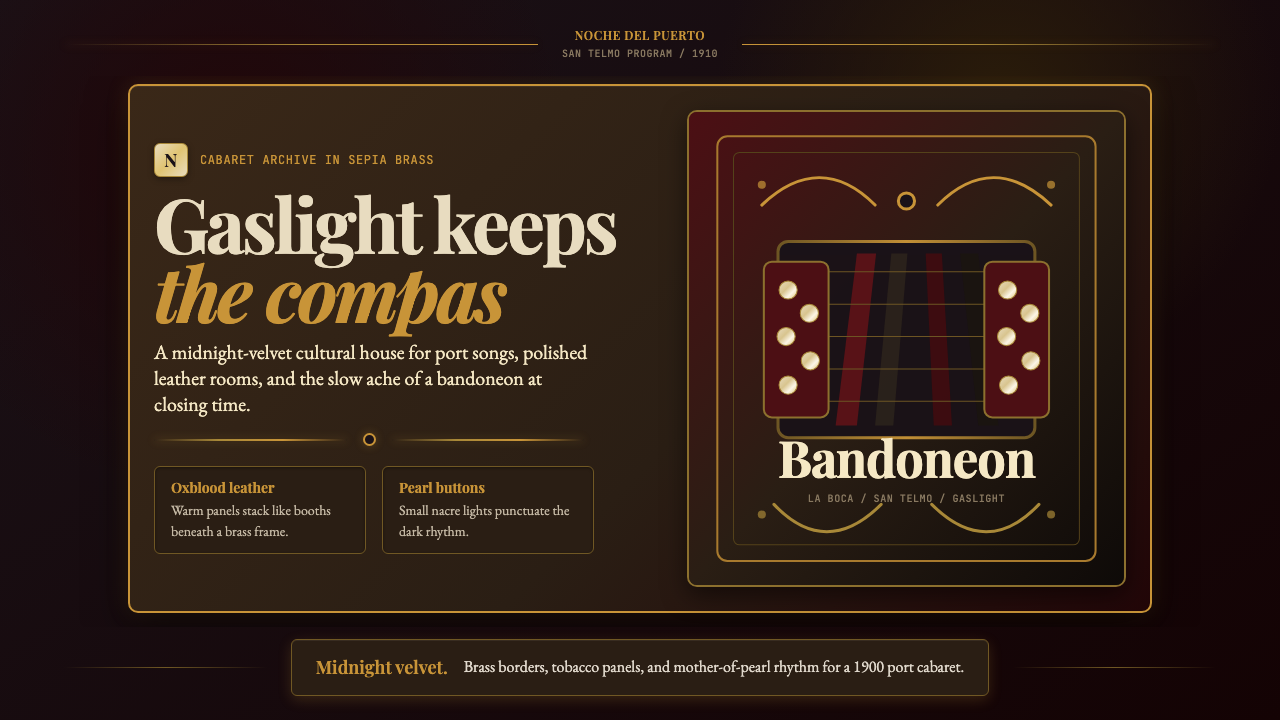 Argentine Bandoneón 1900 (Tango)Gaslit tango luxury. Midnight velvet, brass fileteado, and pearl-button geome…
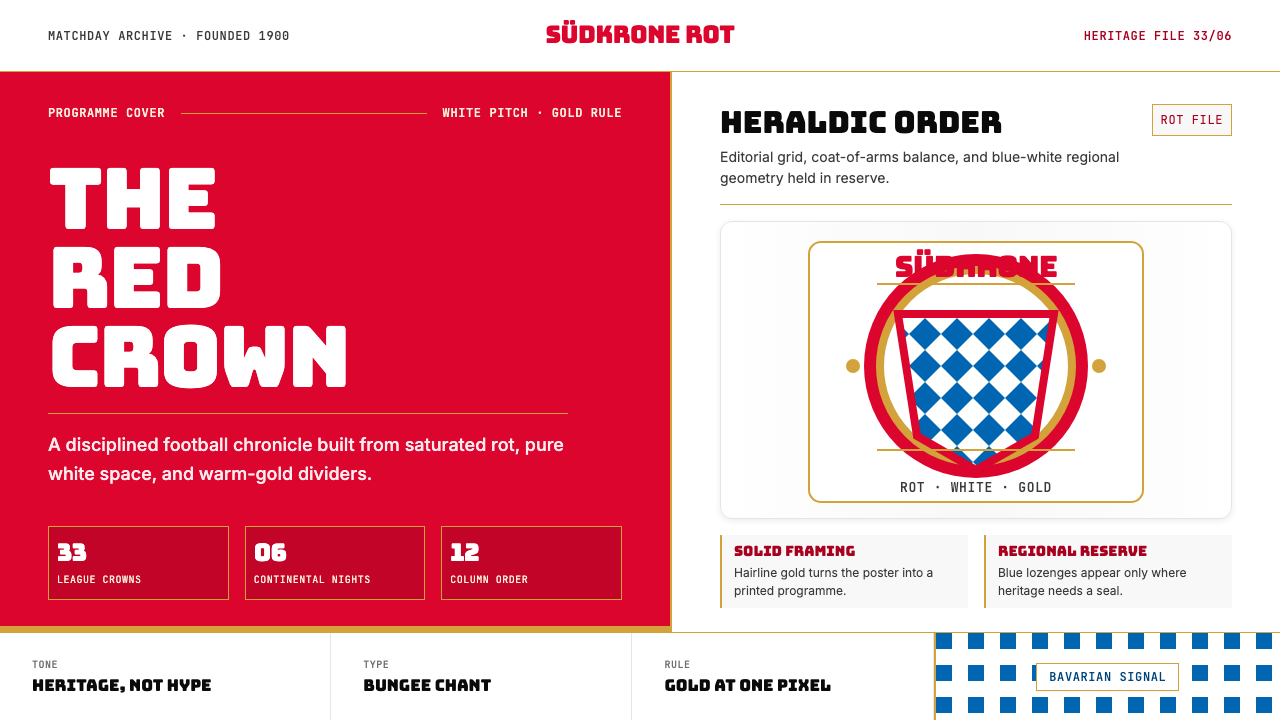 Bayern Munich (Rot)Heritage, not hype. Saturated rot fields, gold rules, and blue lozenges enfor…
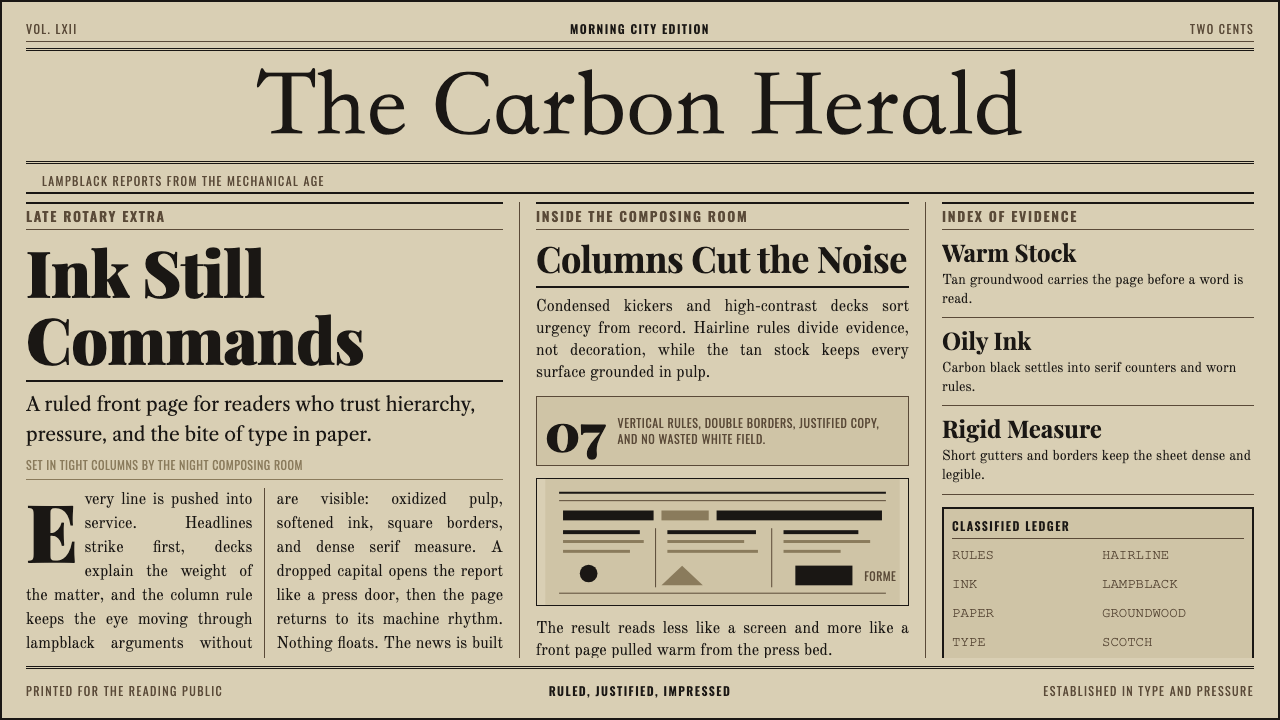 Broadsheet LetterpressAuthority in ink. Lampblack serif decks lock into tan paper with strict ruled…
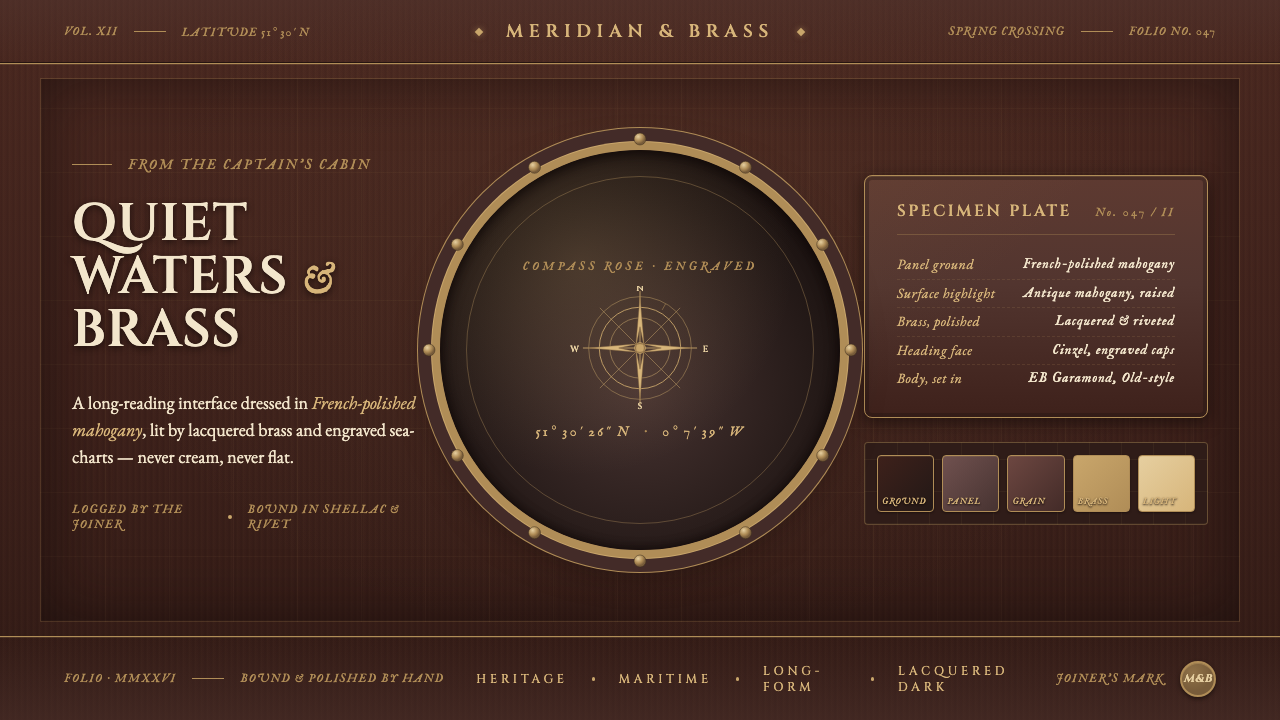 Mahogany Ship CabinPre-1900 maritime luxury. Mahogany panels, brass portholes, Cinzel caps over…
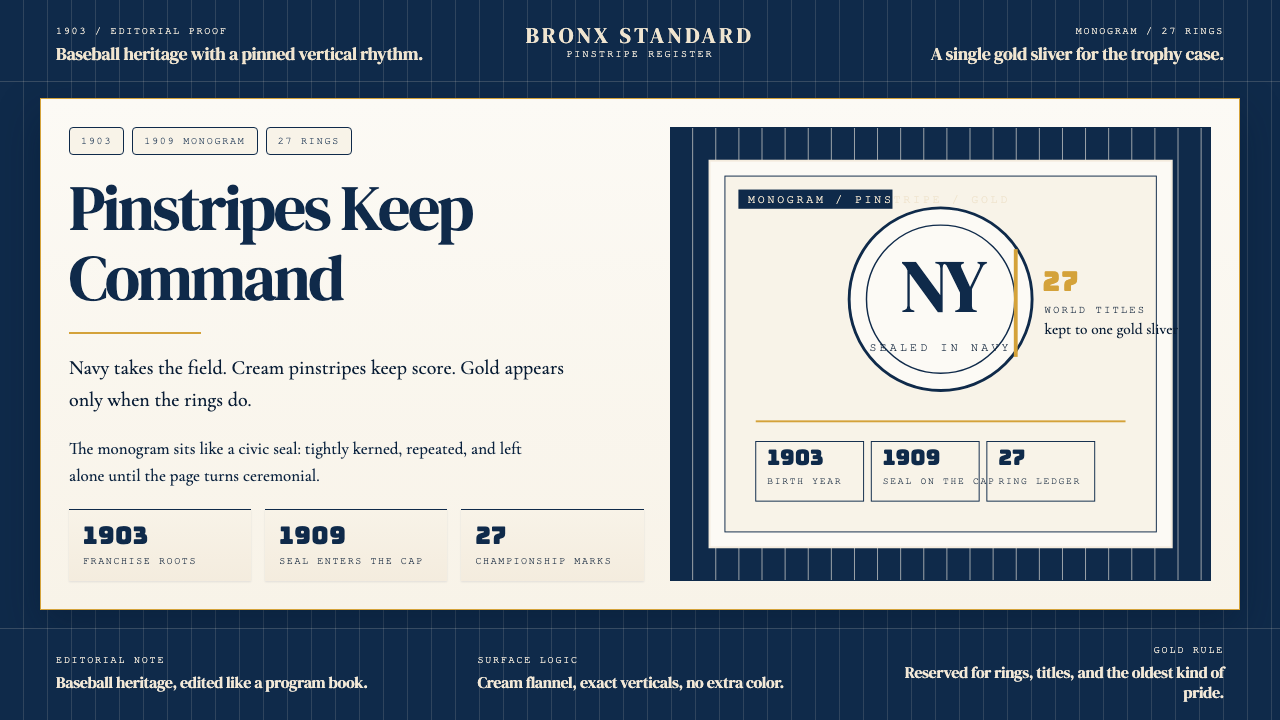 New York Yankees (Navy-Pinstripe)Navy restraint, not noise. Cream pinstripes and a gold monogram seal do the w…
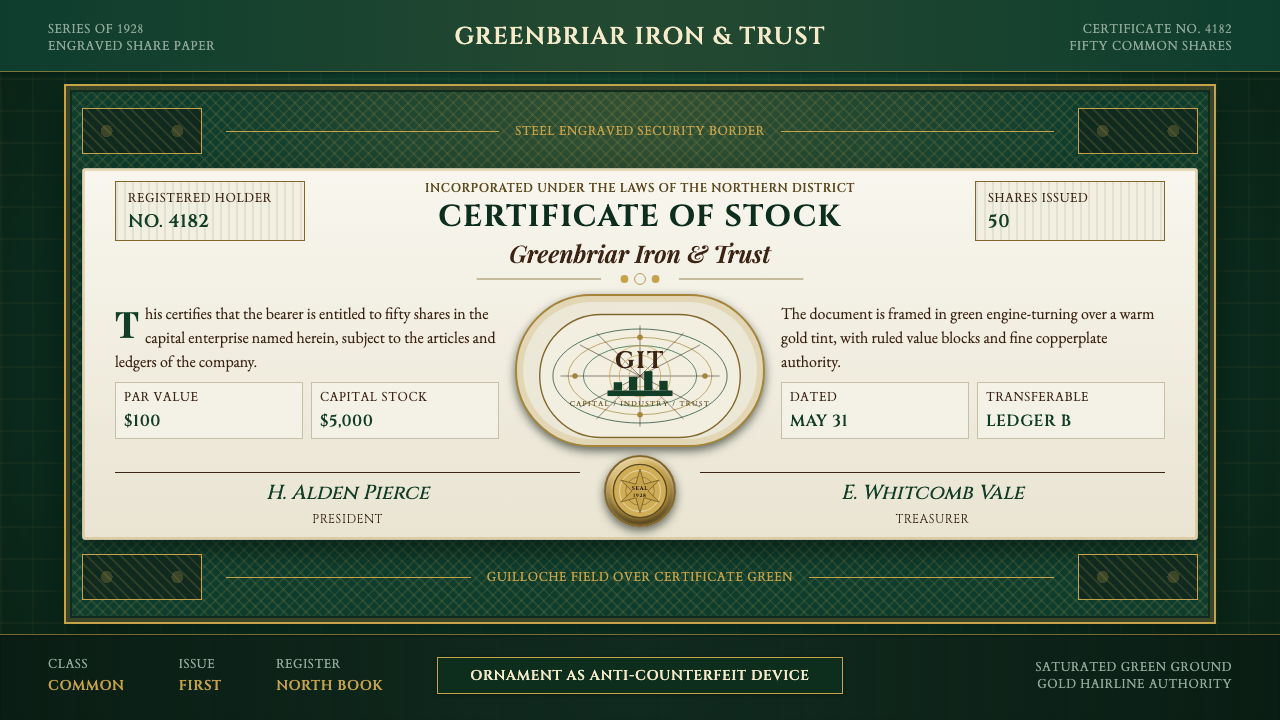 Stock CertificateCapital made ceremonial. Certificate green, gold hairlines, and guilloche bor…