What is Mexican Volcanic Stone?
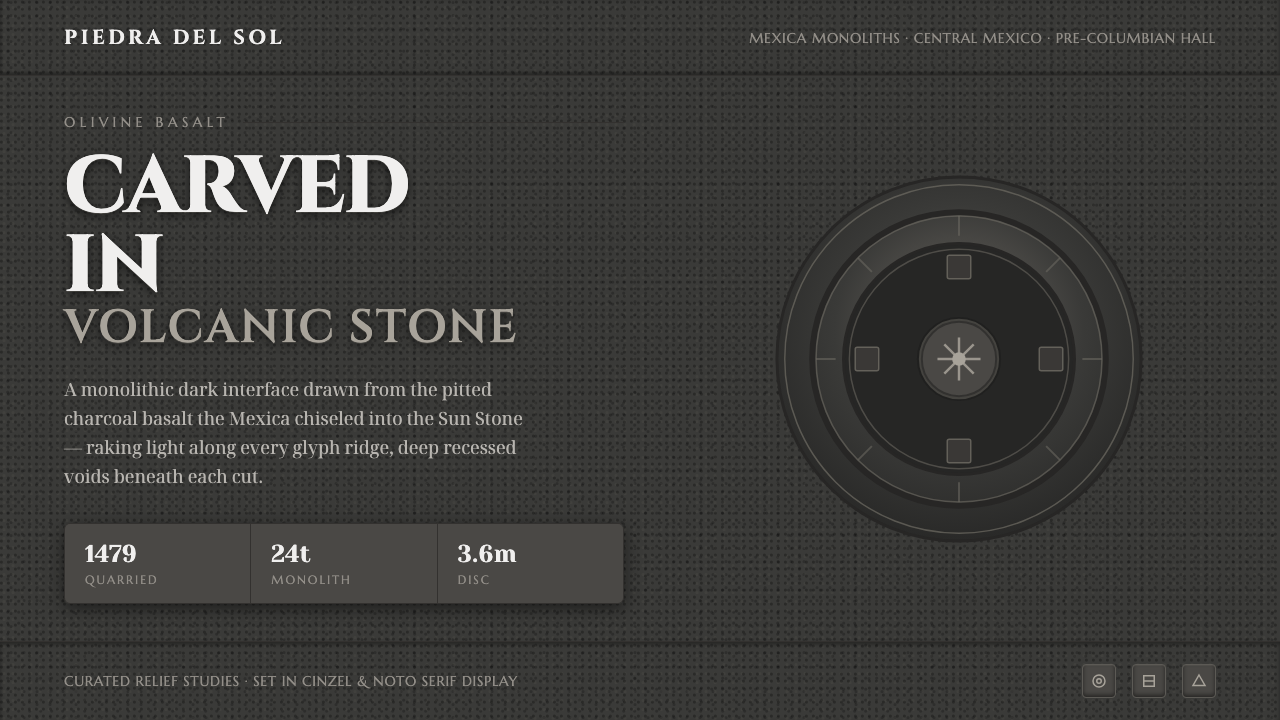
Mexican Volcanic Stone makes the screen feel quarried rather than assembled — a field of pitted charcoal basalt, incised light, and lettering that seems cut from the surface.
Mexican Volcanic Stone in brief
Mexican Volcanic Stone is a dark, monumental visual system drawn from piedra volcánica: the porous olivine-basalt associated with Mexica carving and with the recinto masonry of colonial Mexico City. Its defining premise is material weight. The ground is not an abstract dark backdrop but a weathered stone face, pitted and irregular, moving between charcoal and gunmetal gray without drifting into warm cream, polished luxury, or generic black.
The style translates monolithic relief into a digital surface. Rather than making elements appear to float, it makes them appear carved: important forms are recessed into voids, letters carry narrow raking highlights along their edges, and circular compositions suggest the force of a stone disc. Depth comes from the relationship between a dark plane, a cut edge, and a shadowed cavity, not from glossy illumination or atmospheric softness.
Its visual language is inseparable from monumentality. Monumental carved-serif lettering, especially Cinzel-like forms, holds the composition together with a ceremonial, inscriptional presence. Concentric discs, radial divisions, glyph-like marks, and broad areas of unbroken basalt establish order. The result should feel excavated, deliberate, and dense with surface history, while remaining legible enough for contemporary information design.
Where does Mexican Volcanic Stone come from?
The source of the style is Central Mexico and the long visual authority of volcanic stone there. Piedra volcánica is described here as porous olivine-basalt, a material whose natural pits and dark mineral range already resist the smooth, weightless conventions of many contemporary interfaces. Mexican Volcanic Stone begins by treating those irregularities as meaning rather than damage: porosity becomes evidence of matter, and darkness becomes geological density.
Its monumental reference point is Mexica stone carving of the fourteenth through sixteenth centuries. The Sun Stone and the Stone of Tizoc establish the central visual ideas without requiring literal reproduction: a carved stone surface can organize information through concentric structure, a central focal field, relief edges, and dense symbolic marks. Cihuateotl extends the reference beyond the disc, pointing to sculpture as a presence with mass, silhouette, and a surface shaped by cutting.
The visual system also draws from colonial recinto masonry in Mexico City. This reference matters because it shifts volcanic stone from a singular ceremonial object into built environment: walls, enclosures, thresholds, and enduring structural surfaces. In application, the page should therefore feel less like a museum label placed beside stone and more like information embedded into a stone architecture.
The digital translation is intentionally selective. It does not claim to recreate Mexica sculpture or colonial masonry in full; it carries forward a limited set of material and compositional qualities: dark porous basalt, carved relief, raking illumination, concentric arrangement, and monumental inscription. The restraint is essential. When these references are reduced to decorative motifs, the style loses the gravitas that gives it purpose.
What defines the Mexican Volcanic Stone look?
Basalt Ground
The foundational surface is pitted charcoal-to-gunmetal basalt. It should feel mineral, porous, and deficit-side neutral rather than velvety, warm, or polished. Variation belongs inside the stone itself: faint cavities, worn planes, and changes in density make the field substantial without turning it into a distracting texture.
Carved Relief
The primary depth model is incision. Panels, emblems, and significant labels read as cut into the stone or raised from it by a shallow relief edge. Boundaries are consequential because they imply a chisel path; they should be broad, quiet, and structurally placed instead of multiplied into decorative frames.
Raking Light
Light travels sideways across cut edges rather than falling evenly over the composition. A restrained highlight reveals the lip of a glyph, disc, or recess, while the adjoining void remains deep. This is not theatrical glow; it is evidence that the surface has been worked and has thickness.
Concentric Order
Concentric discs and radial organization provide the style with a strong center of gravity. Circular structure is most convincing when it organizes content, hierarchy, or interaction around a focal field. It should not become a generic sunburst pattern scattered across the page; each ring needs a role in the composition.
Monumental Type
Carved-serif typography carries the voice of the system. Cinzel-like letterforms work because their proportions suggest inscription, stone-cut capitals, and public permanence. Titles should feel set into a facade, while supporting text remains calmer and more recessive so that the hierarchy resembles a monument with an inscription rather than a poster with ornamental type.
Void and Restraint
Deep recesses and broad unmarked stone are as important as visible relief. Negative space should read as a chamber, a pause, or an uncut plane that gives carved forms authority. Ornament is strongest when it is sparse, symbolic, and subordinated to the stone field rather than allowed to compete with it.
Who shaped Mexican Volcanic Stone?
Mexica sculptors are the human origin of the style's carved logic. Their work establishes stone as a medium capable of carrying dense symbolic structure, deep relief, and monumental presence. Mexican Volcanic Stone takes inspiration from that relationship between material, mark, and authority without treating it as interchangeable ornament.
The Sun Stone is the style's clearest compositional reference: a monumental disc whose concentric structure turns a stone surface into an organized field. In contemporary use, it informs radial hierarchy and centered focal systems, not literal copying of its imagery or marks.
The Stone of Tizoc reinforces the principle that a carved stone object can carry meaning through its perimeter, relief treatment, and physical mass. It supports the style's preference for encircling bands, cut boundaries, and forms that appear inseparable from their material ground.
Cihuateotl broadens the reference from circular stone composition to sculptural figure and silhouette. Its relevance is the sense that carved form has a body: contour, mass, recess, and shadow belong together. This keeps the system from becoming only a radial graphic treatment.
How do you use Mexican Volcanic Stone today?
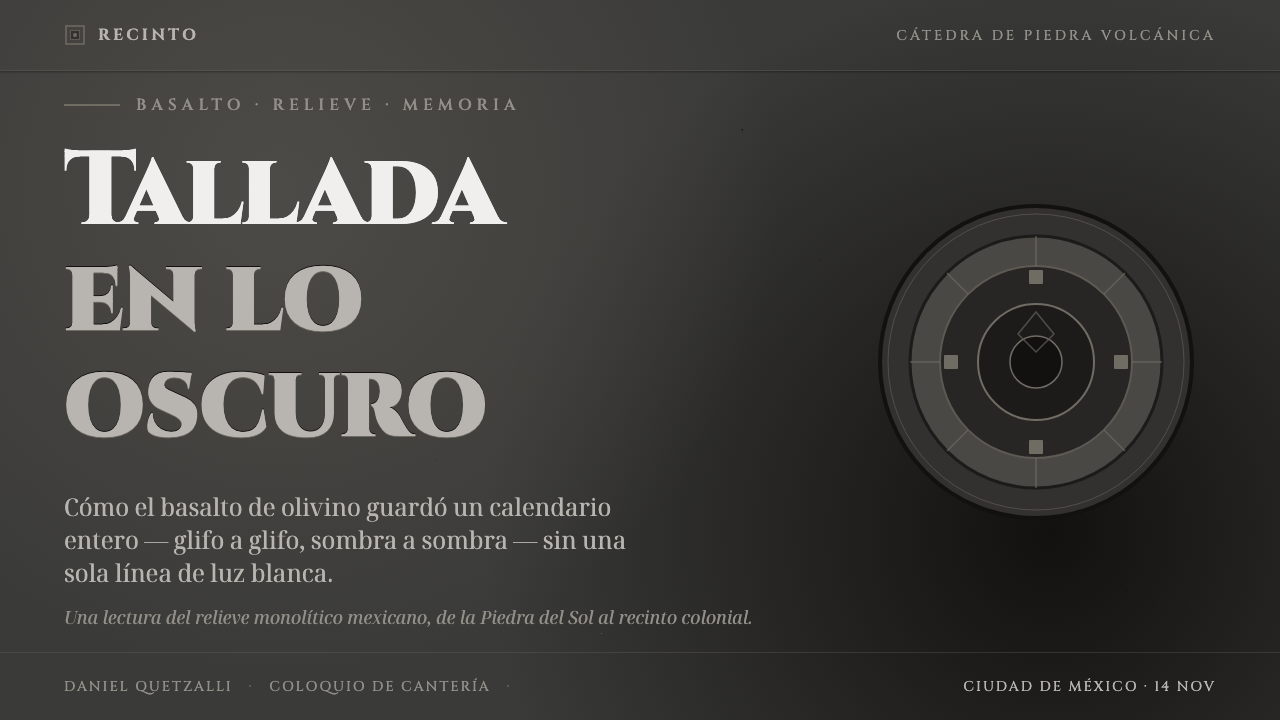
For presentation slides, use the style to make hierarchy feel inscribed rather than layered. A cover can place a monumental title against a broad basalt field, with one concentric disc or cut emblem holding the visual center. Content slides should use recessed sections and disciplined headings instead of floating cards. On data slides, radial comparisons, circular progressions, and ring-based diagrams fit naturally, but labels must remain plain and readable; the stone effect should frame information, never bury it.
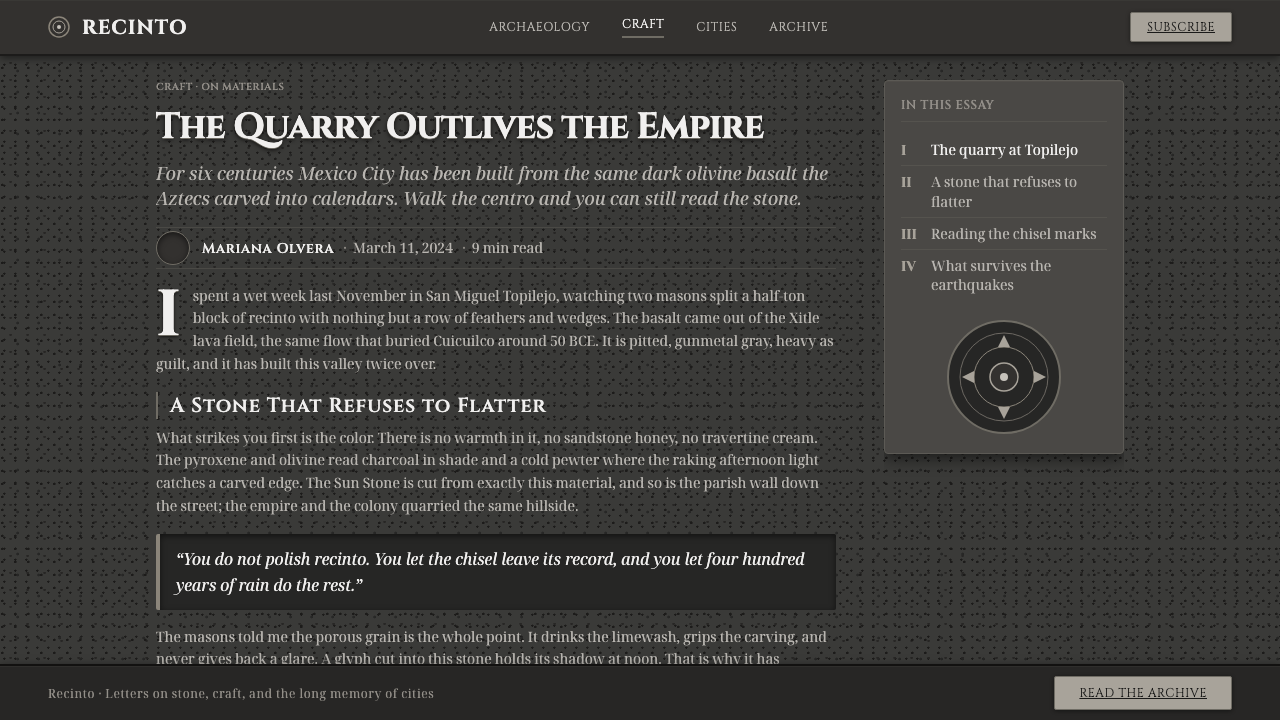
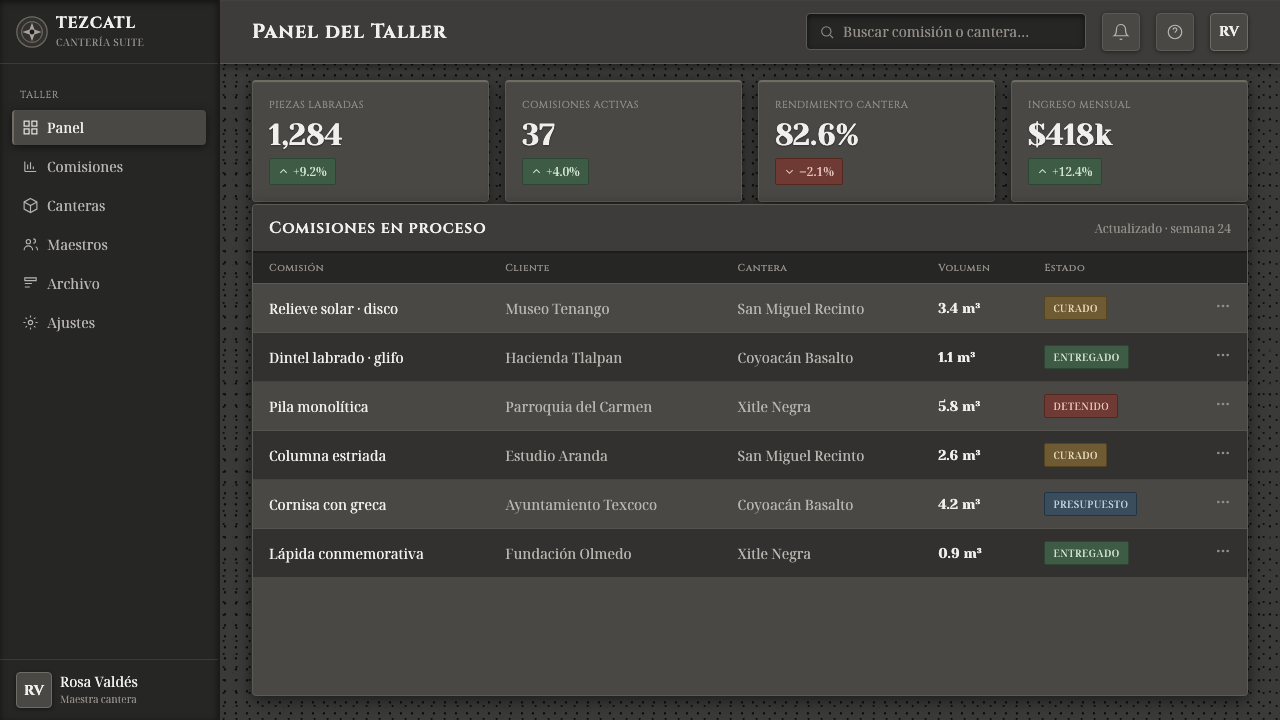
For web interfaces, Mexican Volcanic Stone suits dashboards, archives, cultural platforms, and pricing pages that need authority and a clear center of gravity. Use the dark stone ground as a continuous architectural field, then distinguish navigation, filters, tiers, and alerts through carved boundaries, controlled highlights, and changes in depth. A dashboard benefits when its primary metric occupies a central disc while secondary information recedes into structured bands. A pricing page can make each offering feel like a carved plaque, provided comparison remains immediate.
For editorial and marketing work, the system is strongest when content is given room to read as an inscription. Feature stories can open with a heavy title, a restrained glyph-like marker, and a deep empty field before the body begins. Marketing pages can alternate broad uncut stone planes with carefully selected relief moments: a key statement, a circular seal, a call to action, or an image held within a carved aperture. The visual drama should arrive through material contrast and composition, not through constant effects.
The common mistake is confusing volcanic stone with a generic dark fantasy theme. Smooth black glass, smoky haze, gold-luxury decoration, random cracks, and excessive glowing edges all weaken the material premise. Another error is copying recognizable motifs from the Sun Stone as surface pattern. The more convincing approach is to preserve the underlying logic: porous neutral basalt, a limited number of consequential cuts, raking illumination, concentric order, and typography with the restraint of a public inscription.
Mexican Volcanic Stone — FAQ
Is Mexican Volcanic Stone simply a dark version of a stone-texture interface?
No. The dark basalt ground is necessary, but the system is defined by how forms relate to it. Surfaces should appear carved, recessed, or held in relief; light should reveal edges rather than decorate the entire page; concentric structure should create hierarchy. A dark background with a texture overlay lacks the carved, monumental logic that makes the style distinct.
How should the Sun Stone reference be used responsibly?
Use its compositional lesson rather than treating its marks as interchangeable decoration. Its concentric organization, central focus, and carved-density relationship can inform layouts, diagrams, and emblems. Avoid lifting identifiable imagery into a repeated pattern or using it as a generic exotic signifier. The design should acknowledge volcanic stone and carved structure as the source of its visual discipline.
Can the style use photography or illustration?
Yes, but imagery should enter as something framed by the stone system rather than as a soft window floating above it. Crop images decisively, hold them within a carved aperture or circular field, and preserve a strong relationship to the surrounding dark ground. Illustration works best when its silhouette and edge treatment can coexist with relief, void, and inscriptional typography.
Where does this style work poorly?
It is less suitable where the product needs to feel airy, playful, warm, or immediately casual. Dense basalt, recessed detail, and monumental type naturally create gravity, so they can overwhelm lightweight social tools, intimate wellness experiences, or products whose value depends on softness and spontaneity. The style works best when material authority and focused attention support the content.
Related design styles
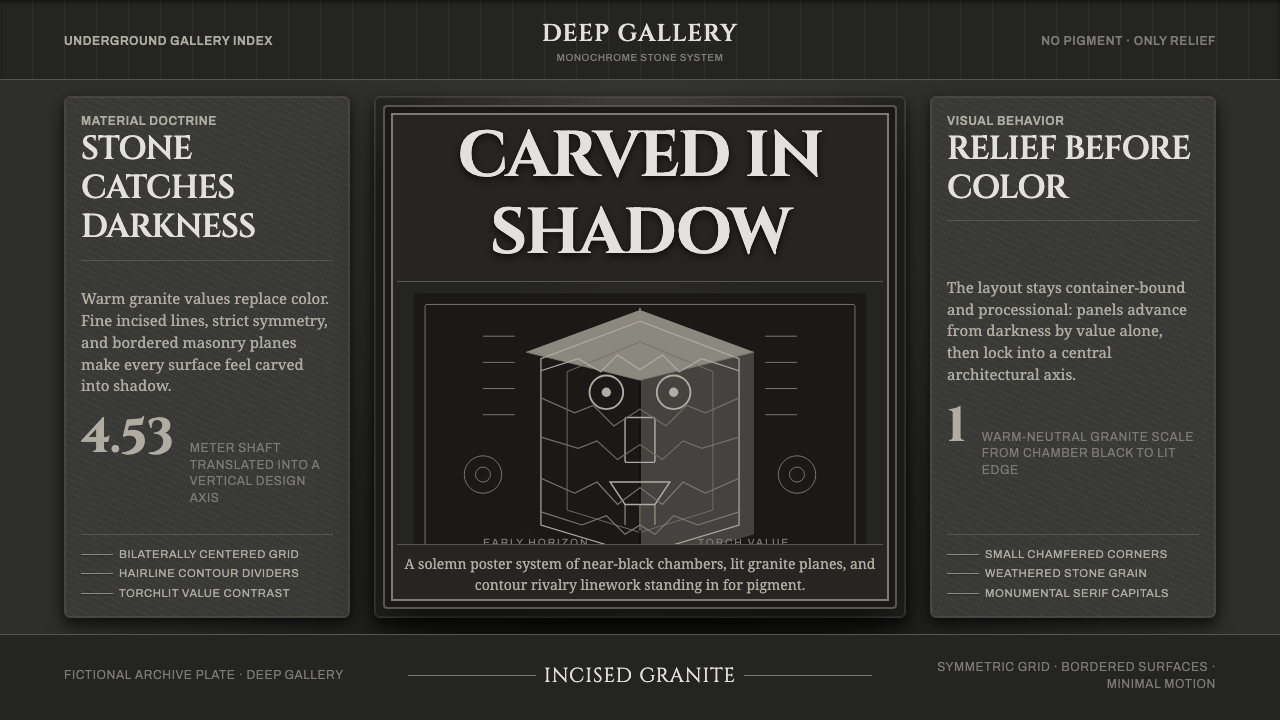 Chavín Lanzón Stone ReliefStone emerges from darkness. Granite grays, incised lines, and torchlit symme…
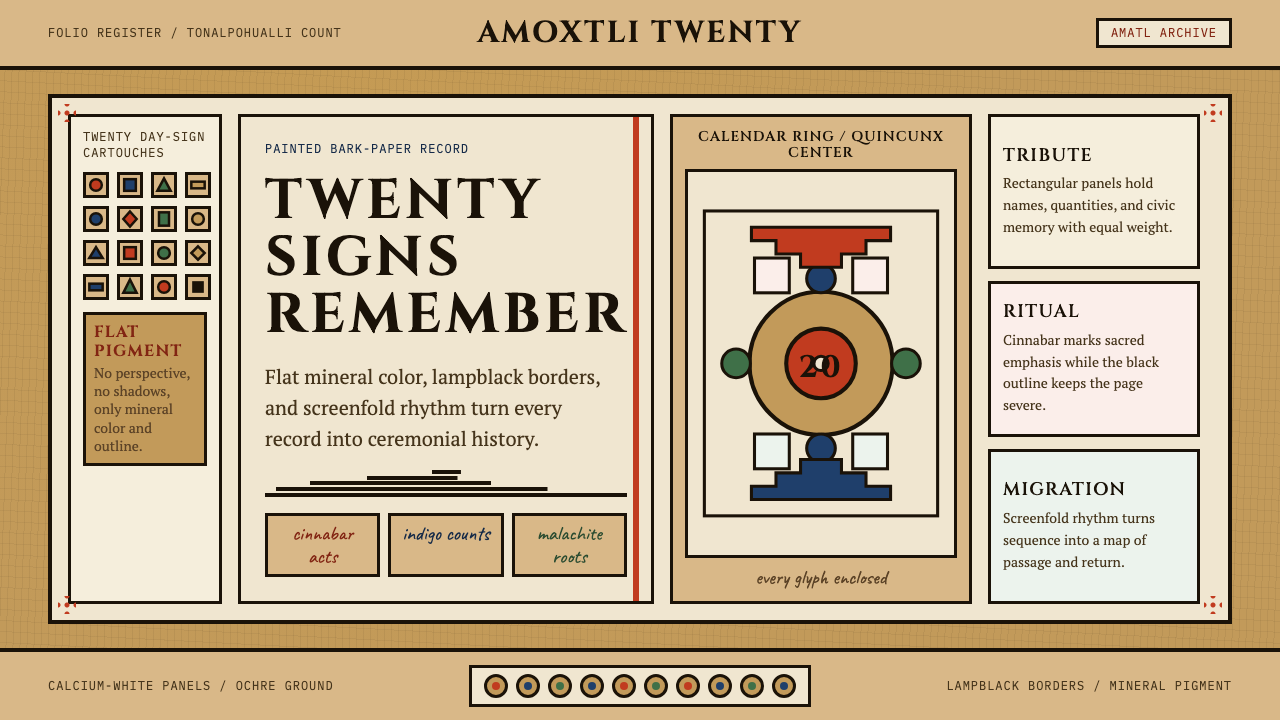 Aztec CodexSacred records stay severe. Ochre amatl ground, Cinzel capitals, black cartou…
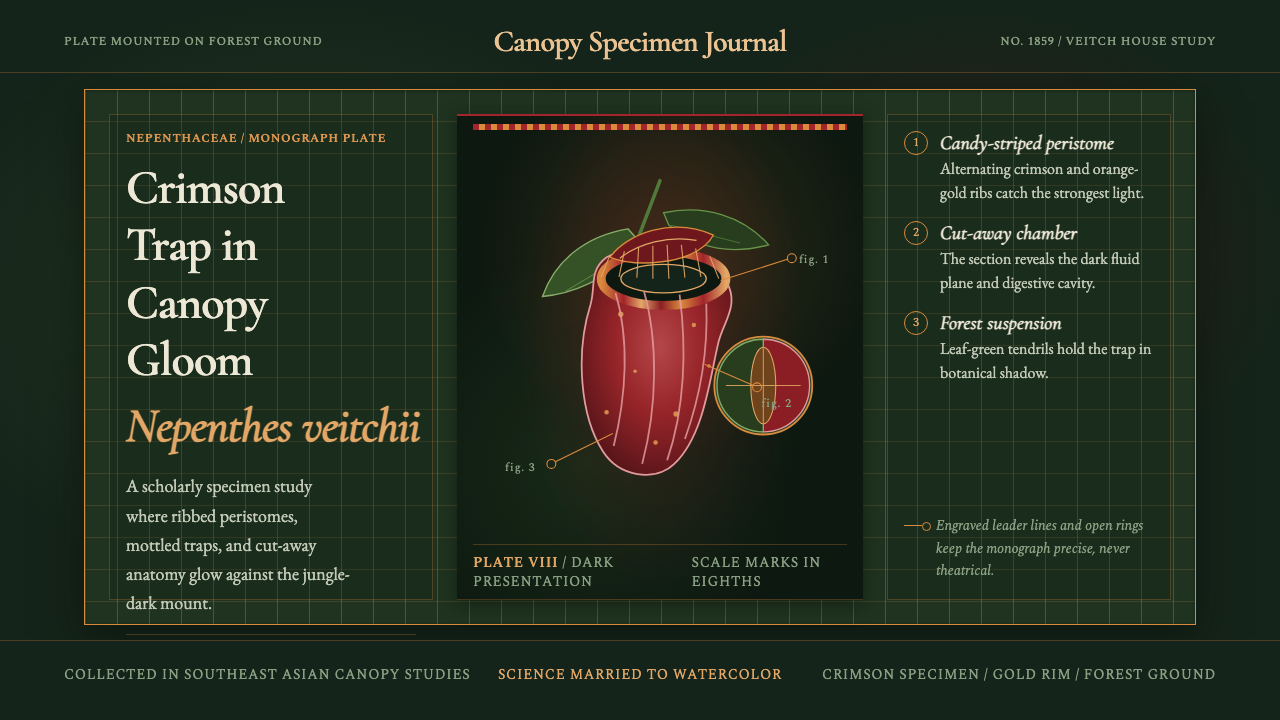 Carnivorous Pitcher PlantBotanical danger glows. Crimson traps and gold rims float on jungle-dark gree…
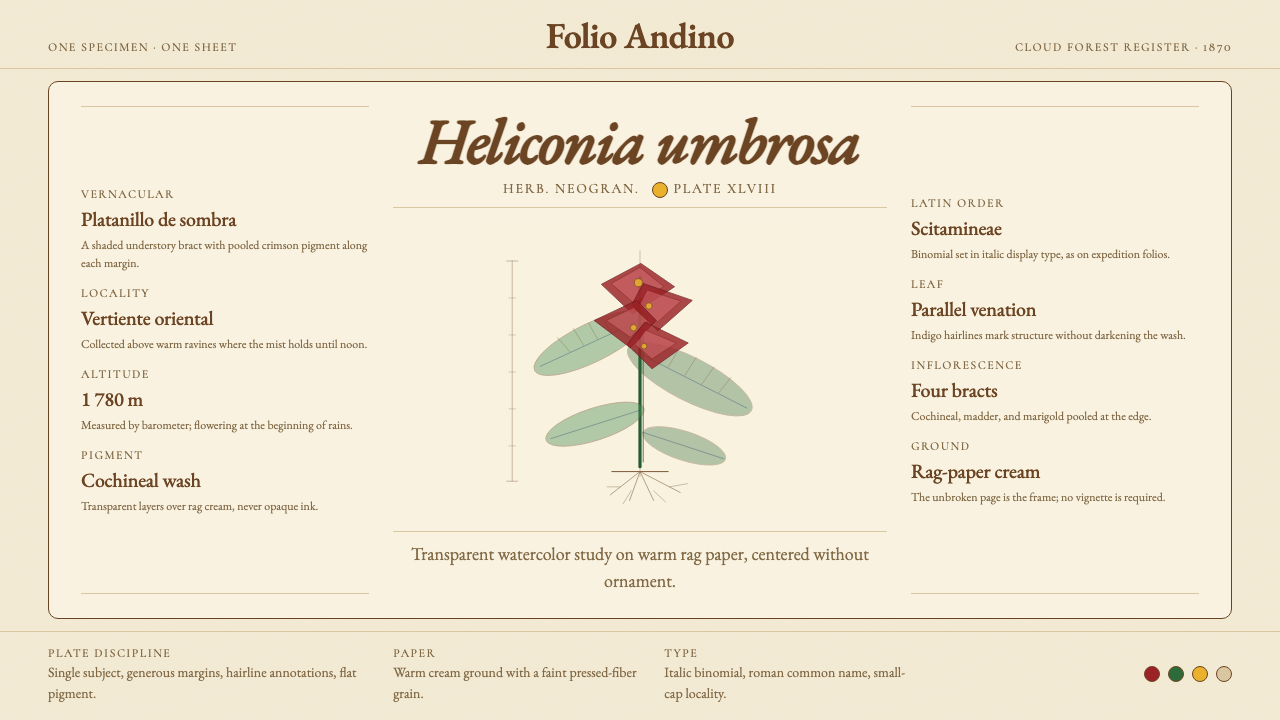 Colombian Botanical (Triana)Observation becomes ornament. Crimson watercolor specimen breathes on cream r…
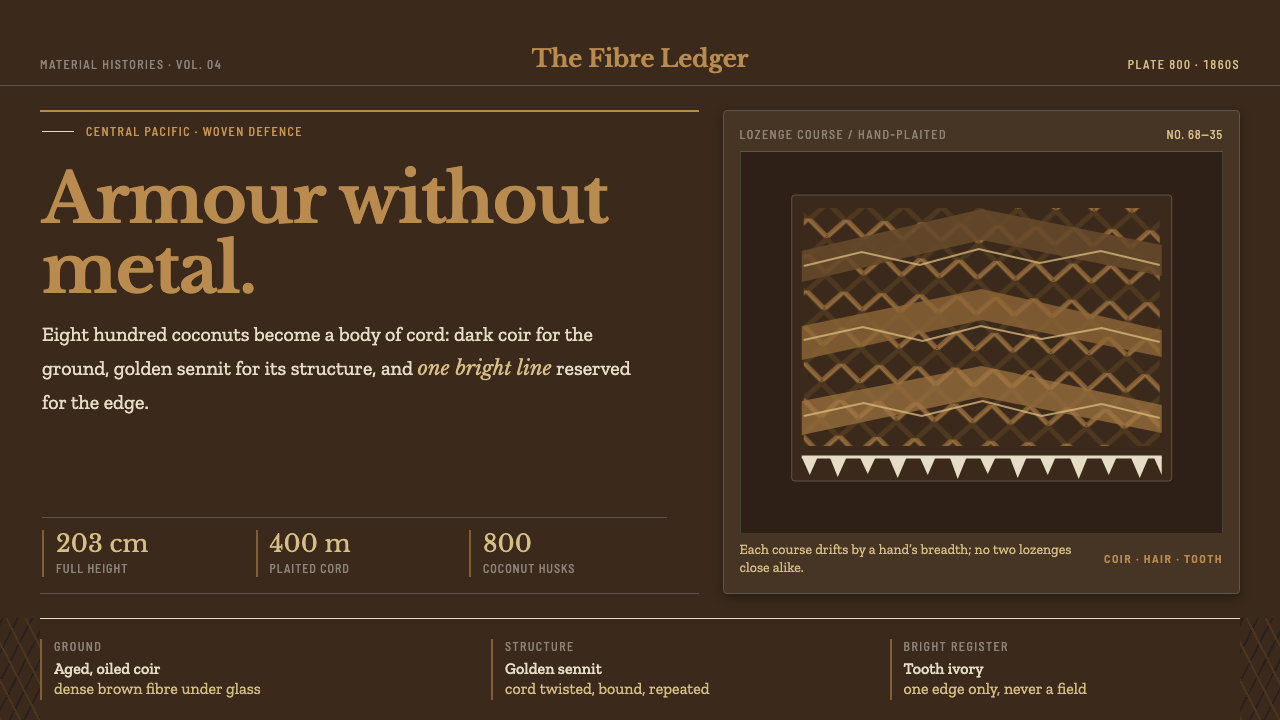 Kiribati Coconut ArmorArmour without metal. Dark coir, golden sennit and one disciplined tooth-ivor…
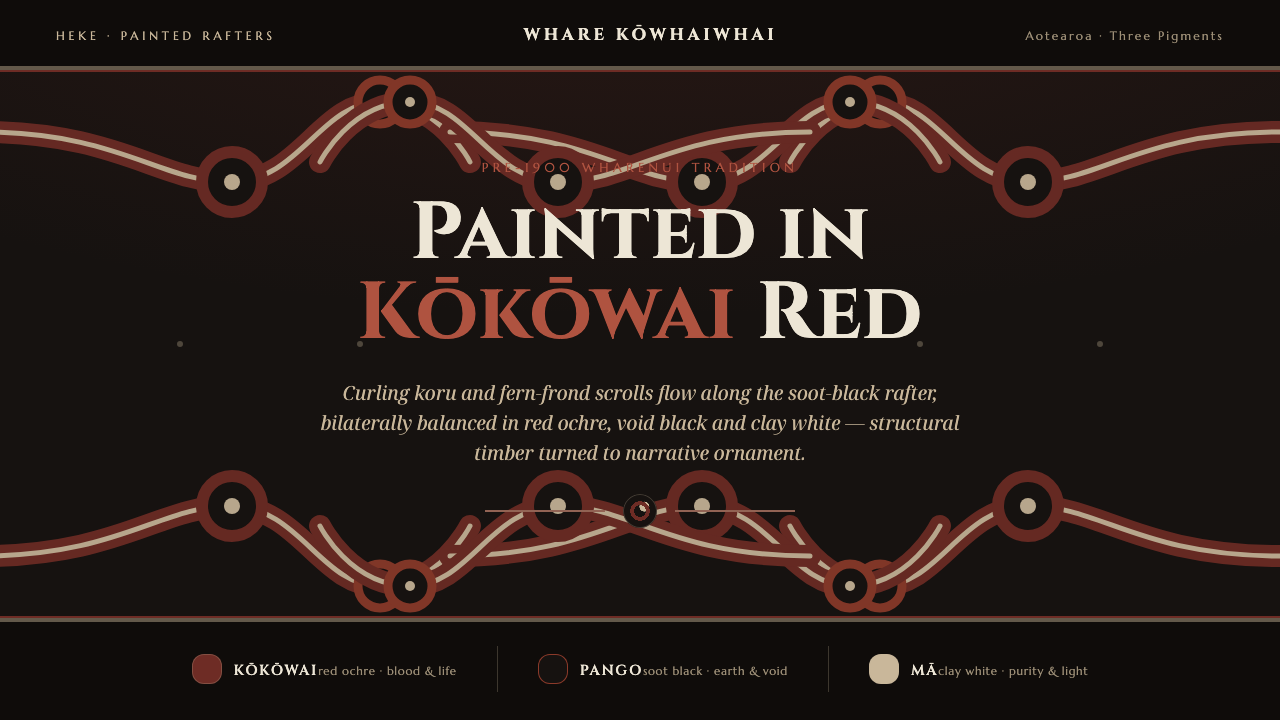 Māori Kōwhaiwhai RafterPainted timber, not pixels. Kōkōwai-red koru scrolls in mirrored balance on b…