What is UNAM Library Mosaic?
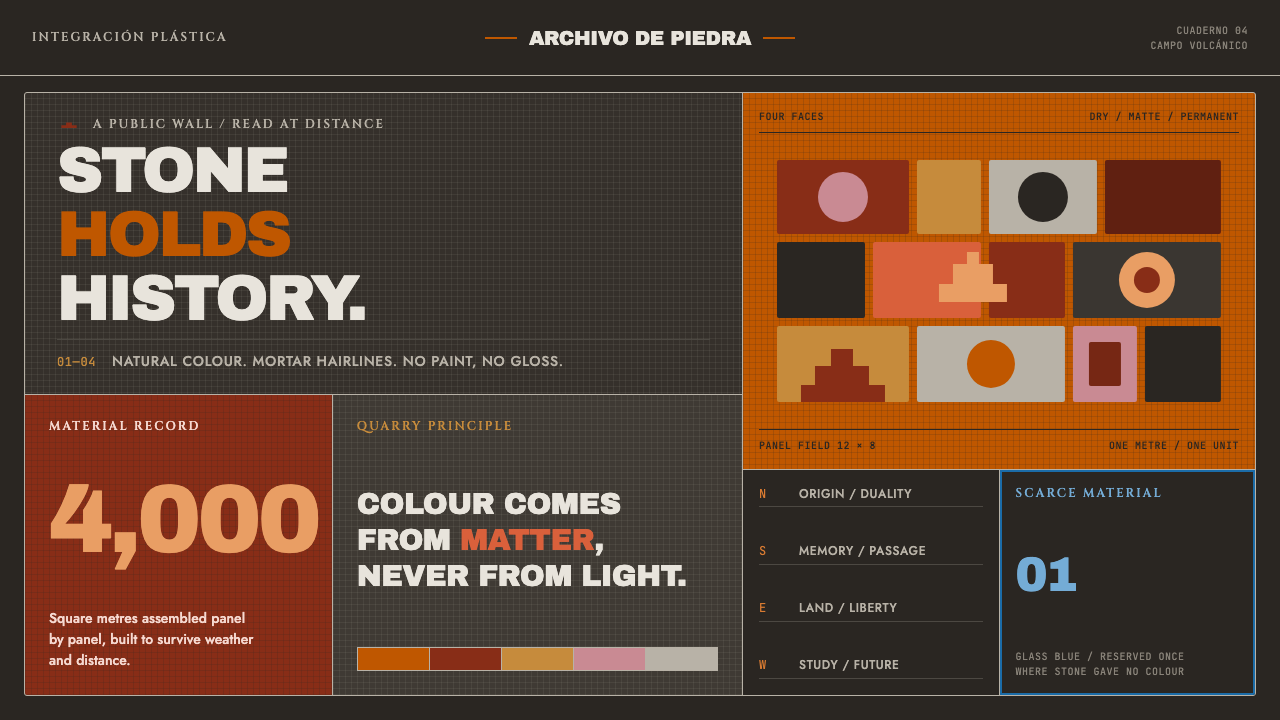
Juan O'Gorman refused to paint the four windowless facades of UNAM's Central Library, because outdoors, paint fails — instead he covered four thousand square meters in natural stone collected from across Mexico, betting that color from rock would outlast color from pigment.
UNAM Library Mosaic in brief
The UNAM Library mosaic is a design system in which color is understood as a property of material rather than a property of light or pigment applied to a surface. Juan O'Gorman covered four windowless facades of the Biblioteca Central — roughly four thousand square meters in total — entirely in natural stone, having concluded that paint exposed to weather over decades would inevitably fail in a way that stone would not.
To build the mural, O'Gorman traveled across Mexico collecting ten to twelve distinct colors of rock from the states of Guerrero, Guanajuato, Hidalgo, and Zacatecas. He sorted this stone by color and then set the entire mural in panels measuring one square meter each, a modular assembly method that let a massive, complex image be constructed piece by piece from a fixed, quarried palette rather than mixed or blended on site.
The visual result is deliberately flat, dry, and matte, reading as a coherent image even from a hundred meters away despite being built entirely from small, discrete stone pieces. Because the color comes from the physical properties of rock rather than from reflected light off a glossy or painted surface, nothing in the composition glows, gradients, or shifts — every color block is a fixed, textured, granular fact rather than a rendered effect, and the single blue that appears anywhere in the mural is glass, deliberately set apart from the stone palette because no stone O'Gorman found could supply it.
Where does UNAM Library Mosaic come from?
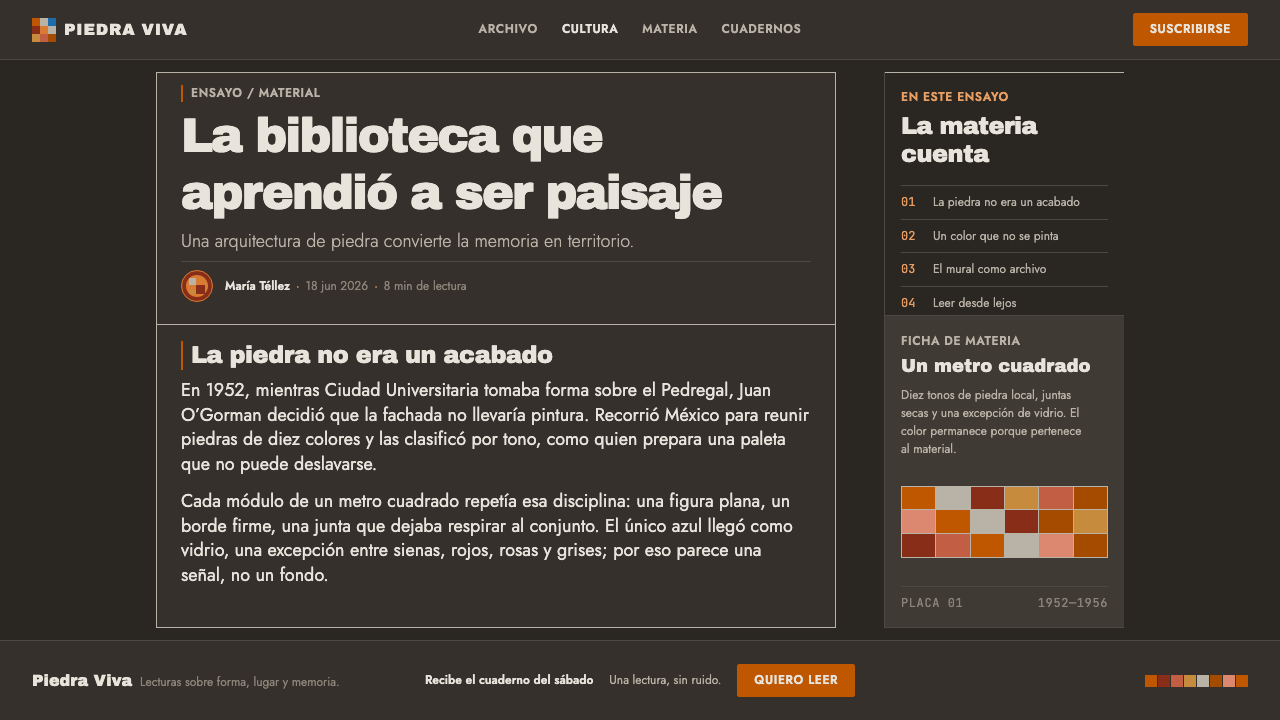
The mural covering UNAM's Biblioteca Central was executed between 1950 and 1956, with the building itself opening on 5 April 1956 as part of the newly built Ciudad Universitaria campus in Mexico City. The campus sits on the Pedregal lava field, a landscape of dark volcanic rock that directly informed the deep gray tone O'Gorman chose as the ground against which his collected stone colors would be set.
O'Gorman worked within the broader context of Mexican modernism and its specific architectural strand known as integración plástica, or plastic integration — the principle that mural art and architecture should be fused into a single inseparable structure rather than treating a mural as decoration applied afterward to a finished building. This places the library mosaic within the same cultural moment as muralismo, Mexico's broader mid-century mural movement, but applied through architecture and material rather than painted fresco.
The project was not O'Gorman's alone; he worked alongside the architects Gustavo Saavedra and Juan Martínez de Velasco on realizing the building and its stone-covered facades. Their collaboration allowed the technical and structural demands of covering four large windowless walls with a modular stone system to be integrated with O'Gorman's design and color scheme from the start, rather than treating the mosaic as a surface application to an already-completed structure.
The significance of the completed work was formally recognized decades later when Ciudad Universitaria, including the library and its mosaic, was designated a UNESCO World Heritage Site in 2007. This recognition confirmed the building's status not merely as a functional library but as one of the defining works connecting Mexican modernist architecture to the country's mural tradition, executed through the deliberately durable and material-based method O'Gorman insisted upon from the outset.
What defines the UNAM Library Mosaic look?
Stone as Pigment
Color in this system comes from the inherent hue of quarried rock rather than from paint or dye applied to a surface. A design following this principle should treat its color choices as fixed, material properties rather than adjustable surface effects, favoring the finite, specific palette a real material would offer over an unlimited digital color range.
One-Square-Metre Modularity
The mural is constructed from panels of a fixed, uniform size, each independently assembled from sorted stone before being set into the whole. This suggests building a large composition from a consistent modular unit — a fixed grid cell or tile — rather than treating the entire surface as one continuous, freely painted field.
Deep Volcanic Ground
The dominant background tone is a deep gray drawn directly from the volcanic rock of the surrounding Pedregal lava field, giving the composition a dark, geologically grounded base rather than a neutral or bright backdrop. Compositions drawing on this should favor a deep, earthy dark tone as the primary ground against which other colors are set.
Matte, Granular Texture
Every surface in the mosaic reads as dry and matte, with a visible granular quality inherent to stone rather than the smooth, reflective finish of paint or glaze. A design should preserve this dry, textured quality rather than smoothing surfaces into a glossy or uniformly flat digital finish.
Fixed, Quarried Palette
The mural's colors are limited to the ten to twelve specific rock hues O'Gorman was able to source from named regions of Mexico, not an open-ended range. This argues for defining a small, specific, sourced set of colors for a project and working strictly within it, rather than drawing freely from an unlimited palette.
Rare Glass Blue
The only blue in the composition is made of glass rather than stone, appearing rarely and deliberately because no available rock could supply that hue. This principle favors introducing one clearly distinct, sparingly used accent material or color specifically because the primary material palette cannot naturally produce it, rather than forcing an approximation.

Who shaped UNAM Library Mosaic?
O'Gorman conceived and executed the UNAM library mosaic, rejecting paint in favor of natural stone precisely because he judged that painted surfaces could not survive decades of outdoor exposure. His decision to travel across Mexico personally collecting ten to twelve colors of rock, and to organize the mural into one-square-meter panels, defines the entire material logic of the work.
Saavedra worked as an architect alongside O'Gorman on the realization of the library building, contributing to the structural and technical work that allowed the modular stone mosaic to be integrated directly into the building's four windowless facades rather than applied afterward as surface decoration.
Martínez de Velasco was the third architect collaborating on the library project, working with O'Gorman and Saavedra to bring the building and its stone-covered facades into being. His involvement reflects the collaborative, multi-architect process behind translating O'Gorman's material-based color concept into a completed structure.
How do you use UNAM Library Mosaic today?
This style transfers well into any context that wants to signal permanence, material honesty, and a deliberate rejection of glossy digital sheen. The core discipline is treating color as a fixed material property with a defined, limited palette rather than an infinitely adjustable surface effect, and preserving a dry, matte, textured quality throughout.
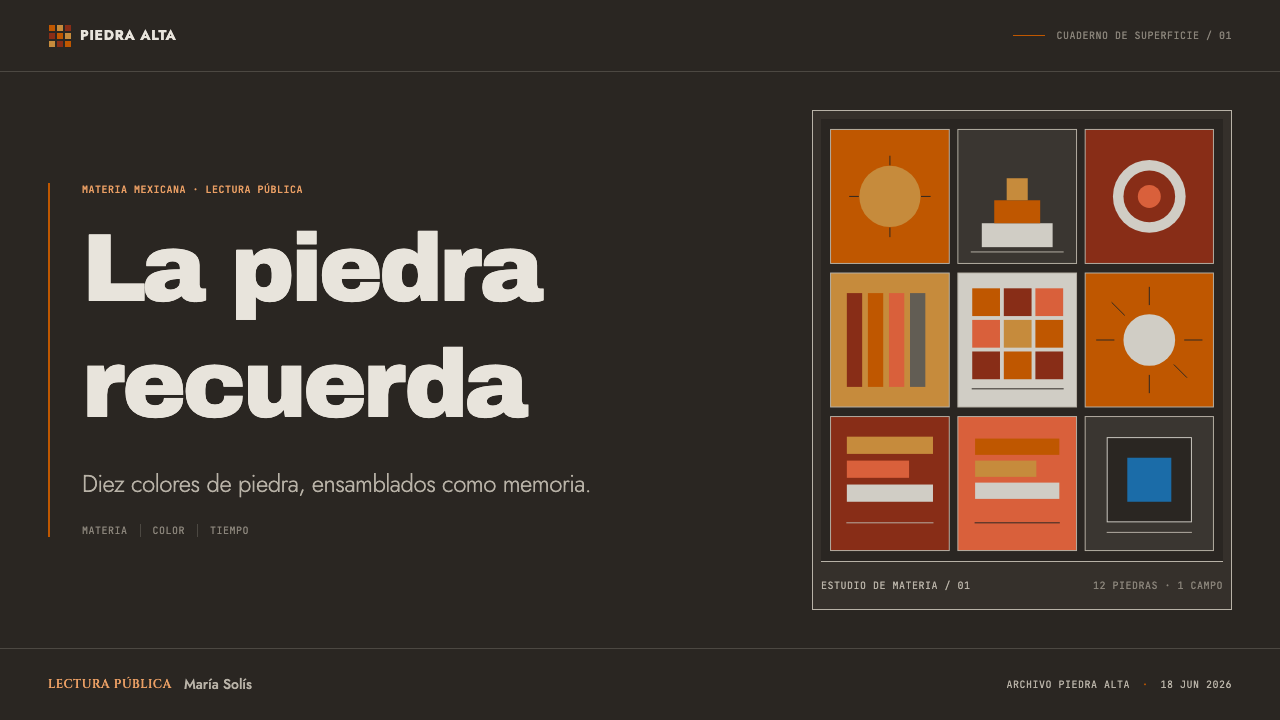
For presentation slides, a cover built from a deep volcanic-gray ground with a small number of specific accent colors arranged in a modular grid of equal-sized blocks — echoing the one-square-meter panel system — establishes the mosaic's material logic immediately. Content slides should draw from the same fixed, limited palette throughout the deck rather than introducing new colors slide to slide, reinforcing the sense of a single quarried source.
For web interfaces, this approach suits institutional, archival, or heritage-forward products where durability and material credibility matter more than vibrant, high-saturation branding. Backgrounds can use the deep gray ground consistently, with UI accent colors limited to a small, fixed set that never expands, and a single distinct accent — analogous to the glass blue — reserved specifically for one critical interactive element that the rest of the palette cannot naturally provide.
For editorial and marketing layouts, a modular grid of equal-sized image or color blocks, each drawn from the same limited palette, can organize a page the way the one-square-meter panels organize the mural. Photography or illustration used within this style should favor a matte, textured treatment over glossy or highly reflective renderings to stay consistent with the source material's insistence on dry, granular surfaces.
A common mistake when applying this style is treating it as simply 'muted earth tones' and using an unlimited range of similar browns and grays freely mixed together. The mosaic's discipline comes specifically from working within a small, fixed, sourced set of colors and organizing them into a strict modular grid — an open-ended earthy palette without that constraint loses the sense of a deliberately limited, quarried material system.
UNAM Library Mosaic — FAQ
Why did O'Gorman refuse to use paint on the library's facades?
O'Gorman judged that paint exposed to weather outdoors would inevitably fail over the decades a building like the library was meant to stand, whereas natural stone would not degrade in the same way. This judgment is the entire reason the mural exists as a stone mosaic rather than a painted mural, and it directly shaped the material-based color logic of the whole design.
Where did the stone used in the mural come from?
O'Gorman traveled across Mexico to collect ten to twelve distinct colors of rock specifically from the states of Guerrero, Guanajuato, Hidalgo, and Zacatecas. This sourcing process defined the mural's entire fixed color palette, since only these collected stone hues, plus glass for the single blue, made up the colors available for the work.
Why is glass, rather than stone, used for the blue in the mural?
Among the rock colors O'Gorman was able to source from Guerrero, Guanajuato, Hidalgo, and Zacatecas, none supplied a usable blue, so he turned to glass for that single hue. Because it is the only material in the mural not drawn from the stone palette, the blue appears rarely and functions almost like a deliberate exception within an otherwise consistent material system.
Why is the mural organized into one-square-metre panels?
Building the mural from fixed, one-square-meter panels allowed the sorted stone to be assembled into manageable, modular units before being set into the overall four-thousand-square-meter composition. This modular approach made it possible to construct an enormous, complex image from a fixed quarried palette in a controlled, repeatable way rather than working freehand across the entire surface at once.
How does this mural relate to Mexico's broader muralismo tradition?
The library mosaic belongs to Mexican modernism's integración plástica principle, which held that mural art and architecture should be fused into one inseparable structure rather than painted onto a finished building afterward. This places it within the same cultural moment as muralismo, Mexico's broader mid-century mural movement, but expressed through architectural stone construction rather than painted fresco.
Related design styles
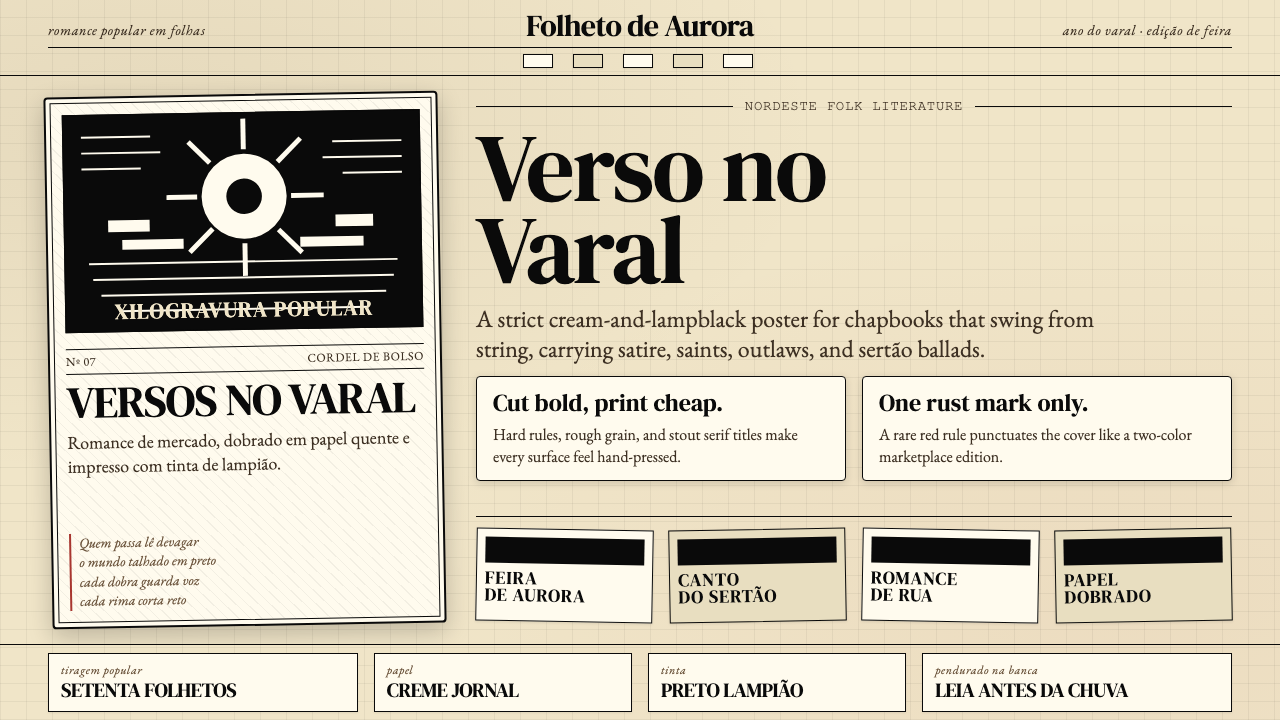 Brazilian Cordel (Northeast Folk Literature)Folk poetry, cut in lampblack. Cream newsprint, bordered chapbooks, one rust-…
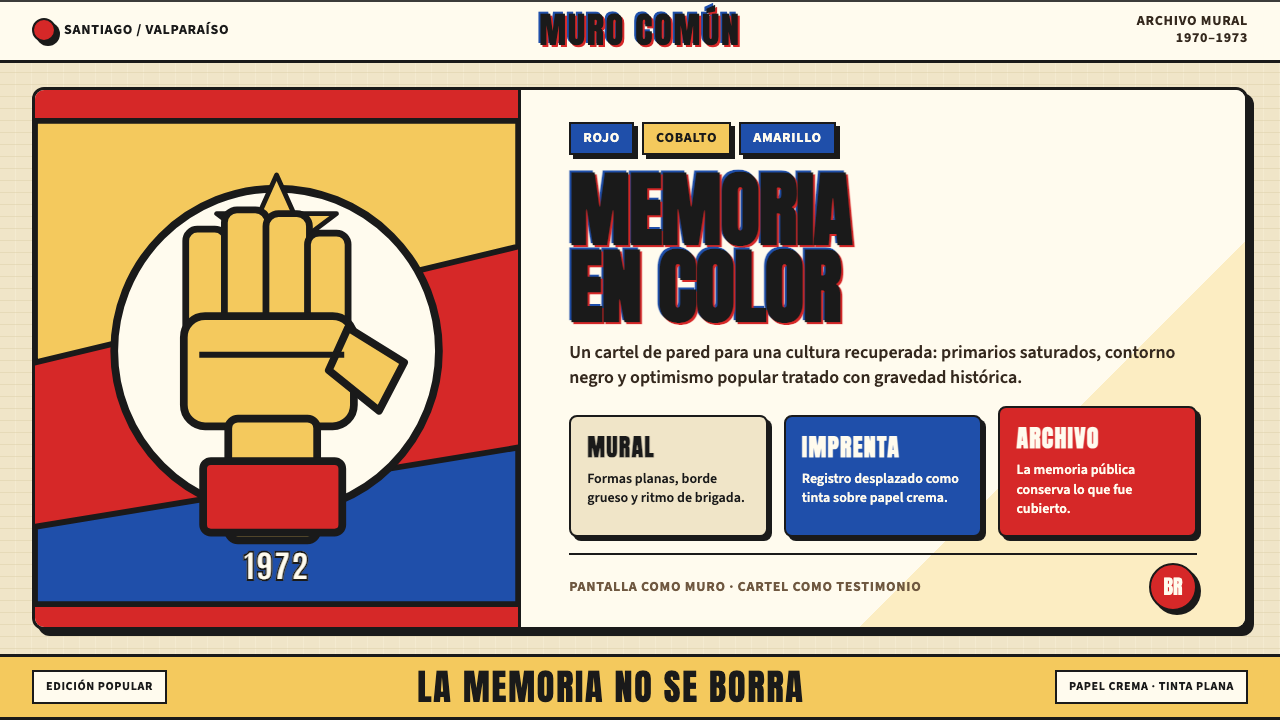 Chilean Allende-Era Propaganda (1972)Solemn revolution. Red, cobalt and yellow lock into thick black mural geometr…
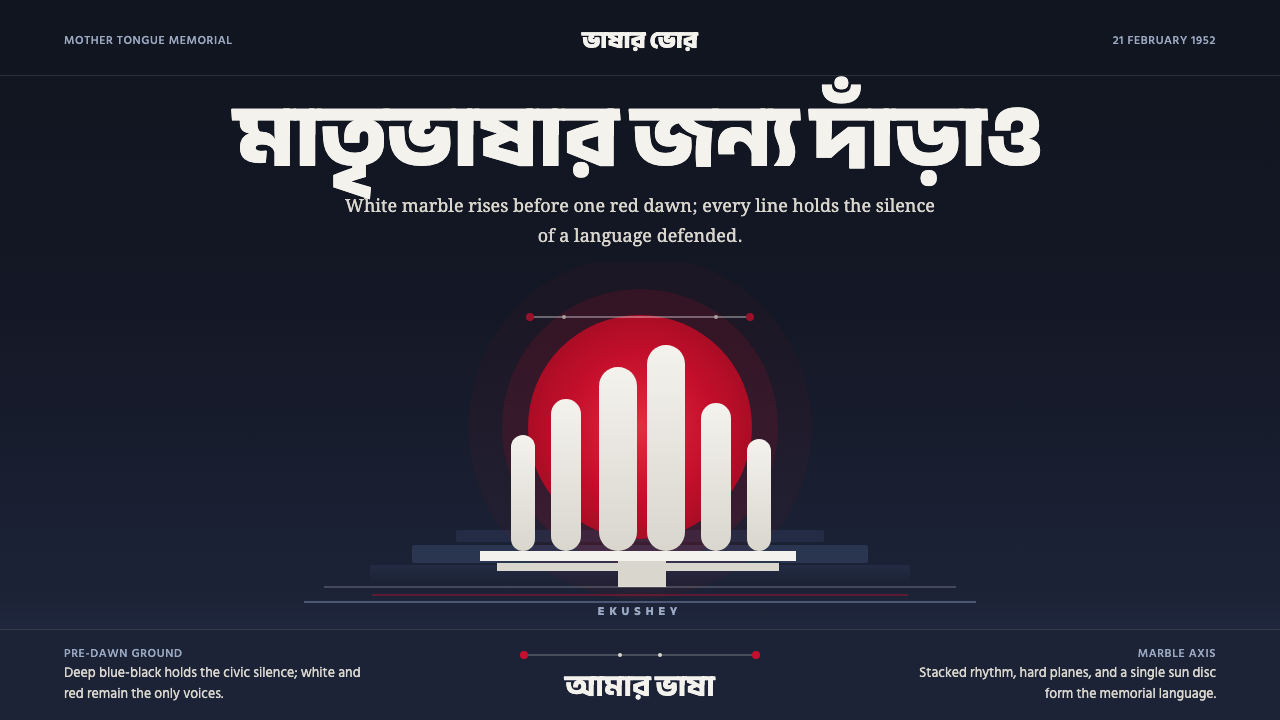 Dhaka Shaheed MinarSolemn before dawn. Marble columns and one red sun hold the page in civic sil…
 Nepali Lungta Prayer FlagsLet the wind carry the prayer. Five woodblock flags flare in fixed order agai…
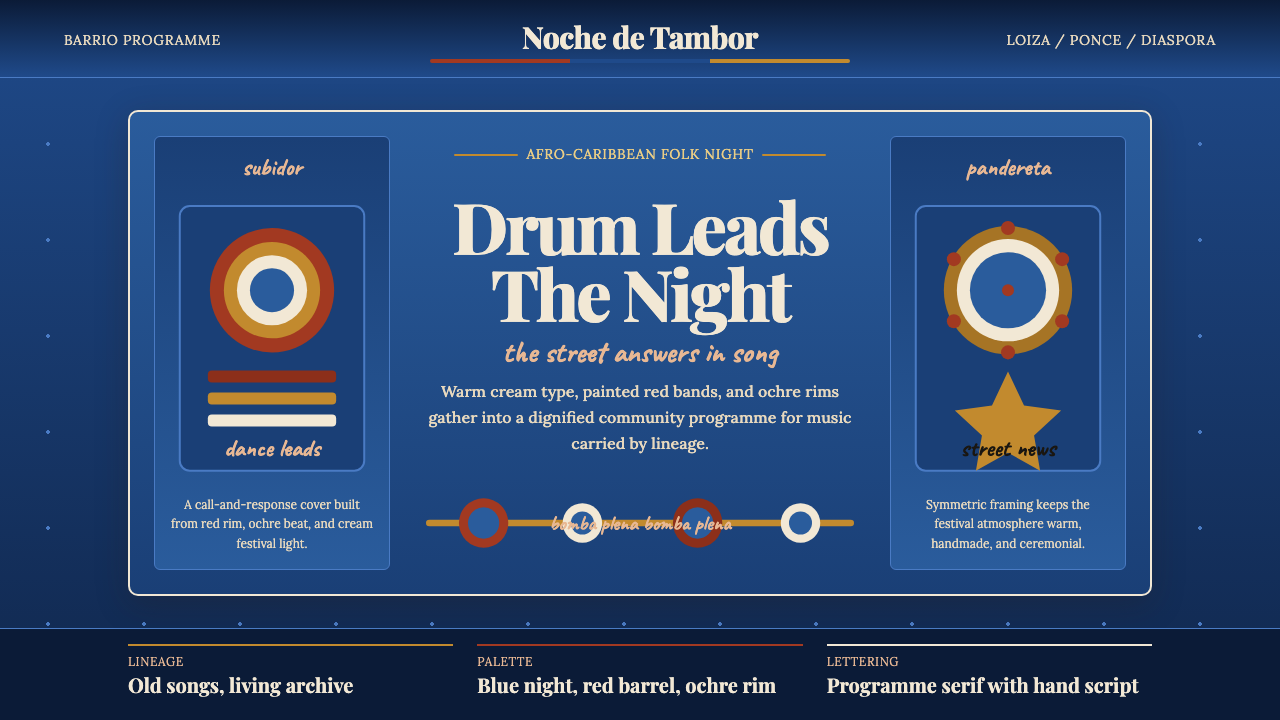 Puerto Rican Bomba & PlenaNight festival dignity. Drum-red stripes and cream Playfair type on deep trop…
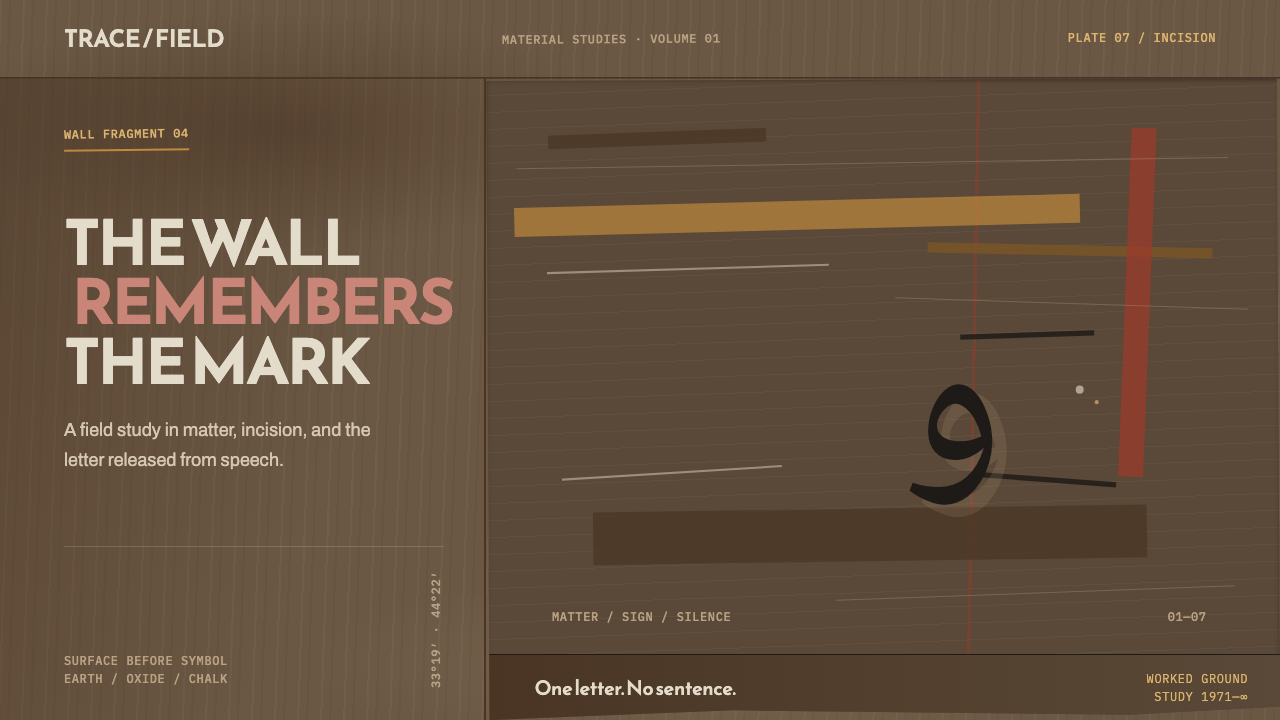 Hurufiyya MovementThe wall carries the meaning. Ochre scars and one off-axis letter break a fie…