What is Día de los Muertos?
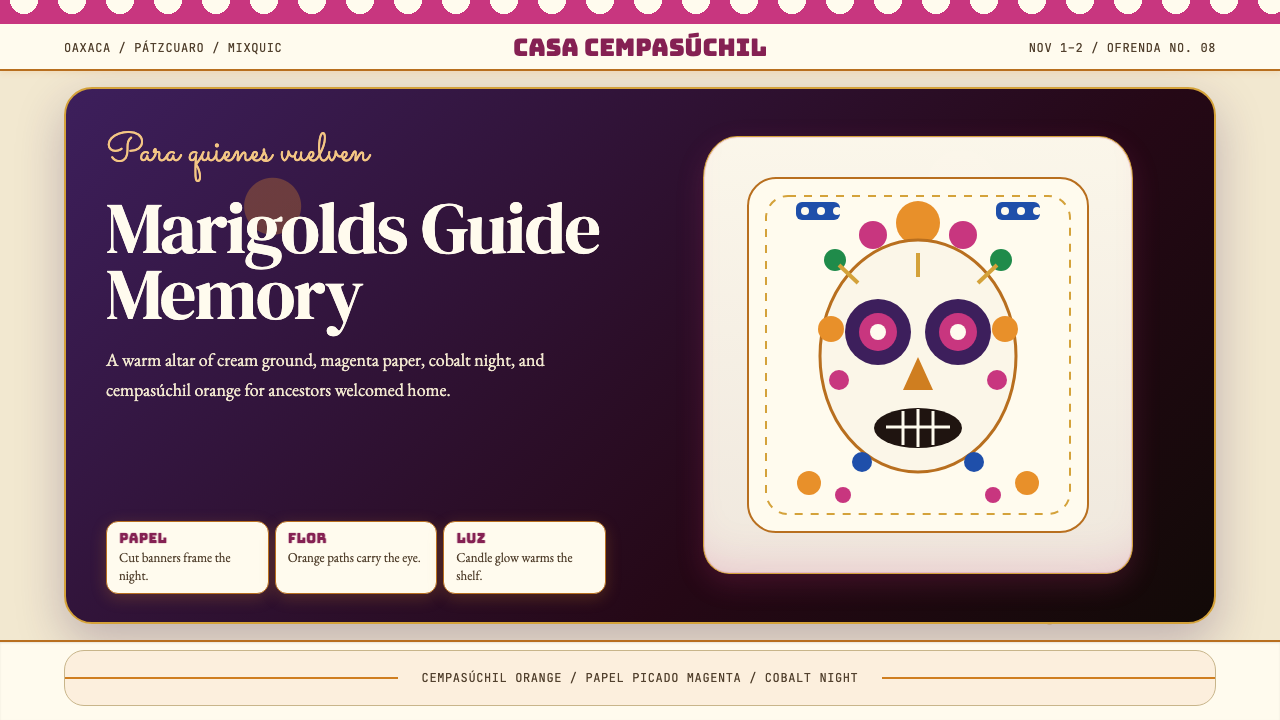
Día de los Muertos turns grief into a festival of blazing marigold, hand-cut paper banners, and candlelit altars where the living celebrate alongside the dead.
Día de los Muertos in brief
Día de los Muertos is Mexico's November 1–2 celebration of deceased ancestors, recognized by UNESCO in 2008 as an Intangible Cultural Heritage of Humanity. Its visual world is one of the most distinctive and emotionally charged folk-art vocabularies on earth: saturated marigold orange, magenta, cobalt, and emerald sit against a deep purple night sky, anchored by the cream-white of skull forms that serve as breathing space rather than morbid symbol.
The tradition is celebratory, not mournful — this is its most important design truth. The imagery of skeletons and skulls is treated with warmth, humor, and intricate ornamentation: calavera sugar skulls are covered in hand-piped floral decoration, Catrina figures wear elaborate hats and lace, and ofrenda altars are dressed in layers of marigold petals, photographs, food, and candlelight. Every element invites the spirit of the departed back, not into shadow, but into light.
Visually, the system was forged in the late nineteenth and early twentieth centuries by printmaker José Guadalupe Posada, whose skeleton figures transformed death into social commentary. It was absorbed and amplified by Diego Rivera and Frida Kahlo into a pillar of Mexican national identity. Today, the visual language spans handmade craft and large-scale public murals, festival street decoration and contemporary graphic design, remaining unmistakably rooted in folk tradition while evolving with each generation.

Where does Día de los Muertos come from?
The roots of Día de los Muertos reach back more than three thousand years to pre-Columbian Mesoamerica, where the Aztec, Toltec, and other indigenous peoples held elaborate multi-day festivals honoring the dead, presided over by Mictecacihuatl, the Lady of the Dead. In the Aztec ritual calendar, death was not the end of a cycle but a transformation — the deceased joined one of several afterlife realms depending on the manner of their death, and the living maintained ongoing relationships with ancestors through offerings, ritual feasting, and ceremony. Marigold flowers, known in Nahuatl as cempasúchil, were associated with the sun and used to guide spirits; this connection persists intact into contemporary ofrenda practice.
The Spanish colonial encounter beginning in 1519 layered Catholic All Saints' Day (November 1) and All Souls' Day (November 2) over the existing indigenous festivals, producing a syncretic hybrid that drew from both traditions. The colonial church could not eradicate deep-seated ancestor veneration, and the indigenous communities could not be separated from their seasonal ritual calendar. The result was a genuine cultural fusion: the timing shifted to align with the Catholic calendar, but the offerings, marigold paths, skull iconography, and the belief in a temporary reunion between the living and dead remained essentially continuous with pre-Columbian practice.
The modern visual identity of Día de los Muertos was crystallized in the decades surrounding the Mexican Revolution of 1910. José Guadalupe Posada, working in Mexico City as a political caricaturist and printmaker, created a figure called La Calavera Garbancera — a skeleton woman in an elaborate European-style hat — as a satire of Mexican upper-class aspirations to European fashion. After Posada's death, Diego Rivera incorporated the figure into his 1947 mural Dream of a Sunday Afternoon in Alameda Park, dressed her in full Catrina garb, and placed her alongside Posada himself, Frida Kahlo, and Rivera as a child. This act of mural canonization transformed a political cartoon into the central icon of a national tradition.
The post-Revolution Mexican muralist movement — Rivera, José Clemente Orozco, David Alfaro Siqueiros — deliberately elevated folk and indigenous cultural forms as a political statement against colonial cultural hierarchies. Día de los Muertos imagery, previously confined to regional folk practice, entered the national cultural canon as a symbol of authentic Mexican identity. The late twentieth century brought further globalization: the 1994 NAFTA era increased cultural exchange across the U.S.–Mexico border, while Pixar's 2017 film Coco introduced the visual language to a global audience of hundreds of millions, accelerating both appreciation and the ongoing debates about cultural commercialization.
What defines the Día de los Muertos look?
Color Palette
The palette is intensely saturated and multi-hued, built around marigold orange as its anchor — a warm, luminous orange that reads as both joyful and sacred. Magenta pink and deep violet provide complementary contrast. Cobalt blue and jewel-toned emerald appear as secondary fields. The deep purple-blue of a night sky serves as a unifying background in more dramatic compositions. Against this saturation, cream and off-white skull forms and altar tiers function as essential resting points, preventing visual overload. Black outlines and lettering define boundaries without dulling the surrounding color.
Skull and Skeleton Iconography
The calavera — decorated skull — is the central recurring motif. Unlike morbid or horror-coded skull imagery, the Día de los Muertos calavera is covered in elaborate floral decoration, rendered with symmetrical patterns, often given expressive features such as roses for eyes or ornate headdresses. The Catrina skeleton figure, derived from Posada's prints, appears in full period dress — top hat or feathered bonnet, lace collars, ornate clothing — treating the skeleton as a fully social, even elegantly attired, presence. The iconography communicates that death is not the opposite of life but its continuation.
Papel Picado
Papel picado — hand-cut tissue paper banners — are hung in layered rows across streets, altars, and event spaces. The technique involves cutting intricate lace-like patterns through stacked layers of colored tissue, producing translucent designs that catch both light and wind. Visually, they introduce the concept of negative space as decorative element: the cut-away portions are as important as the remaining paper. In design application, the paper-cut aesthetic translates to layered, perforated, or lattice-pattern graphic elements that carry the same festive lightness.
Ofrenda Layering
The ofrenda — altar assembled for the deceased — is built in tiers, typically two to seven levels, each holding photographs, food offerings, candles, marigold arrangements, and personal objects belonging to the departed. This tiered, layered structure is central to the aesthetic: elements are stacked vertically, framed by arch forms of marigold or paper flowers, with no area left bare. The compositional logic is one of abundance and intentional density — every horizontal and vertical zone is activated. Applied to design, this translates into richly layered compositions where multiple visual hierarchies coexist without reducing to a single focal point.
Hand-Drawn and Folk-Art Texture
Día de los Muertos visual culture consistently resists mechanical perfection. Hand-drawn outlines with slight variation, imperfect symmetry in skull decoration, brush-lettered text, uneven floral arrangements — these qualities communicate the tradition's handmade, community-craft origins. In typography, lettered scripts with visible flourishes and calligraphic strokes are preferred over clean digital sans-serifs for display and headline use. In graphic elements, a visible hand — slightly irregular, organically patterned — is a mark of authenticity rather than error.
Floral Abundance
Marigold (cempasúchil) flowers — vivid orange-yellow, densely petaled — are the dominant floral motif, appearing as full blooms, scattered petals forming paths, and stylized graphic renderings. They are supplemented by white cempasúchil varieties, red cockscomb (mano de León), and paper flowers in all the palette's range. Floral forms are used in borders, frames, backgrounds, and as infill elements rather than isolated focal accents. The overall effect is one of lush, generous decoration — the opposite of sparse or minimalist approaches.
Typography with Cultural Weight
Lettering in the Día de los Muertos tradition spans several registers. Formal serif typefaces carry the cultural gravitas appropriate for names inscribed on ofrendas and commemorative materials. Chunky, bold display faces echo the street-festival poster tradition, where legibility at distance and visual impact are primary. Script and brush-lettered faces carry the hand-flourished warmth of handwritten ofrenda labels and market signage. All three registers can coexist within a single layout, provided each is clearly assigned a distinct hierarchy level. Decorative letterforms are acceptable and even expected — ornate initial caps or bordered text panels are consistent with the tradition.

Who shaped Día de los Muertos?
Posada (1852–1913) was a Mexico City printmaker and political caricaturist whose skeleton figures — calaveras — appeared as social satire in broadsheets and illustrated newspapers during the Porfiriato era. His most enduring creation, La Calavera Garbancera (later renamed Catrina by Diego Rivera), depicted a skeleton woman in an elaborate European hat, mocking the aspiration of Mexican elites to adopt European aristocratic fashions. Posada died in poverty, but his visual vocabulary — the expressive, decorative skeleton as social commentary — became the foundation of the entire Día de los Muertos visual canon. His influence is visible in every decorated calavera and Catrina costume produced since.
Rivera (1886–1957) was the dominant figure of the Mexican muralist movement and the artist most responsible for elevating Día de los Muertos imagery from regional folk tradition to national icon. His 1947 mural Dream of a Sunday Afternoon in Alameda Park formally introduced the Catrina into the national canon, placing her as the symbolic center of Mexican cultural identity across four centuries. Rivera's murals in the National Palace and the Ministry of Education wove pre-Columbian, colonial, and revolutionary imagery into a single visual argument for a uniquely Mexican national culture — one in which indigenous folk forms were not inferior to European high art but prior to and foundational for it.
Kahlo (1907–1954) did not work primarily in the Día de los Muertos tradition specifically, but her painting practice was saturated with the same visual sources — ex-voto retablo painting, pre-Columbian symbolism, Mexican folk dress — that define the holiday's aesthetic. Her self-portraits established the possibility of a Mexican woman's face as the site of mythological, political, and spiritual meaning. Her personal adoption of Tehuana dress and pre-Columbian jewelry in daily life was a deliberate act of cultural reclamation. Posthumously, her image has become inseparable from contemporary representations of Día de los Muertos, particularly Catrina-themed portraiture.
Linares (1906–1992) was a Mexico City papier-mâché artisan who, following a feverish dream in which he witnessed fantastical hybrid creatures, began creating alebrije — brilliantly painted, wildly imagined sculptural animals combining features of multiple species. He introduced the term and the form, which subsequent generations of artisans, particularly in Oaxaca, have made central to the Día de los Muertos visual tradition. Alebrije now appear on ofrenda altars, in street processions, and as a recurring design motif representing the guide animals said to accompany souls through the underworld.
Vilchis Roque is a contemporary Mexico City retablo painter who has revived and extended the ex-voto tradition — small devotional paintings on tin depicting miraculous interventions — by creating Día de los Muertos themed retablos that incorporate contemporary social subjects alongside traditional iconography. His work demonstrates how the visual tradition actively evolves: the formal constraints of the retablo format (naive perspective, flat color, handwritten text panels, bordered composition) provide a stable aesthetic container into which new subjects and concerns are continuously absorbed, keeping the tradition generative rather than merely archival.
How do you use Día de los Muertos today?
Día de los Muertos is one of the most visually rich and culturally specific design vocabularies available for contemporary work. Applying it well requires more than reaching for an orange palette and adding skull motifs: it requires engaging with the aesthetic logic of the tradition — layered abundance, celebratory warmth, hand-craft texture, and a palette where every color is intentional and saturated. The tradition's emotional register is joy mixed with reverence, never horror or irony. Any application that drifts toward Halloween adjacency has missed the essential point.
For presentation slides, the style rewards bold, layered cover pages. A cover built in this tradition might feature a large Catrina or calavera illustration as the visual anchor, framed with a marigold-petal border against a deep violet or night-sky background. The title can be set in a display serif or ornamental script in cream or warm gold, with the event or organization name in a smaller complementary weight below. Content slides work best with a strong visual hierarchy: marigold orange or magenta reserved for section headers and callouts, cream or white for body text fields, and the dark background used sparingly as a full-bleed accent for high-impact moments. Data visualizations can adopt the palette's colors to differentiate series — using the full saturation of the tradition rather than muted chart defaults — treating bar charts and ring charts as celebratory objects in their own right.
For web interfaces, the style suits event landing pages, cultural institution websites, festival program guides, and any brand positioned around heritage craft, Mexico-adjacent hospitality, or celebratory consumer experiences. The approach: set a warm cream or very deep violet as the page ground, use marigold orange as the primary action color for buttons and links, and introduce magenta as a secondary highlight. Navigation benefits from ornamental border treatments — a simple patterned or scalloped horizontal rule rather than a plain line. Card components work well with visible borders in a contrasting warm color, without shadows softening the edges. Illustration-heavy layouts where decorative calavera or floral elements fill negative space are characteristic of the style at full intensity.
For editorial and marketing work, the tradition's poster heritage makes it exceptionally well-suited to large-format visuals. A Día de los Muertos editorial spread might anchor on a full-bleed illustration — a decorated skull, a Catrina figure, a marigold-covered ofrenda — with type set over or around it in a way that acknowledges rather than competes with the illustration's complexity. Marketing campaigns for cultural events, food brands with Mexican heritage, and seasonal activations in October and November can draw directly from the visual vocabulary: papel picado-inspired banner graphics, ofrenda-tier compositions for product showcases, and marigold-scatter patterns as texture backgrounds.
A common mistake is treating the palette as Halloween-compatible by combining the deep purples and oranges with bats, haunted-house imagery, or spooky horror fonts. This collapses two entirely distinct cultural traditions into visual noise. The skulls and skeletons of Día de los Muertos are decorated, warm, and social; they are never grotesque, dripping, or associated with fear. A second frequent error is reducing the tradition to a single repeated skull motif without the surrounding context — the flowers, candles, layered altars, paper banners — that gives the skull its meaning. The skull alone, decontextualized, reads as generic rather than as Día de los Muertos. The richness of the tradition depends on the full visual ecosystem, not any single extracted element.

Día de los Muertos — FAQ
Is it culturally appropriate to use Día de los Muertos imagery outside Mexican contexts?
The question is live and contested. The tradition is recognized by UNESCO as a shared human heritage, and its imagery has been in global circulation for decades — accelerated significantly since 2017. The key distinction is between appreciative engagement and reductive appropriation. Appreciative engagement means understanding the tradition's origins, using its full visual vocabulary rather than extracting skull motifs as generic spooky decoration, crediting Mexican artists and craft traditions, and avoiding Halloween adjacency. Reductive appropriation means using skull imagery as costume or shock aesthetic without context, or commodifying the tradition in ways that erase its cultural specificity. For commercial work, partnering with Mexican artists or cultural advisors and being transparent about sourcing strengthens the case for respectful use.
How does Día de los Muertos differ visually from Halloween?
The two share surface-level imagery — skulls, skeletons, dark backgrounds — but their visual registers are opposite in intent. Halloween aesthetics are oriented toward fear, shock, and the grotesque: dripping wounds, decayed forms, spiderweb textures, cold green or sickly yellow lighting, horror-film typography. Día de los Muertos aesthetics are oriented toward celebration, beauty, and warm remembrance: intricate floral decoration on skulls, vivid saturated warm colors, abundance of marigold orange and magenta, hand-craft texture, and typographic warmth. Where Halloween leans into ugliness to provoke, Día de los Muertos leans into decoration and color to honor. Confusing the two produces work that is offensive to the tradition and visually incoherent.
What typographic approach best fits this tradition?
Three registers work well, each for different purposes. For display and headlines, ornamental serif or script faces with visible calligraphic flourishes are most authentic — they echo the hand-lettered labels found on ofrendas and the bold block lettering of festival posters. Avoid sterile geometric sans-serifs for display use, as they work against the tradition's hand-craft warmth. For body text, a warm serif with visible stroke variation is appropriate, providing the cultural gravity needed for names and commemorative language. Avoid light-weight or ultra-thin cuts, which read as contemporary minimalist rather than folk-art rooted. The third register is purely decorative lettering used as a graphic element — bordered, floriated, monogram-style initial caps — treated as illustration rather than pure typography.
Can the Día de los Muertos palette be used on a light background?
Yes, and the tradition supports this well. The ofrenda altar and daytime street festival contexts both use cream and white grounds extensively, with the saturated colors of flowers, papel picado, and sugar skull decoration reading against a light field. A cream or warm white background keeps the palette's intensity legible without requiring a dark ground. On a light ground, marigold orange and magenta tend to carry well without overpowering the composition, while the deep purples and cobalts serve better as accent or detail colors. The nighttime, candlelit deep-purple palette is an equally valid option but represents the more dramatic, ceremonial register of the tradition — appropriate for premium, formal, or high-impact applications.
How should the Catrina figure be used responsibly in design?
The Catrina is among the most globally recognized symbols of Mexican visual culture, which makes both her power and her misuse potential high. Used responsibly, the figure references a century of artistic lineage — from Posada's satirical print through Rivera's mural canonization — and can carry significant cultural resonance. The responsible approach: treat her as a character with historical depth rather than a generic skull-woman costume; preserve the ornamental complexity of her signature hat and dress rather than stripping her to a skeleton silhouette; and situate her within contexts that acknowledge the tradition she represents. Commercially, the figure should not be used to sell products whose brand associations would be incongruous with the tradition's commemorative dignity — purely shock-value contexts or unrelated Halloween merchandise among them.
Related design styles
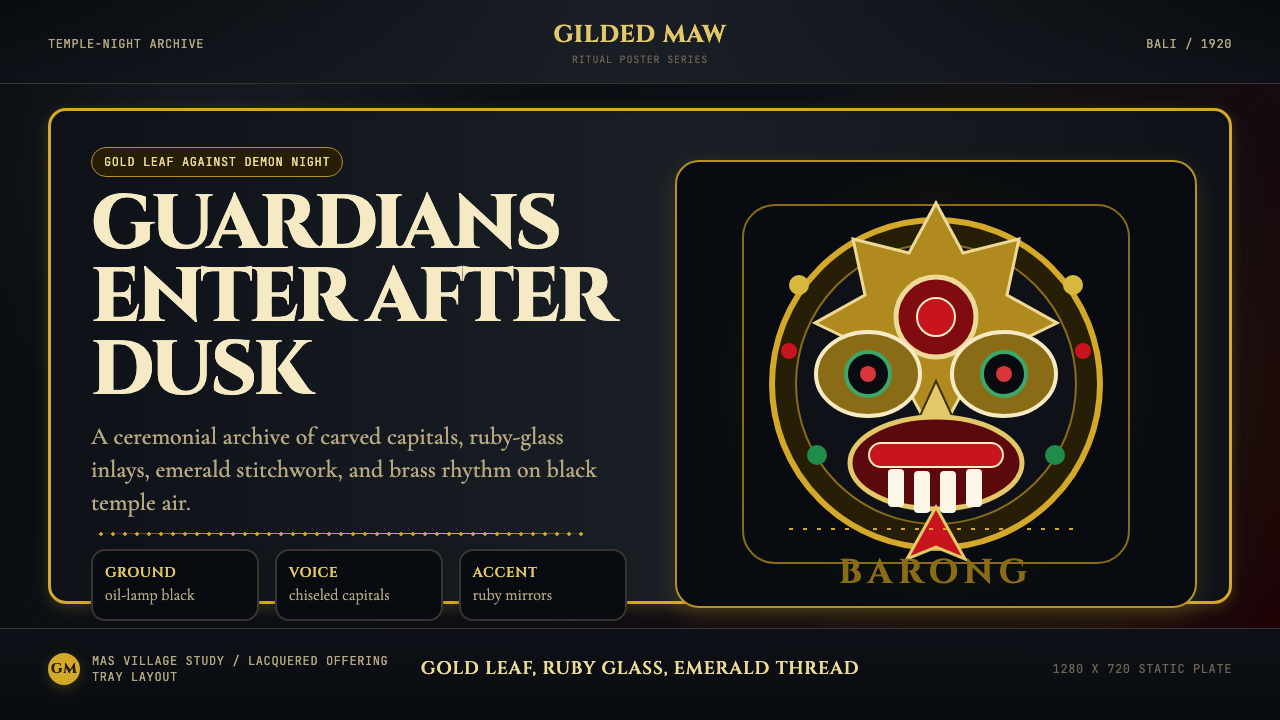 Balinese Barong Mask (1920)Protection glows after dark. Cinzel capitals frame gold, ruby, and emerald ge…
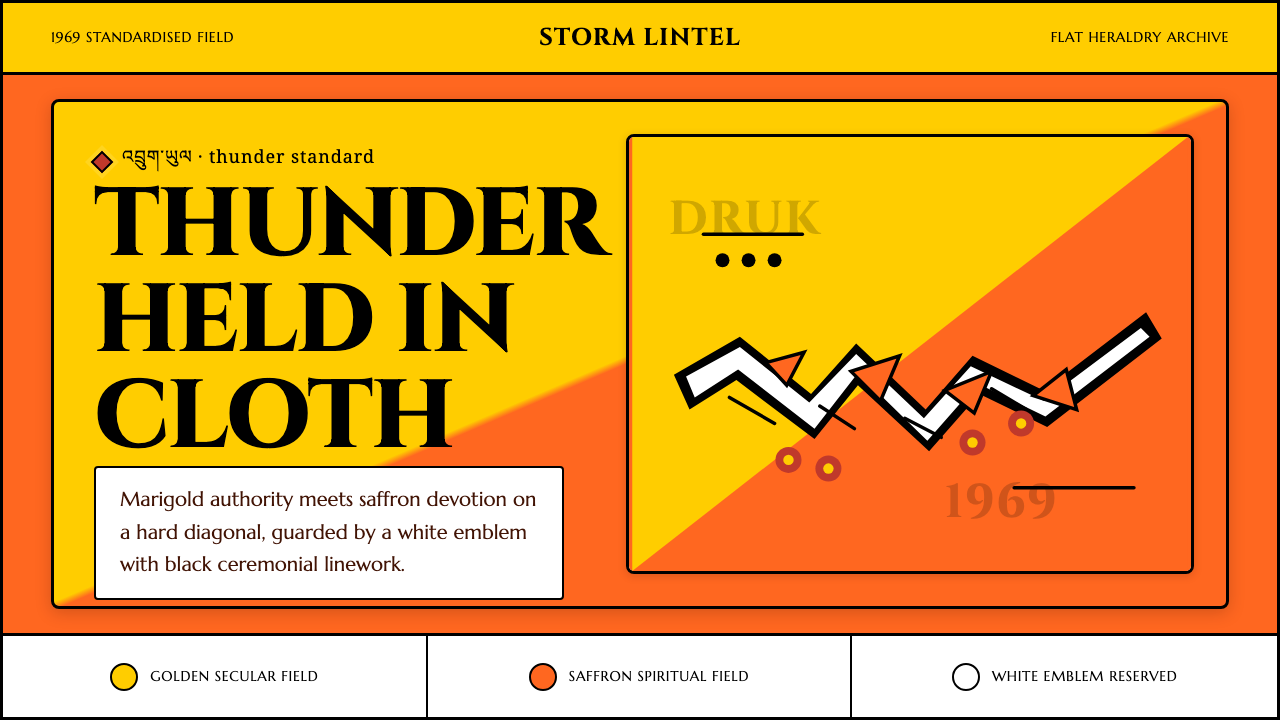 Bhutan Thunder Dragon FlagHeraldry hits like thunder. Marigold and saffron split hard around a white em…
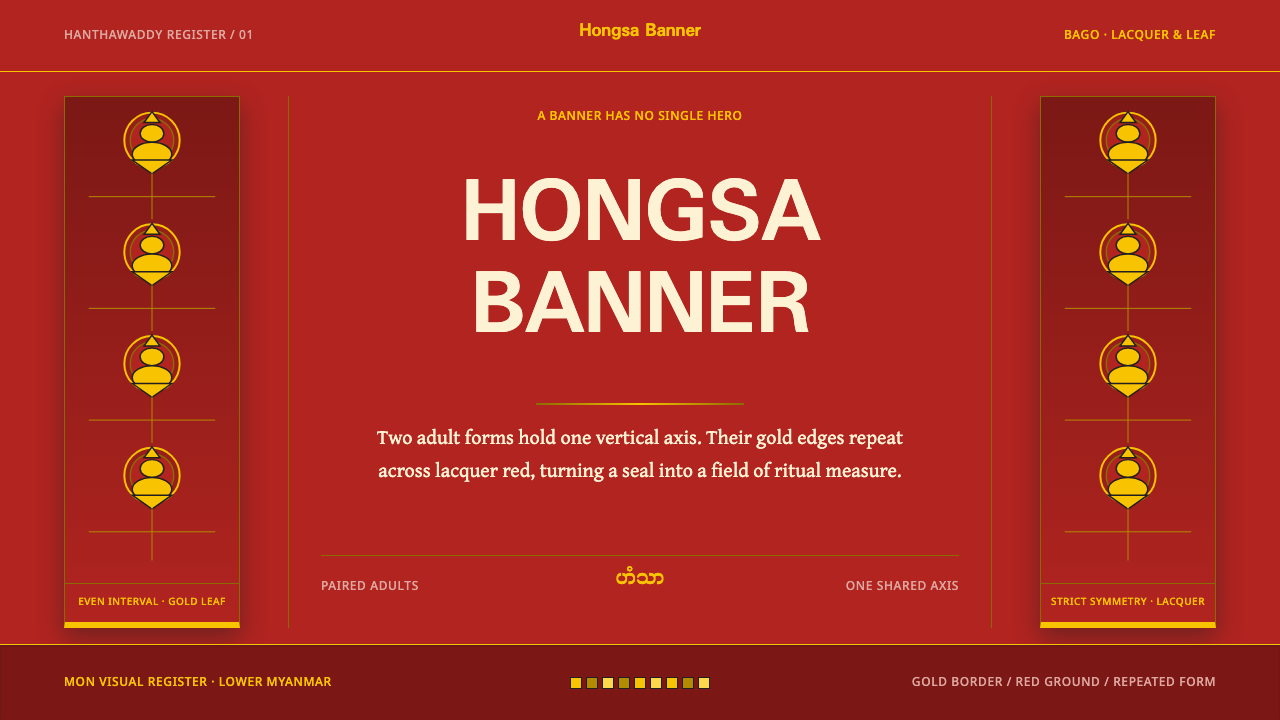 Mon Hongsa EmblemRepetition outranks the hero. Gold paired emblems tile down a lacquer-red ban…
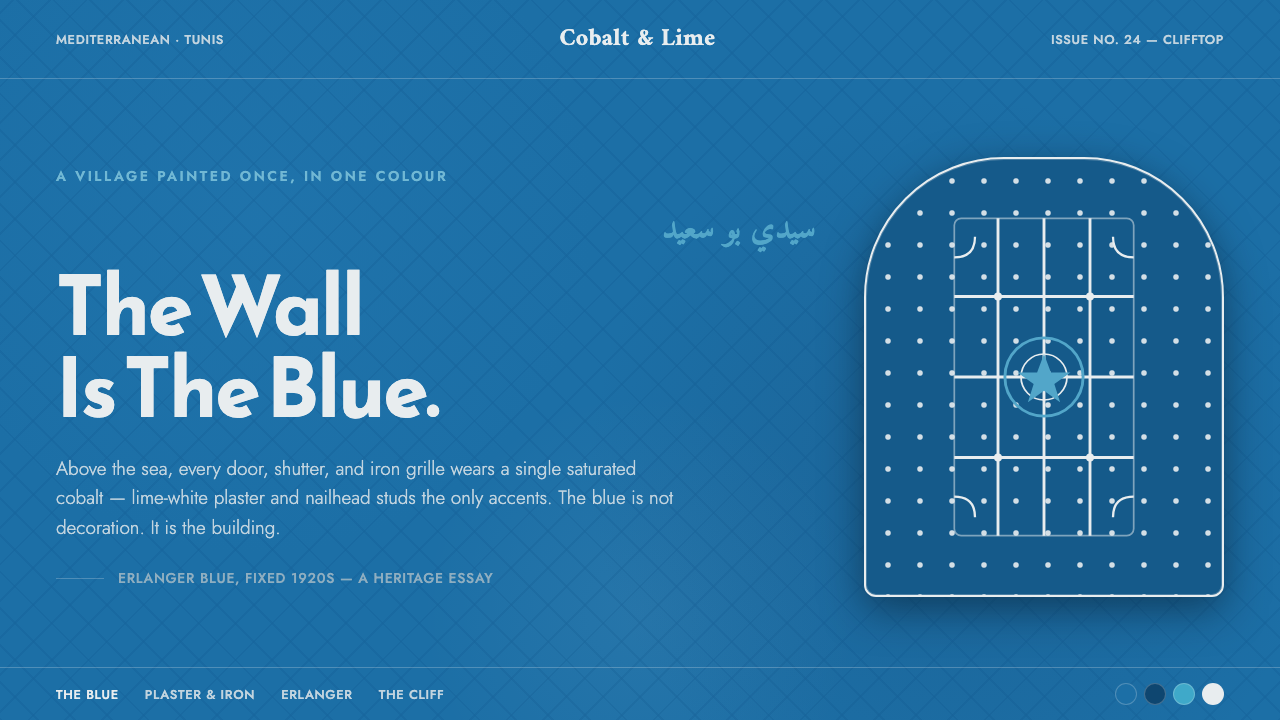 Sidi Bou Said BlueThe village is the blue. Saturated cobalt ground, white plaster frames, iron…
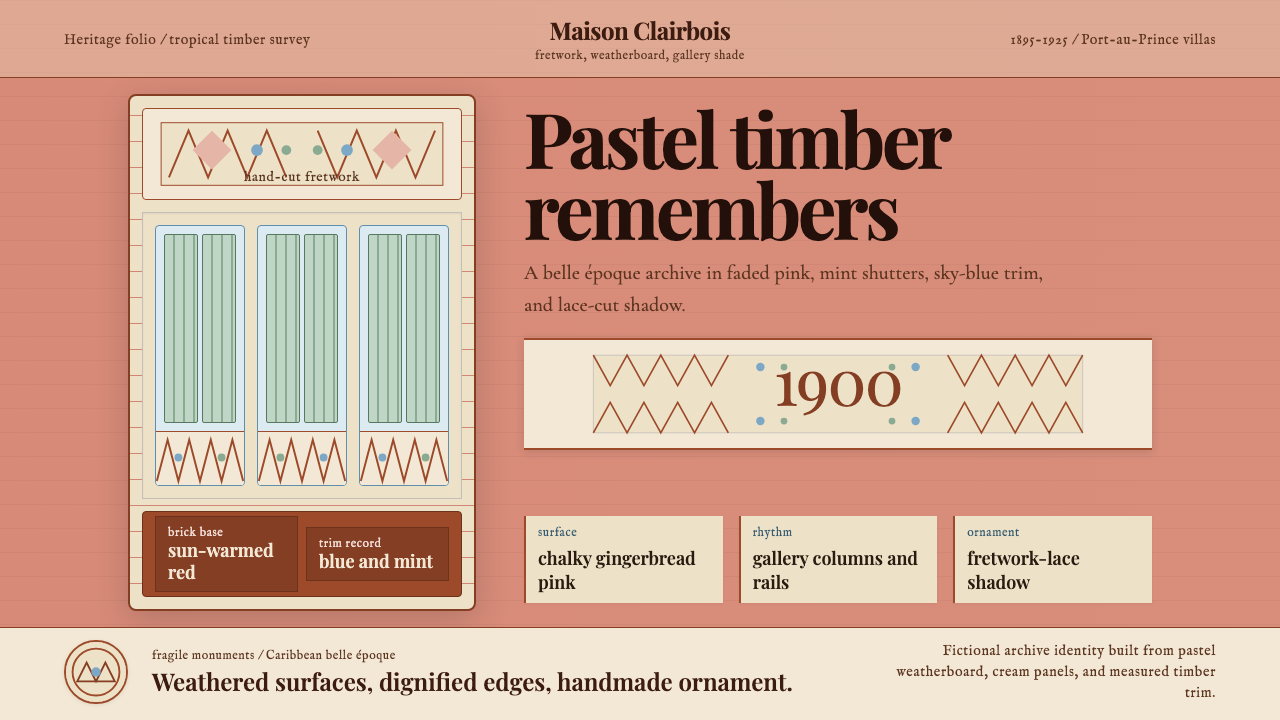 Haitian Gingerbread House (1900)Fragile elegance endures. Faded pink walls carry mint shutters and fretwork-l…
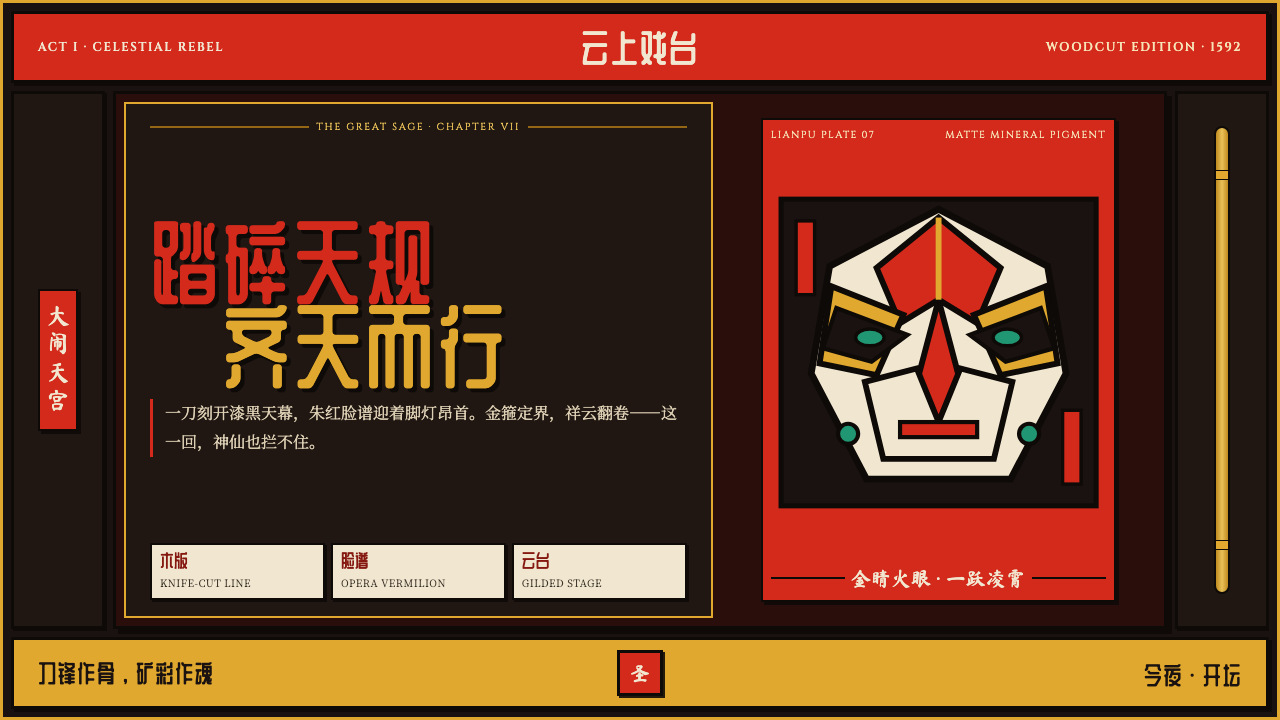 Journey to the West (Monkey King)A god roars off the block. Vermilion opera paint and gilt rules ignite a lacq…