What is Metal Gear Solid Codec?
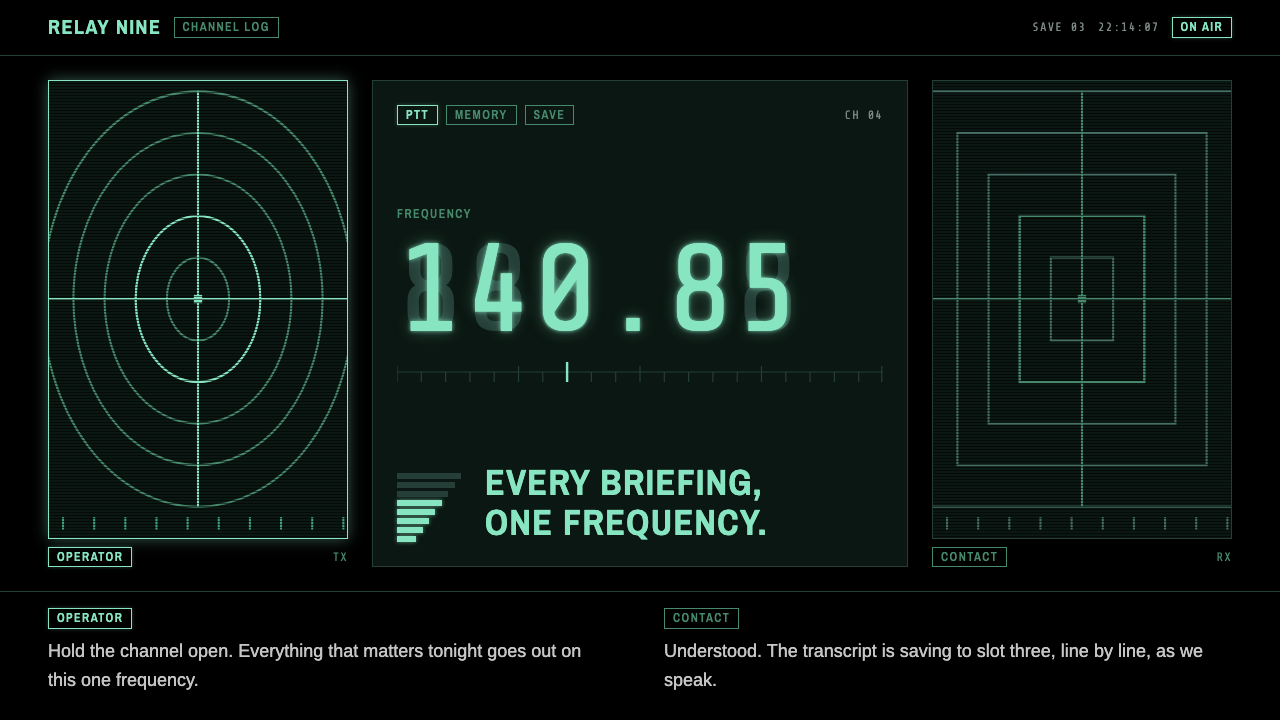
The Codec is the radio-call screen of Metal Gear Solid: two green faces, one frequency, and almost the entire story told across a black screen.
Metal Gear Solid Codec in brief
The Codec is the radio-call interface of Metal Gear Solid, the 1998 PlayStation game made by Hideo Kojima at Konami Computer Entertainment Japan. Almost every briefing, tactical hint and confession in the game plays out on it. The layout is unforgettable in its simplicity: two green portrait windows face each other across a black screen, and a frequency such as 140.85 glows in the space between them.
As a design language, the Codec is a study in limits. The ground is pure black. A single bright phosphor green is reserved for live information: the frequency digits, highlights and key data. Portraits are rendered as scan-lined images in that same green, and the spoken words appear as light grey subtitles. Everything else is empty, which is why the few things that glow carry so much weight.
The result is a screen that feels like a piece of military equipment rather than a game menu. It is squared-off, restrained and information-dense without clutter, and it makes the act of listening feel tense. That combination of cinematic mood and functional readability is why the Codec has remained a frequently cited reference for narrative and data-driven interfaces.

Where does Metal Gear Solid Codec come from?
The Codec belongs to a precise moment. Metal Gear Solid was released in Japan on 3 September 1998 and in North America in October 1998, on the PlayStation. It was the work of Hideo Kojima and his team at Konami Computer Entertainment Japan, based in Tokyo, and it was a landmark of what is often called PlayStation-era cinematic games: titles that used real-time 3D, voice acting and long scripted sequences to tell stories that previously needed film.
The Codec solved a specific problem for that kind of game. Characters needed to talk at length without the camera leaving the player's situation, and the hardware of the period could not render realistic faces for every conversation. A radio screen with stylized portraits and subtitles let the game deliver dense dialogue while staying inside the fiction. The player's character, Snake, appears on one side; the contact appears on the other. In the source material, the frequency 140.85 belongs to Colonel Campbell and 140.96 is Mei Ling's save channel, a detail that shows how the numbers themselves became part of the story.
The portraits are tied to Yoji Shinkawa, whose brush-drawn illustrations were compressed into scan-lined, phosphor-green images. His loose, calligraphic line gave the faces character even at low resolution, and it linked the Codec to Japanese mecha design, one of the movements the style draws on. The screen therefore combines three things: a military display aesthetic, a hand-drawn illustration tradition and the practical limits of 1998 hardware.
Historically the Codec sits within stealth action and the broader PlayStation-era push toward cinematic storytelling. It also belongs to a long line of green-on-black displays, from radar and oscilloscope screens to early computer terminals, that signal technology and surveillance. What the Codec added was a human element: faces and voices on a machine interface, which made the cold display emotionally charged.
What defines the Metal Gear Solid Codec look?
Color
The palette is deliberately tiny. The ground is pure black and stays black; the single accent is a phosphor mint green used only for live elements such as the frequency digits, portrait windows and key highlights. Body text is light grey so it reads clearly without competing with the green. Because the green is rationed, a glowing number immediately feels significant.
Two portrait windows
The composition is symmetrical: one portrait on the left for the player's character, one on the right for the contact, each in a square-edged frame. The faces are drawn from brush illustrations and rendered as scan-lined images in green. This facing-pair structure turns every conversation into a visible exchange, with the viewer positioned between two speakers.
Seven-segment frequency
Between the portraits, a frequency is displayed in seven-segment style digits, like the readout on a radio or calculator. These digits are the brightest element on the screen and tell you who you are talking to. They bring a utilitarian, mechanical note that anchors the otherwise cinematic scene in hardware.
Scan-line texture
Portraits and some panels carry fine horizontal scan lines, the visual signature of a cathode-ray display. The texture makes flat green shapes look like light emitted by a screen, and it softens the low resolution of the illustrations into something that feels intentional. It is applied sparingly, as a surface quality rather than a decorative layer.
Subtitle typography
Dialogue appears as light-grey subtitles in a clean, neutral sans-serif, set at a comfortable reading size beneath the portraits. The type is plain by design so that the words, not the typography, carry the drama. Line lengths are short and spacing is open, which makes long conversations tolerable to read.
Square-edged restraint
Frames are rectangular, corners are sharp and there are no gradients, glows or drop shadows beyond the green itself. The interface feels like military equipment: functional, uniform and slightly cold. This restraint is what lets the few expressive moments, such as a portrait change or a highlighted word, stand out.

Who shaped Metal Gear Solid Codec?
Director and creator of Metal Gear Solid, made at Konami Computer Entertainment Japan in Tokyo. His decision to deliver much of the story through the Codec screen defines the interface: dense dialogue and mood carried by two portraits, a frequency and a black field.
The artist whose brush-drawn character illustrations were turned into the scan-lined green portraits. His calligraphic line is why the faces carry personality at low resolution, and his mecha-influenced sensibility ties the Codec to Japanese mechanical design.
The development studio in Tokyo where the game was made. Its place in the PlayStation-era push toward cinematic games explains why a radio interface carried so much story, and why the Codec became part of the game's identity.
How do you use Metal Gear Solid Codec today?
On slides, the Codec style suits narrative and briefing decks: security reviews, incident post-mortems, research readouts and anything where the tone should be focused and slightly tense. A black slide with two facing panels can present a dialogue, a before-and-after comparison or a question-and-answer pair. Keep the green for the frequency-like element, such as the slide number or a key figure, and let grey text carry the rest.
For data slides, the screen is a natural fit for monitoring and status views. Show the one metric that matters as a large green seven-segment number, with supporting figures in grey beneath it. A black ground and a single accent make trends easy to spot. Avoid adding more than one accent color; the power of the style comes from the fact that green means live.
In web interfaces, the style works for developer tools, logs and consoles, game companion apps, narrative landing pages and dashboards that want a serious tone. Use facing panels for chat or transcript views, a frequency-style readout for connection status, and grey subtitles for message text. Add scan-line texture only to illustrations, not to text areas, so that reading stays comfortable.
In editorial and marketing work, the look suits retro-tech features, game retrospectives, spy and security themes and posters that want a cinematic, low-light mood. A pair of portraits with a glowing number between them is a strong, instantly readable image. It rewards minimal copy: one line of grey subtitle and one glowing detail are often enough.
The most common mistake is to use green everywhere. The style only works when green is rare; if every heading, border and label glows, the screen becomes a generic hacker theme and the live data loses its priority. Another error is to add soft shadows, rounded cards or gradients that break the square-edged logic. Keep the black ground, the sharp frames and the grey text, and the Codec's tension will carry itself.

Metal Gear Solid Codec — FAQ
What is the Codec in Metal Gear Solid?
The Codec is the in-game radio communication screen through which the player receives briefings, advice and story. It shows two green portraits facing each other across a black screen with a frequency in the middle, and the dialogue appears as grey subtitles. Much of the game's narrative is delivered through it.
When and where was the game released?
Metal Gear Solid was released in Japan on 3 September 1998 and in North America in October 1998, on the PlayStation. It was made by Hideo Kojima's team at Konami Computer Entertainment Japan in Tokyo, and it is a landmark of PlayStation-era cinematic games and of stealth action.
Why is the interface green on black?
Green on black recalls radar, oscilloscope and early terminal screens, so it signals technology and surveillance at once. In the Codec it also serves a practical purpose: a single bright color on a dark ground makes live information instantly visible and keeps the interface cheap to render on 1998 hardware.
Who drew the portraits?
The portraits are tied to Yoji Shinkawa, whose brush-drawn illustrations were converted into scan-lined, phosphor-green images. His loose, calligraphic line is why the faces keep their character even at low resolution.
How can I use the style without making it look like a parody?
Be strict about rationing. Keep the ground black, use green only for live data, keep subtitles in plain grey, and avoid decorative effects that break the square-edged frames. Put the information first and let the mood come from the restraint, not from extra glow or noise.
Related design styles
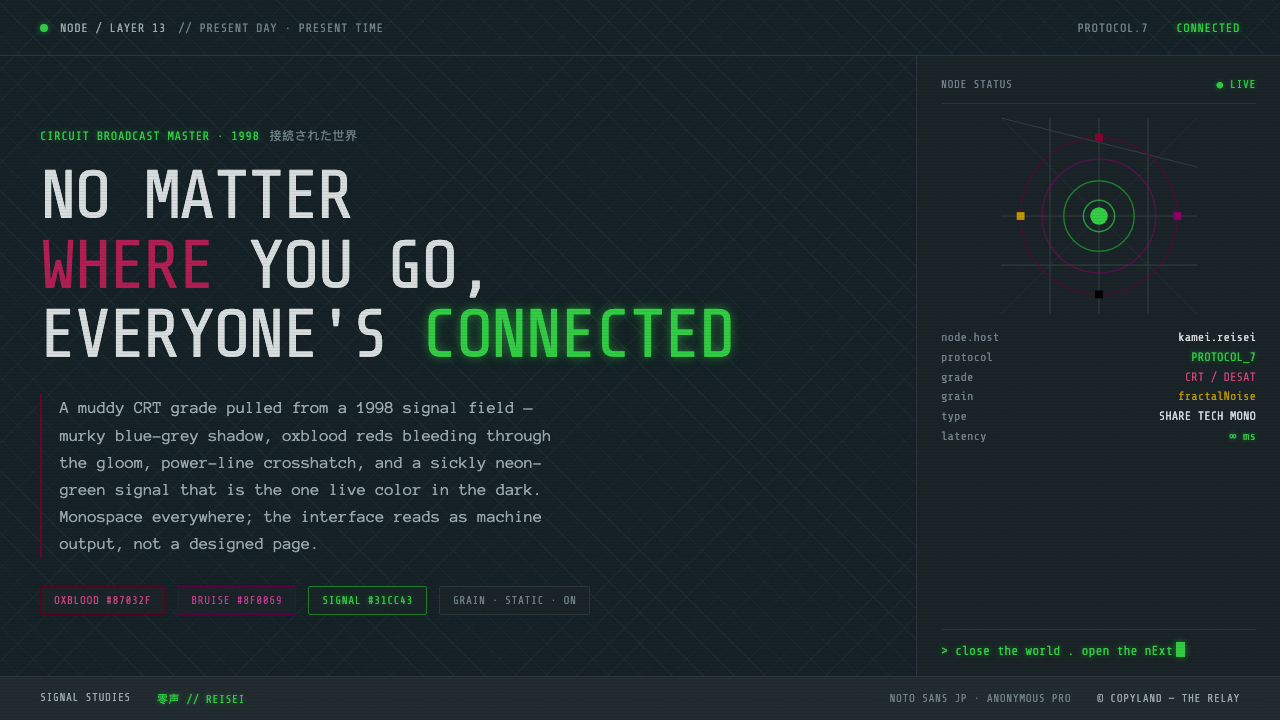 Serial Experiments LainMuddy CRT dread from the 1998 Wired. Blue-grey murk, oxblood reds, one sickly…
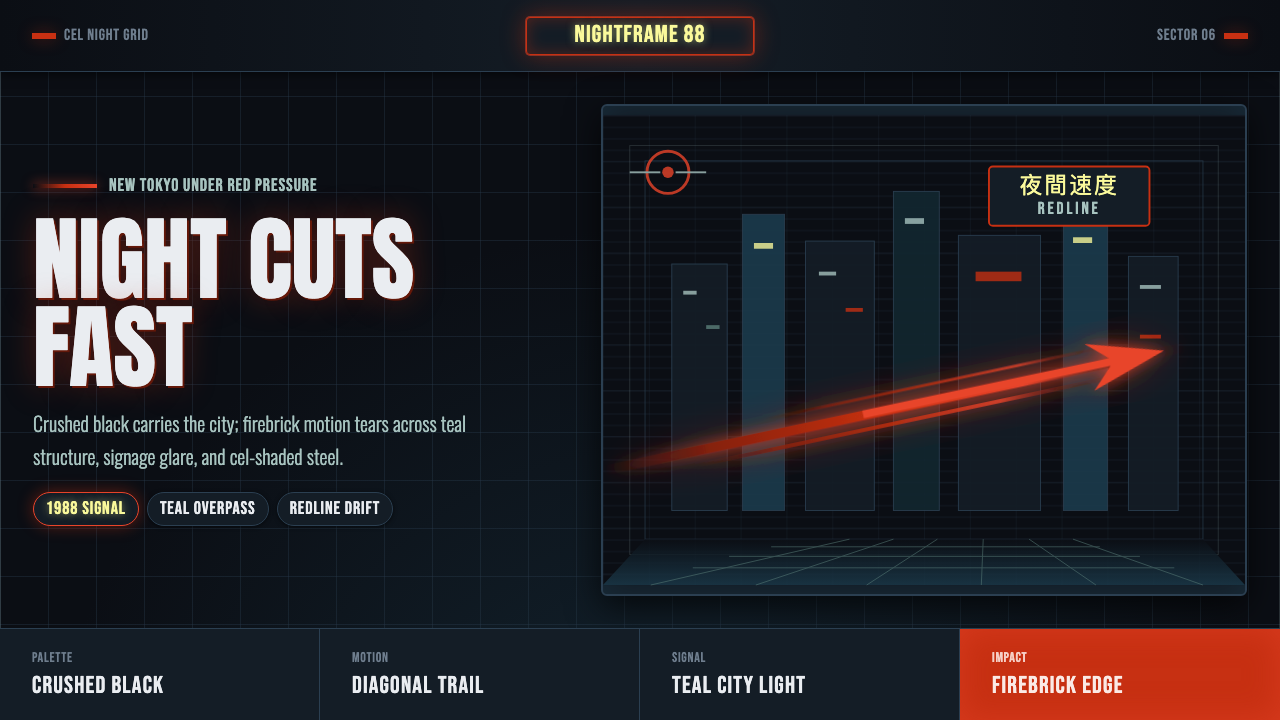 Akira Neo-TokyoNight moves fast. Firebrick trails cut crushed black, teal grids, and condens…
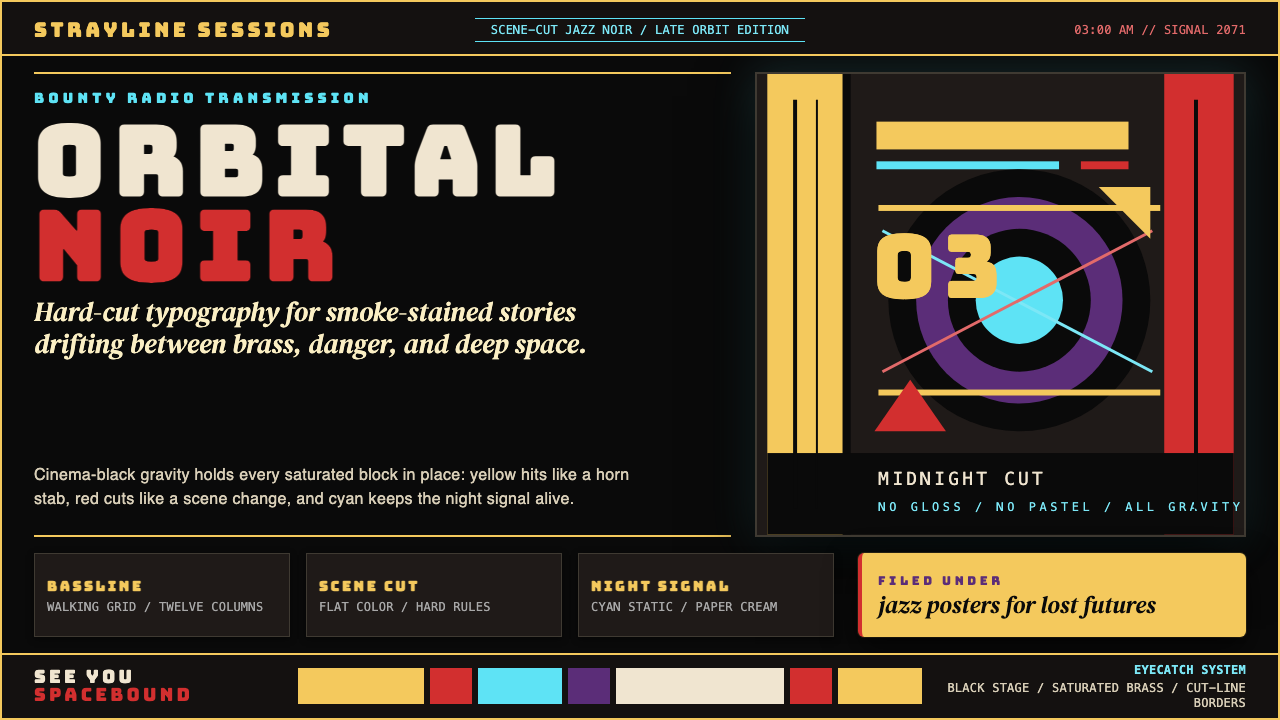 Cowboy Bebop Jazz-NoirCool at 3 AM. Bungee type, jazz yellow, red cuts, and cyan rules hit deep bla…
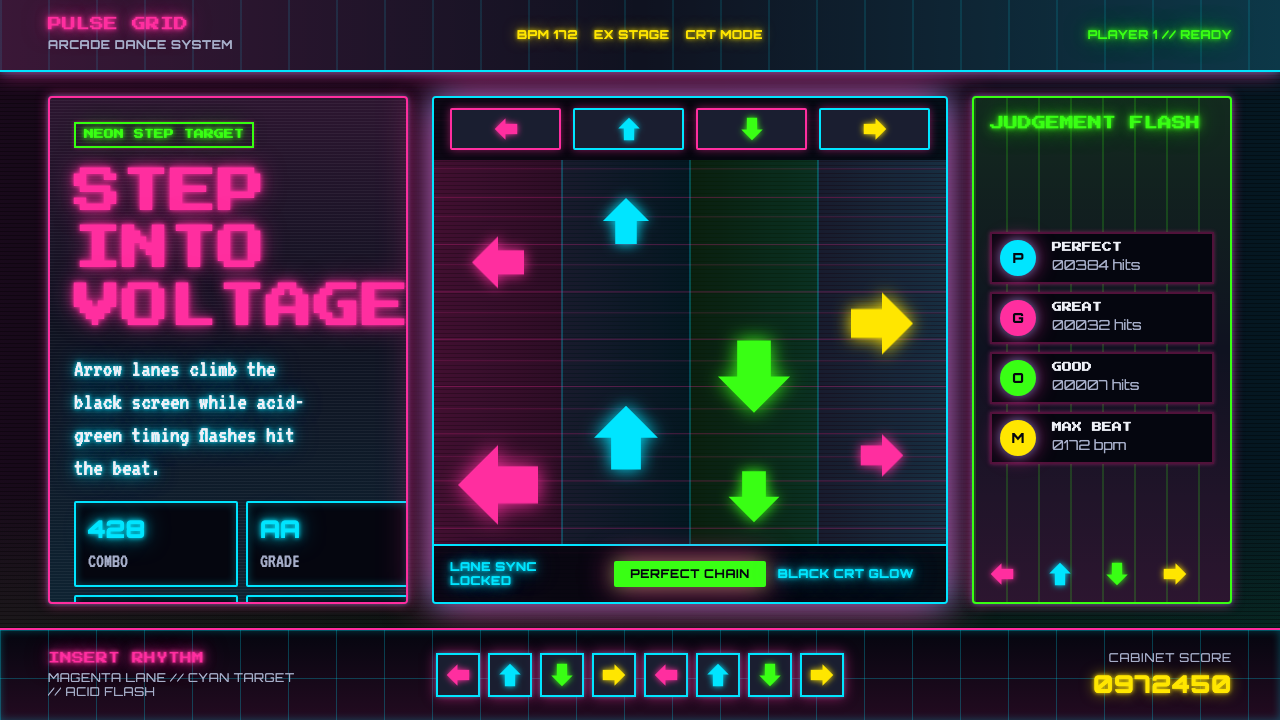 Dance Dance Revolution ArrowsPure arcade voltage. Magenta, cyan, and acid-green arrows climb a black CRT g…
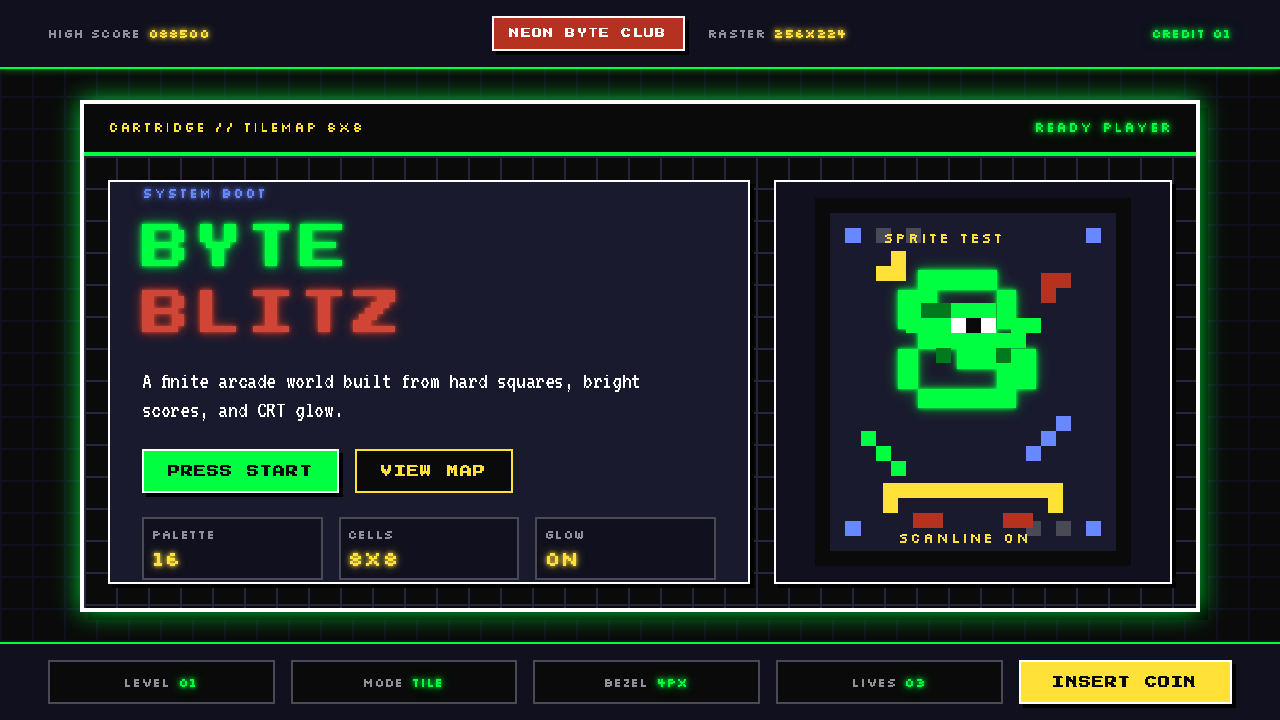 Pixel Art / 8-bit RetroHard-edged digital joy. CRT black, phosphor green, and 8x8 grids snap every p…
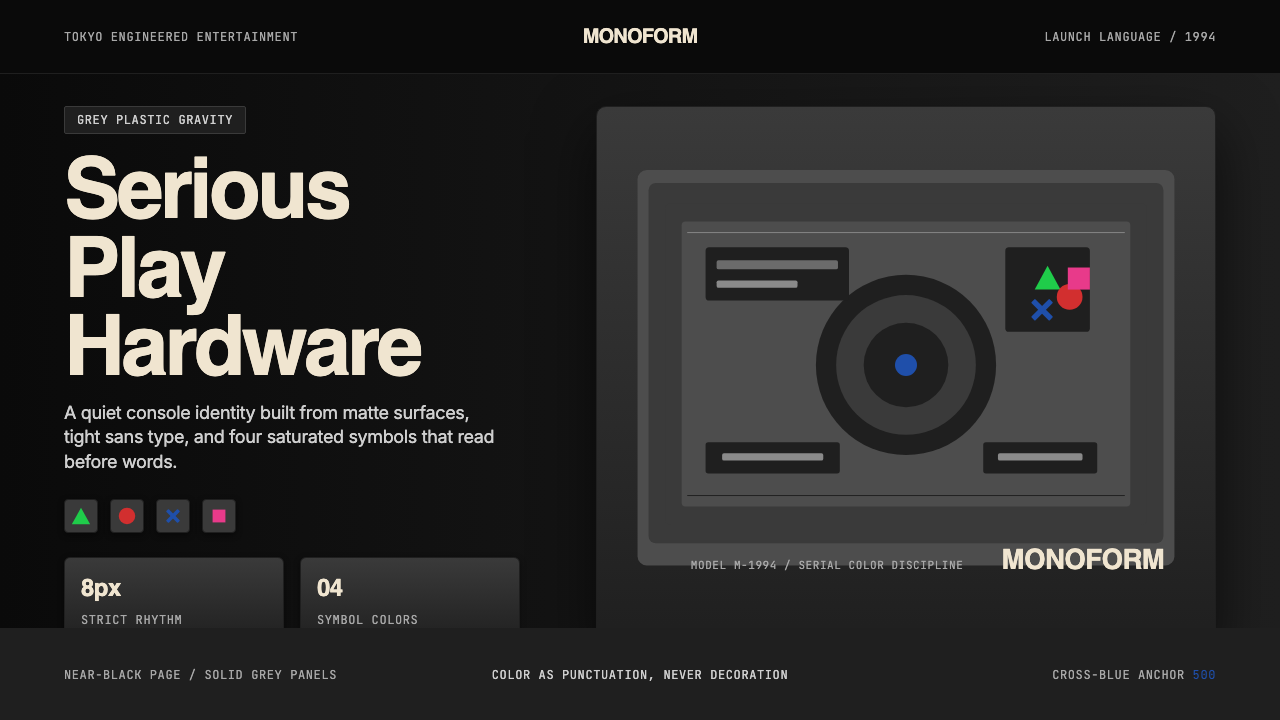 PlayStation (1994 Original)Quiet power, engineered. Grey plastic and four saturated symbols punctuate ti…