What is Māori Hei-Tiki Pounamu?
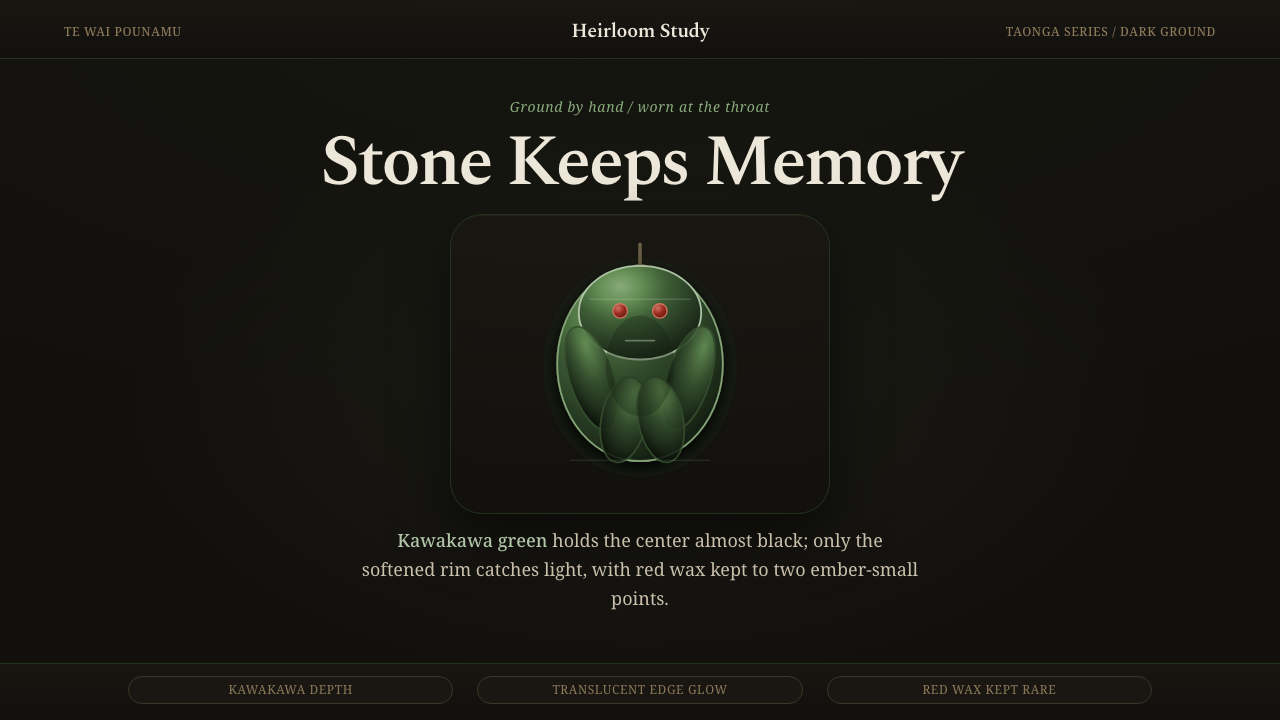
Māori Hei-Tiki Pounamu carries quiet mana in dark stone, letting moss-green light escape only at the edge while red wax gathers into a deliberate point.
Māori Hei-Tiki Pounamu in brief
Māori Hei-Tiki Pounamu translates a carved hei-tiki pendant into a visual language of dark stone, patient abrasion, and restrained light. The base is kawakawa pounamu, whose emerald-to-near-black body is flecked with shadow. Its silhouette is not faceted or sharply machined: hand grinding gives the form soft shoulders, rounded transitions, and a calm weight at the neck. Light belongs at the perimeter, where the stone turns translucent rather than spreading across the whole surface.
The face is organized around the eyes, traditionally inlaid with pāua shell and, after European contact, often represented by red sealing wax. That red is not a broad decorative field. It is a small foreign accent held against an otherwise ancestral form, creating a point of warmth inside a nearly black and moss-green world. The contrast feels ceremonial because it is concentrated: the eye catches attention without competing with the stone.
The overall aesthetic is dark, tactile, and composed. Near-black grounds give the pendant a quiet presence; deep green suggests mineral depth; shadow flecks keep the surface from becoming flat or synthetic; and edge light reveals the material without turning it glossy. Shapes should feel patiently worn into being, not cut from a geometric template. The mood is solemn but not severe, with mana expressed through density, age, and touch rather than spectacle.

Where does Māori Hei-Tiki Pounamu come from?
The hei-tiki is a carved nephrite pendant worn at the neck by Māori of Aotearoa New Zealand. Its stone is pounamu, or greenstone, sourced from the rivers and mountains of Te Wai Pounamu on the South Island. The name of this style therefore joins an object, a material, and a place: the pendant is not an isolated graphic motif, but a form grounded in the stone landscapes that supply it.
The source places the tradition in the pre-1900 classic period. Pounamu was ground by hand rather than faceted, a process that explains the style's soft-shouldered contours and subdued edges. Kawakawa, the darkest variety, moves from emerald toward near-black and carries flecks of shadow. Its material character is central to the visual language: depth comes from the stone itself, while light is allowed to emerge only where the edge becomes translucent.
A hei-tiki was treated as taonga, a treasured heirloom passed through generations. As it moved between wearers, the stone absorbed their mana. Age therefore changes more than appearance: the stone darkens and its polish deepens through touch. This gives the style a temporal quality that cannot be reproduced by adding artificial distress. Its surface should feel accumulated, handled, and quietly consequential.
The traditional eyes were made with pāua shell. After European contact, red sealing wax became a common substitute, introducing a small foreign material into an ancestral form. The tradition is carried by Māori pounamu lapidaries, whānau carving lineages, and tohunga whakairo, or master carvers. Its broader cultural frame includes Māori pounamu carving, hei-tiki adornment, and the practice of preserving taonga as family heirlooms.
What defines the Māori Hei-Tiki Pounamu look?
Dark Stone
The dominant field is kawakawa pounamu: emerald pushed toward near-black, with shadow flecks embedded in the body. Darkness is not treated as empty space but as mineral density. Use it to establish gravity, age, and quiet mana before introducing any accent.
Edge Luminescence
Light should gather at the perimeter rather than wash evenly across the surface. The translucent edge is the visual reward for looking closely: a thin green emergence that reveals the stone's depth without making it appear polished glass or luminous metal.
Soft Shoulders
Because the form is ground by hand rather than faceted, its contours are rounded, softened, and slightly organic. Corners should surrender into the surrounding body. The silhouette carries presence through mass and balance, never through sharp technical precision.
Red Eye Accent
Red sealing wax functions as a concentrated point of attention. It should remain small, warm, and materially distinct from the pounamu. Its power comes from restraint: the red eye is memorable because the surrounding field refuses to compete with it.
Hand-Ground Honesty
The surface should communicate patient abrasion rather than faceted manufacture. Subtle variation, rounded transitions, and a deepening polish suggest a form shaped through use. Do not simulate texture as decoration; let the implied labor and touch carry the material story.
Heirloom Restraint
The visual system is sparse because the pendant carries inherited significance. Empty dark space gives the object room to register, while a limited palette keeps attention on stone, eye, and contour. Quietness here is not lack of expression; it is a form of respect.

Who shaped Māori Hei-Tiki Pounamu?
The lapidaries are the material specialists of the tradition, patiently grinding pounamu sourced from the rivers and mountains of Te Wai Pounamu. Their practice explains the pendant's softened contours, deep polish, and refusal of faceted spectacle.
Whānau, or family carving lineages, preserve the knowledge and continuity surrounding hei-tiki and pounamu. Their presence is reflected in the style's emphasis on inheritance, touch, and the passage of a taonga through generations.
Tohunga whakairo are master carvers whose role represents the highest level of carved-form knowledge in the supplied material. Their work anchors the style in disciplined making: the body is shaped through judgment, patience, and an understanding of stone.
The wearers are part of the object's visual history. As a hei-tiki passes through generations, it absorbs the mana of those who wear it; darkening stone and deepening polish therefore become signs of relationship, not merely surface finish.
How do you use Māori Hei-Tiki Pounamu today?
For presentation slides, use the style first on the cover as a field of near-black stone with a restrained moss-green edge glow and a single red wax point. Let the title sit with calm authority, leaving generous darkness around it. On content slides, keep the same hierarchy: dense dark grounds, soft-edged forms, and accents that appear only where they clarify an idea. Data slides should feel like carved objects or material diagrams, with green carrying the body of information and red reserved for the decisive observation.
For web interfaces, the style suits dashboards and pricing pages that need gravity, trust, and strong focus. Use a dark visual field, quiet green for active surfaces or primary information, and red only for a warning, selected state, or decisive action. Cards should feel substantial rather than floating; borders can be subdued, and depth should come from tonal layering instead of glossy effects. Rounded contours are preferable to sharp faceting, especially around controls and information panels.
For editorial and marketing work, build a narrow reading experience around the contrast between dark stone and edge light. A feature article can begin with a large, nearly black image field, then let green appear along a crop, contour, or quiet side note. Section breaks should be sparse and tactile, using a short rule, a carved-looking marker, or a small red point rather than ornamental decoration. Marketing pages can present the product as an heirloom: considered, durable, and made meaningful through repeated human contact.
For diagrams, catalogs, or educational pages, treat pounamu as the organizing material rather than a decorative texture. Use broad dark planes for structure, rounded silhouettes for objects, and carefully placed green highlights to describe edges or transitions. Red sealing wax can identify the key detail, but it should remain materially separate from the stone. The result should feel like an object being studied and respected, not an artifact being dramatized for spectacle.
The common mistake is to turn the palette into a generic dark luxury theme. Glossy gradients, sharp gemstone facets, numerous red accents, and simulated tribal ornament all weaken the reference. The character comes from hand-ground softness, mineral darkness, edge translucency, and inherited restraint. If every surface glows or every card uses the red accent, the composition loses the quiet mana that makes the style distinctive.

Māori Hei-Tiki Pounamu — FAQ
What is a hei-tiki?
A hei-tiki is a carved nephrite pendant worn at the neck by Māori of Aotearoa New Zealand. In this style, its identity comes from the relationship between pendant form, pounamu stone, hand grinding, and heirloom transmission rather than from a decorative outline alone.
Why is the stone nearly black?
The dark appearance refers to kawakawa pounamu, described as an emerald-to-near-black variety flecked with shadow. Darkness gives the object density and quiet presence, while the edge can still turn translucent and reveal the green within.
Why is red used for the eyes?
The traditional eyes were inlaid with pāua shell. After European contact, red sealing wax became a common substitute. In the visual system, that red should remain a concentrated foreign accent against the ancestral stone form, never a broad ornamental color.
Should the form look faceted or perfectly geometric?
No. Pounamu is ground by hand rather than faceted, so the appropriate character is soft-shouldered, rounded, and materially calm. Geometry may organize a layout, but the pendant itself should retain the evidence of patient abrasion and touch.
What separates this style from a generic dark luxury aesthetic?
Its authority does not come from gloss, rarity cues, or elaborate ornament. It comes from the specific logic of pounamu: dark mineral depth, translucent edges, hand-ground softness, a restrained red-wax accent, and the accumulated mana of an heirloom passed through generations.
Related design styles
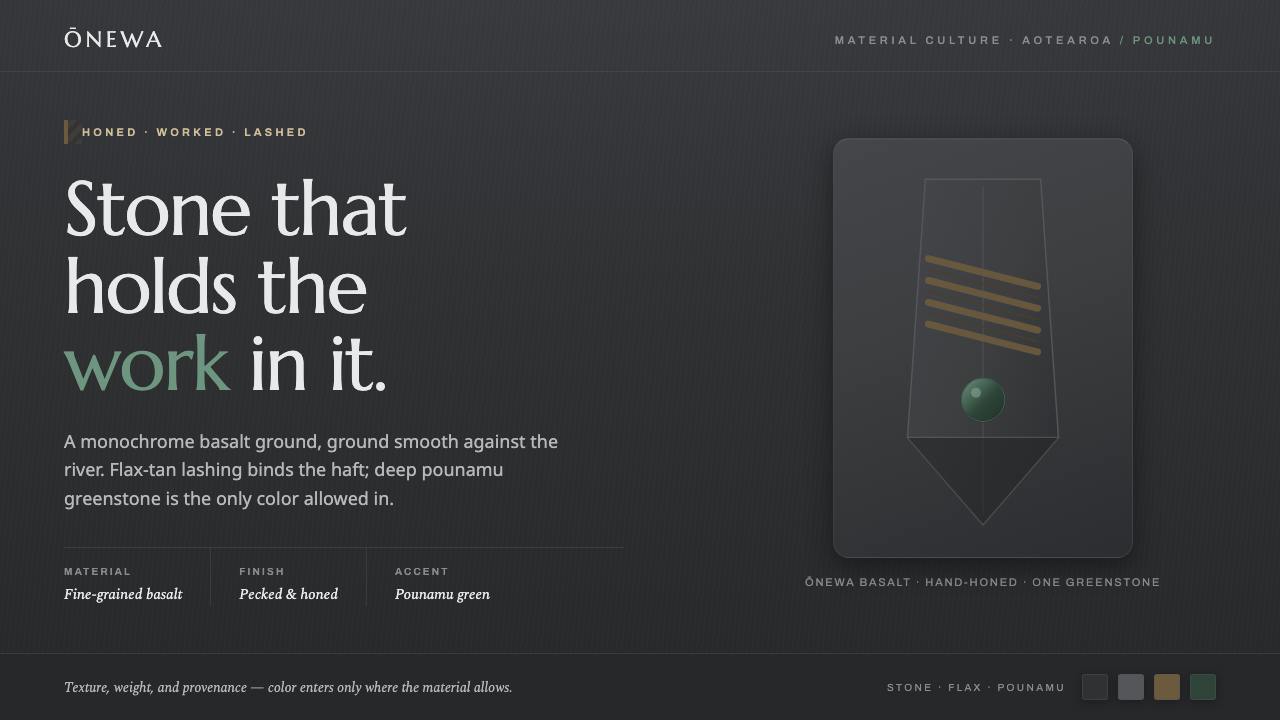 Māori Volcanic StoneColor enters only where the stone allows. Honed charcoal basalt, flax lashing…
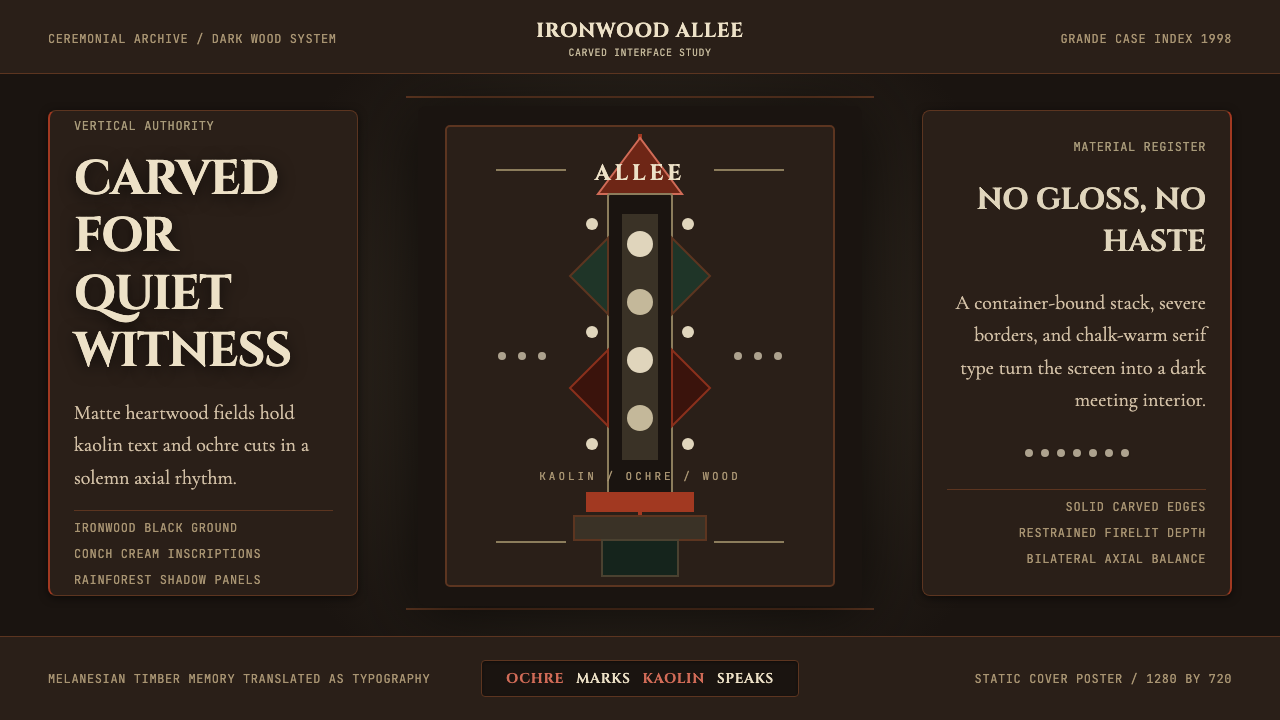 New Caledonia Kanak TotemSolemn carved darkness. Ochre axis, kaolin serif type, and conch dots hold th…
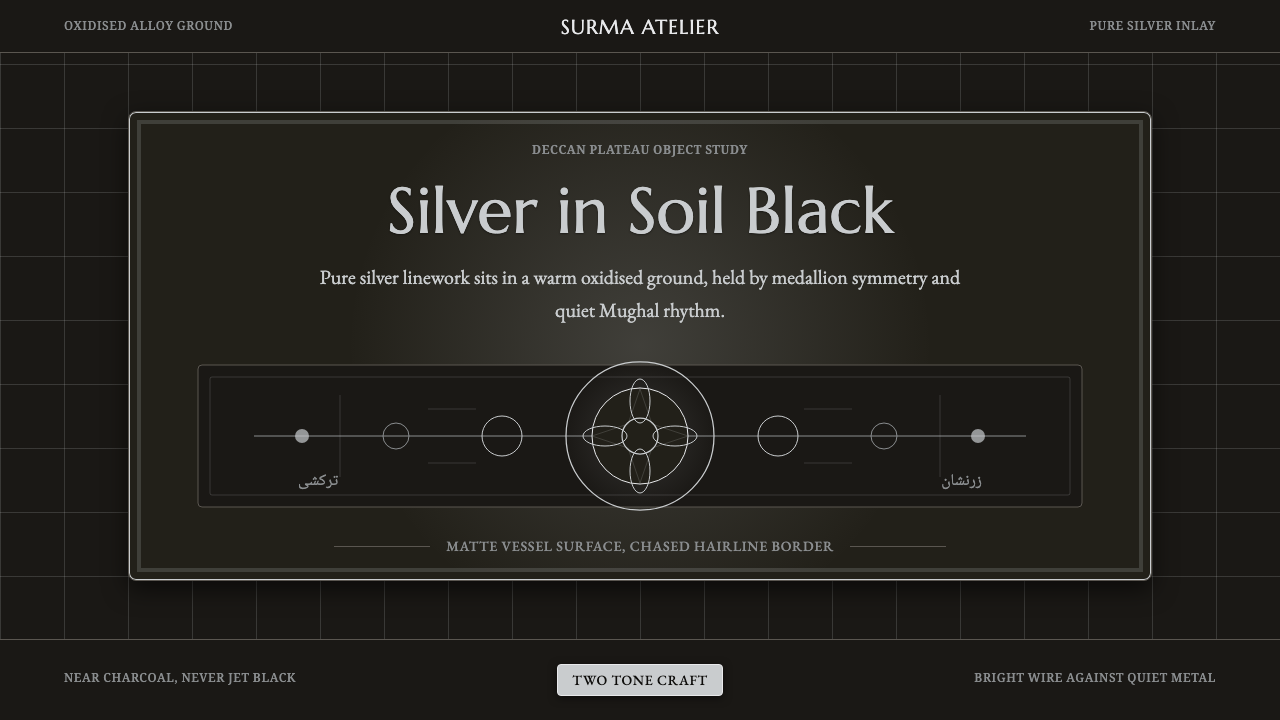 Bidar Bidriware VesselsSoil-black luxury. Crisp silver medallions and hairline borders cut the warm…
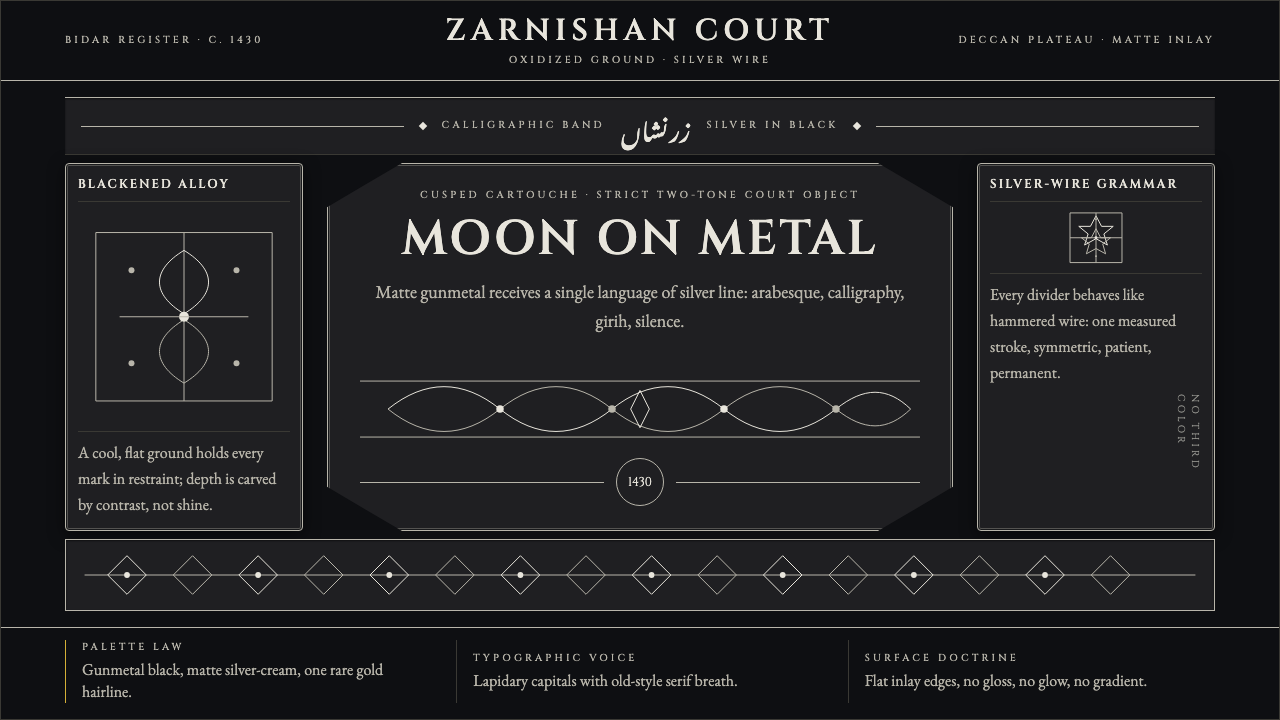 Bidri Deccan MetalworkCourtly darkness, tooled by silver. Cinzel caps and hairline arabesques cut g…
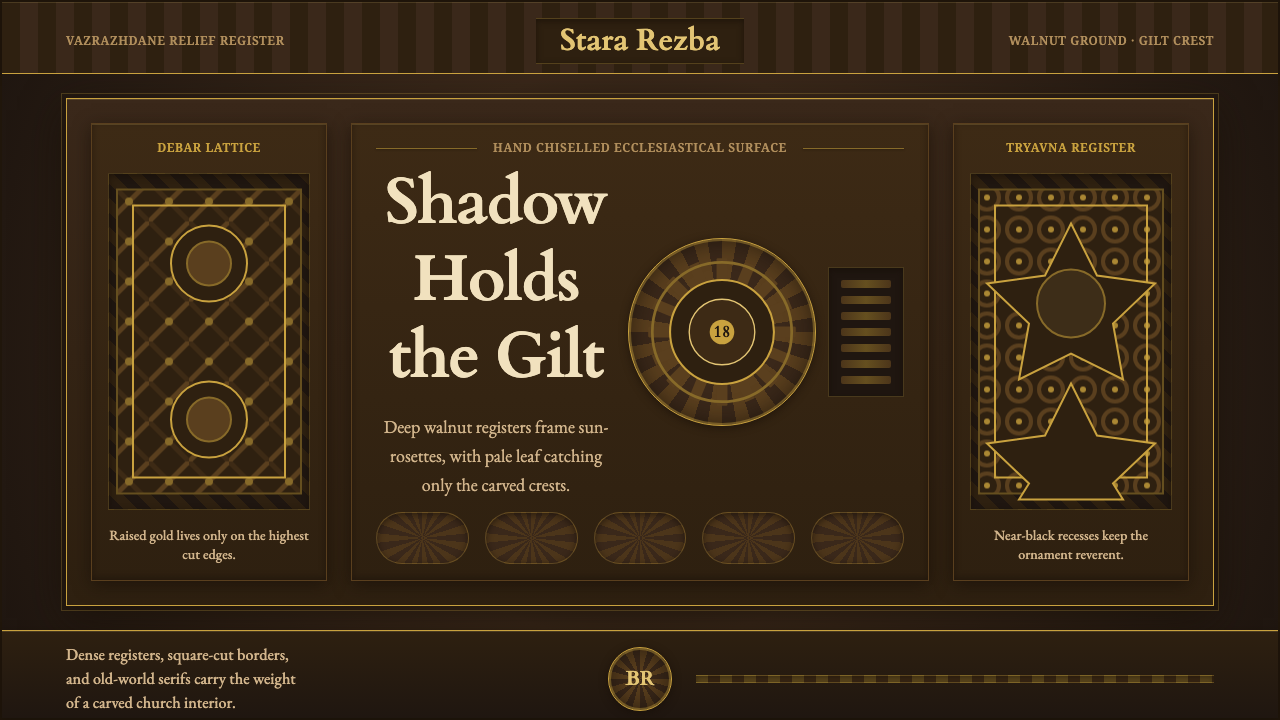 Bulgarian Revival WoodcarvingDark devotion in relief. Walnut panels, Cardo serifs, and gilt rosettes catch…
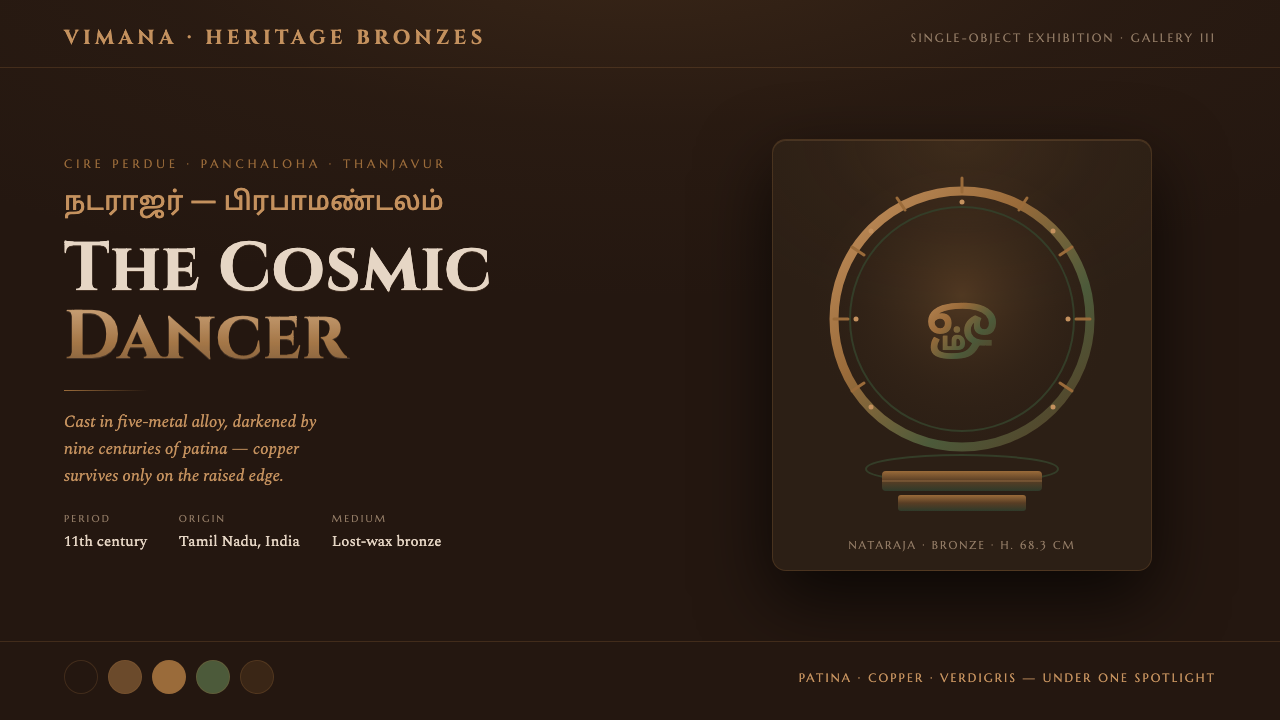 Chola Bronze NatarajaA patinated bronze under museum spotlight. Near-black field, verdigris recess…