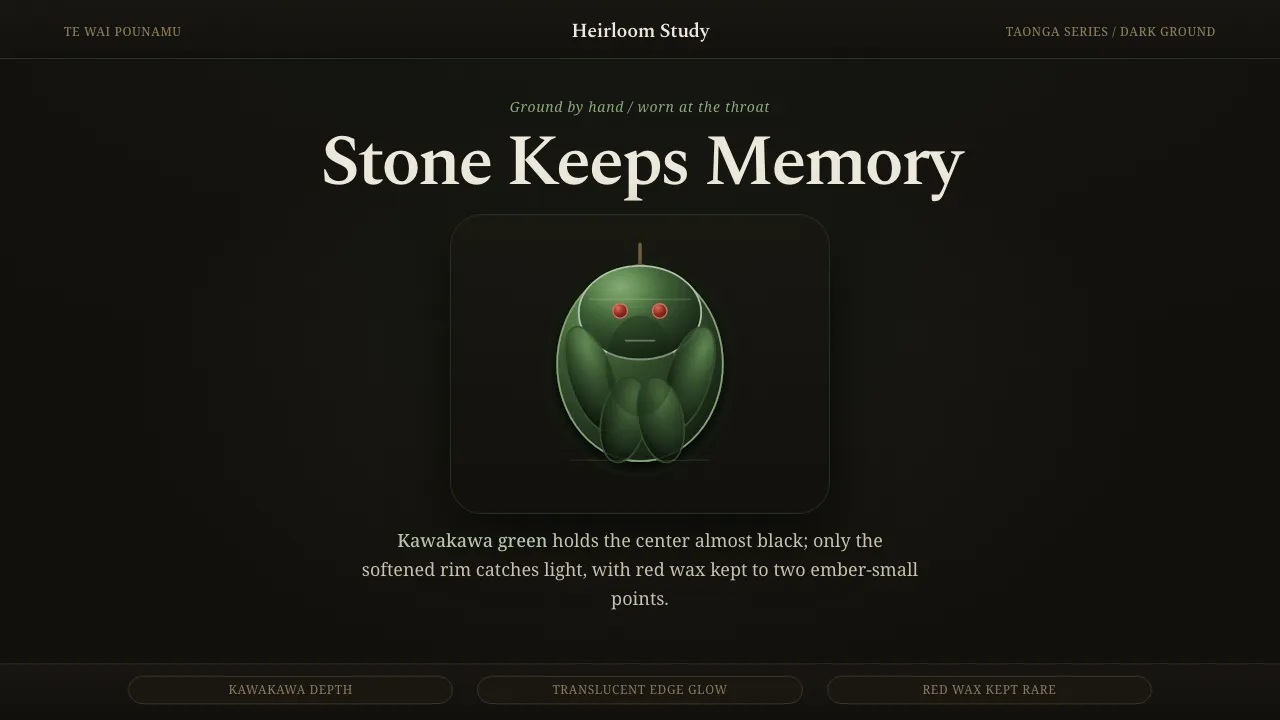
About Māori Hei-Tiki Pounamu
The hei-tiki is a carved nephrite pendant worn at the neck by Māori of Aotearoa New Zealand, ground by hand from pounamu — greenstone quarried from the rivers and mountains of Te Wai Pounamu. Kawakawa, the darkest variety, is an emerald-to-near-black stone flecked with shadow, patiently abraded rather than faceted, so its form is soft-shouldered and its edges alone turn translucent with light. Traditionally the eyes were inlaid with pāua shell; after European contact, red sealing wax became a common substitute, a small foreign accent against an otherwise ancestral form. Passed down through generations as taonga, a hei-tiki absorbed the mana of its wearers, its stone darkening and its polish deepening with age and touch.
- Origin
- Aotearoa / New Zealand (Oceania); pounamu sourced from Te Wai Pounamu, South Island
- Era
- pre-1900 (classic period; red-wax eyes a post-European-contact addition)
- Key figures
- Māori pounamu lapidaries · whānau (family) carving lineages · tohunga whakairo (master carvers)
- Movements
- Māori pounamu (greenstone) carving tradition · hei-tiki adornment · taonga (treasure) heirloom practice
Māori Hei-Tiki Pounamu design spec
Colors
Typography
The other 11 sections — buttons, cards, spacing, motion, techniques and more — open once you unlock. Download the DESIGN.md or send it to your AI in one click. Unlock once, yours forever.
Sign up nowStyles similar to Māori Hei-Tiki Pounamu
Also inspired by crafts & folk art, with a close feel.
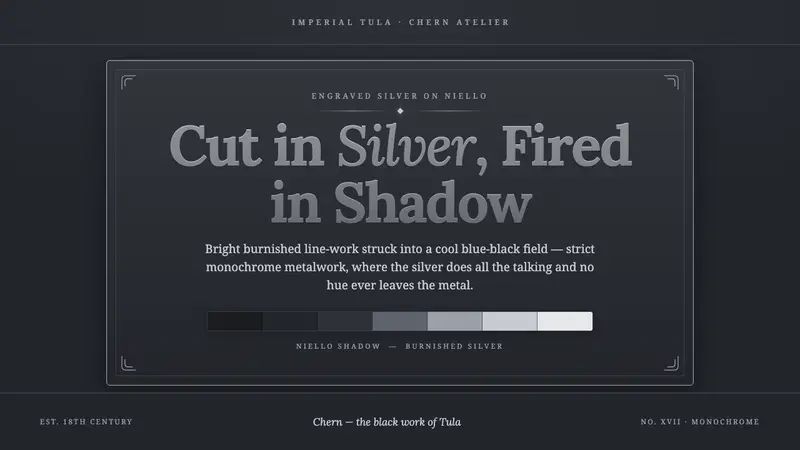 Tula Niello SilverStrict silver-on-shadow monochrome. Burnished line-work cut into a cool blue-black niello field.
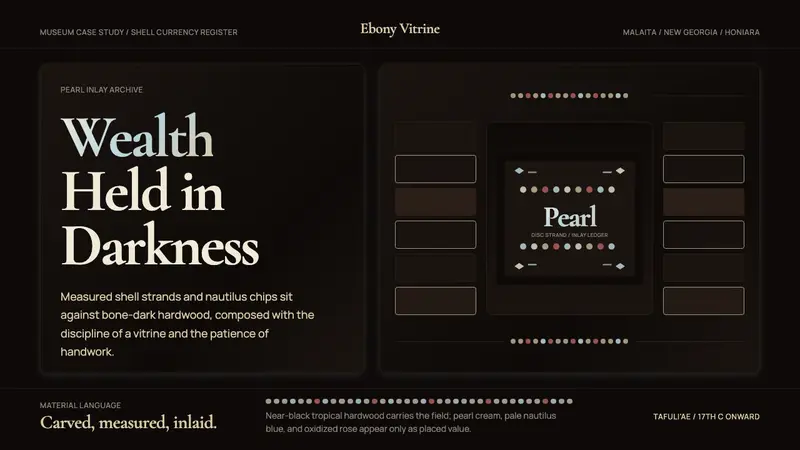 Solomon Shell Money & Pearl InlayDignity inlaid in darkness. Pearl cream and nautilus blue form strict shell-strand bands.
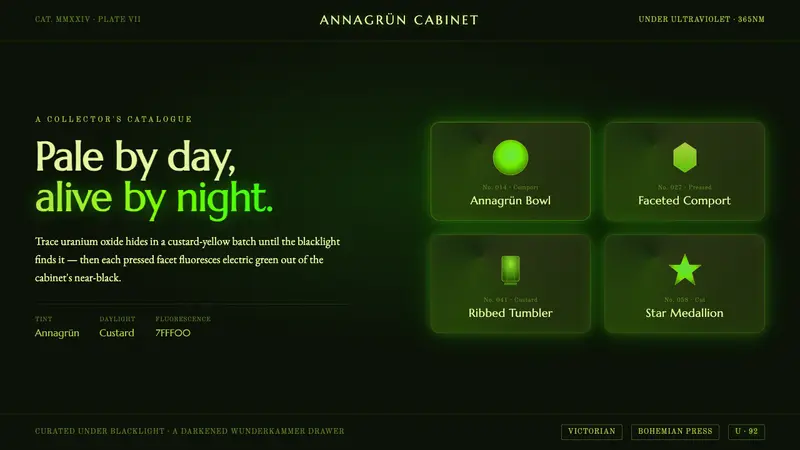 Uranium Vaseline GlassPale by day, electric green by night. Uranium glass fluorescing out of cabinet-black in serif.
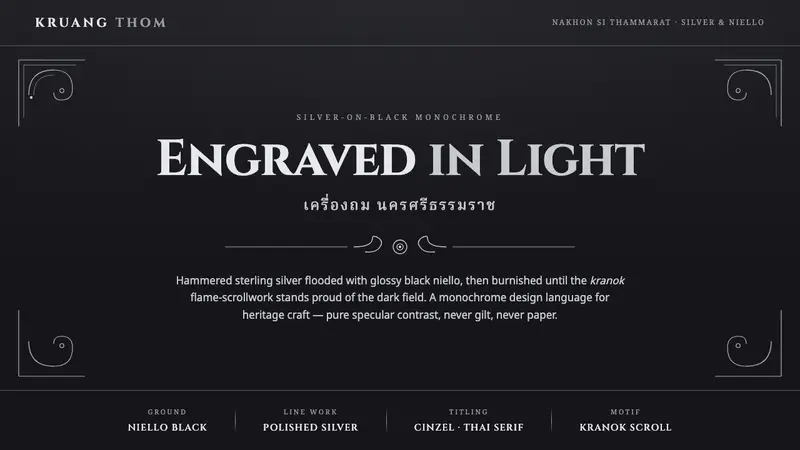 Thai Nielloware ThomSilver-on-black, never gilt. Polished kranok scrollwork glints proud of a glossy niello field.