What is LEGO Classic?
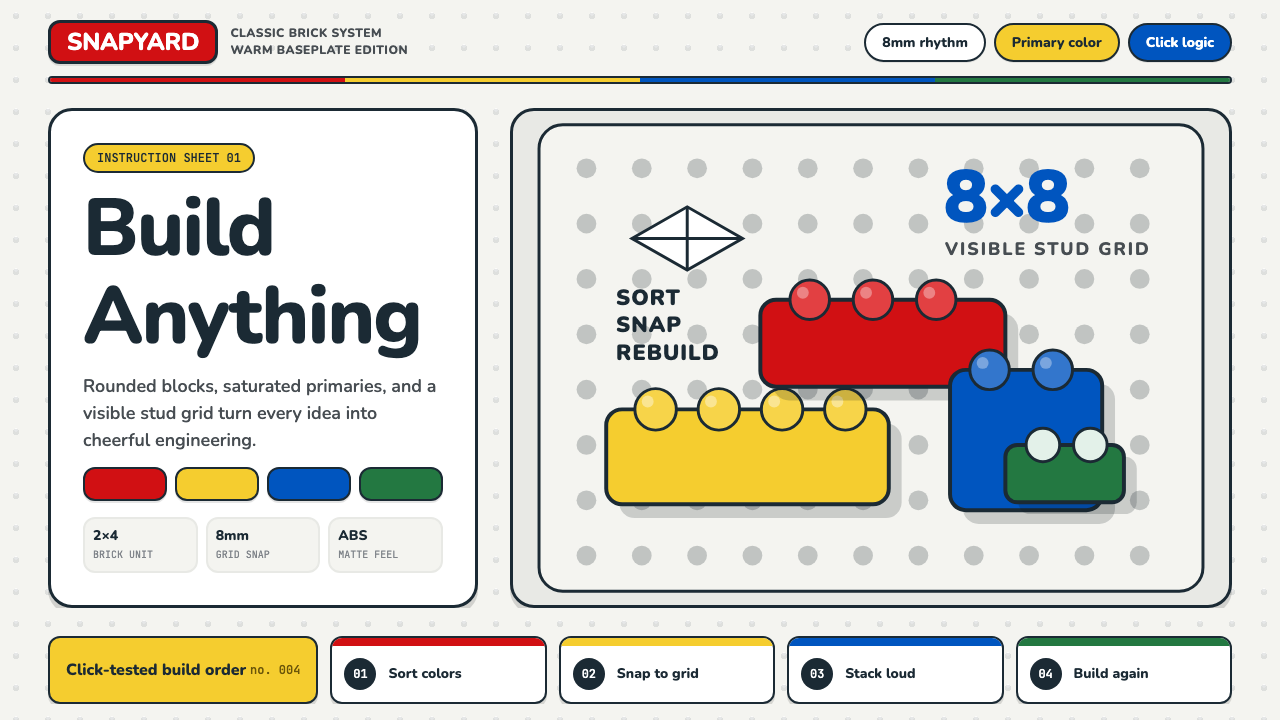
LEGO Classic is the visual language of cheerful engineering — primary bricks snapped onto a warm gray stud grid that has taught generations to believe anything can be built.
LEGO Classic in brief
LEGO Classic is the visual identity system that has defined the LEGO brand since the toy's maturation in the 1970s: bold primary red, yellow, and blue set against a medium-gray stud grid and bright white backgrounds, rendered in the flat, matte, toybox-bright aesthetic of injection-molded plastic. Every element in the system — the brick silhouette, the instruction-manual line art, the logo's cheerful lettered form — communicates the same message: construction is joyful, systematic, and completely within reach.
The design language is governed by what might be called cheerful precision. The stud grid — the regular pattern of raised cylindrical pins that covers every LEGO baseplate — functions as a visual module system, the underlying order that makes infinite combination possible. Above this grid sit saturated primary colors, deliberately chosen for maximum distinguishability and the boldest possible emotional impact. Rounded corners on every brick soften what could be a harsh geometric system into something approachable, tactile, and friendly. Nothing is accidental: the roundness, the primary palette, the gray base, the chunky proportion — each is a considered design decision.
What makes LEGO Classic distinctive among toy aesthetics is its dual nature as both an object system and a communication system. The bricks themselves are the product, but the visual language extends through catalogs, instruction booklets, packaging, and advertising into a coherent world. The instruction manual — with its clean isometric line art, numbered steps, and arrow indicators — is itself a minor design classic, a piece of information design that has successfully communicated complex assembly sequences to children who cannot yet read, across dozens of languages and six decades.

Where does LEGO Classic come from?
The LEGO story begins in a carpenter's workshop in Billund, Denmark. Ole Kirk Christiansen had been making wooden toys since 1932, and his company's name — LEGO — was coined in 1934 from the Danish phrase leg godt, meaning 'play well.' In 1949, following the introduction of an injection-molding machine, the company produced its first plastic interlocking bricks, though these early bricks lacked the precise clutch power — the satisfying grip between stacked pieces — that would come to define the system. The breakthrough came in 1958, when Godtfred Kirk Christiansen, Ole's son, patented the modern stud-and-tube coupling system that remains the foundation of every LEGO element made today. That single mechanical innovation transformed a toy into a system.
The visual identity of LEGO Classic as it is recognizable today solidified across the 1960s and 1970s. The primary color palette — red, yellow, blue, black, and white, later expanded to include green and gray — was not chosen arbitrarily but reflects both practical manufacturing constraints and a considered theory of play. Primary colors are maximally distinct from one another, making sorting and selecting easier for young builders. They are also culturally neutral across most of the markets LEGO served, avoiding the cultural specificity of secondary or tertiary color choices. The medium-gray baseplate, introduced to anchor construction, became an iconic visual signature — the calm foundation beneath vibrant primary color activity.
The LEGO logo itself has passed through several iterations, arriving at its current form in 1998. The bold oval badge with thick white lettering on a red field — high contrast, rounded, instantly legible — distills the brand's visual principles into a single mark. Earlier versions of the logo were more ornate; each successive revision stripped away complexity in favor of the toybox-bright directness that characterizes the mature system. The instruction manual's visual language evolved in parallel: early booklets used photographic assembly guides before the company standardized the iconic isometric line-art format, which proved superior for clarity across print scales and translation contexts.
The design movements that influenced LEGO Classic are perhaps less obvious than for more consciously avant-garde aesthetics. Scandinavian toy design — with its emphasis on durability, play value, and clear visual communication — is the nearest tradition, and LEGO sits comfortably alongside Brio and other northern European toy brands in their shared commitment to simple, direct form. More broadly, the system reflects the postwar European interest in modular systems and kit construction as both educational philosophy and design methodology: the idea that complex objects can be decomposed into a limited set of interchangeable units, and that this decomposition is itself a form of knowledge. The LEGO brick is, in this reading, a physical instantiation of systems thinking.
What defines the LEGO Classic look?
Primary Color Palette
The LEGO Classic palette centers on the three primary colors — red, yellow, and blue — alongside black and white, with green and medium gray serving as supporting constants. Each color is used at full, unmodified saturation: no pastels, no muted tones, no gradients. The primaries are chosen for maximum mutual contrast and universal legibility, ensuring that a mix of bricks reads as a coherent visual field rather than visual noise. Gray functions as the neutral ground — the baseplate, the background — against which the primaries sing.
Stud Grid Structure
The stud grid is the invisible order beneath every LEGO composition. The regular array of raised cylindrical pins defines a modular unit that governs all proportional relationships in the system: width, length, and height are all integer multiples of this single base unit. In visual terms, this creates a system that is simultaneously rigid (nothing can sit outside the grid) and infinitely variable (any combination of units is valid). The stud grid is LEGO's equivalent of a typographic baseline grid — the structure that makes freedom possible.
Rounded Matte Forms
Every LEGO brick is a rectangle with consistently rounded corners and a matte plastic surface finish. The rounding is not decorative — it serves structural and safety functions — but its visual effect is to transform what could be a harsh, angular geometric system into something warm, approachable, and tactile. The matte finish absorbs light rather than reflecting it, giving every color a flat, poster-like quality that reads well both in hand and at any photographic scale. The absence of gloss is part of the aesthetic: LEGO does not simulate glass, metal, or high polish.
Instruction-Manual Line Art
The LEGO instruction manual represents one of the great achievements of information design: a purely visual, language-independent assembly system that communicates complex three-dimensional construction sequences without a single word of text. The isometric line-art style — clean outlines, minimal shading, consistent orientation — is instantly recognizable and has remained essentially stable for decades. Arrow indicators show movement and attachment; numbering provides sequence; close-up insets highlight small or difficult elements. The style is diagrammatic in the best sense: it makes the invisible visible and the complex simple.
Bold Logomark and Typography
The LEGO wordmark — thick white lettering inside a bold red oval badge — is among the most legible brand marks in the world. Its characteristics are directness and weight: high contrast between figure and ground, rounded letterforms that echo the brick's own rounded corners, and a scale that reads at both thumbnail and billboard size. The typographic sensibility extends through all official LEGO communications: headlines are always bold and large, body text is minimal and functional, and there is no place for decorative type or delicate letterforms anywhere in the system.
Systematic Modularity
At the deepest level, LEGO Classic communicates the aesthetic of the kit — the idea that a finite set of standardized parts can produce infinite variety. This modularity shows up visually in the stud grid, proportionally in the brick sizing system, and conceptually in the instruction manual's step-by-step decomposition. The aesthetic implication is that complexity is always reducible to simple, combinable units, and that this reduction is not a limitation but a liberation. LEGO's visual language makes systems feel friendly rather than constraining.
Cheerful Confidence
If Bauhaus is principled austerity and Memphis is ironic exuberance, LEGO Classic is cheerful confidence — a visual register that says nothing is impossible if you have the right pieces. This tonal quality is achieved through the combination of fully saturated colors with rounded forms and the explicit visual promise of combinatorial freedom. Nothing in the system is tentative, subtle, or restrained. The saturation is all the way up, the forms are all the way clear, and the overall message is uncomplicated: building is good, building is fun, and you are capable of building.

Who shaped LEGO Classic?
Ole Kirk Christiansen founded the LEGO company in Billund, Denmark in 1932, initially as a manufacturer of wooden toys. It was his decision in 1949 to invest in plastic injection molding — a technology still regarded with skepticism by much of the toy industry — that set the company on its transformative path. He coined the name LEGO, established the foundational commitment to quality that became the brand's most durable principle, and built a company culture in Billund that would outlast his own tenure. Ole Kirk died in 1958, the same year his son Godtfred patented the modern brick coupling system.
Godtfred Kirk Christiansen, Ole's son, was responsible for the decisive technical and conceptual breakthrough that made LEGO what it is. In 1955 he articulated the concept of the 'LEGO System in Play' — the idea that a consistent set of compatible bricks could form an open-ended system rather than a collection of individual sets. In 1958 he patented the stud-and-tube coupling mechanism that gave LEGO bricks their precise, reliable clutch power. Together, these contributions transformed a toy product line into a design system, establishing the modular logic that still governs every LEGO element produced today.
Jørgen Vig Knudstorp joined LEGO in 2001 and became CEO in 2004, inheriting a company in severe financial crisis. His turnaround strategy — which included refocusing on the core brick system, expanding licensed themes, launching LEGO Digital Designer, and eventually building the LEGO Ideas platform — not only rescued the company but transformed it into one of the world's most valuable toy brands. Under his leadership, LEGO refined and consistently applied its visual identity across an enormously expanded product range, demonstrating that the Classic visual system could scale from a simple brick set to global franchise without losing its essential character.
Unlike most design systems covered in Curio, LEGO Classic is not the work of a single named designer but the accumulated output of the Billund design team over several decades. The team is responsible for maintaining the visual consistency of the system across thousands of sets, instruction manuals, packaging designs, and brand expressions — a task of considerable complexity given the breadth of LEGO's licensed and original themes. The anonymous, collaborative character of LEGO's design authorship is itself consistent with the system's values: the work is about the system and what it enables, not about individual creative signature.
How do you use LEGO Classic today?
LEGO Classic translates into contemporary design work more naturally than its toy origins might suggest, because its core principles — bold primary color, systematic modularity, clear hierarchy, and matte-flat surface treatment — are structurally sound visual thinking rather than mere stylistic decoration. Applying it well means understanding the underlying logic: the grid comes first, color carries meaning, and nothing should exist on the page without a functional reason. The cheerful confidence of the system should feel earned, not pasted on.
For presentation slides, LEGO Classic is especially effective on cover and section-break pages. A cover built on this system uses a single dominant primary color as the background field — deep red or bright yellow — with the title set in heavy, rounded letterforms in white or black for maximum contrast. Section slides benefit from the stud-grid logic: organize content in a visible grid of blocks or cards, use color to differentiate categories, and keep backgrounds either bright white or the primary accent color. Data slides should embrace the diagrammatic clarity of instruction-manual illustration: bar and column charts with flat, fully saturated primary fills, no drop shadows, no gradient overlays, and axis labels kept to the minimum necessary for comprehension.
For web interfaces, LEGO Classic works best on dashboards, product landing pages, and marketing microsites where bold visual hierarchy is the primary communication goal. The approach: build on a strict visible grid, use primary colors only for interactive elements and categorical differentiation, and keep the base background clean and near-white. Card components should have clear, consistent borders and flat fills rather than soft shadows; hover and active states can introduce a primary color highlight. The typography should be heavy and direct — large headings, minimal body copy, clear calls to action. Pricing pages benefit particularly from this system, since color differentiation between tiers maps naturally onto the primary palette.
For editorial and marketing material, LEGO Classic lends itself to a poster-bold approach that works well for both print and digital contexts. Editorial layouts should define a consistent grid with generous gutters, use a single primary color as a repeating accent throughout, and treat photographs either as flat silhouettes or cropped tightly into primary-color geometric frames. Marketing campaigns can draw on the instruction-manual convention of numbered steps and arrow indicators — both are immediately legible, culturally neutral, and carry the system's characteristic sense of ordered possibility. Packaging and social card designs work especially well at high contrast: a primary color field, white text, and a simple geometric or brick-inspired motif.
A common mistake when applying LEGO Classic is confusing its cheerful brightness for permission to be visually chaotic. Authentic LEGO design is not busy — it is bold. The stud grid imposes strict order; the primary colors are used with discipline, never all three simultaneously at full saturation across the same composition. A second frequent error is over-relying on the brick shape as literal decoration — stamping brick outlines across backgrounds or UI elements reads as costume rather than system. The visual language is about the logic of the grid and the confidence of primary color, not about branding with the physical artifact. Reserve brick imagery for deliberate product references or hero moments, and let the color and grid carry the day elsewhere.

LEGO Classic — FAQ
Is LEGO Classic a legitimate design system or just a toy aesthetic?
It is a fully coherent design system, and in some respects a more rigorously systematic one than many acknowledged design traditions. The stud grid provides a modular unit system equivalent to a typographic baseline grid. The primary color palette is applied with genuine discipline — each color has a functional role. The instruction-manual visual language is a sophisticated piece of information design that has proven universally legible across cultures and age groups. The fact that the system was developed for a toy does not diminish its structural integrity; if anything, the requirement to communicate clearly to young children without the aid of language imposed a useful design constraint that produced exceptional visual clarity.
How does LEGO Classic differ from other bold primary-color systems like Bauhaus or Mondrian?
All three share the primary color vocabulary, but their underlying logic and emotional register are quite different. Bauhaus is principled and austere — primary colors carry symbolic weight derived from theory, used sparingly and with deliberate purpose. Mondrian is compositional and contemplative — primary colors define fields in a static, balanced structure. LEGO Classic is systematic and joyful — primary colors are used at full saturation across modular units, and the emotional message is not symbolic or compositional but operational: here are the pieces, now build. Bauhaus restrains; Mondrian balances; LEGO enables.
Can LEGO Classic work for professional or corporate contexts, or is it inherently playful?
The style can work in professional contexts, but it requires deliberate calibration. Its natural fit is with products or services that want to communicate approachability, systematic clarity, and confident simplicity — onboarding experiences, educational platforms, collaborative tools, developer documentation, and consumer-facing applications where the goal is to make a complex process feel manageable. It struggles in contexts that require signaling premium status, sophistication, or gravitas — financial services, luxury goods, legal or medical contexts. The cheerful confidence that makes the system effective for its natural use cases becomes a liability when the user needs to feel that the service handles serious matters with appropriate weight.
What is the biggest visual mistake designers make when referencing LEGO Classic?
The most common error is literalism — using the brick shape as decoration rather than internalizing the system's logic. Designers tile brick outlines across backgrounds, add stud-pattern textures to cards, or use the circular stud as a bullet point, and the result feels like costume rather than design language. LEGO Classic's actual power is in its grid discipline, its color confidence, and its instructional clarity — none of which require a single brick silhouette to be visible. A second common error is breaking the color discipline by introducing the entire primary palette at full saturation simultaneously, which produces visual cacophony rather than the coherent boldness that characterizes the genuine system.
How should LEGO Classic handle illustration and imagery?
The native illustration mode for LEGO Classic is the instruction-manual style: clean isometric line art, flat fills, directional arrows, numbered steps. This style works well for process diagrams, onboarding flows, assembly sequences, and any context where the goal is to make a sequence of steps legible without ambiguity. For photography, the LEGO Classic approach treats images as flat graphic elements — tightly cropped, placed within primary-color frames, or converted to high-contrast treatments that reduce photographic depth. Soft, atmospheric, or ambient photography conflicts with the system's matte flatness. The question to ask of any image used in a LEGO Classic context is: does it look like it belongs in a catalog or instruction booklet, or does it introduce a competing visual logic?
Related design styles
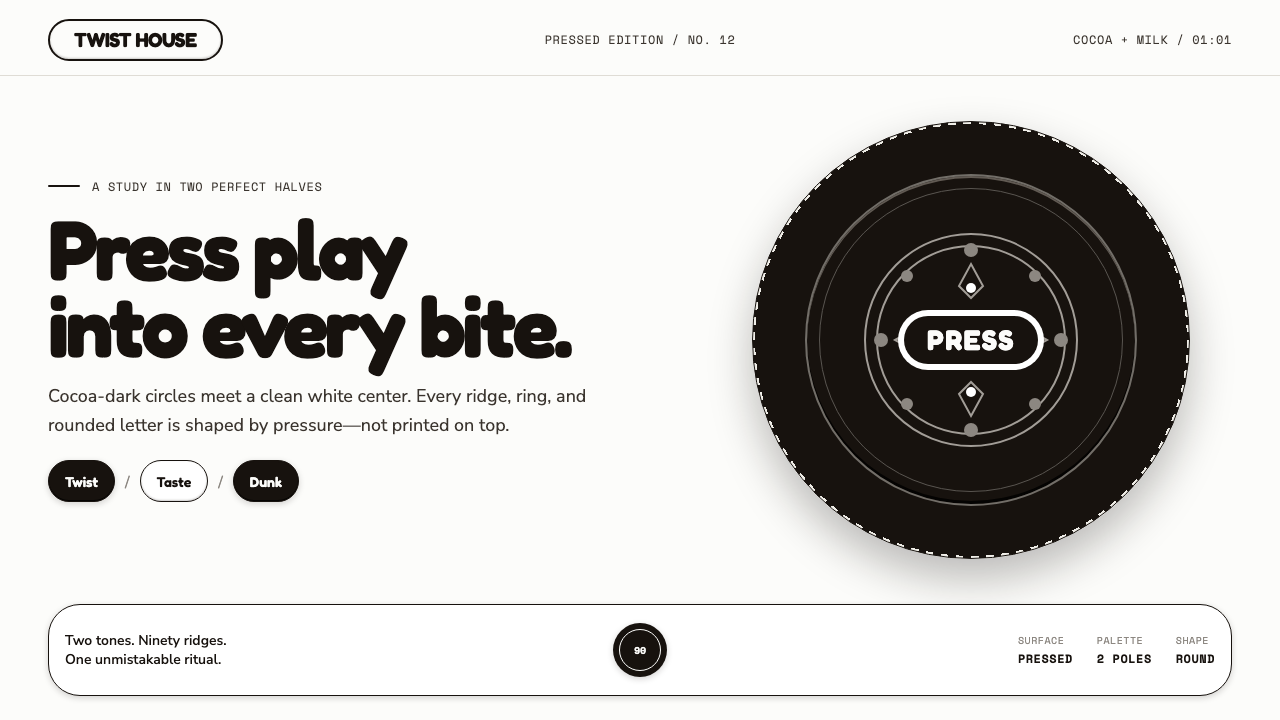 Oreo (1912)Contrast you can feel. Cocoa-black discs and milk-white rings turn every surf…
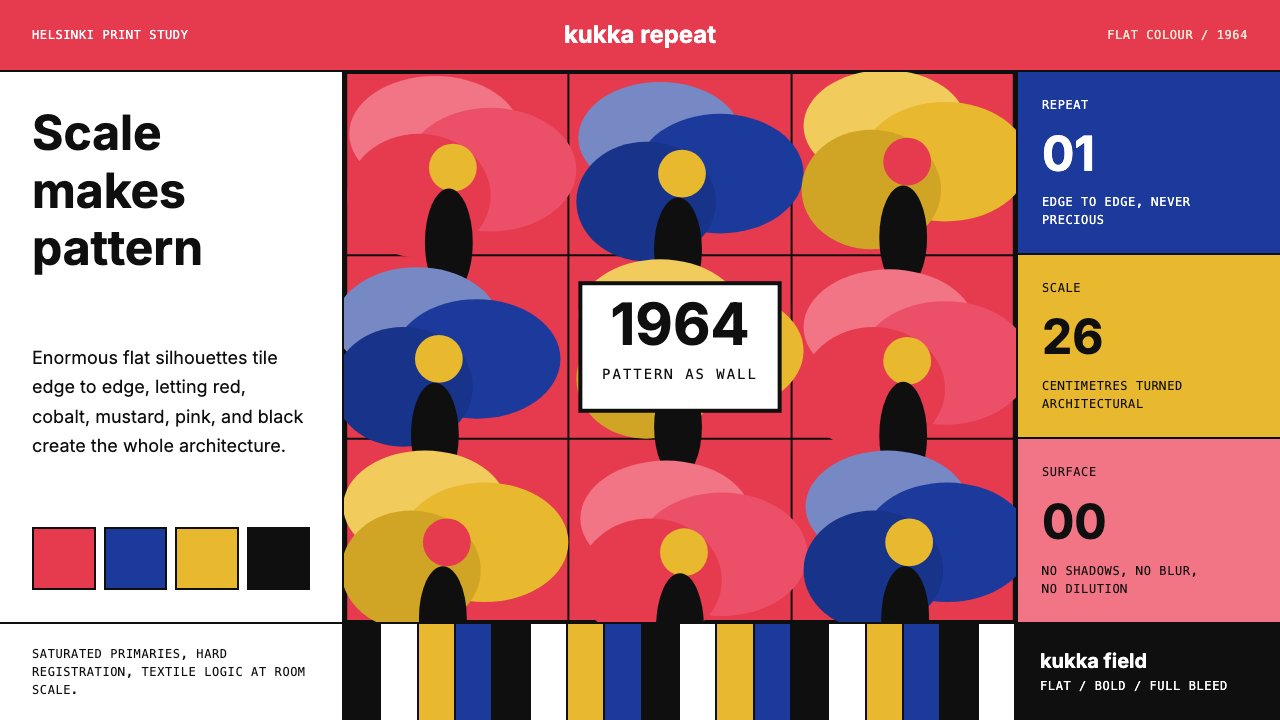 Finnish Marimekko Unikko (1964)Scale becomes pattern. Poppy red, cobalt, mustard, and Inter tile flat silhou…
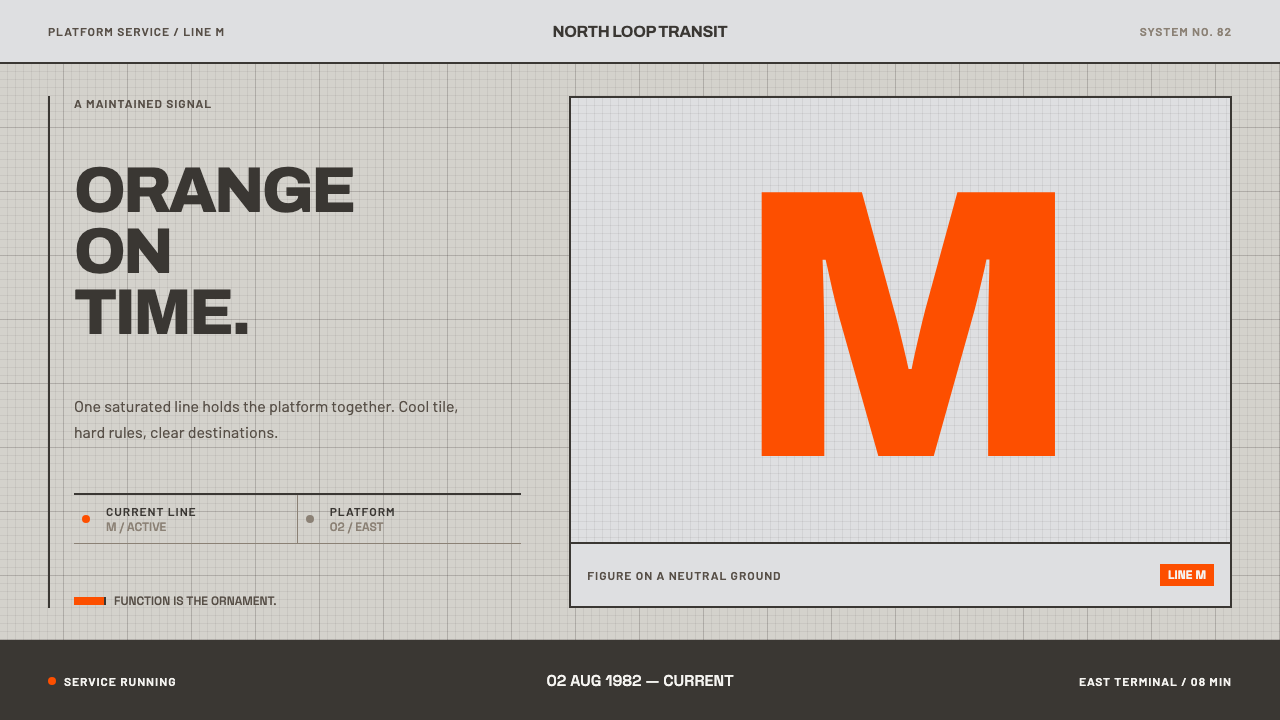 Helsinki Metro OrangeOne orange does the work. Archivo signage cuts across an 8px concrete tile gr…
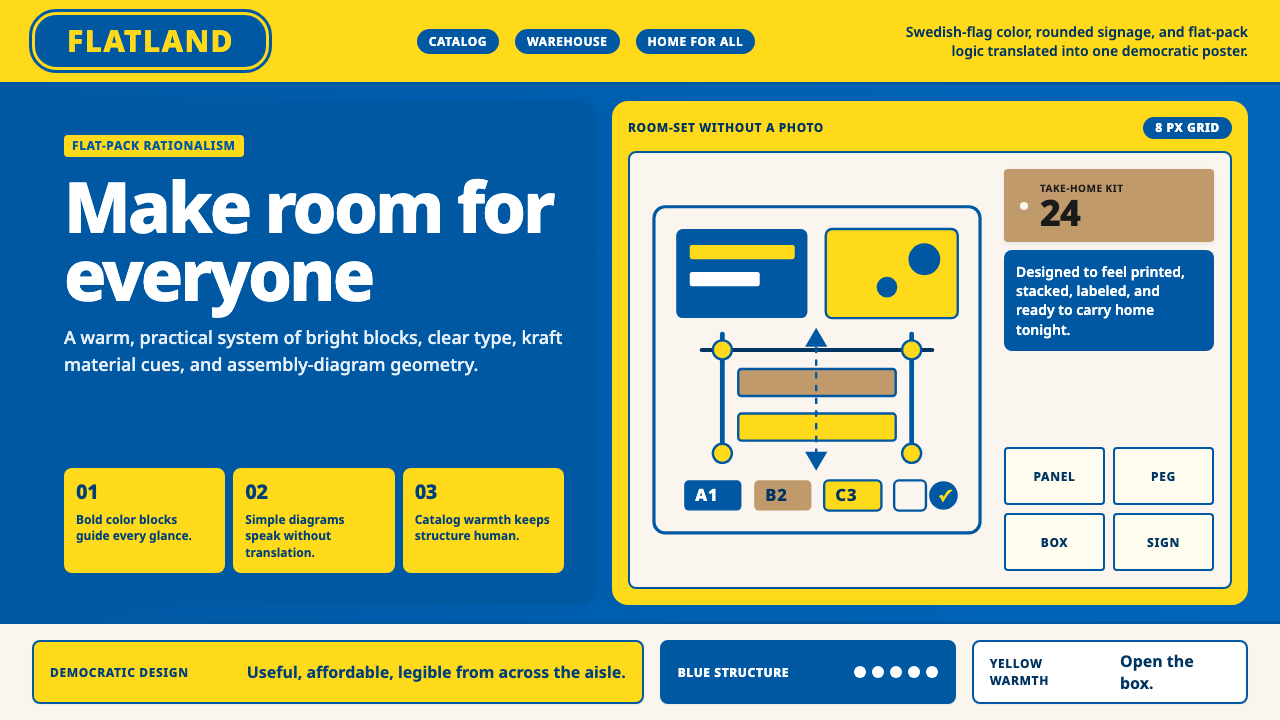 IKEADemocratic warmth in a box. Swedish blue-yellow blocks, Noto Sans, and assemb…
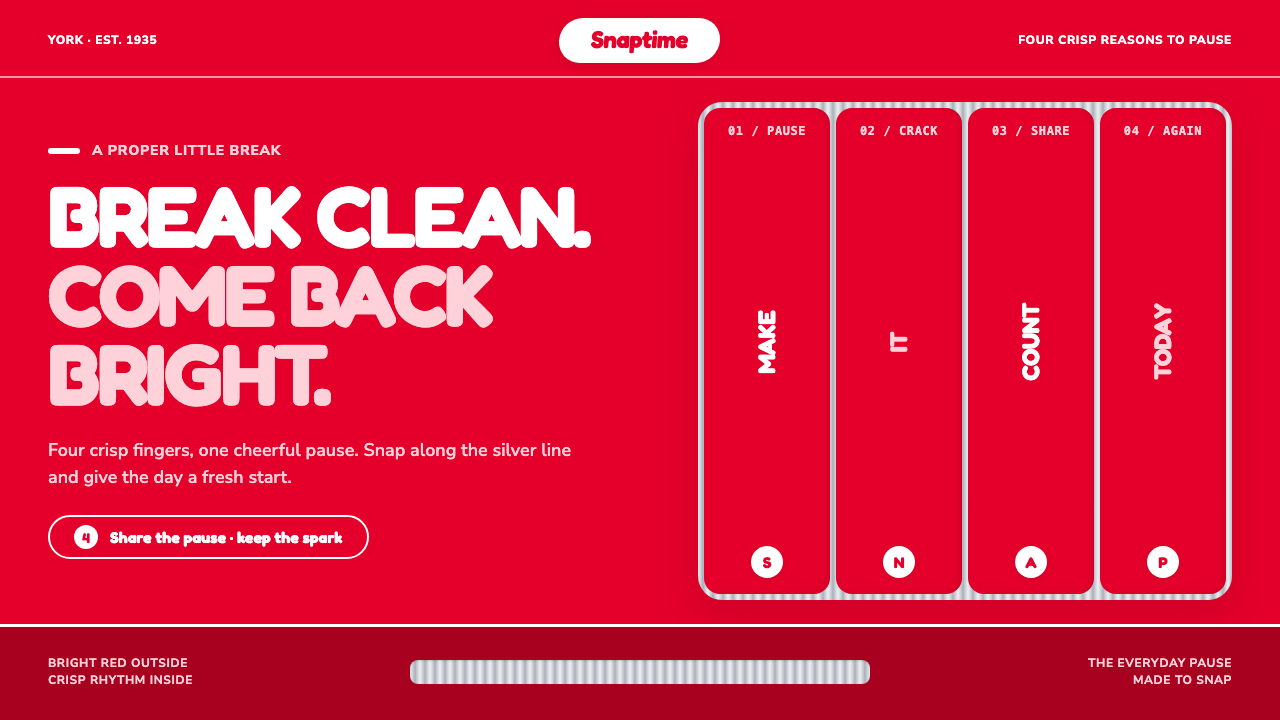 KitKat (1935)A break you can hear. Pillar-box red, plump white type, and silver grooves se…
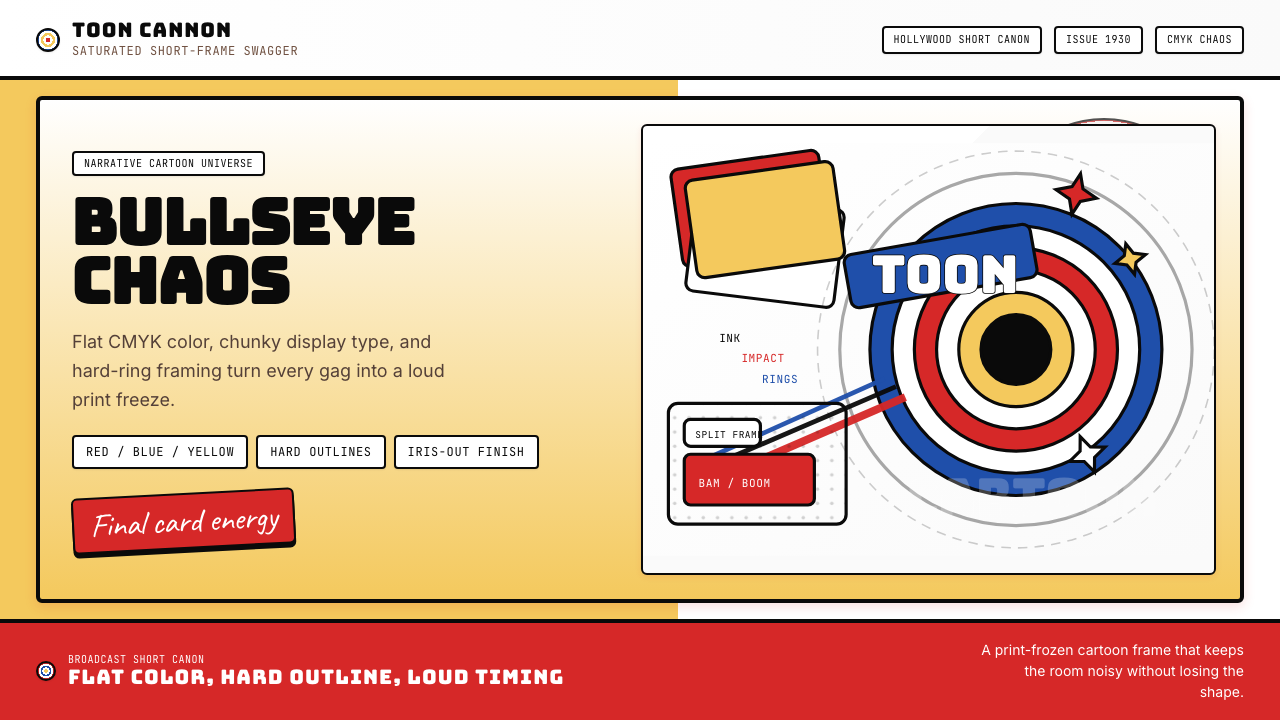 Looney Tunes (Warner Bros.)Pure cartoon chaos. Bull's-eye rings, Bungee type, and red-blue-yellow blocks.