What is IKEA?
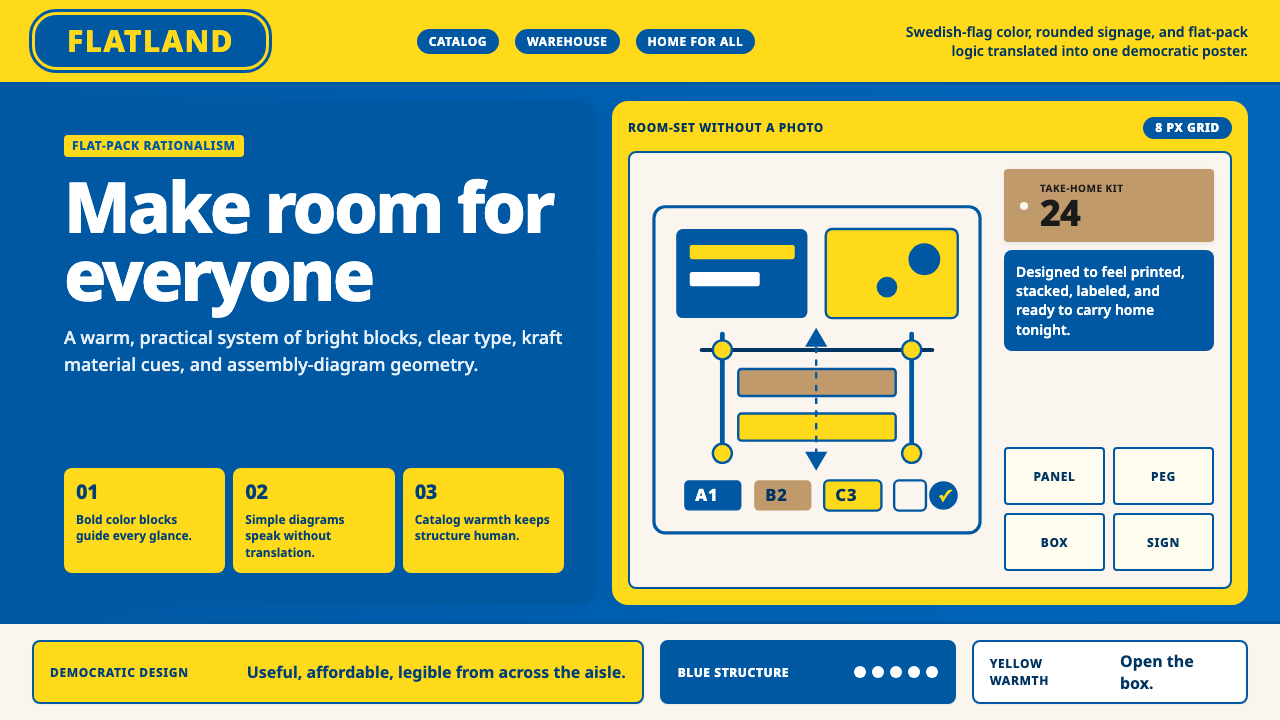
IKEA's blue-and-yellow identity is furniture democracy made visible — a Scandinavian system that turned flat-pack rationalism into one of the most recognized design languages on earth.
IKEA in brief
IKEA's visual identity is one of the most studied examples of a retail brand that functions simultaneously as a design system. The two-color palette drawn from the Swedish flag, combined with bold rectangular layouts, generous lifestyle photography, and wordless assembly diagrams, creates a visual language that communicates warmth, accessibility, and practical order without relying on craft or luxury signals.
The system is built on a fundamental tension: it is mass-market and populist in its values, yet disciplined and consistent in its visual execution. Where luxury brands use scarcity and restraint to signal exclusivity, IKEA uses saturation and scale to signal abundance and availability. The result is a design language that feels simultaneously democratic and confident — never apologetic about its reach, never pretending to be something smaller or rarer than it is.
Visually, the IKEA language is organized around color blocks, photographic panels, and typographic hierarchy rather than illustration or ornament. Every surface is legible at a distance. The rounded-rectangle brand enclosure — the yellow logotype on a deep blue field — functions as a geographic anchor, instantly orienting a viewer within any store, catalog page, or digital interface.

Where does IKEA come from?
IKEA was founded in 1943 by Ingvar Kamprad in Älmhult, a small town in Småland, southern Sweden. Kamprad was seventeen years old. The name is an acronym: I and K are his initials, E stands for Elmtaryd (his family farm), and A for Agunnaryd (his home village). The company initially sold small household goods — pens, picture frames, watches — by mail order. Furniture entered the catalog in 1948, and by 1955 IKEA had begun designing its own pieces, responding to a price war with local competitors that had led suppliers to boycott the company.
The flat-pack format, which became the organizational logic for both the physical product and the visual identity, was developed in the late 1950s. The story most often cited involves a designer named Gillis Lundgren removing the legs of a table to fit it into a car — the insight that a knocked-down object is cheaper to ship, store, and sell than an assembled one reshaped the entire enterprise. Flat-pack demanded a new kind of communication: instructions that could work across languages, diagrams legible to any buyer in any country. The wordless assembly manual — a figure navigating bolts and boards with only numbered steps and line drawings — became one of IKEA's most distinctive and globally consistent design outputs.
The blue-and-yellow visual identity consolidated around the 1970s and 1980s, tracking closely with IKEA's expansion beyond Sweden into Germany, Switzerland, and eventually the rest of Europe and North America. The Swedish-flag palette was both pragmatic and strategic: it communicated a specific national origin at a moment when Swedish design carried strong positive associations — clean, functional, modern, democratic — while also being simple enough to reproduce at any scale, in any medium, with complete consistency.
Stockholm Design Lab, which has worked with IKEA on various identity projects, represents the more refined, typographically rigorous end of the brand's visual evolution. But the core identity — the bicolor palette, the rounded-rectangle enclosure, the commitment to accessibility over refinement — has remained essentially stable across eight decades, maintained through hundreds of markets and billions of catalogs. It is one of the longest-sustained brand identity systems in global retail history.
What defines the IKEA look?
Bicolor Palette
The palette is anchored by two colors drawn from the Swedish national flag: a deep, saturated blue and a warm, vivid yellow. These are not pastel approximations or corporate softened variants — they are used at full intensity, creating maximum contrast and visibility at any scale. Supporting tones include the warm kraft-brown of cardboard and the near-white of catalog backgrounds, but these are ambient rather than defining. The bicolor system is so consistent that either color alone, in this specific saturation and temperature, suffices to evoke the brand.
Rounded-Rectangle Brand Enclosure
The signature visual container is a deeply rounded rectangle — sometimes described as a stadium or pill-adjacent form — filled with the brand's deep blue, inside which the yellow wordmark sits horizontally centered. This enclosure functions simultaneously as a logo, a wayfinding marker, and a system anchor. Its rounded corners soften what would otherwise be a harsh industrial shape, contributing to the sense of approachability that distinguishes the IKEA system from colder Scandinavian-adjacent aesthetics. The form has remained stable for decades.
Photography Scale and Warmth
Photography in the IKEA system is used at generous scale — filling entire catalog spreads, dominating web banners, commanding store displays. Unlike fashion or luxury photography, the subjects are almost always rooms and objects in use, shown from eye level, with evidence of habitation: a half-read book on a side table, morning light entering through an open window, a family meal in progress. The photographs are styled with warm, diffuse lighting and a naturalistic color grading that reads as lived-in rather than aspirational. This photographic warmth is the primary emotional differentiator in the system.
Wordless Diagram Language
The assembly manual represents a distinct and highly refined sub-system within the IKEA visual language. Instructions are delivered entirely through line drawings of a human figure — always calm, always gently expressive — performing numbered steps with hardware and panels. The absence of text makes the instructions function across any language, in any market, without translation. The visual grammar is consistent across thousands of products and decades of updates: isometric views alternate with detail callouts, hardware is shown actual-size in relation to the components, and mistakes are shown crossed out in red alongside the correct approach.
Democratic Typography
IKEA's type system favors clean, highly legible sans-serif letterforms with generous spacing and open counters — letterforms that function across a wide range of contexts, from large signage to small catalog captions, without feeling cramped or precious. The typographic hierarchy is simple and direct: a large, bold headline establishes the primary message; a secondary level handles product names and prices; a tertiary level carries descriptions and specifications. There is no calligraphic or display type in the system. The goal is maximum readability at minimum effort — a democratic rather than connoisseur-oriented typographic approach.
Flat Color Blocks
Beyond the bicolor core, IKEA layouts use flat, unmodulated color fields as structural dividers and background panels. These blocks carry no gradient, texture, or shadow — they function as visual punctuation, separating zones of content and creating breathing room between image and text. In store signage and catalog chapter openers, a full yellow or blue panel serves the same organizing function that a ruled line might serve in a typographically restrained system: it marks a boundary and announces a transition. The flatness is not minimalism — it is a production principle that has proven durable across print, physical, and digital contexts.
Accessibility as Aesthetic
Every element of the IKEA visual system encodes the same core value: this is for everyone. High-contrast color combinations, oversized type, clear wayfinding graphics, and the universally legible assembly diagram language are not accessibility accommodations added after the fact — they are the aesthetic itself. The system was designed for a shopper navigating a 300,000-square-foot store alone, for a first-time furniture buyer reading a flat-pack manual in a second language, for a family choosing a kitchen configuration online. Universality is not a constraint on the design; it is its ambition.

Who shaped IKEA?
Kamprad founded IKEA in 1943 at the age of seventeen and remained its guiding force until his death in 2018, shaping both its commercial strategy and its visual and cultural identity. His insistence on democratic pricing — captured in the concept of designing furniture that any person, regardless of income, could afford — became the brand's foundational principle and the implicit logic behind every visual decision the system makes. His frugality was legendary and genuinely influential: he believed that waste in any form, including unnecessary visual complexity, was a moral failure. The design system's commitment to flat color, legible type, and wordless communication reflects his conviction that good design should cost the same to produce as bad design.
Lundgren was the IKEA designer credited with the insight that led to the flat-pack format — the realization, reportedly made while trying to fit a table into a car, that removing legs and shipping components knocked-down could transform the economics of furniture retail. This was not merely a logistical innovation; it was a design constraint that reshaped the entire visual system. Flat-pack required assembly diagrams, which required a wordless pictorial language, which required a visual grammar consistent enough to function across every culture where IKEA operated. Lundgren's practical problem-solving sits at the origin of what became one of the most influential design communication systems in retail history.
Stockholm Design Lab, founded in 1998, has collaborated with IKEA on identity and communication projects that represent the more typographically refined evolution of the brand's visual language. The studio's broader body of work — including projects for SAS, Absolut, and other Scandinavian institutions — demonstrates a consistent interest in the intersection of simplicity, clarity, and cultural identity that aligns naturally with the IKEA system's underlying values. Their involvement represents IKEA's periodic effort to subject its vast, often chaotic real-world visual output to a more principled and systematic design logic.
Dahlvig served as IKEA's Group CEO from 1999 to 2009, a period that encompassed the brand's most aggressive international expansion and the maturation of its visual identity into a globally standardized system. Under his leadership, the challenge was not invention but consistency — maintaining the coherence of a bicolor, typographically direct, photography-led identity across dozens of new markets, each with different printing norms, retail environments, and cultural contexts. The visual discipline that characterizes the mature IKEA system was consolidated substantially during this decade of expansion.
How do you use IKEA today?
The IKEA visual language is among the most recognizable retail design systems ever built, which creates both opportunity and risk when borrowing from it. Applying it well requires understanding its underlying logic: warmth through scale and photography, not decoration; clarity through contrast and restraint, not minimalism; accessibility through system consistency, not simplification of individual elements. The goal is never to produce an IKEA look-alike but to deploy its structural principles — bold color blocking, generous imagery, direct typographic hierarchy — in service of a different product or message.
For presentation slides, the IKEA approach yields strong results on both cover and content pages. A cover built on this system uses a deep blue or vivid yellow field occupying a substantial portion of the slide, with the title in high-contrast reversed type and a cropped lifestyle photograph showing the product or service in actual use. Content slides are organized on a clear grid with one dominant visual — photograph or diagram — supported by a concise text hierarchy. Data slides benefit from the system's flat color logic: bar charts and segmented graphics use the bicolor palette as their encoding scheme, avoiding decorative gradients in favor of solid, distinct fields that read clearly at projection scale.
For web interfaces, dashboards, and pricing pages, the IKEA system offers a strong model for achieving hierarchy without visual noise. The approach: a near-white background with deep blue and vivid yellow reserved for interactive elements, active states, and tier differentiation. Navigation should rely on clear typographic labels rather than icon-heavy menus. Pricing and feature comparison tables work well with alternating color-field rows — blue fields for one tier, yellow accents for a highlighted tier — keeping all type in a single clean sans-serif family. Card components should use flat backgrounds and clearly legible type at comfortable sizes rather than soft shadows and micro-type.
For editorial and marketing applications, the system's photographic scale and color boldness make it well-suited to materials where immediate visual impact is required. A marketing page or editorial layout built on IKEA principles alternates between full-bleed lifestyle photography and bold color-field sections that carry headlines and calls to action. The yellow field, used as a full-width band, creates natural pause points and reading rhythm. Product-focused editorial benefits from the system's approach to combining object photography with supporting text: generous white space around the photograph, type set in a single weight hierarchy to the side or below.
A common mistake when applying this design language is treating the blue-yellow combination as simply a color choice rather than a system decision. The bicolor palette works because it is deployed with discipline — one color dominates a given surface, the other provides accent, and the combination never appears simultaneously at equal weight on a single composition. Another frequent error is substituting warm, welcoming photography with abstract or illustrative imagery, which immediately loses the warmth that is the system's primary emotional differentiator. The photographic warmth is not incidental to the IKEA aesthetic — it is the mechanism by which the system's strict color and typographic discipline is balanced against human relatability.

IKEA — FAQ
Is IKEA's visual language the same as Scandinavian design?
IKEA's identity shares values with Scandinavian design — functionality, simplicity, restraint — but its visual execution is more saturated, more populist, and more commercially assertive than the Scandinavian design tradition at its most refined. Classic Scandinavian design, as represented by brands like Muuto or Hay, typically uses a muted, nature-derived palette and lets material quality carry aesthetic weight. IKEA uses the Swedish flag's full-intensity blue and yellow, large-scale photography, and bold typographic hierarchy to communicate at retail scale. Think of classic Scandinavian design as the quiet room and IKEA as the same room with the lights fully on and the furniture labeled.
Can the IKEA visual language work for digital products, or is it too retail-specific?
The underlying principles transfer well to digital contexts, but several specific elements require adaptation. The bicolor palette — a deep blue for structure and navigation, a warm yellow for highlights and calls to action — works effectively in interface design, and the system's commitment to high contrast and legible type scale translates directly to accessibility best practice in digital products. The challenge is photography: the IKEA system's warmth depends heavily on lifestyle photography at generous scale, which may not suit all digital product contexts. For a productivity tool or analytics dashboard, the color and typographic logic transfers; the photographic warmth should be replaced by clear data visualization and well-structured empty states.
How does IKEA's design language handle diversity and cultural variation across markets?
The most durable element of the IKEA system across cultures is precisely what requires no cultural translation: the wordless assembly diagram. The bicolor palette and the rounded-rectangle lockup are also remarkably culture-neutral — blue and yellow carry no strong negative associations in most markets, and the enclosure form reads as a container rather than a culturally specific symbol. Where variation occurs, it is primarily in photography: IKEA's catalog and marketing imagery has progressively evolved to show a wider range of family configurations, home sizes, and interior styles reflecting the diversity of each market. The system's visual grammar stays constant; the people and spaces depicted within it change.
Why does the IKEA identity feel warm when it uses such a bold, high-contrast palette?
The warmth comes not from the color palette itself but from the photographic content and the rounded geometry that frames the logotype. The bicolor palette is assertive and high-contrast, which in isolation could read as cold or industrial. But it operates alongside large-format photography of domestic spaces filled with natural light, human activity, and familiar objects — and that photography carries the emotional temperature of the system. The rounded-rectangle enclosure adds a secondary warmth signal: rounded forms are perceptually associated with safety and approachability in a way that sharp-cornered rectangles are not. The bold palette provides visibility and recognition; the photography and rounded geometry provide warmth. Together they prevent the system from tipping into either cold corporate minimalism or chaotic retail noise.
Does applying this style require actual IKEA products or Swedish references?
No. The visual language transfers independently of any specific product or cultural reference. What makes the system work is the structural relationship between its elements: the bicolor palette used with discipline, lifestyle photography at generous scale, a clean typographic hierarchy, the wordless diagram aesthetic for instructional content, and flat color fields as spatial organizers. These principles can be applied to any product category — software, financial services, education, food — without reference to furniture or Sweden. The risk to avoid is literal quotation: copying the rounded-rectangle lockup or using the exact bicolor combination creates brand confusion rather than aesthetic transfer. Extract the principles; do not reproduce the symbol.
Related design styles
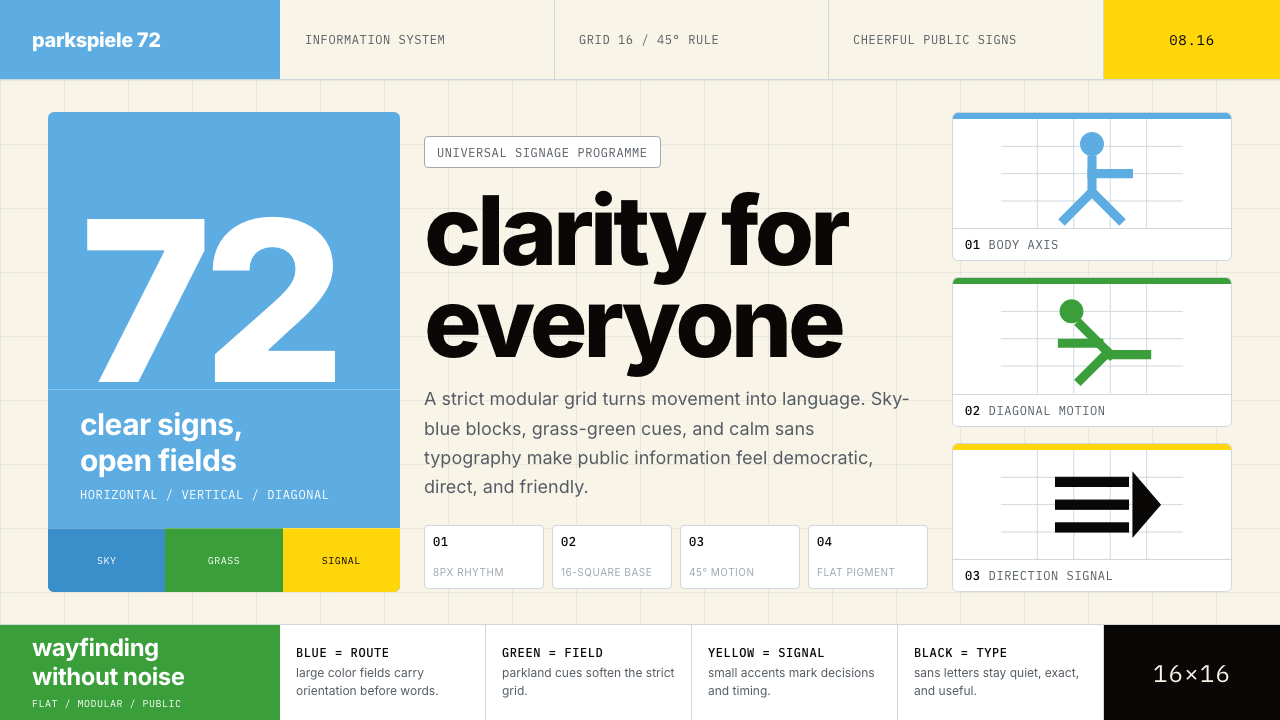 Otl Aicher Munich OlympicsFriendly rigor. Sky-blue grids and straight-line pictograms make public infor…
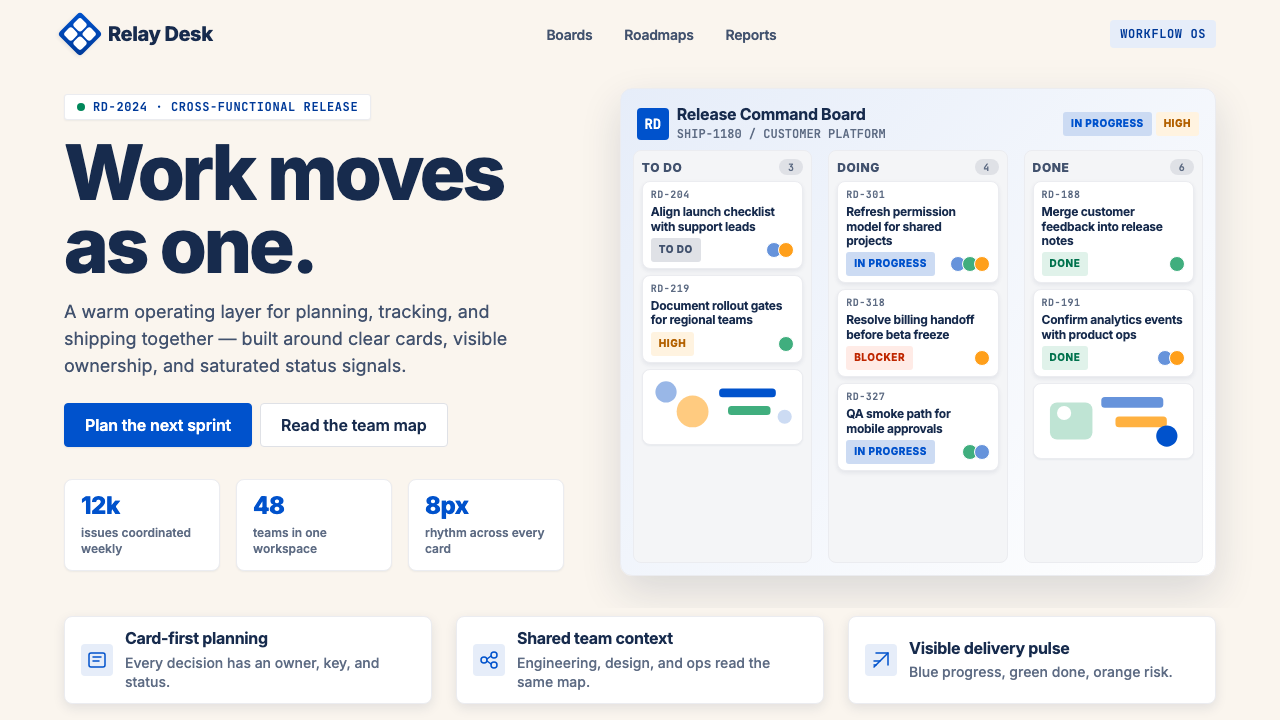 Atlassian Jira BlueWarm enterprise teamwork. Saturated blue cards on cream make status feel huma…
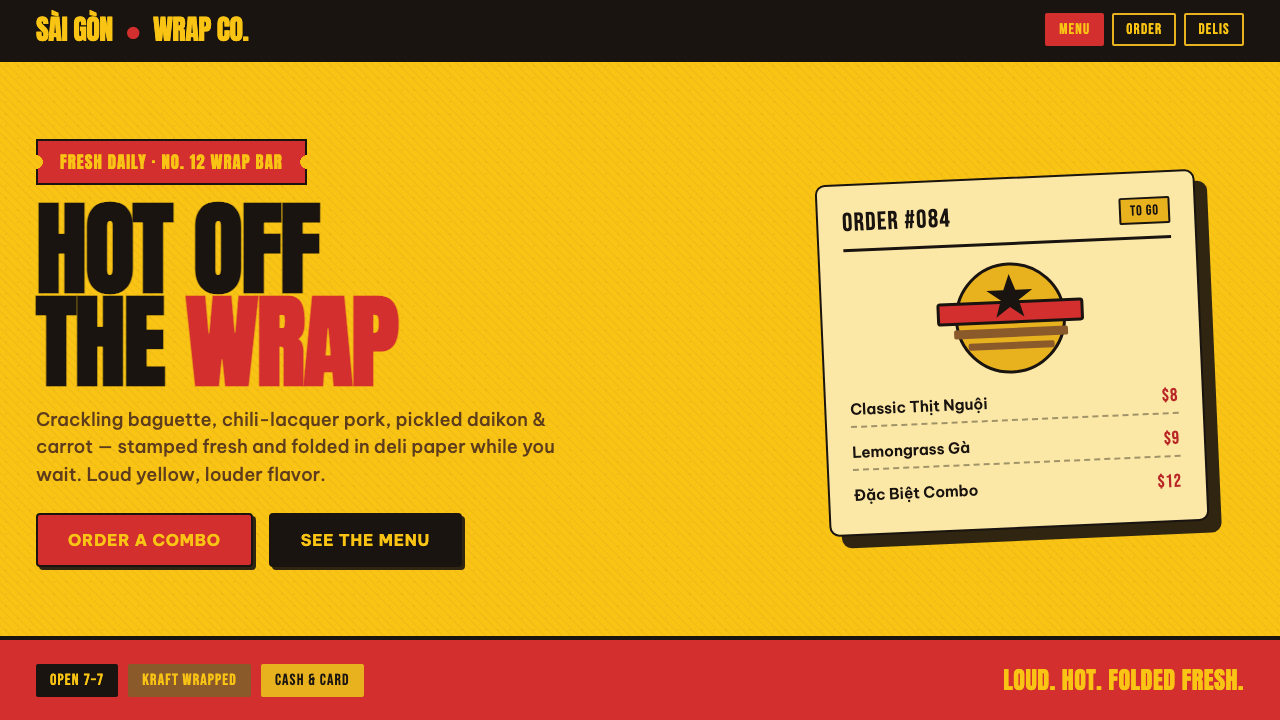 Bánh Mì Deli WrapA poster printed on a wrapper. Marigold ground, chili-red lockups, chunky Ant…
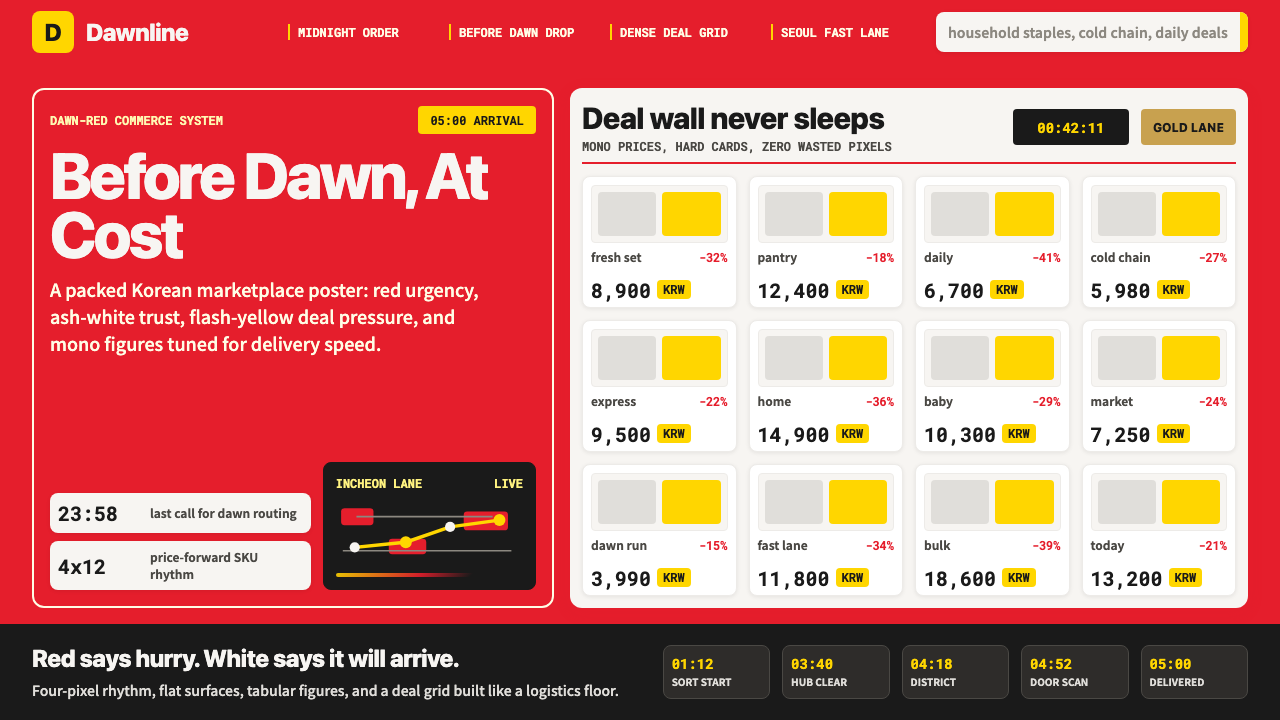 Coupang Rocket DeliveryUrgency made trustworthy. Rocket red, flash yellow, mono prices and packed gr…
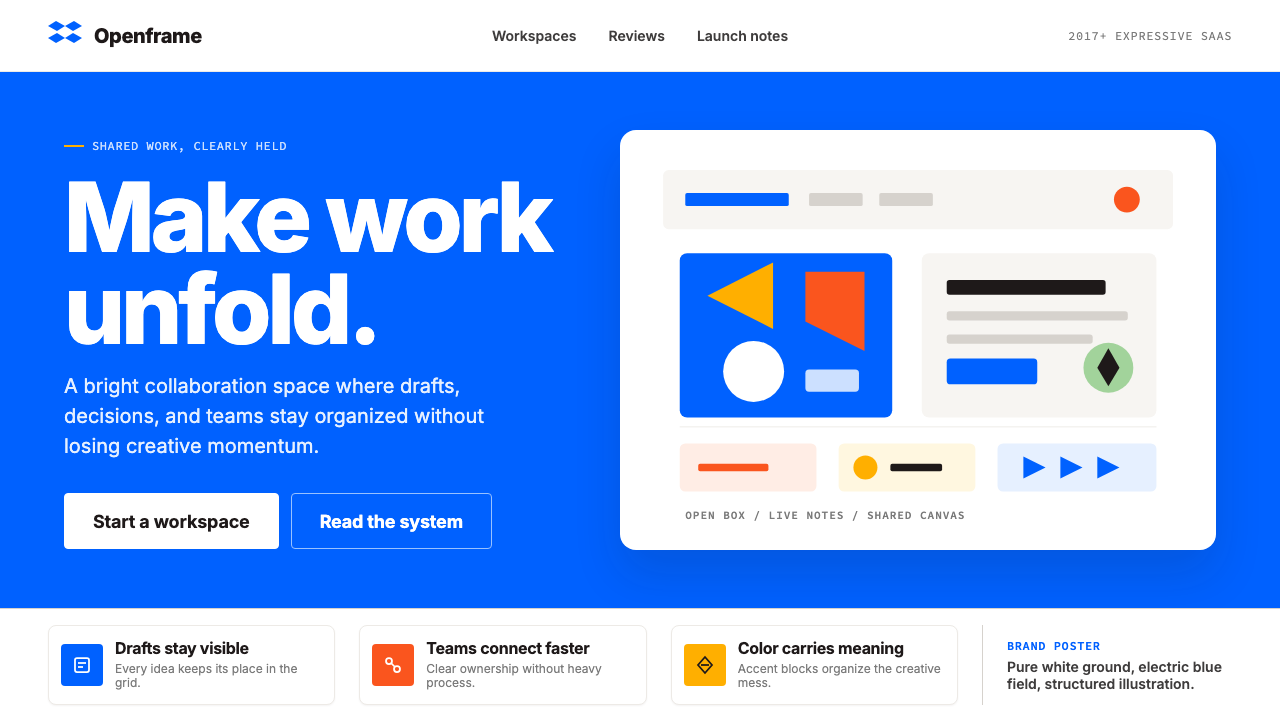 Dropbox ModernFriendly SaaS gets loud. Electric blue and Sharp Sans drive a structured geom…
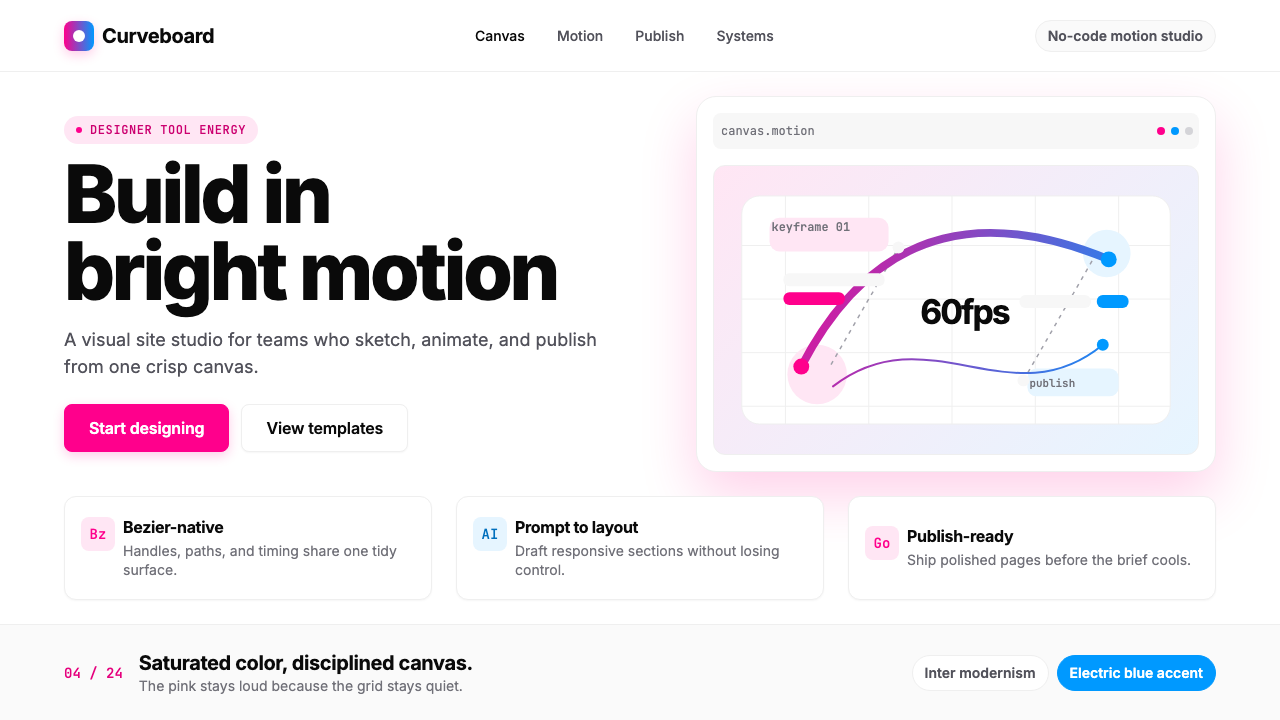 Framer Motion PinkDesigner-tool pink stays sharp. Inter whitespace frames electric blue Bezier…