What is Replit 2024?
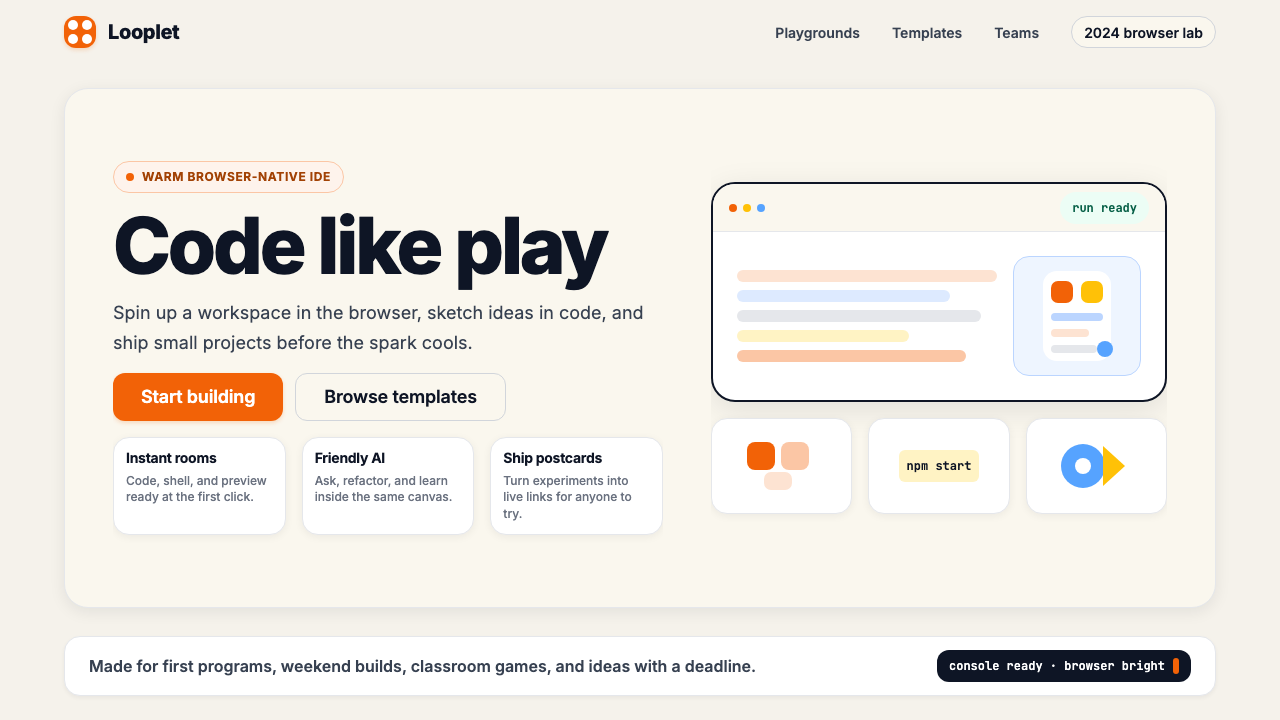
Replit proved that a code editor could feel as warm and inviting as a sketchbook — coral buttons, cream panels, and rounded tiles turned programming into something to look forward to.
Replit 2024 in brief
Replit 2024 is the visual design language developed by Replit between roughly 2022 and 2024 to position browser-based coding as a creative, welcoming discipline rather than a specialist's technical chore. Its most immediate signals are warmth and approachability: a signature coral-orange accent sits against cream backgrounds, geometric illustrations feel playful rather than clinical, and every interactive surface carries a generous border radius that softens the sharp angles typically associated with developer tools.
At its core, the system makes a deliberate argument about who programming is for. By replacing the sterile whites and flat grays of conventional IDE aesthetics with warm neutrals and energetic accents, Replit signals that its platform is built for students, hobbyists, and creative builders — not only for professional engineers already comfortable in the terminal. The visual warmth is not incidental; it is the brand's thesis made visible.
The style belongs to a broader moment in developer-tool design when products began competing on personality as much as on capability. Where earlier coding environments defaulted to dark themes and minimal color as signals of seriousness, Replit staked out the opposite position: bright, rounded, and friendly. Alongside the coral-and-cream palette, bold headline typography and oversized call-to-action buttons convey a single message — start building now, the environment is ready for you.

Where does Replit 2024 come from?
Replit was founded in 2016 by brothers Amjad Masad and Faris Masad with a mission to make programming more accessible. The product launched as a browser-based read-eval-print loop — a place where anyone with a web browser could type code and see it run immediately, without installing anything. For its first years, the visual identity was functional but unremarkable: clean interface conventions borrowed from the developer-tool world, neutral palettes, and modest typography. The platform's differentiation was technical, not aesthetic.
The shift toward a distinct visual identity accelerated around 2022, as Replit moved to reframe itself not merely as a coding utility but as a creative platform — a destination for the next generation of builders. The Replit brand team, working in San Francisco, developed a new visual system built around warmth and approachability. Coral-orange emerged as the signature accent: energetic enough to signal possibility, warm enough to avoid the aggressive neon tones associated with gaming or cryptocurrency brands. Cream replaced pure white as the default background tone, lending surfaces a softness that pure white cannot achieve.
The choice of rounded geometry throughout the interface — in buttons, cards, code-block containers, and illustration style — reflected a deliberate distance from the rectilinear severity of traditional terminals and IDEs. Roundness in interface design carries cultural associations with friendliness and safety; Replit deployed it consistently across every scale, from the corner radius of a primary button to the overall silhouettes of its mascot and illustration system. The effect was a product that looked and felt categorically different from every other tool in the developer space.
The 2022–2024 era also coincided with Replit's major push into artificial intelligence, as AI-augmented coding became a central product offering. The visual language had to accommodate a new kind of interaction — conversational, generative, and less predictable than classical code execution. The warm, approachable aesthetic proved well-suited to this expansion: a system that already felt like a creative partner rather than a utility was better positioned to introduce AI as a collaborator than one that felt like a cold technical instrument. The Replit brand team's decisions from 2022 onward gave the product's AI ambitions a visual home.
What defines the Replit 2024 look?
Coral-Orange Accent
The coral-orange accent is the system's most recognizable element — a hue that sits between a warm red and a muted orange, carrying energy without aggression. It appears on primary buttons, active states, hover highlights, and key illustrative elements. The color was chosen to feel distinct from both the cold blues of enterprise software and the harsh neons of gaming or crypto aesthetics. Used at full saturation only for the most important interactive elements, it recedes to tinted backgrounds or outline treatments for secondary contexts, maintaining hierarchy without visual fatigue.
Cream Ground
Rather than the pure white standard of most developer tools, Replit 2024 grounds nearly all surfaces in a warm off-white — a cream tone that reads as welcoming rather than clinical. The shift is subtle but perceptible: cream softens high-contrast elements by reducing the stark brightness of the overall field, and it gives coral accents a warmer visual context to inhabit. Dark text on cream avoids the harshness of black-on-white while maintaining legibility. The background tone acts as a unifying layer that holds the entire system together without calling attention to itself.
Generous Rounded Corners
Every container surface in the system — buttons, cards, input fields, code-tile panels, modal dialogs — carries a pronounced border radius that transforms otherwise rectangular components into softened, approachable shapes. The degree of rounding is deliberately more generous than the subtle rounding seen in most contemporary design systems, landing closer to the pill-shaped end of the spectrum on smaller elements. This pervasive roundness is the clearest visual signal of the brand's personality: it communicates safety and playfulness at every point of interaction, countering the expectation that developer tools must feel sharp and utilitarian.
Bold Geometric Illustrations
The illustration system uses flat geometric forms, strong outlines, and a limited palette drawn from the core color set. Characters and scenes are simplified to their most legible shapes — there is no photorealistic shading, no complex perspective, and no fine detail that would make the imagery feel labored. Figures are rounded, expressive, and diverse. The style shares ancestry with mid-century editorial illustration while remaining firmly contemporary in its flatness and color confidence. Illustrations appear at onboarding, in empty states, and in marketing contexts where the brand needs to communicate energy and possibility without relying solely on typography.
Heavyweight Display Typography
Headlines and hero text in the Replit 2024 system are set at aggressive weights — thick, confident strokes that command the page without requiring color or decoration to assert hierarchy. The typeface choice favors modern geometric sans-serifs whose letterforms are neutral enough to recede behind the content message while bold enough to anchor large compositions. The contrast between oversized display text and compact body copy creates immediate visual hierarchy. Calls to action are treated as small-scale display elements in their own right, given enough weight to feel like buttons even before their container shape is processed.
Layered Depth Without Harsh Shadow
Unlike the hard-edge, offset shadows associated with neobrutalist design, or the imperceptible micro-shadows of flat material design, Replit 2024 uses a medium-depth shadow vocabulary that gives cards and panels a sense of gentle elevation. Shadows are soft and diffuse rather than geometric, suggesting that surfaces float slightly above the cream ground without aggressively breaking the two-dimensional plane. The effect creates a comfortable sense of layering — foreground cards, mid-tier panels, background fields — that guides the eye through information hierarchy without resorting to hard borders or color changes alone.
Playful Brand Voice in Motion
Interaction states — hover, focus, press, loading — are treated with a lightness that distinguishes the system from utilitarian tooling. Transitions are quick and springy rather than slow and linear, suggesting that the interface responds with personality rather than mechanically. Loading states use illustration or motion rather than bare spinners. Empty states are opportunities to communicate encouragement rather than simply reporting absence. This animated dimension of the design language extends the warmth of the static visual system into behavior, ensuring that the brand personality is felt across the entire experience arc, not only in first-impression marketing surfaces.

Who shaped Replit 2024?
Amjad Masad co-founded Replit and has served as its chief executive, providing the strategic direction that transformed the platform from a browser-based REPL into a full creative coding environment. His public advocacy for democratizing programming — the idea that coding should be as accessible as writing or drawing — directly shaped the brief that the Replit brand team translated into the 2022–2024 visual identity. His emphasis on welcoming newcomers and making the first experience feel non-threatening gave the design team permission to depart radically from developer-tool conventions.
Faris Masad co-founded Replit alongside his brother and contributed to the early technical architecture that made instant, shareable coding environments feasible in the browser. The technical achievement of running real programming environments entirely in-browser — without local installation — is the product reality that the visual design system had to support and communicate. The accessible, no-friction promise of the brand owes as much to Faris's foundational engineering decisions as to any purely visual choice.
The in-house brand and design team based in San Francisco executed the 2022–2024 visual identity, translating the company's mission into a coherent design system. Their work involved developing the coral-orange and cream palette, establishing the rounded-component language, commissioning and systematizing the illustration style, and extending the identity across product, marketing, social media, and physical merchandise. The team's achievement was producing a system that reads as playful without becoming juvenile, and warm without sacrificing the functional clarity that a productivity tool requires.
Replit's visual identity did not emerge in isolation but as part of a broader cultural shift in how coding environments are conceived. Platforms like Glitch, CodeSandbox, and StackBlitz were simultaneously working to make browser-based development mainstream, each developing distinct visual personalities to distinguish themselves from traditional desktop IDEs. This competitive landscape accelerated the need for Replit to establish a strong aesthetic identity — one recognizable enough to build brand loyalty among an audience that had many technically comparable alternatives available.
How do you use Replit 2024 today?
Replit 2024 is a style well-suited to any context where warmth, accessibility, and creative energy need to coexist with technical seriousness. Applying it correctly means committing to the full logic of the system — the coral accent works because it sits against cream, not white; the roundness works because it is consistent, not applied selectively; the typographic boldness works because it contrasts with compact, disciplined body text. Picking individual elements in isolation tends to produce work that reads as vaguely friendly without any of the system's actual persuasive force.
For presentation decks, the style excels on both cover and section-opener slides. A cover built in this language leads with a bold, slightly oversized headline in a heavy weight, positioned against a cream field with the coral accent used for a single word, underline, or geometric shape that gives the composition an anchor. Content slides should maintain the rounded-card metaphor — key points live in softly elevated containers rather than bullet lists, and data visualizations adopt the coral-and-cream palette for chart fills while keeping axis labels and annotations in a dark, restrained tone. The result is a deck that feels energetic and inviting, appropriate for product launches, educational platforms, and creative-industry pitches.
For web interfaces, the Replit 2024 vocabulary is particularly effective on landing pages, pricing tables, and onboarding flows. A pricing page benefits from the coral accent on the recommended tier's call-to-action button, cream backgrounds for card bodies, and bold typographic weight differentials to separate tier names from feature lists. Dashboard interfaces should adopt the layered-depth card system, grouping related metrics into rounded panels that sit visually above the background field. Navigation can use the brand's typographic confidence — wordmarks and section labels in heavy weight — without heavy icon use.
For editorial and marketing contexts, the style's illustrative warmth is its strongest asset. Marketing pages and social media graphics can lean into the geometric illustration system to communicate energy and diversity without relying solely on photography. An editorial article layout in this system would feature an expressive illustrated header, a readable body text column at a comfortable measure, and pull-quotes set in a coral-tinted rounded card that echoes the product's interface language. Email templates using this style work best with a cream background, a single coral call-to-action button, and illustration used sparingly at the header rather than throughout.
A common mistake when applying this style is treating the coral accent as a background color rather than an accent. When coral fills large background areas, it becomes overwhelming, and the warmth that makes it effective at small scale turns oppressive at large scale. A second frequent error is applying roundness inconsistently — if some components use generous corner radii and others use sharp corners, the friendliness signal breaks down and the design reads as unresolved rather than deliberate. The style also resists dark mode implementation without careful rethinking: simply inverting cream to dark and coral to its dark-mode equivalent tends to lose the warmth that justifies using this style in the first place.

Replit 2024 — FAQ
How does Replit 2024 differ from other friendly developer-tool aesthetics like Glitch or CodeSandbox?
Each of these platforms pursued approachability but made different aesthetic choices to get there. Glitch leaned into a hand-drawn, DIY character — its fish mascot and rough-edged illustrations suggest a maker community with intentional imperfection. CodeSandbox is considerably more neutral, using a modern flat system that reads as competent and professional without strong personality. Replit 2024 occupies a middle position: it has the warmth of Glitch without the scrappiness, and the polish of CodeSandbox without the personality deficit. The coral-and-cream palette is the most distinctive specific choice, giving Replit a recognizable color identity that its competitors lack.
Is this style appropriate for a B2B SaaS product, or is it too playful?
The Replit 2024 style is most naturally at home in developer tools, education platforms, creative software, and consumer-facing tech products where personality is a differentiator. For traditional B2B SaaS — enterprise security, financial compliance tools, HR systems — the warmth and roundness can feel misaligned with the seriousness buyers expect. That said, a B2B product targeting younger technical users or positioning itself against legacy enterprise stodginess might find the style's approachability a genuine competitive advantage. The key question is whether warmth and accessibility align with the specific purchase decision being made.
Can this style work well in dark mode?
Dark mode implementation is the system's most challenging adaptation. The warmth of the Replit 2024 identity comes substantially from the cream background — swap that for a dark ground and the primary signal of the brand shifts. A successful dark-mode variant requires finding a background tone that reads as warm despite being dark — deep charcoal with a slight warm undertone rather than a neutral or cool-leaning dark. The coral accent needs careful calibration at reduced brightness; at full saturation on a dark field it can appear garish. The roundness and illustrative style translate well to dark, since they are structural rather than color-dependent. Dark mode is possible but requires treating it as a full design exercise rather than a color inversion.
How does this style handle data-heavy interfaces like analytics dashboards?
Data-heavy interfaces are where the style's layered-depth card system does its most important work. The rounded panel vocabulary creates natural groupings for metric clusters, and the cream background provides a neutral field that does not compete with the data itself for visual attention. The coral accent should be reserved for the most critical metric or the most important threshold indicator — using it sparingly in a dense data context preserves its signal value. Supporting colors in charts should be warm and desaturated relatives of the core palette rather than a full rainbow of independent hues. Typography hierarchy matters especially here: a large, bold headline figure paired with a small, quiet label reads as a unit even without a containing box.
Does Replit 2024 suit print or physical applications, or is it fundamentally a screen style?
The style translates well to print and physical applications, though some adaptations are necessary. The cream ground works beautifully in print — on uncoated stock it gains additional warmth from the paper's natural tone. The coral accent reproduces cleanly in four-color offset or digital printing. The bold typographic weight differentials that define the hierarchy system are equally effective on paper. Where the style loses something in print is in its interactive and motion dimensions: the springy transitions, hover states, and animated empty states are purely digital. Physical merchandise — tote bags, notebooks, stickers — has successfully carried Replit's visual language by leaning into the illustration system and the strong accent color, since these are the most media-independent elements of the brand.
Related design styles
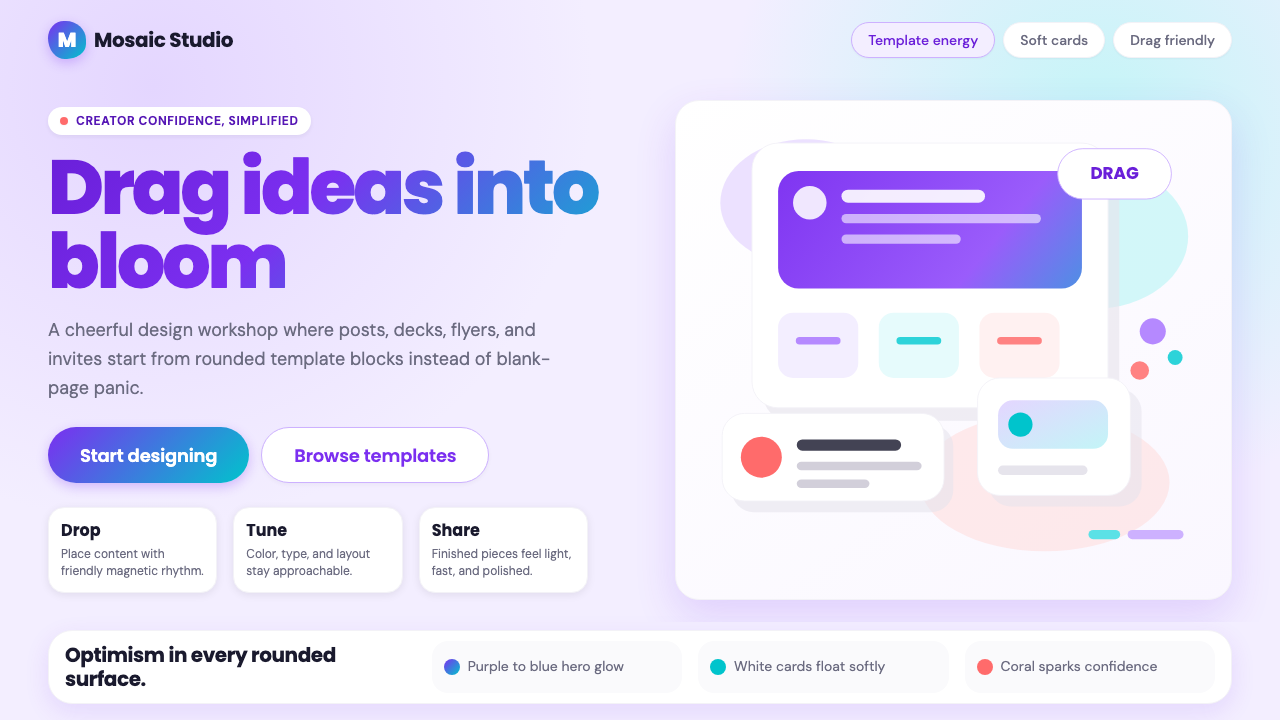 Canva 2024Confidence feels draggable. Purple-blue gradients and floating white template…
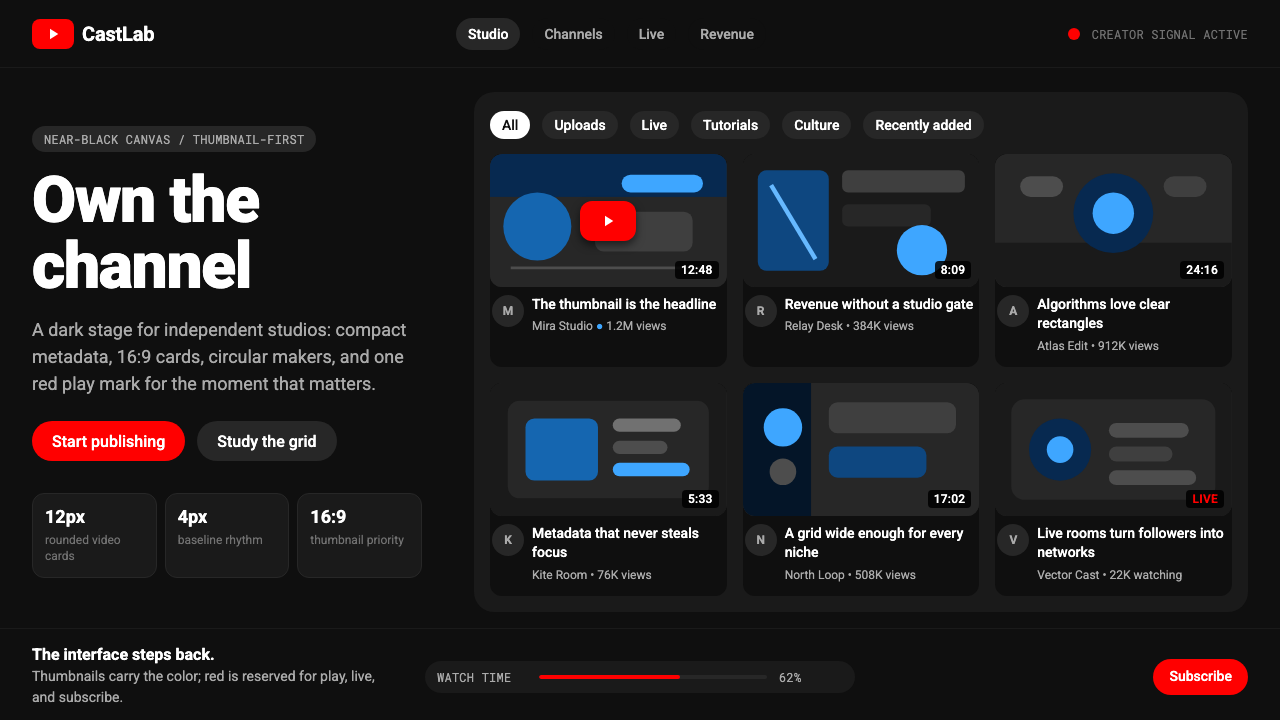 YouTube Creator EconomyThe UI disappears. Near-black Roboto grids let thumbnails shout; red only mea…
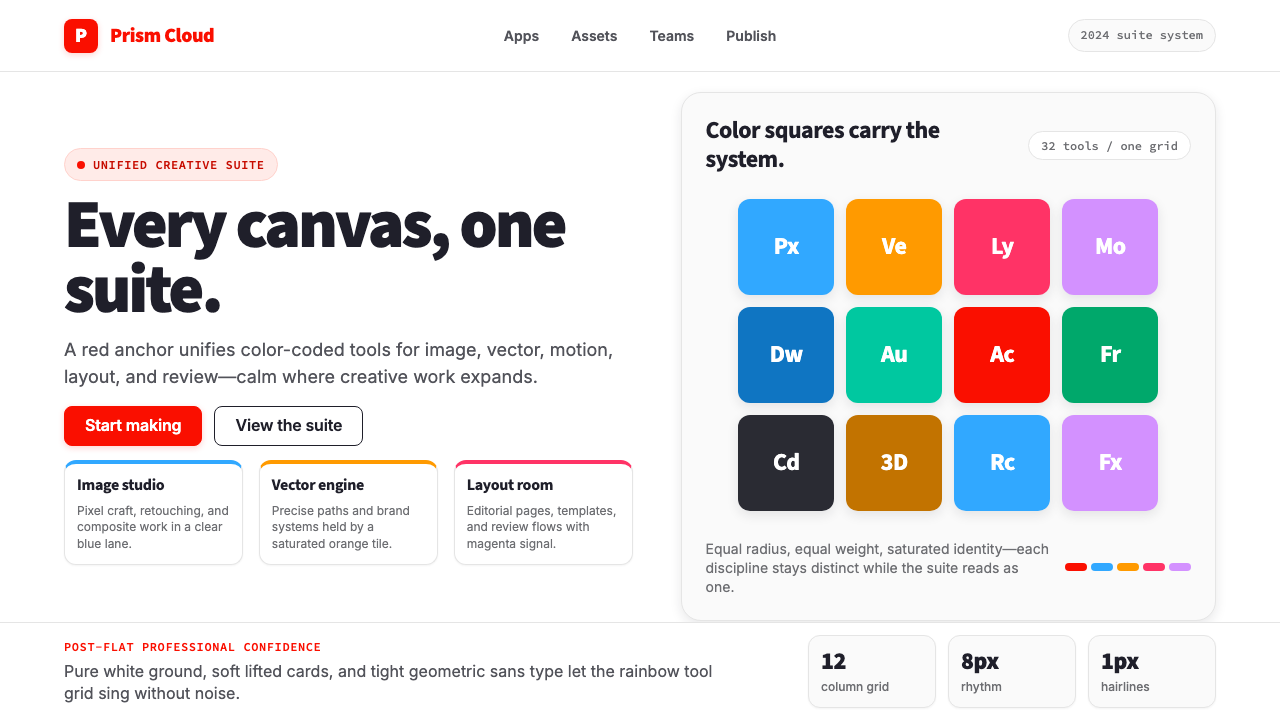 Adobe Creative CloudUnified, not uniform. Red anchor, white space, and saturated app tiles organi…
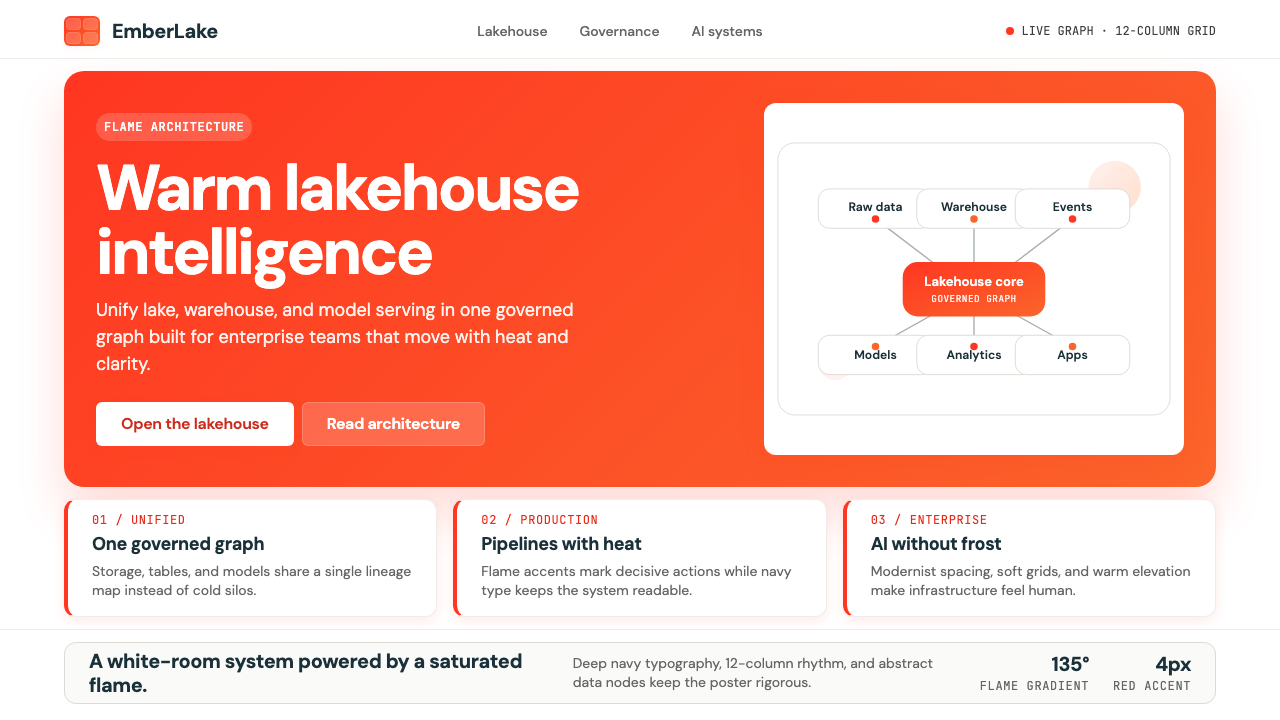 Databricks LakehouseWarm enterprise confidence. Flame red-orange gradients meet DM Sans and clean…
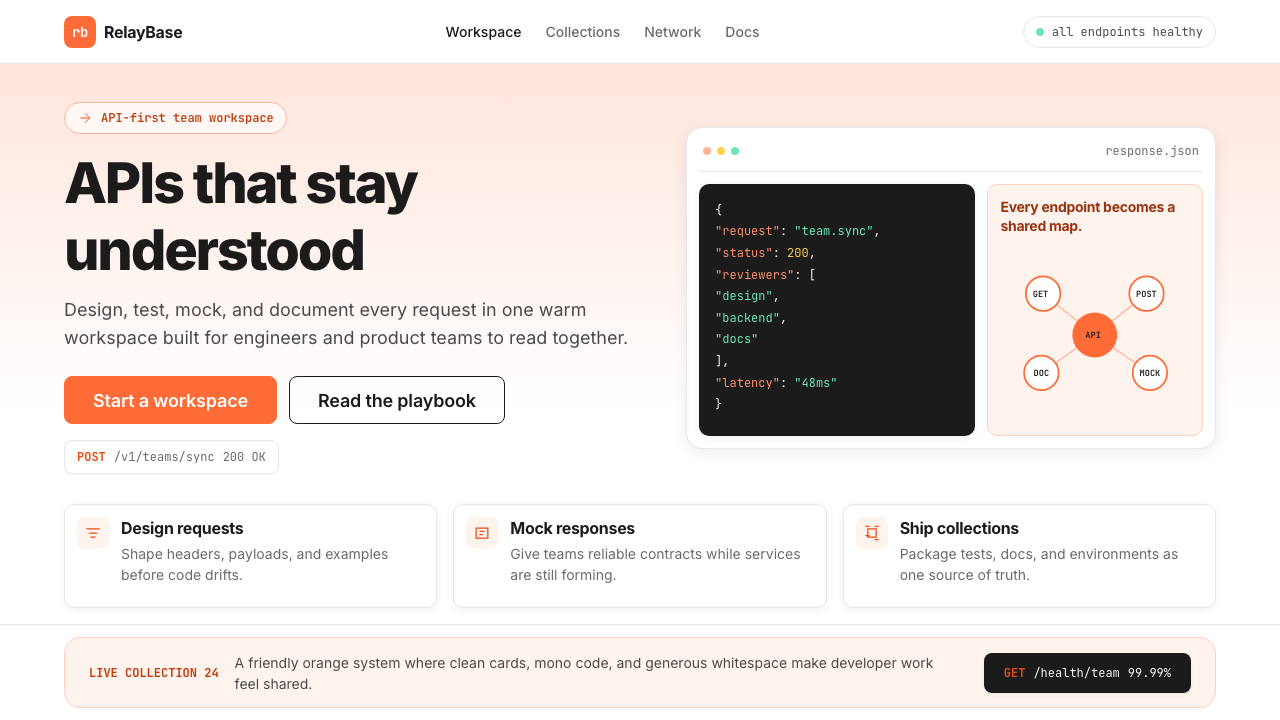 Postman 2024Warm APIs feel approachable. Orange gradients, Inter headlines, and dark mono…
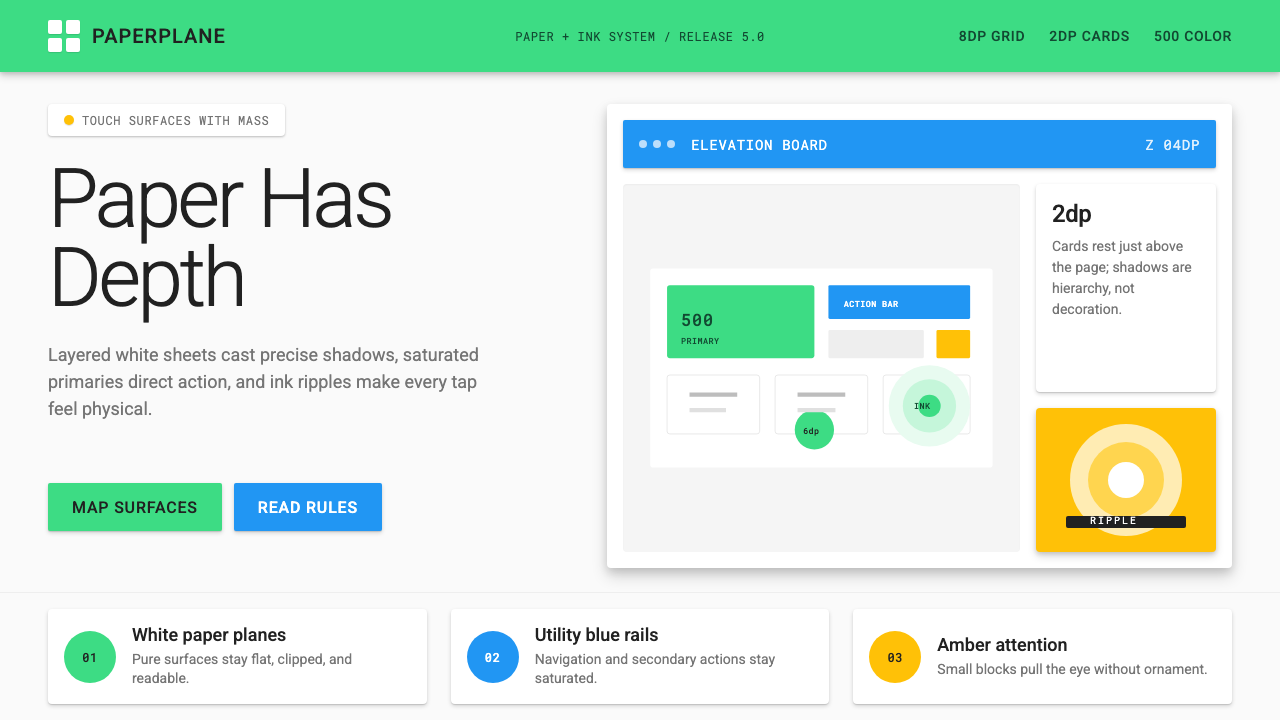 Android Lollipop (Material 1.0)Paper becomes physical. Roboto, green FABs and sharp shadows give white cards…