What is Canva 2024?
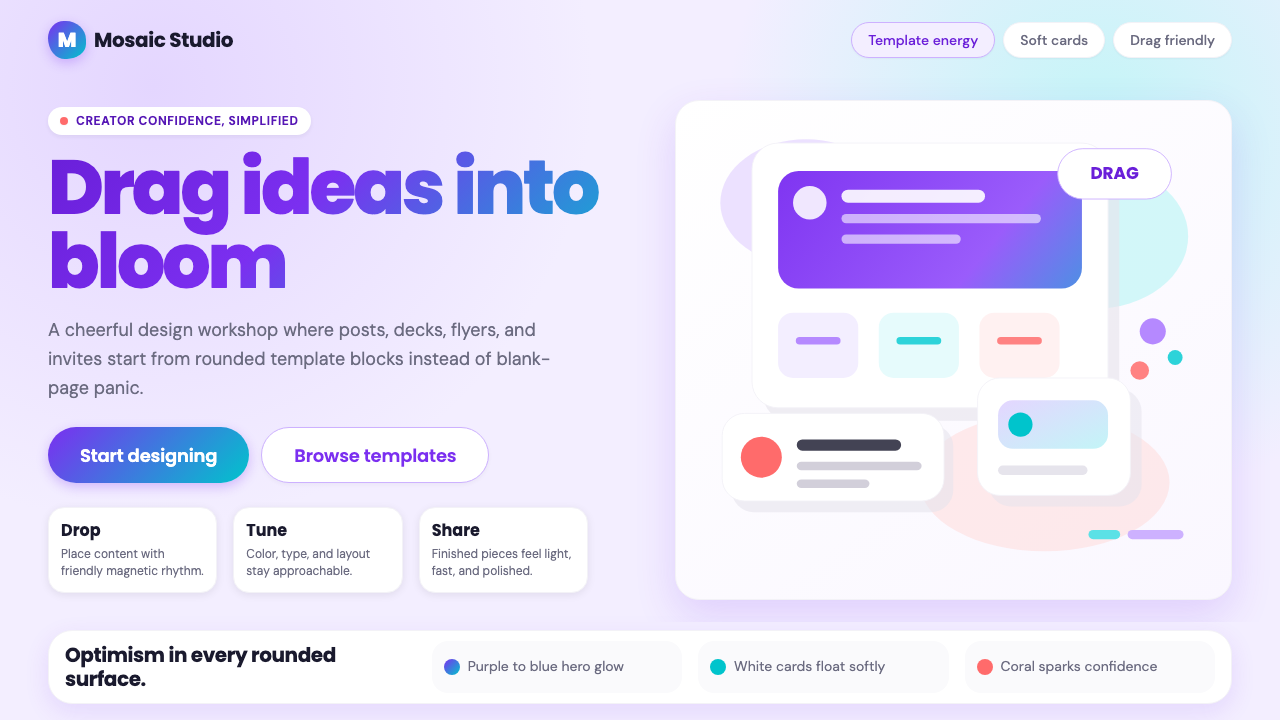
Canva turned a billion non-designers into confident creators by making the act of design feel as natural as dragging a card across a table.
Canva 2024 in brief
Canva 2024 is the visual identity and interface language of Canva at the height of its global reach — a design system built not for professional studios but for the enormous population of people who need to communicate visually without formal training. Its aesthetic is defined by a signature purple-to-blue gradient that functions as the brand's emotional keynote, paired with generous white work surfaces, softly shadowed template cards, and rounded shapes that signal approachability at every scale. The palette exudes warmth and optimism: deep violet meets sky blue in the hero gradient, soft lavender grounds secondary surfaces, and a warm coral accent punctuates interactive moments.
The typography follows the same philosophy of friendliness. Headlines feel rounded and confident rather than formal or authoritative; body text is clean and open, prioritizing comfortable reading over typographic drama. Rounded corners appear on buttons, cards, tags, and input fields with remarkable consistency — the interface has no sharp angles, no stern geometric rigidity, and no element that might intimidate a first-time user. Shadows are soft and diffuse, suggesting cards floating just above a surface, reinforcing the tactile metaphor of a design tool built around picking up and placing things.
What makes Canva 2024 distinctive as a design system is that it is itself the argument. Every visual decision — the approachable gradient, the gentle shadows, the forgiving rounded forms — encodes the product's central promise: that creativity is accessible, that design does not require expertise, and that anyone can make something that looks good. The aesthetic is not neutral; it is persuasive optimism rendered in purple and blue.

Where does Canva 2024 come from?
Canva was founded in Sydney, Australia in 2013 by Melanie Perkins, Cliff Obrecht, and Cameron Adams. Perkins had identified the problem years earlier while teaching design software at the University of Western Australia: students spent most of their time learning the tool, not using it creatively. Her initial concept — a simplified yearbook design tool called Fusion Books — proved the market demand. Canva launched as a web application with a drag-and-drop editor, template library, and asset marketplace, and within two years had millions of active users across more than 150 countries.
The visual identity that would become recognizable as 'Canva' coalesced gradually between roughly 2018 and 2021, then matured into the fully cohesive system seen throughout 2022 to 2024. The early Canva aesthetic was lighter and less confident — a generically friendly SaaS look that borrowed liberally from the conventions of consumer web design at the time. As the company grew and began positioning itself not merely as a design tool but as a creative platform and eventual enterprise suite, its visual identity evolved to reflect greater ambition. The purple-blue gradient emerged as the dominant brand signature, asserting personality and warmth in a product category often dominated by sterile utility tools.
Cameron Adams, who had been a designer at Google before joining Canva as co-founder and Chief Product Officer, brought a sensitivity to interaction design and product aesthetics that shaped the platform's feel. The principle that guided the visual system was not minimalism in the modernist sense but something closer to what might be called expressive accessibility — design choices that actively lower psychological barriers, that signal welcome rather than expertise, and that frame the product experience as inherently encouraging. This is visible in every rounded corner, every soft gradient, every floating card shadow.
The 2024 iteration of the identity also reflects Canva's ambitions beyond casual social content. By this period, Canva had launched Canva for Enterprise, Canva Docs, and extensive presentation and whiteboard tools — products aimed at workplace users creating professional materials. The design system had to scale from a teenager making an Instagram post to a marketing team producing a quarterly report. The solution was not two different aesthetics but a single system flexible enough to feel at home in both contexts: the same gradient and rounded language, calibrated to be simultaneously approachable for newcomers and polished enough for professional outputs.
What defines the Canva 2024 look?
Gradient as Brand Signature
The defining visual element of Canva 2024 is a purple-to-blue gradient that moves from deep violet through mid-tones into sky blue. This gradient appears consistently across hero sections, primary buttons, and illustrated brand moments — it functions not merely as decoration but as an identity marker as recognizable as a logo. Unlike gradients used for depth or realism, Canva's gradient is expressive and optimistic: it reads as energy, possibility, and movement rather than as a lighting simulation. The transition is smooth and warm, never harsh or neon.
Rounded Everything
Corner rounding in Canva 2024 is not a subtle softening but a defining commitment. Buttons, cards, input fields, tags, modal dialogs, and image thumbnails all carry substantial rounding that gives the interface a consistently soft, pillowy quality. This is not arbitrary — the rounded forms are a visual encoding of the brand's accessibility promise. Sharp corners belong to tools that demand precision and expertise; rounded corners belong to tools that welcome everyone. The consistency of this rounding across every component reinforces the message at every interaction point.
Soft Floating Shadows
Cards and panels in Canva 2024 cast soft, diffuse shadows that suggest elevation without drama. The effect is of elements floating just slightly above the surface beneath them — not the hard, offset shadows of a retro or flat-design approach, and not the invisible zero-elevation of pure flat design, but a gentle middle ground that maintains spatial clarity while feeling tactile and inviting. Template preview cards in particular use this shadow treatment to reinforce the metaphor of physical objects you might pick up and rearrange.
Accessible Color with Warm Accents
Beyond the signature gradient, Canva 2024 relies on a layered palette of surfaces: primary white for active work areas, a soft lavender for backgrounds and secondary panels, and a warm coral or peachy tone for interactive highlights and calls to action. This palette is carefully calibrated for legibility and emotional warmth simultaneously. Nothing is cold or clinical; nothing is aggressively saturated. The colors work together to suggest a creative environment that is both professional and personally inviting — a workspace that belongs to you.
Template-Card Visual Grammar
One of Canva's most distinctive visual contributions is the template card: a rounded rectangle that previews a finished design at reduced scale, casting a soft shadow, and arranged in grids that communicate abundance and choice. This card grid pattern has become so associated with Canva that it now reads as a design genre unto itself. The visual grammar of a browseable template library — dense, colorful, thumbnail-previewed, softly shadowed — is legible as 'Canva-like' even when encountered on entirely different platforms that have adopted the same pattern.
Illustrated Brand Warmth
Canva 2024 uses a distinctive style of brand illustration: rounded, slightly three-dimensional figures with the same purple-blue gradient palette, often depicting people in moments of creation, collaboration, or celebration. These illustrations serve to humanize the brand and represent its global, diverse user community. They are never photorealistic; they are stylized to sit comfortably within the same rounded, warm aesthetic as the interface. The figures are consistently joyful, the scenarios collaborative, and the color palette continuous with the broader brand system.
Friendly Typography Hierarchy
The typographic system in Canva 2024 prioritizes approachability over sophistication. Headline type is large, rounded in character, and confident without being aggressive — it invites reading rather than demanding attention. Body text is set with generous line spacing for comfortable scanning. The hierarchy is clear but achieved through scale and weight variation rather than rigid geometric contrast. There is warmth in the letter shapes themselves: the overall typographic tone is that of a knowledgeable friend, not an institutional authority.

Who shaped Canva 2024?
Perkins co-founded Canva and serves as its CEO. Her original insight — that design software was unnecessarily complex and that there was a vast underserved market of people who needed to create visual content without professional training — defined both the product and the brand identity. Her approach to building the company, emphasizing radical accessibility and a belief that everyone has creative potential, is directly encoded in the visual language Canva developed: inclusive, optimistic, and deliberately non-intimidating.
Adams co-founded Canva and serves as its Chief Product Officer. Before Canva, he was a designer and developer at Google, where he worked on products that reached massive audiences. His background in both design and engineering shaped Canva's product sensibility: the interface needed to be genuinely delightful, not just functional, and the visual system had to remain coherent as the product scaled from a simple poster tool to a comprehensive creative suite. Adams has been a key steward of the design system's evolution.
Obrecht co-founded Canva and served as its COO through the company's critical growth phases. His operational focus ensured that the product's visual promise was backed by the infrastructure and business model needed to scale it globally. The philanthropic commitment that Obrecht and Perkins made — pledging the majority of their equity to charitable causes — is part of the brand's story of purpose-driven design, and it has shaped the tone of Canva's communications: genuinely values-led rather than purely commercial.
Unlike design systems associated with a single iconic designer, Canva's visual identity emerged from a large in-house design team working iteratively across product, brand, and marketing touchpoints from approximately 2018 onward. This distributed authorship is itself meaningful: the identity was not imposed top-down by a single creative director but evolved organically in response to user research, product expansion, and the practical demands of designing for hundreds of millions of users across dozens of languages and cultures. The result is a system that feels lived-in rather than prescribed.
How do you use Canva 2024 today?
Canva 2024 is a highly legible and transferable design language for contexts where the goal is to welcome, enable, and retain users who may feel uncertain about their creative abilities. Before applying it, it helps to understand what makes it work: the visual system is built around lowering psychological barriers. Every element — the gradient, the rounded corners, the soft shadows — is a signal that says 'this is easy, you can do this.' That signal only works if the visual execution is consistent and deliberate. Scattering rounded buttons across an otherwise angular, high-contrast interface will not produce the Canva effect.
For presentation slides, the style translates beautifully to both cover and content pages. A cover slide gains impact from the purple-to-blue gradient applied as a full-bleed background or as a bold curved band, with white headline text set at a generous scale. The gradient anchors energy and optimism immediately. Content slides should lean into the card metaphor: information grouped into softly shadowed rounded-corner panels, with a light lavender or near-white background keeping the overall tone airy. Data slides work especially well when charts are given soft container cards and color-coded using the brand's warm accent tones rather than the aggressive primaries of more technical design systems.
For web UI, the Canva visual language suits SaaS dashboards, onboarding flows, pricing pages, and template galleries. The key decisions are surface layering — primary white for active work, soft lavender for sidebar and secondary areas — and consistent component rounding across every interactive element. A pricing page in this style benefits from gradient-topped tier cards, with the recommended tier receiving a more saturated gradient treatment while alternatives use lighter tints. Dashboards should use the soft shadow card system to create visual groupings rather than hard borders. Navigation can use the gradient brand color for active states without overwhelming the layout.
For editorial and marketing materials, the style supports a kind of optimistic confidence that works well for product launches, recruitment materials, educational content, and community communications. Feature sections alternate between light lavender backgrounds and white, using the gradient as an accent for pullquotes or section headers rather than as an all-over color. Marketing email layouts benefit from the template-card grid — a visible grid of rounded, softly shadowed content cards immediately reads as 'Canva-native' and reinforces brand recognition. Social media graphics in this style should use the gradient generously, with white or light-colored type for readability.
A common mistake when applying Canva 2024 is overdoing the gradient — applying it to every section, every button, every panel simultaneously. In Canva's own design, the gradient is deployed selectively as a hero accent or primary action indicator; most of the interface is white and lavender, letting the gradient carry its full expressive weight precisely because it is not everywhere. A second common error is mixing the soft rounded Canva aesthetic with sharp-cornered components: inconsistency in corner treatment collapses the coherent spatial metaphor the system depends on. Commit to the rounded language throughout, or the system reads as unfinished.

Canva 2024 — FAQ
Is Canva 2024 style appropriate for serious or enterprise-facing design work?
Yes, with calibration. The risk with the Canva visual language in enterprise contexts is that the inherent friendliness can read as lightweight or insufficiently authoritative if not handled carefully. The solution is to dial up the professional signals within the system rather than abandoning it: use the deeper end of the purple gradient for hero sections, reduce the density of decorative elements, favor clean white surfaces over layered lavender backgrounds, and ensure that typography is set with precision and clarity. Canva itself has demonstrated this with Canva for Enterprise — the same gradient and rounded language, but with more restraint and compositional discipline applied. The style is not inherently casual; it is inherently approachable, and those are not the same thing.
How does Canva 2024 differ from other friendly SaaS design systems?
The key differentiator is the gradient's role. Most contemporary SaaS design systems use gradients sparingly or not at all, preferring flat color fields for clarity and performance. Canva's gradient is not merely decorative — it is identity-defining and emotionally expressive in a way that flat brand colors cannot be. The other differentiator is the template-card visual grammar: the browseable grid of previews is so specifically Canva-associated that it now functions as a cultural reference as much as a design pattern. Mailchimp has warmth; Notion has calm; Figma has precision. Canva has democratic creative energy, and the gradient is its most direct visual expression of that.
Can Canva 2024 work in a dark-mode context?
The Canva visual language is fundamentally a light-mode system — white work surfaces, lavender backgrounds, and the gradient as an accent all assume a light ground. A dark-mode inversion is possible but requires significant adaptation. On dark grounds, the purple-to-blue gradient can appear richer and more dramatic, which can work well for marketing hero sections or event graphics where impact is the priority. However, the soft floating-card aesthetic — which depends on shadows to create separation from a light background — becomes harder to achieve on dark grounds, typically requiring subtle light-edge glows instead. The rounded, friendly character of the type and components survives the dark inversion reasonably well.
How should the gradient be used sparingly vs. generously?
The practical rule is: the gradient earns its expressive power from contrast with the quieter parts of the system. Use it generously where you want maximum energy — hero sections, primary call-to-action buttons, feature highlights, and brand-defining moments in a presentation or marketing page. Use it sparingly or not at all in utility contexts — body text containers, data tables, form fields, secondary navigation, and content-dense information sections. When in doubt, default to white or soft lavender and let the gradient appear as a deliberate punctuation mark rather than a continuous background hum. The ratio in Canva's own interface is roughly eighty percent quiet surfaces to twenty percent gradient moments.
Where does Canva 2024 not work well?
The style struggles in contexts that call for high informational density, technical authority, or deliberate visual restraint. Financial services interfaces, medical platforms, legal document tools, and highly data-intensive analytical dashboards often need to project seriousness and precision in ways that the rounded, gradient-accented Canva language can undermine. The friendly optimism that is the style's greatest strength in an onboarding flow becomes a liability in a context where the user needs to trust the system's authority. Similarly, the style does not adapt well to purely typographic or text-heavy editorial formats — its visual interest relies on cards, gradients, and spatial layering, not on the kind of refined typographic hierarchy that makes dense reading comfortable.
Related design styles
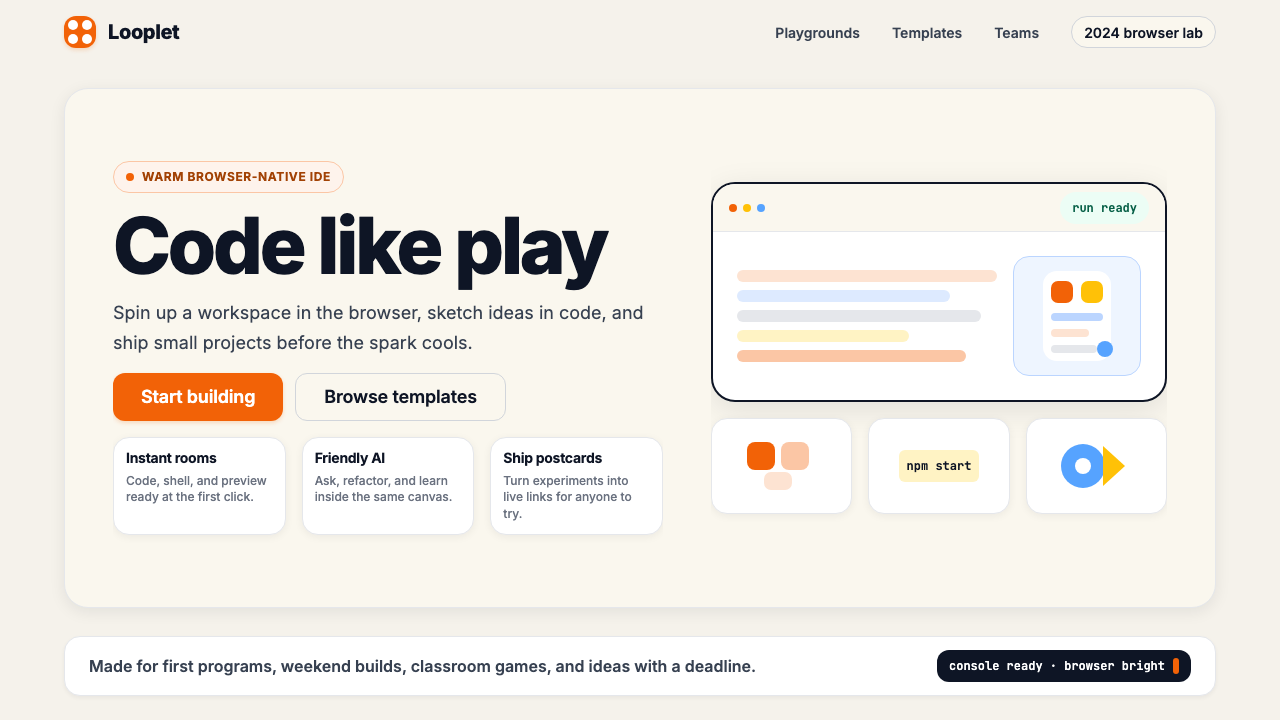 Replit 2024Coding feels warm. Coral buttons, cream panels, rounded code tiles make build…
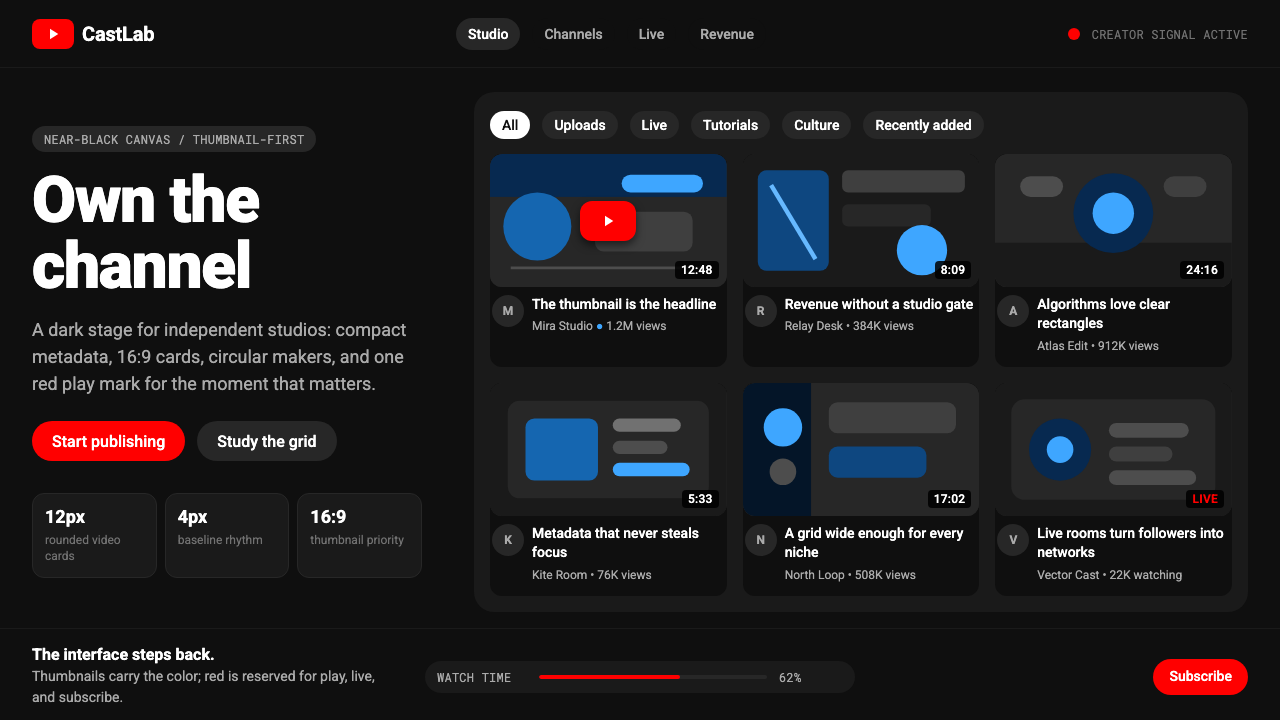 YouTube Creator EconomyThe UI disappears. Near-black Roboto grids let thumbnails shout; red only mea…
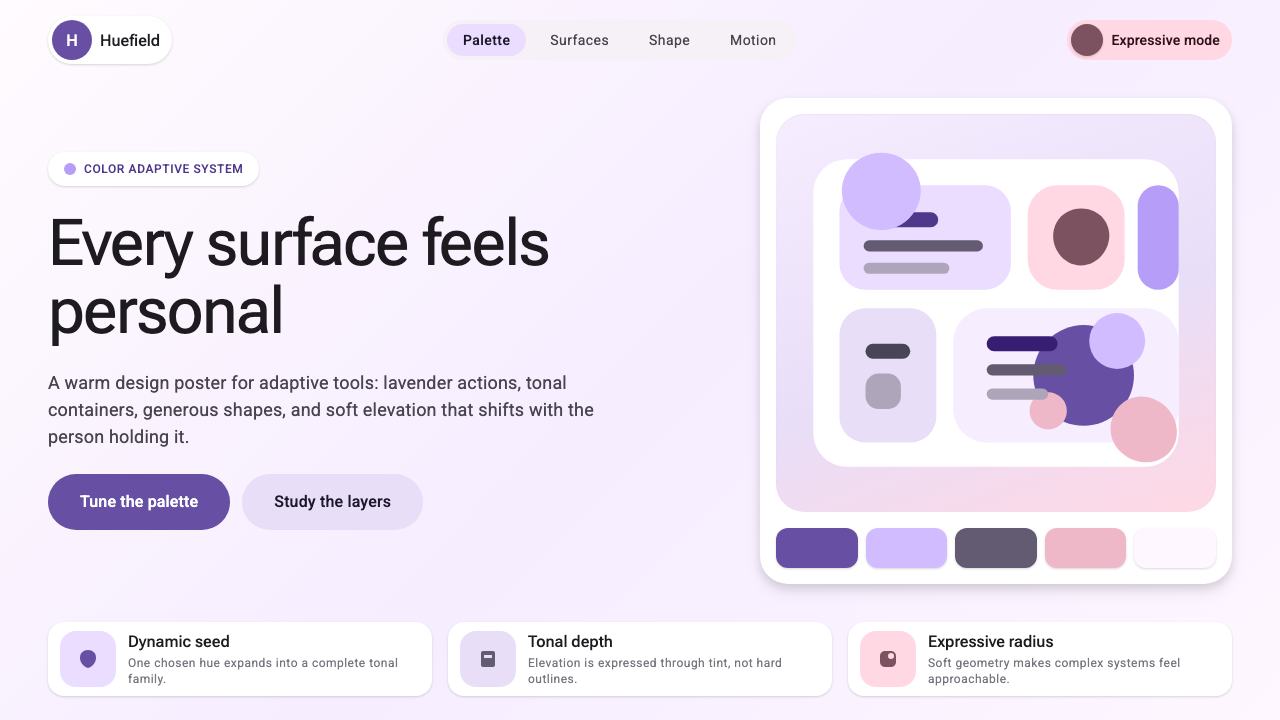 Google Material 3 ExpressiveA living system, themed by your wallpaper. Larger radii, tonal surfaces, emot…
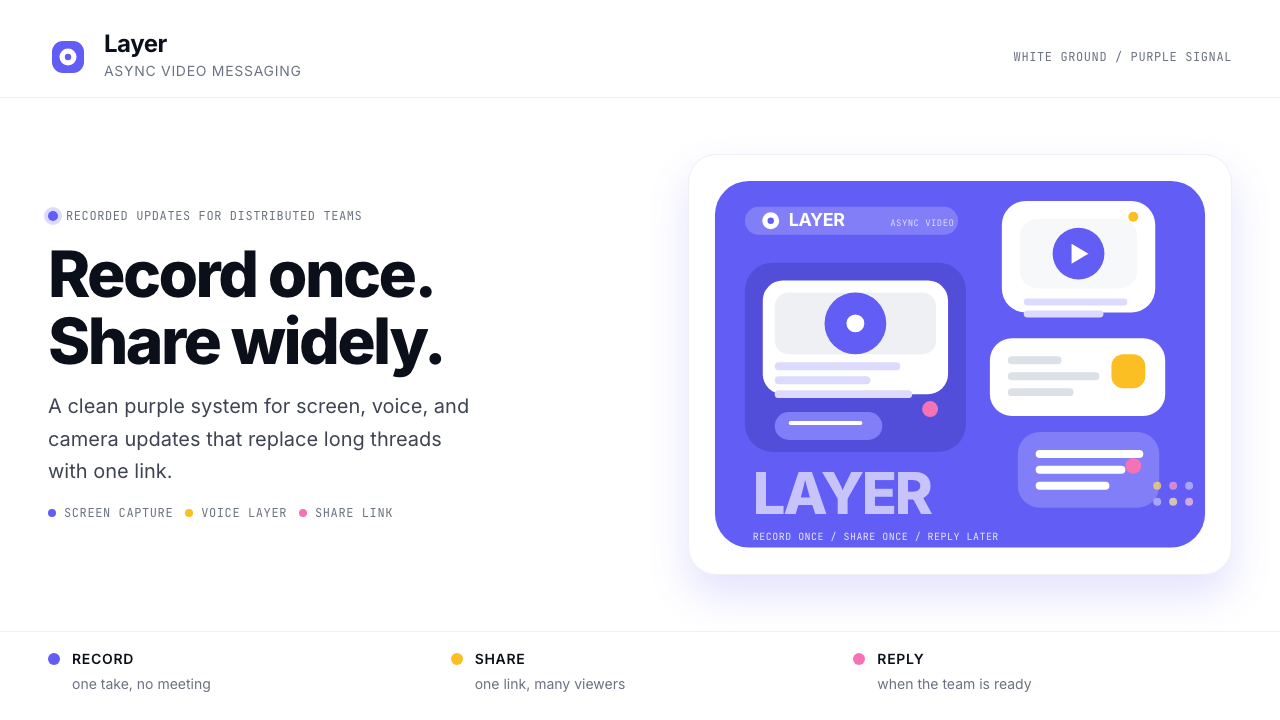 Loom Async-Video PurpleAsync, not meetings. Pure white ground, electric purple, record-button geomet…
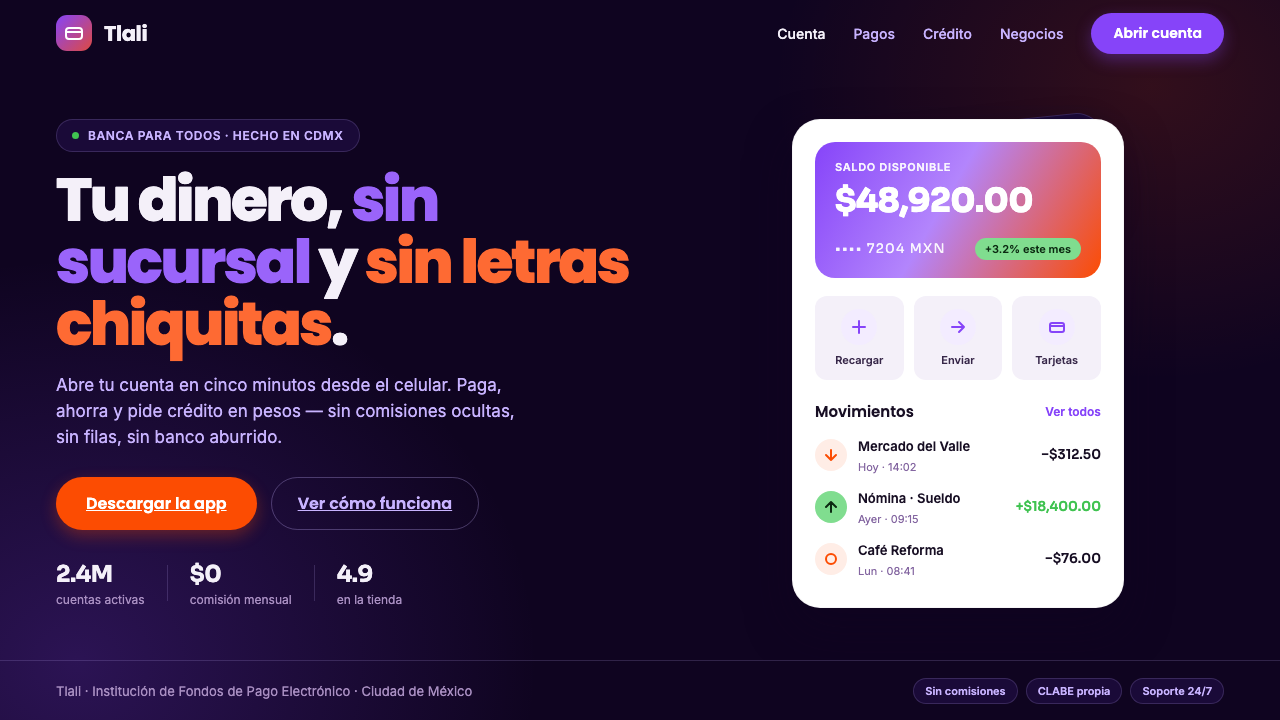 Mexican Fintech StartupNeobank, not legacy bank. White rounded cards float on near-black plum, lit b…
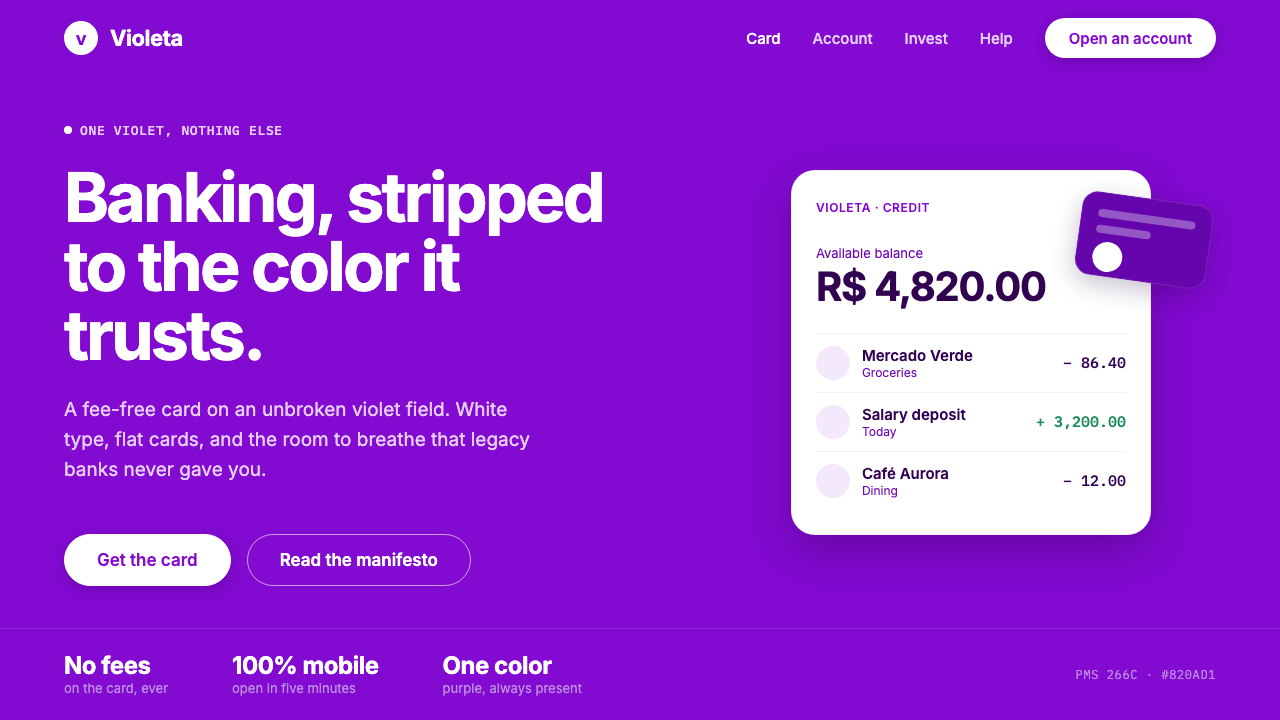 Nubank PurpleBanking stripped to one color. Full-bleed Nupurple ground, white type, genero…