What is Shalimar Mughal Pietra Dura?
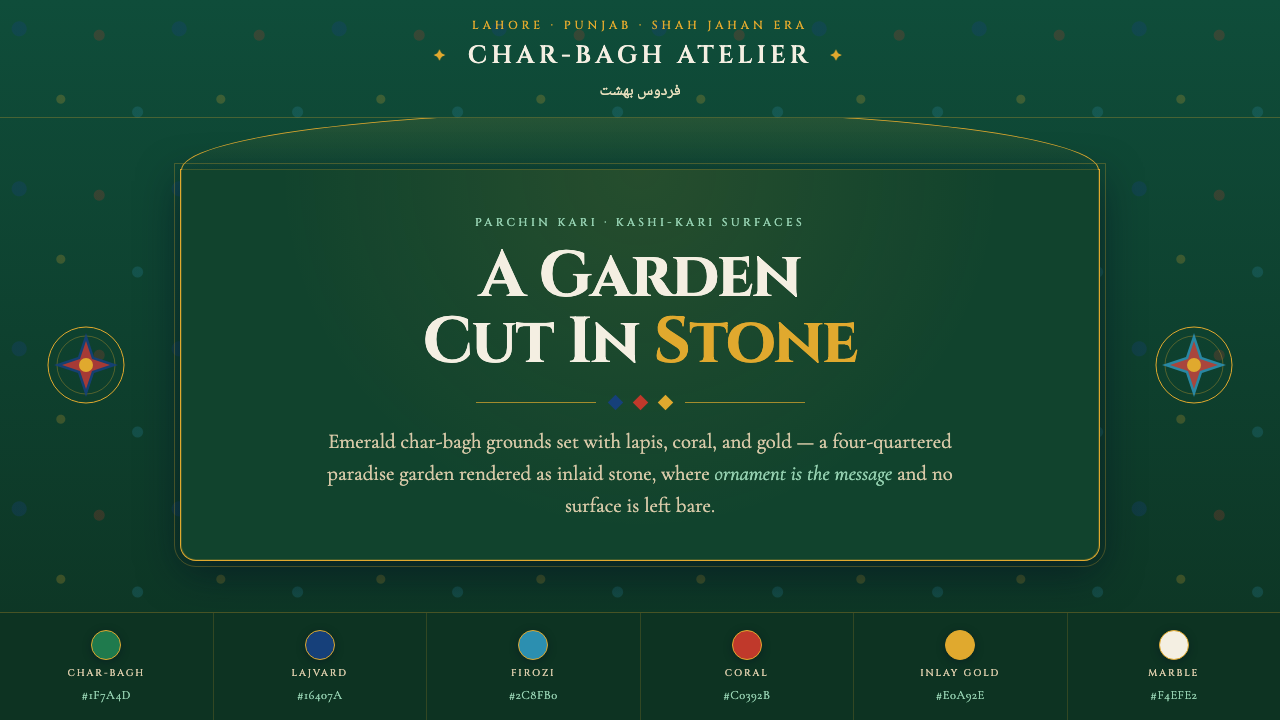
Shalimar Mughal Pietra Dura turns the paradise garden into a surface language: deep emerald ground, jewel-toned inlay, framed arches, and the dense splendor of stone made to bloom.
Shalimar Mughal Pietra Dura in brief
Shalimar Mughal Pietra Dura draws from the Shalimar Gardens and Wazir Khan Mosque in Lahore, the high-water mark of Mughal surface decoration. Its visual world is built from parchin kari, or pietra dura floral inlay, and Persian-style kashi-kari fresco, transforming polished white marble and red sandstone into the image of a four-quartered paradise garden.
The system takes dark emerald greenery as its ground: not an empty background, but the garden field itself. Across that field, lapis, cerulean, coral, and orange-gold inlay appears as foliage, blossoms, tilework, and cartouches. Niche arches and Naskh inscription bands frame the composition, giving the dense ornament a ceremonial order rather than allowing it to become visual noise.
Its defining mood is luxurious density. This is not a style of restraint, exposed structure, or deliberate emptiness. Every surface feels cultivated and inhabited, as though stone has been trained into a living garden. The darkness creates depth and gravity; jewel colors provide the bloom; gold supplies warmth and emphasis. The result is an interface language that feels architectural, precious, and continuously alive.
Where does Shalimar Mughal Pietra Dura come from?
The source tradition belongs to seventeenth-century Lahore in Punjab, within the Mughal Empire and the era of Shah Jahan. The origin context is dated approximately from 1633 to 1642. This period and place matter because the style is not an abstract luxury palette detached from architecture; it comes from a specific South Asian environment in which gardens, mosques, polished stone, tilework, fresco, and inscription were brought into one continuous decorative field.
The Shalimar Gardens provide the organizing image: the char-bagh, or paradise garden divided into four parts. In this visual system, the garden is translated from planted ground and water-defined space into a surface pattern of emerald foliage, lapis tilework, coral blossoms, and orange-gold cartouches. The garden idea is therefore both literal and symbolic. It supplies the composition’s field, its sense of cultivation, and its promise of ordered abundance.
The Wazir Khan Mosque supplies a complementary vocabulary of architectural framing and crafted surface. Parchin kari floral inlay works across polished marble and red sandstone, while Persian-style kashi-kari fresco introduces a related language of colored surface. Niche arches and Naskh inscription bands make the decoration legible as part of architecture: motifs are gathered into thresholds, panels, and bands rather than scattered without hierarchy. The source identifies Shah Jahan, the builders of the Shalimar Gardens, the ateliers of the Wazir Khan Mosque, and Ali Mardan Khan among the key figures and groups associated with this origin context.
What defines the Shalimar Mughal Pietra Dura look?
Emerald Ground
The ground is deep emerald, treated as cultivated garden territory rather than neutral backdrop. It gives the system its darkness, depth, and botanical identity. Large areas of emerald should remain visually continuous enough to support the inlay, but never feel vacant; the surface should suggest foliage, soil, shadow, and a living field prepared to receive ornament.
Jewel Inlay
Color arrives as if cut into the ground. Lapis and cerulean provide cool mineral blues, coral introduces a warm floral note, and orange-gold cartouches bring concentrated radiance. These hues should feel embedded, layered, and precious rather than casually painted on. Emerald carries the field; the brighter colors mark blossoms, tilework, signs, and moments of ceremonial emphasis.
Botanical Geometry
Floral inlay is the central motif, but it is not loose botanical illustration. Foliage, blossoms, and garden divisions are organized into repeatable fields, panels, and directional arrangements. The char-bagh principle contributes an underlying sense of partition and balance, while the flowers keep the geometry from becoming mechanical. Nature is present as cultivated order.
Architectural Framing
Niche arches and mihrab-like framing devices gather ornament into architectural units. A panel should feel entered, bordered, or recessed, even when it belongs to a flat screen. Arches establish thresholds; cartouches create destinations; inscription bands stabilize the perimeter. Framing is therefore structural, not merely decorative, and it gives the dense surface a clear ceremonial rhythm.
Inscription Bands
Naskh inscription bands introduce a typographic layer that is ceremonial and architectural at once. They should read as deliberate horizontal or enclosing passages, with enough authority to separate one ornamental field from another. The script is not an isolated text treatment; it belongs to the wall, arch, border, or panel and helps turn decoration into an ordered surface environment.
Dense Material Splendor
The style depends on abundance without visual collapse. Polished marble, red sandstone, tilework, fresco, stone inlay, and gold are understood as different material voices within one garden composition. Depth comes from layering and framing rather than soft atmospheric effects. The surface should feel handcrafted and tactile, even when translated into a digital interface.

Who shaped Shalimar Mughal Pietra Dura?
Shah Jahan names the imperial era in which the source tradition is situated. His presence anchors the style historically in the seventeenth-century Mughal world of Lahore, where garden design, mosque decoration, polished stone, tilework, fresco, and inscription were brought into a unified language of surface splendor.
The builders of the Shalimar Gardens represent the architectural and horticultural source of the char-bagh image. In this design system, their contribution is translated into the emerald garden ground, the sense of four-part order, and the impression that ornament is not applied to a place but grows from a cultivated paradise field.
The ateliers of the Wazir Khan Mosque embody the crafted surface vocabulary behind the system: parchin kari floral inlay and Persian-style kashi-kari fresco applied across polished marble and red sandstone. Their work explains why the style feels architectural, tactile, and assembled from precious pieces rather than painted as a single uninterrupted image.
Ali Mardan Khan is listed in the source among the key figures associated with the Lahore origin context. The approved material does not assign him a specific motif or workshop, so his place in this article remains contextual: a named presence within the Shah Jahan-era setting rather than an unsupported attribution of a particular decorative device.
How do you use Shalimar Mughal Pietra Dura today?
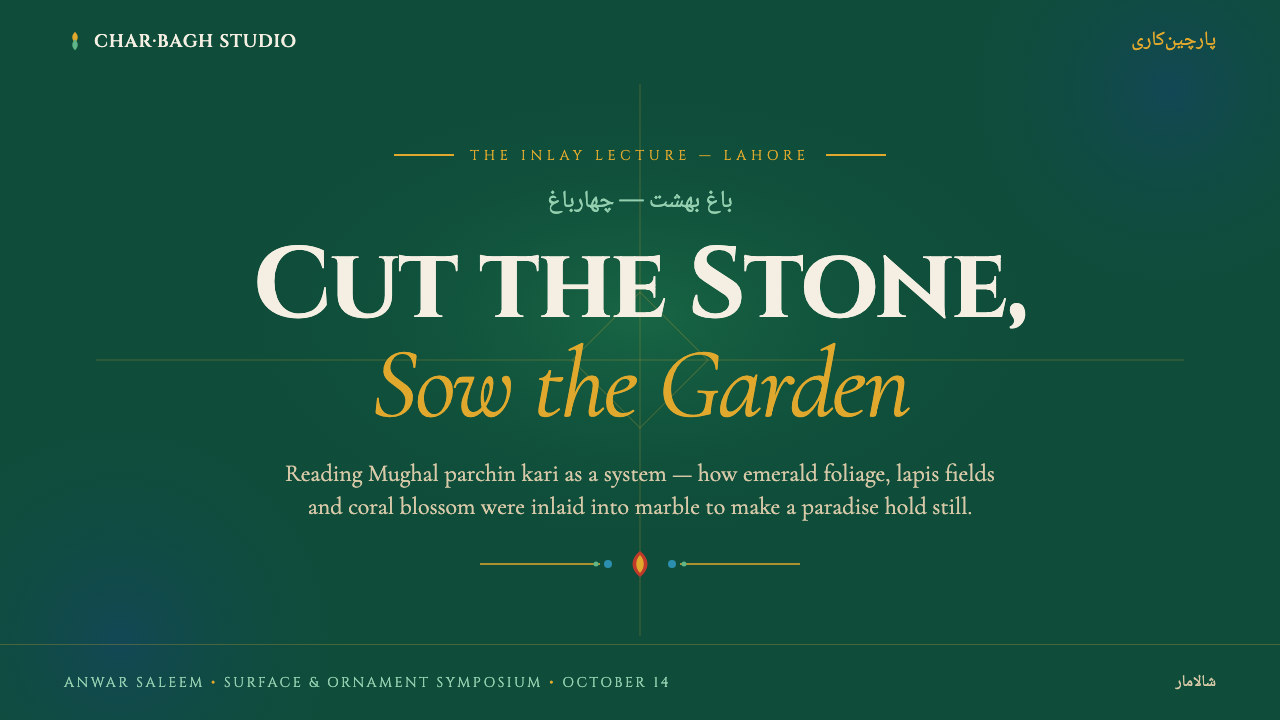
For presentation slides, use the emerald field as the organizing ground rather than treating it as a decorative cover color. A cover can place a framed arch, floral inlay, or gold cartouche near the title, allowing the title to feel like an inscription within architecture. Content slides should divide information into ornamental panels with clear borders and Naskh-inspired bands. Data slides can translate charts into garden-like partitions, jewel-toned segments, and cartouche labels, while preserving enough dark ground for the composition to breathe.
For web interfaces, the style suits dashboards, pricing pages, and premium service surfaces that need to communicate ceremony, craft, and abundance. Use emerald for the main field, jewel colors for active states and meaningful categories, and gold for moments of emphasis such as selected plans or primary actions. Cards should feel like framed panels or niches, with borders and inset structure carrying more weight than floating softness. Navigation can borrow the logic of inscription bands: continuous, authoritative, and architectural.
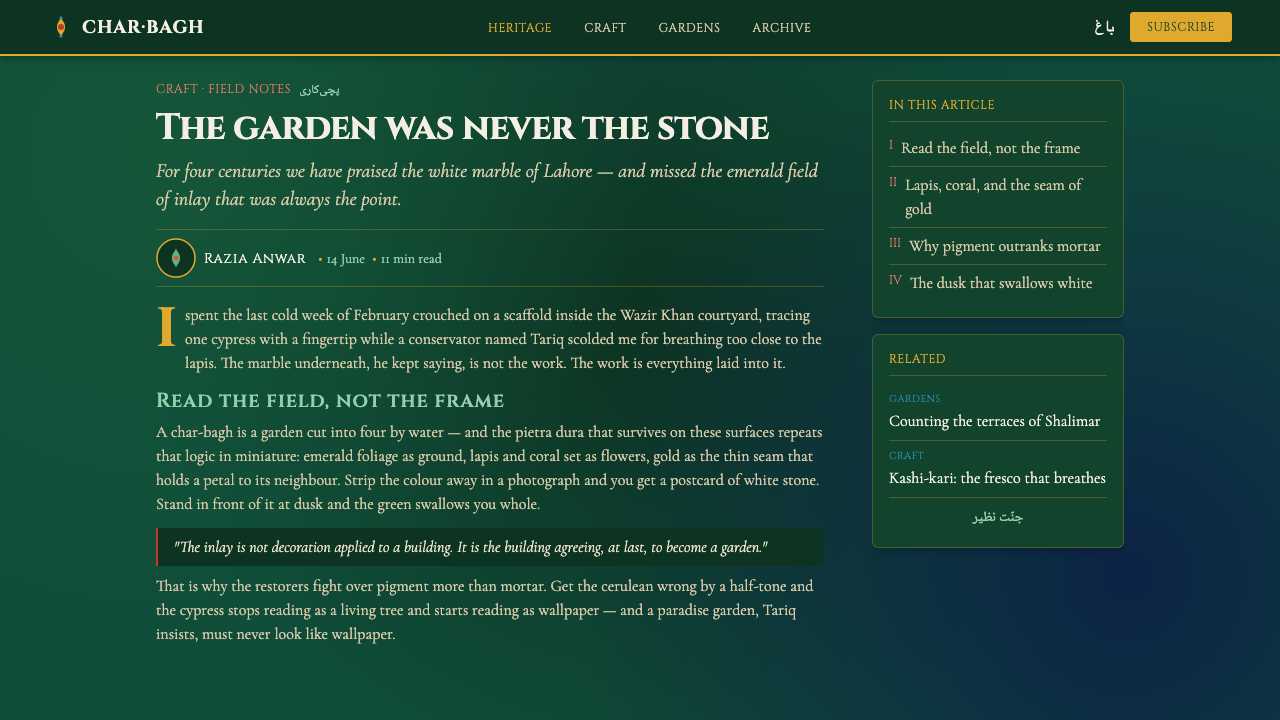
For editorial and marketing work, the system supports luxurious cultural storytelling. Articles can use a deep garden field with framed text blocks, floral separators, and side notes treated as cartouches. Marketing pages can alternate between large emerald sections and light stone-like surfaces, using lapis, coral, and gold as recurring accents. The style is especially effective when the product is presented as crafted, ceremonial, rare, or connected to a sense of place.
The common mistake is to treat jewel colors as independent decoration and scatter them across a generic dark interface. This breaks the garden logic. Emerald must remain the ground, while lapis, cerulean, coral, and gold should behave like inlay with clear structural roles. Another mistake is using arches, script, and floral motifs everywhere at equal intensity. Density needs hierarchy: one dominant field, framed destinations, controlled bands, and moments where the precious colors are allowed to carry emphasis.
Shalimar Mughal Pietra Dura — FAQ
What is Shalimar Mughal Pietra Dura?
It is a design system derived from Mughal surface decoration associated with the Shalimar Gardens and Wazir Khan Mosque in Lahore. Its central language combines a dark emerald char-bagh ground with lapis, cerulean, coral, and gold inlay, then organizes that richness through niche arches and Naskh inscription bands.
Is the emerald ground merely a background color?
No. The emerald ground represents the garden field itself, so it carries the identity and spatial logic of the system. Treating it as a disposable background and allowing jewel colors to dominate everywhere removes the sense of cultivated paradise. The brighter colors should read as inlay placed within the garden, not as unrelated accents floating above it.
Can this style be used on a light interface?
It can be adapted, but the source system is fundamentally organized around a dark emerald field. A light variation may borrow polished marble or red sandstone as its visual ground, yet it should retain the principles of jewel inlay, architectural framing, and dense cultivated ornament. If the dark garden field disappears entirely, the result becomes a related Mughal-inspired surface rather than this specific system.
How should arches and Naskh bands be used without making the interface feel theatrical?
Use them as organizing devices, not as repeated badges. An arch should establish a threshold or frame a destination; an inscription band should stabilize a panel or separate ornamental fields. Their value comes from giving density a boundary. When every component receives the same arch, border, and script treatment, the hierarchy collapses and the architecture becomes costume.
Related design styles
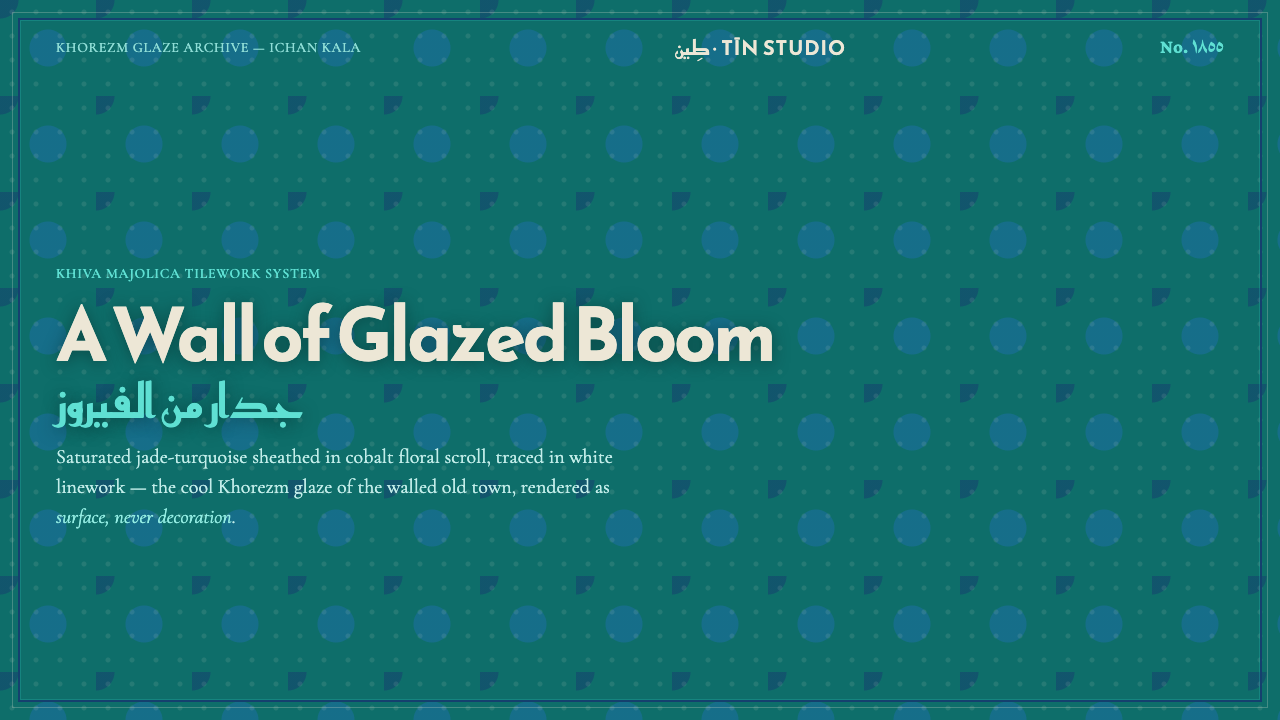 Khiva Ichan-Kala MajolicaJade becomes architecture. Cobalt bands and white tracery lock the surface in…
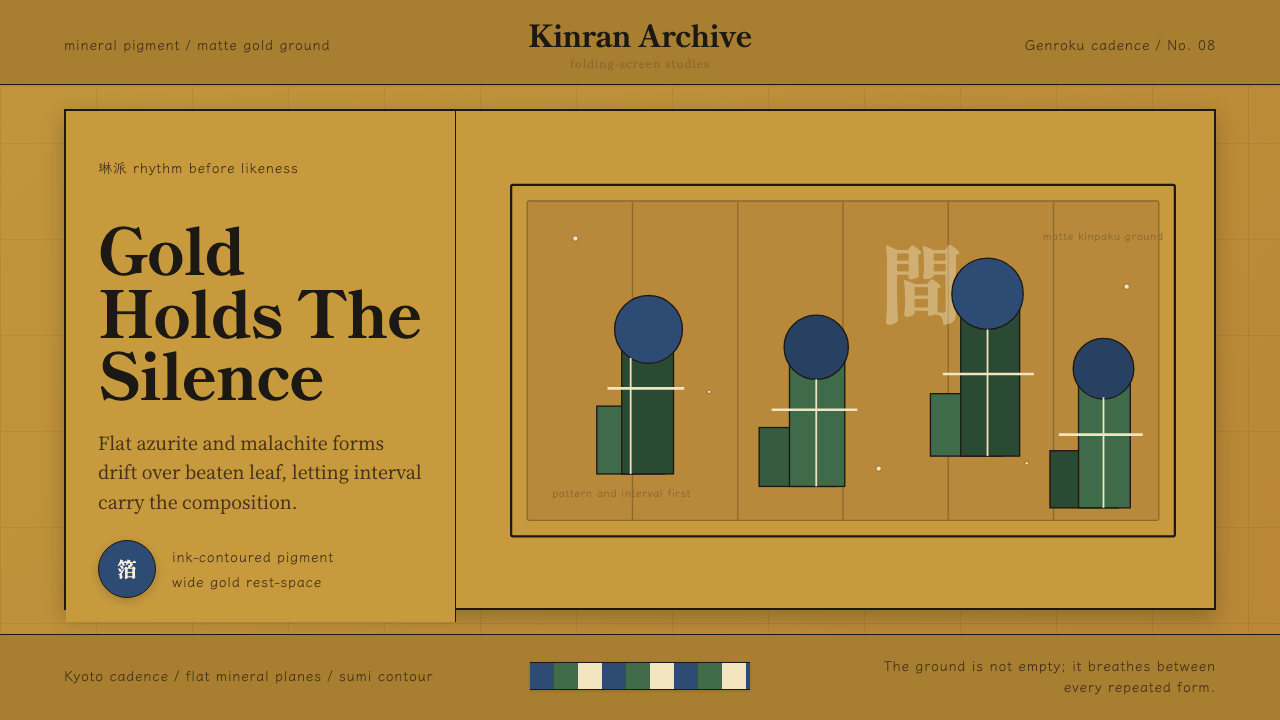 Edo Rinpa (Kōrin)Matte gold breathes. Azurite and malachite repeats float across inked screen…
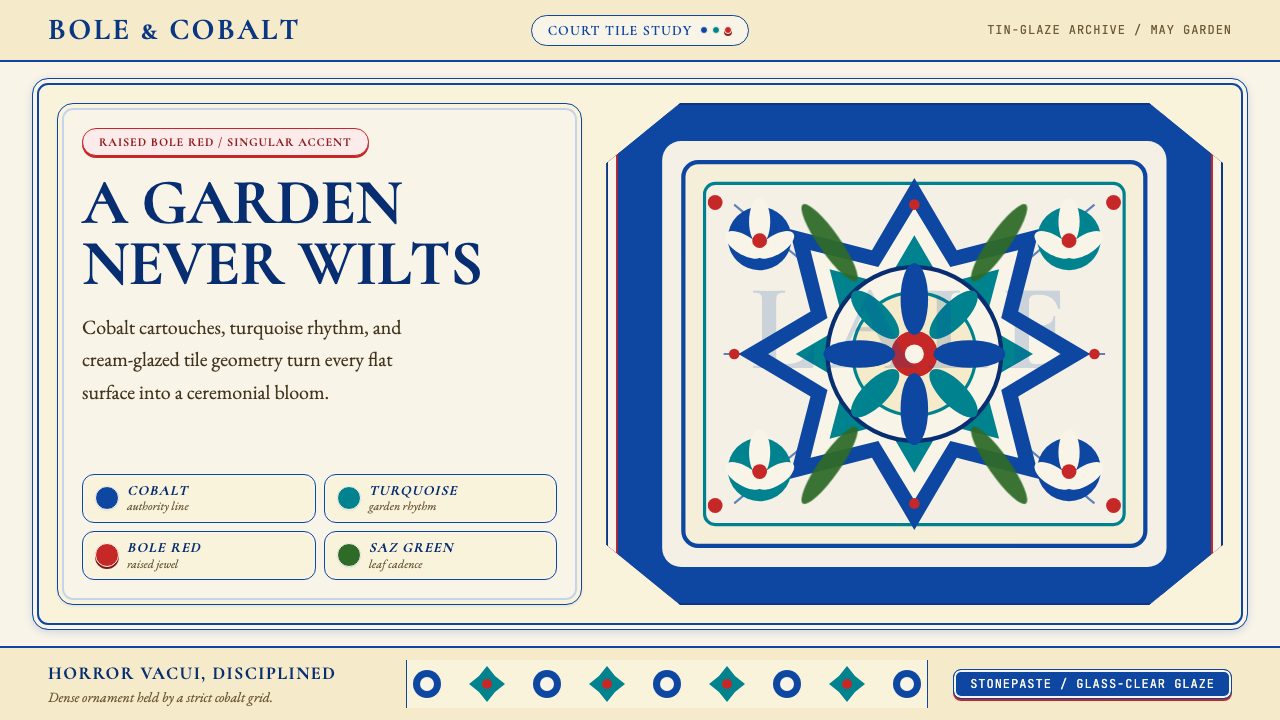 Turkish İznik CeramicBlooms with discipline. Cobalt grid and cream glaze hold turquoise motifs wit…
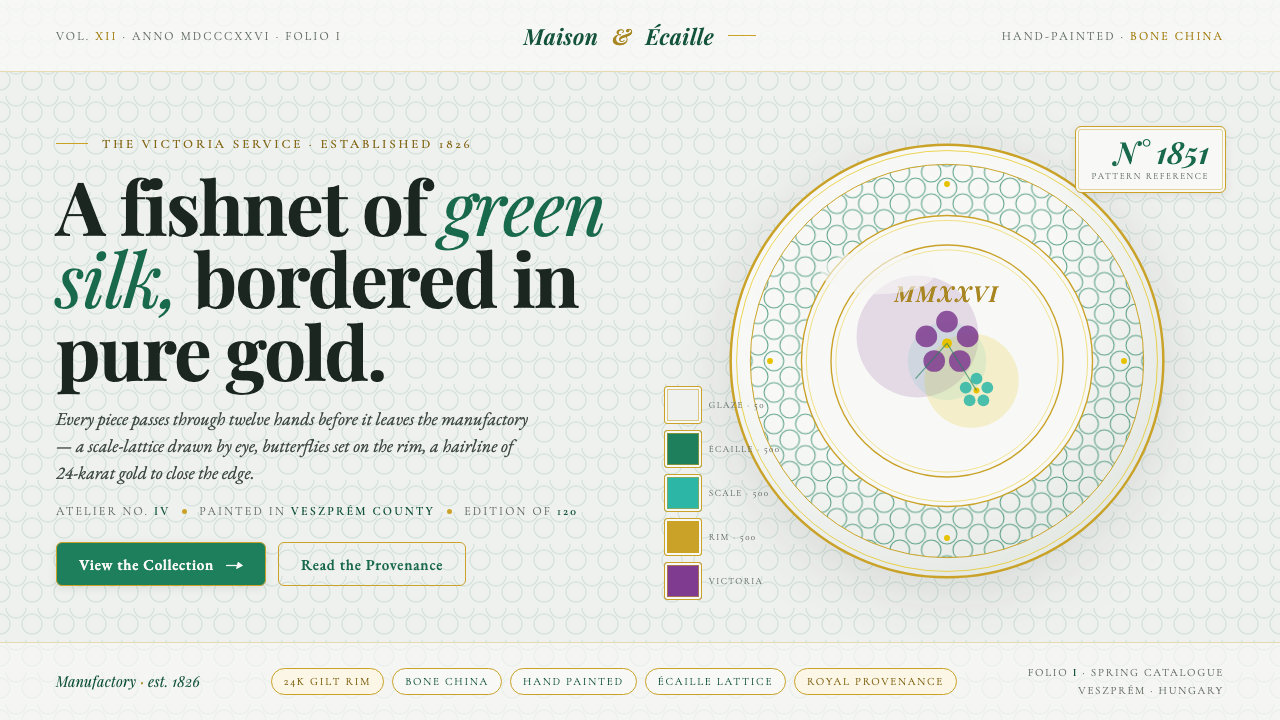 Herend PorcelainRoyal porcelain, drawn by hand. Cool glaze, écaille fishnet, gilt rim, Playfa…
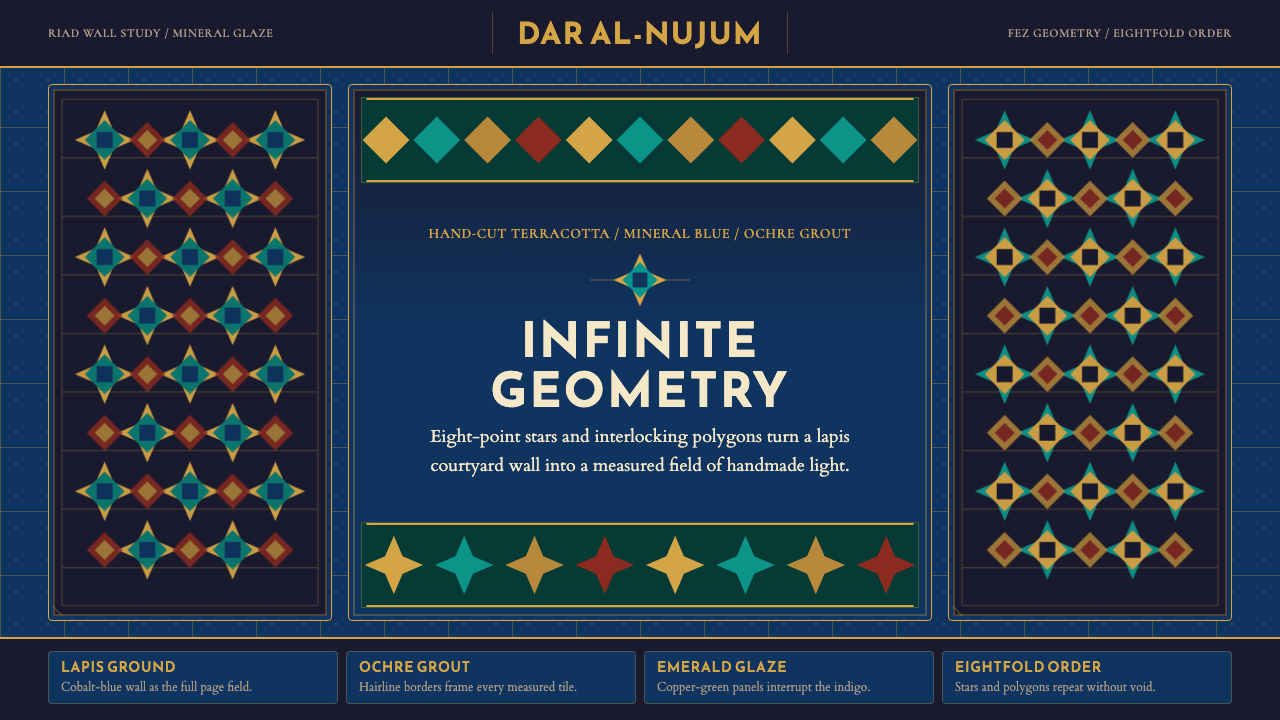 Moroccan Zellige TileLuxurious geometry without void. Lapis ground, ochre borders, and eight-point…
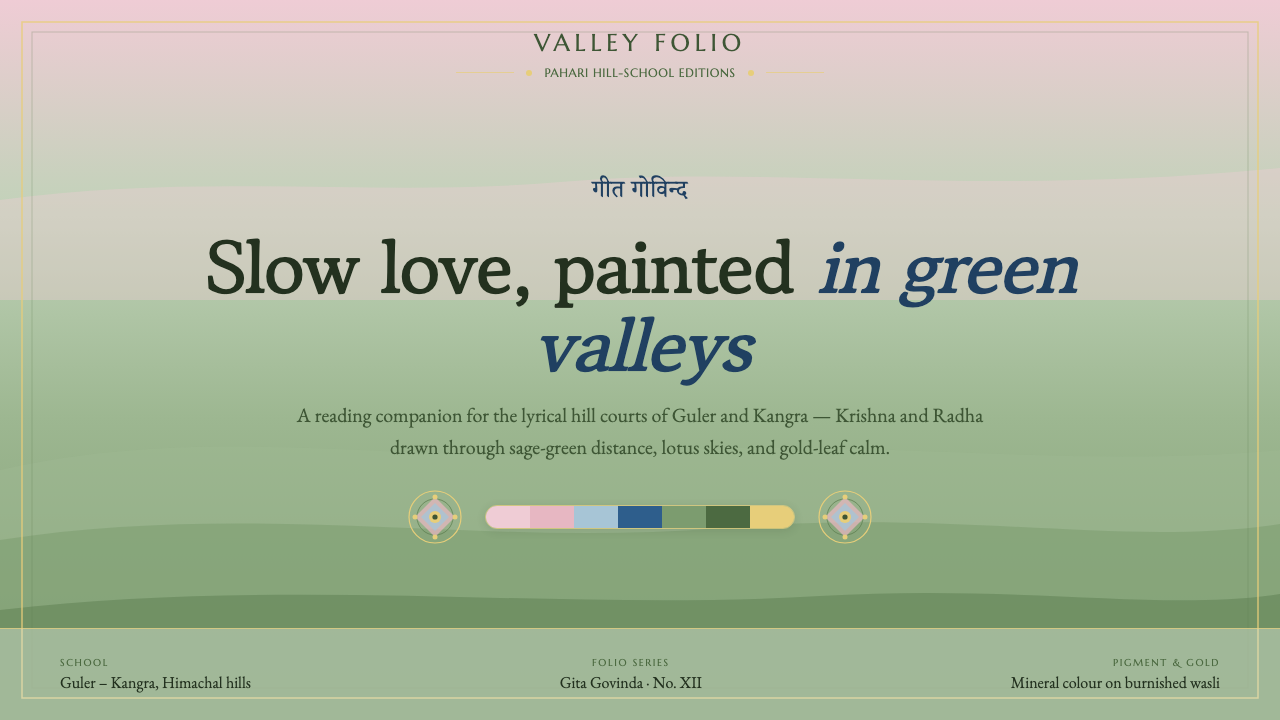 Pahari Kangra PaintingDevotional lyricism, painted slow. Sage-green hill grounds lighten to lotus-p…