What is Toss Korean Fintech Blue?
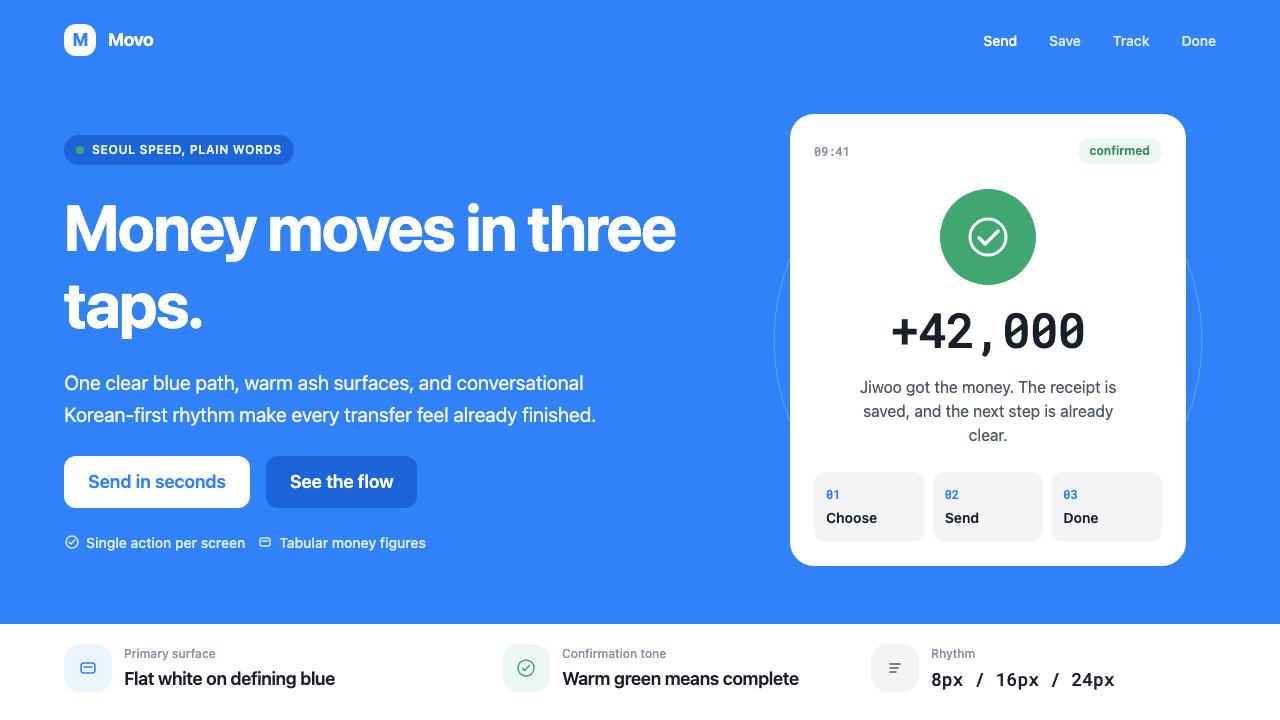
Toss rewired how Koreans think about money by making a bank transfer feel as effortless as sending a text message.
Toss Korean Fintech Blue in brief
Toss Korean Fintech Blue is the visual language pioneered by Viva Republica's Toss super-app, which launched in South Korea in 2015 and redefined mobile finance for a generation that grew up on instant messaging. The style is built around a single, commanding blue — vivid enough to signal confidence and technology, composed enough to project the trustworthiness expected of a financial institution. Against warm ash-tinted neutral surfaces, that blue reads as a friendly authority: not a bank vault, but a smart friend who happens to handle your money.
The system's organizing philosophy is one action per screen. Every layout is designed so that the user's eye and thumb arrive at one destination — a large, pill-shaped blue button — without distraction. Generous whitespace cradles money amounts and account balances, giving numbers room to breathe and preventing the visual anxiety associated with traditional banking interfaces packed with fine print and disclaimers. A warm green confirmation mark closes each successful transaction, offering an emotional punctuation mark that says the job is done.
Alongside the blue, the Toss Design System deploys Pretendard — a contemporary Hangul-first typeface — across four weights that cover every level of the hierarchy, from the largest balance display to the smallest legal caveat. Crucially, the copy itself is designed: Toss writes in conversational Korean, addressing users as informal companions rather than account holders, which makes the language as integral to the aesthetic as the color or the spacing.

Where does Toss Korean Fintech Blue come from?
Toss was founded in 2013 by Lee Seung-gun, a former dental school student turned serial entrepreneur who had failed eight previous startup attempts before hitting on a solution to a problem every Korean with a smartphone understood: domestic bank transfers required a labyrinthine sequence of bank-specific apps, public certificate installations, security card inputs, and pop-up windows that could consume ten minutes for a transaction that should take ten seconds. Lee's insight was not technical novelty — real-time transfer infrastructure already existed in Korea — but experiential: the friction was entirely unnecessary, and removing it was a product design problem as much as a regulatory one.
The company spent nearly two years navigating Korea's financial regulators before launching publicly in February 2015. Almost immediately, Toss attracted users at a rate that surprised even its founders: the app's three-tap transfer flow became a cultural reference point, and by 2019 it had grown into a super-app offering insurance, credit scores, investment accounts, and a neobank. With that expansion came the need for a systematic visual identity that could scale across dozens of product surfaces while maintaining the spare, confident feeling of the original transfer experience. The Toss Design System, developed internally by Viva Republica's product and design teams, codified what had worked in the early product into explicit principles.
The choice of Pretendard as the system's primary typeface was itself a statement of Korean design coming of age. Designed by Kil Hyung-jin and released as open source, Pretendard was built to solve a longstanding problem: Korean digital typography had long suffered from a mismatch between Hangul characters and the Latin characters that appear alongside them in mixed-script contexts — phone numbers, brand names, English loanwords. Pretendard harmonized both scripts at the optical level, producing a typeface where a Korean sentence and an embedded English word feel designed together rather than concatenated. Its adoption by Toss, and subsequently by a large portion of the Korean tech industry, effectively made it the default voice of a generation of Korean digital products.
The visual identity's evolution also reflects the broader trajectory of Korean consumer tech. In the early smartphone era, Korean financial apps were notorious for their complexity — multiple security plugins, mandatory desktop components, and interfaces that seemed designed to satisfy regulators rather than users. Toss's design was a deliberate inversion of that tradition, influenced by the clean interface conventions of global messaging apps and Korean e-commerce platforms that had already proved simplicity could win user trust. The warm neutral backgrounds and conversational tone borrowed from the language of social apps; the commanding blue borrowed from the established color conventions of financial trust. The synthesis was distinctly Korean: technically sophisticated, socially attuned, and built for speed.
What defines the Toss Korean Fintech Blue look?
The Signature Blue
One blue does almost all the work. It is vivid but not electric — saturated enough to command attention on a white or ash-neutral surface, cool enough to read as composed rather than excitable. The blue appears on the primary action button, on active navigation states, on interactive links, and occasionally as a large background fill behind hero content. Everything else retreats to neutral: warm white, ash gray, or near-black for text. The effect of this restraint is that whenever the blue appears, the eye knows something is actionable.
One-Action Screens
The defining spatial principle is that each screen in a flow presents exactly one primary action. This is enforced visually through scale: the blue pill button is large relative to the screen, and all surrounding content — labels, secondary information, legal micro-copy — is set at a noticeably smaller scale and lighter weight. Whitespace is not decoration but architecture, creating a gravitational pull toward the single focal point. Users do not scan or parse; they arrive and act.
Warm Neutral Surfaces
Rather than pure cold white, the system's background and card surfaces carry a subtle warmth — an ash tone that sits between white and a very pale gray, leaning slightly toward beige without committing to it. This warmth softens the potential severity of a blue-and-white scheme and aligns the interface emotionally with the conversational, friend-like tone of the copy. Cards that float above the surface use the same warm family, differentiated by a gentle elevation cue rather than a hard border.
Pretendard Typographic Scale
Pretendard's four weights — from a lean regular through to a commanding bold — define the entire information hierarchy without requiring a second typeface. Balance and account amounts are set large and heavy, commanding immediate attention; labels and category names drop to a middle weight and smaller size; legal and auxiliary text retreats to the lightest weight at a reduced scale. The optical harmony between Hangul and Latin characters within Pretendard means that Korean sentences, English brand names, and numeric amounts all feel like members of the same designed family.
Conversational Copy as Visual Element
The writing style is inseparable from the visual design. Toss writes in informal Korean — the register used between friends or peers, not between an institution and a customer. Sentences are short. Instructions are direct. Error messages explain what went wrong and what to do next without legalese. This tone means the text on screen is visually light even when it carries significant information, because short, clear sentences at a readable size take up less space and create less anxiety than longer, denser institutional prose.
Pill Button as System Signature
The fully rounded, pill-shaped primary button is the most recognizable single element in the Toss visual system. Its silhouette — wide enough to span most of the screen width, tall enough to be comfortable for a thumb — gives the blue its most concentrated expression. The pill shape is also culturally legible in the Korean mobile context, where it has become strongly associated with the specific brand of frictionless, confident digital action that Toss introduced. A flat background, no gradient, no shadow: the button is itself, unambiguous and ready.
Green Confirmation Moment
After the blue drives the action, a warm green mark closes the loop. The confirmation screen — displaying the green checkmark alongside the transferred amount — is designed to provide emotional resolution, not just informational completion. The green is warmer and slightly less saturated than a pure signal green, making it feel celebratory rather than clinical. It appears briefly, prominently, and then the app returns to its resting state, reinforcing the philosophy that a completed transaction should leave no residue — no prompts, no upsells, no lingering forms.

Who shaped Toss Korean Fintech Blue?
Lee Seung-gun founded Viva Republica and Toss after eight failed startup attempts, identifying the extreme friction in Korean domestic bank transfers as both a cultural frustration and a product opportunity. His decision to address the problem as a user-experience problem first — rather than a technology or compliance problem — set the design philosophy that the Toss visual system would later make explicit. His public communication style, frank and informal, directly influenced the brand's conversational copywriting register.
The internal team responsible for building and maintaining the Toss Design System codified what had worked in the early product — the commanding blue, the pill button, the one-action screen structure — into a systematic set of components and principles that could scale across a super-app with dozens of feature areas. Their work transformed an intuitive early design into a reproducible visual language, and made the Toss aesthetic recognizable even on surfaces — insurance, credit, investment — far removed from the original transfer experience.
Kil Hyung-jin is the designer of Pretendard, the open-source typeface that became the typographic foundation of the Toss visual system and subsequently one of the most widely used Korean digital typefaces of its era. By solving the long-standing optical tension between Hangul and Latin character sets in mixed-script environments — a problem endemic to Korean digital publishing — Kil produced a typeface whose harmony across scripts made it the natural choice for any Korean digital product that combines Korean copy, English brand names, and numeric data on the same screen.
Beyond individual figures, Toss's visual identity reflects an organizational culture that treated design and copy as product — not as decoration applied after engineering decisions were made. The practice of writing conversational Korean at the level of each button label and error message, and of reviewing information architecture before visual styling, produced a design system whose coherence runs deeper than its color palette. This culture, sometimes described as 'product thinking as design thinking,' became influential across the Korean startup ecosystem and is visible in the wave of fintech and consumer apps that followed Toss's design conventions.
How do you use Toss Korean Fintech Blue today?
Toss Blue is one of the most transferable contemporary fintech design languages because its logic is behavioral rather than decorative: every visual decision exists to reduce hesitation, direct attention, and provide emotional closure. Applying it well means understanding that the blue is a signal, the whitespace is a decision, and the copy is part of the design — not a placeholder to be filled in later.
For presentation decks, the style works best when each cover slide commits to a full-bleed blue field with white type — large, minimal, direct — and interior slides are treated as product screens: one primary message per slide, secondary data at a noticeably reduced scale, and the same warm neutral background that grounds the Toss interface. Data slides should follow the single-metric-first principle: the most important number is the largest element on the page, set in a heavy weight, with supporting breakdown appearing below at half the visual weight. Charts use the signature blue for the primary series and warm gray for comparison or secondary series; no decorative fills, no gradients.
For web UI, the system is ideally suited to dashboards, account overview pages, and pricing tables where decision-making is the user's primary task. Apply a strict vertical rhythm with generous line height, keep the content column narrower than the screen width to create natural lateral breathing room, and use the blue exclusively for interactive controls and positive states. Card components should float on a warm neutral field without hard borders — a subtle lightening of the surface communicates elevation without adding visual weight. Navigation labels should be typographic rather than iconic wherever legibility permits.
For editorial and marketing contexts, the style's authority and warmth make it effective for long-form financial content — explainers, product announcements, regulatory communications — where trust is the primary persuasive currency. Use wide margins for pull quotes or definitions, set body text at a reading-comfortable scale with generous leading, and deploy the blue only at meaningful moments: a key statistic, a call-to-action, a highlighted term. Marketing hero sections work well with the full blue fill and a single large white statement, echoing the simplicity of the app's own cover states.
A common mistake when adapting Toss Blue is importing the visual surface without the underlying spatial discipline. Designers sometimes adopt the blue and the pill button but crowd the layout with multiple simultaneous calls to action, dense supporting copy, or competing visual hierarchies — the opposite of the one-action principle that gives the style its power. Similarly, substituting a colder or more electric blue breaks the warmth balance; the original is calibrated to read as trustworthy rather than aggressive. Copy that defaults back to formal or institutional language also undermines the system: the visual and verbal tones are designed together, and separating them produces an interface that looks like Toss but feels like a legacy bank.

Toss Korean Fintech Blue — FAQ
Why does Toss use only one blue instead of a full color palette?
The single-blue discipline is a direct expression of the one-action-per-screen philosophy. A richer palette would create more opportunities for the eye to hesitate — to compare, evaluate, and rank competing colors before settling on a destination. By making the blue the only saturated color in the system, Toss ensures that anywhere the blue appears, attention arrives without competition. This is not aesthetic minimalism for its own sake; it is behavioral engineering through color. The warm neutrals, ash grays, and near-black text tones support the blue without challenging it, making every screen a resolved composition with a single clear focal point.
Is this style appropriate for non-financial digital products?
The Toss aesthetic travels well to any product where a small number of clear, confident actions matter more than browsing or exploration — task management apps, booking flows, onboarding sequences, checkout processes, and notification-heavy mobile products all share the single-action-per-screen logic that Toss embodies. It is less suited to products that reward exploration: editorial platforms with rich imagery, e-commerce surfaces where browsing and discovery are the primary experience, or entertainment products where visual density and sensory richness are features rather than failures. The test is whether the user's task has a clear completion state; if it does, Toss-derived conventions will likely serve it well.
How does the Toss visual system handle dark mode?
Dark mode in the Toss system maintains the blue-as-primary-action principle while inverting the surface hierarchy. The backgrounds shift to deep charcoal tones that retain warmth — not pure black, which would feel cold — and the blue button remains the primary call to action at a similar saturation level. The warm green confirmation mark transfers naturally because warm hues hold their emotional character against dark grounds. The critical adjustment is that secondary text and surface differentiation require more deliberate control in dark mode, since the ash-neutral differentiations that work on light surfaces can collapse into indistinction on dark ones. The style's strength in dark mode is the same as in light: the blue always tells you where to go.
What distinguishes Toss Blue from other blue-dominant fintech visual systems?
Most blue-dominant fintech systems use blue to project corporate authority — a cold, slightly desaturated institutional tone inherited from traditional banking identity design. Toss's blue is warmer and more saturated than this convention, placing it closer to consumer tech than to banking heritage. The pill button shape, the conversational copy, and the warm neutral backgrounds together create a system that reads as friendly authority rather than corporate command. The integration of Hangul-Latin typographic harmony — a specifically Korean design challenge — also gives the system a cultural specificity that distinguishes it from the internationally generic blue-and-white fintech aesthetic that dominates Western markets.
Can the Toss style work for print or physical brand applications?
The Toss visual language translates reasonably well to print, particularly for materials where the digital brand experience should feel continuous: debit card design, financial statement cover pages, ATM interface graphics, and co-branded retail point-of-sale materials. The pill button translates to a pill-shaped badge or label element; the single-message-per-surface principle works well for wayfinding and transactional signage. The warm neutrals reproduce faithfully in coated stock printing. Where the style encounters limits in print is in materials that require rich photographic imagery, detailed infographics, or a wide tonal range — the system is optimized for clean, high-contrast digital rendering, and its restraint can read as underdeveloped in print contexts where the eye expects more environmental richness.
Related design styles
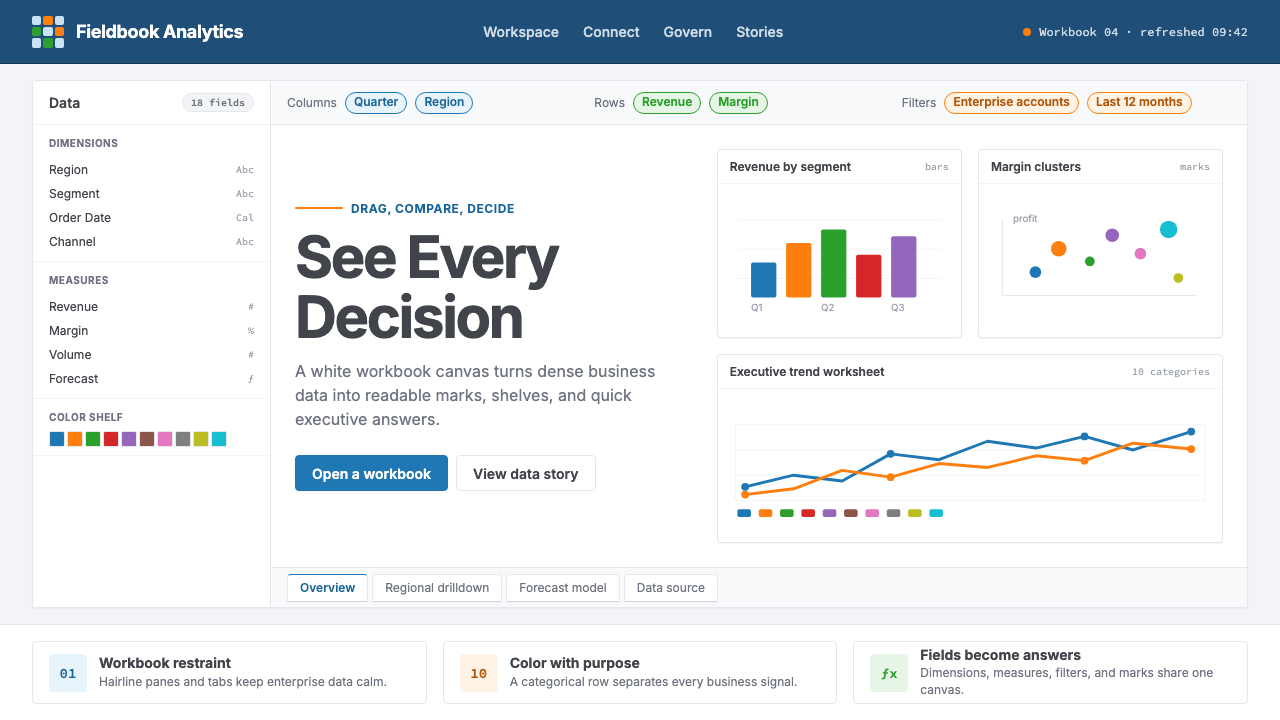 Tableau (Business Intelligence)Enterprise clarity. Navy workbook chrome, hairline panes, and 10-color marks…
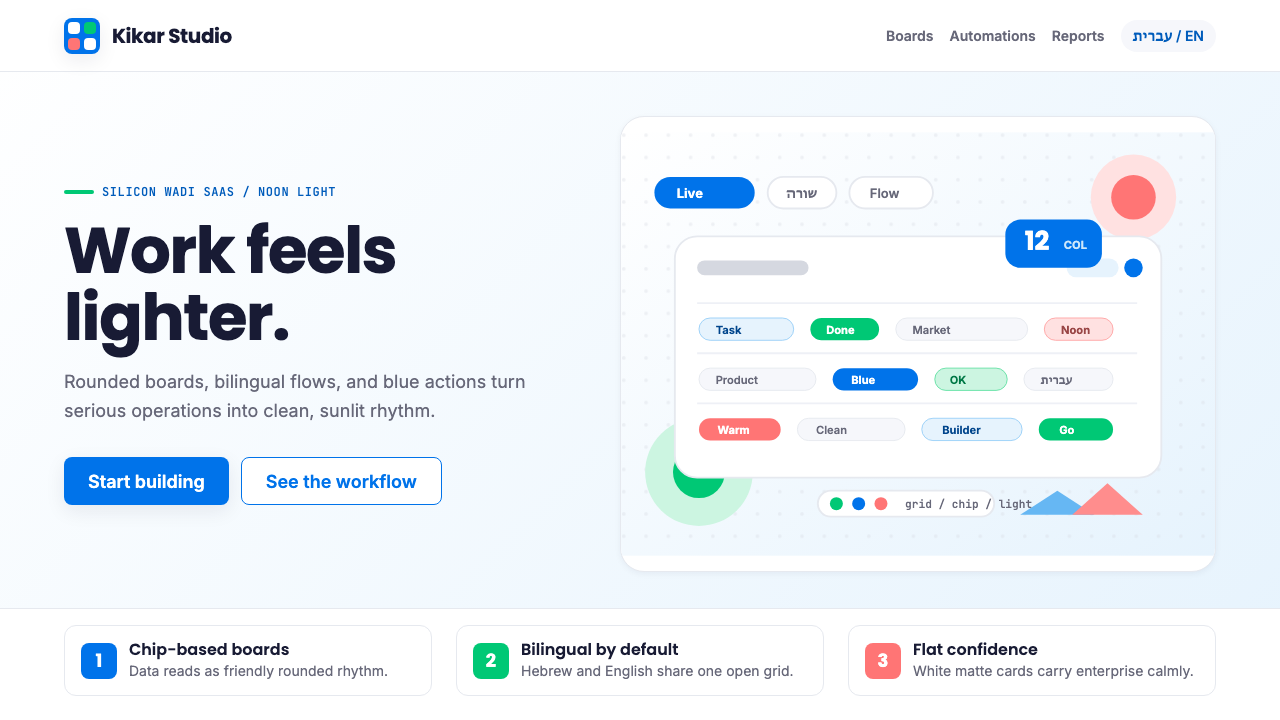 Tel Aviv Silicon WadiEnterprise feels sunny. Azure chips and Poppins grids soften flat SaaS surfac…
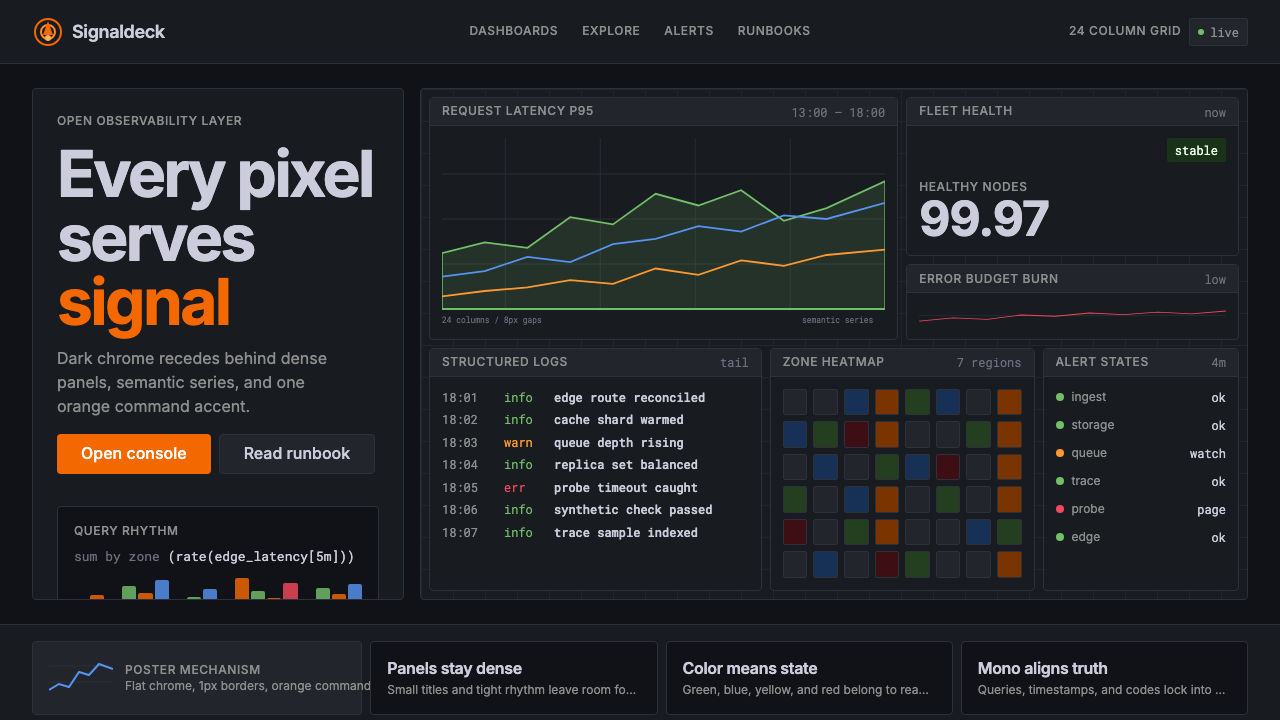 GrafanaData first, chrome last. Orange accent cuts through dense dark panels and sem…
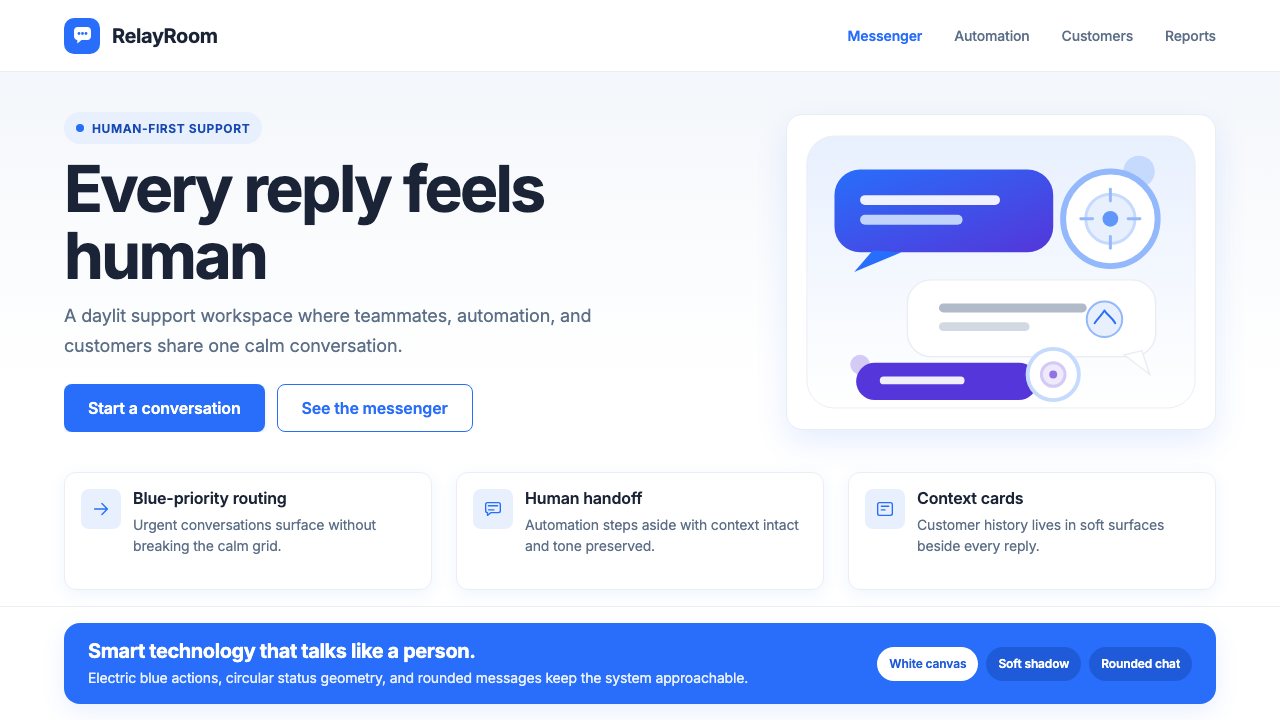 Intercom ModernWarm chat, sharp software. Electric blue bubbles on a daylit white grid.
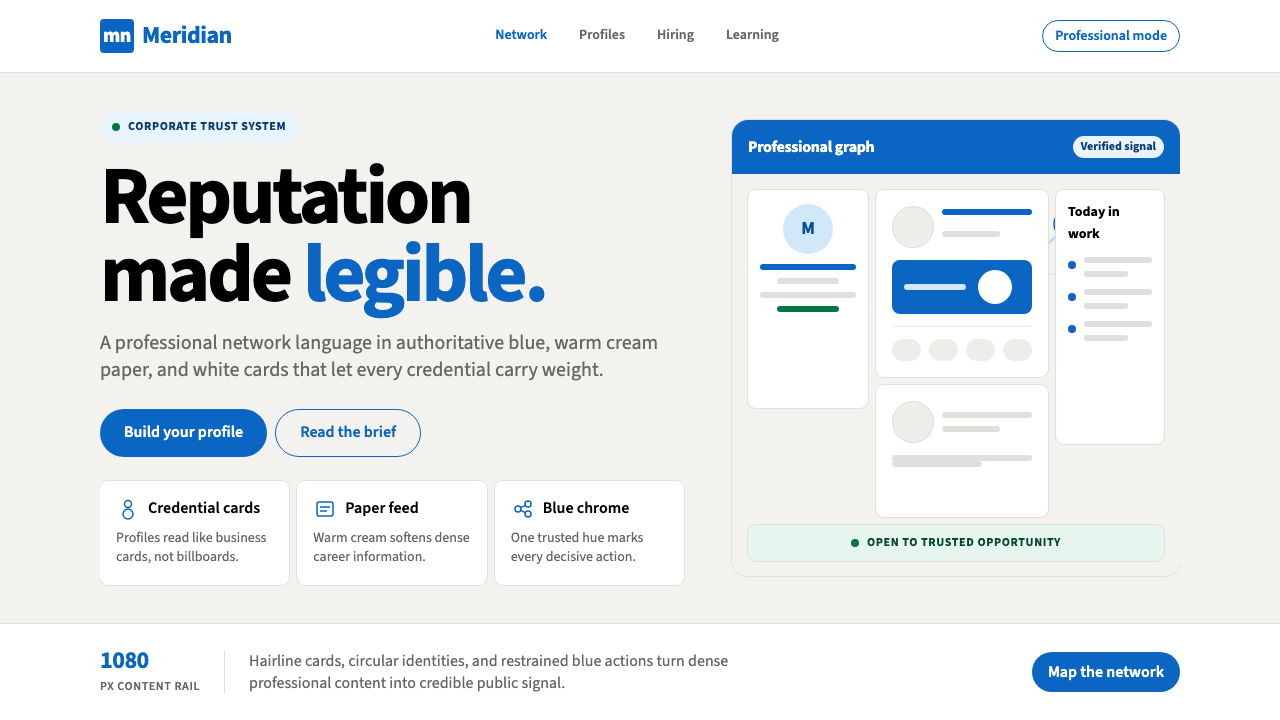 LinkedInCorporate trust, digitized. Authoritative blue frames white cards on warm cre…
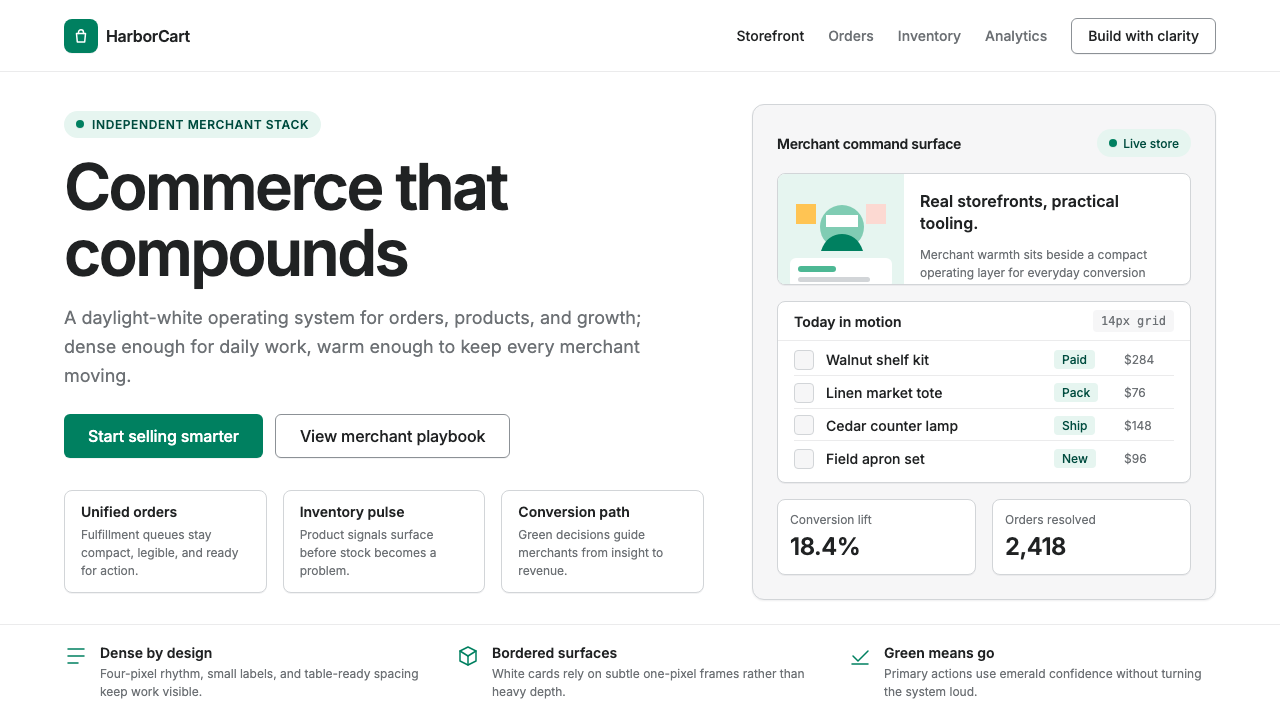 Shopify ModernMerchant ally, not corporate SaaS. Emerald actions on bordered white cards ca…