What is Tel Aviv Silicon Wadi?
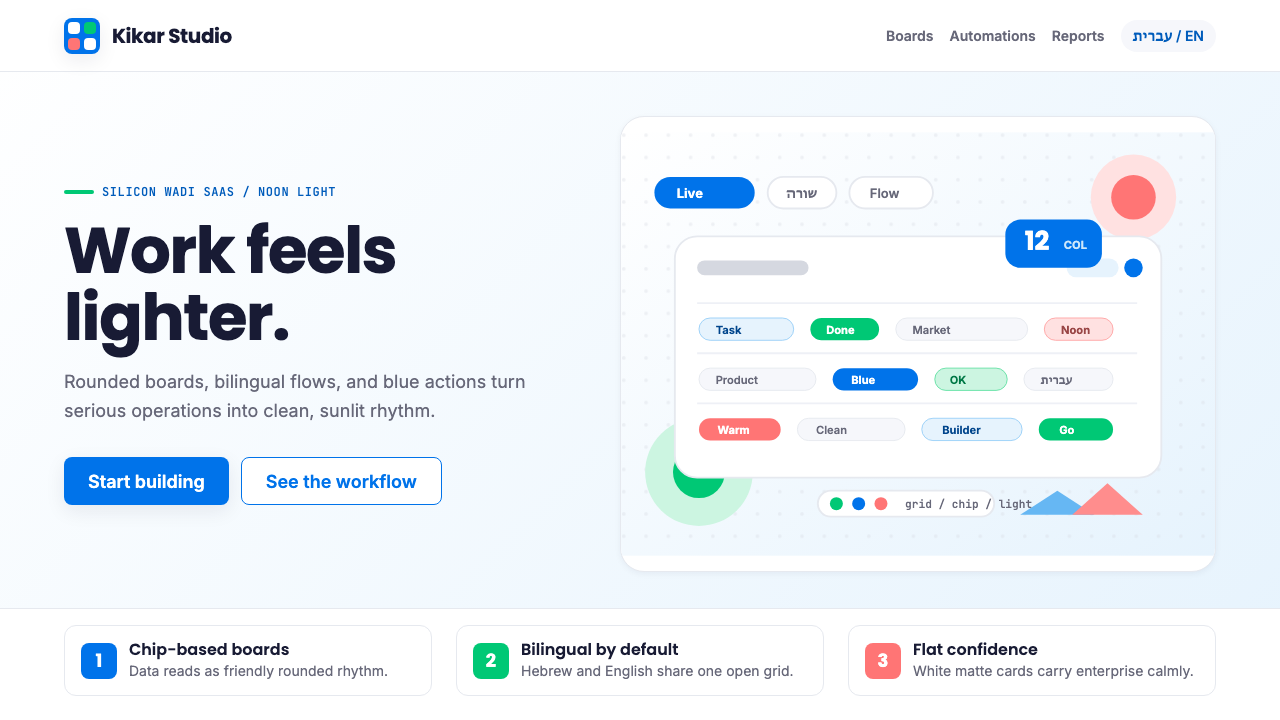
Silicon Wadi rewired enterprise software — sky-blue rounds, Mediterranean light, and the breezy confidence of a Rothschild Boulevard startup at noon.
Tel Aviv Silicon Wadi in brief
Tel Aviv Silicon Wadi style is the visual dialect that emerged from Israel's concentrated cluster of SaaS companies in the late 2010s and early 2020s. Companies such as Monday.com, Wix, Lemonade, and Fiverr developed interfaces that share a recognizable family resemblance: sky-blue primary tones, generous rounded geometry on every interactive element, matte-flat surfaces that avoid simulation of depth, and a color saturation strategy that loads illustration and branded chips with warmth while keeping the surrounding chrome near-white and airy.
The style sits between American tech minimalism and something distinctly warmer. Where Silicon Valley flat design of the 2010s could feel clinical, Silicon Wadi work reads as approachable — even friendly. Rounded chips replace hard rectangular tables, conversational copy sits in generous type, and hero illustrations carry enough color to serve as the emotional anchor of a page without burdening the data beneath them. The effect is enterprise software that does not feel like a burden.
Bilingual Hebrew-English interface conventions are embedded in the style's DNA. Because Hebrew runs right-to-left while English runs left-to-right, Israeli product teams developed layout habits — centered text blocks, symmetrical padding, icon-forward navigation — that translate naturally into globally legible interfaces. This bilingual fluency gives Silicon Wadi products a structural openness uncommon in purely Anglophone SaaS design.

Where does Tel Aviv Silicon Wadi come from?
Israel's technology industry took root in the 1990s, catalyzed by a combination of factors unique to the country: mandatory military service that placed tens of thousands of young people through Unit 8200 and similar intelligence and technology units, a culture of flat hierarchy and direct communication inherited from kibbutz organizational models, and waves of highly educated immigration following the Soviet Union's dissolution. By the early 2000s, Tel Aviv and the adjacent Herzliya Pituach corridor had become the densest startup ecosystem outside Silicon Valley by venture funding per capita.
The visual identity of this ecosystem consolidated noticeably between 2018 and 2024, as the Israeli SaaS cohort — Monday.com, founded 2012; Wix, founded 2006; Lemonade, founded 2015; Fiverr, founded 2010 — matured from scrappy challengers to publicly listed companies. Going public demanded global brand coherence, and the design systems these companies built for their IPO-era products became the de facto visual standard for the next generation of Israeli product teams learning from them.
Mediterranean geography and culture left a visible mark. The light of Tel Aviv — intense, high in the sky, bouncing off pale limestone and the sea — conditions local visual sensibility toward brightness and contrast rather than the muted, overcast tones common in Northern European or Pacific Northwest design. The city's café culture, its informal dress code even in boardrooms, and the compressed distance between engineers and their managers all contributed to a product culture that resisted the stiff formality of traditional enterprise software aesthetics.
Typography played a structural role in the style's formation. The need to support Hebrew — a language with its own complex script, requiring dedicated typeface design and bidirectional text rendering — pushed Israeli product teams to develop strong layout systems that did not depend on text direction for their visual coherence. Rounded geometric display typefaces became favored in English-facing contexts partly because their even stroke weight and open counters survived the visual negotiation between left-to-right Latin and right-to-left Hebrew contexts without friction.
Design figures such as Oded Ezer, one of Israel's most prominent typographers, brought serious typographic thinking into Israeli visual culture. Ezer's experimental Hebrew type work — treating letter-forms as sculptural objects — elevated the status of typography in Israeli design education and indirectly influenced the care with which product companies approached their own type choices. Founders like Avishai Abrahami of Wix and Roy Mann of Monday.com built design-conscious cultures at the leadership level, ensuring that visual quality was a first-class concern rather than an afterthought.
What defines the Tel Aviv Silicon Wadi look?
Sky-Blue Primary Palette
The dominant hue across Silicon Wadi interfaces is a clear, medium-bright blue that evokes open sky and Mediterranean water rather than the darker, more authoritative blue of traditional enterprise software. This blue appears on primary action buttons, progress indicators, selected-state chips, and branded highlights. It reads as confident without feeling heavy, and it pairs naturally with warm white backgrounds to produce the airy quality the style is known for.
Generous Rounded Geometry
Every interactive container — buttons, cards, input fields, chips, tags, modal dialogs — carries a corner radius large enough to read as deliberately friendly rather than merely softened. Fully pill-shaped buttons appear frequently, as do round avatar containers and circular status indicators. This commitment to roundness distinguishes the style from both hard-cornered American enterprise design and the subtly rounded aesthetic of Scandinavian minimalism; the curves here are intentional and expressive, not shy.
Illustration as Emotional Anchor
Silicon Wadi products invest heavily in custom illustration — particularly on onboarding screens, empty states, and hero sections. These illustrations carry the saturation load for the entire interface: they are warm, often multicolored, and deliberately human-centered, featuring characters in casual collaborative scenes. The surrounding interface can remain near-monochrome precisely because the illustration absorbs the emotional temperature. Removing the illustration from a Silicon Wadi page leaves the chrome feeling correct but cold.
Matte-Flat, Shadow-Light Surfaces
The style avoids both the deep shadows of skeuomorphic design and the shadow-free flatness of early mobile design systems. Instead, surfaces carry very soft, diffuse, low-contrast shadows that suggest floating without dramatizing depth. Cards hover slightly above the background rather than being flush with it, creating gentle spatial layers. This approach produces hierarchy without weight — the eye knows what is above what without the page feeling heavy or dimensionally exaggerated.
Multicolored Chip Systems
Status tags, category labels, and data-classification chips in Silicon Wadi interfaces use a broad, coordinated range of soft tints — coral, lavender, mint, amber, sky blue — each distinct enough to carry meaning but muted enough not to compete with the primary action palette. This chip color system originated in Monday.com's column-color model, where users could assign any of dozens of hues to work items, and spread as a convention across the ecosystem. It creates visual richness without requiring complex data visualization.
Bilingual Layout Intelligence
The requirement to support right-to-left Hebrew and left-to-right English simultaneously produced layout conventions that are structurally neutral to text direction. Centered headings, symmetrically padded containers, icon-led navigation labels, and component designs that mirror cleanly on a logical axis all reflect this discipline. Even in purely English-facing products, the legacy shows: Silicon Wadi interfaces tend to use more centering, more icon-text pairing, and more symmetric whitespace than comparable American SaaS products.
Friendly Enterprise Typography
Typeface choices favor geometric or humanist sans-serifs with open apertures, even stroke weight, and letterforms that read clearly at the small sizes common in dense data interfaces. Type scale is functional and ample — body text at a comfortable reading size, labels at a clearly smaller scale, headlines bold enough to anchor without dominating. The overall voice is professional but conversational: tight technical specs coexist with marketing-style warmth in the same interface.

Who shaped Tel Aviv Silicon Wadi?
Co-founder and CEO of Monday.com, Mann shaped one of the most widely studied design systems in the Israeli SaaS ecosystem. Under his leadership, Monday.com developed the multicolored chip model, the rounded card-based interface architecture, and a product philosophy that prioritized immediate visual comprehension over feature density. Monday.com's design system became a reference point for dozens of subsequent Israeli product teams, establishing the colorful-friendly-flat combination as a regional standard.
Co-founder and CEO of Wix, Abrahami built the company from a simple website builder into a platform serving hundreds of millions of users, with design sensibility as a core pillar of the product proposition. Wix's visual builder interface — with its drag-and-drop canvas, template marketplace, and design-system-driven component library — helped normalize the idea that professional-quality visual design should be accessible to non-designers, a democratizing ethos that runs through the Silicon Wadi style broadly.
Co-founder and CEO of Lemonade, Schreiber oversaw the development of one of the most visually distinctive brands in Israeli tech — a bright, high-contrast pink-and-white identity that demonstrated how far the Silicon Wadi warmth aesthetic could be pushed in a consumer-facing financial product. Lemonade proved that the approachable, color-forward Silicon Wadi approach was viable even in regulated, traditionally conservative industries, expanding the perceived range of the style.
One of Israel's most internationally recognized typographers, Ezer built a practice around experimental Hebrew type — treating letterforms as sculptural and biological forms, combining typography with digital fabrication and speculative design. While his own work is far removed from the commercial SaaS context, his decades of elevating typographic ambition within Israeli design culture contributed to an environment where product companies took their type choices seriously. His influence runs beneath the surface of the Silicon Wadi style as cultural infrastructure.
How do you use Tel Aviv Silicon Wadi today?
Silicon Wadi style translates well across multiple output formats because its principles are grounded in approachability and visual hierarchy rather than in period-specific ornamentation. Applying it correctly means understanding the balance at the heart of the style: illustration carries warmth, the surrounding interface carries clarity, and rounded geometry bridges both. When any one of these three elements is missing, the style collapses toward either blandness or visual noise.
For presentation slides, the style is well suited to both cover and content pages. A cover benefits from a strong hero illustration placed at generous scale alongside a bold, rounded-type headline on a near-white or very soft warm background — the illustration doing the emotional heavy lifting while the type remains clean. Content slides should organize information into card-like blocks with visible breathing room between them; avoid tight tabular grids in favor of chip-and-label systems for categorical data. Data slides can use the multicolor chip palette directly — colored bars, segmented progress rings, and status indicators all fit naturally within the vocabulary. Avoid the common temptation to use gradients on chart elements; the style's surfaces remain matte.
For web interfaces, the style is most naturally at home in dashboards, project management tools, and product marketing pages. The approach: keep the background near-white with generous padding, use the sky-blue primary for interactive elements and calls to action, deploy the soft-tint chip palette for status and category information, and allow at least one prominent illustration to provide emotional warmth on key conversion or onboarding surfaces. Navigation should be clear and labeled rather than icon-only; the style is not spare enough to support heavy icon minimalism without losing its conversational character.
For editorial and marketing work, the Silicon Wadi approach supports high-energy, benefit-led layouts. Section headers are large and friendly, pull quotes use colored chip-style backgrounds rather than decorative quote marks, and feature grids alternate illustrated panels with clean data or text panels to maintain rhythm. Email templates in this style use generous white space, a single sky-blue call-to-action button, and a hero illustration at the top — keeping the message scannable and warm. Marketing landing pages work well with the style's combination of cheerful illustration, bold section headlines, and a restrained supporting palette.
A common mistake when applying Silicon Wadi style is over-illustrating — placing custom artwork on every surface until the interface loses hierarchy and everything competes equally for attention. Illustration should be rationed: one hero illustration per major page or section, with the remainder of the interface kept clean and type-led. A second common error is rounding everything indiscriminately; the style calls for generous but consistent corner radii, not maximum rounding on every element regardless of context. Data tables, for instance, may carry lighter rounding than modal containers. Finally, the multicolor chip palette works only when the tints are genuinely soft and coordinated; substituting saturated primaries for the muted tints produces a garish result that reads as a misapplication rather than an evolution of the style.

Tel Aviv Silicon Wadi — FAQ
How is Silicon Wadi different from generic friendly SaaS design?
Generic friendly SaaS design tends to be a diluted application of principles borrowed from multiple sources — some Material Design, some Apple Human Interface, some Atlassian design system conventions — without the coherent underlying logic that gives Silicon Wadi its recognizable character. The distinctive Silicon Wadi markers are: the specific sky-blue primary (not teal, not indigo), the investment in custom illustration as a structural page element rather than decoration, the multicolored chip system for categorical data, and the bilingual layout intelligence that produces centered, symmetrical structures. When all four are present, the result is unmistakably Silicon Wadi; when only one or two appear, the result is simply friendly.
Can Silicon Wadi style work for a dark-mode interface?
Dark mode is not the natural habitat of this style. Silicon Wadi's warmth depends significantly on the contrast between near-white backgrounds and colored elements; invert to a dark ground and the sky-blue primary loses some of its Mediterranean lightness, the soft-tint chips can become harder to distinguish, and the warm illustration palette may fight the darker surroundings rather than floating within them. A dark Silicon Wadi variant is possible, but it requires careful recalibration — shifting the blue toward a brighter, more luminous tone, intensifying the illustration palette, and desaturating the chip tints to maintain softness. The result tends to feel more like a mainstream product-design dark mode with Silicon Wadi illustration influence than a true dark-mode expression of the style.
Is the multicolored chip system appropriate for serious data products?
It depends on what 'serious' means in context. For work-management, CRM, and project-tracking data — where items have categorical status, priority, or owner information — the multicolored chip system is not only appropriate but functionally superior to monochrome alternatives, because color encodes meaning at a glance without requiring the user to read every label. For highly analytical data products — financial dashboards, scientific visualization, medical data — the chip system can introduce visual noise that competes with the data's structural relationships. In those contexts, a more restrained palette with color reserved for alerts and critical states typically serves better. The chip system is a tool for categorical navigation, not for quantitative reasoning.
What separates authentic Silicon Wadi work from imitations?
Imitations typically borrow the color palette and the rounded corners while neglecting the structural intelligence underneath. The most common failure mode is using rounded geometry without the underlying layout discipline — placing pill buttons inside rigid grid systems with no breathing room, or using the sky-blue primary for every interactive element without a coherent hierarchy. A second common failure is substituting stock illustration for the custom-illustrated warmth that makes the style work; stock illustration introduces visual inconsistency that fragments the page's coherence. Authentic Silicon Wadi work has a single-author quality to its illustration and a spatial generosity to its layout that signals intentional design rather than style-kit assembly.
Does this style work outside software — for printed materials or physical branding?
The Silicon Wadi style transfers reasonably well to print and physical brand contexts, with some adaptation required. The sky-blue primary and the rounded geometry work well on printed conference materials, branded merchandise, and packaging. The illustration system translates naturally to large-format prints and exhibition materials. The main adaptation needed is in the chip system: the soft screen-optimized tints may need to be slightly intensified for print reproduction to maintain their distinctness. Physical signage benefits from the style's generous text scale and clear hierarchy. Where the style struggles in print is in contexts requiring monochrome or very limited color reproduction — the multicolor palette is integral enough that a two-color reduction often produces something that no longer reads as Silicon Wadi at all.
Related design styles
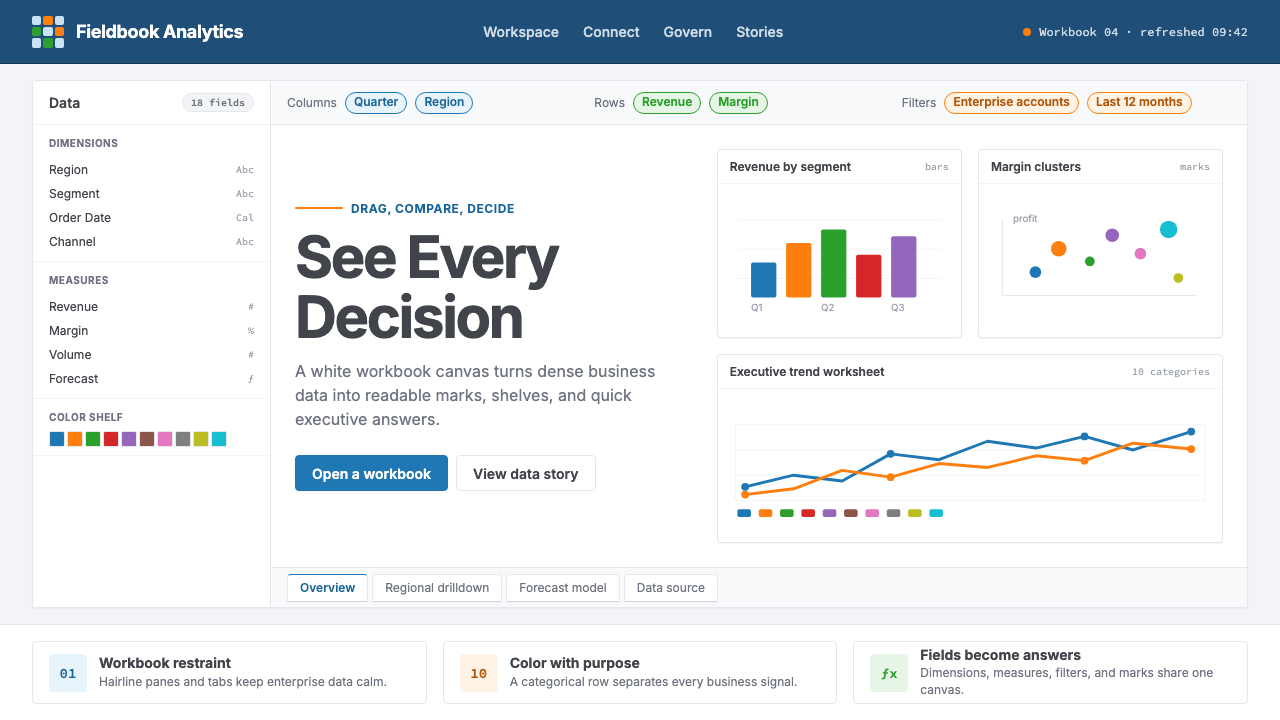 Tableau (Business Intelligence)Enterprise clarity. Navy workbook chrome, hairline panes, and 10-color marks…
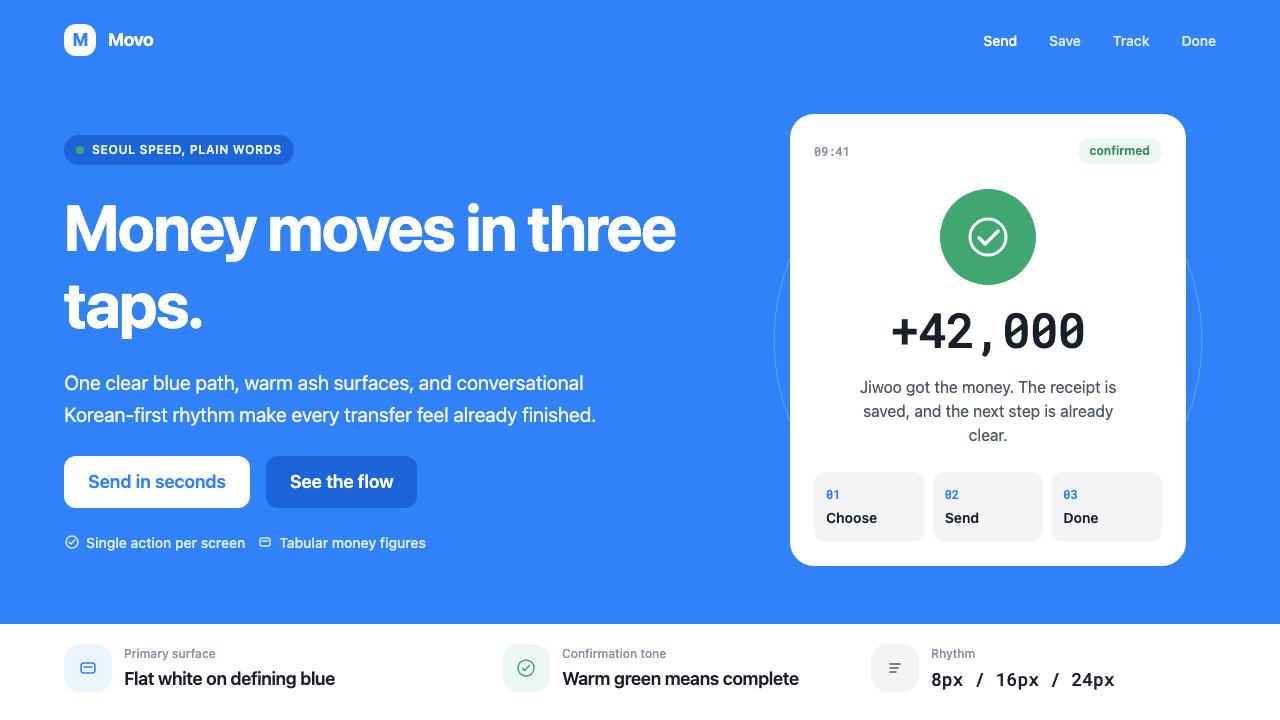 Toss Korean Fintech BlueMoney feels instant. Signature blue, Pretendard scale, and one-screen transfe…
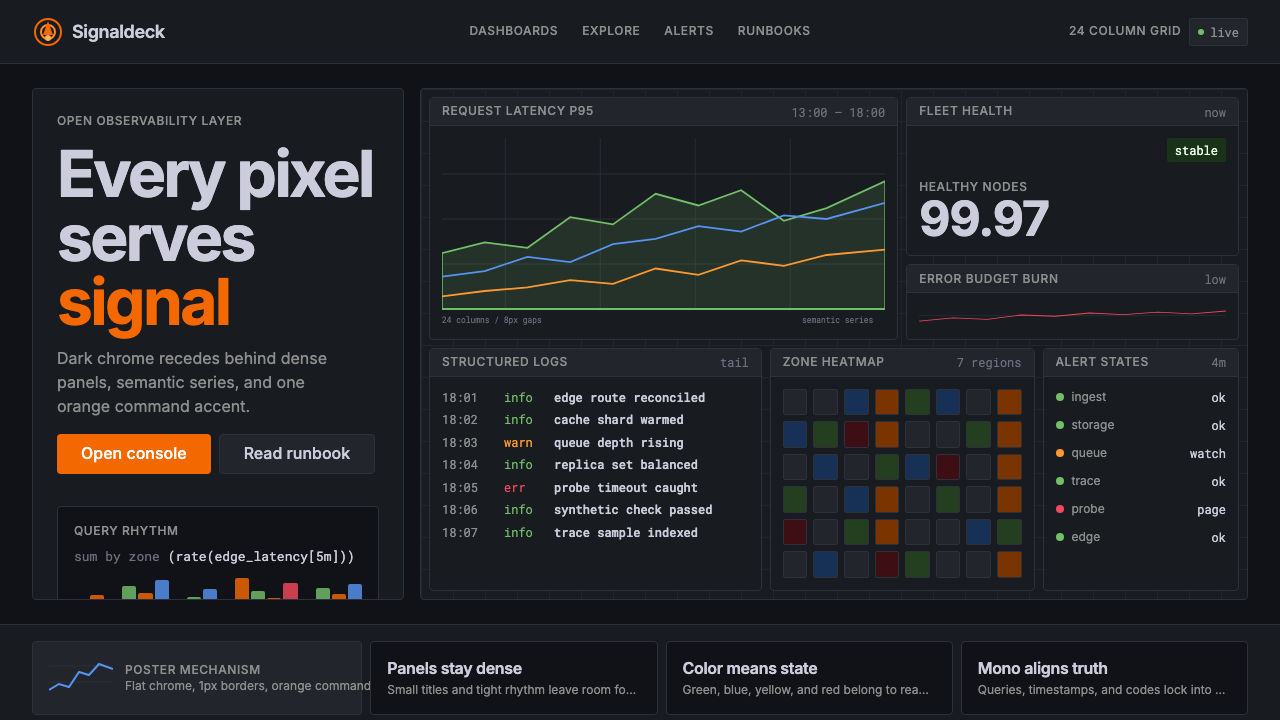 GrafanaData first, chrome last. Orange accent cuts through dense dark panels and sem…
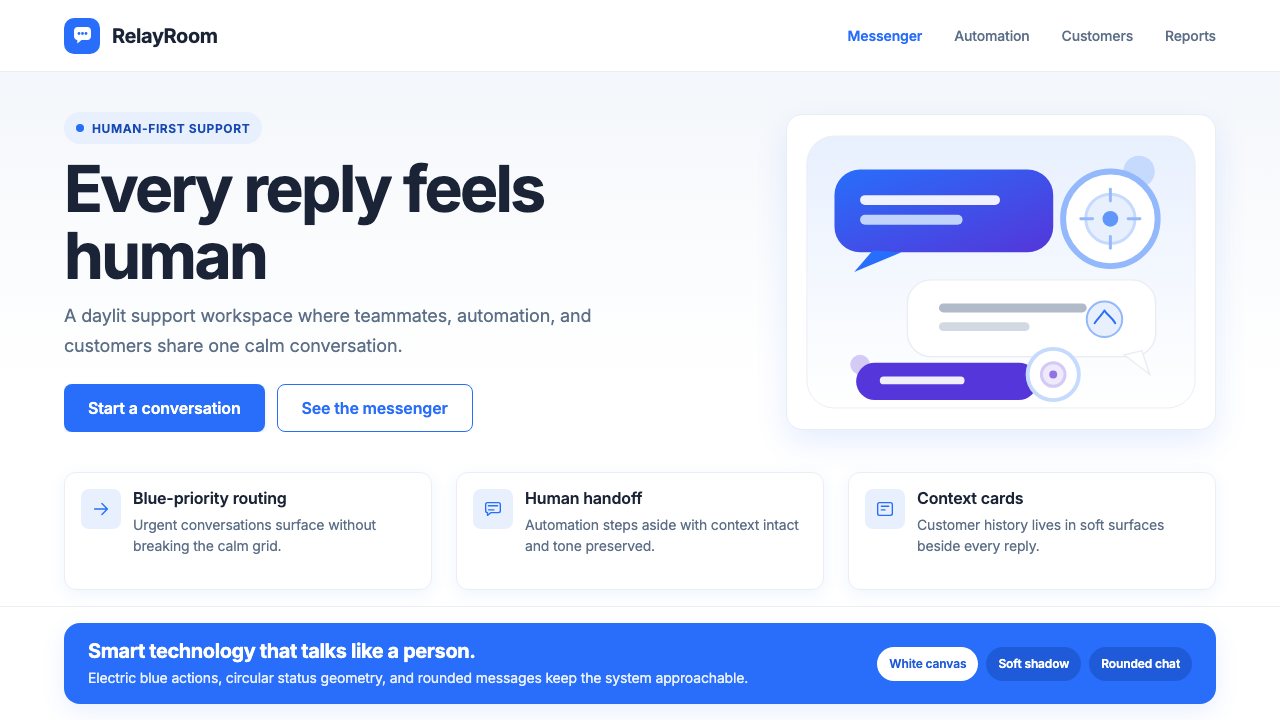 Intercom ModernWarm chat, sharp software. Electric blue bubbles on a daylit white grid.
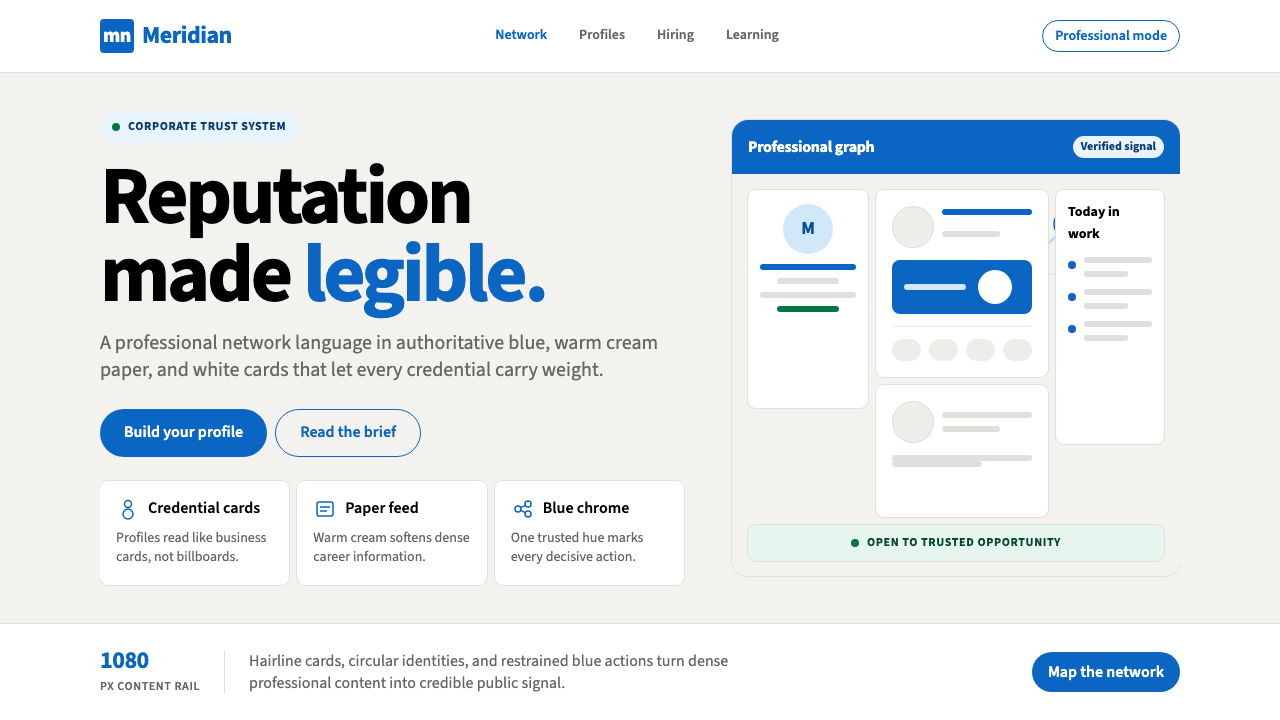 LinkedInCorporate trust, digitized. Authoritative blue frames white cards on warm cre…
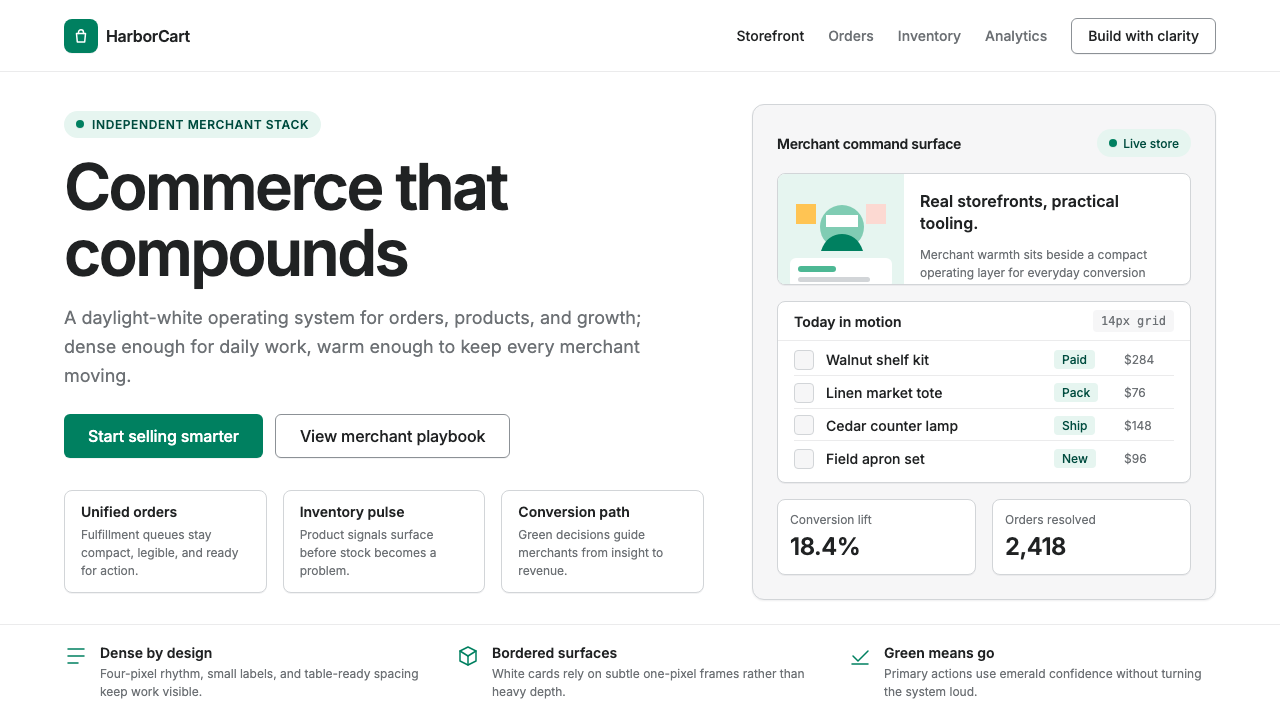 Shopify ModernMerchant ally, not corporate SaaS. Emerald actions on bordered white cards ca…