What is Kongo Nkisi Nkondi Power Figure?
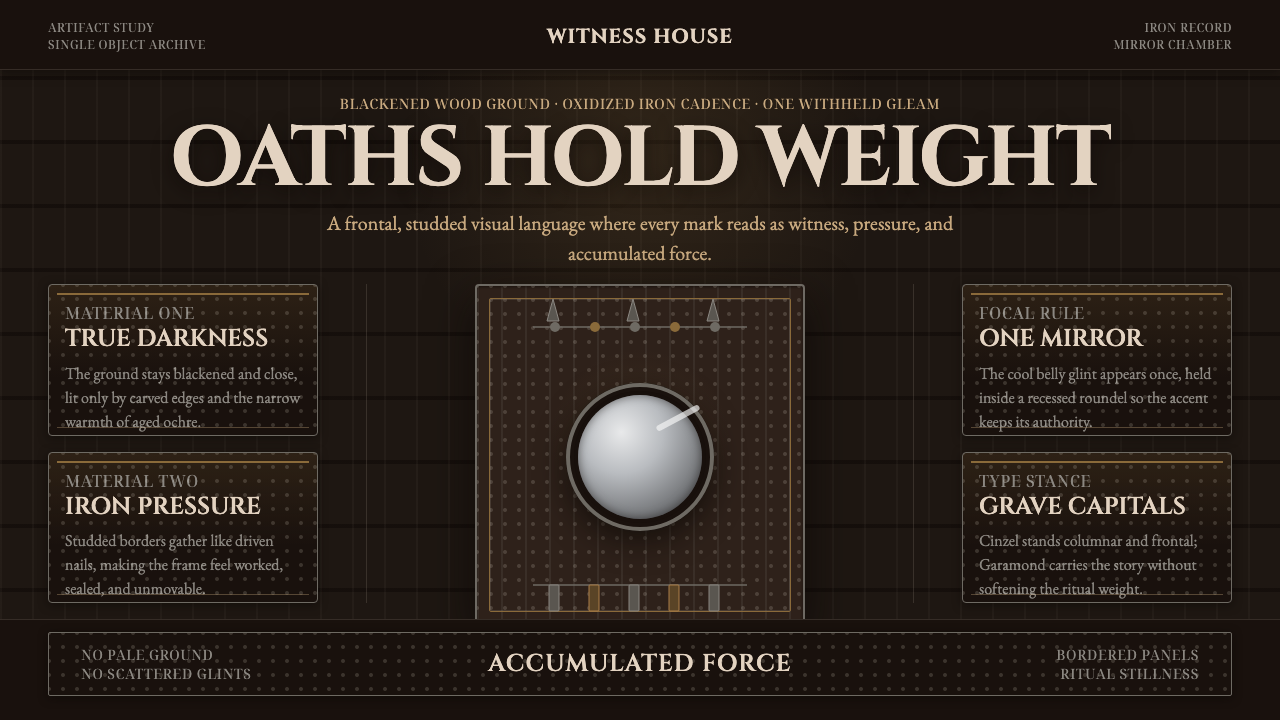
Power accumulates in darkness: blackened wood, oxidized iron, and a single mirror glint turn every surface into a witness.
Kongo Nkisi Nkondi Power Figure in brief
Nkisi nkondi are Kongo and Yombe power figures carved from hardwood and activated through iron nails and blades driven into the body. Each insertion carries an action: an oath is sealed, a grievance is settled, or a witness is called. The figure is therefore not merely an image of power. Its surface records power accumulating through use.
The body is frontal, upright, and hieratic. Its belly contains bilongo medicine sealed behind a resin-set mirror, understood as a window onto the other world. Blackened wood, oxidized iron, and reflective glass produce a severe visual grammar: darkness establishes gravity, metal records intervention, and the mirror introduces a cold opening into an unseen realm.
This design system translates that object into a digital language without softening its force. The field remains truly blackened and wood-dark rather than cream or paper-white. Iron appears as dense studded texture, the mirror becomes a concentrated reflective panel, and grave columnar type stands in for the figure’s unwavering stare. The result should feel accumulated, sealed, and confrontational.

Where does Kongo Nkisi Nkondi Power Figure come from?
The tradition belongs to the Kongo minkisi world of Central Africa, among Kongo and Yombe peoples in the lower Congo region, including areas now associated with the Democratic Republic of the Congo, Angola, and Cabinda. The classic Mangaaka figures belong to the nineteenth century, within a broader tradition that predates 1900. Their visual authority comes from ritual activation rather than from carving alone.
The nganga, the ritual specialist, activated each figure by driving iron nails and blades into its body. These were not incidental decorations. Each strike could seal an oath, settle a grievance, or call a witness, giving the sculpture a surface of accumulated obligations. The figure’s body became a visible register of encounters between people, vows, conflict, and ritual power.
The belly’s bilongo medicine was sealed behind a resin-set mirror. The mirror was understood as a window onto the other world, making the central body both container and threshold. Yombe master carvers shaped the Mangaaka corpus around this combination of frontal presence, hardened material, dense iron intervention, and a reflective center. The design system draws from that logic: every visual decision should suggest stored force, witnessed action, and access to what lies beyond the visible surface.
What defines the Kongo Nkisi Nkondi Power Figure look?
Blackened Wood
The ground is a true blackened-wood darkness, not a pale neutral and not a soft charcoal substitute. It should feel dense, scorched, and materially present. Light is withheld so that the reflective mirror and oxidized iron can register as deliberate interruptions rather than ordinary decoration.
Iron Accumulation
Iron appears as a dense field of studs, blades, and oxidized interruptions. The texture should feel accumulated rather than patterned, as though every mark arrived through a separate act. Metal is evidence: it gives the surface a history of pressure, contact, and sealed intention.
Mirror Threshold
The mirror panel is the visual and conceptual center. Its reflective glint should be concentrated and cold, emerging from the darkness as a window rather than spreading across the whole composition. It introduces a shift from material body to unseen realm without becoming decorative shine.
Frontal Authority
The composition faces the viewer directly. Elements should stand upright, stable, and difficult to ignore, with little sense of casual tilt or playful movement. The authority comes from stillness: a fixed front, a held gaze, and the feeling that the surface is waiting for an account.
Columnar Type
Typography should be grave, columnar, and strongly vertical in presence. Letterforms carry the figure’s unwavering stare, so text should not dissolve into soft atmospheric treatment. The hierarchy is built through mass, placement, and silence around the words, allowing type to feel carved into the dark field.
Ritual Density
The system balances an almost overloaded surface with disciplined containment. Iron marks may gather densely, but the composition still needs a clear central body and a readable route through the darkness. Density should imply stored action, never random noise or ornamental clutter.

Who shaped Kongo Nkisi Nkondi Power Figure?
The nganga is the ritual specialist who activated each figure. Through the insertion of nails and blades, the nganga transformed carved wood into an active power figure whose surface could hold oaths, grievances, and witnesses. In the design system, this role is echoed by deliberate intervention: every mark should feel applied with purpose.
Yombe master carvers shaped the Mangaaka corpus within the wider Kongo minkisi tradition. Their work joined frontal human presence with hardwood, iron, medicine, resin, and mirror. The resulting figure is neither a simple portrait nor a decorative object, but a constructed body in which material and ritual function remain inseparable.
The classic Mangaaka figures belong to the nineteenth-century Kongo and Yombe power-sculpture tradition. Their recognizable force comes from the union of a blackened body, a surface crowded with iron interventions, and a central mirror associated with the other world. The corpus provides the clearest visual foundation for this design language.
How do you use Kongo Nkisi Nkondi Power Figure today?
This system is strongest when the interface needs to communicate gravity, witness, and accumulated force. It should not be treated as a surface treatment that adds black, metal, and shine to an unrelated layout. The structure must support the object’s logic: a stable central presence, dense evidence around it, and one reflective threshold that concentrates attention.
For presentation slides, the cover can use a dark field with a severe vertical title and a concentrated mirror-like focal panel. Content slides should preserve a frontal reading order, with columnar text blocks standing against controlled darkness and iron-like marks used to register sections or claims. Data slides can treat information as accumulated evidence: dense marks gather around a clear central statement, while the reflective accent identifies the point that demands attention.
For web interfaces, the style suits dashboards and pricing pages that need to feel consequential rather than casual. A dashboard can use dark surfaces, restrained iron texture, and a central status or account panel that reads like the figure’s body. Pricing tiers should be separated through stance, density, and reflective emphasis rather than bright color variety. Controls need to remain legible inside the darkness, with metal-like borders or marks serving structure instead of ornament.
For editorial and marketing work, the system supports campaigns about commitment, accountability, protection, or hidden reserves of value. Article layouts can place a narrow column of grave text beside a dense field of iron-like evidence, while feature pages use the mirror panel as a visual threshold between the known and unknown. Marketing compositions should favor a single commanding image or statement over a scattered collection of effects.
The common mistake is turning the style into generic dark luxury: black backgrounds, glossy highlights, and metallic decoration without ritual density or material logic. Another failure is making every surface equally busy, which erases the central body and weakens the mirror’s role. Keep the darkness substantial, let iron record intervention, and reserve the strongest reflection for the one place that should feel like a window.

Kongo Nkisi Nkondi Power Figure — FAQ
What is an nkisi nkondi power figure?
An nkisi nkondi is a Kongo and Yombe hardwood power figure activated by driving iron nails and blades into its body. Each strike could seal an oath, settle a grievance, or call a witness. Its belly held bilongo medicine behind a resin-set mirror, understood as a window onto the other world. The figure’s force therefore resides in the relationship between carved body, ritual action, iron accumulation, medicine, and reflective threshold.
Why must the digital interpretation remain so dark?
Darkness is not a generic mood in this system. It stands for the blackened wood body and gives the iron and mirror their authority as interruptions. A cream or paper-white ground would change the material logic and make the design feel editorial, decorative, or softly luxurious. The intended field is dense and wood-dark, allowing the reflective panel to read as a threshold rather than as a highlight placed on a neutral background.
How can iron texture remain expressive without becoming visual noise?
Iron should look accumulated, not randomly scattered and not repeated as a decorative pattern. Each mark needs to imply intervention, pressure, or a recorded action. The field may be dense, but it must leave a readable central body and a clear route through the composition. If every area is equally active, the surface loses hierarchy and the idea of stored force collapses into texture alone.
What is the role of the mirror panel?
The mirror is the concentrated threshold of the system. It recalls the resin-set mirror behind which the bilongo medicine was sealed and the idea of a window onto the other world. Visually, it should be colder and more focused than the surrounding darkness. It should attract attention without becoming a broad glossy treatment, because its importance comes from being a precise opening inside a materially heavy body.
What kind of product or message suits this design language?
It suits work that needs to communicate seriousness, protection, accountability, commitment, or power held in reserve. The style is especially effective when the audience should feel that information has weight and that actions leave traces. It is less suitable when the desired experience depends on lightness, softness, casual warmth, or abundant visual variety. The system works when darkness, material evidence, and a fixed frontal presence are meaningful to the subject.
Related design styles
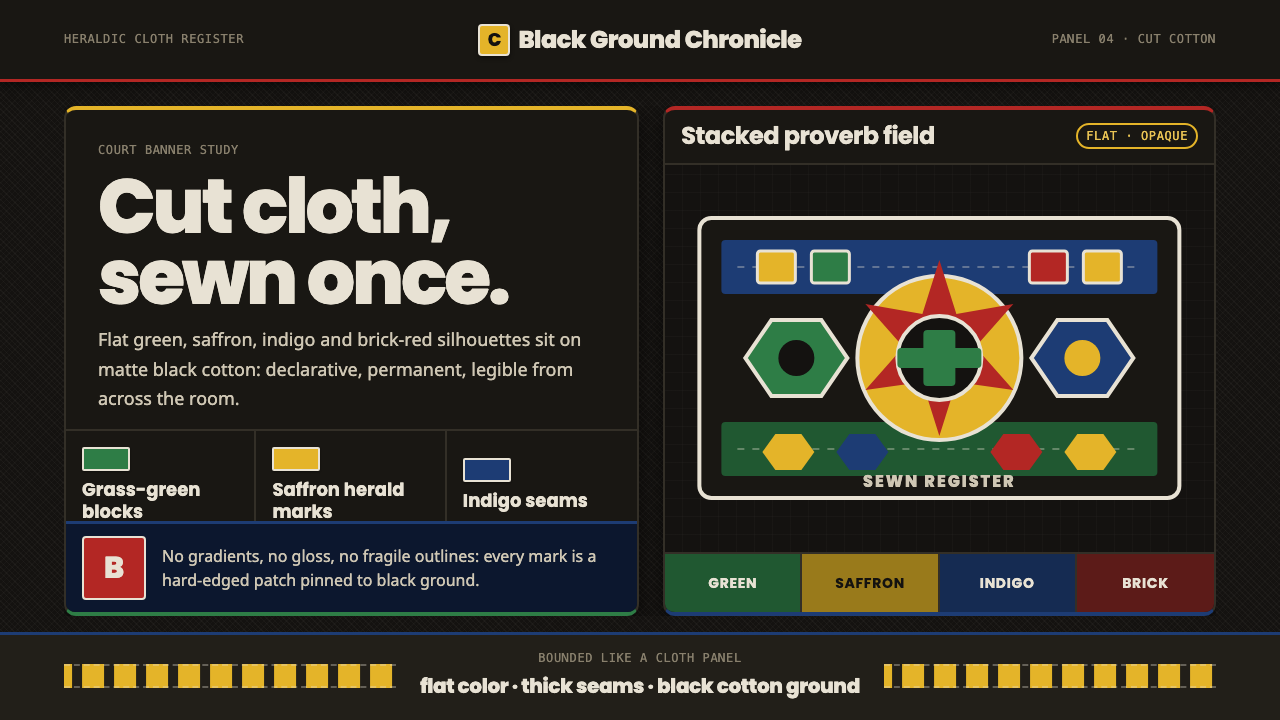 Fon Applique Banner AbomeyRoyal cloth speaks plainly. Flat saffron, green and indigo silhouettes on bla…
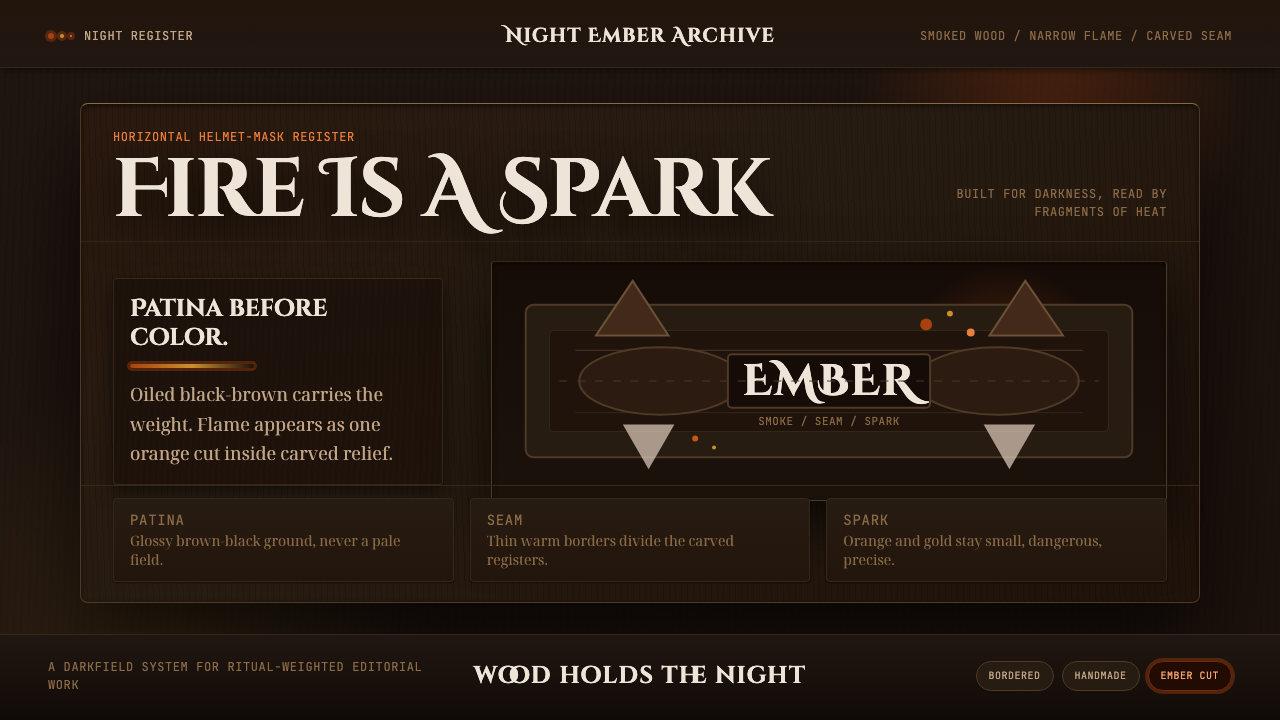 Senufo Firespitter MaskRitual darkness has heat. Smoked wood tones hold back tiny orange-gold sparks.
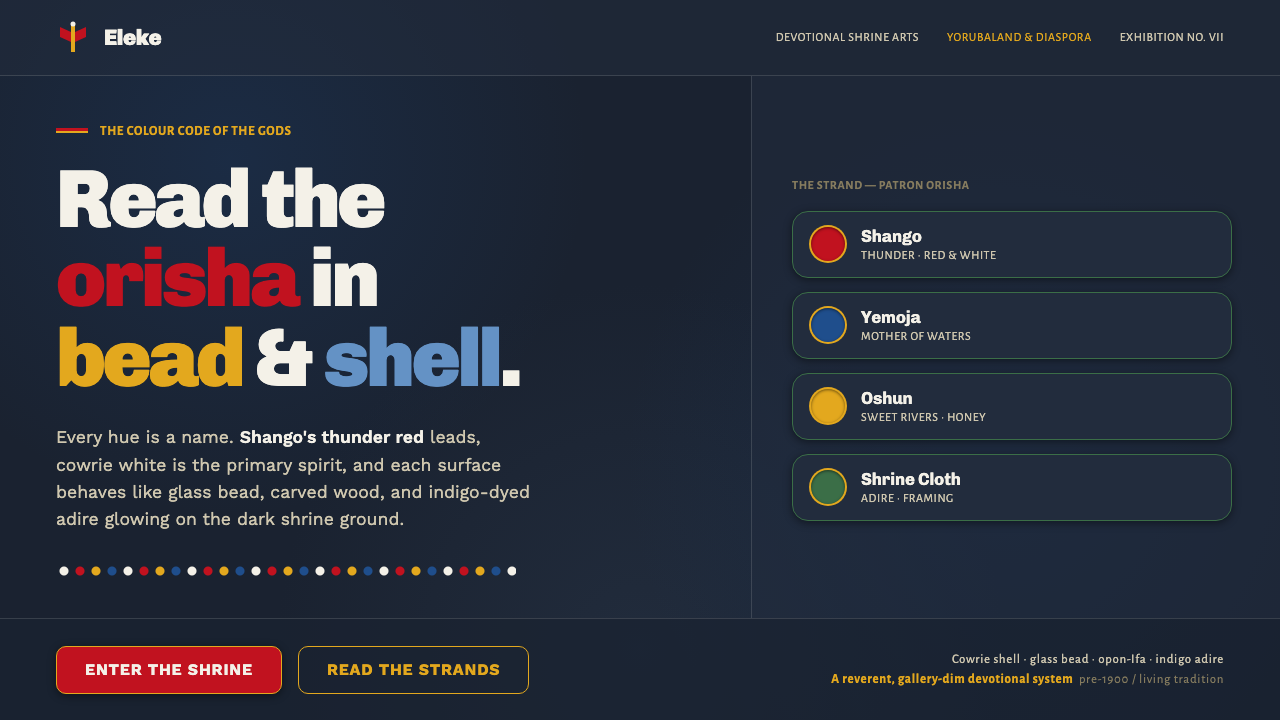 Yoruba Orisha ShrineThe colour code of the gods. Shango-red beadwork and cowrie white glow on dar…
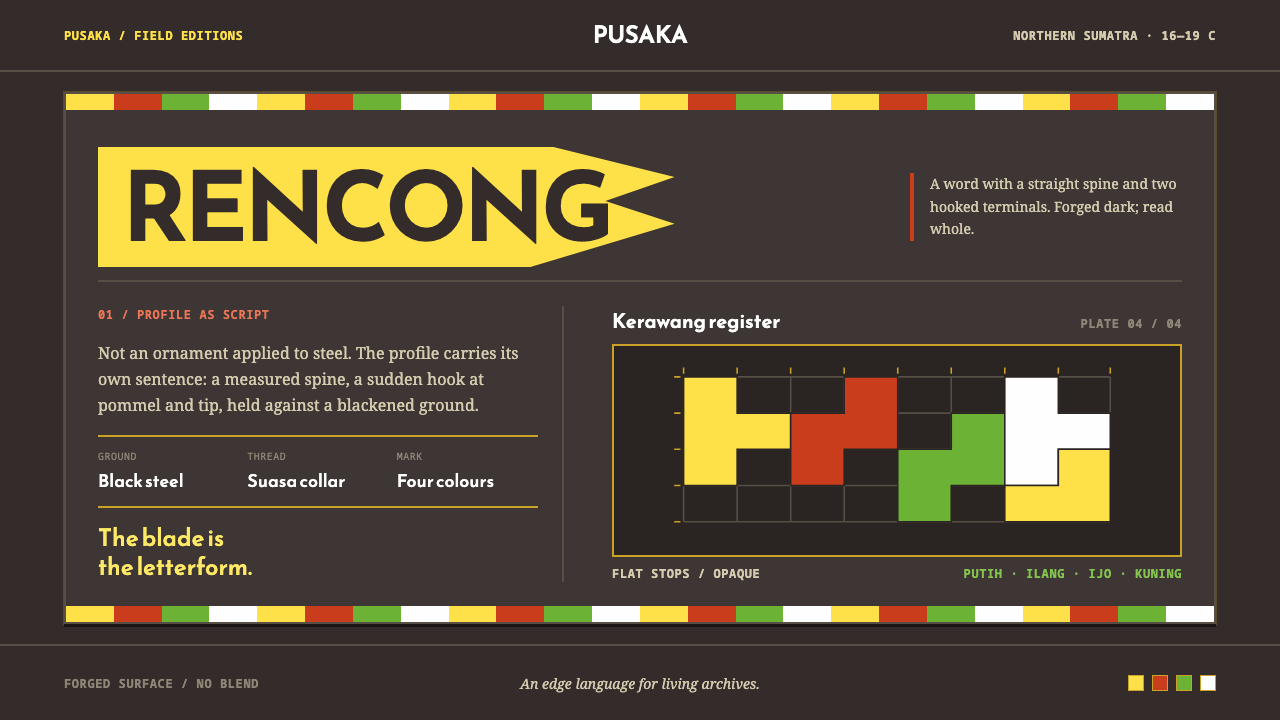 Acehnese Rencong MotifA blade that reads as a word. Flat kerawang red, white, green and yellow lock…
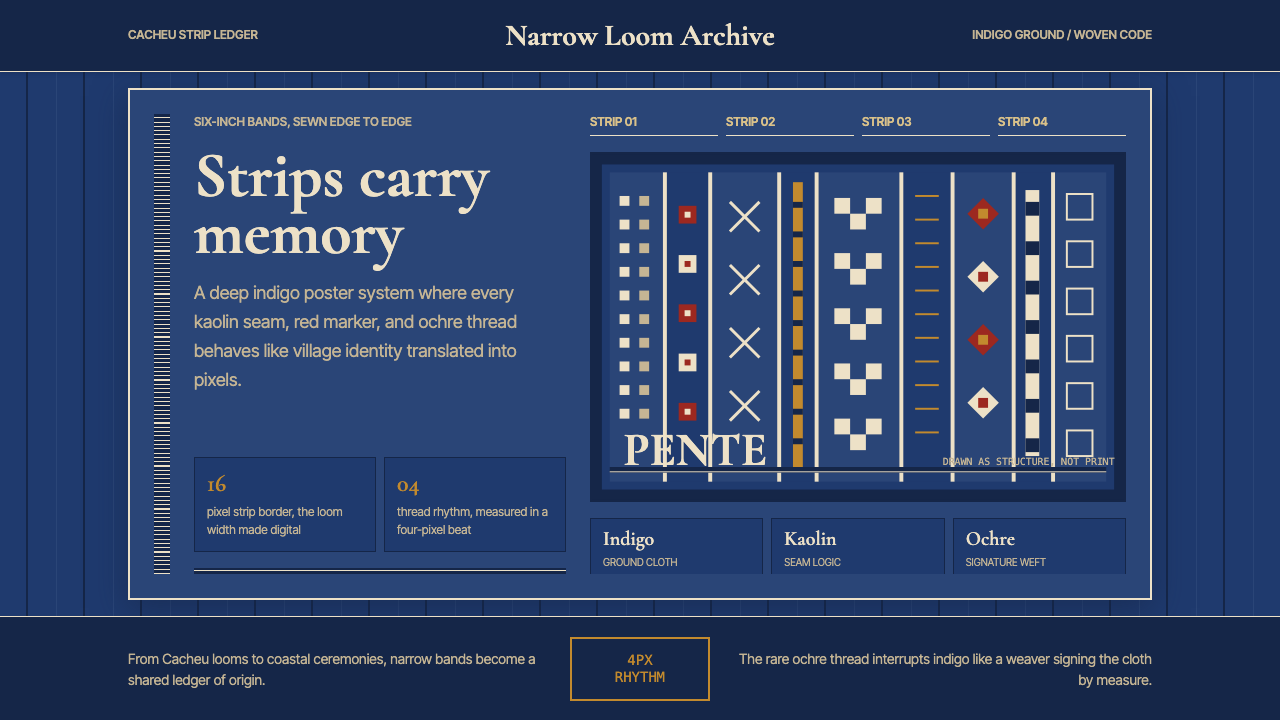 Bissau-Guinean Pano de PenteIndigo remembers. Narrow bands and kaolin seams turn weave grammar into pixel…
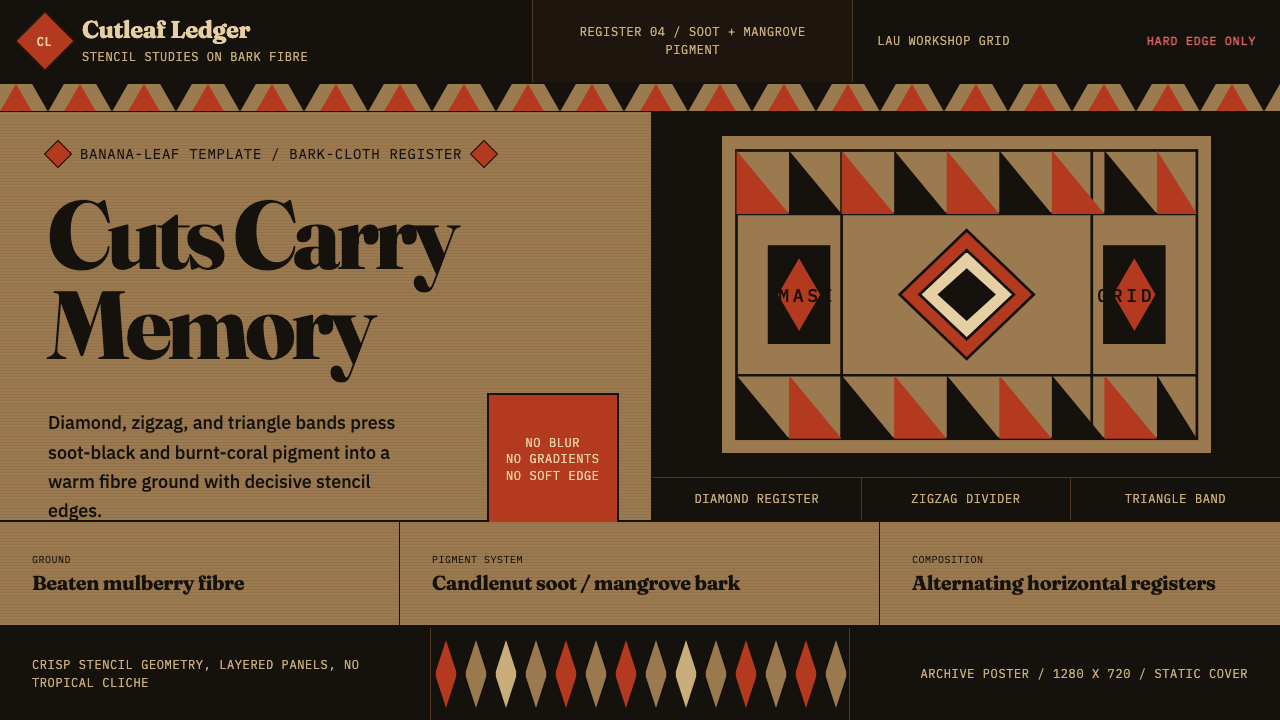 Fijian Masi (Bark Stencil)Stencil memory stays sharp. Soot black and burnt coral strike bark-fibre band…