What is Senufo Firespitter Mask?
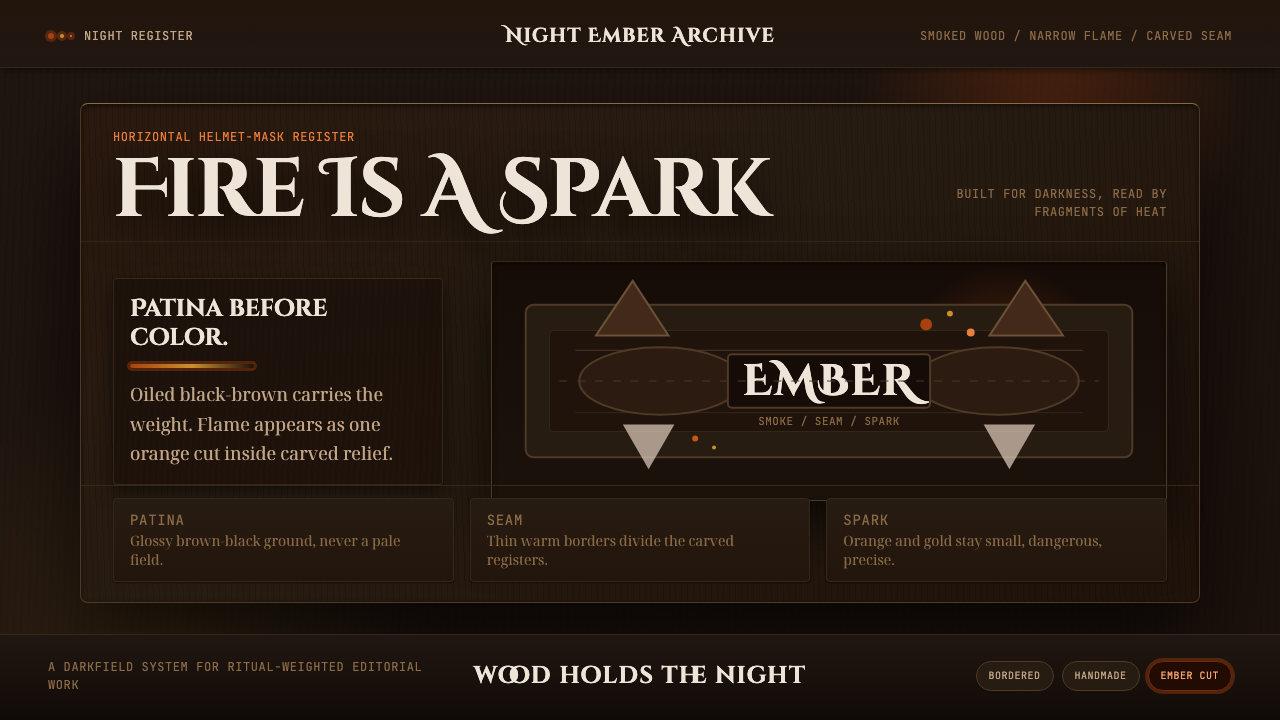
The Senufo firespitter mask turns ritual darkness into a design language: smoke-dark wood, animal force, and small orange-gold flashes held at the edge of night.
Senufo Firespitter Mask in brief
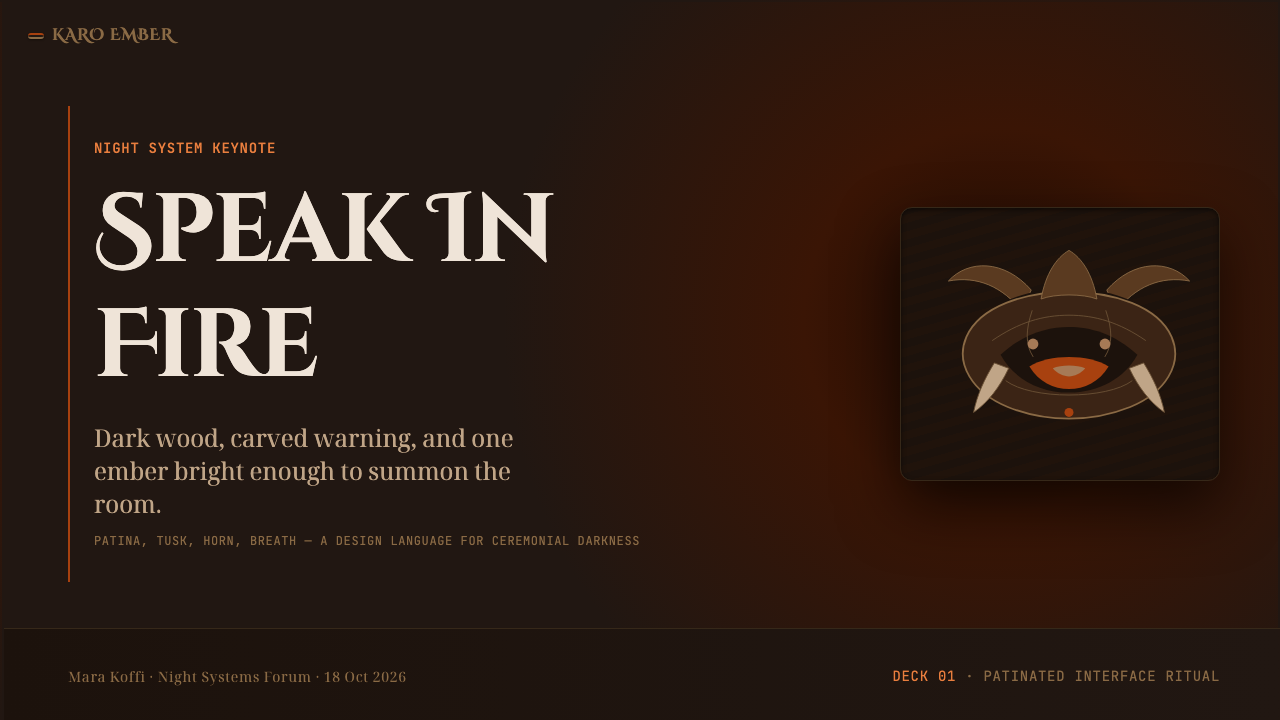
The Senufo kponyugu, or firespitter, is a horizontal helmet mask from Côte d’Ivoire in West Africa. Carved from soft Bombax wood, it joins features associated with several animals into one commanding composite creature: open tusked jaws, curving antelope horns, and the snout of a warthog or crocodile. Its force comes from accumulation rather than naturalistic likeness.
Its surface is central to its identity. Rough leaves sand the carved wood before oil, butter, and smoke gradually create a glossy brown-black patina. The result is not a painted black object but a darkened material whose depth suggests handling, heat, and repeated care. Wood remains present beneath the darkness.
The mask was danced during Poro funerary rites at night and built to spit burning embers into darkness. That context gives the palette its discipline: orange-red and amber-gold belong as rare eruptions against near-black wood, never as broad decorative fields. Darkness is the ground; fire is the interruption.
Where does Senufo Firespitter Mask come from?
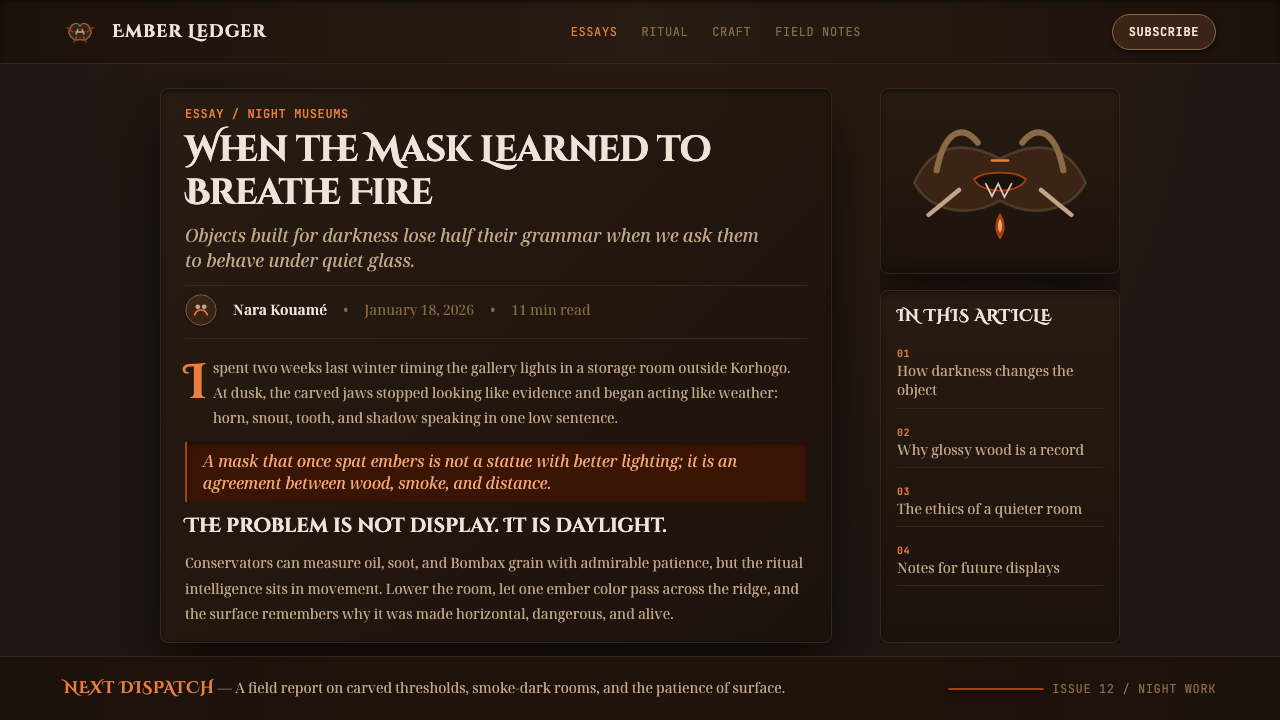
The firespitter belongs to a pre-1900 Senufo ritual tradition that continued into the twentieth century. Its home is Côte d’Ivoire, where the kponyugu became part of Senufo masquerade and helmet-mask carving. The object cannot be separated from that ritual setting: its horizontal form, composite animal vocabulary, and dark surface all belong to a performed presence rather than a static ornament.
Senufo Poro society carvers shaped the mask from Bombax wood. Their work brought together jaws, tusks, horns, and snouts into a single creature whose parts remain legible even as the whole exceeds any one animal. The making process also established the material character later associated with the mask: rough sanding followed by oil, butter, and smoke.
Senufo Poro initiates danced the firespitter in funerary rites. In darkness, the gloss of the smoked wood recedes while embers become momentary points of attention. This relationship between concealment and flare is the most useful visual lesson for contemporary interpretation: the design should preserve tension between a dense, restrained ground and a few purposeful signs of heat.
What defines the Senufo Firespitter Mask look?
Smoked Wood Ground
The dominant field should feel like oiled, smoked brown-black wood: dense, glossy in implication, and materially deep. It should not read as an empty digital black. The darkness needs the suggestion of grain, soot, care, and absorbed heat, while remaining visually quiet enough to hold the composition together.
Ember Accent
Orange-red and amber-gold operate as embers, not as a secondary background. Use them in small, isolated marks that appear to break through the darkness. Their scarcity is what gives them heat; when spread broadly, they lose the ritual logic of a spark seen at night.
Composite Animal Form
Forms should combine rather than illustrate. Curving horns, tusked mouths, and blunt snouts can appear as cropped silhouettes, carved contours, or abstracted directional shapes. The goal is not an animal portrait but a sense of several animal forces compressed into one alert, horizontal presence.
Ritual Contrast
The system depends on a sharp contrast between concealment and revelation. Large dark zones should carry suspense, while a bright detail, opening, or directional stroke supplies the event. The contrast is theatrical without becoming decorative because the light appears to have a role: it announces heat, movement, or danger.
Oiled Patina
Surface richness comes from implied treatment, not from ornate texture. A restrained sheen, softened irregularity, and layered brown-black depth can suggest wood that has been rubbed, buttered, and smoked. Avoid polished luxury effects; the desired surface is cared for and powerful, not pristine.
Horizontal Force
The kponyugu is a horizontal helmet mask, and compositions can inherit that lateral momentum. Let elements extend, curve, or confront one another across the page rather than stacking every idea vertically. A long dark band, a horn-like sweep, or a stretched headline can give the layout the mask’s physical breadth.

Who shaped Senufo Firespitter Mask?
The carvers named in this tradition gave the firespitter its composite body, working soft Bombax wood into jaws, tusks, horns, and snouts. Their process also produced the defining surface: rough-sanded, oiled, buttered, and smoked until the wood developed its deep glossy brown-black patina.
Poro initiates are the dancers associated with the firespitter’s funerary setting. Their night performance explains why the mask’s visual language is organized around darkness and brief flare. The object’s meaning emerges in movement, ritual space, and the contrast of embers against its smoked surface.
The kponyugu itself is the central form of the tradition: a horizontal helmet mask made as a composite beast. Its gaping tusked jaws, curving antelope horns, and warthog or crocodile snout establish an image of concentrated animal force, while its ember-spitting role gives the dark palette its ceremonial charge.
How do you use Senufo Firespitter Mask today?
For presentation covers, treat darkness as the primary statement. A broad smoked-wood field can hold a title, while one horn-like curve, tusked opening, or ember mark establishes the theme. Keep the bright accent away from broad decorative treatment so it feels discovered within the surface rather than applied on top of it.
On content and data slides, use the dark field to establish hierarchy, then let warm sparks identify only the most consequential number, category, or transition. Charts should retain clear structure and restrained labeling. The visual aim is not a flame effect; it is the experience of one meaningful signal becoming visible in an otherwise controlled night.
For web interfaces, this language suits dashboards and pricing pages that benefit from gravity, focus, and a strong sense of occasion. Near-black wood-toned panels can frame information, while ember accents guide active states, selected tiers, warnings, or calls to action. Keep routine text and controls calm so the warm accent retains authority.
For editorial and marketing work, use the style to make a sequence feel ceremonial rather than merely luxurious. A dark opening spread, a close crop of carved form, and a brief warm signal can create rhythm across a story. Editorial copy needs generous quiet territory; marketing messages should emerge like an announcement from the dark rather than compete with the atmosphere.
The common mistake is turning the theme into generic black-and-orange spectacle. Continuous glowing lines, large flame fields, and abundant gold flatten the distinction between wood and ember. The design works only when the brown-black ground remains materially believable and the warm marks stay few enough to feel consequential.
Senufo Firespitter Mask — FAQ
Is this style simply a dark theme with orange accents?
No. Its logic comes from a specific relationship between smoked, oiled wood and embers appearing during a nighttime funerary performance. The dark ground should suggest material depth and ritual concealment, while warm color should behave like a limited event. A generic dark interface loses that relationship when every control receives the same glow.
Should orange-red and amber-gold appear together everywhere?
No. Both hues derive their force from being read as embers, so they work best in a limited hierarchy. One may lead a focal moment while the other appears only as a smaller trace. When warm hues cover large fields together, they stop reading as sparks against darkness and become ordinary decoration.
How literal should animal imagery be?
It is stronger when it remains composite and suggestive. The kponyugu combines jaws, tusks, horns, and snouts rather than presenting a single naturalistic animal. In contemporary layouts, cropped curves, openings, silhouettes, and directional forms can carry that same force without turning the design into wildlife illustration.
Can a light-background version still reflect the firespitter?
A light version can borrow individual motifs, but it gives up the central condition of ember light emerging from near-black smoked wood. It works best as a supporting or editorial variation, with dark material bands or image areas preserving the sense of concealment. For the full visual system, darkness should remain dominant.
What is the most important thing to preserve in a contemporary application?
Preserve restraint and context. The dark field must feel like a meaningful ground rather than a neutral backdrop, and each warm mark must seem earned by the composition. The strongest results do not imitate ritual objects as decoration; they translate the visual relationship of smoked wood, animal force, night, and ember into a disciplined system.
Related design styles
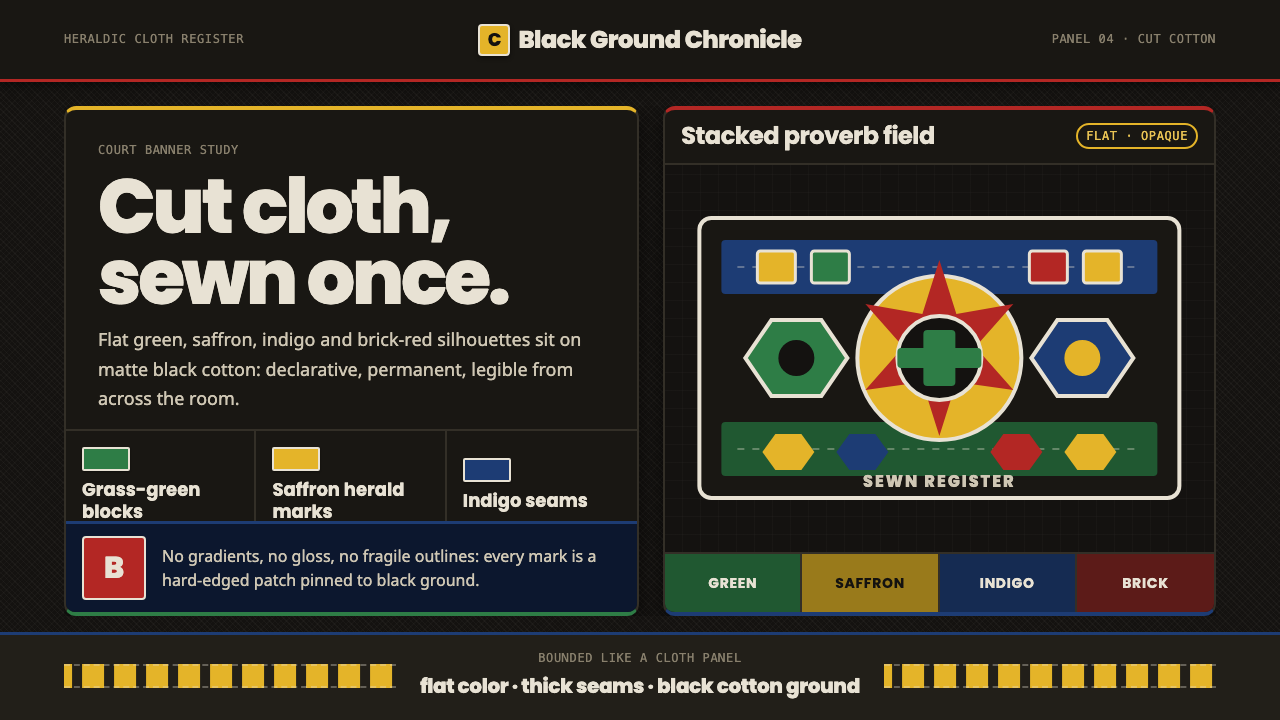 Fon Applique Banner AbomeyRoyal cloth speaks plainly. Flat saffron, green and indigo silhouettes on bla…
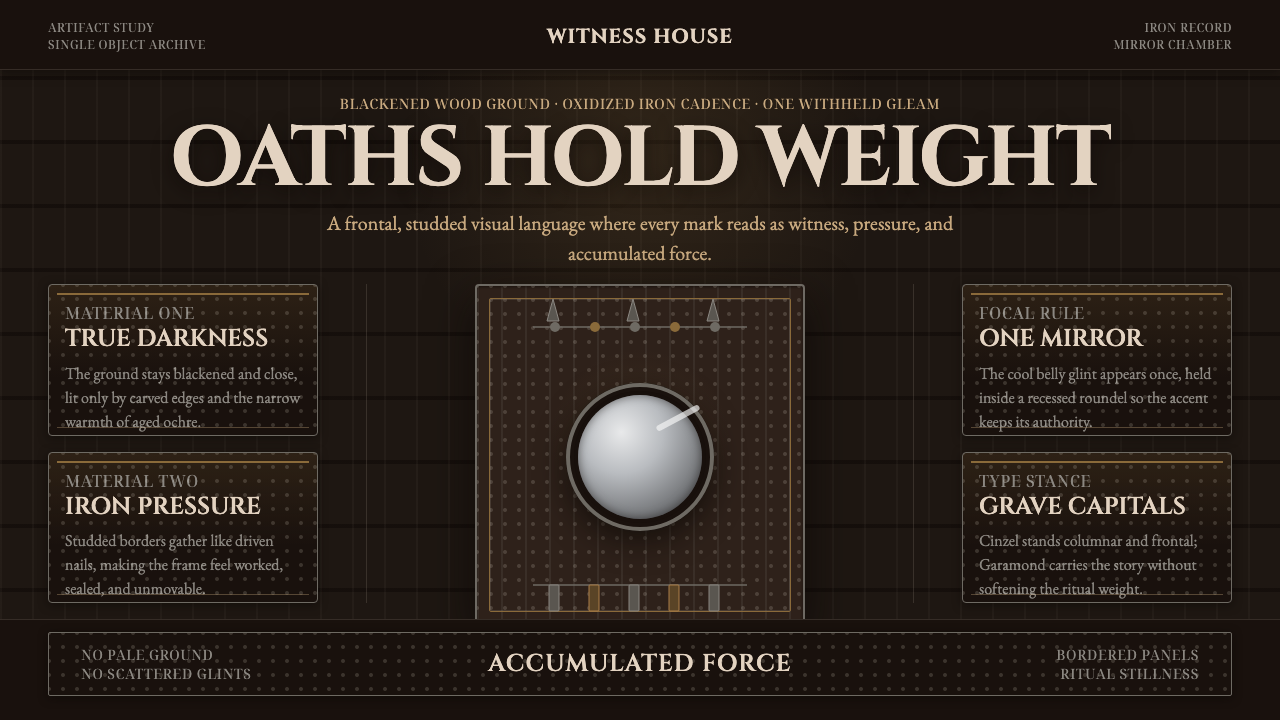 Kongo Nkisi Nkondi FigurePower accumulates in darkness. Black wood, iron studs, and one mirror glint h…
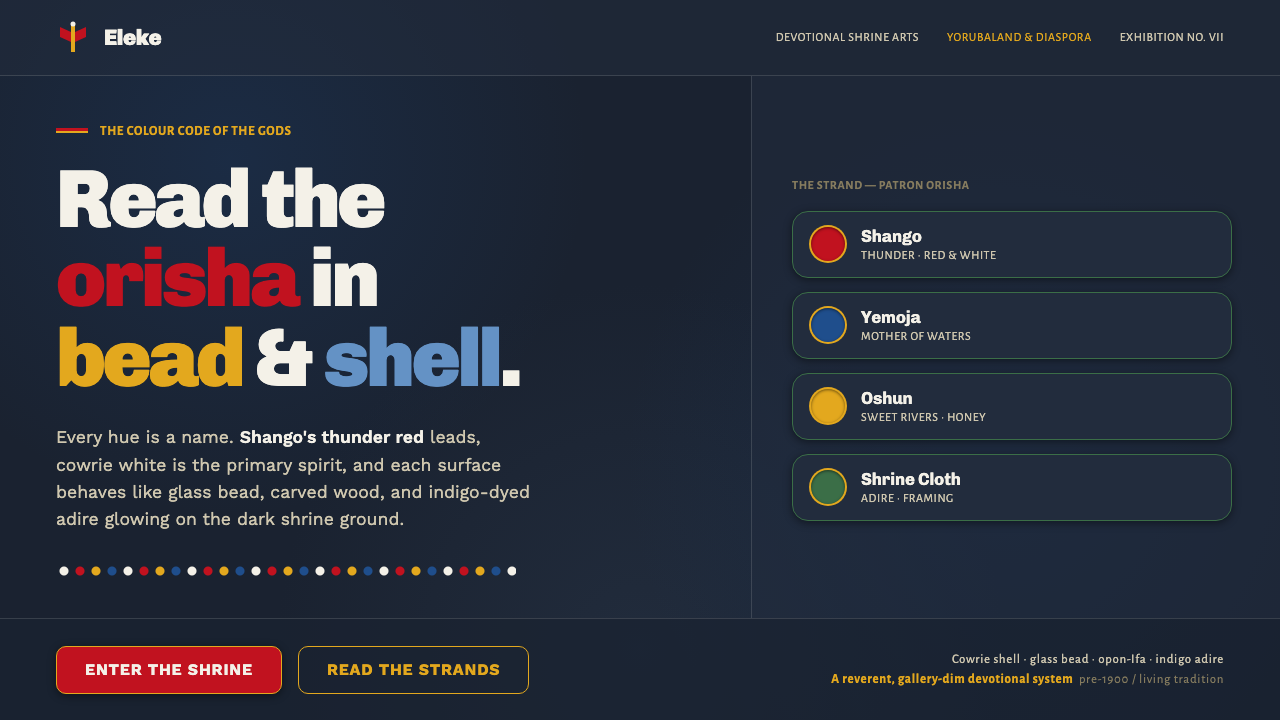 Yoruba Orisha ShrineThe colour code of the gods. Shango-red beadwork and cowrie white glow on dar…
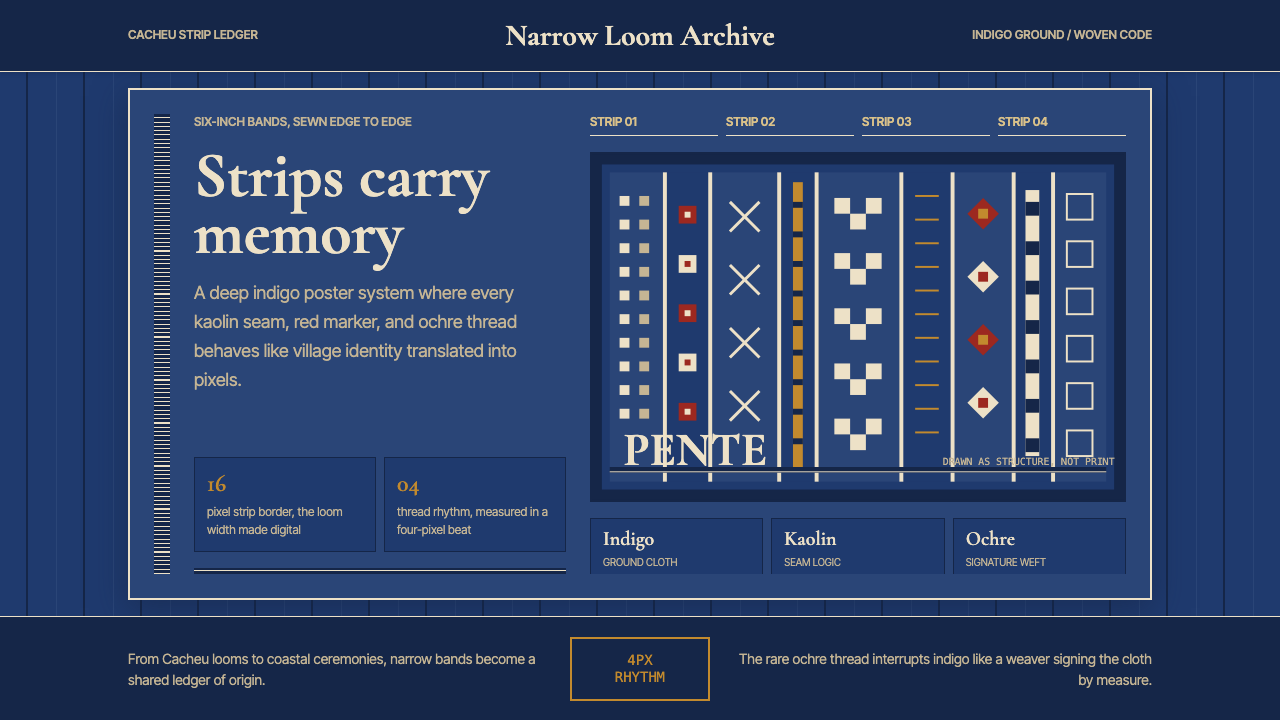 Bissau-Guinean Pano de PenteIndigo remembers. Narrow bands and kaolin seams turn weave grammar into pixel…
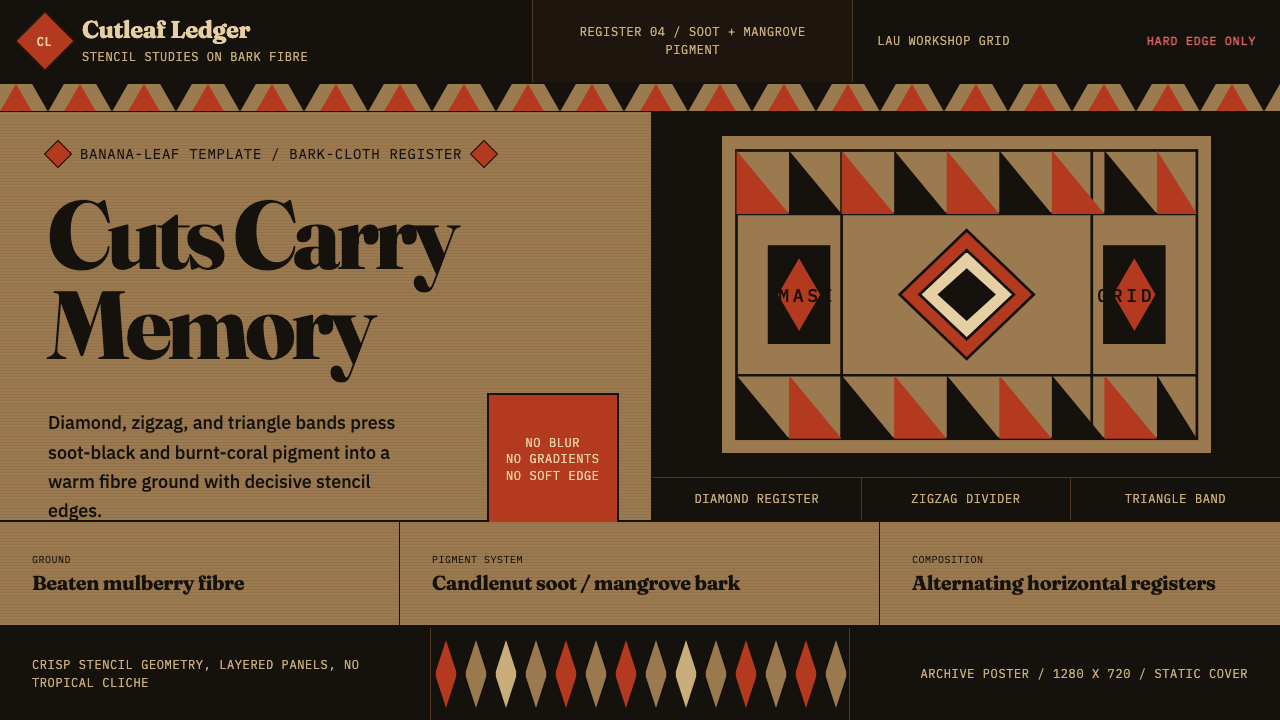 Fijian Masi (Bark Stencil)Stencil memory stays sharp. Soot black and burnt coral strike bark-fibre band…
 Marquesan Tatu PatternDensity as authority. Tiki and enata tessellation inked into blue-black, lit…