What is Nairobi Matatu Art?
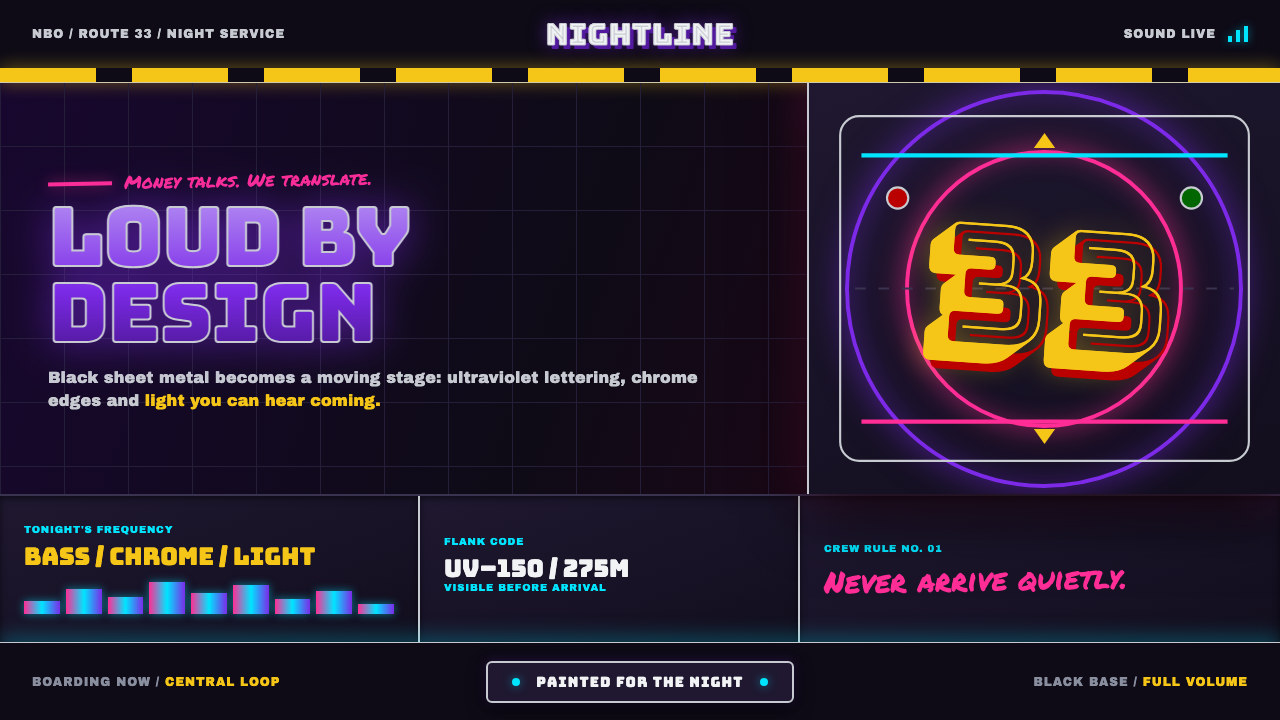
A nganya is built to be seen at night, from far away, over the noise of its own sound system — and its yellow safety band is the one part the law won't let you skip.
Nairobi Matatu Art in brief
A nganya is a Nairobi matatu — a privately operated minibus — that its owner has turned into a moving stage rather than a plain vehicle for hire. Airbrushed portraits run down both flanks, a full vinyl wrap covers the body panels, LED tubing lines the sills, and a sound system is installed loud enough to be the actual reason a passenger chooses that particular bus over the next one in line. A full customization job can take anywhere from a week to four months and cost the owner up to roughly $15,000, depending on the complexity of the artwork and the scale of the sound and lighting build.
The base coat beneath all of that is black, and that choice is functional rather than aesthetic in isolation: neon colors and chrome outlines only read with real punch against a dark ground, so the black base is what makes every other element legible at a glance. Cutting across that black body runs a broken yellow band, required by Kenyan law on every public service vehicle carrying 25 seats or fewer — this is not decorative trim but a legal safety marking, and the system built from this style treats it as load-bearing rather than optional.
This system is built to be read the way an actual nganya is encountered — at night, lit by its own onboard lighting rather than by daylight or a neutral studio setup. Portraiture, lettering, and pattern are all designed with that night-viewing condition in mind, meaning the palette leans toward high-saturation neon and reflective chrome rather than tones calibrated for even, diffuse daylight. The reference point for this style is not the countryside or a generic African textile tradition — it is a specific urban subculture built around named figures, street slang, and the volume of a sound system, closer in spirit to a moving concert flyer than to any kind of pastoral craft.
Where does Nairobi Matatu Art come from?
Matatu culture in Nairobi dates back to the 1980s, when privately operated minibuses became a dominant form of urban public transport. What began as functional vehicles gradually developed into a customization culture, with owners competing to make their buses stand out to attract riders in a crowded, competitive transport market.
The specific nganya phenomenon — full-scale airbrush art, vinyl wraps, LED lighting, and sound systems combined into a single mobile identity — took off as a customization boom from 2013 onward, turning what had been an informal practice into a recognized craft with its own specialists, price points, and reputational hierarchy among airbrush artists.
Kenyan traffic law shaped the aesthetic as much as any artistic choice did. Following regulatory changes associated with transport reforms under John Michuki, and later codified more fully into National Transport and Safety Authority regulation, every public service vehicle of 25 seats or fewer has been required to carry a broken yellow safety band, a rule that customizers had to design around rather than ignore — which is why the yellow band remains a fixed, load-bearing element of the style rather than something an artist could paint over.
Within that legal framework, artists such as Brian Wanyama helped build the reputation of matatu and nganya art as a serious visual craft, drawing on airbrush technique and wildstyle graffiti lettering, and referencing the same touchstones riders would recognize instantly — musical icons, sports stars, and Sheng slang wordplay pulled from Nairobi's own street vocabulary — rather than generic decorative imagery borrowed from elsewhere.
A finished nganya is also inseparable from its sound system, which is as much a part of the vehicle's identity as the airbrushed panels — the volume and quality of the onboard audio is part of what a rider is choosing when they pick one bus over another. That pairing of visual spectacle with audible spectacle is part of why the style resists being reduced to a flat, silent graphic treatment; a faithful digital application should carry a sense of motion, sound, and competition for attention, not just a static color scheme.
What defines the Nairobi Matatu Art look?
Black Base Coat
Every surface begins with a black ground, chosen for functional reasons: neon color and chrome outline only achieve real visual punch when set against dark, not light, backgrounds. The black is not a mood choice — it is the technical foundation the rest of the style depends on.
High-Saturation Neon
Colors are pushed to high saturation and calibrated for a night-viewing, lit-from-within condition rather than for even daylight. Magenta, cyan, and other neon tones are used deliberately, not as an accident of cheap materials.
Chrome Outlines
Reflective chrome lines trace the edges of portraits, lettering, and panel shapes, catching and bouncing available light — headlights, streetlights, LED underglow — to keep the design legible and eye-catching even in low ambient light.
The Broken Yellow Band
A broken yellow band is a required, load-bearing safety element under Kenyan public service vehicle regulation, not a decorative stripe. Any design in this style keeps that band structurally present and legible rather than treating it as optional trim to be removed for a cleaner look.
Portraiture and Lettering
Airbrushed portraits and wildstyle graffiti lettering form the primary figurative content, referencing instantly recognizable touchstones — musical and sports figures, street-vocabulary wordplay — rather than abstract pattern alone.
Horizontal Band Composition
Elements are organized in horizontal bands running the length of a body panel — black ground, LED accent line at the sill, yellow safety band, chrome trim — echoing the literal layout of a customized vehicle's exterior rather than a freeform poster composition.
Who shaped Nairobi Matatu Art?
Wanyama helped build the reputation of matatu and nganya customization as a serious visual craft rather than an informal hobby, working within the airbrush and wildstyle graffiti tradition that defines the style's figurative content.
Michuki's transport reforms are associated with the regulatory changes that made the broken yellow safety band a legal requirement on Kenyan public service vehicles of 25 seats or fewer — the rule that customizers had to design around, making it a permanent, load-bearing feature of the nganya style rather than an optional decorative choice.
This customization tradition took off as a boom from 2013 onward, developing its own specialists, price points reaching up to roughly $15,000 per vehicle, and a reputational hierarchy among artists — the collective craft context from which the style's specific vocabulary of portraiture, chrome, and neon emerged.
How do you use Nairobi Matatu Art today?
This style works by design as loud, high-contrast, and unapologetically attention-seeking — the opposite of restrained minimalism — because the vehicles it draws from exist specifically to compete for a rider's attention on a crowded street. Applying it well means embracing that intensity rather than softening it into a muted 'urban' palette.
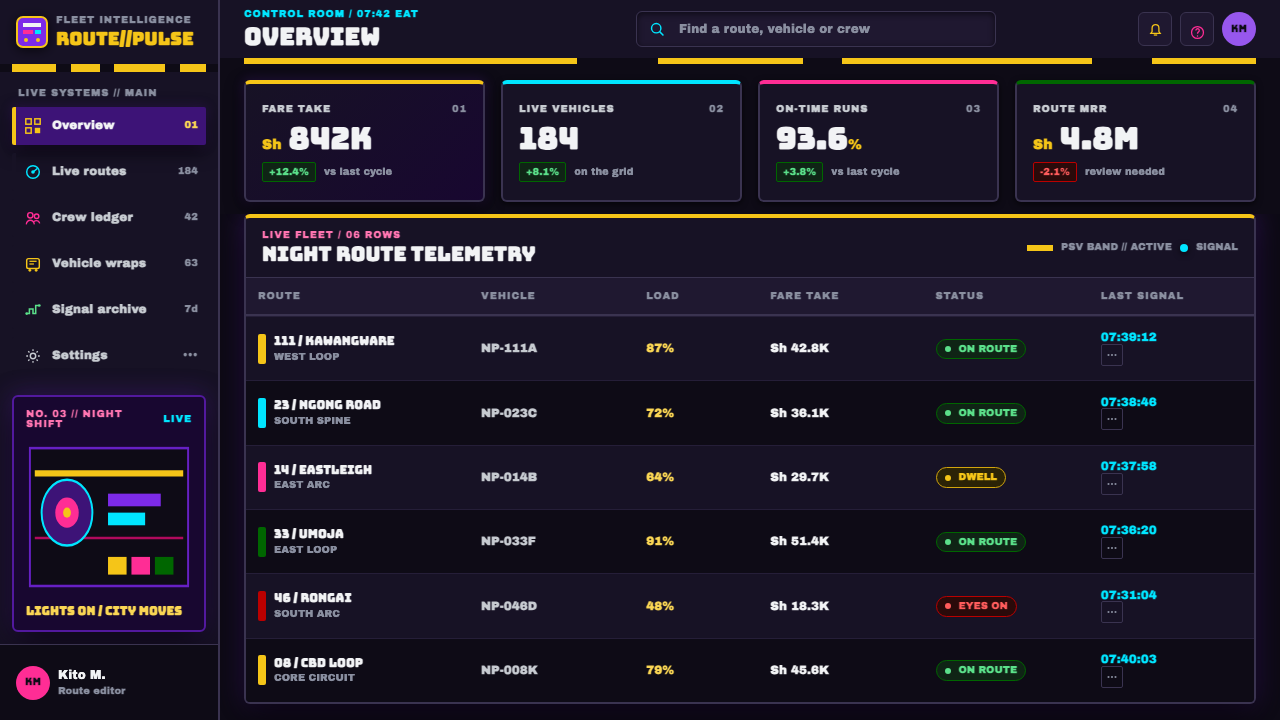
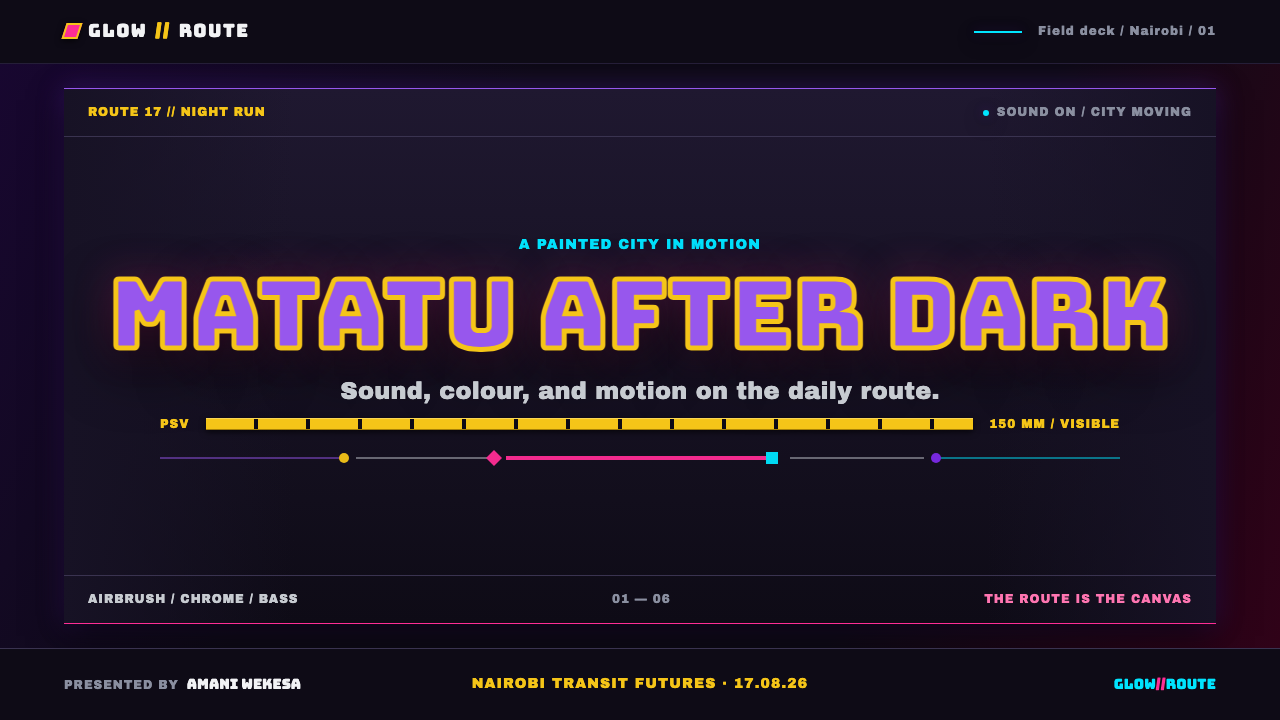
For presentation slides, this style suits a bold cover slide or an energetic section-break slide: a black ground with a neon-and-chrome graphic element and a broken yellow band running along one edge, title type set in a heavy, wildstyle-influenced lettering treatment. Data slides should keep the black base and use neon accent sparingly to highlight a single standout number, since the style's power comes from contrast against darkness rather than from covering the whole slide in neon.
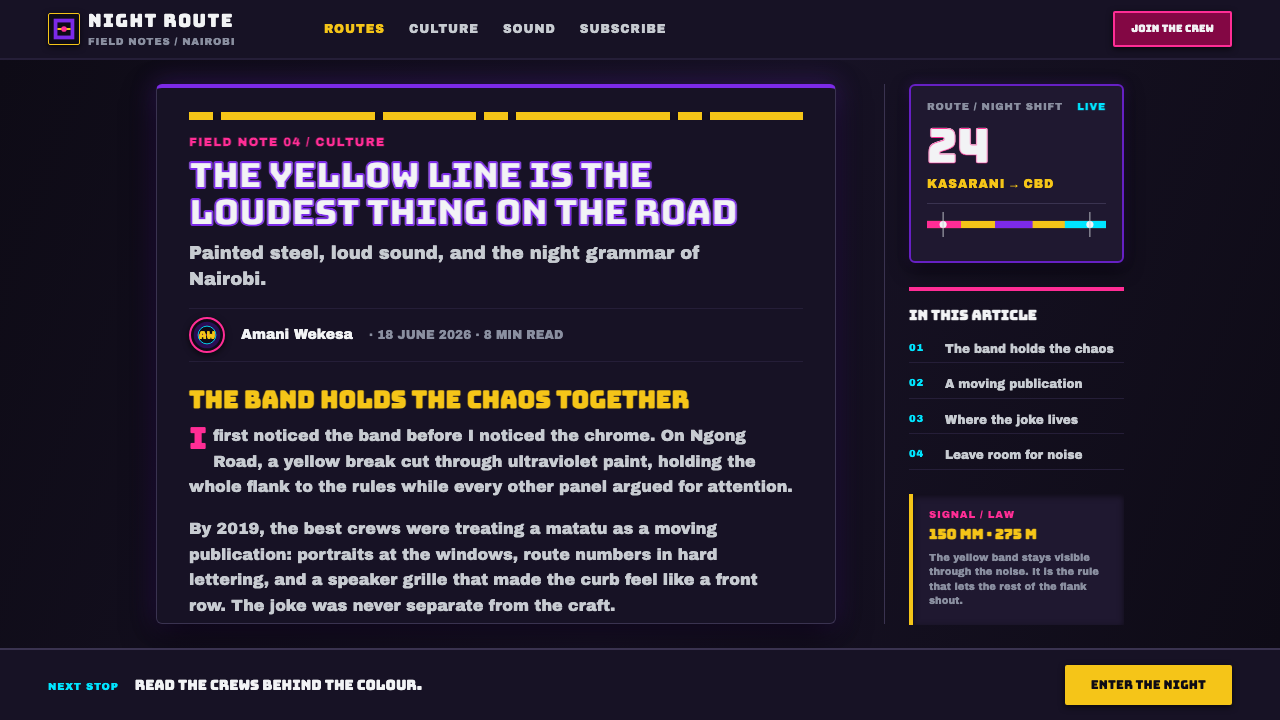
For web interfaces, the style fits entertainment, music, youth-culture, or nightlife-brand products far better than a formal business tool. A hero section built on a black ground with chrome-outlined type and a neon accent color for calls to action can carry real energy; the yellow safety band motif can be echoed as a horizontal divider between sections rather than dropped as an isolated decorative stripe.
In editorial and marketing layouts, the style rewards treating headlines like airbrushed lettering — bold, outlined, high-contrast — with body text kept plain and legible against the black ground so the eye is drawn to the lettering and imagery rather than lost in decoration everywhere at once. Section dividers work well as a broken yellow band rather than a plain thin rule.
The most common mistake is toning the palette down for a 'sophisticated' feel — muting the neon, dropping the chrome, softening the black to a dark gray. That approach removes exactly what makes the style recognizable. A nganya is built to be unmissable at night in a crowded street, not to blend in, and a restrained version of this style has abandoned its entire reason for existing.
Nairobi Matatu Art — FAQ
Why is the base coat always black instead of some other dark color?
Because black is specifically what makes neon and chrome read with maximum contrast and legibility — the source material describes the black base as a deliberate choice made precisely because neon and chrome outlines only read against it. Other dark colors would dilute that contrast, so black functions as a technical requirement of the style, not just an aesthetic preference.
Can the yellow band be removed or replaced with a different color for a cleaner design?
Removing it breaks fidelity to the source: the broken yellow band is a legal safety requirement on Kenyan public service vehicles of 25 seats or fewer, not a decorative stripe an artist chose freely. A design in this style should keep the band structurally present, even if its width or exact placement is adapted, because it is what makes the style specifically nganya rather than generic neon-and-chrome graffiti.
Is this style meant to be viewed in daylight or at night?
At night, under the vehicle's own lighting — that is the condition the source material specifies as the way a nganya is actually encountered, and the reason the palette leans toward high-saturation neon and reflective chrome rather than tones calibrated for even daylight. Designs built in this style should be tested against a dark background to confirm they read the way the original does.
What kind of products or brands suit this style best?
Entertainment, music, nightlife, and youth-culture-facing products suit it best, since the style's entire purpose in its source context is to attract attention and project energy in a competitive, crowded environment. It is a poor fit for formal business tools, financial products, or any brand seeking a calm, understated register.
Does the sound-system connection matter for a purely visual design?
Yes — the source material describes the sound system as often the actual reason a rider picks one nganya over another, meaning the vehicle's identity was never purely visual to begin with. A digital design in this style benefits from carrying that same sense of competition and spectacle, for instance through motion, sound-reactive accents, or simply lettering and imagery that feel loud rather than quiet, even where no literal audio is involved.
Related design styles
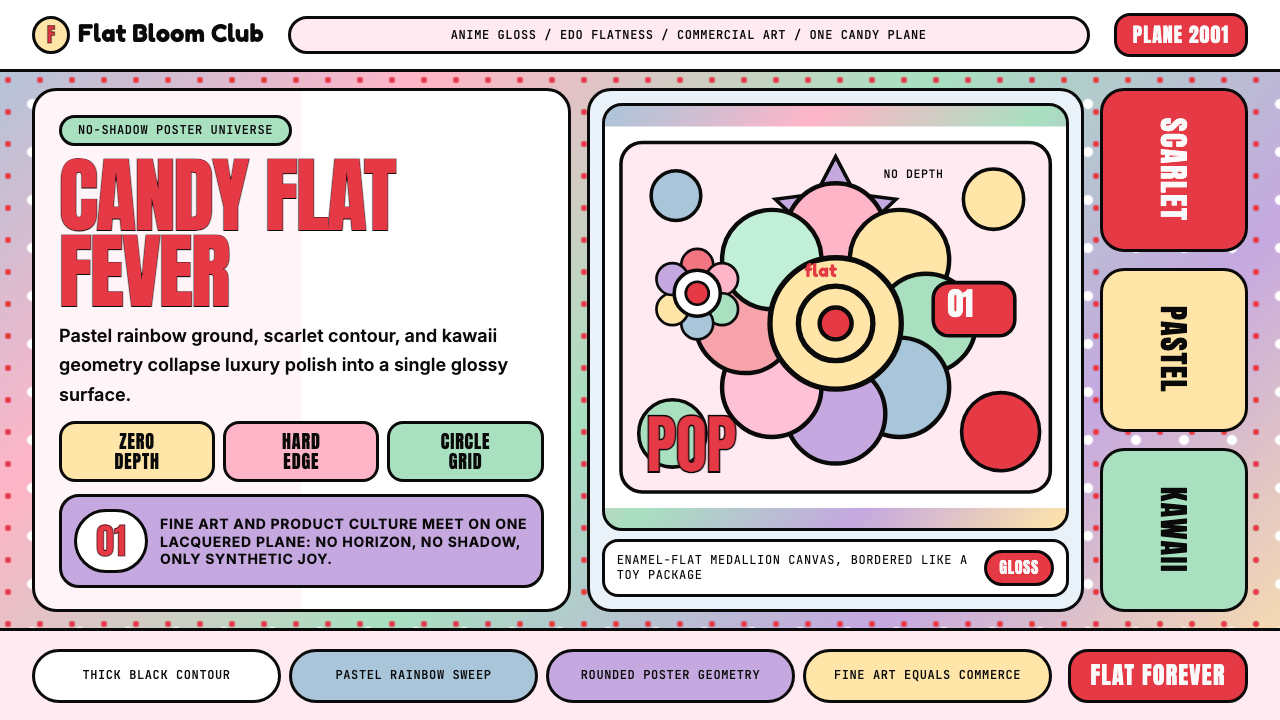 Takashi Murakami SuperflatJoy has no depth. Pastel rainbow, scarlet accents, and black contours flatten…
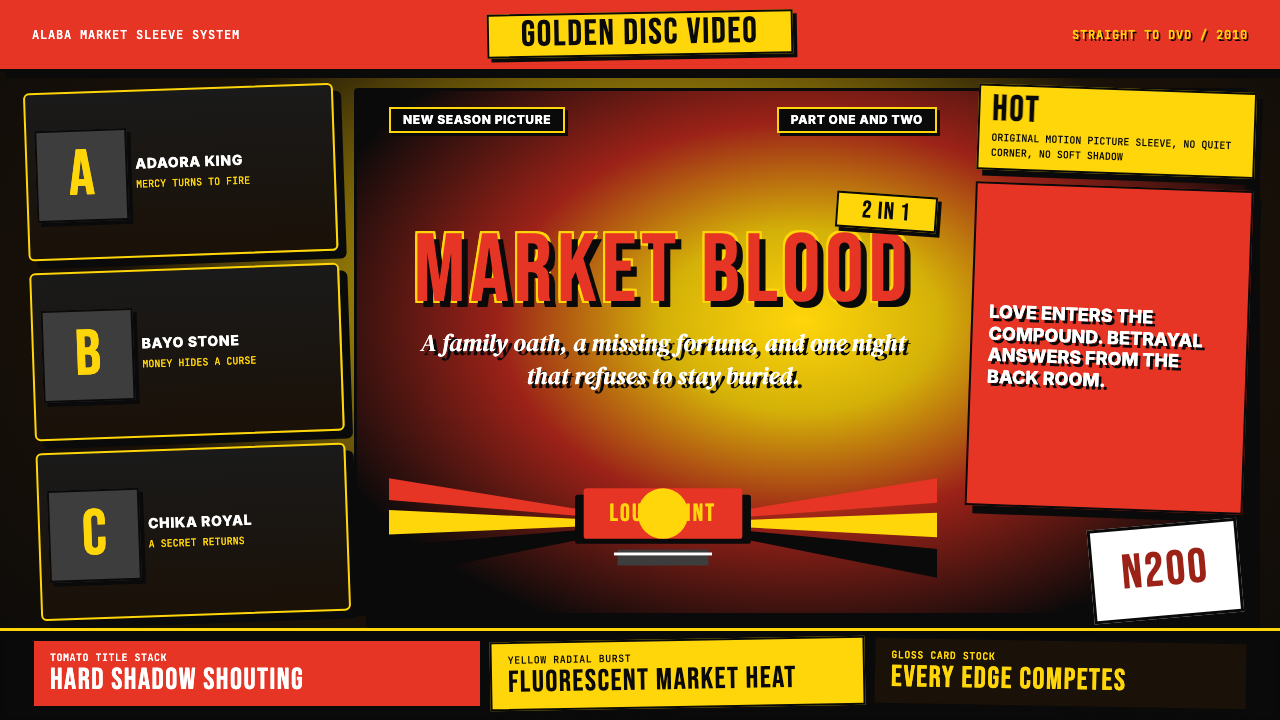 Nigerian Nollywood DVD Poster (2010)Market-stall cinema shouts. Tomato red type and yellow burst collide on jet b…
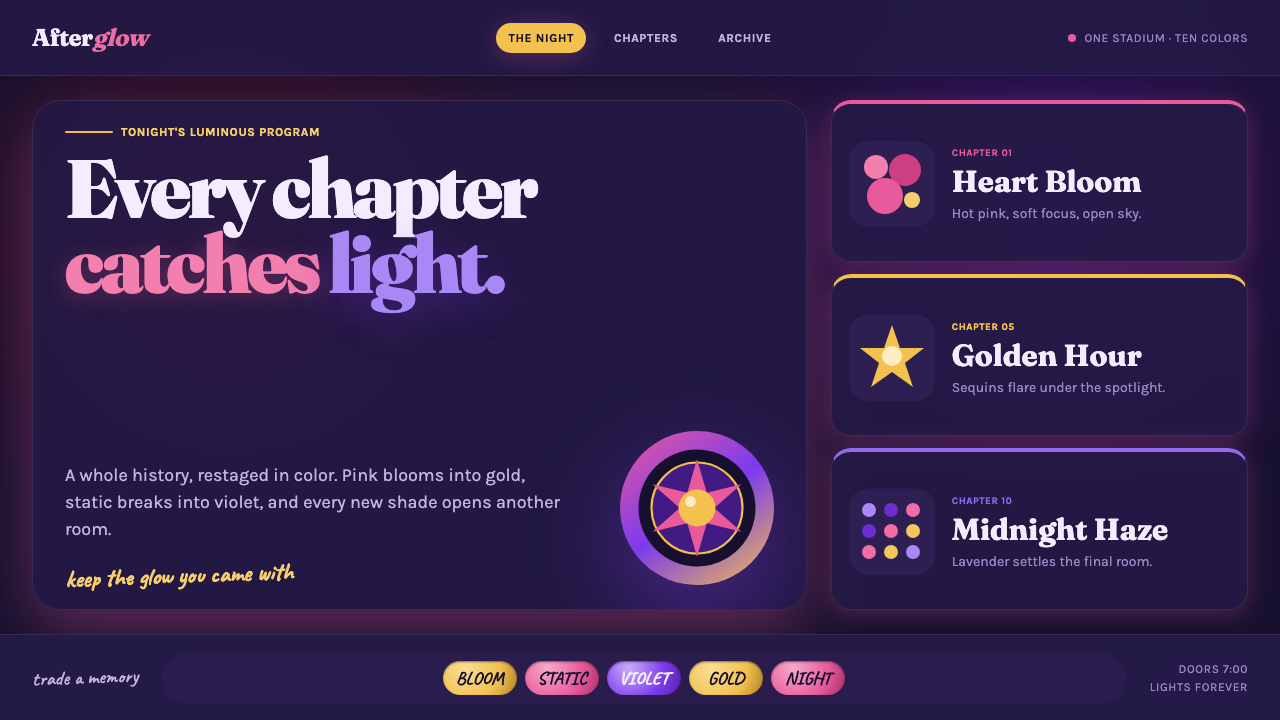 Taylor Swift Eras (2023)Every chapter catches light. Hot pink, lavender, gold and beadwork glow on mi…
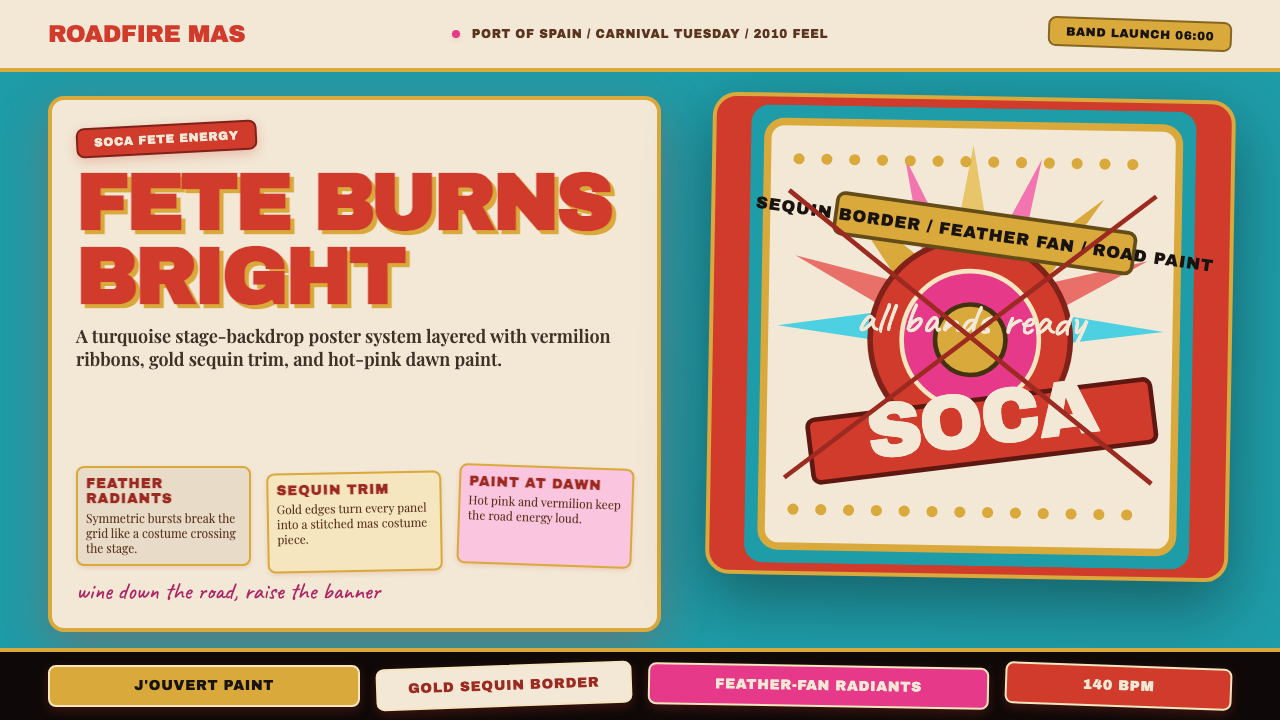 Trinidad Carnival Soca (2010)Joy overload. Turquoise field, vermilion banners, gold sequins, feather-fan g…
 BTS Army Purple 2020Fandom becomes atmosphere. Borahae purple, pearl cards, lavender glow, one go…
 Champeta Picó SoundLoud after dark. Orange-green banners and fat Bungee type glow like a speaker…