What is Kathak Ghungroo Dance?
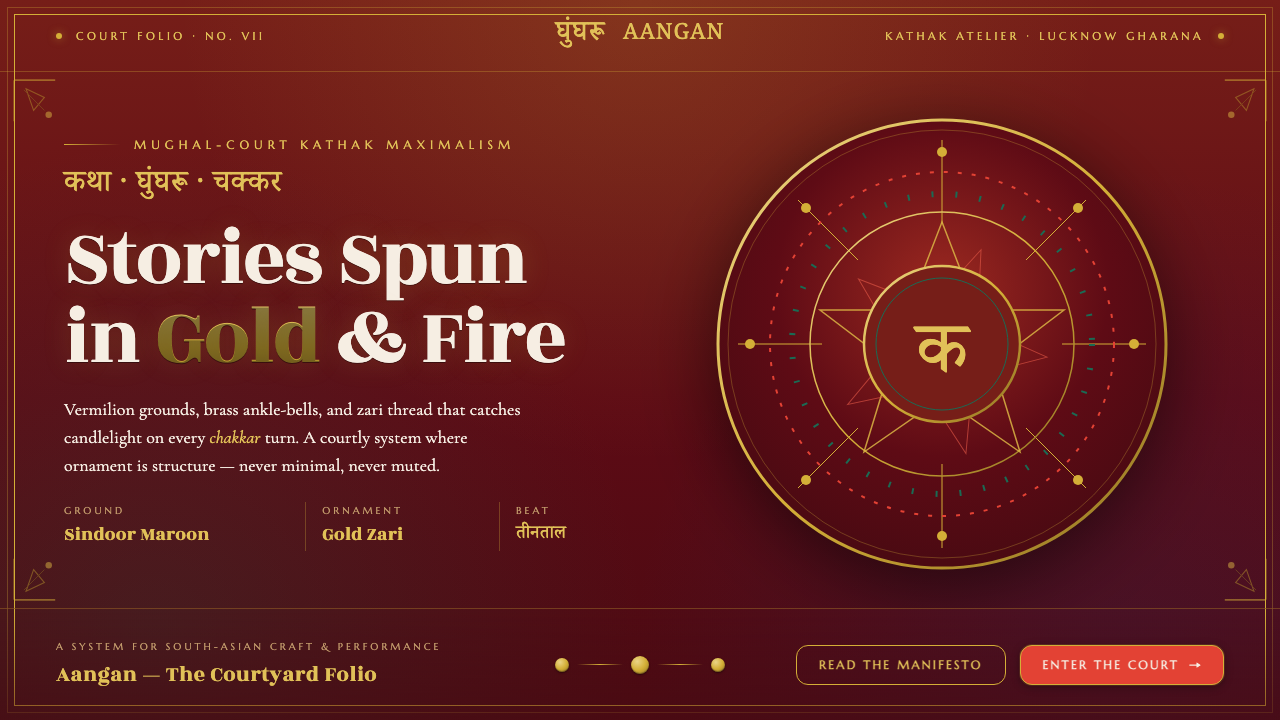
Kathak turns ornament into motion — a vermilion-maroon courtly world where gold zari, brass ghungroo, jewel-toned light, and Devanagari lettering make every surface feel ready to spin.
Kathak Ghungroo Dance in brief
Kathak Ghungroo Dance draws from Kathak, the storytelling dance of North India's Mughal courts. Its visual language is built from vermilion and deep maroon lehenga, brass ankle bells, gold zari, henna, kohl, and jewel-toned miniature backdrops. The result is ceremonial, kinetic, and richly layered rather than quiet or reduced.
The governing idea is simple: ornament is structure. Gold borders do not merely decorate a panel; they establish its boundary and authority. A rotating chakkar medallion is not a detached illustration; it concentrates the system's central movement into a recognizable emblem. Density is intentional, and every embellishment should reinforce the sense of rhythm, ceremony, or motion.
Translated into interface, the style uses dark vermilion-maroon grounds, luminous gold-zari borders, jewel-tone accents, and ornate Devanagari display lettering. Contrast comes from metallic warmth against saturated darkness, while hierarchy comes from framing, scale, and placement. The system should feel dense and radiant, never empty, neutral, or minimalist.
Where does Kathak Ghungroo Dance come from?
The source tradition is Kathak, the storytelling dance associated here with the Mughal courts of North India before 1900. Its regional frame is Uttar Pradesh and Rajasthan. The design system takes that courtly setting as a visual foundation: movement is treated as a source of composition, costume becomes a color field, and ornament becomes the means by which an interface declares importance.
Three source movements shape the language. The Kathak classical dance tradition contributes narrative motion and the sense of a body turning through space. Mughal-court ornament contributes vermilion-maroon grounds, gold borders, jewel-like accents, and a preference for surfaces that feel ceremonial rather than plain. Mughal miniature painting contributes the jewel-toned backdrop and the impression of a compact, highly composed world.
The ghungroo is central because it makes movement audible as well as visible. Brass ankle bells suggest repeated rhythm, clustered detail, and a design language that should feel activated even when still. The chakkar turn supplies the system's emblematic gesture: circular motion gathered into a medallion, with gold zari catching against deep maroon as the dancer turns.
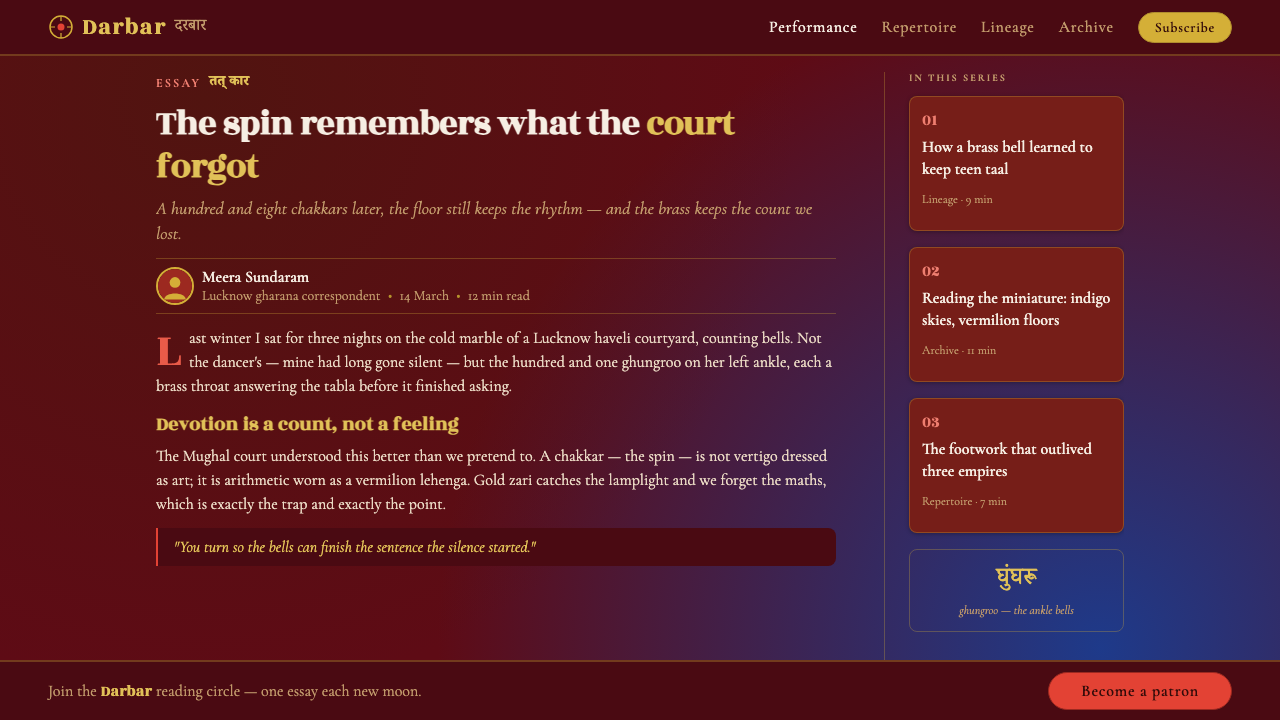
In interface form, these sources are not separate references placed side by side. They operate as one visual grammar. The dark ground creates the stage, the border creates the ceremonial frame, the jewel tones create focal accents, and Devanagari display lettering gives titles an ornate vertical presence. The result is a translation of courtly maximalism into a coherent system of panels, cards, labels, and editorial surfaces.
What defines the Kathak Ghungroo Dance look?
Vermilion-Maroon Ground
The background is deep, saturated, and warm, moving between vermilion energy and maroon gravity. It creates the visual equivalent of a miniature-painting field or a richly dyed lehenga. Dark grounds give gold and jewel tones room to glow, while preventing the interface from drifting toward modern neutrality.
Gold-Zari Borders
Borders are structural ornaments: they contain, separate, and dignify content. Gold-zari treatment should feel woven or embroidered, with a visible sense of repeated craft rather than a generic metallic stroke. Frames may be elaborate, but their purpose remains clear: every boundary should help the viewer understand the surface it encloses.
Devanagari Display
Display lettering is ornate, vertical, and ceremonial, with Devanagari as the defining reference. It should carry the authority of a title or invocation rather than behave like anonymous utility text. Supporting text can be calmer, but headlines need presence: broad forms, strong contrast, and enough surrounding ornament to feel deliberately staged.
Chakkar Medallion
The chakkar medallion concentrates movement into a circular emblem. It can anchor a title, mark a section, or act as a recurring seal across the system. Its geometry should suggest turning rather than static symmetry: rings, radial detail, and gold accents create the impression that the emblem has been caught mid-spin.
Jewel-Tone Accents
Accent colors should arrive like embedded stones in a dark ceremonial surface. They identify active states, highlights, or moments of narrative importance, while vermilion and gold remain the dominant vocabulary. Accents are saturated and intentional, never washed out into pastel neutrality or scattered so widely that the palette loses its hierarchy.
Ceremonial Density
The composition is intentionally full. Repeated motifs, framed compartments, metallic edges, and layered surfaces create a sense of abundance. This is not visual noise: density is organized through borders, medallions, and color hierarchy. Empty space may still appear, but it should read as a pause within a performance, not as the system's default condition.
Who shaped Kathak Ghungroo Dance?
Court Kathak dancers are the living source of the system's movement. Their storytelling presence, vermilion-and-gold lehenga, brass ghungroo, henna, and kohl become a visual vocabulary of gesture, rhythm, costume, and ceremonial focus. The interface should feel composed around an active body, even when the body itself is represented only through a medallion or pattern.
Mughal-miniature painters represent the system's compact, jewel-toned world. Their visual influence appears as richly composed backdrops, controlled clusters of detail, and a preference for surfaces that reward close looking. The lesson is not to fill every area indiscriminately, but to make each framed field feel like a complete, illuminated scene.
Ghungroo and zari function as material figures within the language. The bells supply repeated rhythm and brass warmth; zari supplies reflective gold, border logic, and the sense of hand-worked abundance. Together they keep the system tactile and audible in imagination, preventing the dark palette from becoming merely flat or severe.
How do you use Kathak Ghungroo Dance today?
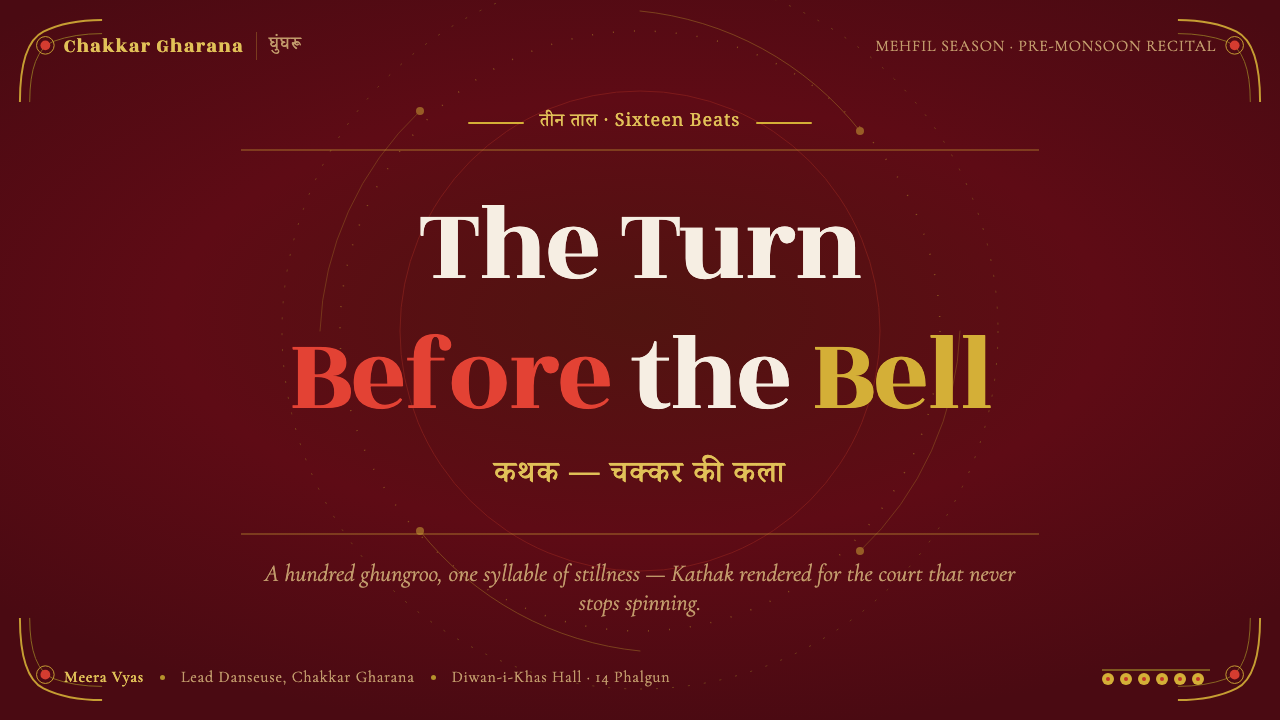
For presentation slides, use the style most fully on the cover, where a deep maroon field can carry a large Devanagari title, a chakkar medallion, and a gold-zari frame. Content slides should retain the same ceremonial border but simplify the interior into clearly framed reading zones. Data slides can treat charts as jewel-like inlays: a dark field, gold labels, and restrained accent colors that make the information feel curated rather than technical.
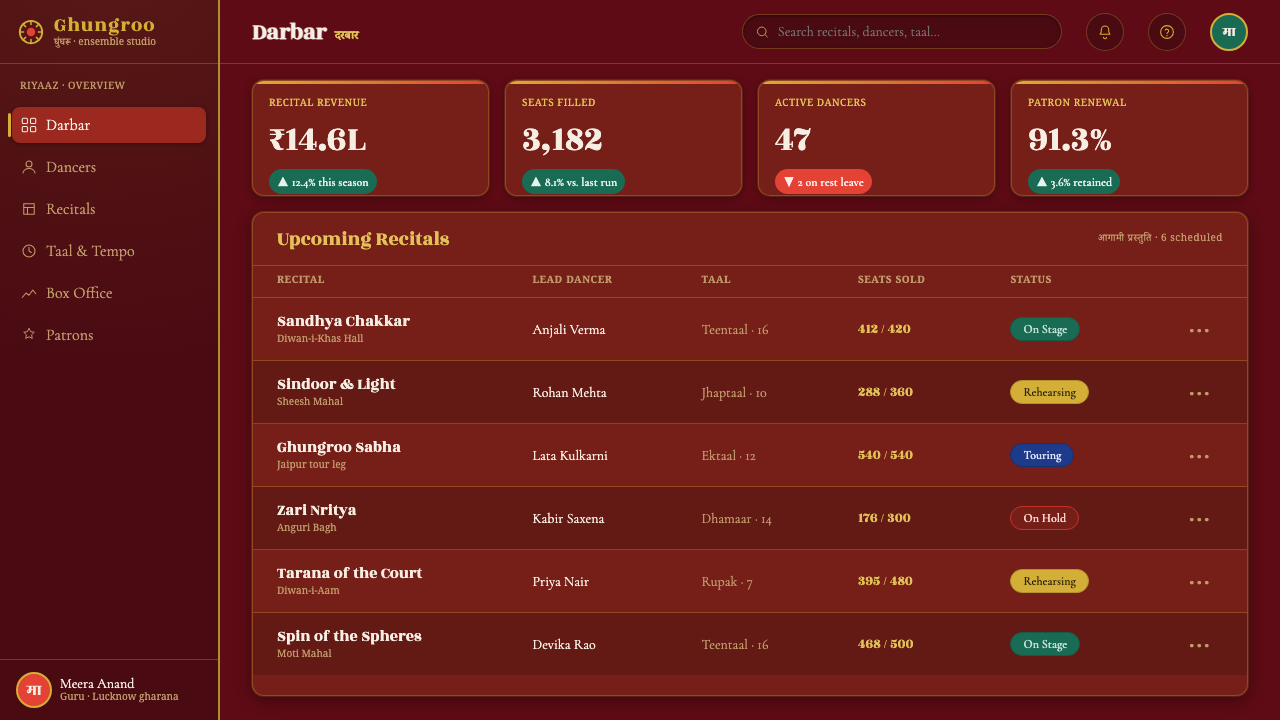
For web interfaces, the system suits dashboards and pricing pages that need strong visual identity and a sense of premium ceremony. Use maroon as the main environment, gold for borders and key actions, and jewel tones for selected states or tier differentiation. Cards should feel framed rather than floating, with ornament integrated into their edges. Dense decoration belongs around the hierarchy; the actual data and labels must remain calm enough to scan.
For editorial and marketing work, Kathak Ghungroo Dance supports invitations, cultural programs, luxury campaigns, fashion stories, and landing pages built around atmosphere. Give the lead section a poster-like composition: a saturated ground, an ornate title, a prominent medallion, and a border that reads as part of the image. Long-form content can alternate framed text fields with miniature-like visual panels, while calls to action appear as gold seals or jewel-tone interruptions.
The common mistake is to treat the style as a pile of exotic decoration. Adding maroon, gold, bells, and ornate lettering without a system of framing and movement produces costume rather than design. Keep ornament structural, repeat the same border and medallion logic, reserve jewel tones for meaningful emphasis, and protect readability inside each ceremonial field. The goal is concentrated abundance: every detail should make the interface feel more rhythmic, luminous, or authoritative.
Kathak Ghungroo Dance — FAQ
Is Kathak Ghungroo Dance meant to be minimal?
No. Its identity depends on density, ornament, saturated color, and the feeling of movement. It can be organized and highly legible, but it should not be stripped into a bare maroon layout with one isolated gold accent. The border, medallion, lettering, and repeated detail are not optional decoration; together they create the system's structure.
How should gold be used without making the interface feel gaudy?
Treat gold as zari: a material for borders, seals, highlights, and points of authority. It should define and reinforce important elements rather than cover every surface equally. A deep maroon ground gives gold its visual charge, while jewel-tone accents can share attention so the entire composition does not collapse into a single metallic effect.
What role does the chakkar medallion play?
It is the clearest emblem of motion. Use it to anchor a title, identify a section, or create continuity between pages and panels. Its circular form should feel active through radial detail, layered rings, or gold movement around the edge. It is strongest when repeated with discipline, not when every component receives a different decorative symbol.
Can the style support information-heavy dashboards?
Yes, provided ornament is assigned to the frame and hierarchy rather than placed behind every piece of data. Maroon can establish the environment, gold can mark boundaries and priority, and jewel tones can distinguish selected states. Inside those frames, labels and numbers need calmer contrast and spacing so the ceremonial surface supports scanning instead of competing with it.
Related design styles
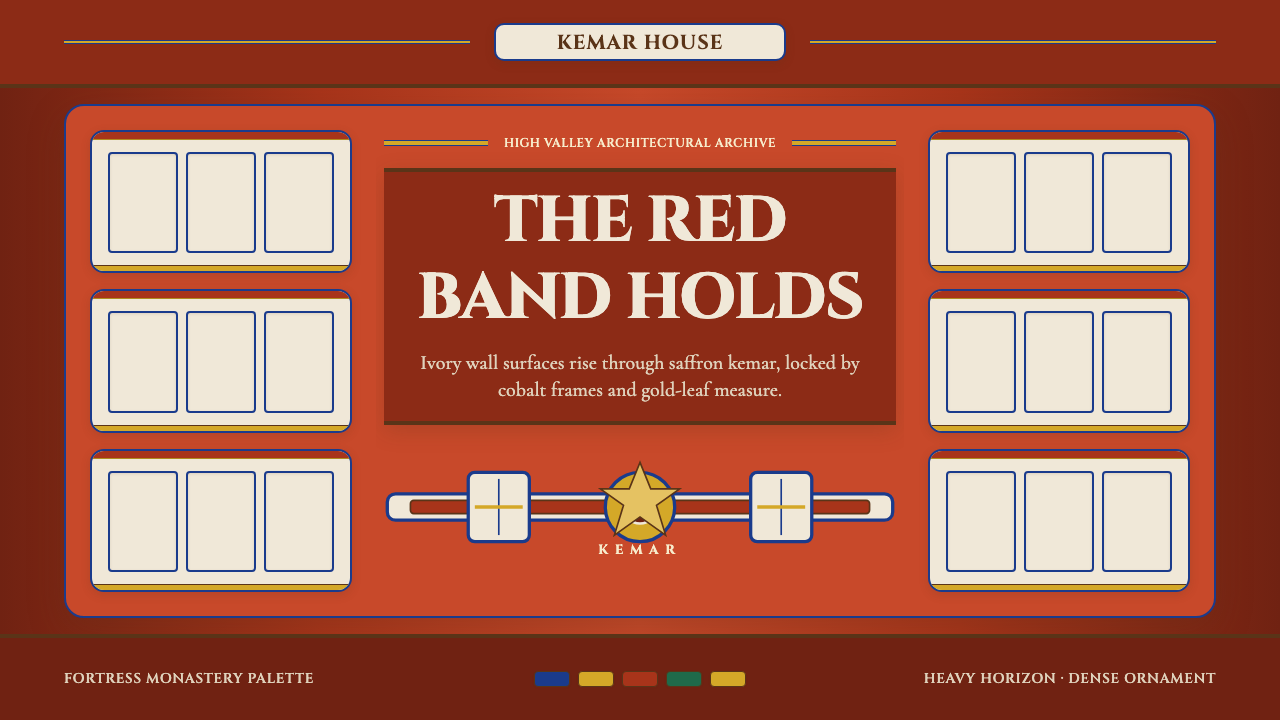 Bhutanese Dzong (Fortress Red)Monumental red holds the page. Cobalt frames and gold bands lock the fortress…
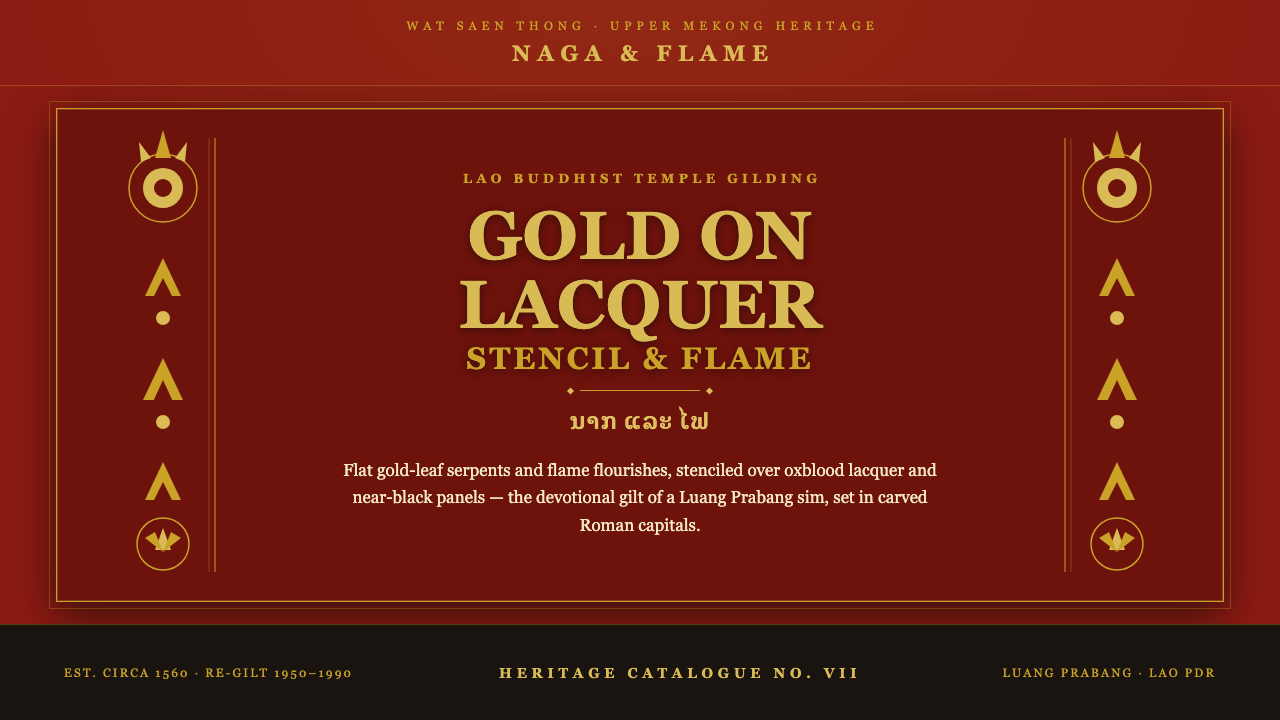 Lao Naga Temple StencilDevotional gilt, not chrome. Flat gold-leaf naga and flame stencils glow on o…
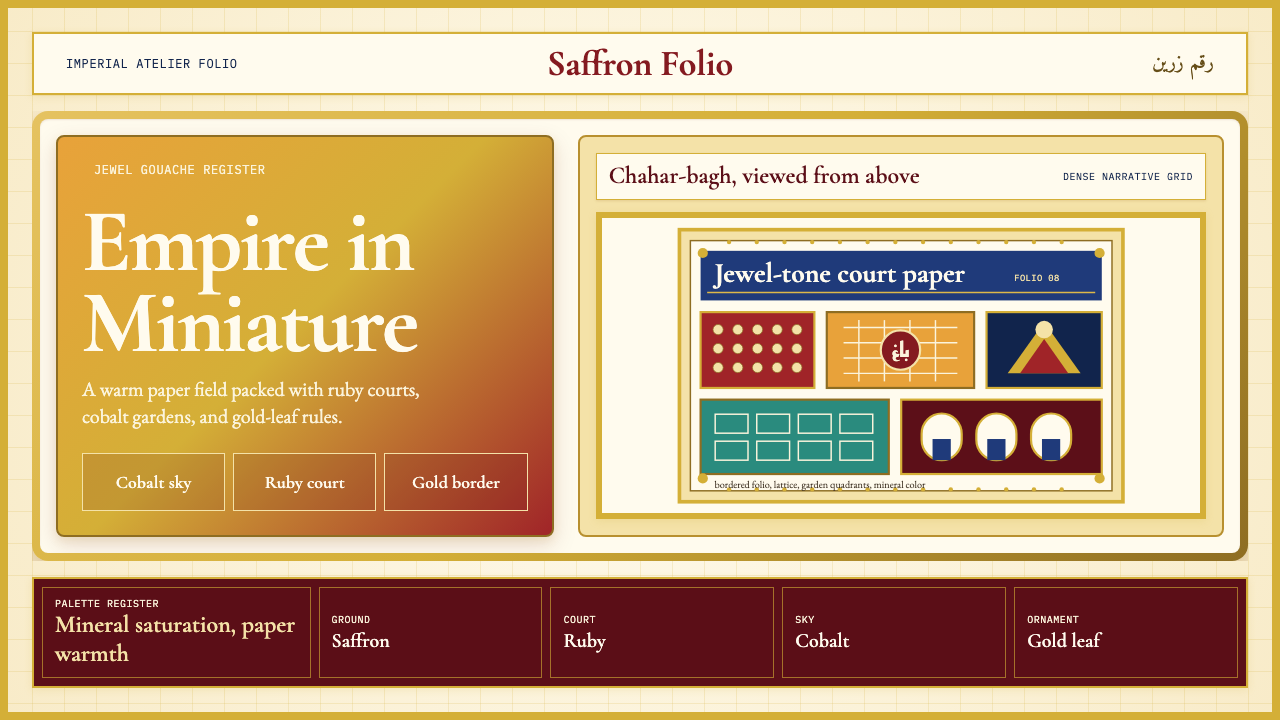 Mughal Miniature (Akbar era)Opulence refuses emptiness. Saffron paper, ruby panels, cobalt lattice, gold…
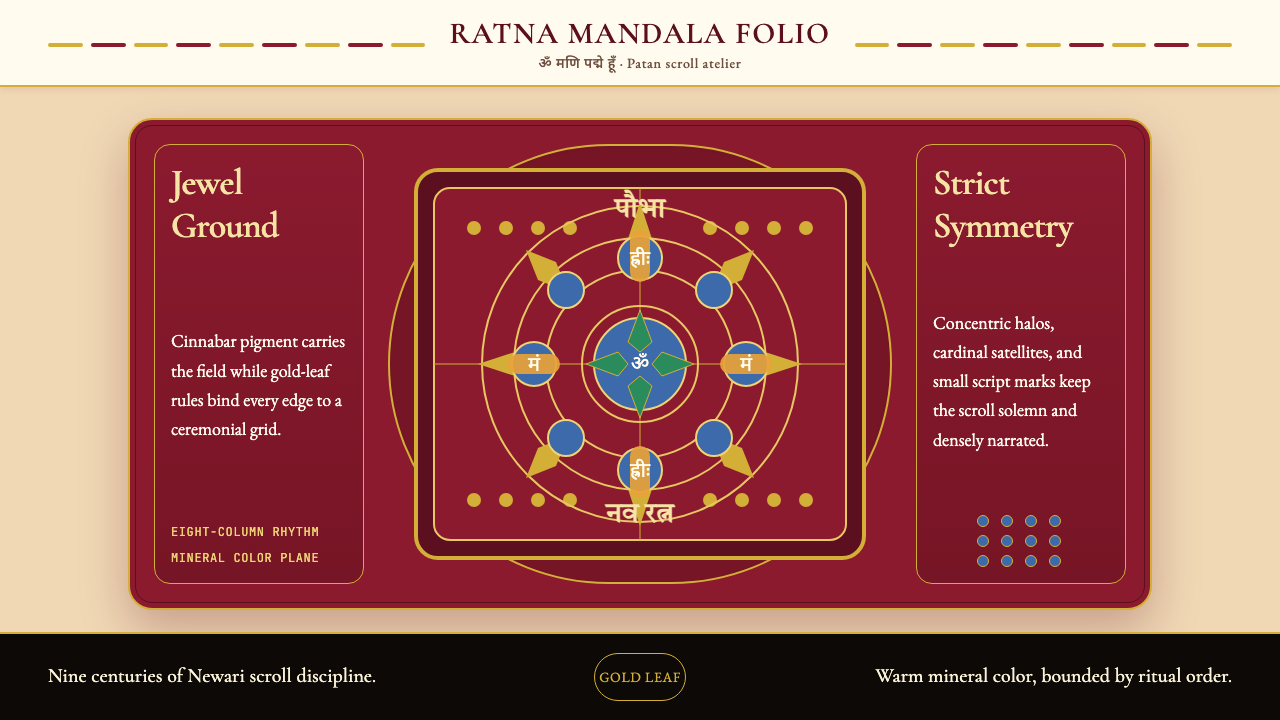 Nepali Paubha (Newari Scroll)Sacred density. Cinnabar ground, gold-leaf frame, lapis rings in strict symme…
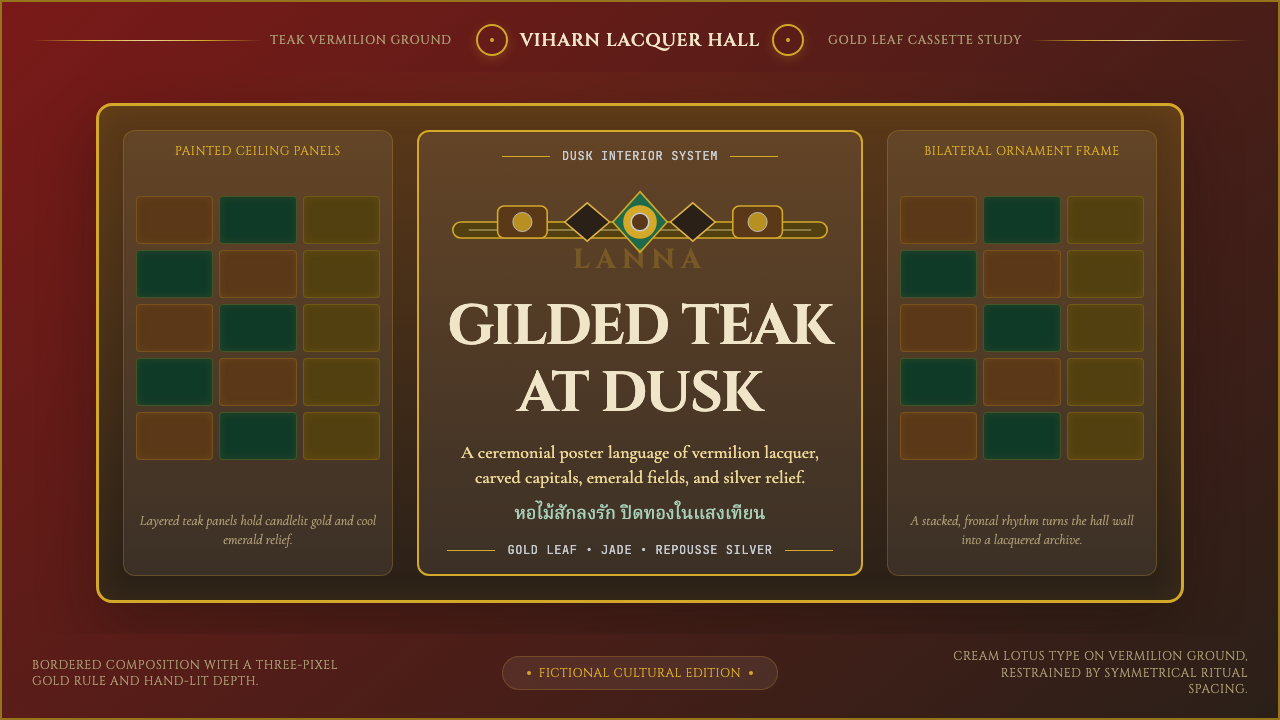 Thai Lanna Tai Yai TempleSacred lacquer glows. Vermilion ground, Cinzel capitals, gold cassette symmet…
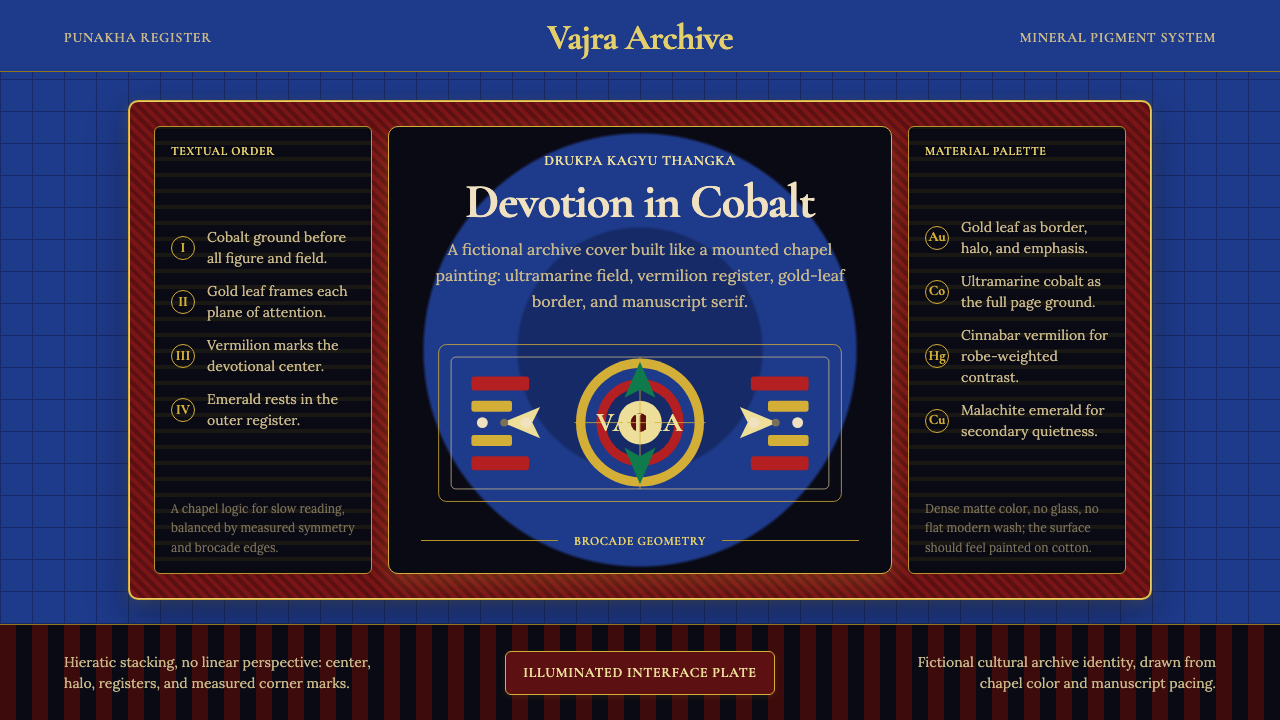 Bhutanese Drukpa Kagyu ThangkaDevotion made cobalt. Gold frames, Cormorant serif, and vermilion marks hold…