What is Kaolin Porcelain Clay Pit?
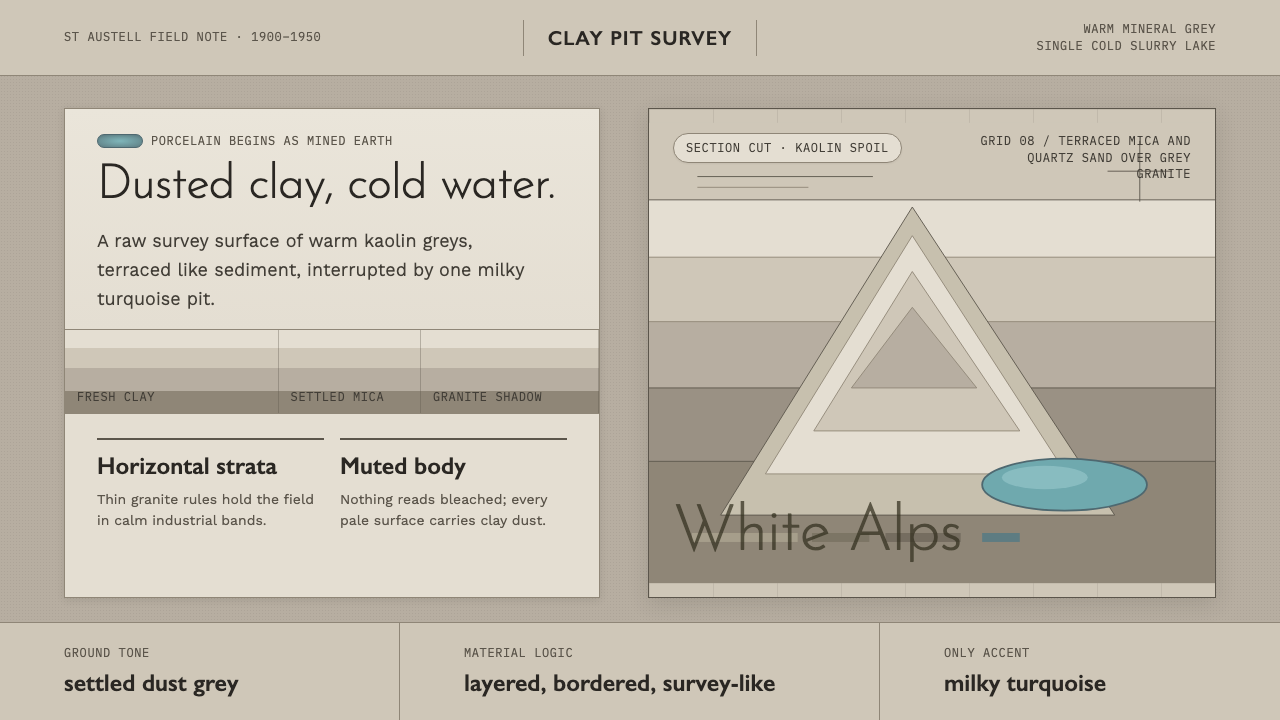
Kaolin Porcelain Clay Pit finds industrial calm in dust-grey strata, broken only by the milky turquoise of a flooded slurry lake.
Kaolin Porcelain Clay Pit in brief
Kaolin Porcelain Clay Pit takes its visual language from the china-clay country around St Austell in Cornwall, known as the White Alps. Pale spoil tips of mica-and-quartz sand rise in conical terraces above grey granite, producing a landscape that appears white from a distance but settles, on closer inspection, into warm mineral dust. The style translates that terrain into a restrained surface of layered greys, quiet bands, and surveyed horizontal order.
Its central contrast is a single flooded slurry pit. The lake is milky blue-turquoise rather than clear or jewel-like, carrying the cloudy density of disturbed earth and industrial water. Against the dust-grey field, it becomes an optical opening: cold, luminous, and unusually calm. The contrast is not decorative variety but a record of two materials meeting — pale extracted clay and water occupying the worked ground.
This is a raw mined-earth aesthetic, not a simulated sheet of paper. Surfaces should feel settled, granular, and mineral, while compositions remain plain, industrial, and survey-like. The visual power comes from restraint: horizontal strata establish duration and mass, conical terraces imply excavation, and the lone lake supplies orientation without turning the scene into a landscape illustration.

Where does Kaolin Porcelain Clay Pit come from?
The source places this style in the industrial china-clay extraction landscape of 1900–1950, during the Wheal Martyn era. Its setting is St Austell, Cornwall, in Western Europe, where porcelain raw material shaped both the ground and the visual character of the region. The style therefore begins with an industrial terrain rather than an art movement: its references are spoil, granite, slurry, water, and the practical geometry of excavation.
The White Alps name describes the pale spoil tips around St Austell. Their light appearance comes from mica-and-quartz sand and china clay, but the surface is not presented as immaculate white. Dust, mineral residue, and the underlying grey granite temper the brightness. This tension between apparent whiteness and actual earthiness is essential: the palette should feel bleached by extraction, then warmed by dust and weather.
The landscape is organized by working processes. Conical terraces show material accumulated and moved; horizontal strata expose the layered logic of the pit; the flooded slurry lake marks a change in use, from active industrial ground to water-filled void. These forms make the style inherently structural. A line is a boundary between deposits, a band is a geological or operational layer, and a pool is a deliberate interruption in the field.
The named human and institutional references are Cornish china-clay miners and the Wheal Martyn works. They anchor the style in labor and place rather than in anonymous industrial imagery. Porcelain raw-material extraction is not treated as background scenery: it is the subject, the source of the color, and the reason the composition favors calm observation over spectacle.
What defines the Kaolin Porcelain Clay Pit look?
Dust Mineral Palette
The dominant palette stays within warm dust greys, pale spoil white, and the muted grey of granite. White is treated as mineral residue rather than a pristine background, so the surface feels settled and atmospheric. The milky blue-turquoise lake is the exceptional accent, kept singular and unmistakable.
Horizontal Strata
Long horizontal bands provide the style’s primary order. They may vary gently in tone or density, but they should read as deposits, cuts, or survey marks rather than decoration. The eye moves laterally across the field, producing a measured rhythm that feels geological and operational.
Conical Accumulation
Spoil tips and terraced cones introduce mass without becoming pictorial scenery. Their geometry should feel accumulated and excavated, with broad quiet slopes and clear edges. Used sparingly, these forms give the otherwise flat strata a sense of depth and industrial scale.
Milky Lake Contrast
The flooded slurry pit is the visual interruption that makes the whole system legible. Its blue-turquoise is cool, cloudy, and water-borne, never tropical or jewel-bright. It works best as one concentrated field, allowing the surrounding greys to remain quiet and making the lake feel like a discovered opening.
Survey Plainness
Composition favors clear bands, restrained marks, and practical spacing over expressive flourish. Elements should appear placed according to terrain, measurement, or material logic. The result is calm but not empty: every interval suggests a boundary, a layer, or a decision made in the field.

Who shaped Kaolin Porcelain Clay Pit?
The miners represent the human labor embedded in the landscape. Their presence is not illustrated through portraiture but through the ordered terraces, worked strata, and material discipline of the pit. They keep the aesthetic connected to extraction as a lived industrial practice.
Wheal Martyn works anchors the style to a specific working landscape and its industrial memory. It suggests a place where porcelain raw material, spoil, water, and granite belong to one continuous system. The reference lends the palette documentary weight.
The flooded slurry pit is the style’s clearest visual protagonist. It is both absence and presence: a worked cavity that has become a lake, carrying a cool milky color into an otherwise mineral field. Its singularity creates recognition and restraint.
How do you use Kaolin Porcelain Clay Pit today?
For presentation slides, use the dust-grey field as the quiet cover and let one broad turquoise lake shape or horizontal break establish the subject. Content slides should rely on strata-like bands, plain labels, and clear alignment. Data slides can treat bars, areas, or survey marks as extracted layers, with the cool lake color reserved for the most important comparison or change.
For web interfaces, the style suits dashboards, monitoring tools, and pricing pages that need industrial authority without visual aggression. Keep surfaces pale and mineral, use horizontal rules to separate states, and reserve turquoise for active selections, key metrics, or a primary tier. Cards should feel like surveyed plates or material samples, with restrained depth and no ornamental gloss.
For editorial and marketing work, build a strong contrast between documentary calm and one memorable cold accent. Articles can pair a narrow reading column with wide strata-like margins for metadata, captions, or field notes. Marketing pages can use the lake tone for a single call to action while allowing the rest of the page to remain almost geological in its restraint.
For covers, posters, and title pages, a conical spoil form or a clean horizontal cut can provide the main silhouette. Let typography sit plainly against the mineral field, with generous breathing room and a measured rhythm. The design should feel observed and recorded, not artificially weathered or theatrically rugged.
The common mistake is adding too much industrial decoration: rust textures, warning stripes, heavy grunge, or several bright water colors. That turns a quiet extraction landscape into a generic factory theme. Keep the greys warm and varied, make the lake singular, and let material relationships carry the drama.

Kaolin Porcelain Clay Pit — FAQ
Is Kaolin Porcelain Clay Pit a white aesthetic?
Only at first glance. Its pale surface is always tempered by dust, mineral residue, and grey granite. The essential color relationship is not pure white against emptiness but warm mineral grey against one milky blue-turquoise lake.
Can the style use several accent colors?
It can, but doing so weakens its identity. The flooded slurry pit works because it is singular. If several vivid accents compete for attention, the composition loses the calm hierarchy created by the grey strata and the lone cold lake.
Does the style require literal mining photography?
No. Photography can support the reference, but the defining qualities are structural: horizontal layers, pale spoil, conical accumulation, grey granite, and a single milky lake. Abstracted shapes or restrained diagrams can carry the same logic without becoming documentary illustration.
Where does this aesthetic work best?
It works best where observation, material intelligence, and measured hierarchy matter: dashboards, pricing tools, reports, environmental or industrial editorial, and brands that want quiet authority. It is less suitable when the experience depends on exuberance, softness, or many competing emotional cues.
Related design styles
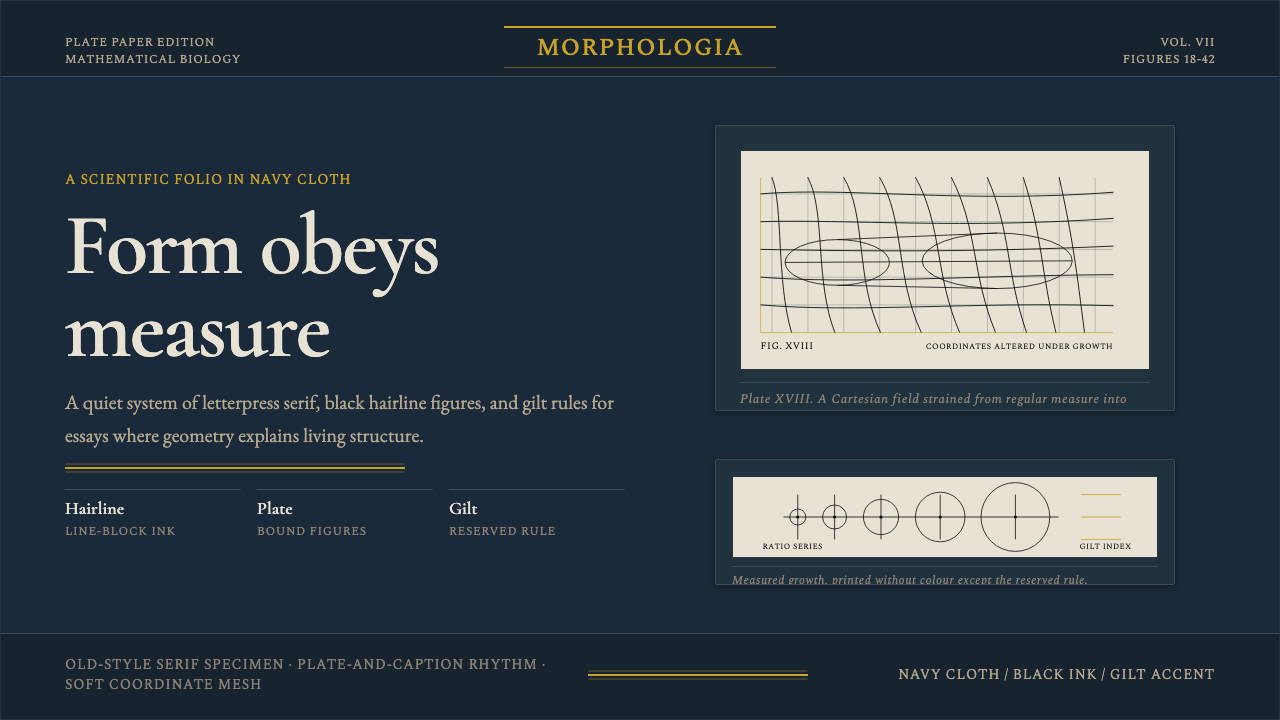 On Growth and FormMathematics in mourning cloth. Navy ground, gilt rules, Garamond type, hairli…
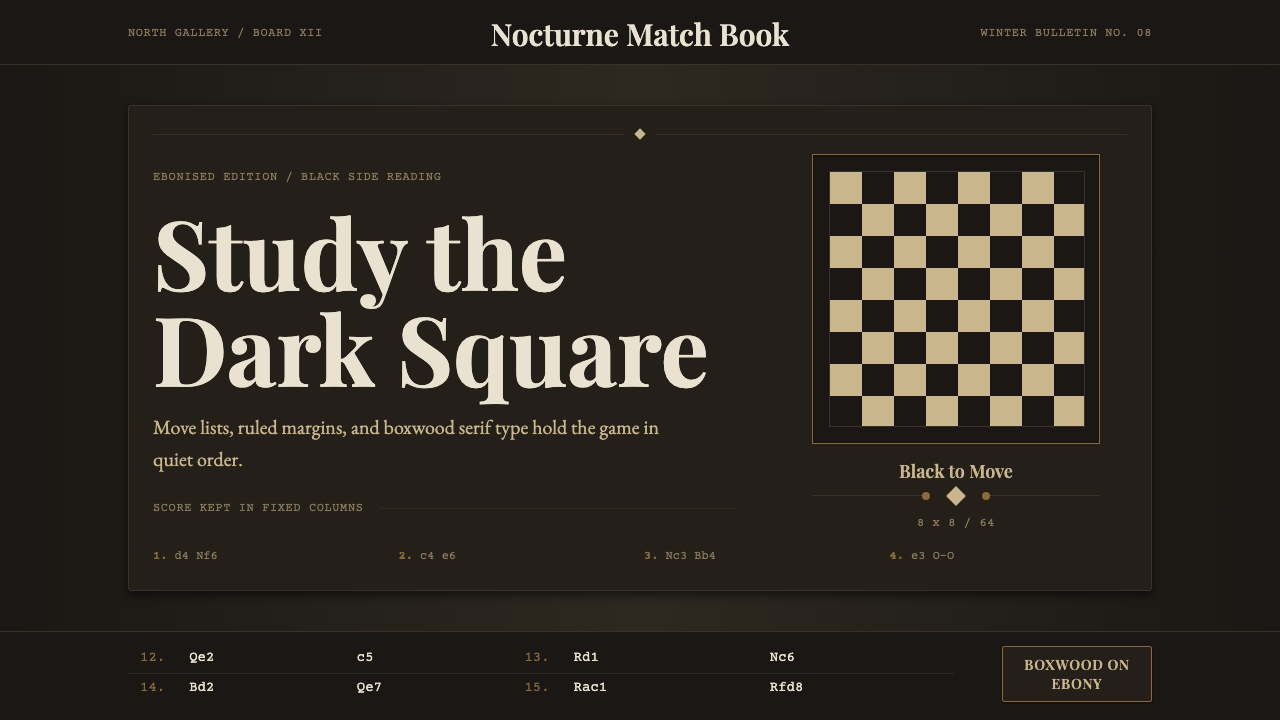 Chess TournamentQuiet intellect. Cream Playfair type, walnut rules, and notation glow on ebon…
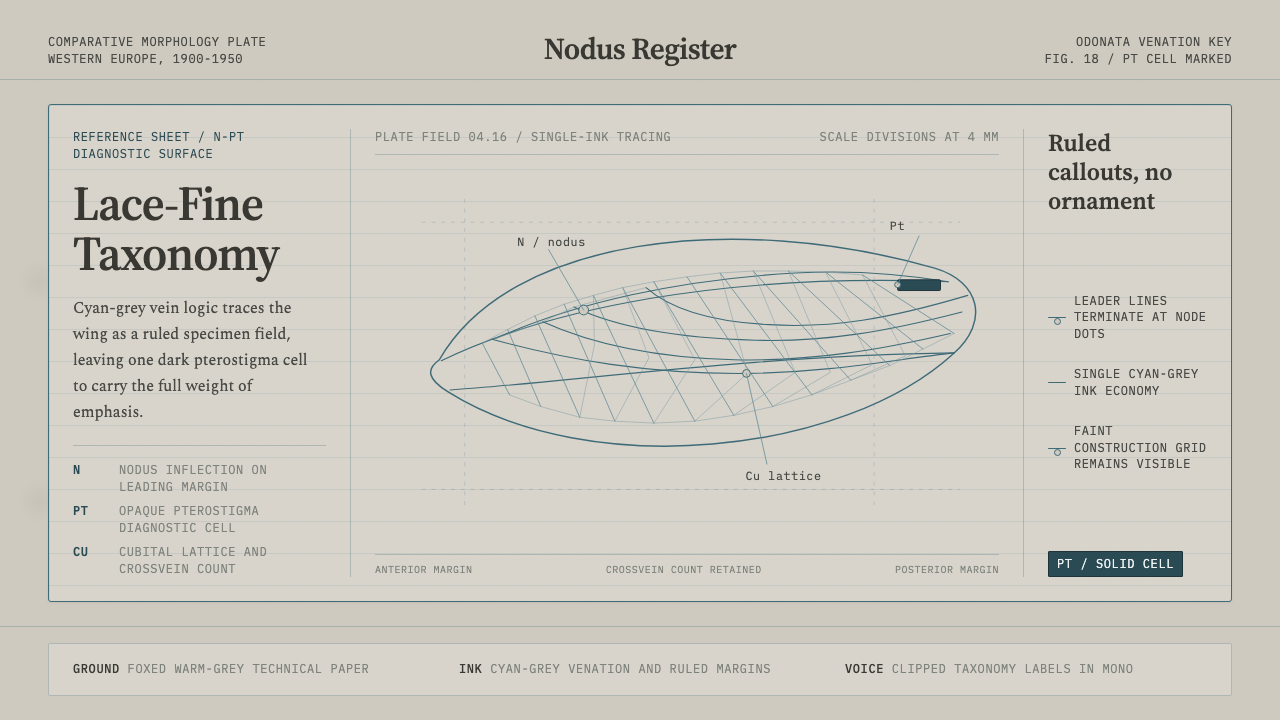 Dragonfly Wing VenationPrecision, nearly weightless. Cyan-grey veins rule a foxed paper taxonomy pla…
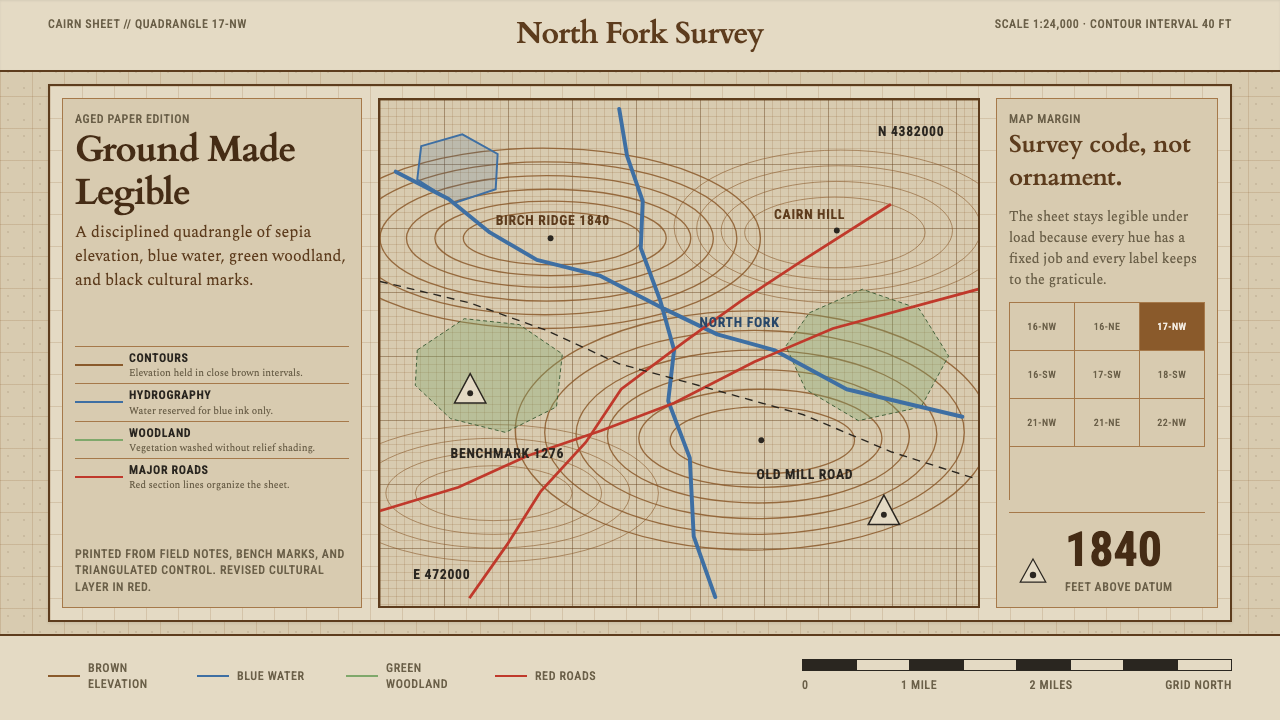 Topographic Survey MapMeasurement becomes beauty. Sepia contours and blue hydrography sit on aged m…
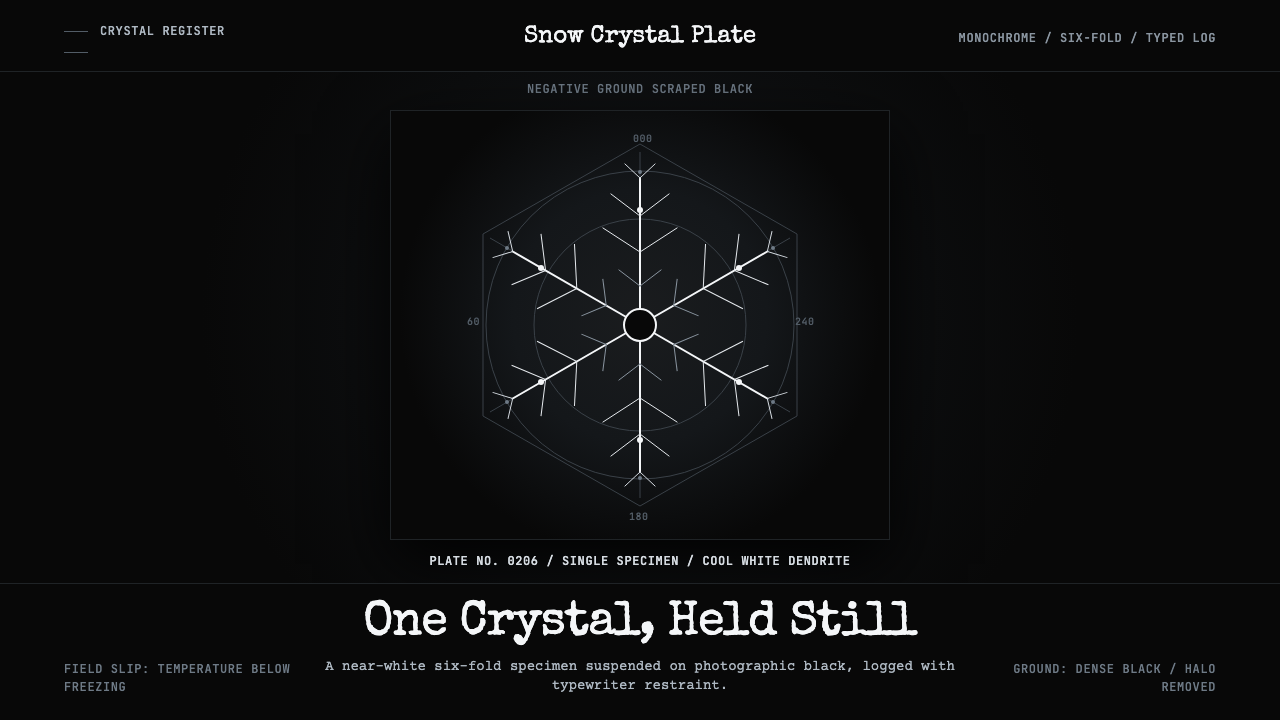 Bentley SnowflakeClinical rarity. Crystal white on scraped black, centered by hex geometry and…
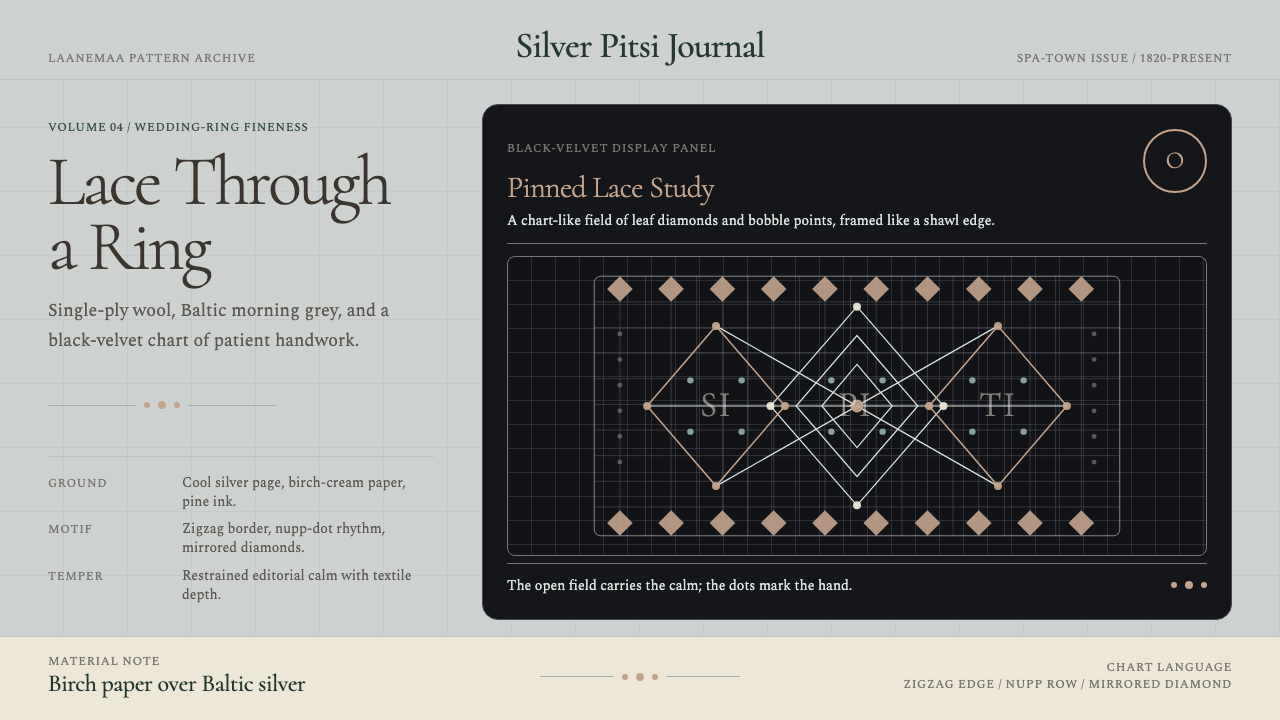 Estonian Haapsalu Lace ShawlQuiet craft, held in silver light. Cormorant type meets nupp dots and velvet…