What is Kalighat Patua (Bengal)?
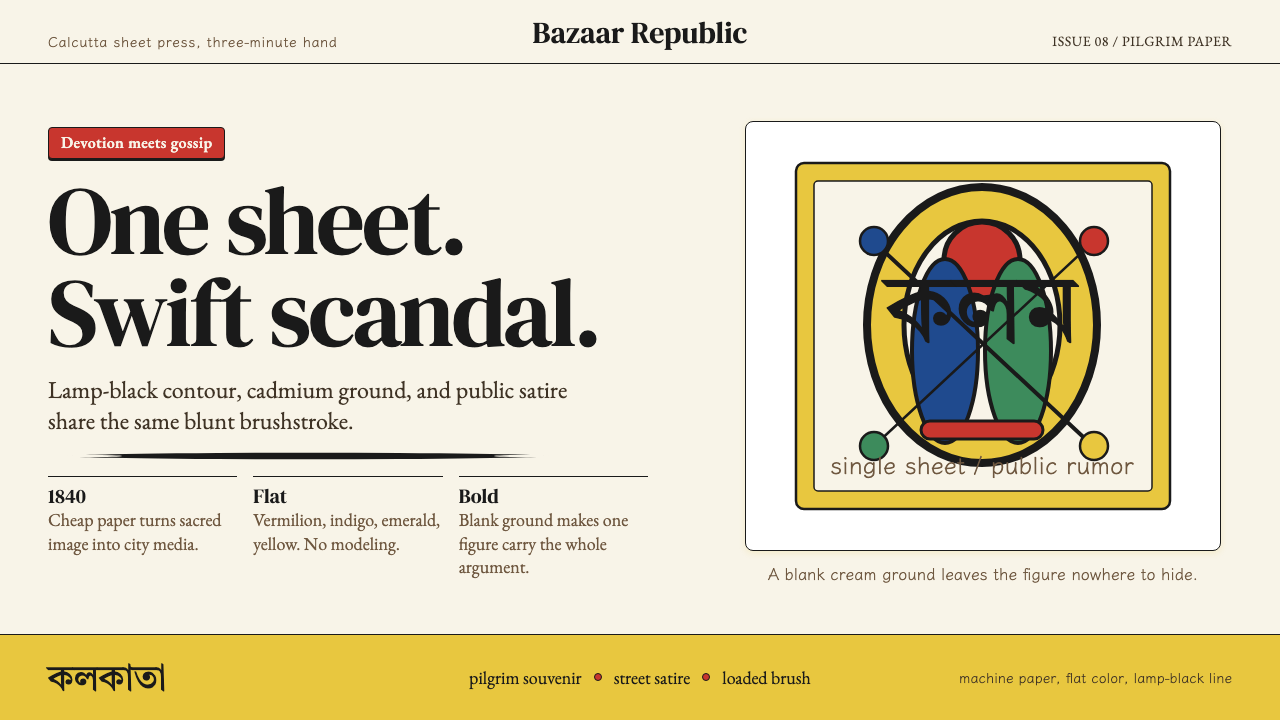
A single swift brushstroke and cadmium yellow on blank cream paper — Kalighat painting turned the folk scroll into Asia's first mass-market art form.
Kalighat Patua (Bengal) in brief
Kalighat Patua painting is a Bengali folk tradition that flourished between roughly 1840 and 1930 in the lanes surrounding the Kalighat Kali temple in Calcutta. Hereditary Patua-caste scroll-painters — whose ancestral craft was the long narrative pat scroll, sung village to village — relocated to the city and reinvented their practice for an entirely new audience: the urban pilgrim, the curious clerk, and the colonial-era babu who could spare a few annas for a picture.
The resulting visual language is immediately distinct from anything that preceded it. Each image is a single figure, or two figures in confrontation or embrace, set against a completely bare cream ground. There is no landscape, no architectural backdrop, no decorative border. A swift calligraphic contour line — drawn with a brush in a matter of minutes — defines the entire form, and flat areas of cadmium yellow, vermilion, indigo, and emerald fill within it. Color is never blended or shaded; the palette is applied in bold, opaque planes that read at a glance from a market stall.
The subject matter is split almost perfectly between the sacred and the satirical. Kalighat painters depicted the great Hindu deities — Kali, Durga, Krishna, Radha, Ganesh — with the same loose confidence they brought to caricatures of the colonial Bengali gentleman (the overrefined babu), corrupt lawyers, scheming wives, and Englishmen in their ridiculous topcoats. Both registers share a single visual mode. That equivalence — the goddess and the social climber drawn with the same three-minute hand — is among the most subversive things in nineteenth-century world art.

Where does Kalighat Patua (Bengal) come from?
The Patua (also spelled Potua or Chitrakar) painters of Bengal trace their lineage to a hereditary artisan caste whose primary medium was the pata, a long cloth or paper scroll painted in sequential panels and sung to audiences in village courtyards. The subject matter was mythological: episodes from the Ramayana, the Mahabharata, tales of Manasa and Shitala. Scroll-painting was both craft and performance, and the painter doubled as a singing narrator — a tradition with roots stretching back several centuries across Bengal, Odisha, and Andhra Pradesh. The Patua identity was bound up entirely with this mobile, rural, oral economy.
The transformation began in the 1830s when a critical mass of Patua families settled in the Kalighat neighborhood of Calcutta, drawn by the constant flow of pilgrims to one of Hinduism's most important Shakti shrines. The city had already become a vast commercial experiment under British colonial administration, and the pilgrimage economy offered a natural marketplace. Painters quickly discovered that visitors wanted not long scrolls to be sung over an hour, but small, portable single-sheet images they could carry home as religious souvenirs — a function partly analogous to the holy cards sold outside European cathedrals.
The shift in format demanded a reinvention of technique. Long narrative scrolls required compositional patience; the single-sheet Kalighat picture required speed, confidence, and immediate visual impact. Painters adopted machine-made British cartridge paper — cheap, smooth, and uniform in a way handmade paper was not — and began working in watercolor rather than the natural pigments of the scroll tradition. The brushwork became faster and more abbreviated: a single unbroken calligraphic line for the body contour, flat color fills, minimal interior detail. A practiced Patua could complete a picture in three to five minutes, enabling production at a scale the scroll tradition never approached.
By the 1860s and 1870s, the Kalighat picture had become a genuine mass-market commodity — possibly the first such commodity in Asian art history. Estimates suggest that tens of thousands of sheets were sold annually at the height of production, at prices accessible to working-class pilgrims. British administrators, collectors, and visitors including Rudyard Kipling's father John Lockwood Kipling took notice and began acquiring examples; the art historian W. G. Archer later produced the first serious scholarly study of the tradition in the twentieth century. The tradition went into steep decline after about 1910, when cheap chromolithographic religious prints flooded the market and undercut handmade pictures on price. By the 1930s, commercial Kalighat production had effectively ended, though the visual vocabulary survived through the influence of painters like Jamini Roy, who consciously absorbed Kalighat's flat line and bold color into his own modernist practice.
What defines the Kalighat Patua (Bengal) look?
Calligraphic Contour Line
The defining mark of Kalighat is a single, unbroken contour drawn with a fully loaded brush in one confident gesture. The line is not sketched and corrected — it is committed to in one pass. It swells and tapers like written script, thickening at shoulders and joints and thinning at extremities, giving figures a sense of weight and rhythm that no mechanical outline could achieve. This calligraphic confidence is the direct inheritance of the village Patua's scroll-painting speed, adapted to the commercial pressure of the Calcutta market.
Flat Unmodulated Color
Color in Kalighat painting is applied as solid, opaque planes with no shading, no modeling, and no transitions between hues. Cadmium yellow, vermilion red, indigo, and a vivid emerald or deep green are the core palette, deployed on cream or white paper grounds. The flatness is not a limitation — it is a deliberate strategy that ensures legibility from a distance and allows rapid production. A single color fills an entire garment or body area without gradation, creating a graphic boldness that anticipates twentieth-century poster art and modernist painting.
Single Figure on Bare Ground
Kalighat compositions are radically stripped of context. One figure — or at most a pair — occupies the center of an otherwise bare cream sheet. There is no ground plane, no skyline, no horizon, no landscape, no interior setting. The figure is isolated as completely as a specimen pinned to a board, yet it vibrates with implied narrative. This isolation forces all expressive energy into the body itself: the angle of the head, the position of the hands, the posture of confrontation or repose. It is a compositional logic that has no precedent in Indian painting and anticipates the centered single-figure compositions of mid-century commercial illustration.
Sacred and Satirical Equivalence
Kalighat painting is unique in treating devotional religious imagery and sharp social satire with the same visual language and the same degree of affection. A Kali standing over Shiva occupies the same compositional slot and receives the same calligraphic treatment as a fat lawyer clutching a briefcase or a fashionable woman smoking a hookah. The paintings do not visually signal which mode they are in. This equivalence was legible to contemporary Calcutta audiences as social commentary — the sacred and the corrupt rendered by the same unimpressed hand — but it was also a practical consequence of the Patua tradition's range and the commercial market's demand for both piety and entertainment.
Speed as Aesthetic Principle
Kalighat painting was commercial art produced under time pressure — a single painter working the temple precincts might complete dozens of images in a day. This production speed is not incidental to the aesthetic; it is the aesthetic. The abbreviation of detail, the commitment to a single unretouched line, the flat color that eliminates any need for layering or blending — all of these are simultaneously efficient solutions and expressive choices. The images look gestural because they were gestural. That the gesture also happens to be beautiful is inseparable from the fact that it was also fast.
Inherited Body Language
Despite the radical compression of format, Kalighat figures carry the body conventions of the older Bengali and pan-Indian pictorial traditions: the three-bend (tribhanga) posture for divine figures, the exaggeratedly large eyes rendered as wide almond or fish-shaped forms, the profile or three-quarter face with its characteristic protruding eye. These conventions were deeply legible to Bengali audiences — they signaled divine status, emotional register, and narrative role — even when stripped of the architectural and landscape context in which they normally appeared. Kalighat painting is thus not a rupture from tradition but a radical editing of it.
Paper as Active Ground
The bare cream or white paper is not a neutral void in Kalighat painting — it is a compositional participant. The absence of background is felt as a presence: the open field around the figure creates visual breathing room, draws attention toward the contour line, and gives the flat color areas their maximum luminosity. British machine-made paper, adopted by Kalighat painters around the 1840s, had a smoother, more uniform surface than handmade paper, and its consistent cream tone became part of the visual signature of the tradition. The ground is always visible, always active.

Who shaped Kalighat Patua (Bengal)?
The vast majority of Kalighat paintings are unsigned and unattributed. The tradition was a collective, hereditary craft practiced by Patua-caste families — men and women both participated, with women often handling color application while men drew the outlines. Individual authorship was not a concept the tradition recognized or valued; the style was the shared property of the community, and its consistency across thousands of sheets produced over a century is testament to the discipline of oral transmission and apprenticeship. The anonymity is not a gap in the historical record — it reflects the tradition's own self-understanding.
Jamini Roy (1887–1972) was the first academically trained Indian painter to make a sustained, principled study of Kalighat painting and to translate its visual logic into a self-consciously modern idiom. Trained at the Calcutta School of Art in the Western academic tradition, Roy became increasingly dissatisfied with European naturalism in the 1920s and turned to folk and tribal sources — Kalighat, Santali crafts, and Bankura terracotta — as alternatives to colonial mimicry. His mature work deliberately appropriates the flat line, simplified form, and opaque color of Kalighat painting, while addressing it to the international modernist conversation of the mid-twentieth century. Roy's practice effectively conferred retrospective critical prestige on the Kalighat tradition and drew Western museum attention to it.
William George Archer (1907–1979) was a British civil servant posted to Bengal and Bihar who became one of the most important scholarly advocates for Indian folk and tribal art. His 1953 book Bazaar Paintings of Calcutta, published by the Victoria and Albert Museum, was the first serious English-language monograph on the Kalighat tradition and introduced it to an international audience of art historians and museum professionals. Archer argued against the condescending colonial view of Kalighat as merely 'bazaar art' and made the case for its formal sophistication, its satirical intelligence, and its historical importance as a document of nineteenth-century Bengali urban culture. His collection, donated to the V&A, remains one of the finest public holdings of Kalighat material.
John Lockwood Kipling (1837–1911) — father of Rudyard Kipling and an accomplished designer, sculptor, and museum curator — served as Principal of the Mayo School of Art in Lahore and Curator of the Lahore Museum for many years. During his time in India, Kipling developed a sophisticated interest in vernacular and craft traditions across the subcontinent, and he acquired and documented Kalighat paintings as part of his broader engagement with Indian popular visual culture. His work helped establish the idea that Indian popular art deserved the same scholarly attention as courtly and classical traditions, a critical reframing that influenced how British institutions approached Indian visual material.
How do you use Kalighat Patua (Bengal) today?
Kalighat Patua is a style that rewards restraint and penalizes excess. Its visual power comes from what is removed — background, texture, shading, complexity — not from what is added. Applying it well requires internalizing this logic: the empty cream field is not a failure of design, it is the primary compositional gesture. Any impulse to fill space, add detail, or introduce decorative texture should be resisted as fundamentally contrary to the tradition's spirit.
For presentation slides, Kalighat works especially well as a visual identity system built around bold illustrated characters and a severely limited color set. A cover slide might feature a single large Kalighat-derived figure — stylized with calligraphic outline and flat fill — centered on a warm cream or off-white field, with the title set in type that echoes the boldness and weight of the painted line. Content slides should use the same cream ground, the same tight color palette, and sparse typographic hierarchy. Data visualizations take on a diagrammatic quality: bar charts and comparative graphics become geometric objects in a primary palette, avoiding all gradient and drop-shadow treatment that would contradict the flat aesthetic.
For web interfaces, the style is best suited to contexts with strong editorial or cultural character — an arts organization, a publishing platform, a brand positioned around craft and authenticity. A Kalighat-inspired dashboard or pricing page would use a near-cream or warm white background, black or very dark brown for body text and interface structure, and the characteristic warm yellow, vermilion, or indigo as accent colors for calls to action, active states, and tier differentiation. Interface elements should be flat and bordered rather than shadowed and elevated; card components work well with a simple visible outline rather than a diffuse drop shadow.
For editorial and marketing work, the style's graphic boldness translates directly into high-impact imagery. A Kalighat-derived editorial layout uses large, isolated illustrated figures as the primary visual element — set against open cream fields with minimal surrounding text — creating a poster-like drama that is immediately distinctive. Marketing pages benefit from alternating the cream ground with occasional blocks of the accent color used as a full-width background, maintaining the flat, unmodulated quality throughout. The satirical tradition of the style also makes it well-suited to opinion journalism, cultural commentary, and any editorial context where the content itself carries a point of view.
The most common mistake when applying this style is treating the primary palette as an invitation to use all colors simultaneously at high saturation, and introducing photographic imagery or textured backgrounds that undercut the flatness the entire system depends on. Kalighat's visual authority comes from the commitment of its emptiness: a cluttered, layered composition is not a 'fuller' version of this style, it is its negation. A second common error is softening the contour line — using thin strokes, rounded corners, or gradual transitions where the tradition demands bold, direct, uncompromised marks. The line should feel drawn, not constructed.

Kalighat Patua (Bengal) — FAQ
Is Kalighat painting still produced today?
Commercial Kalighat production at the Kalighat temple effectively ended by the 1930s, when cheap printed religious images displaced the handmade tradition in the market. However, Patua-caste painters in Bengal — particularly in Naya village in Paschim Medinipur district, which has become a major center of contemporary Patua art — continue to practice related scroll-painting and single-sheet traditions. These contemporary Patua works address both religious themes and social and environmental issues in a style that shares certain formal qualities with historical Kalighat — the flat color, the calligraphic outline — while evolving in response to contemporary concerns and craft-revival interest.
How does Kalighat relate to other Indian painting traditions?
Kalighat occupies a unique position in Indian art history because it is neither a court tradition nor a classical temple tradition but a genuinely urban, commercial, popular one. It shares with older Bengali painting traditions — particularly the narrative pata scroll — its Patua-caste practitioners and its storytelling orientation. It shares with pan-Indian religious painting certain figure conventions: the elongated almond eye, the three-quarter face, the tribhanga posture. But its compression of format, its speed, its commercial scale, its satirical range, and its use of machine-made paper and watercolor all mark it as something genuinely new in Indian visual history — a folk tradition that adapted itself to modernity rather than retreating from it.
Can the Kalighat aesthetic work without figurative illustration?
The figurative element — the calligraphic single-figure composition on a bare ground — is so central to Kalighat painting that a purely abstract or typographic application inevitably loses most of what makes the style distinctive. However, the underlying principles are transferable: the commitment to flat color without blending, the use of a warm cream ground as an active compositional element, the bold unmodulated color palette, and the restriction to a very small number of hues. A layout or interface that embodies these principles will feel Kalighat-adjacent even without illustrated figures. The contour-line quality can also inform typographic weight choices and the treatment of dividing rules — bold, uncompromising, drawn rather than hairline.
What is the difference between Kalighat and other Bengali folk art forms like Madhubani or Pattachitra?
These three are often grouped together as Indian folk art traditions but are visually and historically quite distinct. Madhubani painting (from Bihar, not Bengal) is characterized by dense pattern-filling, nature-derived motifs, and highly decorated grounds — almost the opposite of Kalighat's bare-ground severity. Odisha Pattachitra shares the Patua-caste lineage and the scroll format but is characterized by ornate borders, intricate detail, brilliant lacquer-like color, and heavily decorated grounds, again in strong contrast to Kalighat's radical simplicity. Kalighat is the most urban and commercial of the three, the only one explicitly shaped by market economics and the social conditions of colonial modernity, and the only one with a sustained tradition of secular satirical imagery.
Why does Kalighat appeal to contemporary designers?
Several qualities make Kalighat painting particularly resonant in contemporary design culture. Its radical editorial compression — one figure, one ground, maximum three or four colors — maps cleanly onto the constraints of digital interfaces, social media formats, and mobile screens. Its calligraphic line quality offers an alternative to both the slick vector illustration of commercial design and the photographic imagery that dominates digital communication, providing warmth and handmade character without nostalgia or pastiche. Its dual sacred-satirical register speaks to contemporary sensibilities around cultural diversity, folk knowledge, and the value of non-Western visual traditions. And its historical status as a genuinely mass-market art form — not court patronage, not gallery art, but art sold by the sheet to pilgrims and passersby — gives it a democratic credibility that resonates with brands and organizations positioning themselves around accessibility and cultural authenticity.
Related design styles
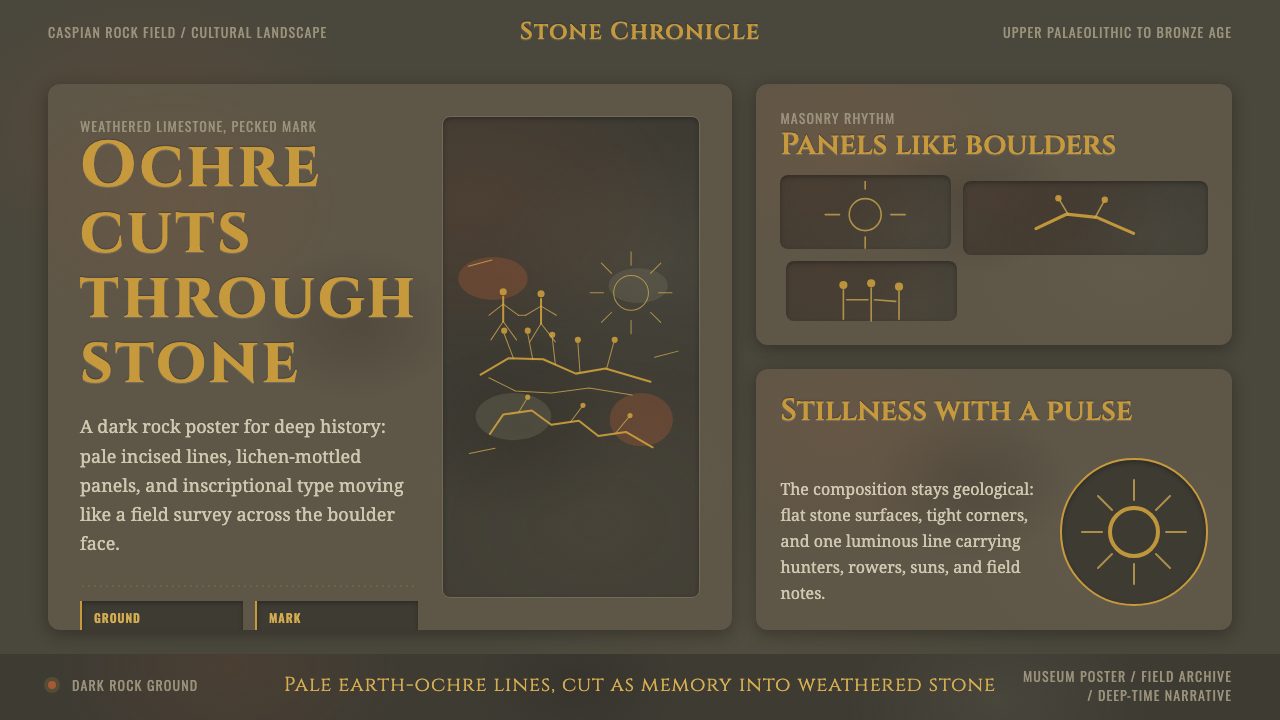 Azerbaijani Gobustan PetroglyphAncient rock speaks. Ochre incisions glow across dark lichen-mottled stone.
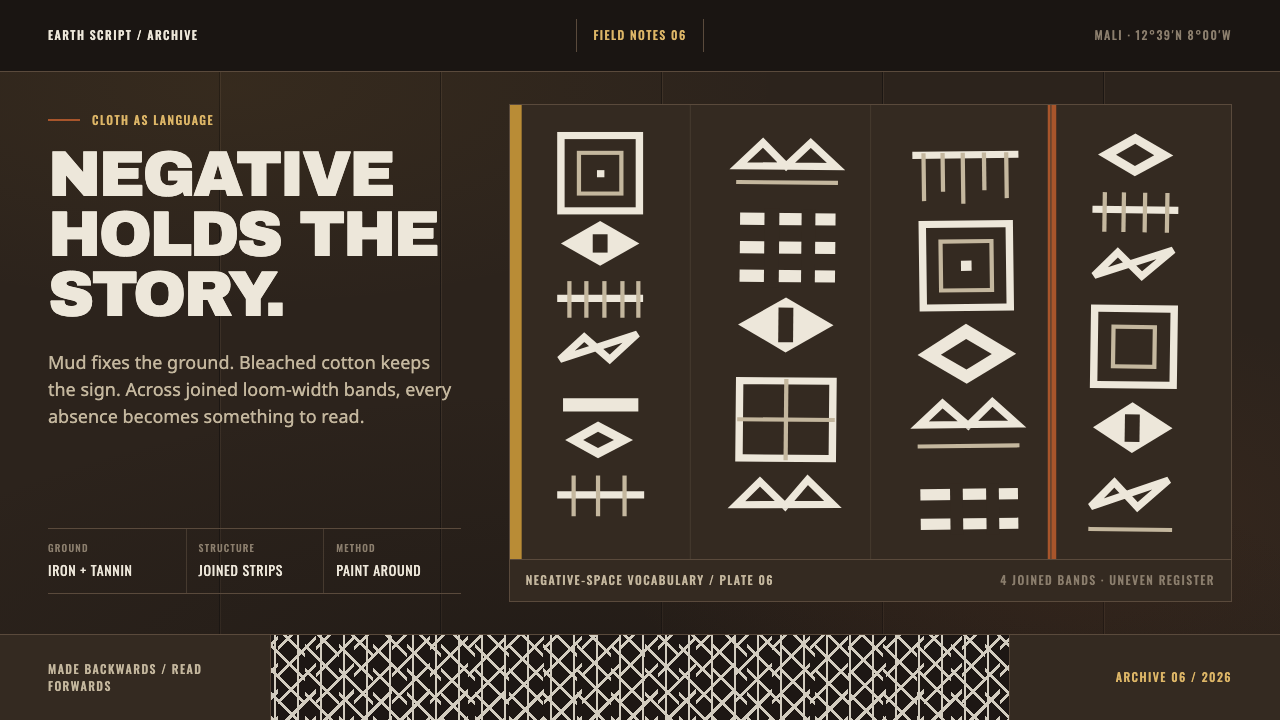 Bogolanfini MudclothAbsence becomes language. Warm iron-black bands hold uneven bleached-cotton s…
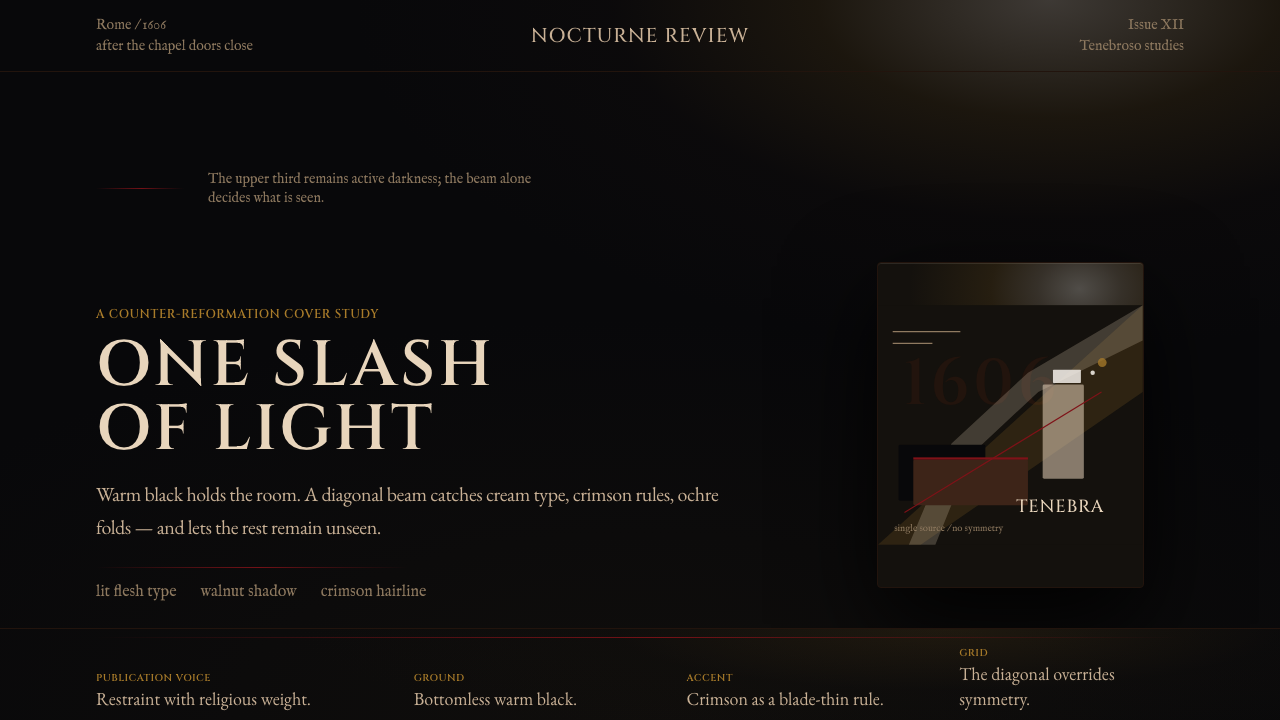 Caravaggio TenebrismDarkness acts first. Warm-black voids, Cinzel capitals, and one ochre raking…
 Charcoal & Conté DrawingAtelier calm, in middle value. Gray-taupe tooth, smoky charcoal, and chalk-wh…
 Claude Monet ImpressionistLight becomes the subject. Buttercream, pastel dapples, and Cormorant serif s…
 Don Quixote (1605)Imagination defies the plain. Rust capitals and cross-hatched ink score a dry…