About Kalighat Patua (Bengal)
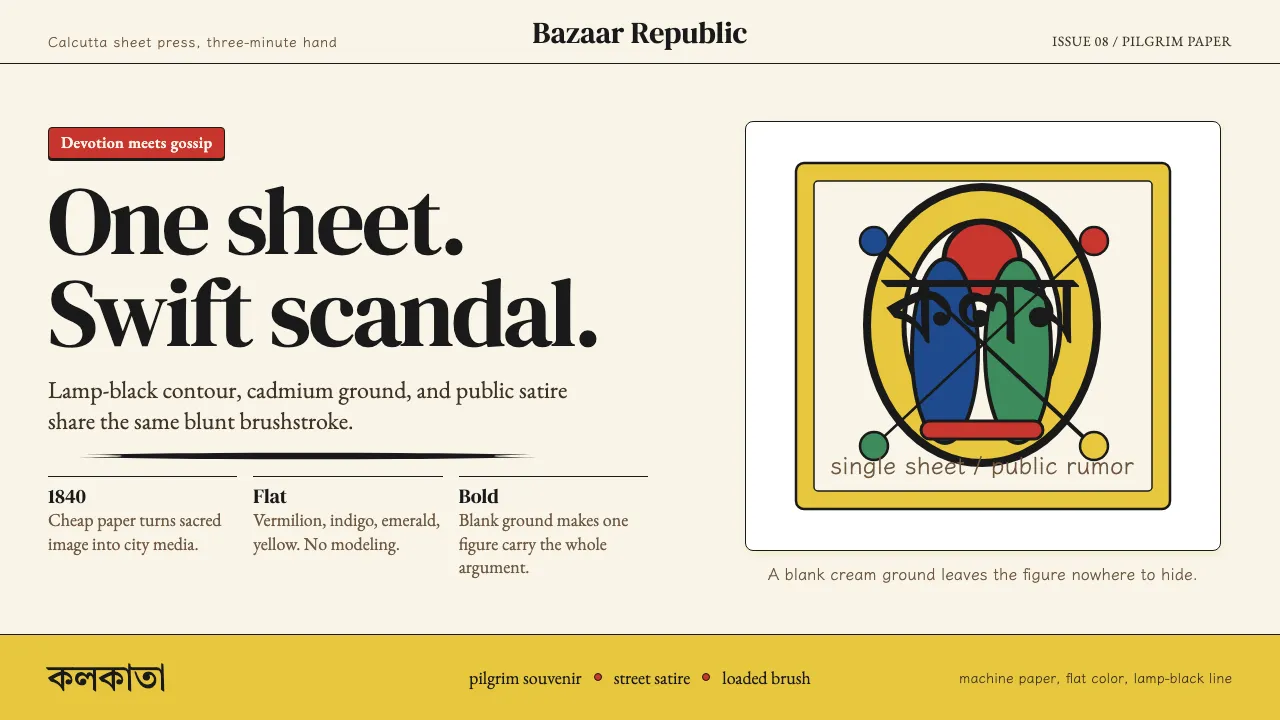
Kalighat painting is the 19th-century Bengali Patua tradition that became Asia's first mass-market vernacular painting. Between 1840 and 1930, village potua scroll-painters near the Kalighat Kali temple in Calcutta abandoned long pat scrolls and began producing single-sheet watercolors on machine-made British paper, sold cheap to pilgrims.
The visual language is uncompromising: one figure on blank cream ground, no background, a swift calligraphic contour-line loaded with cadmium-yellow, vermilion, indigo, emerald. Hindu gods sit alongside satirical caricatures of corrupt babus and Englishmen — both registers rendered in the same fluid three-minute hand.
- Origin
- Calcutta (Kolkata), Bengal, India
- Era
- 1830s–1930s peak; commercial production at Kalighat for ~100 years
- Key figures
- anonymous Patua-caste painters · Jamini Roy · W. G. Archer · Rudyard Kipling Sr.
- Movements
- 19c Bengali vernacular painting · popular-print mass-market · satirical-caricature lineage · Bengal Renaissance
Kalighat Patua (Bengal) design spec
Colors
Typography
The other 11 sections — buttons, cards, spacing, motion, techniques and more — open once you unlock. Download the DESIGN.md or send it to your AI in one click. Unlock once, yours forever.
Sign up nowStyles similar to Kalighat Patua (Bengal)
Also inspired by crafts & folk art, with a close feel.
 Pattachitra (Odisha Temple Scroll)Devotion as dense color. Vermilion bands and soot-black outlines stack like a temple scroll.
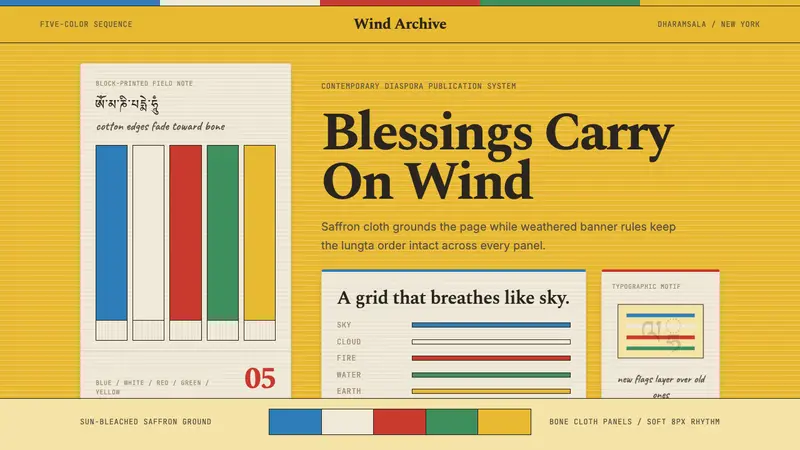 Tibetan Prayer Flag Modern RainbowWind-worn warmth. Saffron ground, Spectral type, and fixed lungta strips carry the page.
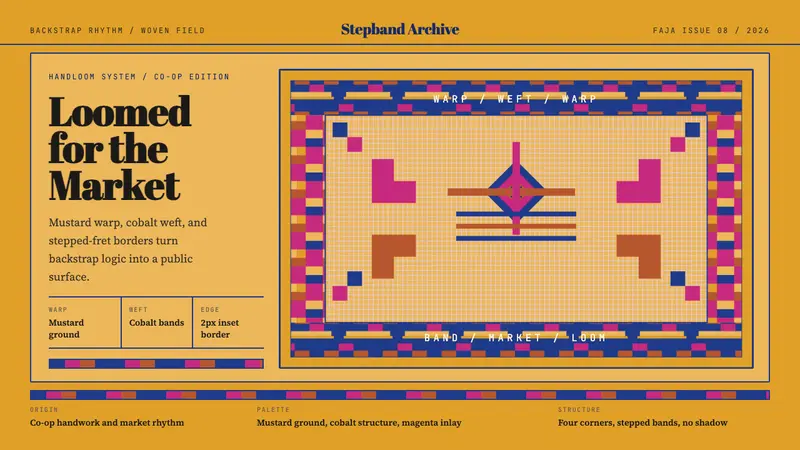 Otavalo Andean TextileThe loom stays vivid. Mustard ground, cobalt bands, stepped-fret borders.
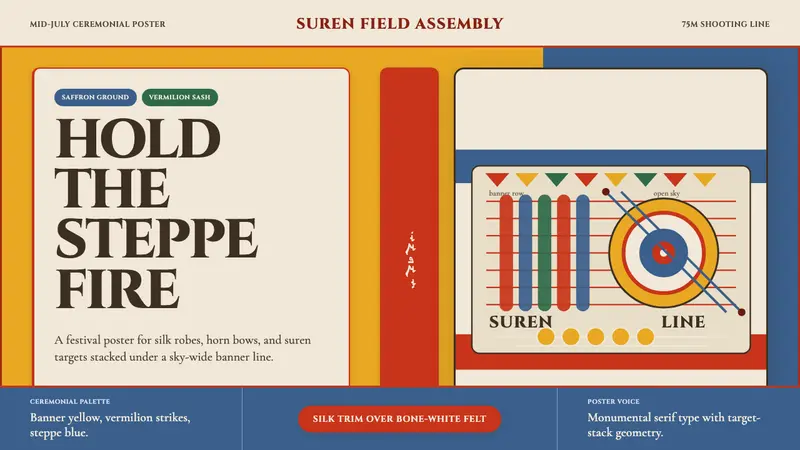 Mongolian Naadam ArcheryFestival heat at full draw. Saffron ground, vermilion trim, suren circles.