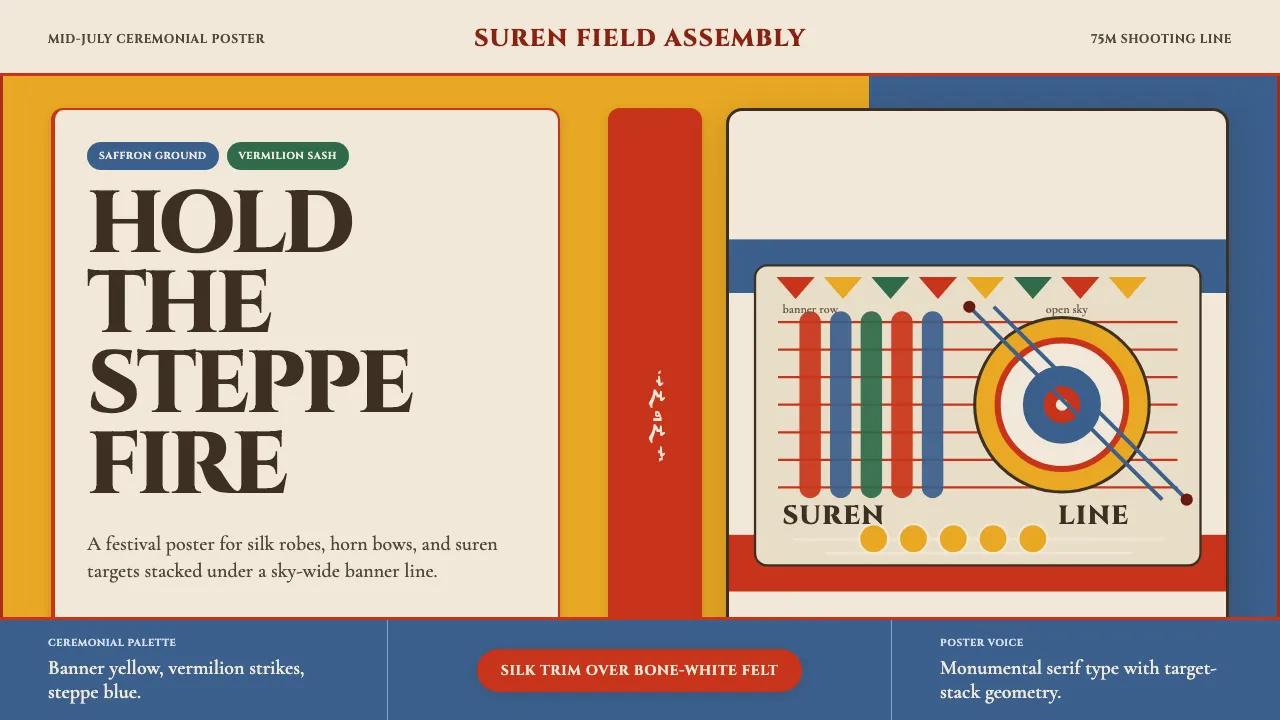
About Mongolian Naadam Archery
Mongolian Naadam archery is the visual crescendo of the "three manly games" — a festival codified under the Qing court in 1696 and reborn as a national spectacle after the 1921 revolution. Archers in silk deel robes and vermilion-blue sashes draw composite horn bows at 75-meter suren cylinder targets while saffron banners snap overhead.
This design system captures that mid-July stadium energy: saturated saffron grounds, vermilion accent strikes, steppe-sky blue panels, and bone-white felt surfaces. Typography is monumental and serif-heavy; every element echoes the ceremonial weight of a festival that predates the Mongol Empire itself.
- Origin
- Mongolia (nationwide, Ulaanbaatar Central Stadium)
- Era
- pre-Mongol Empire steppe games; codified 1696 under Qing; revived 1921
- Key figures
- Damdin Sükhbaatar · Jack Weatherford · Caroline Humphrey
- Movements
- Naadam (eriin gurvan naadam) · Mongolian Buddhist syncretism · post-revolutionary national identity
Mongolian Naadam Archery design spec
Colors
Typography
The other 11 sections — buttons, cards, spacing, motion, techniques and more — open once you unlock. Download the DESIGN.md or send it to your AI in one click. Unlock once, yours forever.
Sign up nowStyles similar to Mongolian Naadam Archery
Also inspired by crafts & folk art, with a close feel.
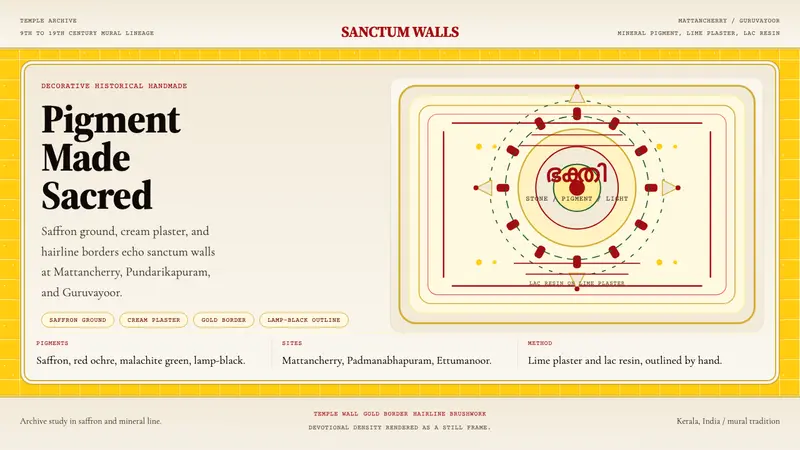 Kerala Mural TempleDevotional density over space. Saffron ground and cream panels, edged in gold.
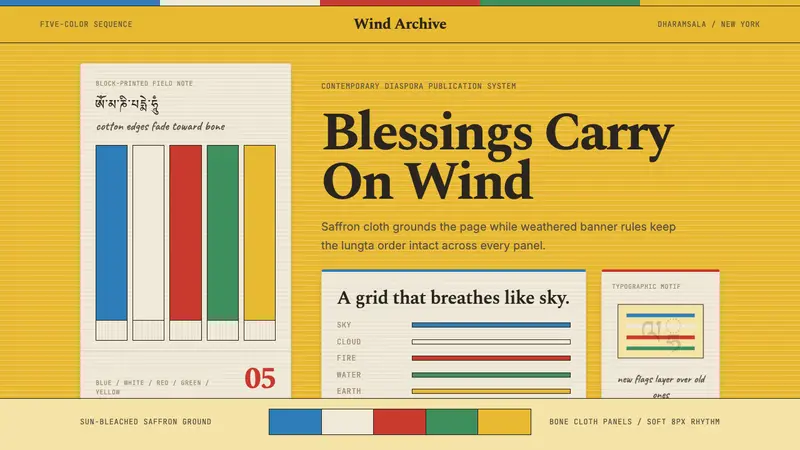 Tibetan Prayer Flag Modern RainbowWind-worn warmth. Saffron ground, Spectral type, and fixed lungta strips carry the page.
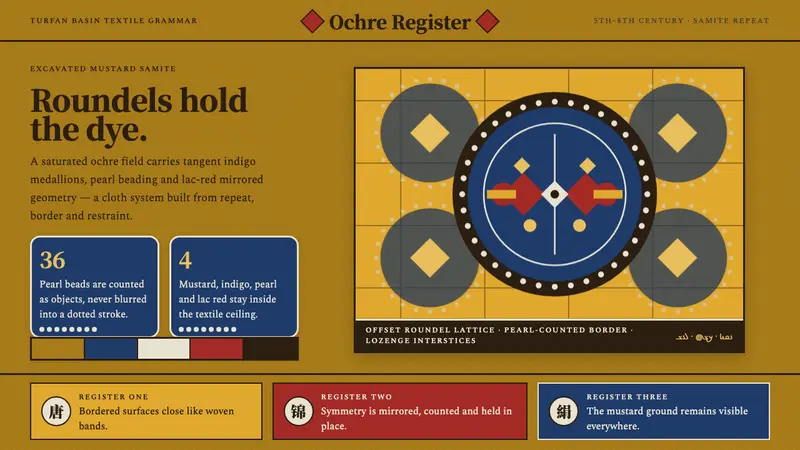 Astana Tomb SilksDye survives as structure. Mustard ground, indigo roundels and pearl beads lock the repeat.
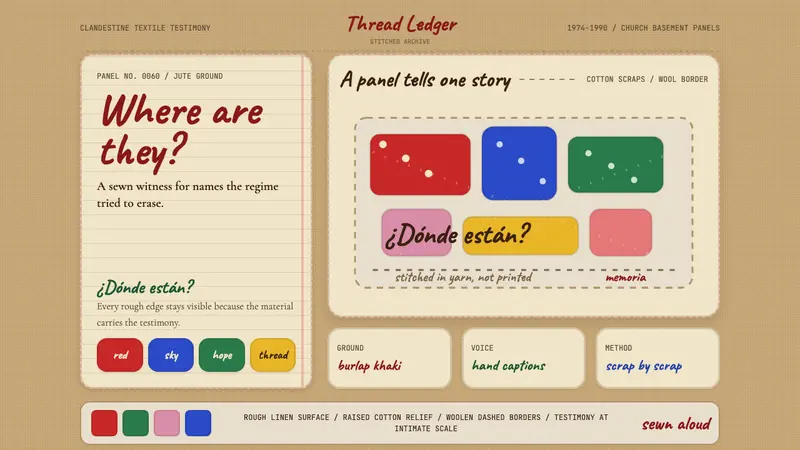 Chilean Arpillera (Pinochet Resistance)Witness sewn, not spoken. Burlap khaki, Caveat captions, and red cotton blocks carry testimony.